Affiliate disclosure: As an Amazon Associate, DailyHomeDecorating.com earns from qualifying purchases. If you buy through links on this page, we may receive a commission at no extra cost to you.
This guide focuses on compact cordless vacuums for recreational vehicles: floor-plan fit, battery and inverter constraints, carpet/vinyl transitions, secure travel storage, and dustbin maintenance.
RV vacuum examples to compare

Eureka RapidClean Pro Lightweight Cordless Stick Vacuum, NEC285GR | 40-Min Runtime, 3 Power Modes, LED Headlights, Tangle-Free Brushroll, Swivel Steering, For Pet Hair, Hard Floors & Carpets
ASIN: B0D86SCPH3
The verified Eureka NEC285GR listing describes a cordless stick vacuum with 3 power modes, LED headlights, a tangle-free brush roll, and up to 40 minutes of stated runtime. Its official specifications also list a 5.3-pound weight and low-profile floorhead. Measure the vacuum folded or stored against your RV’s actual cabinet and bed clearance.

Vacmaster Portable 10.8V 2-in-1 Cordless Stick Vacuum Cleaner | Lightweight, 2-Speed Power Control, LED Headlight, for Hardwood Floor, Carpet & Pet Hair – VSD1001
ASIN: B0DFLNKMX4
The Vacmaster VSD1001 is listed as a 10.8V cordless 2-in-1 stick vacuum with two speeds and a headlight. Its convertible format can help when floor and spot-cleaning needs share limited storage. The listing does not specify RV fit or runtime for every mode, so confirm dimensions and charging details in the manual.
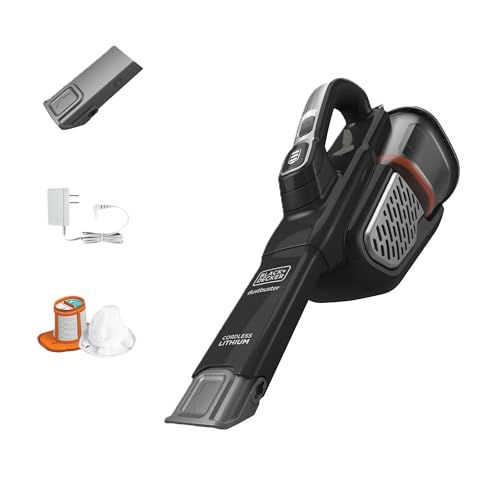
BLACK+DECKER dustbuster Portable Vacuum Cordless Handheld, Small Hand Vacuum Cleaner for Dorm Home and Car, Powerful 20V AdvancedClean+ (HHVK515J00FF)
ASIN: B07T17TDLR
The BLACK+DECKER HHVK515J00FF listing describes a built-in 20V MAX battery and a 750 mL dustbin; the manufacturer lists a 10-minute runtime. A handheld can be convenient for dinette crumbs, steps, and upholstery, but it is not a whole-floor substitute. Check how its charger works with your RV power setup.

Shark WANDVAC Cordless Hand Vac, Gray, WV201WH | Lightweight at 1.4 Lbs., Powerful Suction, Charging Dock, One-Touch Empty, NEW Furfins Tool & Crevice Tool for Pet & Home
ASIN: B0F45ML5MV
The Shark WANDVAC WV201 listing describes a 1.4-pound handheld vacuum with charging dock and one-touch emptying. It is suited to short spot cleans rather than a long whole-RV floor session. Check where the dock can be secured for travel and empty the small cup frequently.
Certain content that appears on this site comes from Amazon. This content is provided “as is” and is subject to change or removal at any time. Product examples and images are supplied through Amazon Creators API; confirm specifications and availability on the current listing.
For other compact cleaning options, see our hand vacuum guide, the cordless handheld vacuum comparison, and our broader home vacuum guide.
Start with the RV floor plan, not a home-vacuum ranking
An RV vacuum has to work inside narrow aisles, small storage bays, compact dinettes, and mixed flooring. A full-size household vacuum may be powerful yet awkward to stow or turn around in a trailer. A tiny hand vac can live near the entry but may take too long to clean a carpeted slide-out. The best RV vacuums balance a usable floorhead, storage dimensions, battery or power-source limits, and dustbin maintenance for the specific vehicle.
This guide compares compact cordless stick and handheld options for road travel. It focuses on clearance under furniture, carpet and vinyl, battery/runtime, charger and inverter compatibility, travel storage, and dustbin care. We have not tested the selected products in a recreational vehicle. Listing specifications are a shortlist; measure your RV and confirm the exact charger, battery, and accessory bundle before buying.
Quick picks by RV cleaning job
The Eureka RapidClean Pro NEC285GR is the full stick option in this comparison, with a listed up-to-40-minute runtime, three power modes, a tangle-free brush roll, and a low-profile head. The Vacmaster VSD1001 is a compact 10.8V 2-in-1 stick-and-handheld model with two speeds. The BLACK+DECKER HHVK515J00FF is a handheld with a larger listed 750 mL dustbin and a manufacturer-stated 10-minute runtime. The Shark WANDVAC WV201 is a 1.4-pound compact hand vac with a charging dock and one-touch emptying.
These product examples suit different jobs. A stick can handle floor runs, while a hand vac is faster for dinette crumbs, entry steps, and upholstery. If your RV has more than a small rug, consider a floor-capable unit rather than relying on a tiny cup. If storage space is the priority, measure the dock, wand, and floorhead as one package rather than evaluating only the motor body.
Measure the RV before choosing a vacuum
Measure the storage location’s height, width, and depth, then check the vacuum in its stored configuration. Include the floorhead, wand, charger, and dock. A tall stick vacuum may fit under a bed only after the wand is detached; a wall dock may be inconvenient if you do not want to drill or if the RV wall panel cannot support it. Check whether the unit can be stored upright or laid flat, and whether the dust cup can remain attached.
Also measure the clearance under the dinette, bed frame, sofa, and cabinets. Compare the vacuum head height—not only the handle. A low-profile head can reach under some furniture, but only if the battery body and wand pivot also clear the obstruction. Use a cardboard template or tape to simulate the full head and handle turn. In a narrow aisle, steering radius and head width affect use more than the vacuum’s stated coverage area.
Stick, handheld, or 2-in-1?
A cordless stick makes sense when the RV has carpeted areas or enough hard floor to justify a floorhead. It usually stores as a long assembly and may use a powered brush that helps with carpet but increases battery draw. A handheld is easier to stow and carry outside, but it is best for short cleanups and upholstery, not a full floor route. A convertible 2-in-1 can split the difference, though its battery and dust cup may be smaller than those of a larger household stick.
Think about what you clean most: sand at the entry, crumbs under a dinette, hair on a rug, dust under the bed, or upholstery. If you can keep a small broom for dry grit and use a hand vac for everything else, a compact unit may be enough. If the RV has a carpeted slide-out, a floor-capable stick with a brush roll may reduce the manual work. Match the appliance to recurring tasks, not occasional deep-cleaning needs.
Battery and inverter limits in an RV
Cordless vacuums do not need to run directly from the RV’s 12-volt system, but their chargers need the power source specified by the manufacturer. Many come with an AC charger. If you plan to use an inverter, read the charger’s input label and compare its requirements with the inverter’s continuous output and the RV’s battery capacity. Do not assume a 12V outlet can run an AC charger through an adapter, and do not substitute a generic charger or battery.
Inverter performance, wiring, battery state, and other loads affect whether charging is practical while boondocking. Use the inverter and RV manuals, keep an appropriate safety margin, and charge when connected to shore power if your setup is uncertain. The vacuum’s advertised runtime is not the same as charging time or the energy required to replenish it. If you want to use the vacuum while traveling, secure it and never run charging cords where they can interfere with driving.
Runtime claims versus RV cleaning sessions
A model’s maximum runtime is usually an “up to” figure under specific conditions. A powered brush, high-suction mode, carpet, and a loaded filter can change how long a session lasts. The Eureka NEC285GR listing states up to 40 minutes, while BLACK+DECKER’s official HHVK515J00FF page lists 10 minutes. Those manufacturer specifications are useful comparison points, not guarantees for every setting or battery age.
Estimate your own session: entry mat, aisle, dinette, bed area, and slide-out carpet may take more time than a quick spot pass. If a vacuum runs out before you finish, decide whether you can split the job into two sessions or whether a model with a removable battery is necessary. Verify replacement packs and charging time for the exact model. For a small RV, 10 minutes may be ample for crumbs but too short for a whole floor.
Carpet, rugs, and vinyl flooring
RV interiors often combine vinyl or other resilient flooring with carpet, carpeted steps, or small area rugs. A powered brush can agitate carpet, but it may scatter dry debris on vinyl or pull a lightweight rug. Look for a floorhead with a hard-floor mode, suction control, or an appropriate brush setting. If the model is single-mode, test it on a small area and follow the floor manufacturer’s care guidance.
Vinyl can show grit and sand, so a soft brush or suitable head helps collect debris without dragging particles. Carpet holds hair and crumbs deeper and may need a powered brush. Avoid using a harsh brush on delicate floor coverings. Secure runners before vacuuming and keep fringe away from a rotating roller. For damp spills, do not use a dry cordless vacuum; blot and clean the surface using the RV flooring maker’s approved method.
Low-profile storage and under-bed reach
RV storage compartments are often shallow or divided by support rails. Consider whether the vacuum separates into a hand unit, wand, head, and charger. A unit that breaks into smaller pieces may fit a pass-through bay more easily than a single long stick. Keep the battery and charger in a dry, temperature-appropriate area and leave enough clearance to retrieve the vacuum without moving packed gear.
Under-bed cleaning needs more than a low floorhead. The body must pivot far enough to lie flat, and the handle or dust cup must not hit the bed frame. The Eureka NEC285GR official page describes an under-furniture, low-profile head, but its dimensions should still be compared with the RV’s clearance. If the floorhead cannot turn under the bed, a crevice tool or small hand vac can handle edges but will not substitute for a full-width pass.
Dustbin size and debris disposal on the road
A small dustbin fills quickly with sand, pet hair, and crumbs. In an RV, emptying outdoors is preferable when possible because fine dust can settle on counters and bedding. Check whether the cup empties with a one-click bottom, whether the filter can be removed without scattering debris, and if replacement filters are easy to obtain. Keep a small bag or container for emptying during a travel day.
Clean or replace filters as the manufacturer directs. A clogged filter reduces airflow and can make the vacuum feel weak. Washable filters must dry completely before reinstalling; do not leave a damp filter inside a closed RV cabinet. Keep the dust cup and brush roll free of hair and grit, especially after cleaning the entry mat. A little routine maintenance helps prevent odors and avoids carrying a cup full of dust across the campground.
Travel storage: secure the vacuum before moving
Before driving, store the vacuum so it cannot fall, slide, or become a projectile during braking. A wall-mounted dock may require a secure backing surface, and a drawer or strap can be safer if the wall structure is unknown. Remove loose attachments and place them in a closed container. If the vacuum has a removable battery, follow the manufacturer’s guidance about whether to remove it for travel and how to protect its terminals.
Keep the vacuum away from wet gear, cookware, and objects that can press on the trigger. Do not charge it in a sealed hot compartment or leave it in extreme temperatures. Check the product manual for storage and transport instructions. Charging docks that work well in a house may not be designed to hold a vacuum during road vibration; secure the unit independently if necessary.
Noise and shared small-space use
In a compact RV, the vacuum motor is close to sleeping and work areas. A hand vac can be loud despite its small size. If you clean at a campground, consider quiet hours and nearby neighbors. Run the vacuum when others are not sleeping, and use a lower mode where it still collects the debris you need. A high-power setting may finish faster but can be louder and consume battery sooner.
Plan the path to avoid banging the floorhead against cabinet fronts or catching cords. Pick up loose charging leads before cleaning. Keep the vacuum and accessories away from the entry path so nobody trips while moving around the vehicle. Good storage organization is part of making a small vacuum practical.
A closer look at Eureka RapidClean Pro NEC285GR
The Eureka NEC285GR listing describes a cordless stick with up to 40 minutes of runtime, three power modes, LED headlights, a tangle-free brush roll, and swivel steering. Eureka’s official page lists a 5.3-pound weight, 0.6-liter dust cup, and low-profile floorhead. Those features can suit an RV with a small carpeted zone and enough storage height for a stick vacuum.
Check the exact dimensions against your under-bed space and closet. The wall mount and charger need a suitable location, and the dust cup may need frequent emptying if the RV accumulates sand or pet hair. Runtime will depend on mode and surface; confirm which floorhead comes in the selected package and whether the battery is replaceable.
A closer look at Vacmaster VSD1001
The Vacmaster VSD1001 is listed as a 10.8V 2-in-1 cordless stick vacuum with two speeds and a light. Its convertible design may appeal to RV owners who need a small floor tool and an above-floor unit without storing a full-size upright. The official manual identifies the model and approved charger, which is important if you plan to recharge it from an inverter.
Compare its dimensions, dust capacity, runtime, and available replacement filter with the Eureka stick. The product title does not state RV-specific compatibility or a full cleaning-session runtime. Use the manufacturer’s included charger only, and check the charger label against your power source before plugging it into an inverter.
A closer look at BLACK+DECKER HHVK515J00FF
The BLACK+DECKER AdvancedClean+ handheld uses a built-in 20V MAX battery according to the manufacturer. Its product page lists a 750 mL dustbin, two speeds, a long crevice tool, and a manufacturer-listed 10-minute runtime. A handheld is handy for dinette crumbs, steps, small rugs, upholstery, and corners, but its short runtime makes it a spot-cleaning tool rather than a whole-RV floor vacuum.
Its built-in battery means the pack may not be a quick-swap component, so confirm charging and replacement support. The manufacturer page lists the charger and battery in the box and a washable filter; follow the stated drying time before use. Measure the dock or storage base and keep the tool secured before travel.
A closer look at Shark WANDVAC WV201
The Shark WANDVAC WV201 is listed at 1.4 pounds with a charging dock and one-touch emptying. The official SharkNinja page positions it as a lightweight handheld for quick messes. In an RV, its small form may be convenient for a dinette or entry compartment, but the small hand-vac format limits its reach and whole-floor utility. Consider it as a spot cleaner or pair it with a separate floor tool.
Check the dust cup and filter care instructions and confirm the dock can be safely secured. Its compact size does not eliminate the need for a protected charging spot. If you frequently clean sand, long hair, or a carpeted slide-out, compare the hand vac’s capacity and runtime with a cordless stick before choosing.
Charging from shore power, generator, or inverter
If you have shore power, use the included manufacturer charger as directed. If you use a generator or inverter, check that the power source is rated for the charger’s input and that other RV loads leave enough capacity. Avoid running a charger from a questionable outlet or improvised adapter. Check the battery status and charger indicators before putting the vacuum away.
A charger may draw power only while charging, but its label and manual provide the right figures. Do not guess based on the vacuum’s battery voltage. The battery pack voltage and the AC charger’s input are different values. When in doubt, charge while connected to shore power or ask a qualified RV technician to review the inverter setup.
Common RV vacuum mistakes
One mistake is buying the smallest vacuum without checking whether it can reach the floor. A hand vac may be easy to store but frustrating for a carpeted slide-out. Another is buying the longest-runtime stick without checking whether it fits under the bed or in the storage bay. Measure the complete unit, accessories, and dock before ordering.
Also avoid assuming that any 12V car vacuum will work well on RV flooring or that a home charger can run from any inverter. Check the exact product input, battery, and charger. Do not leave the vacuum unsecured during travel. Finally, do not use a dry floor vacuum on wet spills; follow the flooring maker’s cleaning instructions instead.
Frequently asked questions
What kind of vacuum is best for an RV? A compact cordless stick suits carpet and larger floor areas; a handheld is convenient for crumbs and upholstery. Choose based on storage dimensions and floor type.
Can I charge a cordless vacuum from an RV inverter? Only if the included charger’s input requirements are compatible with the inverter’s continuous output and the RV’s electrical system. Check both manuals and labels; do not use a generic adapter.
Is a handheld vacuum enough for a camper? It may be enough for a small hard-floor layout and spot cleaning. A carpeted slide-out or larger floor area may call for a cordless stick with a powered head.
How do I store a vacuum while driving? Secure the vacuum and attachments so they cannot move during braking. Do not rely on a wall dock unless it is mounted to adequate backing and designed for that use.
How often should I empty an RV vacuum? Check the bin after each significant cleanup. Sand and pet hair can fill a small cup quickly; empty it outdoors when practical.
Can I vacuum vinyl and carpet with one machine? Many cordless sticks support both, but brush settings differ. Confirm the head and floor modes for the exact model and test carefully on delicate surfaces.
Should I use a vacuum on wet RV flooring? No, unless the exact unit is designed for wet pickup. Keep dry vacuums away from spills and follow the RV flooring maker’s cleaning instructions.
Final decision checklist
Before choosing the best RV vacuum for your vehicle, measure the closet and under-bed clearance; identify the ratio of carpet to vinyl or hard flooring; decide whether you need a floorhead or only a handheld; compare runtime in the mode you will use; verify the charger and battery against your RV power setup; and plan how the vacuum will be secured while driving. Then check dustbin size, filter maintenance, replacement parts, and current return terms.
The Eureka NEC285GR is the floor-capable stick comparison with a low-profile head and listed 40-minute maximum. The Vacmaster VSD1001 offers a 2-in-1 compact format. The BLACK+DECKER HHVK515J00FF and Shark WANDVAC WV201 are handheld options for quick cleanups. None is automatically right for every RV. Measure first, confirm your charger requirements, and choose the smallest format that still cleans the floors and carpet you actually have.