Affiliate disclosure: As an Amazon Associate, this site may earn from qualifying purchases. If you buy through links on this page, we may receive a commission at no extra cost to you.
The best vacuums for cat litter make everyday tracking easier without flinging granules across the room or turning a quick cleanup into a filter-maintenance chore. The right choice depends on what comes out of your litter box: fine clay dust, heavier clumping granules, hard crystal pieces, or larger wood and paper pellets. It also depends on where the litter lands. Dry pieces on sealed tile are a different job from powder caught in a rug, pellets near a sifting box, or damp clumps beside the tray.
This guide focuses on litter tracking and scatter, not general pet hair. It explains how to choose a vacuum for hard floors, rugs, and tight litter-box corners; how litter materials change cleanup; and what to do with filters, bins, and odors afterward. Product examples below are comparison candidates, not the result of head-to-head tests. Follow the vacuum and litter manufacturers’ instructions, and never vacuum wet clumps, urine, or any material excluded by your machine’s manual. BISSELL’s own litter-cleanup guidance likewise says to vacuum dry litter only and pick up wet clumps by hand first.
Quick answer: use the right floor mode and clean up dry litter only
For a litter box on tile, vinyl, sealed wood, or another sealed surface, a hard-floor setting or brush-roll shutoff is useful because a spinning brush can push loose granules outward. Choose a nozzle with enough opening for the litter pieces you expect and a shape that reaches around the box. For a rug or carpeted litter area, compare suction, brush height, and how easily the head can be cleaned; first remove larger pieces by hand so they do not jam the intake or roll into the pile.
A compact upright can be handy for a small apartment or a litter station tucked into a laundry room. A full-size upright is better suited to cleaning the whole floor and adjoining rugs, while a detachable pod or hose can reach baseboards and corners. A small handheld works for spot cleanup but may have a narrow intake and small bin. If you collect fine dust frequently, prioritize accessible filters, secure seals, and a disposal method you can manage without shaking dust back into the room.
Examples worth comparing include the BISSELL CleanView Compact 3508, which has Scatter-Free Technology for hard-floor debris; the CleanView Swivel 3836, a larger upright with similar scatter-reducing positioning; Shark’s Navigator NV360, whose brush-roll shutoff allows straight-suction operation; and BISSELL’s Pet Hair Eraser Turbo Lift-Off 3774F for homes that need a pod and above-floor tools as well as floor cleanup. Confirm the exact variant, accessories, current listing, and maintenance instructions before buying.
Vacuum models to compare for litter-area cleanup
Amazon titles and images below were retrieved through Amazon Creators API. The links lead to Amazon as product references; confirm the exact model, attachments, and current listing details. These are examples of vacuum formats that may suit different litter-area layouts, not claims that a model can vacuum every type or quantity of litter.

ASIN: B09V5NPHP3. A compact corded upright to compare for a smaller litter station and dry hard-floor scatter.
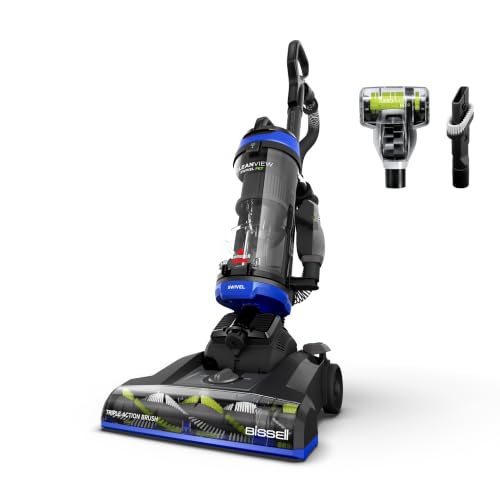
ASIN: B0CWB3TF7X. A full-size upright example for larger sealed floor areas and adjoining rugs.

ASIN: B00JH98GR4. Compare when you want an upright with a detachable pod and a brush-roll shutoff mode.

ASIN: B0C69ZFWM9. A pod-style example for corners and above-floor cleanup when litter tracking is one of several pet messes.
Start by identifying the litter that is being tracked
Clumping clay usually forms scoopable clumps when it absorbs moisture, while non-clumping clay absorbs liquid without forming the same solid mass. Loose granules and dry dust can reach the floor with either type. Clay granules are denser than fur, and fine dust can settle on baseboards or coat nearby surfaces. For vacuum cleanup, that means you should not treat a litter spill like lightweight hair: clear the larger pieces, select a floor mode that does not scatter, and monitor the filter if you pick up powder regularly.
Crystal litter is made from silica gel beads or crystals. Depending on the formula, pieces can be larger and harder than fine clay, and a low-dust claim does not mean that no granules will track. Check your vacuum’s nozzle opening and the litter product’s own instructions. Do not vacuum large volumes of crystals in one pass; clear the obvious debris first and avoid pushing rigid pieces into a small intake or brush housing. Use the vacuum’s hard-floor setting where available.
Wood pellets can break down into sawdust after absorbing moisture, while paper litter may come as pellets or softer pieces. Larger pellets may track less than fine granules, but can still roll away from the box. If a pellet is damp, softened, or breaking apart, scoop it up and follow the litter maker’s disposal advice instead of feeding it into a dry vacuum. A vacuum is most predictable for dry, loose debris that the manufacturer permits it to collect.
Other plant-based or mixed litters vary widely in size, weight, dust, and clumping behavior. Read the packaging, especially if it has special disposal instructions or contains additives. Do not infer that two litters are vacuum-safe just because they are both marketed as natural. A low-tracking litter can reduce the amount of vacuuming needed, but a cat’s preference for texture and scent should also guide any switch. Purina notes that litter types vary in material, dust, tracking, and clumping; a change should be made in a way the cat accepts.
Clumping clay: separate dry granules from wet clumps
Clumping litter often creates three kinds of floor debris: loose granules immediately outside the box, fine dust around the tray, and clumps that may be carried farther away if they break. Vacuum only the dry loose material. Pick up wet clumps by hand with a scoop or another appropriate method before using a vacuum. Moist litter can stick inside the nozzle and bin, form residue in the airflow path, and produce odors that are difficult to remove.
Large clumps are not loose litter, even if they look dry on the outside. They can be heavy and may break when sucked through a narrow intake. Keep the vacuum focused on small, dry granules and a light layer of dust. If a spill includes a lot of litter, sweep or scoop the larger amount into a bag first, then vacuum the remaining dry grit. This reduces filter loading and makes it less likely that the brush roll will kick granules into corners.
Fine dust deserves care because it can pass through or clog a filter that is not designed for it. Use the filter type specified for your vacuum, and check it after cleaning the area. If the filter becomes visibly coated or airflow drops, turn the machine off and maintain it according to the manual. Do not beat a dusty filter indoors or rinse a filter that is not washable. If dust is a persistent issue, consider changing the litter formula or improving the litter mat and box placement rather than relying on repeated vacuuming alone.
For carpet near the box, remove the loose top layer of litter before vacuuming. Set the carpet height correctly and make slow passes. A powered brush can work particles down into the pile or scatter them, depending on the head and settings. If the manual provides a suction or brush adjustment, use it. For delicate rugs, test an inconspicuous area and turn the brush off if appropriate.
Crystal litter: use a wider pickup path and avoid overloading
Crystal granules can be rigid and may bounce on a smooth sealed floor. A brush roll that spins rapidly can scatter them beyond the litter mat, so straight suction or a gentle hard-floor mode is often easier to control. Move the head slowly and approach from the outside toward the center of the spill. A narrow crevice tool may concentrate suction but can also funnel hard pieces into an opening that is too small; use the attachment recommended by the vacuum maker.
Do not vacuum a large pile of crystals in one go. Hand-scoop the bulk, especially if the pieces are large, and use the vacuum for remaining small, dry granules and dust. Check the hose and floor head afterward for trapped pieces. If you hear a rattling sound or suction changes, switch off and inspect the nozzle before continuing. Avoid shaking trapped crystals through the hose with the motor running.
Crystal formulas and litter systems vary, so read the product directions. Some materials are intended for specific trays, depth, or replacement schedules. What appears to be loose crystals could be part of a system that should not be swept into a vacuum in quantity. Keep waste separate from the clean litter and use the disposal method recommended by the maker.
Pellet litter: account for both whole pieces and broken-down fines
Pellets are larger and less likely to stick to paws than very fine litter, but the individual pieces can roll across a hard floor. Their size makes them more likely to lodge in a narrow nozzle or get caught in a rotating brush. For a few dry pellets, hand pickup is often fastest. For a small scatter, use a hard-floor nozzle with a roomy opening and no active brush roll, if your vacuum provides that option.
Wood pellets can disintegrate into sawdust after absorbing moisture. That fine material is not the same cleanup problem as intact pellets: it can create a dust cloud, spread into floor seams, and load the vacuum filter. Scoop damp or broken-down material from a pellet tray according to the litter system’s instructions. Vacuum only small amounts of dry residue that your vacuum’s manual permits. Empty and inspect the bin sooner after collecting fines.
Paper pellets and other soft pellets may compress or break when wet. Avoid vacuuming damp material, which can stick to the hose or filter and create odor. Around a sifting tray, clean the area after the box’s solids and absorbent pad are serviced. A mat with grooves or a catch tray can limit how far pellets travel and reduce the need to chase each piece across the room.
Sealed floors, grout, rugs, and corners
On sealed tile or vinyl, a floor head with brush shutoff can collect litter without flinging it. Use slow overlapping passes, and approach the box from multiple directions if pieces have rolled into the baseboard edge. A soft brush attachment can help around the box exterior, but do not use a rotating floor brush on delicate finishes unless the flooring and vacuum manuals allow it. For wood floors, check the finish maker’s guidance and avoid scratching the surface with hard granules under the nozzle.
Grout lines and floor joints can hold dust and fine grit. Use a crevice tool gently along edges, then wipe the surface with a slightly damp cloth if the floor material permits. Vacuuming alone may leave a thin residue in textured tile. Avoid adding liquid cleaner to the vacuum unless it is a designated wet-dry floor washer and the product instructions specifically permit that use. Standard dry vacuums should collect dry debris only.
Area rugs at the litter station act as tracking mats but can trap fine particles in their pile. A low-pile washable mat is often easier to clean than a fluffy rug. If you vacuum a rug, select a head height and brush setting that suits its weave. Lift the mat periodically to clean underneath, where dust and granules may accumulate. A smooth tray or catch mat that can be shaken out may be easier to maintain than trying to vacuum every crevice.
For corners around a covered litter box, a short hose and crevice tool can be more useful than a wide upright head. Check that the hose does not collapse when bent sharply and that the attachment opening is large enough for the particles. If the box sits in a cabinet, ensure there is enough clearance to clean without striking the vacuum head against the panels or tipping the box.
Hard-floor controls and nozzle design
A hard-floor setting usually changes brush-roll behavior, suction, or both. The exact effect varies by model. Brush-roll shutoff is straightforward: the vacuum can use suction without spinning the brush, which can help prevent the nozzle from scattering dry pieces. Some products use a dedicated hard-floor mode or an anti-scatter nozzle design. Read the manual to confirm which setting to use around litter and how the machine transitions back to carpet.
The opening size is important. A very narrow nozzle may clog on pellets, while a broad nozzle may not concentrate suction on fine dust in a corner. A motorized roller can catch hair and litter together, making cleanup and maintenance more difficult. For a litter station, compare whether the main head can be adjusted or whether a secondary hard-floor tool is available. If you use the crevice tool, do not force a granule that is too large through the neck.
Keep the head level and move at a controlled pace. Fast sweeping motions can send granules underneath furniture or across the room. Starting at the outer edge and working inward keeps the spill contained. If the vacuum pushes particles around even on its lowest setting, scoop more by hand first or use a different attachment. The goal is to collect litter, not to make the vacuum do the entire bulk cleanup.
Filtration and dust management
Cat litter creates dust independently of cat hair and pet dander. The Environmental Protection Agency describes indoor dust as a mixture that can include tracked soil, biological particles, hair, and other materials; cleaning and vacuuming can stir settled dust into the air. A HEPA filter can help keep some vacuumed dust from escaping, but the complete machine’s seals, filter fit, and collection container matter. A “HEPA” label on a replacement filter alone does not prove that every part of the vacuum forms a sealed system.
If you regularly collect fine litter dust, inspect the filter more often than you would for only coarse debris. Replace it when required, and clean washable filters only as directed. A clogged filter can reduce pickup and may lead to the vacuum blowing dusty air through leaks. If you have asthma or allergies, consider having someone else vacuum when practical, ventilate the area appropriately, and follow your healthcare provider’s guidance. Filtration is one part of indoor dust management, not a promise to prevent symptoms.
Bagged machines can make disposal more contained if the bag closes securely. Confirm bag availability and model compatibility before purchase. Bagless units require more direct emptying; remove the cup carefully and avoid dumping it from face height. When cleaning the litter area, empty the vacuum before it is overfull and take care not to create a second dust cloud while disposing of the contents.
Odor and filter maintenance after litter pickup
Odors often come from waste, damp material, or debris trapped in the vacuum rather than from dry litter granules themselves. Do not vacuum urine, wet clumps, or soaked litter with a standard dry vacuum. Scoop them up separately, clean the floor according to its care instructions, and let the area dry. If you accidentally collect damp material, stop using the vacuum and consult the manual for safe cleaning and drying instructions.
After a dusty cleanup, inspect the dust cup, bag compartment, filter, floor head, and hose. Remove packed particles only after turning the unit off and disconnecting power as directed. Wash only components the manufacturer says are washable; let them dry completely before reassembly. Never add deodorizer, baking soda, fragrance, or cleaning liquid to the dust cup unless the manufacturer specifically approves it. Fine powders or scented products can clog filters or damage the machine.
Emptying and washing the litter tray are separate from vacuuming the surrounding floor. Maintain the box on the schedule recommended for the litter type, keep scoops and waste bags nearby, and wipe sealed surfaces with a compatible cleaner. A clean mat and a well-positioned box can reduce tracked material. If the vacuum develops a persistent smell after proper emptying and filter care, check for a blockage or seek model-specific support instead of masking the odor.
Choose a format for the litter-box layout
A compact upright or stick can be convenient when the box is in a small bathroom, laundry room, or apartment corner. It is easier to maneuver around the tray, but may have a smaller bin and more frequent filter maintenance. A full-size upright is more efficient when you also vacuum adjoining carpet and open floor areas, though its base may not fit around a tucked-away box.
A handheld vacuum is handy for small, dry granules on a mat or shelf, but verify its inlet width and filter design before using it for fine dust. A narrow hand-vac nozzle can clog on larger pellets, and a tiny dust cup fills quickly. A canister with a short hard-floor tool may offer better control if the box is in a narrow space, but the hose and canister need storage nearby.
Some households use a broom and dustpan for bulk granules and a vacuum for fine dry residue. That can be more controlled than trying to vacuum every piece. A textured mat, litter-catching tray, or low-pile washable runner can intercept debris at the box exit. The most useful machine is the one you can reach easily and clean without scattering debris or leaving the box area unattended for a long setup.
How the example vacuums fit different litter jobs
BISSELL CleanView Compact 3508: BISSELL describes Scatter-Free Technology for sealed hard floors, and the compact body may fit a smaller station. Check the exact model’s brush controls and manual before collecting pellets or large pieces. Its smaller size may mean more frequent emptying if your litter tracks broadly.
BISSELL CleanView Swivel 3836: This larger upright has a Triple Action brush roll and Scatter-Free Technology in the manufacturer’s product information. It may suit a home that wants one machine for the litter area and full-room cleaning. Verify the nozzle settings and use its hard-floor approach for dry granules.
Shark Navigator NV360: The listing identifies brush-roll shutoff and a detachable pod. A brush-off mode can be useful on sealed hard floors, while the pod and hose can reach corners. Confirm model instructions and maintain the bin and filters after dusty material.
BISSELL Pet Hair Eraser Turbo Lift-Off 3774F: Its detachable pod and pet tool are useful for homes where litter cleanup is only one of several pet messes. It is not a dedicated litter vacuum; use a suitable hard-floor setting for dry granules and avoid wet clumps. The maintenance steps still include emptying the tank, cleaning filters, and checking the brush roll.
Practical cleanup routine around the tray
First, scoop waste and wet clumps from the box and collect any large dry spill by hand. Keep clean litter from being drawn into the vacuum. Next, remove the litter mat or shake it outdoors if its material allows; do not shake dust into a room. If the floor is sealed, choose the hard-floor mode or turn the brush roll off. Start at the outer edge of the tracked area and move inward so granules do not get pushed toward the walls.
Use the hose and crevice tool around baseboards, cabinet edges, and box feet. Avoid forcing large pellets or crystals into a narrow nozzle. For fine dust, make gentle passes and check the filter after cleanup. If a rug is involved, remove its largest granules first and follow the vacuum’s carpet-height instructions. Avoid vacuuming wet litter, urine, or litter sludge under all circumstances unless a machine manual explicitly permits the specific material; ordinary household vacuums generally are not intended for that use.
Afterward, empty the bin or replace the bag before the collected debris sits for a long time. Inspect the brush and inlet for stuck material, then wipe the sealed floor with a compatible damp cloth if a fine residue remains. Return the litter mat once the floor is dry. This brief routine helps keep a cleanup from becoming a dusty, smelly maintenance problem.
Common mistakes when vacuuming cat litter
- Vacuuming wet clumps or urine. Moist waste can damage a dry vacuum and leave odor; pick it up separately.
- Using an active brush on loose granules without testing. The roller may scatter litter across a sealed floor. Use brush shutoff or the specified hard-floor mode.
- Trying to collect the whole spill at once. Scoop bulk material first and use the vacuum for dry remnants.
- Ignoring particle size. Large pellets and crystals can lodge in narrow openings; do not force them through a crevice tool.
- Assuming low-dust litter creates no dust. Fine residue can still accumulate and load the filter over time.
- Rinsing a filter that is not washable. Follow the exact vacuum manual and dry washable parts completely.
- Adding fragrance or powder to the vacuum. This can clog or damage parts unless the manufacturer explicitly approves it.
- Forgetting the mat and floor underneath. Litter can collect under the mat or along the box’s feet, so include those areas in routine cleaning.
Frequently asked questions
Can I vacuum cat litter?
Many manufacturers allow a vacuum to pick up small amounts of dry loose litter, but always check your specific manual. Pick up wet clumps and urine by hand, and remove larger pieces before vacuuming. Use a suitable hard-floor setting and monitor the filter if fine dust is common.
Can a vacuum pick up clumping clay litter?
It can collect small amounts of dry, loose granules when the vacuum maker permits it. Do not vacuum wet or soiled clumps. Scoop those first, then use the vacuum for dry residue around the box.
Is crystal litter safe to vacuum?
Use the litter product’s instructions and vacuum manual. A few dry pieces may be manageable with a suitable hard-floor nozzle, but large crystals can lodge in a narrow intake. Remove bulk pieces by hand and inspect the hose and floor head afterward.
Should I use a brush roll on the litter-box floor?
A spinning brush can push granules around. If your vacuum has brush-roll shutoff or a hard-floor setting, use it as directed. For models without that control, scoop more by hand and make slow passes with a suitable attachment.
Will cat litter damage my vacuum filter?
Fine dust can load filters and reduce airflow, especially if collected frequently. Inspect and clean or replace filters according to the manual. Do not wash filters that are not washable, and do not use the machine without its required filter.
What vacuum is best for a litter box on a rug?
Choose a vacuum with an adjustable head or suitable brush controls and a tool that can reach the mat edges. Pick up large granules first, set the head for the rug pile, and avoid aggressive brushing on delicate or loose-weave mats. A washable low-pile mat may be simpler to maintain.
How can I reduce litter tracking without vacuuming more?
Try a litter-catching mat, a tray that suits the box, and a low-tracking litter that your cat accepts. Keep the box and nearby floor clean on a regular schedule. Larger pellets may track less than fine particles, but preference, litter design, and box placement all matter.
Final recommendation
The best vacuum for cat litter is one that collects dry granules without scattering them, reaches the edges around the box, and is easy to maintain after dusty cleanup. Match the nozzle and floor setting to the litter’s size and the surface beneath it. Use a brush shutoff or hard-floor mode on sealed floors, remove wet clumps and large spills by hand, and check the filter after collecting fine dust. A litter mat and routine scooping can reduce the amount of vacuuming needed.
For other cat-home cleanup needs, see our guides to vacuums for cat hair, vacuums for pet homes, and mixed hard-floor and carpet cleaning. For litter-type differences, read Purina’s overview of cat litter materials; for indoor dust context, see the EPA’s indoor particulate matter guidance. BISSELL also provides brand guidance for cleaning around litter boxes.
Certain content that appears on this site comes from Amazon. This content is provided “as is” and may change or be removed at any time. Product examples and images are supplied through Amazon Creators API; check current Amazon listings for the latest prices, availability, product details, and specifications.