As an Amazon Associate, DailyHomeDecorating.com earns from qualifying purchases. If you buy through links in this article, we may earn a commission at no additional cost to you.
The best stick vacuums for hardwood floors should collect dust and crumbs without making daily cleaning feel like moving furniture. On wood, engineered flooring, laminate, and tile, the floor head can matter as much as the motor. A stiff or fast brush may scatter cereal, push larger debris, or feel too aggressive on a delicate surface. A wide, bulky head can be difficult to guide around chair legs. A light stick may be easier to carry but have a small dust cup or limited reach. The right choice balances head design, weight in the hand, storage, and power source.
This guide is specifically about upright stick-vacuum form factors for hard floors, including corded and cordless models. It does not repeat our broader cordless-vacuum comparison for hardwood, which focuses on cordless whole-category examples. Instead, this page compares stick vacuums by floor head and roller behavior, handle weight, docking, cord management, and everyday maneuverability. For whole-home floor-care planning, see our general vacuum-cleaner guide.
Quick recommendations by floor and routine
- Small rooms and short pickups: a very light corded stick can be simple to grab, and it never needs charging, but expect a basic floor head and limited dirt capacity.
- Mixed hard floors and low-pile rugs: select a stick with a head or brush setting that can be adjusted for the surfaces you own; do not assume “multi-surface” means the brush is safe for every finish.
- Longer sessions without a cord: a cordless stick with a dock can be convenient, but check its runtime with the floor head attached and the selected power mode.
- Furniture and tight turns: look for a low-profile nozzle, a hinge or swivel that matches your room layout, and a body that does not feel top-heavy when raised.
- Hardwood plus lots of pet hair: prioritize hair management, an easy-to-clean roller, and a brush style appropriate for your flooring; a tangle-resistant claim is not a substitute for maintenance.
- Continuous cleaning at a predictable time: a corded stick may suit homes with outlets nearby and remove battery-runtime planning, although the cord can catch on furniture.
What “stick vacuum” means for hardwood
A stick vacuum has a long handle and a relatively slim floor body compared with a traditional upright. Some convert into handheld vacuums; others are dedicated floor cleaners. The format is often easier to store in a narrow closet and lift onto stairs. On wood floors, though, the floor head has a separate job from the stick body: it needs to glide, maintain contact, direct debris into the intake, and avoid pushing larger crumbs around.
Many stick vacuums use a rotating brushroll, a soft roller, a combination head, or a simple suction opening. A brushroll that excels on rugs may scatter hard pieces across a smooth floor if the design does not manage airflow around them. Soft rollers are designed to make broad contact with hard floors, but they can need frequent cleaning and may not be ideal for thick rugs. A simple suction-only head can be gentle and easy to maintain but may struggle with hair or debris that is pressed into a textured surface. There is no single head style that suits every household.
Hardwood also varies. A sealed, durable finish may tolerate regular vacuuming differently from a worn, waxed, oiled, or hand-scraped surface. Manufacturer instructions for the floor and the vacuum matter. Avoid a head with sharp edges or abrasive debris trapped beneath it. When unsure, test in a hidden area and use the gentlest setting. No vacuum can repair a scratched finish; keeping grit off the floor and cleaning the head can help prevent avoidable abrasion.
Product examples for different stick-vacuum priorities
The products below show different approaches: a basic corded stick, a light convertible design, and cordless sticks with different brush and storage features. This is an editorial comparison from manufacturer documentation and published product listings, not a hands-on lab test. Confirm the exact variant, accessories, floor compatibility, and included charger before ordering. Manufacturers sometimes sell near-identical model numbers with different colors, tools, or bundles.
BISSELL FeatherWeight 2033M: simple and very light
BISSELL lists the FeatherWeight 2033 family as a corded stick weighing 2.6 pounds, with a 15-foot cord, a 0.67-liter dirt cup, and a 9.5-inch cleaning path. The product is convertible for handheld tasks and its simple floor head does not use a powered brushroll. This can suit short daily pickups on bare floors where light weight and simplicity matter more than a swivel head or a larger bin. The cord removes battery-runtime concerns but limits how far you can roam without changing outlets. The small cup also means emptying more often than a full-size vacuum.
BISSELL FeatherWeight 3061: cordless convenience with dock storage
The FeatherWeight 3061 is a cordless stick variant in BISSELL’s FeatherWeight/ReadyClean family. Its appeal is the slim, self-standing design and freedom to move between rooms without cord routing. The tradeoff is that runtime and battery condition determine when it is ready. Check the manufacturer’s charging guidance, the exact battery and charger supplied, and whether the current version includes the floor tool you want. BISSELL support documents charging indicators and maintenance for the 3061 family; a light that flashes or a clogged brush can affect operation. Treat its compact format as a quick-clean tool rather than assuming it has the bin size of a full upright.
Shark Rocket HV301: corded stick with a swivel head
The Rocket HV301 is a corded stick design that converts for above-floor use and is sold with a motorized floor nozzle and swivel steering. A corded format can be useful when you want sustained cleaning time, especially in rooms with accessible outlets. The swivel head can make it easier to steer around table legs than a straight, fixed nozzle, while the floor body is more substantial than a featherweight suction-only stick. Confirm the product variant and supplied accessories; listings may vary. For a smooth wood floor, use the brush or setting appropriate for the finish and pick up grit before running the head across the surface.
Shark Pet Cordless IX141: detachable hand vacuum and floor head
Shark describes the IX141 as a cordless pet stick for carpets, rugs, tile, and hardwood, with a removable handheld unit. Its “up to 40 minutes” runtime is measured at the hand vacuum in standard mode without accessories, according to the manufacturer. That distinction matters: it is not a promise of 40 minutes of floor-head cleaning. A cordless stick can be convenient for moving among rooms, but consider how the main head handles hard-floor debris, where the unit rests when paused, and whether the full assembly feels comfortable over a longer session. Empty the cup and maintain the roller as directed.
Tineco PURE ONE S15 Essentials: sensor-assisted cordless stick
Tineco lists the PURE ONE S15 Essentials with an anti-tangle brush, a charging base, a removable battery, and an iLoop sensor that adjusts suction based on detected mess. The manufacturer lists a 0.47-liter dust capacity, a 6.8-pound weight, and up to 40 minutes of runtime; its manual notes that runtime changes with power mode and attachments. This design is intended for owners who want a rechargeable stick and a docked storage point. Compare the floor head’s behavior on your surface, since a powered brush that handles mixed floors may need a different routine from a soft roller dedicated to bare floors. Treat the published runtime as a mode-dependent estimate rather than an assured full-power session.
Amazon product examples

BISSELL FeatherWeight 2033M
ASIN: B081HQFJWZ
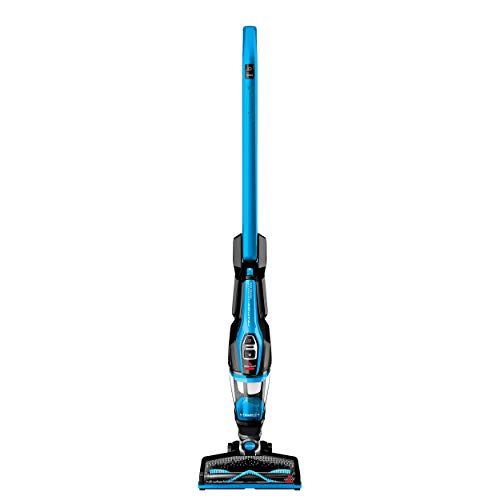
BISSELL FeatherWeight 3061
ASIN: B08LHK3RQB

Shark Rocket HV301
ASIN: B00DFBDALC

Shark Pet Cordless Stick IX141
ASIN: B07S652B12

Tineco PURE ONE S15 Essentials
ASIN: B09WYBWT38
Certain content that appears on this site comes from Amazon. This content is provided “as is” and is subject to change or removal at any time. Product images and descriptions are supplied through Amazon Creators API; confirm specifications, included accessories, floor compatibility, and availability on the current listing.
How to evaluate a floor head for hardwood
Soft rollers versus bristle brushrolls
A soft roller is designed to sweep up fine dust and larger pieces on hard floors by bringing a broad surface into contact with the floor. It can reduce the tendency of some heads to push debris forward, but it collects hair and fibers and needs regular cleaning. A bristle brushroll can work on carpet and mixed floors but may feel too aggressive if the brush cannot be turned off or adjusted. A combined head can be convenient, yet check how it behaves on the exact floor and debris you have.
Not every stick vacuum allows a roller swap. Some offer a hard-floor mode that changes motor or brush behavior; others use one head for all surfaces. If you have delicate, waxed, or uneven wood, check the floor maker’s care advice and the vacuum’s compatible-surface list. A label that says “hard floor” is broad marketing language and is not a guarantee for every finish or every brush setting. Keep wheels and rollers clean so trapped sand does not become an abrasive contact point.
Pickup at the front edge
A vacuum head can have strong suction yet struggle to pull a pea-sized crumb under its front lip. On hard floors, look for a design that leaves an adequate intake path and does not form a large sealed gap that pushes debris ahead. Review manufacturer diagrams and user guidance for large particles. Use a crevice tool or handheld mode for a pile that the floor head repeatedly shoves; repeated forward passes can scatter debris farther across a room.
Test with common dry debris that is safe to vacuum, such as cereal pieces or crumbs, in a small area. Watch whether the head captures on a forward pass or only when pulled backward. Do not use sharp, wet, hot, or damaging materials as test debris. If a head is poor at larger pieces, that does not necessarily make the whole vacuum unsuitable for dust and fine debris; it may simply mean you need a different technique or tool.
Edge cleaning and furniture clearance
Wood floors collect dust along baseboards, under cabinets, and around table legs. A low-profile head can fit under some furniture, while an articulated stick may let you reach farther without moving chairs. Swivel steering can simplify turns but may feel loose to someone who prefers a straight path. Edge-cleaning claims vary by design, so compare the width of the head, its side suction openings, and the amount of clearance near the wall.
Measure the clearance beneath your sofa and bed if you expect to clean under them. A vacuum’s total height can hide a bulky motor body that does not slide under furniture even when the floor nozzle is low. Some folding sticks have hinges that reduce bending; those mechanisms can add bulk or change feel. Choose based on your room layout, not an isolated photo of the head sitting flat.
Weight, balance, and maneuverability
“Lightweight” can describe the complete vacuum, the detachable hand unit, or just a marketing category. For floor cleaning, the weight distribution matters: a top-heavy cordless body can tire the wrist even when the total weight is modest. A corded stick with a low motor near the floor may feel easier to push but may require a hand to manage the cord. If the manufacturer lists assembled weight and hand-vac weight separately, compare the number that matches your use.
Consider how the vacuum moves around the room. A swivel neck helps steer around chair legs and table bases. Large wheels can roll smoothly across plank seams; a small hard wheel may bump or collect grit. A wide floor head covers more area per pass but can be difficult between close furniture. A narrow head reaches tight spaces but requires more passes in an open room. The right width is a compromise between coverage and access.
Handle height and grip shape can affect comfort, especially for taller users or longer cleaning sessions. If a cordless stick has a removable hand vacuum, check where the center of mass shifts when the floor unit is converted. The same tool may feel balanced as a stick and nose-heavy in hand mode. For stairs and shelves, look at the handheld form and included attachments separately from the floor head. A vacuum that is comfortable for floors may not be comfortable overhead.
Corded or cordless for a hardwood home?
Why a corded stick can still be practical
A corded stick provides continuous operation when plugged into a supported outlet. It suits smaller homes where the cord reaches the entire floor or rooms can be cleaned in sections. There is no battery-runtime calculation or dock to reserve, and a basic corded machine can be light. The inconvenience is cable routing: the cord may snag on furniture or need to be moved between outlets. Check the cord length, plug placement, and whether a cord hook keeps it away from the floor head.
When vacuuming wood with a corded model, route the cord behind you and keep it away from chair legs and sharp corners. Do not pull the machine by the cord or use it near water. If your home has open rooms and few outlets, a short cord can interrupt cleaning more than a cordless runtime would. Think of a corded model as an always-powered tool with a path limitation.
What cordless runtime really means
Manufacturer runtime figures are often “up to” values or tied to a particular mode, battery, and attachment. A stick using a powered floor head can draw more energy than a handheld unit with no accessory. High mode may shorten runtime. Battery condition, temperature, floor type, and how much resistance the head experiences can also matter. For the Shark IX141, Shark specifies up to 40 minutes measured at the hand vacuum in standard mode without accessories; that is not a guarantee of 40 minutes with the full floor head engaged.
Estimate the cleaning area and decide whether you will vacuum one floor or a whole level. If you usually clean a small kitchen after dinner, a short battery window may be fine. If you clean a large open-plan floor with rugs and chairs, consider a replaceable battery, available spare packs, or a corded option. A charge indicator can help with planning but is not always a precise minute-by-minute meter.
Docking and storage
A wall dock keeps a cordless stick organized and easy to grab, but it requires a suitable location near an outlet. Measure the assembled height and any clearance needed to remove the vacuum or empty its bin. Check whether the dock stores the accessories you will use. If the vacuum is self-standing, it can be paused during a room without leaning against a wall, but verify how stable it is on your floor and whether the brush touches the floor while parked.
Some sticks charge only when placed on a base; others use a removable battery and an independent charger. A removable battery can be convenient if you have a spare or want to charge away from the vacuum, but that pack can add upfront cost. Follow battery storage advice and do not store lithium batteries in extreme temperatures. Empty the bin and clean the roller before long-term storage so hair and dust do not remain packed in the head.
Dust cups, filtration, and roller maintenance
Stick vacuums often use smaller dust cups than upright or canister vacuums. A compact cup keeps the body light, but a home with long hair, pets, or lots of daily debris may need frequent emptying. A transparent bin makes fill level visible; an easy-release door reduces contact with dust. Look for a filter that can be accessed without tools and check replacement cost and availability. Wash only filters that the manufacturer labels washable and let them dry fully before reinstalling.
Soft rollers need attention because they can collect hair and fibers across their full width. Some roller covers can be removed for cleaning; others must be cleaned in place. Brushrolls may include end caps where threads wrap around. Inspect the head periodically, clear wrapped hair, and remove trapped grit before it scratches a finished floor. If the vacuum’s manual recommends a maintenance interval, follow it rather than waiting for suction to drop.
Filtration systems vary. A manufacturer may describe a multi-stage filter, sealed system, or HEPA filter for a particular configuration. Confirm the exact model’s specification; do not infer a filter rating from a neighboring model in the same product family. A loaded filter can reduce airflow and pickup. Emptying a cup and cleaning a filter are part of routine ownership, so choose a design you are willing to maintain.
How to choose by hardwood layout
Small apartment or studio
In a compact space, storage size and quick access can outweigh a large bin. A light stick stored upright in a closet may cover the room in one short session. If there are only a few outlets, cordless can simplify moving between the kitchen and living area. A corded model avoids charging and may cost less to maintain but can require changing outlets. Check whether the vacuum’s parking method protects your floor and whether its head fits beneath common furniture.
Large open-plan rooms
Open-plan homes require longer continuous passes and more turning around tables, island stools, and rugs. A wider head can speed up open areas, while a swivel neck helps navigate obstacles. Battery runtime becomes more important for cordless sticks; a cord may need to cross a busy path for corded ones. Map the room’s outlet locations and consider whether the floor head can switch between hardwood and low-pile rugs without leaving debris behind.
Hardwood mixed with area rugs
Area rugs change how the floor head interacts with the surface. A powered roller may lift hair from a rug but scatter fine debris on adjacent wood. If a vacuum has a brushroll off setting or a dedicated hard-floor mode, learn how it behaves before relying on it. Consider moving a rug or using a separate attachment if the head struggles at the edge. Select a vacuum that can transition between your actual floor types rather than a hypothetical all-purpose surface.
Pets and long hair
On hardwood, hair may collect along walls and under furniture, while the same household also needs a vacuum that can handle rugs. Look for an anti-tangle design or an accessible roller, and make time to cut wrapped hair free as directed. A tangle-resistant label does not mean hair never reaches the brush. A wide soft roller can gather hair efficiently but may need cleaning across a broader surface. Compare the head’s cleaning routine and replacement availability. For more on hair-heavy households, see our dog-hair vacuum guide.
Practical test before committing
Before a return window closes, test the vacuum safely on the surfaces you own. Begin with a clean head and empty bin. Try fine dust, a few dry crumbs, and hair if relevant. Watch for debris scattering, missed edges, or the roller pushing larger pieces. Turn around furniture and guide the head beneath a cabinet edge. If the manual allows it, compare the hard-floor setting with the normal setting. Do not put abrasive grit under the head as a stress test; it can damage both floor and vacuum.
Try carrying the vacuum up stairs and lifting it for above-floor cleaning if you plan to use it that way. Check whether the wand detaches smoothly, whether the handheld mode feels balanced, and where the cord or battery sits. Empty the bin once to see whether dust falls out cleanly. Inspect the roller after several passes. These observations reveal more about day-to-day usability than a single suction number.
Common mistakes when buying a stick vacuum for wood floors
- Choosing by suction claims alone: floor-head design and debris intake affect hard-floor pickup.
- Assuming every roller is floor-safe: check the floor maker’s care guidance and the vacuum instructions.
- Ignoring the head’s leading edge: some designs can push larger crumbs rather than capture them.
- Buying the lightest model without checking pickup: a very light body can have a small cup and limited accessories.
- Forgetting outlet or runtime needs: a corded stick needs reachable outlets; a cordless one needs sufficient usable runtime.
- Assuming a detachable battery is included: package variations may sell a bare tool or different charger.
- Neglecting storage: a wall dock needs clearance and an outlet; a self-standing model needs a stable parking position.
- Not cleaning the roller: wrapped hair and trapped grit can affect pickup and floor contact.
- Using a powered brush on a delicate finish without testing: start gently and stop if the floor shows marks.
- Expecting a stick to replace every vacuum: a small cup and narrow head may not suit heavy workshop debris or a large carpeted home.
Frequently asked questions
Are stick vacuums safe for hardwood?
Many manufacturers list hard floors as a compatible surface, but the finish and head design still matter. Check both the flooring maker’s care advice and the vacuum manual. Keep the roller and wheels clean, use a suitable mode, and test a hidden area if the floor is delicate or unsealed.
Is a soft roller always better than a brushroll?
No. A soft roller can be effective on smooth floors and larger dry debris, but it may collect hair and require regular cleaning. A combination or bristle head may be more useful on rugs and mixed surfaces. Choose based on your surfaces and inspect how the head handles the debris common in your home.
Should I pick corded or cordless?
Choose corded if continuous operation and simple charging matter and the cord can reach your rooms. Choose cordless if freedom of movement and easy storage are more important, provided its runtime and charging setup match your cleaning area. There is no universally better power source.
How much runtime do I need?
Estimate the minutes required for your routine and compare them with the manufacturer’s mode-specific estimates using the floor head. Runtime measured in handheld mode or without accessories may be longer than floor cleaning. A larger home or frequent high-power use may benefit from a spare battery or a corded stick.
What is a good stick vacuum weight?
Weight preferences vary with height, grip, floor layout, and how much above-floor cleaning you do. Compare assembled weight and hand-vac weight separately. Balance also matters: a top-heavy model may feel tiring even if its listed weight is moderate. If possible, handle the vacuum assembled before deciding.
Can a stick vacuum clean area rugs?
Some models are listed for rugs and low-pile carpet, but the head must suit the pile and rug construction. A rotating brush can catch loops or fringe. Read the instructions, test a hidden edge, and use the approved setting or attachment. Do not assume a hard-floor head will work equally well on every rug.
Bottom line: let the floor head and daily handling guide the choice
The best stick vacuums for hardwood floors balance head design, weight, turning, storage, and power source. A lightweight corded model is easy to grab and always ready but may lack a swivel head or large bin. A cordless stick can simplify room-to-room cleaning but makes runtime and charging part of the routine. A sensor-assisted stick may adjust suction, while a convertible model adds handheld tasks. Compare exact variants and choose a head that suits both your wood finish and any rugs in the home.
Before buying, verify the exact ASIN/model package and manufacturer surface guidance. Check whether the roller can be adjusted or switched, how the vacuum parks and charges, and how much weight you hold during turns. Clean the head and filter regularly. For a cordless-only comparison, read our cordless hardwood vacuum guide; for broader cleaner types, start with the general vacuum guide.
Manufacturer references
- BISSELL FeatherWeight 2033 specifications
- Shark Pet Cordless Stick IX141 product details
- Tineco PURE ONE S15 Essentials specifications
- Shark Rocket HV301 product information
Certain content that appears on this site comes from Amazon. This content is provided “as is” and is subject to change or removal at any time. Product images and descriptions are supplied through Amazon Creators API; confirm exact models, specifications, floor compatibility, accessories, and availability on the current listing. This is an editorial comparison based on manufacturer information, not a hands-on product test.