Affiliate disclosure: This article contains affiliate links. If you buy through them, Daily Home Decorating may earn a commission at no additional cost to you. Product examples help with comparison; inclusion does not guarantee performance or represent a hands-on test.
Choosing among the best vacuums cleaners is less about chasing the biggest advertised suction number and more about matching the machine to your rooms, floors, cleaning routine, and maintenance habits. A compact cordless stick can make daily crumbs and pet hair easier to handle, while a corded upright may be more practical for wall-to-wall carpet. A canister vacuum is often easier to steer around furniture and can be gentle on hard floors when paired with the right head.
This guide explains how to compare vacuum types, what to check before buying, and how four recognizable models fit different needs. It is a buying guide based on product configuration and published manufacturer information, not a laboratory ranking or a claim that we personally tested these units. Product bundles can change, so use the exact model number and current listing details when comparing.
Certain content that appears on this site comes from Amazon. This content is provided “as is” and is subject to change or removal at any time. Product examples and images are supplied through Amazon Creators API; confirm specifications, included accessories, price, and availability on the current listing.
Quick answer: which vacuum style fits your home?
- Mixed floors and quick daily cleaning: a cordless stick with a powered brush head and removable battery is convenient if its runtime and bin size suit your rooms.
- Mostly carpet or a larger home: consider a corded upright with a multi-surface head, a large dust container, and a manageable hose or lift-away pod.
- Hard floors, stairs, and furniture: a canister with a soft floor tool, long hose, and useful attachments can move around obstacles without pushing a heavy body across the floor.
- Pets and a modest budget: prioritize a brush roll that can be cleaned, upholstery tools, an easy-empty bin, and readily available filters over decorative features.
How this guide evaluates vacuum choices
Vacuum shopping pages often compare machines as if every household had the same flooring and cleaning habits. That can make a high-priced flagship look like the automatic winner when a lighter or simpler machine might be more useful in a particular home. We organize this guide by practical job: versatile cordless cleaning, a corded upright, a canister for hard floors and low pile, and a budget-friendly pet-oriented upright.
We checked product identities and images through Amazon Creators API and used manufacturer information to describe general design and intended use. We do not state independent suction measurements, dust pickup scores, long-term durability results, or measured noise levels here. Those require standardized hands-on testing. Amazon listings may show a different package or revision over time; inspect included tools, seller, warranty, and return policy at checkout.
The word “best” also depends on your constraints. A heavy machine may clean well but be impractical on stairs. A light cordless model may be easy to grab but need recharging before a whole-home deep clean. A bagged canister may control dust during disposal but adds ongoing bag purchases. Start by writing down what surfaces you clean, how much storage you have, and what maintenance you will realistically do.
Vacuum examples to compare
These products illustrate different vacuum formats rather than a claim that one model is best for every household. Confirm the current configuration, included heads, price, warranty, and compatibility on the listing before ordering.
Amazon product examples to compare

ASIN: B0GXX8KQY7

ASIN: B0B2VTZ432

ASIN: B07P97CD5T
ASIN: B07F6N3RT6
Certain content that appears on this site comes from Amazon. This content is provided “as is” and is subject to change or removal at any time. Product examples and images are supplied through Amazon Creators API; confirm specifications and availability on the current listing.
Vacuum types: what changes from one design to another?
Upright vacuums
An upright combines the handle, dust container or bag, motor, and floor head in one body. This layout can be efficient for open carpeted rooms because the brush head sits beneath the motorized unit and the user pushes the machine in a familiar forward-and-back motion. Many uprights add height adjustment, brush-roll shutoff, hose tools, or a lift-away section. Those features matter more than a long list of attachments if your home has mixed surfaces.
The tradeoffs are weight and reach. Carrying a full upright upstairs can be awkward, and a fixed head may be less nimble around low furniture than a canister wand. Check the machine’s weight, hose length, whether the brush roll can be switched off, and whether the handle reclines far enough to reach under beds. For hard floors, a powered brush that cannot be disabled may scatter debris or risk scratching delicate finishes, so confirm the floor setting.
Cordless stick vacuums
A stick vacuum is appealing when cleaning happens in short bursts: breakfast crumbs, tracked-in grit, pet fur near a chair, or a fast pass through a kitchen. Cordless operation removes the need to find an outlet and can make stairs and upholstery easier to reach. Some models convert to a handheld unit, accept powered mini tools, and display battery information. A wall dock keeps the machine accessible, but it requires a suitable spot and may not provide enclosed storage for every accessory.
Battery runtime figures are usually maximums in a particular mode and configuration. A motorized head, boost setting, dense carpet, and aging battery can reduce the time available. If you want one cordless machine for an entire home, check whether the battery is replaceable, how long charging takes, whether a second battery is available, and how large the dust bin is. If you have thick carpet in several rooms, compare a cordless model with a corded upright before assuming portability will outweigh a shorter cleaning window.
Canister vacuums
A canister keeps the motor and dust container in a separate wheeled body connected to a hose and wand. The wand can feel light in the hand, and the hose helps clean stairs, drapes, shelves, cars, and furniture without lifting the main unit. A canister is often a good match for hard floors because a soft parquet head can glide without an aggressive brush roll. Bagged versions can make disposal more contained, though replacement bags add a recurring cost and must be available for the exact model.
Canisters involve a different movement pattern: pull the body behind you, guide the hose, and store several pieces together. A small apartment with tight closets may not have room for the body, wand, floor head, and attachments. Check the cord rewind, caster design, hose reach, parking position, and storage dimensions. For plush carpet, a pure-suction head may not agitate pile enough; seek a compatible powered or turbo brush and verify whether the package includes it.
Robot and handheld vacuums
Robot vacuums can maintain open floors between deeper cleaning sessions, but they do not remove the need for a full-size vacuum in most homes. Cables, loose rugs, thresholds, pet bowls, and chair legs can complicate navigation. A robot is most useful when its route is predictable and the home can be prepared. Handheld vacuums are convenient for cars, stairs, upholstery, and small spills, but their small bins and short reach usually make them supplementary rather than primary machines.
What to compare before you buy
Floor head and floor compatibility
The floor head determines how a vacuum contacts the surface, so inspect it closely. A brush roll can lift debris and hair from carpet, but long fibers can wrap around it and require cleaning. Hard-floor heads may use soft bristles or a roller to collect fine dust without scattering it. Multi-surface heads try to balance both jobs, sometimes using gates or automatic adjustment. These are design approaches, not a guarantee that one head will be ideal on every floor.
Homes with several floor types should look for a clear way to switch modes or change heads. If the vacuum has a powered brush, check whether it can be shut off for delicate rugs and smooth flooring. For shag or looped rugs, use the manufacturer’s guidance and test cautiously in an inconspicuous area. Strong suction can make a high-pile rug difficult to push even when the brush is off. A suction release or adjustable setting can help, though it may reduce debris pickup.
Filtration and dust containment
Filtration claims need careful reading. A filter may capture fine particles inside the vacuum, but leaks around seals or an open dust cup during emptying affect the overall experience. A sealed-system claim describes the design’s effort to prevent air from bypassing filtration; it should not be confused with medical certification or a promise to resolve allergies. If dust sensitivity is important, verify the exact filter standard, replacement interval, sealing information, and disposal process for the specific model.
Bagged machines keep collected debris in a replaceable bag, which can be convenient for households that prefer not to empty a dusty cup. Bagless machines avoid bag purchases but require regular bin washing or wiping and filter care. Emptying outdoors may be more comfortable for some users, but follow the manual and avoid washing parts that are not labeled washable. A vacuum with a washable filter still needs time to dry fully before reuse.
Weight, reach, and storage
Weight is not just a number on the listing. Consider whether you carry the machine between floors, lift it into a closet, or hold the wand above shoulder level to clean corners. Measure the storage area, including space for the floor head, hose, dock, and charger. A tall upright can fit a narrow closet but be difficult to park in a small utility cupboard. A cordless dock keeps a stick vacuum ready while taking wall space and requiring access to an outlet.
Reach depends on cord length, hose length, wand design, and attachments. A long cord reduces outlet changes but can trail across walkways. A long hose makes stair cleaning easier but may be cumbersome to store. If you regularly clean furniture, compare the upholstery tool’s width and whether it includes a motorized brush. A narrow crevice tool is useful around baseboards and between cushions; a dusting brush is better for shelves, lampshades, and trim.
Noise, controls, and handling
Noise ratings are not always stated in a comparable way, so read independent measurements when quiet operation is essential. Consider when you vacuum: during naps, remote work, or in a shared building. A lower suction mode may reduce noise but also alter pickup, so treat it as a convenience setting rather than an exact performance equivalent. Handle shape, trigger style, steering, and switch placement can affect comfort over a whole-home session.
Some cordless sticks use a hold-to-run trigger while others have a power button. One is not universally better; users with hand pain may prefer not to squeeze continuously. A readable display can show remaining time or maintenance notices, but it cannot replace checking the filter and brush. Controls should be reachable without twisting your wrist, and the head should pivot smoothly around table legs without forcing you to bend sharply.
Maintenance and ownership cost
Look up the price and availability of filters, bags, brush rolls, batteries, and replacement heads before buying. A low purchase price can become less attractive if parts are difficult to find or if the machine needs an expensive proprietary battery. A premium model can also cost more to maintain, especially if accessories are sold separately. The sensible comparison is total expected ownership cost, not simply the current sale price.
Maintenance is part of performance. A clogged filter, tangled brush, or full bin can reduce airflow or cause the machine to work harder. Ask yourself whether you are willing to remove hair from a roller, clean a filter, or replace a bag on the schedule in the manual. Choose a model whose routine you can maintain. A simpler vacuum that gets cleaned regularly may be more dependable in practice than a complex one that stays clogged because maintenance feels difficult.
Four vacuum cleaners for different household needs
Dyson V15 Detect: a feature-rich cordless option
The V15 Detect is a premium cordless stick designed for users who want a grab-and-go machine with tools for mixed surfaces. Dyson’s product information describes a hard-floor head that illuminates fine dust, a powered head for multiple surfaces, and a display that reports picked-up particles and remaining runtime. The product can convert for above-floor jobs, which is useful for stairs, furniture, and car interiors. A removable battery and included heads vary by bundle, so confirm the exact Amazon listing rather than assuming every package is identical.
This style is most compelling when daily convenience matters and the home can be cleaned in several shorter sessions. It can reduce the friction of hauling out a large upright for a small mess. It is less automatically suitable for a large house with thick carpet if the owner expects one charge to handle a complete deep clean. Boost mode may shorten runtime, and the bin needs more frequent emptying than a full-size upright. Consider its cost alongside replacement batteries, filters, and accessory availability.
Before purchasing, confirm the model suffix, floor heads, battery arrangement, filtration details, and warranty. The word “Detect” appears in multiple Dyson product names, and included accessories change between packages. A buyer who mostly cleans hard floors may value the soft head; someone with rugs and pets may focus on the powered head and mini motorized tool. For a home with multiple floors, check whether a second battery is practical and supported for that exact configuration.
Shark Stratos upright AZ3002: a corded, full-size alternative
The Shark Stratos AZ3002 listing identifies a corded upright with Powered Lift-Away, a sealed HEPA system, DuoClean and PowerFins branding, a self-cleaning brush roll, odor neutralizer, headlights, and included tools. Those features suit a household that wants an upright as its main machine and values a powered floor head plus the ability to lift a section for stairs or above-floor cleaning. Its cord avoids battery-runtime limits, though it introduces outlet changes and cable management.
Do not assume “self-cleaning” means maintenance-free. Long hair and threads can still collect around edges or other moving parts, and filters still need the care described in the manual. The machine’s weight and dimensions matter if you carry it up stairs or store it in a narrow closet. Confirm the bundle’s attachments and warranty, and check how the lift-away section handles when detached. A full-size upright may be a better primary fit for carpeted space than for a home dominated by delicate hard floors.
For hard floors, review the head’s operating mode and manufacturer guidance for the finish you have. Headlights can help reveal debris in dim spaces, but they do not replace methodical passes. If your rooms have many chairs or low furniture, compare steering and reach in product documentation or at a local retailer. A corded model makes sense only if you are comfortable routing the cable safely and plugging it into outlets that cover your regular cleaning path.
Miele Classic C1 Pure Suction: a canister for hard floors and low pile
The Classic C1 Pure Suction is a bagged canister model intended for hard floors and low-pile carpet. Its split-body design separates the canister from the wand, and the listing describes a combination floor head rather than an integrated powered brush. That can be an advantage for smooth surfaces and users who want a light wand in hand, but shoppers with plush carpet should understand that a pure-suction setup differs from a powered carpet-cleaning head. Check the specific included tools and whether a suitable brush is compatible before ordering.
Bagged disposal may appeal to households that would rather remove a sealed bag than shake dust from a bin. The tradeoff is recurring supply cost and the need to buy the correct bag type. Canister vacuums also require space for the body, hose, wand, and floor head. If you have stairs, a canister’s hose-and-wand reach can be convenient, though the body must be positioned securely so it does not tumble down steps. Store it in a way that protects the hose from sharp bends.
This model is most relevant for buyers who prioritize hard-floor care, light wand movement, and a traditional bagged system over a cordless format. It is not the right answer simply because it is a Miele; match the suction-only head to your actual carpeting. Ask whether the kit includes tools you need for upholstery, curtains, or narrow spaces, and calculate bag and filter cost over time. Manufacturer documentation and the current listing should be the final reference for included accessories.
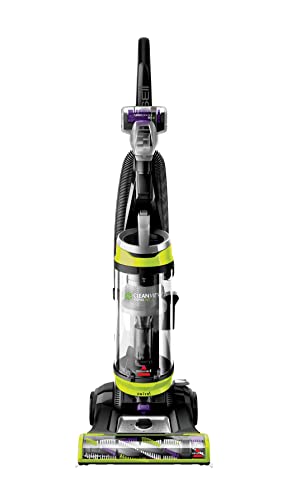
BISSELL CleanView Swivel Pet 2252: a straightforward pet-oriented upright
The CleanView Swivel Pet 2252 is an upright positioned around pet hair and everyday floor cleaning. Its product support information names the model and provides guidance for brush-roll, suction, and power issues. The Amazon listing describes a swivel design, triple-action brush roll, scatter-free hard-floor feature, and tools for upholstery. This may appeal to a household looking for an accessible corded upright without the larger feature set or premium price of a flagship cordless machine.
Before buying, check the package and current manual for the exact attachment set, filter replacement, bin-emptying steps, and brush-roll care. Pet hair can wrap around any rotating brush; a tool-free or easy-access roller makes maintenance less frustrating. A budget vacuum should still fit your floor types. If you have delicate hardwood, confirm that the brush can be stopped or that the head has a hard-floor mode. For thick carpet or large homes, consider bin capacity, cord reach, and how often you are comfortable emptying it.
Its value is in a clear job description: an upright for routine carpets and floors, with pet-related tools, rather than a machine promising to replace every cleaning tool in the house. If you own a shedding dog or cat, also vacuum upholstery and pet beds with a suitable attachment and clean the filter more often if the manual advises it. A vacuum cannot remove embedded odor from fabric by itself; treat stains and wash removable covers using their care labels.
Choose based on your actual floors
Hardwood, laminate, and tile
For sealed hardwood and laminate, use a head intended for hard floors and avoid a stiff spinning brush unless the manufacturer says it is safe. Fine sand and grit can scratch a finish when dragged under a head. Pick up larger debris first if needed, use a slow pass, and inspect the roller for trapped particles. On tile, grout lines can trap dust that a smooth head might bridge; a brush attachment or crevice tool can help along edges. Do not vacuum wet spills unless the unit is explicitly designed for liquids.
For a room with both hard surfaces and area rugs, switching heads may give better control than leaving a powered brush running everywhere. Check the rug’s pile and backing; an aggressive head can pull loose fibers or fringe. If the head sticks, use lower suction or choose another attachment instead of forcing it. Our guide to rugs for a living room can help you consider pile, texture, and placement alongside cleaning needs.
Carpet and area rugs
Carpet cleaning depends on agitation, airflow, and repeated passes. A powered brush roll helps loosen debris from pile, but the right height and speed vary with carpet density. On thick carpet, an adjustable head can be easier to push and may reduce the chance of pulling fibers. Low-pile rugs may work with a combination head, but fringe and delicate weaves need a gentler approach. Follow the rug maker’s care guidance before using a rotating brush.
Vacuum slowly enough for the head to collect debris and make overlapping passes in high-traffic areas. Move light furniture, but use floor protectors when repositioning heavier pieces. A vacuum picks up dry debris; it does not replace periodic deep carpet cleaning when soils are embedded. A dedicated spot cleaner can address fresh spills, but test cleaning solution on an inconspicuous area and follow fabric or carpet instructions.
Upholstery, stairs, and corners
Above-floor cleaning is where tools can transform a vacuum from a floor-only machine into a more versatile home cleaner. An upholstery tool handles loose dust and crumbs, while a small motorized brush can help with lint and pet fur on durable fabric. Use a soft dusting brush on lampshades and trim, and a crevice tool around sofa cushions, baseboards, and window tracks. Avoid using a motorized tool on delicate fabrics unless the maker approves.
Stairs need a stable working position. Keep the cord behind you and avoid balancing a heavy upright on a step. A removable wand or handheld configuration can make the task easier, but support the machine on a level landing and use a short hose if available. For general fabric care, see our guide to cleaning patio furniture cushions; vacuuming removes loose debris, while stains may require a fabric-safe method.
Match the vacuum to your household
Homes with pets
Pet owners should look beyond the word “pet” on a product label. Useful factors include brush-roll access, a motorized upholstery tool, sealed dust handling, bin capacity, and filter replacement cost. A long-haired dog may wrap fur around a brush, while short hair can cling to fabric and collect in corners. A vacuum’s head has to reach the places where the animal rests, and the owner has to empty and maintain the machine often enough to keep airflow clear.
For allergens, avoid treating any single filter claim as a guarantee. A well-sealed system, suitable filtration, and careful bag or bin disposal all contribute to the experience. If someone in your household has a medical allergy or respiratory condition, use their clinician’s advice and the manufacturer’s specifications when selecting equipment. Consider keeping the pet’s bed washable and vacuuming it separately with a clean attachment to avoid transferring fur from one room to another.
Small apartments
Small homes reward compact storage and easy access. A cordless stick can be convenient when there is little room for a bulky upright, but docking space and charging access must still be planned. A lightweight canister may fit a narrow closet if its hose and wand store neatly. A small dust bin means more frequent emptying, which is acceptable if cleaning sessions are short. Avoid buying a machine based on a showroom footprint alone; measure the assembled height and the space needed for the handle or dock.
Apartment dwellers should also consider noise, shared walls, and cord reach. A long cable can cross a hallway and create a trip hazard, while a cordless machine can eliminate that concern. If there are multiple floor types, decide whether swapping heads is tolerable or whether an all-floor head is more practical. Keep the charger, attachments, and replacement filter in a labeled spot so the machine remains easy to use instead of becoming an inconvenient object stored in a closet.
Large or multilevel homes
A large house can benefit from a corded main vacuum, a second lightweight machine on another floor, or a cordless model with a spare battery. There is no single right setup; think about where outlets are, how much carpeting exists, and whether you will carry one machine between levels. A large bin reduces interruptions, while a long cord covers more area between outlet changes. If you have stairs, safe handling may matter more than maximum capacity.
In a multilevel home, keep a small attachment kit where it is needed and avoid storing the vacuum at the bottom of a staircase if carrying it up is inconvenient. One vacuum per floor can be more practical than one expensive machine used rarely. If you choose a single machine, prioritize a manageable weight and secure parking position. Review battery replacement and service availability before relying on a cordless machine for every floor.
How to get better cleaning results
Start by clearing cords, toys, and small items from the floor. Pick up large debris by hand when it could jam a head. Use the correct attachment and mode, then move in overlapping, deliberate passes. For carpet, slow passes can give a brush more time to work; for hard floors, avoid pushing grit across a delicate finish. Use a crevice tool around edges before making a final pass through the center of the room.
Work from the far side of the room toward the exit so you do not walk over freshly cleaned areas. Vacuum high-traffic strips in two directions occasionally to reach debris settled between carpet fibers. Move cushions and clean seams with a small tool, checking the fabric label first. Lampshades, baseboards, and shelf tops collect dust too; use a soft brush and a low suction setting where appropriate so the tool does not pull at fabric or knock objects over.
For homes with area rugs, vacuum the underside and floor beneath periodically if the rug can be moved safely. Use furniture glides rather than dragging heavy tables and sofas. Before vacuuming a new rug, check care instructions and test a small section with the gentlest compatible head. Some fibers shed naturally at first, and repeated aggressive passes can worsen it. The same principle applies to runners and stair treads: stability first, then gentle cleaning with the appropriate tool.
Routine care that protects performance
Read the manual for bin fill lines, bag replacement, filter washing, and brush-roll access. Empty a bagless canister before debris reaches the fill mark. Remove hair from the brush roll with the method provided, keeping fingers away from blades or cutters. Never rinse a filter unless it is labeled washable, and allow a washable filter to dry completely before reinstalling it. A damp filter can damage the machine or encourage odor and mildew.
Check the hose and wand when suction suddenly drops. A toy, paper wad, or clump of hair can block airflow. Turn off and unplug a corded unit before inspecting the head, and remove the battery from a cordless vacuum if the manual directs you to. Do not reach into a powered brush while it is connected. If a vacuum emits a burning smell, makes an unusual sound, or becomes excessively hot, stop using it and follow the manufacturer’s troubleshooting steps.
Keep the floor head’s wheels and brush clean, and replace worn belts or filters on the schedule stated by the manufacturer. Store the vacuum in a dry area away from direct heat. Avoid winding a cord tightly around sharp corners, and do not bend a flexible hose sharply. If you want a living space that stays easier to clean, choose furniture with enough clearance for the vacuum head and rugs that suit your household traffic. Our article on round mid-century coffee tables discusses shapes and room layout that can leave better movement paths.
Common vacuum-buying mistakes
- Buying by wattage alone: motor input does not directly tell you how well a head collects debris from your floor. Look at design, head compatibility, filtration, and independent testing instead.
- Ignoring carpet pile: a pure-suction floor tool may not be ideal for deep carpet, and a stiff powered brush may not suit delicate rugs.
- Assuming maximum runtime is typical: the highest advertised runtime may refer to low power or a non-motorized tool. Compare the mode you will actually use.
- Overlooking replacement costs: filters, bags, batteries, and proprietary tools can change the long-term cost.
- Choosing features you will not maintain: more sensors and settings do not help if cleaning the brush and filters is frustrating.
- Skipping storage measurements: confirm that the full assembly, charging dock, or canister body fits your available space.
Frequently asked questions
What is the best vacuum cleaner for most homes?
There is no single best choice for every floor plan. A mixed-floor home that values convenience may prefer a cordless stick with separate or adjustable heads. A large carpeted home may be better served by a corded upright. A canister can suit hard floors and above-floor cleaning, while a budget upright can cover routine floor care at a lower entry cost. Start with your most common cleaning job, then check weight, maintenance, and accessories.
Are cordless vacuums powerful enough to be a primary vacuum?
Some cordless models can serve as a primary vacuum in smaller homes or homes with mostly hard floors, especially when their powered head and battery configuration suit the space. The practical limits are runtime, bin capacity, and how the unit handles dense carpet. A maximum-runtime claim is not the same as full-power runtime. Check replacement-battery availability and compare the cleaning time you need with the manufacturer’s figures for the exact configuration.
Should I choose a bagged or bagless vacuum?
Bagged machines keep collected debris in a replaceable container, which some people find cleaner to dispose of. They require compatible replacement bags and add a recurring expense. Bagless machines avoid those purchases but require regular bin and filter care, and emptying can release dust. Choose based on disposal preference, part availability, and maintenance you will consistently do rather than assuming one format is universally more hygienic.
Which vacuum type is best for hardwood floors?
Look for a soft hard-floor head or a brush-roll setting that can be turned off. A canister with a parquet-style tool is one option; some sticks and uprights also offer a soft roller or dedicated hard-floor head. Keep grit off the roller and follow the flooring manufacturer’s guidance. Do not use a wet pickup or mop function unless the vacuum is specifically designed for liquids and the floor is compatible.
Do I need a HEPA vacuum for pet hair?
Pet hair pickup and fine-particle filtration are separate considerations. A powered brush and upholstery tool address hair on surfaces, while filtration and sealing affect fine dust handling. Read the exact product’s filtration specifications and the manufacturer’s definition of its sealed system. If allergies are a medical concern, speak with a healthcare professional and follow documented filtration ratings rather than relying on a marketing phrase alone.
How often should I replace vacuum filters?
Replacement timing differs by model, filter type, and cleaning frequency. Follow the manual: some filters are washable, some are not, and each has a different service interval. Inspect filters regularly, clean only as directed, and let washable parts dry completely. Replace a filter if it is damaged, develops persistent odor, or reaches the stated interval. Keep the exact model number when ordering parts to avoid a poor fit.
Is an upright or canister vacuum better for stairs?
Neither format is automatically better. A lightweight removable wand or handheld conversion can help, while a canister hose may extend reach without lifting the body. For an upright, do not balance the full machine on a stair; use a stable landing and supported hose or attachment. Compare overall weight, hose length, included tools, and how safely the machine can be positioned during stair cleaning.
What should I check on an Amazon vacuum listing?
Verify the model number, seller, package contents, warranty, return policy, and current price. Confirm that photos and title refer to the same configuration, especially when several color or accessory bundles share a product family. Check whether replacement bags, filters, brush rolls, or batteries are available for that model. Product information and availability can change, so the listing at the time of purchase is the final reference.
Bottom line: make the vacuum easy to use and maintain
The most useful vacuum is the one that matches your floors and that you will actually take out, empty, and maintain. For a quick daily clean, cordless convenience can be worth the tradeoffs. For large carpeted areas, an upright can provide a longer uninterrupted session. A canister is a strong format to consider for hard floors and above-floor reach, and an affordable upright can cover everyday tasks without premium extras. Check heads, filtration, maintenance parts, storage, and warranty before comparing brands.
Use product examples as starting points, not automatic endorsements. Confirm the exact model and included tools, review manufacturer care instructions, and compare independent testing when you want performance claims beyond published specifications. Clean at a pace suited to the floor, keep the brush and filter clear, and vacuum rugs and upholstery with the appropriate attachment to help your rooms stay comfortable.