Best Band Saws: A Practical Guide to Choosing the Right Saw
The best band saws make jobs possible that are awkward on many other shop saws: cutting smooth curves, resawing thicker stock, and following a marked shape through wood. A band saw can also cut metal when the machine and blade are specifically designed for that material. The tool uses a continuous loop of toothed steel running over two wheels, which creates a narrow kerf and supports controlled curved cuts. Its flexibility is useful, but it also means blade selection, tension, tracking, guide setup, and feeding technique matter.
Choosing a band saw starts with the work, not the largest motor number or the tallest frame. A compact benchtop model can be easy to store and appropriate for small parts, while a floor-standing saw may offer more throat depth, resaw height, and table support. Horizontal metal-cutting saws have a different layout and purpose. This guide explains those differences, how to compare blades and machine features, and what to check before buying. It is a research-based buying guide, not a hands-on ranking of specific models. Verify current specifications, included accessories, safety equipment, and manual instructions for any saw you consider.
Affiliate disclosure: DailyHomeDecorating.com may earn a commission from qualifying purchases through links in this article. This does not change the price you pay.
Amazon product examples to compare

ASIN: B0BK2V91VW
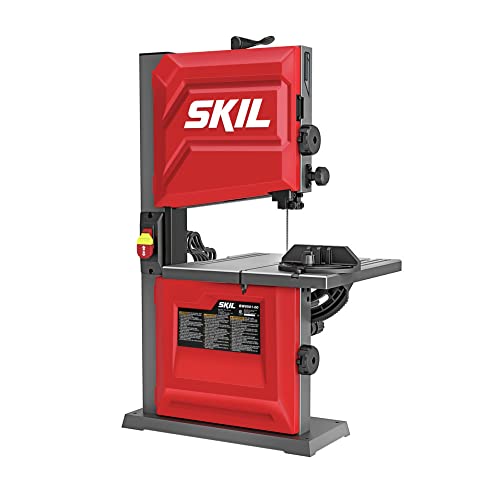
ASIN: B0BFR2BJQP

ASIN: B0FYJ6T9PH
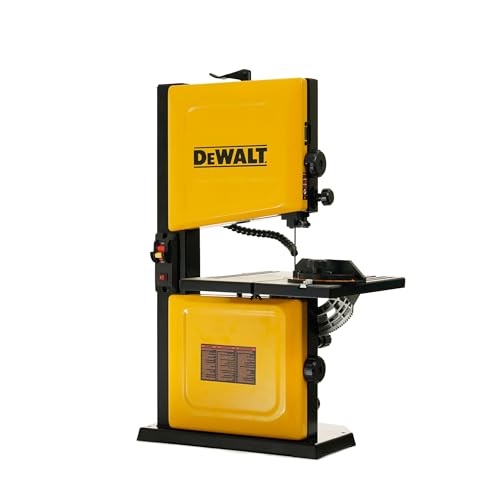
ASIN: B0GRWFVDQL
Certain content that appears on this site comes from Amazon. This content is provided “as is” and is subject to change or removal at any time. Product examples and images are supplied through Amazon Creators API; confirm specifications and availability on the current listing.
At a glance: which band saw category fits?
| Band saw type | Typical use | What to compare | Common limitation |
|---|---|---|---|
| Benchtop woodworking | Small curves, craft parts, light shop work | Throat depth, resaw height, table tilt, blade range | Limited capacity and support for large stock |
| Floor-standing woodworking | Furniture parts, larger curves, resawing | Frame stiffness, capacity, guides, table and fence | Floor space, weight, and setup cost |
| Portable jobsite band saw | Cutting metal stock and pipe at a jobsite | Cutting capacity, grip, support, blade replacement | Not a substitute for a woodworking resaw machine |
| Horizontal metal-cutting | Repeatable crosscuts of metal bar, tube, or shapes | Vise, capacity, feed control, blade and speed range | Large footprint and material-specific setup |
Names are not fully standardized across manufacturers. Compare the actual machine design and manual rather than assuming that any product called a “band saw” can perform every band-saw task. Woodworking and metal-cutting models can differ in blade speed, frame, table, guides, vise, coolant needs, and intended stock.
What makes a band saw different?
A band saw blade is a continuous loop. On a typical vertical woodworking model, the blade travels through a slot in the table while the operator guides stock into the cutting edge. The narrow blade can follow curves that are difficult or impossible to cut with a straight-running table saw blade. It can also remove material from the inside of a shape after a starter opening is made, and a suitable wide blade can resaw boards into thinner pieces within the saw’s rated capacity.
A table saw is usually the better choice for long, straight rips and repeatable panel widths. A band saw is more suited to curved outlines, irregular stock, and some resaw work. For branches and pruning, use outdoor cutting tools designed for that job, such as the hand saws for gardening, pole saws for tree trimming, or loppers for thick branches guide.
Band saws are not automatically safer because the blade moves in a continuous loop or because the cut appears slower. The cutting edge remains exposed at the point where stock meets the blade. Fingers can approach that point when small pieces are steered, and a damaged or incorrectly tensioned blade can break. Correct guards, a properly adjusted upper guide, an appropriate blade, stable stock, and careful hand placement remain essential.
Woodworking band saw types
Benchtop band saws
Benchtop models are compact woodworking saws that can work well for small craft parts, narrow curves, and light-duty shop jobs. Their size may make them a reasonable choice when a permanent floor machine is impractical. They can be stored or moved more easily than many floor models, although their weight, mounting needs, and required operating space should still be checked. A benchtop saw must sit on a stable surface or a compatible stand so vibration does not affect control.
The limitation is capacity. A smaller frame often restricts the maximum width of material that fits between the blade and frame, known as throat capacity, and the height of stock that can pass beneath the upper guide, often called resaw capacity. Those numbers are not the only practical limits: the table, motor, blade options, and machine stiffness affect how manageable a cut will be. Do not select a small saw for thick stock simply because its product page lists a theoretical maximum height. Check the manual, compatible blade widths, and the type of cuts the manufacturer permits.
Floor-standing woodworking band saws
Floor-standing models are designed for a dedicated shop and may offer more throat capacity, taller resaw clearance, a larger table, or a heavier frame. They can suit furniture makers and serious hobbyists who regularly cut curves or resaw lumber. The actual feature set varies, so compare the saw’s documented capacity, guide design, blade tensioning system, table support, and available fence or resaw accessories.
A larger frame does not guarantee better results by itself. The blade must be appropriate and installed correctly; tracking and guides must be set up; the stock must be supported; and feed pressure must allow the blade to cut without twisting. A wide blade can be useful for resawing but may not handle tight curves. Plan to change blades for different jobs if the work demands different widths or tooth patterns.
Portable and horizontal metal-cutting saws
Portable band saws are commonly used by tradespeople for cutting metal tube, rod, conduit, or other stock, but their rated material and capacity depend on the exact model and blade. Some can be secured in a stand for repeated cuts; others are intended to be hand-held and need a firm grip and a stable workpiece. Check how the saw is supported, how the blade is changed, and whether the intended metal type and profile are approved by the manufacturer.
Horizontal metal-cutting saws generally clamp material in a vise while the blade lowers through the work. This can make them useful for repeatable cuts in metal stock, but their operation and setup are different from a vertical woodworking saw. The vise must secure stock without distorting it, and the machine’s speed, blade, coolant, and feed settings must match the material. Never assume that a woodworking band saw can safely or effectively cut metal just because a metal blade appears to fit.
How to choose among the best band saws
1. Identify the material and cut geometry
List the materials and shapes you expect to cut most often. Curved plywood templates, solid wood furniture parts, thick lumber for resawing, and steel tubing call for different saw designs and blades. Write down the largest workpiece you expect to handle, both in height and in width from the blade to the frame. Include the tightest curve you need to cut. Capacity is useful only when the saw and blade can make that cut without forcing stock or pushing the blade into a radius that is too small.
For wood, also consider whether the stock is rough, warped, glued-up, or already surfaced. Irregular stock can shift during a cut and may require a sled, carrier, or other approved support. For metal, identify the alloy, profile, wall thickness, and whether cuts will be made dry or with a manufacturer-approved coolant system. If you work with several materials, choose a machine specifically designed for that range or plan on separate tools.
2. Compare throat and resaw capacity
Throat capacity is the approximate distance from the blade to the frame and affects the width of stock that can be passed through for a cut. Resaw capacity refers to the vertical clearance under the upper guide and affects the height of stock. Manufacturers may describe these values differently, so consult the dimension drawings and manual. Measure your project stock and include space for a fence, guide, jig, or workholding setup where needed.
Capacity should not be interpreted as a promise that the machine will cut every material at that size easily. A saw may accommodate tall stock while lacking a blade, power, or frame rigidity that suits a demanding resaw operation. A wide board may fit through the throat yet be hard to control with a small table. Choose a useful margin rather than planning to work constantly at the machine’s maximum, and ensure the stock can be fed with stable body position and support.
3. Inspect frame and table construction
The frame holds the wheels and keeps the blade path stable under tension. Look for manufacturer documentation on frame construction and rated blade sizes. On a floor model, consider the base, weight, leveling, and whether it can be moved safely into the workshop. On a benchtop saw, consider how it mounts and whether the bench can support it without wobbling. Heavier construction may reduce vibration but also adds transportation and space demands.
The table should give the stock a firm, reasonably smooth surface and tilt or lock as specified by the saw’s design. Check the size of the table and the support offered around the blade slot. A small table may make large panels or irregular parts more difficult to guide. A fence can support repeatable straight cuts, while a miter gauge or jig may help with other tasks. Confirm that accessories are compatible with the specific table, slots, and model.
4. Evaluate blade guides and tracking adjustment
Blade guides support the blade close to the work and help control side movement. Designs differ and can use bearings, blocks, or other guide systems. What matters is that the guide can be adjusted according to the manual, stays in good condition, and is set close enough to support the blade while allowing the stock to pass. Check whether the upper guide moves smoothly and can be positioned for different stock heights.
Tracking adjustment keeps the blade positioned on the wheels. A clear procedure and accessible controls make setup easier, but every adjustment should follow the manufacturer’s instructions. The blade should not wander, rub against guards, or ride improperly on the wheels. Check that the saw includes a tension indicator or another way to establish proper tension, and determine which blade widths the tension system supports. A convenient setup does not eliminate the need to inspect tracking after blade changes.
5. Look at blade tensioning and changing
Blade tension affects tracking and cut behavior. Some saws provide a tension scale or indicator; others require a method described in the manual. Do not use an internet rule of thumb as a replacement for model-specific instructions. Too little or too much tension can create problems and may damage the blade or saw. A quick-release lever can reduce setup time when changing blades, but learn how it works and how to restore the required tension afterward.
Changing a band saw blade can involve opening wheel covers, moving the blade through guides, and checking its direction and tracking. The manual should explain how to isolate power, protect hands, install the correct blade, and close covers. Compare access to the blade path and the availability of replacement blades before buying. If a blade change requires awkward handling or uncertain adjustments, ask the manufacturer or a qualified instructor to demonstrate the process.
6. Consider motor, speed, and power requirements
Match the motor and speed range to the material and use described by the manufacturer. Woodworking saws and metal-cutting saws may operate at different blade speeds. Some machines offer variable speed or speed changes for different materials, but the supported settings must be checked in the manual. Never improvise a speed or drive modification outside approved configurations.
Check voltage, amperage, circuit, plug, and extension-cord guidance. A motor rating alone does not explain how a saw performs on a demanding cut. Blade sharpness, tooth pitch, stock condition, feed pressure, and support also matter. If installation requires electrical work, use a qualified electrician and follow local requirements. Avoid adapters that remove grounding, damaged cords, or undersized extension cords.
7. Check dust collection and debris control
Woodworking band saws create sawdust and chips. Look for the location and size of dust ports, then compare them with your collection equipment. A dust port can help but does not guarantee all airborne dust will be captured. Empty collection containers and maintain filters according to the equipment makers. Use appropriate ventilation and respiratory protection for the work and material.
Metal-cutting work can create chips, hot particles, and residue. Follow the saw and material instructions for cleanup and any coolant. Do not use a shop vacuum or dust system for materials or debris it is not rated to handle. The system should be appropriate to the material and environment, and hot chips should be allowed to cool and managed as the manufacturer directs.
8. Factor in accessories, service, and workspace
Some saws include a fence, miter gauge, stand, work light, blade, or storage, while others may require separate purchases. Verify exactly what is included in the selected package. Confirm replacement blades, tires, guides, bearings, and other wear parts are available for the model. Check warranty coverage, service contacts, and the manufacturer’s guidance on maintenance and repairs.
Measure the full footprint, including the space needed to feed long material and stand comfortably. A vertical band saw may take less room than a long table saw, but stock may still extend beyond the table in multiple directions. A horizontal saw requires room for its vise and for loading material. Make a paper or tape outline on the floor before buying a large machine, and ensure that doorways and stairs can accommodate delivery.
Band saw blades: width, teeth, and material
Blade width and curve radius
Blade width affects how tightly the saw can turn and how stable the blade is on a straight or resaw cut. A narrow blade can follow a tighter curve, while a wider blade generally resists twisting and can be more suitable for straight cuts or resawing, provided the saw supports it. The exact minimum radius depends on blade width, tooth design, material thickness, and the saw’s capabilities. Check the blade manufacturer’s chart and the saw manual rather than relying on a universal radius claim.
When a curve is tighter than the blade can follow, forcing the stock sideways can twist the blade, bind the cut, or damage teeth. Plan the shape with relief cuts that remove waste and allow the workpiece to turn gradually, as appropriate to the operation. Practice on scrap and use a pattern or template that leaves room for the cut line. A blade that is too wide for the curve is not fixed by applying more steering pressure.
Teeth per inch and tooth pattern
Teeth per inch, often abbreviated TPI, influences how a blade engages the stock. A finer tooth pitch may create a smoother cut in thinner material but can clear chips less effectively in thick stock. A coarser pitch can provide more gullets for chip removal in thicker material but may leave a rougher finish. The correct choice depends on material thickness, feed rate, and the blade maker’s recommendations.
Tooth patterns such as regular, skip, or hook are designed for different cutting behavior. They should be selected using manufacturer guidance for the material and operation. Do not assume that one tooth pattern will be ideal for every curve, resaw, and material. For metal, choose a blade with the appropriate tooth pitch and material compatibility for the stock profile and thickness; a blade that is too coarse can engage too few teeth, while a very fine blade can pack chips under unsuitable conditions.
Blade material and tooth set
Blades can differ in steel, tooth hardening, backing, and construction. These characteristics affect durability, flexibility, and price. Bimetal blades are commonly offered for metal-cutting applications, while woodworking blades may use different tooth materials and geometries. Compare a blade’s intended application, compatible saw range, weld quality, length, width, and thickness to the machine’s specifications.
Tooth set—the alternating offset of teeth—creates clearance for the blade body as it moves through material. It can influence kerf and cut finish. The set and tooth shape should be suitable for the work and not altered casually. Do not install a blade that exceeds the saw’s maximum supported width or speed. Keep packaging or model information available so you can reorder the correct size later.
Choosing a blade for the task
For tight curves, start with a narrower blade within the saw’s approved range, and verify the blade chart’s radius guidance. For resawing, use a wider blade the machine can tension correctly and that has a tooth pattern suitable for the stock thickness. For general-purpose shop work, a middle-width blade may offer a compromise, but that does not make it ideal for every cut. Keep a small selection of task-specific blades when you switch frequently between curves and straight cuts.
For metal, use a blade and speed approved for the exact machine and material. Clamp stock securely and follow the saw’s guidance for coolant, feed pressure, and blade break-in where applicable. A blade designed for wood should not be used to cut metal unless the manufacturer explicitly rates that exact blade for the job. Similarly, a metal-cutting blade is not automatically the right choice for woodworking.
Safety and setup for band saws
The moving blade is exposed at the point where stock is cut, so keeping hands clear and setting the guide near the work are essential. OSHA’s band-saw guidance identifies blade contact as a common injury mechanism and recommends guarding the blade except at the point of operation, adjusting the guide post to stock thickness, using an appropriate blade, and using a push stick or fixture when appropriate. It also advises not retrieving material until a coasting blade has stopped. Read the OSHA band saw safety guidance and the operator’s manual for the exact machine before use.
Band saw wheels and pulley mechanisms should remain enclosed by their covers. Do not operate with a missing guard, faulty switch, damaged cord, cracked blade, loose wheel tire, or guide assembly that cannot be adjusted correctly. The upper blade guide should be lowered close to the stock while maintaining the clearance and setup prescribed by the manufacturer. This reduces the length of exposed blade, but does not make the cutting point safe to touch.
Pre-cut checklist
- Read the manual and confirm the machine is intended for the material you plan to cut.
- Disconnect power before blade changes, guide adjustments, or clearing material as directed.
- Inspect the blade for damage and verify that its length, width, tooth type, and speed rating fit the saw.
- Check blade tension and tracking according to the model-specific instructions.
- Close wheel covers and set guards and guides so only the working portion of blade is exposed.
- Secure the machine to a stable bench or floor and make sure the table is clean and unobstructed.
- Plan how the stock will be supported before and after the cut; use a jig for small or irregular pieces when appropriate.
- Wear suitable eye and hearing protection; manage dust or metal chips with equipment intended for the material.
- Tie back long hair, remove jewelry, and avoid loose clothing or gloves that can catch moving parts.
- Keep bystanders clear and know how to shut off the machine before starting.
Feeding stock safely
Mark the cut clearly and keep the stock flat against the table. Feed at a controlled pace without twisting the workpiece or forcing the blade sideways. For curves, make relief cuts as needed so the waste can separate without binding the blade. When cutting small parts, use a suitable jig or fixture and push device so fingers do not approach the blade. Use a push stick only where the setup allows it to control stock safely; it does not replace a stable fixture.
Do not hold round stock by hand if it can roll or rotate into the blade. Use a suitable cradle, vise, or fixture approved for the saw and operation. For metal stock on a horizontal band saw, clamp the work in the vise and use the specified feed arrangement. Never hand-hold material close to the blade or reach into the cutting area while the blade is moving.
If a blade binds, breaks, or makes an unusual sound, switch off the saw and wait until all motion has stopped before investigating. Do not pull stock away while the blade is moving. Disconnect power before making adjustments or clearing a jam when required by the manufacturer. If the machine cannot be returned to its specified setup, stop and consult the manual or a qualified technician.
Maintenance that protects the cut and the machine
Follow the manufacturer’s maintenance schedule and isolate power before cleaning or service. Keep the table, guides, wheel covers, and dust ports clear of chips and buildup. Check blade tension, tracking, guide alignment, tires, bearings, and fasteners at the intervals specified in the manual. Do not lubricate components unless the manufacturer calls for it; excess oil can attract dust or contaminate wood surfaces.
Inspect the blade before each use. Teeth should not be missing or damaged, and the blade should not have cracks, kinks, or corrosion that could compromise it. Replace a damaged blade rather than trying to continue until it fails. Store spare blades in a safe way, following the maker’s instructions for folding, handling, and disposal. If you are not familiar with handling a looped blade, get instruction before removing or installing it.
After a blade change, recheck tracking and tension and close the covers before powering up. Test the saw according to the manual and keep clear of the blade path. If the blade drifts consistently, burns stock, wanders, or produces a cut that changes width, inspect blade condition, tension, tracking, guides, stock support, and feed method. Do not compensate for a machine problem by pushing harder.
Keep a basic service log for a frequently used saw. Note blade sizes and applications, tension and guide adjustments, part replacements, and changes in cut behavior. These records help distinguish a dull blade from a setup issue and make it easier to follow maintenance intervals. For a mobile model, recheck mounting, clamps, and stand stability after transport.
Common buying mistakes
Buying for maximum capacity alone
A larger resaw height or throat measurement may appear attractive, but it matters only if your projects use that capacity and the saw can support the work safely. Larger machines require more room, setup, and investment. Match the frame to stock you actually plan to cut and consider whether a different tool or a professional service makes more sense for occasional oversized work.
Using one blade for every operation
A blade that follows tight curves may be too narrow or unstable for long straight resaw cuts. A wide blade may not turn through a tight radius. Tooth pitch and pattern also affect chip clearance and finish. Review blade charts and expect to change blades for distinct jobs rather than forcing one setup to cover every task.
Ignoring blade-guide access
Guides need periodic adjustment and cleaning. A saw that is difficult to access can encourage skipped maintenance. Check how the guides move, whether the upper post locks securely, and whether the manual explains setup clearly. Choose a machine you can maintain correctly, not just one with impressive stated capacity.
Confusing a woodworking saw with a metal saw
Some band saws are designed for wood, others for metal, and some product listings use broad language that can obscure the difference. Blade speed, frame, vise, coolant arrangements, and intended stock vary. Verify permitted materials and operating speeds in the manual. Do not assume a blade swap alone makes a saw appropriate for a different material.
Forgetting accessories and operating space
A fence, stand, mobile base, blades, dust collection, and suitable fixtures may not be included. Confirm the contents of the exact package and calculate the total setup cost. Leave room to position stock, operate controls, change blades, and clean the machine. A saw that fits on paper may be difficult to use if there is no place to support material.
Band saws for common buyers
For a beginner woodworker
Look for a clearly documented machine with compatible blades readily available, an adjustable guide post, functional guards, and a stable table. Choose capacity around your actual projects. Plan to learn basic blade installation, tension, tracking, and guide setup from the manual or a qualified instructor before cutting. A small saw can be appropriate for small shapes, but do not expect it to resaw thick stock beyond its capability.
For furniture and instrument work
Furniture and instrument makers may need accurate curves, repeatable templates, and resaw capacity. Compare frame stiffness, table size, blade options, guide adjustment, fence availability, and the machine’s ability to maintain settings. The work often benefits from having multiple blades available for curves, straight cuts, and resawing. Confirm that the operator can support long or heavy stock without twisting it through the blade.
For a small home shop
A benchtop or compact floor saw may fit a limited area, but the whole setup still needs safe access and stock support. Measure the footprint and path from storage to working position. Consider whether the saw can be moved without compromising alignment and whether a dedicated stand is needed. For occasional curves, a compact saw may be more reasonable than a large machine that dominates the shop.
For metal fabrication
Start with a saw explicitly intended for metal and the stock shapes you expect to cut. Compare capacity, vise design, blade options, speed settings, feed control, coolant requirements, and portability. If the saw is handheld, think about how you will clamp and support the work so the tool cannot twist. If cuts are repeated, a horizontal model with a suitable vise may make more sense. Use the manufacturer’s procedure and never handle hot chips without appropriate protection.
Frequently asked questions
What is a band saw best used for?
A woodworking band saw is commonly used for curves, irregular shapes, and some resaw cuts within the machine’s capacity. Metal-cutting models can cut approved metal stock with the right blade and settings. The saw type, blade, and material must all match the operation.
Are band saws better than table saws?
They do different work. A table saw is generally designed for straight cuts guided by a fence or miter gauge. A band saw can follow curves and may resaw thicker stock within its capacity. Many shops use both, while small workshops may choose based on the cuts they make most often. Select the machine based on the cuts it is designed to perform and the space and support each one needs.
What size band saw should I buy?
Choose throat and resaw capacity based on the largest stock and curve you expect to cut, then ensure the blade and machine can manage it. Include table support, workspace, and material handling in the decision. Do not buy solely by the maximum capacity printed in a listing.
What blade width should I use for curves?
A narrower blade generally follows tighter curves than a wide blade, but the actual minimum radius depends on the specific blade, material, thickness, and saw. Check the blade manufacturer’s chart. If the curve is too tight, use relief cuts or choose another method instead of forcing the work.
What does TPI mean on a band saw blade?
TPI means teeth per inch. It describes tooth spacing and helps indicate how the blade may handle different stock thicknesses and finishes. A finer pitch may suit thinner material, while a coarser pitch can help clear chips from thicker stock. Follow the blade maker’s material and thickness recommendations.
Can one band saw cut both wood and metal?
Only if the manufacturer explicitly rates the machine for both materials and provides the permitted blade, speed, setup, and cleanup procedures. Many woodworking and metal-cutting saws are designed differently. Never assume a blade change alone is enough to make a saw suitable for another material.
Why does my band saw blade drift?
Drift can relate to blade condition, tension, tracking, guide setup, tooth set, stock support, or feed technique. Follow the manual to inspect and adjust the saw. Do not compensate by applying more sideways force. If the blade or machine remains unstable, stop and consult the manufacturer or a qualified technician.
How close should the upper guide be to the stock?
Set the guide as close as the manufacturer directs while allowing the material to pass. This helps limit exposed blade length. Consult the model manual for the specific adjustment and do not use a general distance as a substitute for the maker’s instructions.
Can I cut round stock on a band saw?
Round stock can rotate or roll into the blade if it is not secured. Use an appropriate cradle, vise, or fixture approved for the saw and operation. Do not hand-hold a round piece near a moving blade.
How often should I replace a band saw blade?
There is no universal schedule. Blade life depends on material, use, tooth damage, maintenance, and cut quality. Inspect before use and replace a cracked, damaged, or unsuitable blade. Follow the blade maker’s sharpening or replacement guidance.
Is a used band saw worth buying?
A used saw can be a value if its frame, wheels, tires, guides, tension system, guards, switch, and electrical condition can be inspected and replacement parts are available. Confirm its capacity and obtain the manual. If key safety parts are missing or the blade cannot be tracked and tensioned reliably, consider another machine.
Final decision: match the saw, blade, and work
The best band saws match the material, cut shape, stock size, and workspace. For small curves and limited storage, a compact woodworking saw may be enough. For furniture or resaw work, a larger floor model with suitable blade capacity and support may be a better fit. Metal fabrication calls for a saw built for metal, with an appropriate vise, speed, blade, and feed arrangement.
Before buying, compare actual capacity, blade range, guides, tensioning, tracking, table, guards, dust or chip handling, service parts, and electrical needs. Read the exact manual and make a plan for safe stock support and blade changes. A well-matched blade and correct setup matter as much as the machine’s headline specifications.
This guide is general product research and does not replace the saw manufacturer’s instructions, formal training, or applicable workplace safety requirements.