Disclosure: As an Amazon Associate, dailyhomedecorating.com earns from qualifying purchases. Links on this page are affiliate links; they cost you nothing extra. Prices and availability change often, so check the current Amazon listing before you buy.
Weighing up outdoor wall light pros and cons means resisting two lazy conclusions: that a wall light is mere decoration, and that it is a security floodlight in disguise. It is neither. This balanced assessment works through the genuine advantages owners report year after year and the honest limitations that catch buyers out, so the decision that follows is based on the fixture as it actually behaves on a real wall.
Quick Verdict and Key Takeaways
Worth it for: almost any homeowner with a door, porch, garage, or passage used after dark. Harder to justify for: anyone whose only dark area is a large yard, or whose wall cannot safely take a fixture at all. The pros cluster around nightly welcome, safety, and appearance; the cons cluster around installation, exposure, and expectations. None of the cons are hidden — all can be planned for, which is the point of listing them plainly.
In this guide
The Pros
A warmer, safer arrival home
The headline pro is felt nightly: keys found first try, steps seen clearly, faces lit at the door. It is a small quality-of-life upgrade repeated hundreds of times a year, which is why owners rarely remove a good fixture once fitted.
Curb appeal that works after dark
Wall lights frame a facade, graze texture across brick and stone, and signal a cared-for home. Few changes this modest alter how a house reads from the street as completely.
Safety on steps and thresholds
Even, local light reveals step edges, thresholds, and icy patches before they surprise anyone — the least glamorous and arguably most valuable benefit in the whole category.
Controls remove the remembering
Dusk-to-dawn and motion controls mean the light is simply there when needed and absent when not, with no daily switching discipline required from anyone in the house.
A wide, mature market
Decades of demand mean every style, size, and positioning tier is well served, replacement bulbs are easy, and the design language of any home can be matched without compromise.
Layering is easy
Wall lights combine gracefully with porch, path, and garage lighting, letting a scheme grow fixture by fixture rather than demanding one grand project.
The Cons
Installation is real work
Hardwired fixtures involve boxes, wiring, and code considerations. Done carelessly they are a hazard; done properly they may mean paying a licensed electrician, which belongs in the honest cost of ownership.
Local light, limited reach
A wall light serves its immediate area. Owners expecting yard-wide coverage will be disappointed unless they plan layers, and discovering that after purchase is the category’s most common frustration.
Weather audits every shortcut
Under-rated fixtures, pinched seals, and cheap finishes fail visibly outdoors. The category punishes bargain-hunting at exposed positions more than almost any indoor fitting does.
Glare is easy to buy by accident
Unshielded bulbs and over-bright choices annoy neighbours, spill into bedrooms, and wash out camera images. Avoiding glare takes thought at purchase, not adjustment afterwards.
Solar’s honest limits
Wire-free convenience comes with sun-dependent, accent-level output. Treating solar as security or task lighting sets an expectation it cannot meet, especially on shaded walls.
Maintenance never fully ends
Insects, dust, and weather film dull output; seals age; finishes need occasional care. The effort is small but real, and fixtures installed and forgotten slowly stop earning their place.
Outdoor Wall Light Pros and Cons in Daily Life
Placement decides more than brightness
Where an outdoor wall light sits matters more than almost any other choice, because the same fixture can feel welcoming in one spot and glaring in another. Beside a front door, a fixture at roughly eye level spreads light across faces, locks, and house numbers, which is exactly what arriving guests and delivery drivers need. Too high and the light pools uselessly overhead while the step below stays in shadow; too low and it shines straight into eyes. Walk the approach at dusk before you commit, stand where a visitor stands, and judge the view from there rather than from the ladder.
Renters, old houses, and awkward walls
Not every wall welcomes a new hardwired fixture. Renters may be limited to solar or battery accent lights at the door, which is fine for a welcoming marker glow as long as expectations stay honest. Older homes may hide shallow boxes, cloth-wrapped wiring, or no box at all behind an existing fixture — discoveries that turn a Saturday swap into a job for a licensed electrician. Masonry walls need the right fixings and patience; siding needs mounting blocks that sit flat and shed water. Knowing your wall before you shop saves the most common returns.
Coastal, cold, and high-sun realities
Climate writes the fine print. Salt air works into finishes and fasteners, so coastal homes should favour robust materials and rinse fixtures when washing the house. Hard winters test seals as water freezes in crevices, and bulbs that strike reliably in deep cold matter at a door you use daily. Intense sun yellows cheap plastics and fades finishes on south and west walls. None of these climates rules out good wall lighting; each simply moves a different quality — corrosion resistance, sealing, or sun stability — to the top of the checklist.
Light for steps, paths, and safety
The most valuable outdoor light is often the least glamorous: the fixture that makes a step edge, a change of level, or an icy patch visible before someone finds it by falling. Wall lights throw useful pools beside doors and along passages, especially when paired thoughtfully rather than multiplied. Avoid creating a bright pool next to a dark void, because eyes adjusting between the two see less in both. Even, overlapping light at modest brightness beats one fierce hotspot, for safety and for how the house feels after dark.
How Wall Lights Compare with the Alternatives
Against porch ceiling lights, wall fixtures win on face-level light and facade presence but lose on sheltered simplicity. Against solar path markers, they win decisively on brightness and reliability while losing on wire-free ease. Against floodlights, they win on neighbourliness and image quality for cameras while losing on raw coverage. Most good schemes are not a winner-takes-all choice but a layering of these tools, each doing the job its shape suits.
Three representative families show the balance in practice:
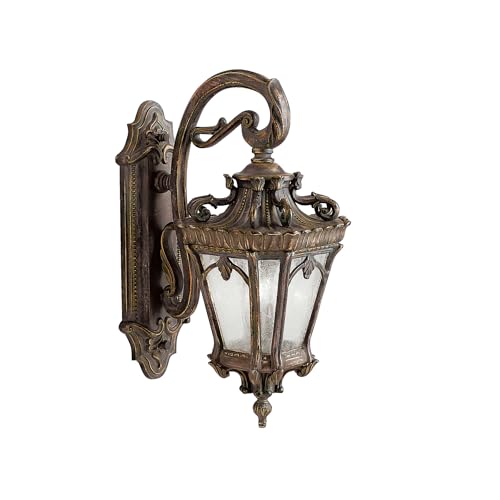
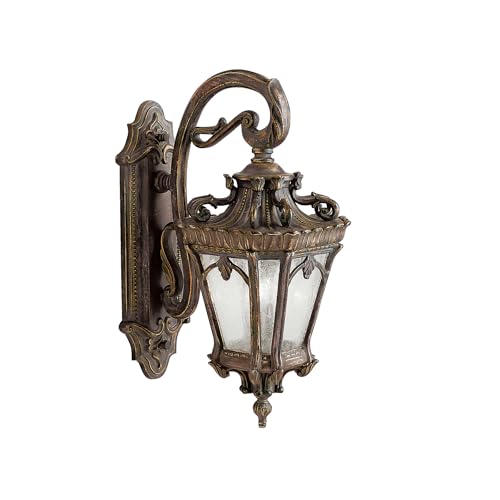
Kichler Outdoor Wall Lantern
Positioned as a mid-range choice, the Kichler outdoor wall lantern offers a versatile transitional design that bridges classic and modern exteriors without fighting either one. In daily use what stands out is how predictably it behaves: the light lands where the design intends, the finish shrugs off ordinary weather when the fixture is matched to a suitable exposure, and the overall impression from the street is composed rather than flashy. It suits homeowners who want the decision made once and made well. Check price on Amazon for the current listing before you buy, and confirm the listing describes the same configuration described here.
Best for: readers who want a versatile transitional design without overthinking the shortlist. Not suited for: anyone expecting one wall fixture to flood a whole yard, or anyone whose wall exposure is harsher than the rating they are willing to pay for. As with every hardwired option in this guide, switch the breaker OFF and verify the circuit is dead before touching wires, and let a licensed electrician handle anything unclear.
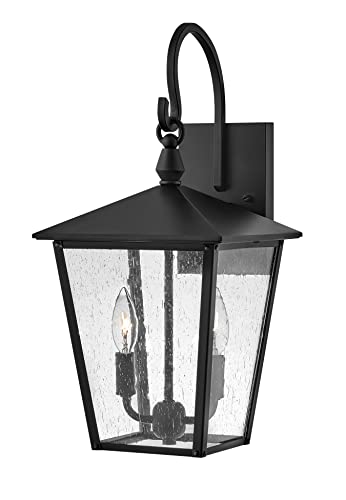
Designers Fountain Outdoor Wall Light
Positioned as a entry-level choice, the Designers Fountain outdoor wall light offers a straightforward coach-light shape that covers porches and garage doors on a sensible budget. In daily use what stands out is how predictably it behaves: the light lands where the design intends, the finish shrugs off ordinary weather when the fixture is matched to a suitable exposure, and the overall impression from the street is composed rather than flashy. It suits homeowners who want the decision made once and made well. Check price on Amazon for the current listing before you buy, and confirm the listing describes the same configuration described here.
Best for: readers who want a straightforward coach-light shape without overthinking the shortlist. Not suited for: anyone expecting one wall fixture to flood a whole yard, or anyone whose wall exposure is harsher than the rating they are willing to pay for. As with every hardwired option in this guide, switch the breaker OFF and verify the circuit is dead before touching wires, and let a licensed electrician handle anything unclear.
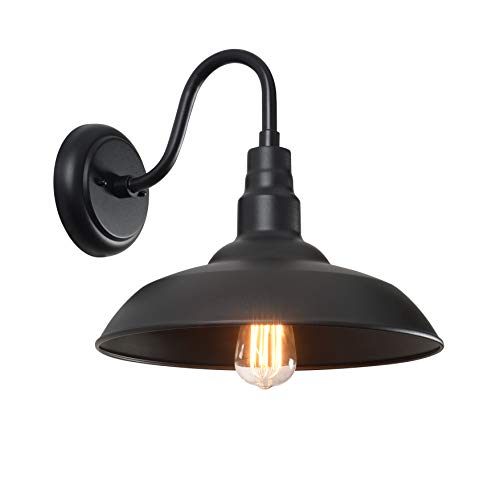
Globe Electric Outdoor Wall Sconce
Positioned as a entry-level choice, the Globe Electric outdoor wall sconce offers a clean-lined sconce with an exposed-bulb look that flatters modern and farmhouse entries. In daily use what stands out is how predictably it behaves: the light lands where the design intends, the finish shrugs off ordinary weather when the fixture is matched to a suitable exposure, and the overall impression from the street is composed rather than flashy. It suits homeowners who want the decision made once and made well. Check price on Amazon for the current listing before you buy, and confirm the listing describes the same configuration described here.
Best for: readers who want a clean-lined sconce with an exposed-bulb look without overthinking the shortlist. Not suited for: anyone expecting one wall fixture to flood a whole yard, or anyone whose wall exposure is harsher than the rating they are willing to pay for. As with every hardwired option in this guide, switch the breaker OFF and verify the circuit is dead before touching wires, and let a licensed electrician handle anything unclear.
How to Buy Smart
Reading exposure honestly
Homes rarely offer one uniform microclimate. The wall under a deep eave may stay dry through most storms, the gable end may take every gust the street funnels toward it, and the wall beside a downspout may be splashed daily. Before choosing a fixture, watch your walls through one proper rain if you can, or at least look for the tell-tale streaks and tide marks that show where water actually travels. That observation, which costs nothing, tells you more about the rating and sealing a position demands than any catalogue description.
Sizing against the wall
Scale is the quiet mistake in outdoor lighting. A small fixture that looked generous in a showroom can vanish on a tall two-storey wall, while an oversized lantern can crowd a modest porch. As a working habit, hold a cardboard cut-out of the fixture size against the wall and view it from the street before ordering. Doors usually want a fixture that reads as a deliberate fraction of the door height, and pairs flanking a wide garage or double door need enough presence to balance the opening rather than decorate its corners apologetically.
Materials and how they age
Outdoor fixtures live hard lives. Cast and formed metals with proper outdoor finishes shrug off seasons that would peel a cheap coating within a year, and the difference usually shows first at edges, screw heads, and the underside where water sits. Glass survives weather better than thin plastic panels, which can yellow and turn brittle in strong sun. None of this requires premium spending everywhere — a sheltered porch is forgiving — but an exposed coastal or mountain wall earns its keep from better materials faster than almost any other position in the home.
And the safety clause of buying smart: confirm who installs. Hardwired work starts with the breaker OFF and a verified-dead circuit; junction-box and GFCI requirements vary; anything unclear goes to a licensed electrician, plainly and without embarrassment.
Setup and Care That Reduce the Cons
Energy and running costs in plain terms
Modern outdoor lighting is inexpensive to run compared with the fixtures of a generation ago, especially when efficient bulbs meet sensible controls. The real waste is rarely the bulb; it is light left burning all day because nobody fitted a sensor, or an over-bright fixture chosen to compensate for poor placement. Right-sizing the light, aiming it downward, and letting dusk-to-dawn or motion controls do the remembering keeps paths welcoming without paying to light an empty street at noon. Qualitatively, a modest fixture on a good control beats a powerful one on none.
Glass, glare, and the view from inside
Clear glass shows the bulb and gives the crispest light, seeded or frosted glass softens the beam and hides a plainer bulb, and opaque or downward-shielded designs keep light on the ground where it belongs. Think about the view from inside as well as out: a bright unshielded fixture beside a bedroom window can spill light across the room all night. Downward-aimed or hooded designs are kinder to sleep, kinder to neighbours, and kinder to the night sky, while still lighting the step, the path, and the door handle perfectly well.
Before any hardwired work begins, switch the breaker OFF at the panel and then verify the circuit is dead with a tester at the fixture itself, because a wall switch alone does not prove the wires are safe to touch. Treat every wire as live until you have checked it yourself, keep hands and tools dry, and never work on an exterior fixture in rain or on a wet ladder. If the existing wiring looks brittle, scorched, or unfamiliar, stop and hand the job to a licensed electrician rather than guessing.
Only fit a fixture that is rated for the exposure it will actually face. A light tucked under a deep porch roof lives a different life from one mounted on an open gable wall that takes driving rain, so match the fixture to the spot: fully exposed positions need a wet-location rating, while sheltered positions may suit a damp-location rating. Use outdoor-rated bulbs and make sure every gasket and seal sits flat, because most early failures trace back to water creeping past a pinched seal rather than to the bulb itself.
Junction-box and GFCI requirements vary by home, by age of the wiring, and by local code, so treat any general guidance as a starting point rather than a permit. The fixture must mount to a sound, properly supported box, and exterior circuits commonly involve ground-fault protection, but the exact arrangement in your wall is something only an inspection of that wall can confirm. If any step is unclear at any point, a licensed electrician does the install — that is the plain rule, and it is cheaper than repairing a mistake hidden inside a wall.
Solar models ask for no wiring at all, which makes them tempting beside paths, fences, and garden walls where running cable would be disruptive. Be honest about what they deliver, though: output depends entirely on sun exposure, a shaded north wall may never charge them properly, and the light they give is accent-level — a gentle marker glow rather than the working brightness of a hardwired fixture. They are not security floodlights, and judging them as if they were only leads to disappointment.
The companion pieces explore the same balance from other angles: our outdoor wall light review
The companion pieces explore the same balance from other angles: our outdoor wall light reviews roundup
The companion pieces explore the same balance from other angles: the outdoor wall light buying guide
The companion pieces explore the same balance from other angles: best outdoor lights for planters
The companion pieces explore the same balance from other angles: Black Friday lighting deals
The companion pieces explore the same balance from other angles: smart lighting deals
Bottom Line
The pros of an outdoor wall light are experienced nightly and compound quietly; the cons are mostly one-off — installation care, honest rating choices, realistic expectations. That asymmetry is why the category endures. Buy with the cons in view and they shrink to a checklist; buy ignoring them and they become the review you wish you had read.
One More Consideration
Style that agrees with the house
An outdoor wall light is one of the few fittings neighbours see every day, so its style carries unusual weight. Lantern forms suit traditional brick, colonial, and cottage exteriors; clean rectangular sconces sit comfortably on modern and minimalist facades; and industrial cage designs flatter farmhouse and workshop-style homes. The finish matters as much as the silhouette — a black finish reads crisp against pale siding and brick, while warmer metallic tones soften darker cladding. Whatever you choose, repeat the same family of fixture at the garage and back door so the house reads as one idea.
One More Consideration
Materials and how they age
Outdoor fixtures live hard lives. Cast and formed metals with proper outdoor finishes shrug off seasons that would peel a cheap coating within a year, and the difference usually shows first at edges, screw heads, and the underside where water sits. Glass survives weather better than thin plastic panels, which can yellow and turn brittle in strong sun. None of this requires premium spending everywhere — a sheltered porch is forgiving — but an exposed coastal or mountain wall earns its keep from better materials faster than almost any other position in the home.
One More Consideration
Maintenance that actually happens
Every exterior fixture collects insects, dust, and weather film, and output quietly falls long before anything fails. Plan for a gentle clean a couple of times a year: power off for hardwired fixtures, a soft cloth, no harsh solvents on finishes or seals, and a check that gaskets still sit flat and drain holes are clear. Bulb swaps are the moment to inspect screw heads and mounting plates for early corrosion. Ten unhurried minutes twice a year is the difference between a fixture that looks cared for at year five and one that looks abandoned.
One More Consideration
Coastal, cold, and high-sun realities
Climate writes the fine print. Salt air works into finishes and fasteners, so coastal homes should favour robust materials and rinse fixtures when washing the house. Hard winters test seals as water freezes in crevices, and bulbs that strike reliably in deep cold matter at a door you use daily. Intense sun yellows cheap plastics and fades finishes on south and west walls. None of these climates rules out good wall lighting; each simply moves a different quality — corrosion resistance, sealing, or sun stability — to the top of the checklist.
One More Consideration
Placement decides more than brightness
Where an outdoor wall light sits matters more than almost any other choice, because the same fixture can feel welcoming in one spot and glaring in another. Beside a front door, a fixture at roughly eye level spreads light across faces, locks, and house numbers, which is exactly what arriving guests and delivery drivers need. Too high and the light pools uselessly overhead while the step below stays in shadow; too low and it shines straight into eyes. Walk the approach at dusk before you commit, stand where a visitor stands, and judge the view from there rather than from the ladder.
One More Consideration
Bulbs and the quality of light
Whether a fixture uses an integrated light source or a replaceable bulb changes its whole ownership story. Replaceable bulbs let you adjust warmth and brightness over the years and swap a failure in minutes, while integrated designs often run cooler and sleeker but ask for a whole-fixture replacement when the light eventually fades. For most entries, a warm tone that flatters skin, brick, and timber feels more welcoming than a stark blue-white glare, which tends to read as institutional outdoors. Whatever the source, choose outdoor-rated bulbs so the seals and ratings of the fixture stay meaningful.
One More Consideration
Energy and running costs in plain terms
Modern outdoor lighting is inexpensive to run compared with the fixtures of a generation ago, especially when efficient bulbs meet sensible controls. The real waste is rarely the bulb; it is light left burning all day because nobody fitted a sensor, or an over-bright fixture chosen to compensate for poor placement. Right-sizing the light, aiming it downward, and letting dusk-to-dawn or motion controls do the remembering keeps paths welcoming without paying to light an empty street at noon. Qualitatively, a modest fixture on a good control beats a powerful one on none.
One More Consideration
Security without the floodlight glare
It is tempting to equate security with maximum brightness, but a harsh flood of light creates deep shadows at its edges and can annoy a whole street. Steady, even wall lighting at entries and passages removes the dark corners people actually worry about, keeps faces visible and recognisable, and works with cameras far better than a blinding hotspot that washes out the image. Motion-triggered fixtures add the alert value of sudden light at side gates and garages. The goal is a house that looks awake and cared for, not a stadium.
One More Consideration
Style that agrees with the house
An outdoor wall light is one of the few fittings neighbours see every day, so its style carries unusual weight. Lantern forms suit traditional brick, colonial, and cottage exteriors; clean rectangular sconces sit comfortably on modern and minimalist facades; and industrial cage designs flatter farmhouse and workshop-style homes. The finish matters as much as the silhouette — a black finish reads crisp against pale siding and brick, while warmer metallic tones soften darker cladding. Whatever you choose, repeat the same family of fixture at the garage and back door so the house reads as one idea.
One More Consideration
Materials and how they age
Outdoor fixtures live hard lives. Cast and formed metals with proper outdoor finishes shrug off seasons that would peel a cheap coating within a year, and the difference usually shows first at edges, screw heads, and the underside where water sits. Glass survives weather better than thin plastic panels, which can yellow and turn brittle in strong sun. None of this requires premium spending everywhere — a sheltered porch is forgiving — but an exposed coastal or mountain wall earns its keep from better materials faster than almost any other position in the home.
One More Consideration
Maintenance that actually happens
Every exterior fixture collects insects, dust, and weather film, and output quietly falls long before anything fails. Plan for a gentle clean a couple of times a year: power off for hardwired fixtures, a soft cloth, no harsh solvents on finishes or seals, and a check that gaskets still sit flat and drain holes are clear. Bulb swaps are the moment to inspect screw heads and mounting plates for early corrosion. Ten unhurried minutes twice a year is the difference between a fixture that looks cared for at year five and one that looks abandoned.
One More Consideration
Coastal, cold, and high-sun realities
Climate writes the fine print. Salt air works into finishes and fasteners, so coastal homes should favour robust materials and rinse fixtures when washing the house. Hard winters test seals as water freezes in crevices, and bulbs that strike reliably in deep cold matter at a door you use daily. Intense sun yellows cheap plastics and fades finishes on south and west walls. None of these climates rules out good wall lighting; each simply moves a different quality — corrosion resistance, sealing, or sun stability — to the top of the checklist.
One More Consideration
Placement decides more than brightness
Where an outdoor wall light sits matters more than almost any other choice, because the same fixture can feel welcoming in one spot and glaring in another. Beside a front door, a fixture at roughly eye level spreads light across faces, locks, and house numbers, which is exactly what arriving guests and delivery drivers need. Too high and the light pools uselessly overhead while the step below stays in shadow; too low and it shines straight into eyes. Walk the approach at dusk before you commit, stand where a visitor stands, and judge the view from there rather than from the ladder.
One More Consideration
Bulbs and the quality of light
Whether a fixture uses an integrated light source or a replaceable bulb changes its whole ownership story. Replaceable bulbs let you adjust warmth and brightness over the years and swap a failure in minutes, while integrated designs often run cooler and sleeker but ask for a whole-fixture replacement when the light eventually fades. For most entries, a warm tone that flatters skin, brick, and timber feels more welcoming than a stark blue-white glare, which tends to read as institutional outdoors. Whatever the source, choose outdoor-rated bulbs so the seals and ratings of the fixture stay meaningful.
Where the Trade-Offs Show Up in Daily Use: Outdoor Wall Light in Practice
This section exists to move past the tidy two-column summary and watch where each advantage and disadvantage actually appears during an ordinary week. It adds a layer that a feature list cannot give you, grounded in the home decor & lighting context this outdoor wall light will actually live in. Where this guide names examples such as Kichler Outdoor Wall Lantern, Designers Fountain Outdoor Wall Light, Globe Electric Outdoor Wall Sconce, use them as test cases for the checks below rather than as shortcuts past them.
Consider the edge cases that sit just outside normal use, because a outdoor wall light will meet all of them eventually. The unusually large load, the unusually small task, the day you are in a hurry, the day something else in the room is broken and this has to cover for it. Versatility is not about a long feature list; it is about behaving predictably when conditions are imperfect. Where a design offers settings, modes, attachments or configurations, ask what each one is actually for in your home, and be suspicious of flexibility you cannot attach to a real occasion. One well-judged configuration used weekly beats five clever ones used once, and the honest outdoor wall light for your home is the one whose strengths line up with your most frequent edge case, not your rarest.
Build a simple decision checklist and score it in writing. Five lines are enough: fit in the space, fit with the routine, ease of cleaning or upkeep, quality of the parts that move or wear, and how the outdoor wall light will be stored or will look when it is not the centre of attention. Score each contender quickly, then look only at the lowest scores, because purchases are usually ruined by their weakest point rather than saved by their strongest. If two options tie, choose the one whose weakness is cheapest or easiest to live with. This sounds mechanical, and it is meant to: a written checklist is the best defence against the very human habit of falling for the last photograph you looked at.
Finally, plan the first fortnight. Decide where the outdoor wall light will live from day one, what it replaces, what accessory or companion it needs straight away and what small job you will use to learn its habits while returning it is still simple. Keep the packaging until that learning period is over, note anything that surprises you, and deal with a mismatch early rather than adapting yourself around a poor fit for years. The households that end up happiest with a outdoor wall light are rarely the ones that researched longest; they are the ones that checked fit honestly, bought for the ordinary week, and paid attention during the first days instead of assuming the decision ended at checkout.
One more angle is worth your time: the second-order costs. A outdoor wall light changes what happens around it. It can demand a different cleaning product, a new storage habit, a moved piece of furniture, a rearranged cupboard or a standing arrangement with the people you live with. List those knock-on effects before you buy and decide whether you accept them as part of the deal. Sometimes the answer is an easy yes, and the outdoor wall light earns its place by improving the whole routine around it. Sometimes the honest answer is that the supporting changes are the real project, and the purchase should wait until you are ready for them. Either answer is useful; the only bad outcome is discovering the knock-on effects by accident, one irritation at a time, after the decision can no longer be revisited.
Frequently Asked Questions
Can one outdoor wall light cover a whole front yard?
Honestly, no — and it is not designed to. A wall light is a local light: it serves the door, the steps, the house number, and the few paces around them, and it does that job beautifully. Yards, driveways, and long paths need their own layers, whether that is additional wall fixtures at the garage, path markers, or a separate flood for a working area. Expecting one fixture to do everything leads to glare at the door and darkness everywhere else, so plan in layers and let each light do the job it is shaped for.
Are solar wall lights bright enough for a front door?
For a welcoming marker glow, often yes; for reading a lock, lighting steps confidently, or supporting a camera, usually not. Solar output depends on sun exposure, so a bright south-facing wall fares far better than a shaded porch, and even then the light is accent-level rather than working light. Many households use solar happily at garden walls and fences while keeping a hardwired fixture at the main door. Judge solar by what it honestly is — wire-free accent light — and it rarely disappoints.
What rating does a fixture on an open wall need?
A fixture on a wall that takes direct rain needs a wet-location rating, while one sheltered under a deep porch roof may suit a damp-location rating. The distinction is about how much water the fixture is built to withstand, and matching it to the real exposure is one of the most important decisions in the whole purchase. When in doubt, choose the tougher rating; it costs a little more and forgives a lot. Always pair the fixture with outdoor-rated bulbs and intact seals so the rating stays meaningful.
Can I replace an outdoor wall light myself?
Swapping a like-for-like fixture on a sound existing box is within many homeowners’ comfort, provided the breaker is switched OFF and the circuit is verified dead before any wire is touched. The moment the job involves a new circuit, a doubtful box, damaged wiring, or anything you cannot clearly identify, it belongs to a licensed electrician — junction-box and GFCI requirements vary, and local code has the final say. There is no savings in a cheap install that hides a fault inside a wall.
How do I stop an outdoor light annoying the neighbours?
Aim light downward, shield the bulb from direct view, and choose warmth and brightness for the task rather than for maximum effect. A hooded or downward fixture lights your step and path while keeping the beam on your property, and motion sensing limits light to the moments someone is actually there. Talk helps too: a quick word with the neighbour whose window faces your side passage costs nothing and prevents the slow build of resentment that a glaring fixture can cause.
Why does my new fixture look smaller than expected?
Because walls are bigger than showroom displays and product photos rarely include a person for scale. Fixtures are judged from across the street in real life, not from an arm’s length away, so most homes can carry a size larger than instinct suggests — especially tall entries and wide garages. Before ordering a replacement, tape a cardboard outline of the proposed size to the wall and view it from the pavement. That two-minute test prevents the most common disappointment in this whole category.
Related Reading
More from this site on lighting and outdoor living: best outdoor porch rocking chairs
More from this site on lighting and outdoor living: lighting deals overview