Disclosure: As an Amazon Associate, dailyhomedecorating.com earns from qualifying purchases. Links on this page are affiliate links; they cost you nothing extra. Prices and availability change often, so check the current Amazon listing before you buy.
Ask is an outdoor wall light worth it at the front door on a dark evening and the question answers itself differently than it does in a showroom at noon. Worth, here, is not about the fixture — it is about how often you arrive home after dark, how treacherous your step is, how much your facade matters to you, and whether the installation your wall needs is simple or involved. This assessment separates the households for whom the answer is an easy yes from those who should spend elsewhere first.
Short Answer and Key Takeaways
Worth it if you use an exterior door after dark most days, have steps or a threshold that deserve light, or care how your home looks from the street in the evening. Not worth it if your only dark problem is a big yard, your tenancy forbids fixtures and your door wall gets no sun for solar, or a wiring fault means the real job is an electrician’s repair first. For the majority of homeowners, a sensibly chosen wall light is among the highest-value small upgrades available.
In this guide
Is an Outdoor Wall Light Worth It? What You Actually Get
Placement decides more than brightness
Where an outdoor wall light sits matters more than almost any other choice, because the same fixture can feel welcoming in one spot and glaring in another. Beside a front door, a fixture at roughly eye level spreads light across faces, locks, and house numbers, which is exactly what arriving guests and delivery drivers need. Too high and the light pools uselessly overhead while the step below stays in shadow; too low and it shines straight into eyes. Walk the approach at dusk before you commit, stand where a visitor stands, and judge the view from there rather than from the ladder.
Curb appeal after dark
A well-lit entry changes how a whole house is judged from the street. Light grazing across brick or stone reveals texture that flat daylight hides, a warm glow at the door signals occupancy and care, and balanced fixtures frame the facade the way punctuation frames a sentence. This is also why matching matters: two different fixture families fighting across one facade undo the effect. Photograph your frontage at dusk once the lights are in; the camera is brutally honest about glare, imbalance, and dark corners your eyes politely ignore.
Light for steps, paths, and safety
The most valuable outdoor light is often the least glamorous: the fixture that makes a step edge, a change of level, or an icy patch visible before someone finds it by falling. Wall lights throw useful pools beside doors and along passages, especially when paired thoughtfully rather than multiplied. Avoid creating a bright pool next to a dark void, because eyes adjusting between the two see less in both. Even, overlapping light at modest brightness beats one fierce hotspot, for safety and for how the house feels after dark.
Glass, glare, and the view from inside
Clear glass shows the bulb and gives the crispest light, seeded or frosted glass softens the beam and hides a plainer bulb, and opaque or downward-shielded designs keep light on the ground where it belongs. Think about the view from inside as well as out: a bright unshielded fixture beside a bedroom window can spill light across the room all night. Downward-aimed or hooded designs are kinder to sleep, kinder to neighbours, and kinder to the night sky, while still lighting the step, the path, and the door handle perfectly well.
The Real Costs Beyond Money
Maintenance that actually happens
Every exterior fixture collects insects, dust, and weather film, and output quietly falls long before anything fails. Plan for a gentle clean a couple of times a year: power off for hardwired fixtures, a soft cloth, no harsh solvents on finishes or seals, and a check that gaskets still sit flat and drain holes are clear. Bulb swaps are the moment to inspect screw heads and mounting plates for early corrosion. Ten unhurried minutes twice a year is the difference between a fixture that looks cared for at year five and one that looks abandoned.
Materials and how they age
Outdoor fixtures live hard lives. Cast and formed metals with proper outdoor finishes shrug off seasons that would peel a cheap coating within a year, and the difference usually shows first at edges, screw heads, and the underside where water sits. Glass survives weather better than thin plastic panels, which can yellow and turn brittle in strong sun. None of this requires premium spending everywhere — a sheltered porch is forgiving — but an exposed coastal or mountain wall earns its keep from better materials faster than almost any other position in the home.
Beyond purchase, the costs are installation effort or an electrician’s visit, a few minutes of cleaning a couple of times a year, and the thought required to choose rating and control correctly the first time. Running costs with modern bulbs and sensible controls are modest enough to be a rounding error in most household budgets — the greater waste is light left burning pointlessly, which good controls eliminate. None of these costs are hidden; all are listed here so the verdict that follows is honest.
Before any hardwired work begins, switch the breaker OFF at the panel and then verify the circuit is dead with a tester at the fixture itself, because a wall switch alone does not prove the wires are safe to touch. Treat every wire as live until you have checked it yourself, keep hands and tools dry, and never work on an exterior fixture in rain or on a wet ladder. If the existing wiring looks brittle, scorched, or unfamiliar, stop and hand the job to a licensed electrician rather than guessing.
Only fit a fixture that is rated for the exposure it will actually face. A light tucked under a deep porch roof lives a different life from one mounted on an open gable wall that takes driving rain, so match the fixture to the spot: fully exposed positions need a wet-location rating, while sheltered positions may suit a damp-location rating. Use outdoor-rated bulbs and make sure every gasket and seal sits flat, because most early failures trace back to water creeping past a pinched seal rather than to the bulb itself.
Junction-box and GFCI requirements vary by home, by age of the wiring, and by local code, so treat any general guidance as a starting point rather than a permit. The fixture must mount to a sound, properly supported box, and exterior circuits commonly involve ground-fault protection, but the exact arrangement in your wall is something only an inspection of that wall can confirm. If any step is unclear at any point, a licensed electrician does the install — that is the plain rule, and it is cheaper than repairing a mistake hidden inside a wall.
Solar models ask for no wiring at all, which makes them tempting beside paths, fences, and garden walls where running cable would be disruptive. Be honest about what they deliver, though: output depends entirely on sun exposure, a shaded north wall may never charge them properly, and the light they give is accent-level — a gentle marker glow rather than the working brightness of a hardwired fixture. They are not security floodlights, and judging them as if they were only leads to disappointment.
Who It Pays Off For
The daily after-dark arriver gains the most obvious return: a lit lock, a lit step, a lit welcome, hundreds of evenings a year. The host and the seller gain the facade effect — guests and buyers alike judge a lit entry as a cared-for home. The household with older members or young children gains the safety margin on steps and thresholds that only becomes visible the night it prevents a fall.
Security without the floodlight glare
It is tempting to equate security with maximum brightness, but a harsh flood of light creates deep shadows at its edges and can annoy a whole street. Steady, even wall lighting at entries and passages removes the dark corners people actually worry about, keeps faces visible and recognisable, and works with cameras far better than a blinding hotspot that washes out the image. Motion-triggered fixtures add the alert value of sudden light at side gates and garages. The goal is a house that looks awake and cared for, not a stadium.
Who Should Skip It
The yard-first household should spend on the layer that actually serves the yard rather than asking a wall fixture to pretend. The deeply shaded renter may find even solar starved of charge and should look at landlord-approved options instead. The home with suspect wiring should fund the repair, not the fixture — a licensed electrician’s assessment comes before any cosmetic upgrade on a doubtful circuit.
Renters, old houses, and awkward walls
Not every wall welcomes a new hardwired fixture. Renters may be limited to solar or battery accent lights at the door, which is fine for a welcoming marker glow as long as expectations stay honest. Older homes may hide shallow boxes, cloth-wrapped wiring, or no box at all behind an existing fixture — discoveries that turn a Saturday swap into a job for a licensed electrician. Masonry walls need the right fixings and patience; siding needs mounting blocks that sit flat and shed water. Knowing your wall before you shop saves the most common returns.
Strengths and Trade-Offs of Owning One
Strengths
- Nightly, repeated usefulness at the exact point of arrival
- Facade and welcome transformed for a modest, one-off effort
- Step and threshold safety that quietly prevents accidents
Trade-offs
- Installation must be done properly, sometimes professionally
- Coverage is local; other areas still need their own light
- Exposed positions demand honest ratings and occasional care
Alternatives to Consider
If a hardwired wall fixture is not right for your wall, these families frame the realistic alternatives — solar-leaning and sensor-led options among them. Remember the honest framing: solar gives wire-free accent light dependent on sun, not security brightness.
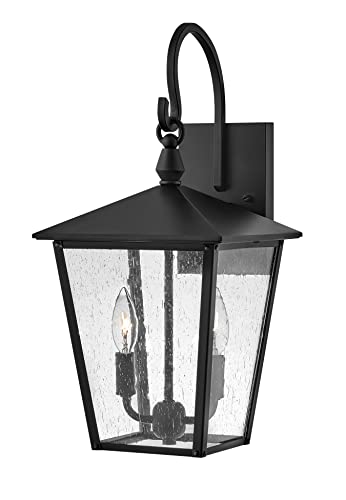
Designers Fountain Outdoor Wall Light
Positioned as a entry-level choice, the Designers Fountain outdoor wall light offers a straightforward coach-light shape that covers porches and garage doors on a sensible budget. In daily use what stands out is how predictably it behaves: the light lands where the design intends, the finish shrugs off ordinary weather when the fixture is matched to a suitable exposure, and the overall impression from the street is composed rather than flashy. It suits homeowners who want the decision made once and made well. Check price on Amazon for the current listing before you buy, and confirm the listing describes the same configuration described here.
Best for: readers who want a straightforward coach-light shape without overthinking the shortlist. Not suited for: anyone expecting one wall fixture to flood a whole yard, or anyone whose wall exposure is harsher than the rating they are willing to pay for. As with every hardwired option in this guide, switch the breaker OFF and verify the circuit is dead before touching wires, and let a licensed electrician handle anything unclear.
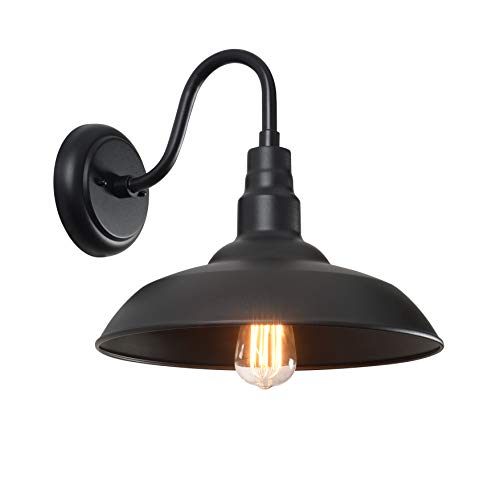
Globe Electric Outdoor Wall Sconce
Positioned as a entry-level choice, the Globe Electric outdoor wall sconce offers a clean-lined sconce with an exposed-bulb look that flatters modern and farmhouse entries. In daily use what stands out is how predictably it behaves: the light lands where the design intends, the finish shrugs off ordinary weather when the fixture is matched to a suitable exposure, and the overall impression from the street is composed rather than flashy. It suits homeowners who want the decision made once and made well. Check price on Amazon for the current listing before you buy, and confirm the listing describes the same configuration described here.
Best for: readers who want a clean-lined sconce with an exposed-bulb look without overthinking the shortlist. Not suited for: anyone expecting one wall fixture to flood a whole yard, or anyone whose wall exposure is harsher than the rating they are willing to pay for. As with every hardwired option in this guide, switch the breaker OFF and verify the circuit is dead before touching wires, and let a licensed electrician handle anything unclear.

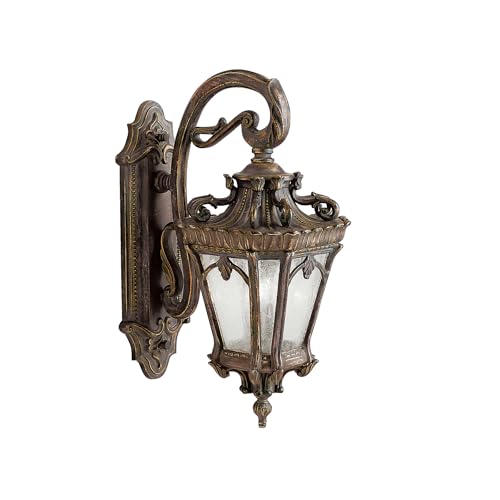
Kenroy Home Outdoor Wall Lantern
Positioned as a mid-range choice, the Kenroy Home outdoor wall lantern offers a generously sized lantern that holds its own on taller walls and two-storey entries. In daily use what stands out is how predictably it behaves: the light lands where the design intends, the finish shrugs off ordinary weather when the fixture is matched to a suitable exposure, and the overall impression from the street is composed rather than flashy. It suits homeowners who want the decision made once and made well. Check price on Amazon for the current listing before you buy, and confirm the listing describes the same configuration described here.
Best for: readers who want a generously sized lantern without overthinking the shortlist. Not suited for: anyone expecting one wall fixture to flood a whole yard, or anyone whose wall exposure is harsher than the rating they are willing to pay for. As with every hardwired option in this guide, switch the breaker OFF and verify the circuit is dead before touching wires, and let a licensed electrician handle anything unclear.
How to Get the Most Value If You Buy
Controls: switches, timers, and sensors
How a light turns on shapes how useful it is. A simple wall switch is predictable but relies on someone remembering. Dusk-to-dawn sensors take the remembering away and suit doors used every evening, though they can be confused by deep shade or by the light of a neighbouring fixture. Motion sensing is the working choice for side passages, bins, and garages, lighting the way only when someone is actually there. Many households end up happiest with a mix: a welcoming always-on glow at the front door and motion-triggered light where the need is occasional.
Working with what is already there
Many homes already have a fixture position, a switch, or a porch structure that shapes the sensible choice. Replacing a tired fixture on an existing box is the simplest upgrade in outdoor lighting, provided the box is sound and the wiring healthy. Where no position exists, solar accent lights, or a licensed electrician adding a proper circuit, are the honest options — improvised wiring is not. Also consider what the new light must agree with: porch ceiling lights, path markers, and garage fixtures should share a colour temperature and a design language so the whole scheme feels intentional.
Energy and running costs in plain terms
Modern outdoor lighting is inexpensive to run compared with the fixtures of a generation ago, especially when efficient bulbs meet sensible controls. The real waste is rarely the bulb; it is light left burning all day because nobody fitted a sensor, or an over-bright fixture chosen to compensate for poor placement. Right-sizing the light, aiming it downward, and letting dusk-to-dawn or motion controls do the remembering keeps paths welcoming without paying to light an empty street at noon. Qualitatively, a modest fixture on a good control beats a powerful one on none.
The Decision Checklist
Answer honestly: Do I use this door after dark most days? Are there steps or a threshold here that deserve light? Is the wall exposure matched by a rating I am willing to buy? Is the existing box and wiring sound — or budgeted for an electrician? Have I chosen a control that removes remembering? Would solar’s accent-level light genuinely satisfy this spot, or am I pretending? Four or more confident yes answers, and the fixture will earn its place; fewer, and spend the money where your answers point instead.
The rest of this series pressure-tests the same verdict: our outdoor wall light review
The rest of this series pressure-tests the same verdict: our outdoor wall light reviews roundup
The rest of this series pressure-tests the same verdict: the outdoor wall light buying guide
The rest of this series pressure-tests the same verdict: best outdoor lights for planters
The rest of this series pressure-tests the same verdict: Black Friday lighting deals
The rest of this series pressure-tests the same verdict: smart lighting deals
One More Consideration
Style that agrees with the house
An outdoor wall light is one of the few fittings neighbours see every day, so its style carries unusual weight. Lantern forms suit traditional brick, colonial, and cottage exteriors; clean rectangular sconces sit comfortably on modern and minimalist facades; and industrial cage designs flatter farmhouse and workshop-style homes. The finish matters as much as the silhouette — a black finish reads crisp against pale siding and brick, while warmer metallic tones soften darker cladding. Whatever you choose, repeat the same family of fixture at the garage and back door so the house reads as one idea.
One More Consideration
Materials and how they age
Outdoor fixtures live hard lives. Cast and formed metals with proper outdoor finishes shrug off seasons that would peel a cheap coating within a year, and the difference usually shows first at edges, screw heads, and the underside where water sits. Glass survives weather better than thin plastic panels, which can yellow and turn brittle in strong sun. None of this requires premium spending everywhere — a sheltered porch is forgiving — but an exposed coastal or mountain wall earns its keep from better materials faster than almost any other position in the home.
One More Consideration
Maintenance that actually happens
Every exterior fixture collects insects, dust, and weather film, and output quietly falls long before anything fails. Plan for a gentle clean a couple of times a year: power off for hardwired fixtures, a soft cloth, no harsh solvents on finishes or seals, and a check that gaskets still sit flat and drain holes are clear. Bulb swaps are the moment to inspect screw heads and mounting plates for early corrosion. Ten unhurried minutes twice a year is the difference between a fixture that looks cared for at year five and one that looks abandoned.
One More Consideration
Coastal, cold, and high-sun realities
Climate writes the fine print. Salt air works into finishes and fasteners, so coastal homes should favour robust materials and rinse fixtures when washing the house. Hard winters test seals as water freezes in crevices, and bulbs that strike reliably in deep cold matter at a door you use daily. Intense sun yellows cheap plastics and fades finishes on south and west walls. None of these climates rules out good wall lighting; each simply moves a different quality — corrosion resistance, sealing, or sun stability — to the top of the checklist.
One More Consideration
Placement decides more than brightness
Where an outdoor wall light sits matters more than almost any other choice, because the same fixture can feel welcoming in one spot and glaring in another. Beside a front door, a fixture at roughly eye level spreads light across faces, locks, and house numbers, which is exactly what arriving guests and delivery drivers need. Too high and the light pools uselessly overhead while the step below stays in shadow; too low and it shines straight into eyes. Walk the approach at dusk before you commit, stand where a visitor stands, and judge the view from there rather than from the ladder.
One More Consideration
Bulbs and the quality of light
Whether a fixture uses an integrated light source or a replaceable bulb changes its whole ownership story. Replaceable bulbs let you adjust warmth and brightness over the years and swap a failure in minutes, while integrated designs often run cooler and sleeker but ask for a whole-fixture replacement when the light eventually fades. For most entries, a warm tone that flatters skin, brick, and timber feels more welcoming than a stark blue-white glare, which tends to read as institutional outdoors. Whatever the source, choose outdoor-rated bulbs so the seals and ratings of the fixture stay meaningful.
One More Consideration
Energy and running costs in plain terms
Modern outdoor lighting is inexpensive to run compared with the fixtures of a generation ago, especially when efficient bulbs meet sensible controls. The real waste is rarely the bulb; it is light left burning all day because nobody fitted a sensor, or an over-bright fixture chosen to compensate for poor placement. Right-sizing the light, aiming it downward, and letting dusk-to-dawn or motion controls do the remembering keeps paths welcoming without paying to light an empty street at noon. Qualitatively, a modest fixture on a good control beats a powerful one on none.
One More Consideration
Security without the floodlight glare
It is tempting to equate security with maximum brightness, but a harsh flood of light creates deep shadows at its edges and can annoy a whole street. Steady, even wall lighting at entries and passages removes the dark corners people actually worry about, keeps faces visible and recognisable, and works with cameras far better than a blinding hotspot that washes out the image. Motion-triggered fixtures add the alert value of sudden light at side gates and garages. The goal is a house that looks awake and cared for, not a stadium.
One More Consideration
Style that agrees with the house
An outdoor wall light is one of the few fittings neighbours see every day, so its style carries unusual weight. Lantern forms suit traditional brick, colonial, and cottage exteriors; clean rectangular sconces sit comfortably on modern and minimalist facades; and industrial cage designs flatter farmhouse and workshop-style homes. The finish matters as much as the silhouette — a black finish reads crisp against pale siding and brick, while warmer metallic tones soften darker cladding. Whatever you choose, repeat the same family of fixture at the garage and back door so the house reads as one idea.
One More Consideration
Materials and how they age
Outdoor fixtures live hard lives. Cast and formed metals with proper outdoor finishes shrug off seasons that would peel a cheap coating within a year, and the difference usually shows first at edges, screw heads, and the underside where water sits. Glass survives weather better than thin plastic panels, which can yellow and turn brittle in strong sun. None of this requires premium spending everywhere — a sheltered porch is forgiving — but an exposed coastal or mountain wall earns its keep from better materials faster than almost any other position in the home.
One More Consideration
Maintenance that actually happens
Every exterior fixture collects insects, dust, and weather film, and output quietly falls long before anything fails. Plan for a gentle clean a couple of times a year: power off for hardwired fixtures, a soft cloth, no harsh solvents on finishes or seals, and a check that gaskets still sit flat and drain holes are clear. Bulb swaps are the moment to inspect screw heads and mounting plates for early corrosion. Ten unhurried minutes twice a year is the difference between a fixture that looks cared for at year five and one that looks abandoned.
One More Consideration
Coastal, cold, and high-sun realities
Climate writes the fine print. Salt air works into finishes and fasteners, so coastal homes should favour robust materials and rinse fixtures when washing the house. Hard winters test seals as water freezes in crevices, and bulbs that strike reliably in deep cold matter at a door you use daily. Intense sun yellows cheap plastics and fades finishes on south and west walls. None of these climates rules out good wall lighting; each simply moves a different quality — corrosion resistance, sealing, or sun stability — to the top of the checklist.
One More Consideration
Placement decides more than brightness
Where an outdoor wall light sits matters more than almost any other choice, because the same fixture can feel welcoming in one spot and glaring in another. Beside a front door, a fixture at roughly eye level spreads light across faces, locks, and house numbers, which is exactly what arriving guests and delivery drivers need. Too high and the light pools uselessly overhead while the step below stays in shadow; too low and it shines straight into eyes. Walk the approach at dusk before you commit, stand where a visitor stands, and judge the view from there rather than from the ladder.
The Break-Even Question in Real Life: When an Outdoor Wall Light Pays Its Way
This section exists to ask the break-even question honestly, counting not just the purchase but the space, upkeep and attention the item will claim for as long as it is owned. It adds a layer that a feature list cannot give you, grounded in the home decor & lighting context this outdoor wall light will actually live in. Where this guide names examples such as Designers Fountain Outdoor Wall Light, Globe Electric Outdoor Wall Sconce, Kenroy Home Outdoor Wall Lantern, use them as test cases for the checks below rather than as shortcuts past them.
Finally, plan the first fortnight. Decide where the outdoor wall light will live from day one, what it replaces, what accessory or companion it needs straight away and what small job you will use to learn its habits while returning it is still simple. Keep the packaging until that learning period is over, note anything that surprises you, and deal with a mismatch early rather than adapting yourself around a poor fit for years. The households that end up happiest with a outdoor wall light are rarely the ones that researched longest; they are the ones that checked fit honestly, bought for the ordinary week, and paid attention during the first days instead of assuming the decision ended at checkout.
One more angle is worth your time: the second-order costs. A outdoor wall light changes what happens around it. It can demand a different cleaning product, a new storage habit, a moved piece of furniture, a rearranged cupboard or a standing arrangement with the people you live with. List those knock-on effects before you buy and decide whether you accept them as part of the deal. Sometimes the answer is an easy yes, and the outdoor wall light earns its place by improving the whole routine around it. Sometimes the honest answer is that the supporting changes are the real project, and the purchase should wait until you are ready for them. Either answer is useful; the only bad outcome is discovering the knock-on effects by accident, one irritation at a time, after the decision can no longer be revisited.
It also helps to separate the problems a outdoor wall light can solve from the problems it merely moves. If the underlying difficulty is space, the answer may be a smaller format or a different location rather than a more elaborate model. If the difficulty is time, look for the option that removes steps rather than the one that performs each step slightly better. If the difficulty is that several people want different things, a compromise design that everyone rates as good enough will usually outlast a specialist design that one person loves and everyone else avoids. Naming the real problem in one sentence, out loud, before you order, is a surprisingly powerful filter, and many shoppers find that the sentence itself points at a different outdoor wall light than the one they started out researching.
Start with the unglamorous measurements. For a outdoor wall light, the numbers that decide satisfaction are rarely the headline ones in a listing; they are ceiling height, wall finish, the direction of natural light during the day and where the switch or socket actually sits. Write the real dimensions of your space down, including the awkward constraints you normally work around without thinking, and hold every contender up against that sheet rather than against a showroom photograph. Then walk the route the outdoor wall light will take on delivery day and during normal use. A choice that fits on paper but fights you every time it is moved, opened, cleaned or stored will lose its shine quickly, however strong its other qualities look in a comparison table.
Next, rehearse the week, not the ideal day. Picture the outdoor wall light inside a quiet evening at home, a room full of guests, and the morning after when harsh light or a crooked fitting is impossible to ignore. Most disappointment comes from buying for the best-case scenario: the tidy version of the household, the motivated version of yourself, the weather or the guest list you hope for rather than the one you usually get. If the outdoor wall light only makes sense when everything goes to plan, it is the wrong size, the wrong format or the wrong purchase for now. If it still looks useful on the tired, rushed, slightly chaotic version of the day, it has passed the most honest test there is, and the remaining questions are about detail rather than direction.
Frequently Asked Questions
Can one outdoor wall light cover a whole front yard?
Honestly, no — and it is not designed to. A wall light is a local light: it serves the door, the steps, the house number, and the few paces around them, and it does that job beautifully. Yards, driveways, and long paths need their own layers, whether that is additional wall fixtures at the garage, path markers, or a separate flood for a working area. Expecting one fixture to do everything leads to glare at the door and darkness everywhere else, so plan in layers and let each light do the job it is shaped for.
Are solar wall lights bright enough for a front door?
For a welcoming marker glow, often yes; for reading a lock, lighting steps confidently, or supporting a camera, usually not. Solar output depends on sun exposure, so a bright south-facing wall fares far better than a shaded porch, and even then the light is accent-level rather than working light. Many households use solar happily at garden walls and fences while keeping a hardwired fixture at the main door. Judge solar by what it honestly is — wire-free accent light — and it rarely disappoints.
What rating does a fixture on an open wall need?
A fixture on a wall that takes direct rain needs a wet-location rating, while one sheltered under a deep porch roof may suit a damp-location rating. The distinction is about how much water the fixture is built to withstand, and matching it to the real exposure is one of the most important decisions in the whole purchase. When in doubt, choose the tougher rating; it costs a little more and forgives a lot. Always pair the fixture with outdoor-rated bulbs and intact seals so the rating stays meaningful.
Can I replace an outdoor wall light myself?
Swapping a like-for-like fixture on a sound existing box is within many homeowners’ comfort, provided the breaker is switched OFF and the circuit is verified dead before any wire is touched. The moment the job involves a new circuit, a doubtful box, damaged wiring, or anything you cannot clearly identify, it belongs to a licensed electrician — junction-box and GFCI requirements vary, and local code has the final say. There is no savings in a cheap install that hides a fault inside a wall.
How do I stop an outdoor light annoying the neighbours?
Aim light downward, shield the bulb from direct view, and choose warmth and brightness for the task rather than for maximum effect. A hooded or downward fixture lights your step and path while keeping the beam on your property, and motion sensing limits light to the moments someone is actually there. Talk helps too: a quick word with the neighbour whose window faces your side passage costs nothing and prevents the slow build of resentment that a glaring fixture can cause.
Why does my new fixture look smaller than expected?
Because walls are bigger than showroom displays and product photos rarely include a person for scale. Fixtures are judged from across the street in real life, not from an arm’s length away, so most homes can carry a size larger than instinct suggests — especially tall entries and wide garages. Before ordering a replacement, tape a cardboard outline of the proposed size to the wall and view it from the pavement. That two-minute test prevents the most common disappointment in this whole category.
Related Reading
Continue with these guides from the same site: best outdoor porch rocking chairs
Continue with these guides from the same site: outdoor planter lighting