Disclosure: As an Amazon Associate, dailyhomedecorating.com earns from qualifying purchases. Links on this page are affiliate links; they cost you nothing extra. Prices and availability change often, so check the current Amazon listing before you buy.
So, is a vacuum food container worth it for a normal household, judged in wasted food avoided, fridge order gained and washing-up accepted rather than in advertising promises? This article gives the short answer first, then works through what you actually get, what it really costs beyond money, the households it pays off for, the households it does not, and a checklist you can answer honestly in two minutes.
Short answer. Worth it if you cook several times a week, buy ingredients you hate wasting, and will wash a valved lid properly. Not worth it if you store little, eat mostly fresh, or want a container to make food safe for longer — because no vacuum container does that, and buying one for that reason is money spent on a misunderstanding.
Key Takeaways
- The value is quality and waste avoided, repeated weekly — not extended safety.
- The real costs are cupboard space, cleaning time and ecosystem commitment.
- It pays off fastest for batch cooks, cheese buyers and herb users.
- A small starter set is the low-risk way to test your own habits.
In this guide
Is a Vacuum Food Container Worth It: What You Actually Get
The seal is where these containers live or die. Most lids use a soft silicone or rubber gasket that sits in a channel around the rim, and that gasket has to be clean, supple and correctly seated before the pump ever runs. A crumb of grated cheese, a smear of sauce or a single hair trapped under the gasket can create a channel that lets air creep back in over a day or two. Experienced users wipe the rim with a clean cloth as a reflex, the way experienced bakers flour a surface, because the few seconds it takes are the difference between a seal that holds all week and one that quietly fails overnight.
The valve deserves the same respect as the gasket. It is a small, often flexible disc or button in the lid that opens under suction and closes when the pump stops. Because food vapour and tiny droplets pass through it every time you evacuate the container, the valve is where residue collects first and where hygiene problems begin if cleaning is lazy. Any container you consider should let you reach the valve, rinse it and dry it properly. A lid design that traps moisture around the valve and cannot be opened up for washing is a design you will regret within a month of regular use.
Glass and plastic bodies involve a genuine trade, not a hierarchy. Glass is heavier and can chip, but it resists staining from tomato sauces and turmeric, does not hold onto yesterday’s onion smell, and feels reassuringly rigid when you stack it. Plastic is lighter for lunch bags and kinder when dropped, and good food-grade plastic handles the freezer without complaint, but it can pick up colours and odours over time and it scratches as cutlery and scouring pads do their work. Many households end up with both: glass for the fridge at home, lighter plastic for food that travels.
Shape matters more than most listings admit. Rectangular and square containers tile a fridge shelf with far less wasted space than round ones, and they stack in neat layers that let you see a week of prepared food at a glance. Round containers, on the other hand, are easier to stir in, easier to clean in the corners and often seal beautifully because the pressure is even all the way around. If you mostly store soups, salads and marinated foods, round vessels earn their place. If you mostly store flat, portioned, stackable meals, rectangles will make your fridge feel twice as organised.
Capacity should be planned around portions, not around the biggest thing you might ever cook. A container that is far too large for its contents leaves a lot of air to remove and a lot of headspace where condensation can gather, while a container packed sensibly full evacuates quickly and keeps food in gentle contact with itself rather than sloshing around. Most households do best with a spread: small vessels for herbs, cheese ends and half an onion, medium vessels for single meals and leftovers, and one or two large vessels for a whole cooked dish or a big salad before dressing.
Think honestly about the pump before you think about the boxes. Some systems borrow suction from a countertop vacuum sealer you may already own, some use a small rechargeable electric pump, and some rely on a simple hand pump that asks for a little patience. The best pump is the one you will actually use on a tired weeknight. A powerful system that lives in a cupboard behind the slow cooker will lose to a modest hand pump that lives in the cutlery drawer, every single week, because storage habits are built on convenience far more than on maximum performance.
Food Safety, Stated Plainly: What Vacuum Storage Cannot Do
The food-safety position in this article is deliberately plain, because vacuum storage attracts exaggerated claims. Removing air slows spoilage; it does not stop it. Bacteria and moulds are slowed by cold far more reliably than by low oxygen, so everything perishable still belongs in the fridge or freezer, still needs to be used within the normal period for that food, and still needs your ordinary judgement about smell, texture and appearance before you eat it. If anything about stored food seems off, throw it away. No container, however expensive or well sealed, can make doubtful food safe again.
A vacuum container is not a preserving jar, and this point cannot be repeated too often. It is not canning, it does not sterilise food, and it does not make anything shelf-stable. Food sealed under vacuum must never be treated as safe to keep at room temperature unless that food was already safe to keep at room temperature in an ordinary container — dry goods, for example. Cooked food, dairy, meat, fish and prepared salads belong in the fridge, vacuum or no vacuum, and anyone who tells you a vacuum lid lets you store perishables in a cupboard is giving you dangerous advice.
Low-oxygen storage carries one specific risk that deserves honest mention rather than alarm. Some harmful bacteria are comfortable in environments with very little oxygen, and moist, low-acid foods are exactly the setting where care matters most. The protection is not to avoid vacuum containers; it is to respect the ordinary defences — prompt refrigeration, sensible storage times, clean containers, and reheating food properly. Vacuum storage should sit on top of good food hygiene, never in place of it. Households that follow normal fridge discipline can use these containers with confidence and without anxiety.
Two working rules protect almost everything else in this article. First, never vacuum-seal hot food: let cooked food cool, refrigerate it promptly within the usual safe window, and seal it once it is cool, because sealing in steam creates condensation, weakens the seal and keeps food warm in the danger zone longer than it should be there. Second, wash the seals and valves thoroughly after every use, because the valve is the hygiene weak point of the whole system — residue collects there, and a dirty valve both smells and seals badly. Clean equipment and cold storage do the real safety work; the vacuum simply helps.
The Real Costs Beyond Money
Compatibility is the hidden cost in this category. Lids, valves and pumps are rarely interchangeable between brands, so the first set you buy is effectively a decision about the ecosystem you will expand later. Before committing, check that replacement gaskets and extra lids for that system are easy to find, that individual containers are sold separately as well as in sets, and that the pump connection has not changed between generations of the product. A cheap orphaned set with no spare parts is more expensive in the end than a slightly dearer system you can maintain for years.
Freezer use is where vacuum containers quietly shine, provided you leave room for expansion. Liquids and saucy foods expand as they freeze, so fill a little less generously than you would for the fridge, and let hot food cool completely before it goes anywhere near a seal. Freezing in a rigid container also protects food from being crushed under bags of peas and gives you flat, stackable blocks that thaw evenly. Label the lid or the side with the contents and the date you froze it, because vacuum-packed food all starts to look mysteriously similar after a few weeks in frosty glass or plastic.
Marinating is the use case that surprises people most pleasantly. Under vacuum, a marinade is held in close contact with the surface of meat, fish or vegetables, and the food takes on flavour in a way that feels noticeably more even than a loose bag left to slosh in the fridge door. Use a container large enough that the food is not compressed into a solid block, keep everything properly refrigerated for the whole marinating time, and observe exactly the same food-safety timing you would use in any other vessel. Vacuum changes contact, not temperature, and the fridge rules do not relax just because the lid is impressive.
Delicate foods need a gentler hand. Berries, soft herbs, ripe avocado and leafy salads can be bruised if you pull every last bit of air out and let the pressure press the lid’s seal hard against them. Many users evacuate delicate foods only partially, or line the container with a sheet of kitchen paper to absorb surface moisture before sealing. Bread and baked goods benefit from the opposite instinct: they stale mainly through moisture loss and air exposure, so a good seal and a cool, dark cupboard do them real favours, though soft crusts can be slightly compressed if you overdo the vacuum.
Cheese is a natural fit, with one caveat. Hard and semi-hard cheeses keep their flavour and resist drying out beautifully in a vacuum container, and you can open, slice and reseal the same block across many days without wrapping and rewrapping in film. Soft, high-moisture cheeses are less predictable: they can weep liquid under pressure and their texture can suffer. Whatever the cheese, bring it out, let any condensation be wiped away, and reseal with a clean, dry rim. If you see mould, do not simply trim more generously because the food was vacuum stored; use the same judgement you would use for any stored cheese.
Who It Pays Off For
The Weekend Batch Cook
Delicate foods need a gentler hand. Berries, soft herbs, ripe avocado and leafy salads can be bruised if you pull every last bit of air out and let the pressure press the lid’s seal hard against them. Many users evacuate delicate foods only partially, or line the container with a sheet of kitchen paper to absorb surface moisture before sealing. Bread and baked goods benefit from the opposite instinct: they stale mainly through moisture loss and air exposure, so a good seal and a cool, dark cupboard do them real favours, though soft crusts can be slightly compressed if you overdo the vacuum.
Cheese is a natural fit, with one caveat. Hard and semi-hard cheeses keep their flavour and resist drying out beautifully in a vacuum container, and you can open, slice and reseal the same block across many days without wrapping and rewrapping in film. Soft, high-moisture cheeses are less predictable: they can weep liquid under pressure and their texture can suffer. Whatever the cheese, bring it out, let any condensation be wiped away, and reseal with a clean, dry rim. If you see mould, do not simply trim more generously because the food was vacuum stored; use the same judgement you would use for any stored cheese.
The Careful Ingredient Buyer
Leftovers are the everyday test. A cooked stew, a tray of roasted vegetables or the remains of a roast chicken will tell you within days whether your system seals well, stacks sensibly and cleans without a fight. Portion leftovers into the containers you will actually reheat or serve from, cool them promptly and refrigerate them within the usual safe window, and eat them within the usual safe period for cooked food. The vacuum buys you better texture and slower staling on the surface; it does not buy you extra days of safety, and any leftover that smells off or looks wrong should be thrown away without negotiation.
Odour control is an underrated benefit in a shared fridge. Strong foods — blue cheese, cut onion, garlicky dips, spicy ferments — can perfume everything around them through an ordinary loose lid. A properly sealed vacuum lid holds those smells in far more effectively, which your butter, milk and leftover cake will silently thank you for. The effect runs both ways: delicate foods are protected from absorbing fridge odours. Just remember that the gasket itself can absorb strong smells over time, which is another reason the lid needs regular, thorough washing rather than a quick rinse under the tap.
The Lunch-Prepping Household
Washing up decides long-term satisfaction more than any first impression. Bodies that go in the dishwasher are convenient, but lids with valves and gaskets often do better washed by hand, where you can lift the seal, clean its channel and check for nicks or warping. Heat can distort some plastic lids and age gaskets faster, so follow the maker’s care guidance for the lid even if the base is dishwasher-happy. Dry every part fully before reassembling and storing, because a lid closed on a damp gasket in a dark cupboard is an invitation to musty smells that then transfer to food.
A simple seal check becomes second nature. After evacuating, wait a minute and look at the lid: many designs have an indicator, a slightly domed or dimpled button, or simply a lid that resists a gentle lift. Recheck the next day for the first few uses of any new container, until you trust your technique. If a seal has failed, the usual suspects, in order, are food on the rim, a gasket seated unevenly, a valve with residue in it, and a container filled so full that the lid cannot sit flat. Work through that list calmly before blaming the product, because technique fixes most failures.
Who Should Skip It
Travel and lunch use reward lighter, smaller containers and punish fragile ones. A vacuum container in a work bag keeps a salad crisper and a grain bowl fresher-tasting than a loose box, and the seal resists the minor leaks that ruin a commute. Glass is usually the wrong choice for a bag that gets dropped on trains; good plastic earns its keep here. Keep the container upright where you can, remember that temperature rules for perishable lunches still apply in full — an insulated bag and a cold pack are still necessary — and open the valve before microwaving anything, always.
Microwaving deserves its own warning because it is the mistake everyone makes once. Never microwave a sealed vacuum container: steam needs somewhere to go, and a lid held down by pressure difference is exactly the wrong arrangement. Release the vacuum, remove or fully vent the lid according to the maker’s instructions, and check whether the body itself is rated for microwave use before it goes in. The same caution applies to reheating on a hob or in an oven unless the product is explicitly sold for that purpose. A container that is brilliant in the fridge is not automatically a cooking vessel.
Environmental reasoning cuts in a more honest direction than most marketing suggests. A durable container system you use for years replaces a great deal of single-use film and foil, and better storage means less food thrown away, which matters more than almost any packaging saving. But a large set bought on impulse and abandoned in a cupboard is pure waste, however virtuous its materials. Buy the smallest set that covers your real habits, expand it only when you find yourself short, and choose a system with spare parts available so that a worn gasket is a small replacement, not a reason to bin the whole set.
There is a learning curve, and it is mostly about restraint. New owners tend to vacuum everything to the maximum, fill containers to the brim and seal food that is still warm from cooking, then wonder why results are mixed. A week or two of calmer use — cooling food first, leaving a little headroom, wiping rims, using partial vacuum for delicate items — produces dramatically better results from exactly the same equipment. Keep notes for the first month if you like: which foods improved, which did not, which container sizes you reached for. That small record is worth more than any amount of advertising copy.
Strengths and Trade-Offs of Owning One
Strengths:
- Weekly, repeatable gains in freshness, order and odour control.
- Less food thrown away and less film and foil used.
- Marinating and freezer organisation noticeably improve.
Trade-offs:
- Cleaning gaskets and valves becomes a permanent small chore.
- You commit to one brand’s ecosystem and spare parts.
- The benefit stops exactly where food safety begins — it adds quality, never time.
Alternatives to Consider
Two prose reference points frame the choice. One is the ecosystem route for households that already vacuum-seal; the other is a large matching plastic set for households that want quantity and simplicity. Between them sits the third alternative: good ordinary airtight boxes, which remain the right answer for many kitchens and are compared directly in the companion guide.
FoodSaver Vacuum Container
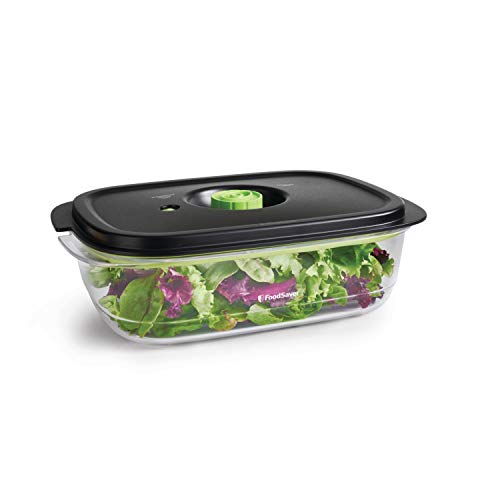
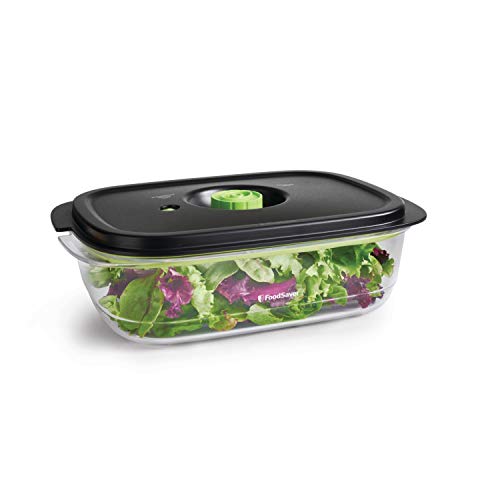
The FoodSaver Vacuum Container is a widely available system container designed to work with FoodSaver hose and handheld accessories, familiar to anyone who already owns a FoodSaver machine. Treat it here as a prose description only: it sits in the system tier its maker aims at, and its real value depends on whether its pump, lid sizes and spare parts fit the way your household already works. Judge it on the seal you can maintain, the valve you can clean properly, and the sizes you will reach for weekly, rather than on any headline promise printed on the box.
In daily use, a container like the FoodSaver earns its place through small repetitions: a rim wiped without thinking, a lid that tells you clearly whether the seal has held, a body that comes clean without soaking, and a shape that returns to the same shelf space every time. Those repetitions, not the first impressive demonstration, are what separate a system that is still in service after a year from one that migrates to the back of a cupboard. If you shortlist it, plan to start with the smallest sensible set and expand only after a month of real use.

Lasting Freshness Vacuum Container
The Lasting Freshness Vacuum Container is a plastic system sold in family-size sets with its own pump, aimed at bulk buyers who want many matching vessels rather than a few premium pieces. Treat it here as a prose description only: it sits in the system tier its maker aims at, and its real value depends on whether its pump, lid sizes and spare parts fit the way your household already works. Judge it on the seal you can maintain, the valve you can clean properly, and the sizes you will reach for weekly, rather than on any headline promise printed on the box.
In daily use, a container like the Lasting Freshness earns its place through small repetitions: a rim wiped without thinking, a lid that tells you clearly whether the seal has held, a body that comes clean without soaking, and a shape that returns to the same shelf space every time. Those repetitions, not the first impressive demonstration, are what separate a system that is still in service after a year from one that migrates to the back of a cupboard. If you shortlist it, plan to start with the smallest sensible set and expand only after a month of real use.
There is a learning curve, and it is mostly about restraint. New owners tend to vacuum everything to the maximum, fill containers to the brim and seal food that is still warm from cooking, then wonder why results are mixed. A week or two of calmer use — cooling food first, leaving a little headroom, wiping rims, using partial vacuum for delicate items — produces dramatically better results from exactly the same equipment. Keep notes for the first month if you like: which foods improved, which did not, which container sizes you reached for. That small record is worth more than any amount of advertising copy.
Think about what you will store most, in plain categories, before you look at any set. Households that cook big batches on weekends need large, freezer-friendly rectangles. Households that buy small amounts of good cheese, herbs and deli items need small vessels with excellent seals. Households feeding children need many medium containers that survive being dropped, opened by small hands and washed constantly. The right set is simply the one whose sizes match your list. Buying to a fantasy of elaborate preserving projects, when your real life is leftovers and lunches, is how good containers end up unused.
How to Get the Most Value If You Buy
Shape matters more than most listings admit. Rectangular and square containers tile a fridge shelf with far less wasted space than round ones, and they stack in neat layers that let you see a week of prepared food at a glance. Round containers, on the other hand, are easier to stir in, easier to clean in the corners and often seal beautifully because the pressure is even all the way around. If you mostly store soups, salads and marinated foods, round vessels earn their place. If you mostly store flat, portioned, stackable meals, rectangles will make your fridge feel twice as organised.
Capacity should be planned around portions, not around the biggest thing you might ever cook. A container that is far too large for its contents leaves a lot of air to remove and a lot of headspace where condensation can gather, while a container packed sensibly full evacuates quickly and keeps food in gentle contact with itself rather than sloshing around. Most households do best with a spread: small vessels for herbs, cheese ends and half an onion, medium vessels for single meals and leftovers, and one or two large vessels for a whole cooked dish or a big salad before dressing.
Think honestly about the pump before you think about the boxes. Some systems borrow suction from a countertop vacuum sealer you may already own, some use a small rechargeable electric pump, and some rely on a simple hand pump that asks for a little patience. The best pump is the one you will actually use on a tired weeknight. A powerful system that lives in a cupboard behind the slow cooker will lose to a modest hand pump that lives in the cutlery drawer, every single week, because storage habits are built on convenience far more than on maximum performance.
Compatibility is the hidden cost in this category. Lids, valves and pumps are rarely interchangeable between brands, so the first set you buy is effectively a decision about the ecosystem you will expand later. Before committing, check that replacement gaskets and extra lids for that system are easy to find, that individual containers are sold separately as well as in sets, and that the pump connection has not changed between generations of the product. A cheap orphaned set with no spare parts is more expensive in the end than a slightly dearer system you can maintain for years.
The Decision Checklist
Answer yes or no, honestly: Do you throw away herbs, cheese or leftovers most weeks? Do you cook at home at least three times a week? Will you wash a gasket and valve properly after each use? Do you have cupboard space for a system, lids included? Would better marinating and freezer order genuinely change your cooking? Are you clear that vacuum storage never extends safe storage time? Four or more yes answers, including the cleaning and safety questions, means a small starter set is very likely worth it. Fewer means ordinary containers will serve you better.
Marinating is the use case that surprises people most pleasantly. Under vacuum, a marinade is held in close contact with the surface of meat, fish or vegetables, and the food takes on flavour in a way that feels noticeably more even than a loose bag left to slosh in the fridge door. Use a container large enough that the food is not compressed into a solid block, keep everything properly refrigerated for the whole marinating time, and observe exactly the same food-safety timing you would use in any other vessel. Vacuum changes contact, not temperature, and the fridge rules do not relax just because the lid is impressive.
Delicate foods need a gentler hand. Berries, soft herbs, ripe avocado and leafy salads can be bruised if you pull every last bit of air out and let the pressure press the lid’s seal hard against them. Many users evacuate delicate foods only partially, or line the container with a sheet of kitchen paper to absorb surface moisture before sealing. Bread and baked goods benefit from the opposite instinct: they stale mainly through moisture loss and air exposure, so a good seal and a cool, dark cupboard do them real favours, though soft crusts can be slightly compressed if you overdo the vacuum.
Going Deeper: Living With the System Week After Week
Capacity should be planned around portions, not around the biggest thing you might ever cook. A container that is far too large for its contents leaves a lot of air to remove and a lot of headspace where condensation can gather, while a container packed sensibly full evacuates quickly and keeps food in gentle contact with itself rather than sloshing around. Most households do best with a spread: small vessels for herbs, cheese ends and half an onion, medium vessels for single meals and leftovers, and one or two large vessels for a whole cooked dish or a big salad before dressing.
Think honestly about the pump before you think about the boxes. Some systems borrow suction from a countertop vacuum sealer you may already own, some use a small rechargeable electric pump, and some rely on a simple hand pump that asks for a little patience. The best pump is the one you will actually use on a tired weeknight. A powerful system that lives in a cupboard behind the slow cooker will lose to a modest hand pump that lives in the cutlery drawer, every single week, because storage habits are built on convenience far more than on maximum performance.
Compatibility is the hidden cost in this category. Lids, valves and pumps are rarely interchangeable between brands, so the first set you buy is effectively a decision about the ecosystem you will expand later. Before committing, check that replacement gaskets and extra lids for that system are easy to find, that individual containers are sold separately as well as in sets, and that the pump connection has not changed between generations of the product. A cheap orphaned set with no spare parts is more expensive in the end than a slightly dearer system you can maintain for years.
Freezer use is where vacuum containers quietly shine, provided you leave room for expansion. Liquids and saucy foods expand as they freeze, so fill a little less generously than you would for the fridge, and let hot food cool completely before it goes anywhere near a seal. Freezing in a rigid container also protects food from being crushed under bags of peas and gives you flat, stackable blocks that thaw evenly. Label the lid or the side with the contents and the date you froze it, because vacuum-packed food all starts to look mysteriously similar after a few weeks in frosty glass or plastic.
Marinating is the use case that surprises people most pleasantly. Under vacuum, a marinade is held in close contact with the surface of meat, fish or vegetables, and the food takes on flavour in a way that feels noticeably more even than a loose bag left to slosh in the fridge door. Use a container large enough that the food is not compressed into a solid block, keep everything properly refrigerated for the whole marinating time, and observe exactly the same food-safety timing you would use in any other vessel. Vacuum changes contact, not temperature, and the fridge rules do not relax just because the lid is impressive.
Delicate foods need a gentler hand. Berries, soft herbs, ripe avocado and leafy salads can be bruised if you pull every last bit of air out and let the pressure press the lid’s seal hard against them. Many users evacuate delicate foods only partially, or line the container with a sheet of kitchen paper to absorb surface moisture before sealing. Bread and baked goods benefit from the opposite instinct: they stale mainly through moisture loss and air exposure, so a good seal and a cool, dark cupboard do them real favours, though soft crusts can be slightly compressed if you overdo the vacuum.
Cheese is a natural fit, with one caveat. Hard and semi-hard cheeses keep their flavour and resist drying out beautifully in a vacuum container, and you can open, slice and reseal the same block across many days without wrapping and rewrapping in film. Soft, high-moisture cheeses are less predictable: they can weep liquid under pressure and their texture can suffer. Whatever the cheese, bring it out, let any condensation be wiped away, and reseal with a clean, dry rim. If you see mould, do not simply trim more generously because the food was vacuum stored; use the same judgement you would use for any stored cheese.
Coffee, nuts, seeds and dry pantry goods are the quiet overachievers here. Oxygen is the enemy of aromatic oils, so keeping beans, ground coffee, walnuts or flaked almonds in an evacuated container in a cool cupboard protects flavour between uses far better than a loosely clipped bag. The container must be completely dry inside, because trapped moisture in a low-air environment helps nobody, and strong-smelling goods deserve their own dedicated vessel so the gasket does not carry garlic or spice notes into everything else you store. Pantry use also spares the pump the sticky work that fridge foods involve.
Leftovers are the everyday test. A cooked stew, a tray of roasted vegetables or the remains of a roast chicken will tell you within days whether your system seals well, stacks sensibly and cleans without a fight. Portion leftovers into the containers you will actually reheat or serve from, cool them promptly and refrigerate them within the usual safe window, and eat them within the usual safe period for cooked food. The vacuum buys you better texture and slower staling on the surface; it does not buy you extra days of safety, and any leftover that smells off or looks wrong should be thrown away without negotiation.
Odour control is an underrated benefit in a shared fridge. Strong foods — blue cheese, cut onion, garlicky dips, spicy ferments — can perfume everything around them through an ordinary loose lid. A properly sealed vacuum lid holds those smells in far more effectively, which your butter, milk and leftover cake will silently thank you for. The effect runs both ways: delicate foods are protected from absorbing fridge odours. Just remember that the gasket itself can absorb strong smells over time, which is another reason the lid needs regular, thorough washing rather than a quick rinse under the tap.
Stacking and fridge geography sound trivial until you live with a system for a month. Lids that nest or stack flat, bases that sit securely on top of one another, and a footprint that matches your shelf depth turn storage from a jigsaw into a system. Measure your fridge shelves and your cupboard before you buy a big set, and count the lids as carefully as the bases, because lids are what actually fill a drawer. A set that stores compactly when empty will be kept; a set that explodes across a cupboard will gradually be abandoned, however well it seals.
Washing up decides long-term satisfaction more than any first impression. Bodies that go in the dishwasher are convenient, but lids with valves and gaskets often do better washed by hand, where you can lift the seal, clean its channel and check for nicks or warping. Heat can distort some plastic lids and age gaskets faster, so follow the maker’s care guidance for the lid even if the base is dishwasher-happy. Dry every part fully before reassembling and storing, because a lid closed on a damp gasket in a dark cupboard is an invitation to musty smells that then transfer to food.
A simple seal check becomes second nature. After evacuating, wait a minute and look at the lid: many designs have an indicator, a slightly domed or dimpled button, or simply a lid that resists a gentle lift. Recheck the next day for the first few uses of any new container, until you trust your technique. If a seal has failed, the usual suspects, in order, are food on the rim, a gasket seated unevenly, a valve with residue in it, and a container filled so full that the lid cannot sit flat. Work through that list calmly before blaming the product, because technique fixes most failures.
Children, older relatives and anyone with limited hand strength should be part of the buying decision if they will use the containers. Some lids need a firm two-handed press to close before vacuuming, some pumps need a steady grip, and some sealed lids are genuinely hard to open because the pressure difference is doing its job. Look for lids with a clear release valve or tab that lets air back in before opening, and try to picture the least strong person in the household opening a sealed container of soup without drama. Accessibility is a performance feature, not an afterthought.
Travel and lunch use reward lighter, smaller containers and punish fragile ones. A vacuum container in a work bag keeps a salad crisper and a grain bowl fresher-tasting than a loose box, and the seal resists the minor leaks that ruin a commute. Glass is usually the wrong choice for a bag that gets dropped on trains; good plastic earns its keep here. Keep the container upright where you can, remember that temperature rules for perishable lunches still apply in full — an insulated bag and a cold pack are still necessary — and open the valve before microwaving anything, always.
The Break-Even Question: When a Vacuum food container Earns Its Space, and When It Honestly Does Not
Worth it is a personal verdict dressed as a product question. The same vacuum food container can be money well spent for one household and an expensive ornament for another, and the difference is almost never quality — it is frequency of use, fit with the space, and what it replaces. This section gives you a break-even way of thinking about the vacuum food container: a simple accounting of cost per use, space per benefit, and effort per result, plus the honest signs that your household should skip it, borrow it, or buy the simpler version instead. Run your own numbers through it before you decide.
The Arithmetic That Actually Matters
Start with cost per use. Take the full cost of owning the vacuum food container — purchase, any consumables, any accessories you genuinely need, and the space it occupies valued honestly — and divide it by a realistic count of uses in its first two years. Realistic is the key word: count the uses your calendar supports, not the uses your intentions promise in January. Then compare that figure with the alternatives you would actually use — hiring, borrowing, a service, or the simpler item you already own. A vacuum food container that wins that comparison on your real schedule is worth it almost regardless of its badge; one that only wins on an imagined schedule is not.
The Signs on Each Side of the Line
On the worth-it side: you already do the task or feel the gap weekly; you have measured the space and it fits with room to live around; someone besides the buyer will use it too; and you can name what it replaces or retires. On the skip-it side: the purchase is motivated by a rare event, a visitor, or a version of your routine you have never actually kept; the space only works if something else is moved into storage; or the honest plan is to change your habits first and buy later. Neither list is a judgement — households change, and a vacuum food container that fails the test this year may pass it easily after a move, a new job or a new family member.
Before you buy the vacuum food container, answer these five questions out loud or on paper:
- How many times did I genuinely need this in the last three months — not wished for it, needed it?
- What exactly does it replace, retire or stop me paying for, starting in its first month?
- Where does it live when idle, measured and checked, and what currently in that spot gets moved?
- Who else in the household will use it without being asked, and who will maintain it?
- If it stopped working in a year, would I replace it immediately, manage without, or feel quietly relieved?
Think about noise, light and heat as neighbours of the vacuum food container, not afterthoughts, since a choice that performs well but disturbs the room around it rarely stays popular for long. Remember that guests experience your vacuum food container without instructions, so anything that needs explaining, warning or demonstrating is worth simplifying before it is worth defending. Plan for the vacuum food container to be moved at least twice in its life — for cleaning, redecorating or a change of room — and favour designs that forgive being shifted, tilted or carried.
The last question is the sharpest: immediate replacement means the vacuum food container has become infrastructure in your home, and purchases like that are almost always worth it. Quiet relief means the opposite, however good the reviews were. Decide with your own arithmetic and your own answers, and whichever way the verdict falls you will have bought — or saved — with your eyes open, which is the only definition of value that survives contact with real life.
Frequently Asked Questions
Is a vacuum food container worth it for a small household?
It can be, because small households waste proportionally more: half an onion, the end of a cheese block, herbs bought for one recipe. A couple of small vessels aimed at exactly those items can pay for themselves in avoided waste. What a small household does not need is a large set; buy two or three well-chosen containers and judge the habit before expanding.
Does it save money?
It saves money indirectly, through food that gets eaten instead of binned and through fewer single-use wraps, provided you use it weekly for years. It does not save money if it sits unused, and no honest calculation should include keeping perishable food beyond its normal safe life, because vacuum storage does not allow that. The savings are real but they are household savings, not a licence to stretch safety.
What is the hidden cost nobody mentions?
Attention. The system asks for wiped rims, washed valves, dried gaskets and occasional seal checks, forever. Each task is small, but together they are the subscription you pay in effort. Households that accept that rhythm get excellent value; households that resent it quietly stop sealing anything, and an unused system is worth nothing at all.
Can I try vacuum storage cheaply first?
Yes, in spirit: start with the smallest sensible set from a system with spare parts available, use it for your three most-wasted foods for a month, and keep a rough note of what you stopped throwing away. That trial tells you more about your own habits than any review can. Avoid very large bargain sets as a trial, because clutter prejudices the experiment.
Does it replace my ordinary containers?
Only partly, and that is fine. Keep ordinary boxes for microwaving, serving and foods opened constantly. The vacuum system earns its worth on the foods where air does the damage — cheese, herbs, leftovers, marinades, coffee and freezer portions. Judged on that territory rather than on replacing everything, the value case is much stronger.
What would make it not worth it, even for a keen cook?
Buying it for preservation. If the hope is shelf-stable food, longer safe storage or room-temperature perishables, the product cannot deliver and the purchase will disappoint. Vacuum containers are not canning, they do not sterilise, and moist low-acid foods in low-oxygen conditions still demand full refrigeration discipline. Buy for freshness and order, and the worth-it case stands on solid ground.
Related Guides and Next Steps
Use the companion guides in this series together: each one covers a different decision, and together they take you from first principles to a clean, well-kept system that suits your kitchen.
vacuum food container pros and cons
vacuum food container buying guide
how to choose a vacuum food container
best vacuum storage bags for space saving
best under bed storage for spare household items