Disclosure: As an Amazon Associate, dailyhomedecorating.com earns from qualifying purchases. Links on this page are affiliate links; they cost you nothing extra. Prices and availability change often, so check the current Amazon listing before you buy.
Learning how to choose a string trimmer is mostly learning to ignore the loudest claims and ask six calmer questions in the right order. This guide walks those questions as steps, from measuring your plot to checking the safety basics, then shows the process applied to real buyer profiles, so the trimmer you bring home fits your ground, your hands and your habits from the first session.
Key Takeaways
The deciding factors, in order, are your plot and growth, the power source, cutting width and line, balance in your hands, the feed system, and the ownership basics of safety and storage. Brand comes last, not first. Follow the steps in order and the shortlist builds itself, because each step removes the tools that were never going to suit you, whatever their badges promise.
In this guide
What You Need to Know Before Comparing
A string trimmer is the finishing tool of the lawn. A mower handles the open ground, but it cannot reach the strip along a fence, the ring around a tree, the edge where grass creeps over a path, or the tufts that grow against steps and walls. A spinning length of flexible line does that work, slicing grass and light weeds cleanly where a blade would be clumsy or dangerous. Gardeners also call it a weed eater or a line trimmer, and whatever the name, its job is the same: the neat border that makes a mowed lawn look finished rather than merely cut.
String trimmers come in three broad families, and the differences shape daily life more than any headline feature. Gas models offer long running and strong cutting for large or overgrown ground, at the cost of fumes, noise, fuel mixing and more maintenance. Battery models start at the press of a trigger, run quietly enough for early mornings, and ask little beyond charging and cleaning, with running time tied to the battery ecosystem you own. Corded electric models are light and always ready near an outdoor socket, but the cord limits reach and demands constant awareness so it is never cut.
Gas power deserves an honest qualitative framing. Its strengths are endurance and indifference to charging: with fuel in the can, a gas trimmer works all day on a large or neglected plot, and it shrugs off thick stems that slow lighter tools. Its costs are fumes in your face, noise that carries across the street, pull starting, fuel mixing and storage, and an engine that needs periodic attention to keep starting easily. Battery power reverses the trade: clean, quiet and ready instantly, but bounded by the packs you own and the size of the ground you ask them to cover.
How to Choose a String Trimmer in Six Steps
Step One: Measure Your Plot and Your Growth
Start with the ground, not the catalogue. Walk your boundaries and note the total length of fence, wall and path you will trim, the number of trees and posts, and the toughest growth the tool must handle in your worst month, not your best. A short border of fine grass and a long boundary of thick, damp growth are different purchases wearing the same name, and being honest here prevents both the underpowered disappointment and the overpowered, overweight mistake.
Step Two: Choose the Power Source
Decide gas, battery or corded before you look at a single brand. Gas means endurance with fumes, noise and engine care. Battery means clean, quiet, instant work bounded by your packs, and it rewards joining a family you already own. Corded means light, endless running within reach of a socket. This single decision narrows the field more than any other and shapes your costs, your storage and your Sunday-morning relationship with the neighbours.
Step Three: Match Cutting Width and Line to the Job
Wider heads clear open strips faster and tangle more in tight corners; narrower heads are precise and slower. Thicker line tolerates tough stems and masonry; thinner line cuts fine grass cleanly and feeds easily. Match both to the growth you described in step one, and be wary of choosing maximum everything, because the biggest specification is often the least comfortable tool for an ordinary garden’s mixture of corners, posts and delicate plantings.
Step Four: Test Balance, Weight and Adjustment
If you can, hold the tool. Check whether the weight sits comfortably between your hands, whether the handle adjusts to your height, and whether you can imagine a full session without your forearms complaining. Consider everyone who will use it, not only the strongest person in the house. A trimmer that fits its users gets used weekly; a trimmer that fights them gets left in the shed while the edges grow back.
Step Five: Choose the Line Feed System
Bump feed is simple and proven but interrupts rhythm. Automatic feed is effortless but can overfeed in some designs. Fixed line removes feed problems and asks you to swap pieces by hand. Pick the system whose annoyance you mind least, because you will meet it in every session, and confirm that replacement spools or line for your choice are easy to find where you live.
Step Six: Check the Safety and Ownership Basics
Confirm the guard is sturdy and fitted as standard, and commit now to never removing or modifying it. Budget attention for eye protection, long trousers and closed shoes, and a clear-the-garden habit that keeps children, pets and bystanders away while you work. Finally, check storage: a dry wall space, a sensible home for spare line and spools, and, for cordless models, a charging spot that keeps packs ready.
For battery models, the ecosystem is the purchase. A trimmer bought into a battery family you already own, perhaps from a mower, blower or hedge trimmer, costs less to run, needs fewer chargers and always has a charged pack nearby. A lone tool with a single small pack can leave you watching a charger while the job is half done. Consider how the packs are shared in your household, how long a charge takes in real life, and whether the same packs power the other garden tools you realistically plan to buy next.
Corded electric trimmers are easy to overlook and easy to underestimate. For a small garden near the house, they offer endless running, light weight and almost no maintenance, and they start every time. The cord is the compromise: it limits how far you can roam, it snags on furniture and shrubs, and it must be managed constantly so it stays behind you and away from the head. Many owners of tiny plots find that trade perfectly acceptable, while anyone trimming a long fence line or a far corner will feel the tether within minutes.
Gear for This Guide
The following named models are discussed in prose only, one per broad tier, as worked reference points for the steps above. None carries a link or a price in this draft; use them to test whether your own shortlist behaves the way the steps predict.

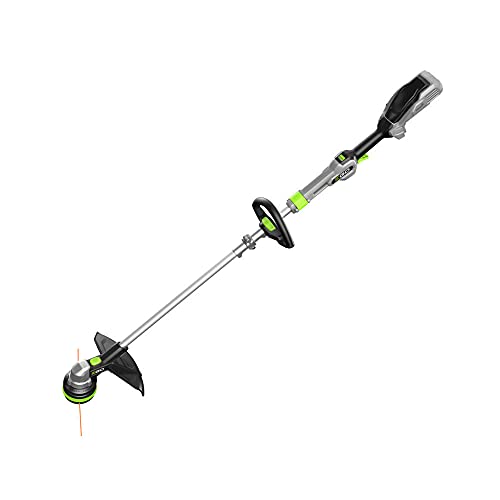
EGO Power+ String Trimmer
Positioning: premium battery pick. Prose-only in this draft — check the current listing before you buy.
The EGO Power+ String Trimmer represents the premium end of cordless trimming, aimed at owners who want gas-like confidence without fuel, fumes or pull starting. In prose terms it suits larger suburban gardens, thick border growth and households already invested in a serious battery platform. Its appeal is composure: it feels built for owners who trim often and dislike compromise. The honest trade-off is that premium cordless tools ask premium commitment to their battery family, so it makes most sense when the same packs will power your mower, blower or hedge trimmer as well.
Balance matters more than raw power for most gardens. A trimmer that feels nose-heavy will tire your forearms and shoulders long before the battery fades, while a well-balanced tool can be guided with the fingertips. Notice where the weight sits, how the handle adjusts to your height, and whether the shaft length lets you work standing upright rather than stooping. A curved shaft often suits shorter users and tight borders, while a straight shaft reaches under benches, shrubs and fences more easily and tends to suit taller users and heavier growth.

Ryobi 40V String Trimmer
Positioning: mid-range battery pick. Prose-only in this draft — check the current listing before you buy.
The Ryobi 40V String Trimmer sits in the broad, practical middle of the cordless market, and that is its charm. It is aimed at typical family gardens: fence lines, paths, tree rings and the weekly tidy after mowing. Owners drawn to wide retail availability and a large family of compatible garden tools will find its ecosystem thinking reassuring. Its limitation is the mirror of its strength, in that a generalist tool rarely feels as refined as a premium specialist, but for steady weekly trimming it covers the brief without drama.
Balance matters more than raw power for most gardens. A trimmer that feels nose-heavy will tire your forearms and shoulders long before the battery fades, while a well-balanced tool can be guided with the fingertips. Notice where the weight sits, how the handle adjusts to your height, and whether the shaft length lets you work standing upright rather than stooping. A curved shaft often suits shorter users and tight borders, while a straight shaft reaches under benches, shrubs and fences more easily and tends to suit taller users and heavier growth.
BLACK+DECKER String Trimmer
Positioning: entry-level household pick. Prose-only in this draft — check the current listing before you buy.
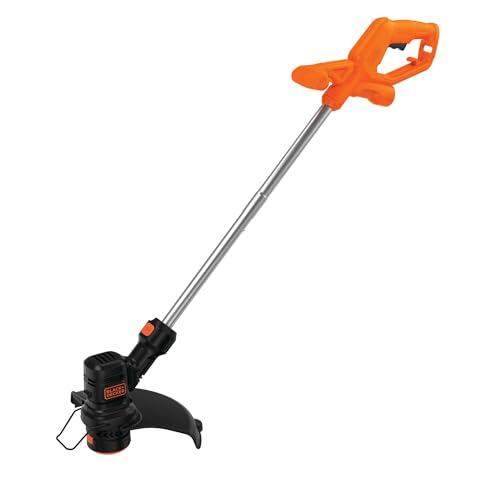
The BLACK+DECKER String Trimmer name is familiar to generations of household gardeners, and its models occupy the entry end of the market in both corded and cordless forms. That makes them a sensible first trimmer for a small garden, a starter home or a tool that will only ever tidy light edges. The strength is simplicity and approachability; the honest limitation is that entry tools are built for light duty, so asking them to reclaim an overgrown field edge weekly will shorten their life and your patience alike.
Balance matters more than raw power for most gardens. A trimmer that feels nose-heavy will tire your forearms and shoulders long before the battery fades, while a well-balanced tool can be guided with the fingertips. Notice where the weight sits, how the handle adjusts to your height, and whether the shaft length lets you work standing upright rather than stooping. A curved shaft often suits shorter users and tight borders, while a straight shaft reaches under benches, shrubs and fences more easily and tends to suit taller users and heavier growth.

WORX WG170 String Trimmer
Positioning: convertible trimming and edging pick. Prose-only in this draft — check the current listing before you buy.
The WORX WG170 String Trimmer is known for converting between trimming and wheeled edging, which makes it interesting for gardens where paths and drives dominate the finishing work. The wheeled edging posture takes the guesswork out of holding a vertical line freehand, and that support helps beginners produce straighter edges. It suits smaller to medium gardens and owners who value clever conversion over brute strength. Its trade-off is that convertible designs ask you to learn their mechanisms, and heavy rural growth is not their home ground.
Balance matters more than raw power for most gardens. A trimmer that feels nose-heavy will tire your forearms and shoulders long before the battery fades, while a well-balanced tool can be guided with the fingertips. Notice where the weight sits, how the handle adjusts to your height, and whether the shaft length lets you work standing upright rather than stooping. A curved shaft often suits shorter users and tight borders, while a straight shaft reaches under benches, shrubs and fences more easily and tends to suit taller users and heavier growth.
Common Mistakes
The common mistakes are easy to avoid once named. Owners scalp edges by tilting the head, wrap long grass around the shaft by attacking overgrowth in one plunge, and chew through line by grinding the head against concrete instead of letting the line tip kiss the edge. They buy power they cannot comfortably carry, ignore the battery family they already own, and remove the guard because it seems to block the view, trading safety for convenience. Each mistake has the same cure: slow down, match the tool to the ground, and respect what the spinning line can do.
Pro Tips
Good technique is mostly rhythm. Hold the head level and slightly above the ground, swing it in smooth arcs, and let the tip of the line do the work, because only the outer end moves fast enough to cut cleanly. Work so debris is thrown away from paths, windows, cars and people, which usually means choosing your walking direction deliberately rather than wandering. Trim before you mow if the edges are long, so the mower can pick up the clippings, or after you mow if you prefer to judge the finished height against the cut lawn.
The line itself is a working part, not a detail. Thicker line shrugs off tougher stems and lasts longer against masonry, while thinner line spins faster, cuts fine grass more cleanly and is gentler on delicate bark and edging. Twisted and shaped profiles can cut more quietly and efficiently than plain round line, though they can cost more and feed less smoothly in some heads. Whatever you choose, keep a spare spool or a length of fresh line ready, because old line grows brittle in storage and snaps constantly, turning a quick tidy into a stop-start frustration.
Buy spare line the same day you buy the tool, and keep it with the trimmer. Choose the shop as carefully as the tool where you can, favouring somewhere that stocks spools and parts for your model. And if two finalists feel equal, pick the lighter one: over a season, comfort beats specification almost every time.
Worked Examples
A small terraced garden with a short fence and a path needs lightness and quiet above all, so the steps lead to a compact battery or corded model, narrow head, easy feed. A family lawn with trees, a drive and an existing battery mower leads to a mid-range battery trimmer in that same family, sharing packs. A large rural plot with rough corners leads to endurance first: a trade-tough battery platform with several packs, or gas, with thicker line and a straight shaft for reaching under fences.
Think about who will actually use the tool. A trimmer shared between a tall adult and a shorter teenager needs an adjustable handle and manageable weight more than it needs maximum cutting width. Someone with limited grip strength or a bad back needs light weight, easy starting and a balance that does not fight them. A keen gardener clearing a large rural plot needs endurance and toughness instead. The best trimmer is not the most powerful one on the shelf; it is the one the real user can start, carry and control comfortably for the whole job.
Trimming changes with the seasons. Spring growth is soft, fast and wet, and rewards frequent light passes that keep edges from ever getting away from you. Summer brings tougher, drier stems and dust, when eye protection matters even more and line wears faster against hard ground. Autumn adds fallen leaves and seed heads that tangle in the head. A tool that copes gracefully across that range, with line and power suited to your worst month rather than your easiest, will never leave you mid-season wishing you had bought differently.
Safety and Care Once You Have Chosen
Safety comes before technique with this tool, every single time. Wear eye protection always, because the spinning line throws stones, grit and fragments of stem at surprising speed and distance. Wear long trousers and closed shoes, never sandals or shorts, so thrown debris meets fabric and leather rather than skin. Keep children, pets and bystanders well clear of the working area, and stop the moment anyone wanders close. Never remove or modify the guard, because it shields you from debris and sets the line length the head was designed for.
Build a short safety routine and repeat it until it is automatic. Before starting, walk the strip you plan to trim and pick up stones, wire, toys and hidden debris that the line could fling. Stop the motor fully before clearing tangled line or changing spools, and on cordless models remove the battery pack for any maintenance at all, so the head can never spin while your hands are near it. Let a gas engine cool before refuelling or storing it. These habits take seconds, and they are the difference between a routine chore and an avoidable injury.
Maintenance is light but not optional. After each session, stop the motor fully, remove the battery pack on cordless models, and clear the grass that packs around the head and guard, because a clogged guard cuts badly and throws debris unpredictably. Inspect the line, the spool and the guard for cracks, and wipe down the shaft before storing the tool dry and out of the weather. Gas models add fuel care and air-filter checks to that list. Ten unhurried minutes of care after a session prevents most of the failures owners blame on the tool.
Storage shapes how long a trimmer lasts and how willingly you use it. Hang it or stand it where the head stays clean and the shaft cannot be bent by things piled on top. Keep line somewhere cool and out of direct sun so it stays supple, and keep spare spools with the tool rather than in a forgotten drawer. Store battery packs partly charged in a dry place away from extremes of heat and cold, and keep fuel, for gas models, in a proper container away from living spaces and ignition sources.
Going Deeper: Field Notes That Change the Verdict
The sections below gather the practical details that owners discover across a season and that shorter guides leave out. Read them as the fine print of everything above: they rarely reverse a decision on their own, but they regularly refine one, and they are where the difference between a trimmer that suits a garden on paper and one that suits it in August is actually decided.
Troubleshooting follows a calm order. If cutting weakens, suspect the line first: too short, too old, too thin for the growth. If feeding fails, suspect the spool: tangled, welded or empty. If the head wraps with long stems, suspect technique: bites too deep into overgrowth. If a battery tool fades early, suspect the pack’s age and the thickness of the work before suspecting the motor. Most trimmer misery lives in the line and the spool, which is good news, because both are cheap, quick and entirely within the owner’s control.
Trimming around garden lighting, irrigation and cables demands a mental map before you start. Solar lights pull out or snap, irrigation heads crack, and shallow cables are exactly where the line wants to be. Mark or memorise their positions, slow down in those zones, and finish the last fraction by hand where the hardware is delicate. Replacing a season of garden fittings costs more, in money and temper, than the minutes saved by trimming blind.
For households with dogs, add one habit: check the strip for anything hidden in long grass before the line finds it. Toys, bones and worse lie invisible in growth, and the trimmer will announce them at speed. A thirty-second walk of the boundary, which the safety routine already asks for stones and wire, protects the dog, the tool and the operator’s shoes in a single pass, and it turns tidying the garden into a job done with attention rather than hope.
Dandelions and seeding weeds raise a timing point. Trimming a border full of ripe seed heads spreads tomorrow’s weeds across today’s lawn, so where a patch is about to seed, cut it before the heads mature or bag the clippings rather than scattering them. The trimmer is neutral in this; it simply does quickly whatever your timing decides. A gardener who thinks one week ahead finds the tool an ally in weed control rather than an unwitting distributor.
The finish of a trimming session is part of the craft. Sweep or blow clippings off paths before they stain or turn slippery, empty the grass packed under the guard while the motor is stopped and the battery is out, and stand back once to read the garden as a visitor would. That last look catches the missed tuft behind the bin and the wobbly section of edge, and fixing them now, while the tool is in your hands, is what separates a finished garden from an almost one.
Height of cut at the border is a quiet aesthetic decision. Matching the mower’s height makes the edge disappear into the lawn, which suits formal gardens. Leaving the border a fraction longer creates a soft, deliberate frame that suits cottage planting and wildflower margins. Either is right; what looks wrong is inconsistency, scalped patches beside long tufts, which is why a steady hand and a level head matter more than any setting printed on the tool.
Finally, remember that trimming skill compounds quietly. The owner who struggled in April is, by August, reading growth, choosing line, setting stance and judging edges without conscious thought, and the sessions have shortened as the results improved. That learning curve is part of what you buy with any trimmer, and it is why judging the tool, or yourself, on the first two sessions is the one evaluation every experienced owner would warn you against.
Working on a slope changes the safety picture and deserves its own moment of thought. Stand so the trimmer swings across the slope rather than up and down it, keep your footing deliberate on wet grass, and never trim above shoulder height, where control fades and debris falls toward you. If a bank is steep enough that you are thinking about footing more than cutting, that bank is telling you something: cut it in shorter sessions, from the most stable stance available, or leave it to a tool and a method designed for banks.
Gravel and loose-stone areas are the sternest test of trimmer discipline. The line treats a small stone as a projectile, so eye protection matters doubly there, bystanders must be further away, and a slower head speed with a lighter touch throws less material. Many owners simply accept slightly longer grass over gravel, trimming it rarely and carefully rather than weekly and briskly, and that compromise protects windows, cars, ankles and paintwork far better than any technique refinement.
Chain-link and wire fences eat line faster than almost any other boundary, because every contact is an abrasion event. Approach with the line tip only, accept that this boundary will always cost more line than a wooden fence or a wall, and consider a low physical barrier or a gravel strip along the fence base if the line bill annoys you. Wooden fences ask a different care: the line scuffs paint and soft timber, so a glancing touch at an angle preserves both the fence and your line.
Brick, stone and concrete edges reward precision. The line can cut a beautiful groove against masonry, but grinding the head along the surface destroys line, wears the head and spatters grit everywhere. The skilled motion is a kiss, not a scrape: the tip of the line just meeting the growth at the base of the wall. Practised on an unseen corner first, that touch becomes second nature and your line consumption falls dramatically.
Wildflower margins and pollinator corners need a truce with the trimmer. Many gardeners now leave deliberate uncut patches for insects, and the trimmer’s role becomes defining the edge of the wildness rather than eliminating it: a crisp trimmed frame around a shaggy centre looks intentional and tidy while the ecology inside it thrives. That framing is, quietly, one of the best modern uses of the tool, turning a potential argument about neatness into a design feature.
Allotments and community plots add social dimensions to trimming. Shared paths, neighbouring plots and communal hours all argue for the quieter battery and corded families, for trimming at sociable times, and for clearing your clippings from shared paths as you go. A trimmer used considerately on a shared site earns goodwill; the same tool used at dawn on a Sunday, scattering debris across a neighbour’s seedlings, spends it quickly.
For rental properties and landlords, a trimmer is often the difference between a garden that photographs well at a viewing and one that looks neglected. A light, simple battery model that any tenant can start safely, stored with its charger and a spare spool, is usually worth more than a powerful machine that intimidates. Clear written guidance about eye protection, the guard and keeping children and pets inside during use protects both the property and the people in it.
Buying a trimmer as a gift is a thoughtful idea with one trap: fit. Weight, height and grip are personal, and a well-meant surprise can miss by enough to gather dust. If you gift one, gift the ecosystem the household already uses, include eye protection and a spare spool in the parcel, and keep the receipt visible rather than hidden, so an exchange for a better-fitting model feels like part of the present rather than a failure of it.
Second-hand trimmers deserve careful, specific checks rather than general optimism. Inspect the guard for cracks, because a damaged guard must be replaced before use and never simply removed. Check the head and eyelets for wear, ask why the tool is being sold, and treat any machine with a missing guard, a bypassed safety switch or a story about modifications as a firm walk-away. For battery models, the health of the included packs matters more than the shine of the shaft.
Accessories earn their place one by one. Proper eye protection is not an accessory but a requirement. Gloves improve grip and calm vibration. A shoulder strap or harness transforms long sessions on larger plots by moving weight from arms to torso. Spare spools and fresh line prevent the mid-job stop. Beyond that honest list, most add-ons are optional garnish, and money is usually better spent on the right tool and its consumables than on a basket of attachments for jobs your garden never presents.
A shoulder strap deserves a fuller word, because it changes who can trim. Fitted so the tool hangs balanced at working height with your arms relaxed, a strap lets smaller or older users manage a mid-weight trimmer comfortably, and lets anyone work longer with less fatigue. Fitted badly, it fights you. Spend the unglamorous minutes adjusting it at home, standing on the lawn in your trimming shoes, rather than discovering the discomfort halfway down a long fence.
Wet grass is the trimmer’s least favourite meal. It clumps around the head, smears rather than cuts, sticks to shoes and paths, and makes slopes treacherous. Where the schedule allows, trim when growth is dry, ideally later in the day after dew lifts. When wet work is unavoidable, take shallower bites, clean the head and guard more often, and accept a scruffier finish that a dry pass can perfect later. Patience in the wet prevents the wrapped, stalled head that ruins sessions.
Line can weld itself together inside a hot spool, a puzzling failure where feed stops even though line remains. Heat, pressure and age fuse the wraps, and the cure is unglamorous: stop the motor fully, remove the battery pack on a cordless model, open the spool, unwind and rewind the line evenly without stretching it, and replace line that has grown old and brittle. Even winding, without crossing and trapping the strands, prevents most feed mysteries before they start.
Spring start-up is a small ritual worth doing properly. Inspect the guard, head and shaft after winter storage, replace line that sat all winter growing brittle, clean the air paths on a gas engine or charge and check the packs on a cordless one, and make the season’s first session a gentle one on easy growth while you confirm everything feeds, spins and stops as it should. Ten minutes of spring honesty prevents the first warm Saturday being spent troubleshooting instead of trimming.
Winterising mirrors that ritual at the other end of the year. Clean the tool thoroughly, because packed grass holds moisture against metal and plastic all winter. Store it dry, hung or stood where the shaft stays straight. Keep line somewhere cool and dark, store battery packs partly charged away from frost, and handle any remaining fuel for a gas model according to its maker’s guidance rather than leaving it to stale in the tank until spring.
Long grass laid flat by wind or foot traffic defeats a single-direction pass. Work such patches from two directions, lifting stems with the first light pass and cutting with the second, rather than pressing harder in one direction. The line rewards patience geometrically: two gentle passes cut what one forced pass merely combs, and the head stays clear of the wrapping that ends sessions early.
A final ownership truth: the trimmer you maintain is the trimmer you keep. Every failure story in this category, whatever the badge on the shaft, traces back to old line, a clogged guard, a neglected spool or storage in a damp corner. None of those is a product defect, and all of them are preventable in minutes. That is genuinely good news, because it puts the tool’s whole service life inside the owner’s own habits.
A word about trimming after rain on clay or heavy soil: your own footing becomes the hazard before the tool does. Boots with real tread, short sessions and a willingness to postpone the far corner are the professional answer, and there is no edge in any garden worth a twisted ankle. The trimmer will still be there tomorrow; the lawn edge, despite appearances, is in no hurry at all.
Owners of very small gardens sometimes ask whether a trimmer can share duty indoors or on artificial grass. Artificial lawns do benefit from an occasional light pass to lift the pile and clear debris from edges, worked gently so the line never digs at the backing. Balcony planters and patio pots, by contrast, are hand-shear territory: the trimmer is simply too much tool at that range, and recognising where a tool stops is part of using it well.
Consider the humble practice strip. Every new owner should nominate one unseen stretch of boundary, behind the shed or along the back fence, as the permanent practice and warm-up zone. New line, a changed spool, a borrowed tool or the first session of spring all get proven there, where a wobble costs nothing, before the showpiece edges by the front path receive the same treatment with the rhythm already settled.
There is a quiet economics to spare spools. A pre-wound spare turns a line failure into a one-minute swap, while hand-winding mid-session, with grass on your gloves and daylight fading, is where tangles and bad moods are born. Owners who trim often keep the spare loaded and ready in the same box as the eye protection, so the safety gear and the solution to the commonest stoppage live together and are fetched together.
Hearing deserves a mention alongside sight. Even battery trimmers produce a sustained whine at close range, and gas models are plainly loud, so ear protection is a sensible habit for long sessions and a courtesy consideration for anyone working nearby. Comfort is cumulative: the owner who protects eyes and ears, wears the trousers and closed shoes, and takes the strap’s help finishes a long session fresher in every way that matters.
Judging a trimmer by its first charge or first tank is a beginner’s error this guide is keen to prevent. New line, new packs and a new operator all settle in across the first several sessions, and performance, comfort and consumption typically improve together as the three bed in. Keep brief mental notes across the first month rather than the first afternoon, and you will evaluate the tool you actually own instead of the stranger you met on day one.
Edges along a prized flower border ask for one extra courtesy: trim before deadheading and tidying the border itself, so fallen clippings can be gathered with the border work rather than left to rot on the mulch. Work from the path side where you can, keep the line out of the planting, and let the border’s own foliage overhang slightly; a hard, scalped line against flowers looks meaner than the soft fringe it replaced.
Where a lawn meets a pond, a pool or a children’s play area, slow the whole operation down and widen the clear zone. Water hides footing, play equipment hides small people until the last moment, and both deserve a trimmed perimeter done deliberately, at a chosen time, with the area confirmed empty. The finish in these zones matters less than the certainty, and no guide on this site will ever rank a tidy edge above a safe one.
Think, too, about who trims when you cannot. A household where a partner, a parent or an older teenager may pick up the tool benefits from the simpler, lighter end of the range and from the safety routine written down rather than assumed. A note on the shed wall, eye protection stored with the tool, and a spare spool in its box turn your private habits into a household system that survives your holidays.
The difference between trimming and scalping is mostly head height discipline. Fit your eye by trimming a short test strip and inspecting it at ground level: crowns visible and soil showing means too low, a ragged fringe means too high or too fast. Once your eye learns the correct picture, your hands reproduce it without thought, and that calibration, repeated each spring, is worth more than any guide line or accessory sold for the purpose.
A Room-by-Room Fitting Walkthrough Before You Choose a String Trimmer
Technique matters more with a string trimmer than most instructions admit, because the same product can feel clumsy or effortless depending on the order you do things in and the setup you repeat each time. Start by standardising your starting position: the string trimmer in the same place, at the same setting, height or configuration each time, so that any change in results tells you something about the job rather than about a forgotten adjustment. Photograph your setup once the string trimmer is working well — the position, settings, arrangement or layout you settled on — so that after a move, a deep clean or a seasonal break you can recreate the arrangement that worked instead of rediscovering it. Use a simple decision checklist at the end: the string trimmer fits the measured space, suits the real frequency of the job, matches the household’s cleaning temperament, has obtainable parts, and has a named storage home — five yeses make a confident order.
Check the floor, wall, ground or surface the string trimmer will meet, since level, texture, moisture and finish decide more about everyday performance in garden & lawn settings than most shoppers expect when they are comparing listings on a screen. Watch for edge cases in your own home: the pet that investigates everything, the child who treats every new object as furniture, the guest who uses force where you use familiarity, and the weather, light or season that changes how a string trimmer behaves. Consider the cleaning rhythm honestly: a string trimmer that needs attention after every use suits a household that enjoys small rituals, and frustrates a household that wants to finish a job and walk away, so match the upkeep to the temperament, not the intention. Measure before anything else, and measure the string trimmer in its working state rather than its packed or folded state, because handles extend, lids open, cords trail, doors swing and users stand somewhere, and all of that belongs in the measurement.
If you want a concrete listing check, take a name already shortlisted in this guide, such as EGO Power+ String Trimmer, Ryobi 40V String Trimmer and BLACK+DECKER String Trimmer, and verify that exact string trimmer listing against the measurements and compatibility questions above, field by field, rather than trusting the headline description alone. Plan the storage home for the string trimmer before it arrives, naming the exact cupboard, corner, shelf, hook or stretch of floor, because a product without a home migrates around the house and slowly becomes the clutter it was bought to reduce. Seasonal thinking helps more than expected: a string trimmer bought in one season will meet different light, humidity, mud, heat, guests and routines in another, so judge its size, storage and upkeep against the hardest season it will face. When something about the string trimmer disappoints, change one variable at a time — position, setting, timing, load, accessory or technique — and give the change a fair trial, because changing three things at once leaves you with a better or worse result and no idea why.
Read the manual’s warnings page for the string trimmer even if you read nothing else, because that page is a compressed list of every way the product has ever been misused, and it tells you exactly which of your own habits needs adjusting. For troubleshooting, start with the boring causes first: power, water, fit, blockage, alignment, a full container, a loose connection or a setting changed by the last person who used the string trimmer, because boring causes account for most apparent failures. Slow down at the difficult part rather than speeding up, because most string trimmer tasks fail at the moment of impatience — the forced fit, the skipped check, the extra load — and a ten-second pause at that moment prevents most of the damage and most of the rework. Finally, remember that the best string trimmer for your home is the one whose size, habits and upkeep disappear into your routine, leaving only the result behind — a cleaner surface, a better-lit seat, a tidier shelf, an easier job — week after ordinary week.
Decide in advance what good enough looks like for the job the string trimmer does in your home, because chasing a flawless result usually costs more time than the flaw itself, and most households are happier with a reliable ninety percent they actually repeat.
Frequently Asked Questions
Do I really need eye protection for a quick trim?
Yes, every time, even for a two-minute tidy. The line throws stones and grit at speed, and eyes are the one injury you cannot shrug off. Long trousers and closed shoes complete the basic set, children and pets stay well clear, and the guard stays on the tool exactly as designed. Quick jobs cause a surprising share of accidents precisely because the precautions felt skippable.
Should I choose gas or battery power?
Choose by ground and temperament. Gas suits large, rough or remote plots where running all day matters, and it brings fumes, noise and engine upkeep. Battery suits most homes: instant starting, quieter running and minimal maintenance, with running time set by the packs you own. Corded remains a fair choice for a tiny plot near a socket. There is no universal winner, only the match between your land, your storage and your patience.
How do I stop the line snapping so often?
Frequent snapping usually means old, brittle line, a head ground against concrete, or line too thin for the growth. Store line cool and shaded, let only the line tip touch hard edges, and step up a line grade for tough stems. Also check the eyelet and spool for wear, and remember that technique, a light kiss rather than a grind, saves more line than any product change.
Can a string trimmer replace an edger?
For most homes, yes. A trimmer turned so the line spins vertically cuts a clean edge along paths and drives, and convertible models add a wheel for support. A dedicated edger earns its storage space only when you maintain long, formal edges very frequently. For the typical mix of a drive, a path and a few beds, the trimmer you already own for borders does the edging job perfectly well.
How do I protect tree trunks while trimming?
Keep a mulch ring or physical guard around valued trunks so the head rarely needs to go close, slow right down near bark, and finish the last inch by hand on young or thin-barked trees. Line wounds look small, but repeated cuts around a trunk damage the living layer under the bark and can weaken a tree over seasons. Prevention with mulch is faster than repair, because bark does not truly repair at all.
What should I do before clearing a tangle or changing a spool?
Stop the motor fully and wait for the head to be completely still. On a cordless model, remove the battery pack before your hands go anywhere near the head, and on a gas model switch off and let hot parts cool. Never remove or modify the guard while you work on the head. This short pause is the single most valuable habit in trimmer ownership.
Related Guides
our hands-on string trimmer review
string trimmer reviews compared
our string trimmer buying guide
string trimmer pros and cons in full
best cordless string trimmers compared