Disclosure: As an Amazon Associate, dailyhomedecorating.com earns from qualifying purchases. Links on this page are affiliate links; they cost you nothing extra. Prices and availability change often, so check the current Amazon listing before you buy.
The portable air conditioner vs air conditioner question is really three questions wearing one coat: portable against a window unit, portable against central air, and — underneath both — flexibility against efficiency. This portable air conditioner vs air conditioner comparison scores the contest criterion by criterion, because the honest answer is not that one side wins; it is that each side wins the homes it was designed for, and loses, sometimes badly, in the others.
Key Takeaways
- Choose portable if: you rent, you lack permission or a suitable window, or you cool one room at a time.
- Choose a window unit if: your windows and rules allow it — it is more efficient, quieter and frees your floor.
- Choose central if: you own the home and need whole-house cooling; nothing else plays that game.
- The portable’s tax is physics: hose losses and a compressor in the room. Its gift is freedom: no installation at all.
Portable Air Conditioner vs Air Conditioner: The Side-by-Side
| Criterion | Portable air conditioner | Window / central air conditioner |
|---|---|---|
| Installation | Roll in, fit a removable window kit, plug in | Window unit needs a suitable window and support; central needs a full professional install |
| Permission | Usually allowed where window units are banned | Window units often restricted by leases and HOAs; central is an owner’s decision |
| Efficiency | Lowest of the three; dual-hose closes part of the gap | Window units clearly better; central best at whole-house scale |
| Noise in the room | Compressor is in the room — always audible | Window unit partly outside the glass; central effectively silent indoors |
| Coverage | One closed room at a time | Window unit: one room; central: the whole home |
| Mobility and storage | Moves rooms and homes; stores in a closet | Window unit is semi-fixed; central is part of the house |
In this guide
Installation and Permission
This criterion is the portable’s home ground, and it is not close. A portable asks for an afternoon-free evening: fit the kit, seal it, plug straight into the wall — no extension cord — and you are cooling. A window unit asks for a window of the right shape and strength, a support solution, and frequently a landlord’s or HOA’s blessing that never comes. Central air asks for ownership, ductwork or a major retrofit, and a professional installation calendar. For the large population whose housing forbids the fixed options, this criterion does not merely favour the portable; it disqualifies the opposition. Verdict: portable wins, decisively, wherever permission or permanence is the constraint.
Cooling Efficiency and Power
The difference between single-hose and dual-hose designs decides how efficient a portable can be. A single-hose unit uses room air for everything: it blows some of it back into the room cold, and pushes the rest outside through its one hose. That exhausted air has to be replaced, so warm air from the rest of the home — and ultimately from outdoors — is constantly drawn in through door gaps and cracks. Engineers call this negative pressure, and it means a single-hose machine is always, to some degree, cooling a room while simultaneously inviting warm air into it. A dual-hose unit avoids most of that problem by drawing its intake air from outside through a second hose, so the air it exhausts is not air you already paid to cool. Dual-hose models cost more and their window kits take a little more care to fit, but in larger rooms and hotter climates the difference in real, sustained cooling is the difference between a machine that keeps up and one that runs all day and never quite arrives.
A window unit avoids the portable’s core losses: its hot side sits outside the glass, it does not consume room air, and it does not invite infiltration. Central systems extend the same advantage across a whole home with properly sized equipment. The portable’s honest counter is behavioural — it cools one closed room rather than a whole dwelling — but on machine efficiency alone the ranking is fixed and no brand escapes it. Verdict: window and central win; dual-hose portables narrow, but do not close, the gap.
Noise
Noise honesty matters with portables because the compressor — the loudest part of any air conditioner — sits inside the room with you, a few feet from your bed or desk. A window unit puts that machinery partly outside the glass; a central system puts it outside the house. A portable cannot. Fan noise can be softened with lower speeds, and inverter models avoid the repeated clunk-and-surge of a compressor starting, but no portable is silent, and a machine working hard on a hot afternoon will be clearly audible in the room. If you are a light sleeper, plan around this rather than pretending it away: pre-cool the bedroom before bed so the unit can idle at low speed overnight, position the machine as far from the bed as the hose allows, and treat manufacturer quietness claims as relative comparisons within the category, not as a promise of hush.
A window unit moves the compressor to the plane of the glass, with much of its sound shed outdoors; central air moves it out of the house entirely. For light sleepers, nurseries, and anyone recording or calling from the cooled room, this is a first-order difference, not a footnote. Verdict: fixed air conditioning wins, and the lighter your sleep, the bigger the win.
Room Coverage and Whole-Home Reality
Understanding heat load explains most portable air conditioner disappointment. Your room is not a sealed box that cools once and stays cool; heat leaks in continuously through sunlit glass, warm walls, ceilings under hot roofs, doorways, electronics, cooking, and the bodies of the people in it. A portable has to remove heat at least as fast as it arrives, all afternoon, or the temperature climbs no matter how cold the air at the vent feels. This is why the same machine can feel heroic in a shaded bedroom and hopeless in a sunny open-plan living space, and why closing curtains, sealing the window kit, and shutting the door of the room being cooled are not fussy extras — they directly cut the load the machine must beat. Judge any portable against the load of the specific room, at the worst hour of the day, and the category makes sense.
A portable is a one-room appliance with a door that closes; ask it to cool an open-plan home and it will run bravely and lose. Window units share the one-room limit but hold their room more efficiently. Central air is the only contestant actually designed for whole-home cooling, and households that need every room conditioned are not comparison-shopping — they need the fixed system. Verdict: central wins whole-home by definition; portable and window tie as single-room tools, with different prices of admission.
The Venting and Water Reality Both Sides Live With
Venting is not optional, and this is the single most misunderstood fact about portable air conditioners. A portable unit is a real refrigeration machine, and refrigeration does not destroy heat — it moves it. The cold air blowing from the front of the unit is only half of the story; the heat pulled out of that air, plus the heat the compressor itself generates, has to leave your home through the exhaust hose and the window kit. Run a portable air conditioner without venting its hose outside and the machine becomes a net heater: the room briefly feels cooler in the narrow stream of air in front of the unit while the room as a whole steadily warms up. Every legitimate use of a portable air conditioner starts with the hose sealed into a window, a sliding door kit, or another proper vent path to the outdoors. If a listing or a friend suggests you can simply stand the unit in the middle of a room and enjoy air conditioning, that suggestion is wrong, and no model from any brand escapes the physics.
Cooling air wrings moisture out of it, and that water has to go somewhere. Most portables collect condensate in an internal tank or evaporate much of it into the exhaust stream, and in moderate conditions many owners rarely think about draining at all. In humid weather, though, evaporation can fall behind, and a full tank will stop the machine — usually at the least convenient hour. Some models offer a continuous drain option through a small hose to a floor drain or a low container, which is the set-and-forget answer for humid climates and for units that run overnight. Build the habit early: know where your model’s tank and drain port are, check them on the schedule the manual suggests, and never ignore a machine that starts cycling off unexpectedly in muggy weather, because a full condensate tank is the most common and most fixable cause.
Window units shed their condensate outside by design and central systems drain to plumbing, so this criterion quietly favours the fixed side: the portable is the only contestant whose water and exhaust management are the owner’s weekly business. It is manageable business — the routines in this article are minutes a month — but it belongs on the scorecard. Verdict: fixed cooling wins on set-and-forget; the portable asks for, and rewards, a little discipline.
Strengths and Trade-Offs of Each Side
Portable — strengths
- No installation, permission or permanence; the only real cooling many homes may have.
- Moves between rooms and homes; stores away out of season.
- Targets one room instead of conditioning a whole dwelling.
Portable — trade-offs
- Least efficient design; single-hose models pay an extra physics tax.
- Compressor noise inside the room, plus floor space and a window kit to manage.
- Condensate, filters and sealing are the owner’s ongoing job.
Window / central — strengths
- Higher efficiency and stronger sustained cooling per room.
- Quieter where people live; central is effectively silent indoors.
- Central covers the whole home; both shed water without owner routines.
Window / central — trade-offs
- Need suitable windows, permission, or outright ownership and professional installation.
- Fixed in place; useless to you when you move house.
- Central cools rooms nobody is in, unless zoned — its own kind of waste.
Who Each Option Suits, and Who Should Skip Each
The portable suits renters, students, room-by-room coolers, households bridging a broken system, and anyone whose building says no to everything else; skip it if you own good windows and want the efficient, quiet default. The window unit suits owners and permitted renters cooling one room for years; skip it if your windows are the wrong shape, your lease forbids it, or you move often. Central suits owners cooling whole homes; skip it — for now — if the home, the budget or the tenancy is temporary. The value framing in is a portable air conditioner worth it and the category ledger in portable air conditioner pros and cons will confirm which household you are.
How to Decide
Ask in order. Am I allowed to install anything? If no, the portable wins by default — go to the portable air conditioner buying guide. Do I need the whole home cooled, and do I own it? If yes to both, central is your conversation. Is it one room, with a cooperative window, for the long term? The window unit is the efficient answer. Is it one room, but the window, lease or your moving plans say no? Portable — and if the room is large or the use is daily, a dual-hose portable. Every branch of that tree is a respectable outcome; the only wrong answer is forcing a contestant into a home it was not designed for.
Where to Buy: Representative Models for the Portable Side

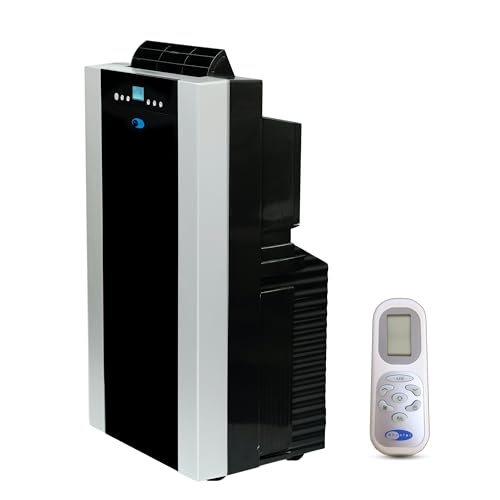
Whynter ARC-14S — premium dual-hose flagship
The Whynter ARC-14S is the reference point for buyers who want a portable unit that behaves as much like a real air conditioner as the format allows. Its dual-hose layout draws intake air from outdoors and pushes exhaust air back out, so it does not constantly pull warm air into the room through every crack and doorway the way single-hose designs do. In practice that means steadier cooling in larger bedrooms and living rooms, and less of the frustrating pattern where the air near the unit feels cold while the far side of the room never catches up.
Best for: larger bedrooms and living rooms where a window unit is banned or impossible, and for buyers who will run the machine daily all summer. Not suited for: anyone who needs near-silent sleep cooling, or a room with no workable window for the two-hose kit.
Positioning: this model is sold as a check-price-on-Amazon listing, and because prices move constantly we position it by tier rather than by a number — premium dual-hose flagship. Judge it against the room-matching and venting guidance in this article before judging it against other models.
SereneLife Portable Air Conditioner — compact entry-level option
SereneLife’s portable air conditioners aim at the compact, entry end of the category: smaller rooms, smaller budgets, and buyers who need relief in a single space rather than a whole-home solution. Expect the standard single-hose layout, a basic window kit, and controls that keep things simple. The honest framing is that a compact unit like this is a room-specific tool — a dorm, a small bedroom, a little office — and it will disappoint anyone who asks it to fight the heat load of a big, sunny, open space. Matched to the right room, it is a reasonable first step into real compressor cooling.
Best for: dorms, small bedrooms and little offices, and buyers testing whether a portable suits their life. Not suited for: large rooms, very hot climates as a sole source of cooling, or noise-sensitive sleepers.
Positioning: this model is sold as a check-price-on-Amazon listing, and because prices move constantly we position it by tier rather than by a number — compact entry-level option. Judge it against the room-matching and venting guidance in this article before judging it against other models.
Those two bookend the portable side — flagship dual-hose and compact entry — and the full field between them is scored in our portable air conditioner reviews and examined singly in the portable air conditioner review. On the fixed side, models are chosen with an installer or a window measurement in hand, not from a roundup, and we will not pretend otherwise.
Final Recommendation by Use Case
Renting, restricted, or mobile: portable, dual-hose if the room and budget allow. One room, good window, long stay: window unit. Whole home, owned, long horizon: central. Heat emergency tonight: whichever legitimate option can be cooling by bedtime — and that is very often the portable, which is why, for all its physics taxes, this category is not going anywhere.
Pets and children change the placement maths a little. The exhaust hose gets warm, the unit is heavy enough that it should never be climbed on, and a curious toddler can find the intake grille fascinating. Set the machine where it cannot be tipped, keep the cord path tidy and out of walkways, and remember that a pet who sleeps in the cooled room will vote for the portable with their whole heart on hot nights. None of this is a reason to avoid the category; it is a reason to spend two minutes on placement rather than none.
Finally, keep expectations in their proper frame and the category will treat you well. A portable air conditioner is a compromise appliance: it trades some efficiency and some quiet for freedom from installation, permission and permanence. Judged as a window unit it will always look flawed. Judged as the only real cooling many homes are allowed to have — the machine that makes a rental bedroom sleepable through a heatwave, with no contractor, no bracket and no deposit at risk — it is one of the most useful appliances a household can own. Buy it for what it is, install it with care, and it will do its job.
Consider the shoulder seasons, when a portable earns quiet extra credit. Spring and autumn bring the odd hot week that does not justify opening up a whole fixed system, and rooms that overheat from sun or cooking even when the house overall is comfortable. A portable rolled out for those spells, then stored again, solves a problem that fixed cooling handles clumsily. Owners who think of the machine as a year-round tool with a summer peak, rather than a three-month appliance, consistently rate its value higher — the purchase spreads itself across more days of genuine usefulness.
Sound behaves differently in a furnished room than in the empty rooms of product videos, and this cuts in the portable’s favour. Soft furnishings, curtains, bedding and carpet absorb a share of the machine’s voice, and the steady character of the sound — closer to a large fan than to a rattling appliance, once the compressor has settled — is the kind the ear learns to file as background. None of this rescues a genuinely light sleeper sharing a small room with a hard-working unit, but many owners who braced for the worst report being pleasantly surprised by the third night.
There is a planning habit that separates satisfied owners from frustrated ones: they decide the machine’s home before it arrives. They know which window, which outlet, where the hose will run, where the condensate will drain, and where the unit will live in winter. The buyers who improvise on delivery day discover the awkward outlet, the too-narrow window and the blocked doorway all at once, and blame the category for their logistics. Two measurements and five minutes of thought, taken before ordering, are the cheapest upgrade in this entire article.
Energy behaviour deserves one more honest paragraph. A portable converts electricity into cooling less efficiently than fixed alternatives, and within the category the spread is real: dual-hose and inverter designs waste less of your money on physics. But behaviour still dominates equipment. A well-matched portable cooling one closed room for the hours it is occupied will use less energy in a week than a whole-home system conditioning empty rooms around the clock. Judge energy at the level of the household’s actual pattern, not only the machine’s rating plate, and the portable’s ledger often looks better than its reputation.
Temperature is only half of comfort, and the other half — humidity, air movement, radiant heat from sunlit walls — explains many confusing experiences with this category. A room can read cool on the thermostat and still feel oppressive if the air is saturated, or feel pleasant a degree warmer once the air is dry and moving. This is why the dehumidifying effect of a real compressor machine feels disproportionately good, why curtains that stop sunlight heating the wall change the evening, and why owners who manage the whole comfort picture get more from the same machine than owners who chase the thermostat number alone.
If two people in the household disagree about the purchase, the disagreement is usually about different rooms in their heads. One imagines the bedroom at midnight; the other imagines the living room at four in the afternoon. Both are right about their own picture. Settle it by naming the actual room, the actual hours and the actual sleeper, and most portable decisions resolve themselves — including the decision that the honest answer for that living room is a different kind of cooling altogether, with the portable assigned to the bedroom where it will be loved.
Storage is the unglamorous final chapter of every season, and it decides how the next season begins. A machine put away wet grows smells; a machine put away with a clogged filter starts the summer already behind; a window kit tossed loose into a garage loses the panel you will need in the first heatwave. The half hour of end-of-season care described in this article — dry it, drain it, clean it, coil it, keep the kit together — is the difference between a portable that serves for years and one that becomes a cautionary tale at a yard sale.
A word about buying timing, offered qualitatively because prices are for the listing page to tell you. Demand for portables spikes exactly when the heat arrives, and the models everyone wants sell through first. The buyer who shops in the mild weeks, measures calmly, and has the kit fitted before the first hot night pays less in every currency that matters — money, choice and misery. Heatwave purchases can still be right; emergencies are this category’s home turf. But when the calendar gives you the chance to prepare, preparation is the bargain.
Guests change the cooling equation in ways worth planning for. A spare room that is tolerable for storage all year becomes a bedroom during the exact weeks when family visits and heat peaks coincide. A portable is the only form of real cooling that can be assigned to a room for a fortnight and then recalled, which is why so many households report that the machine bought for one emergency became the household’s flexible reserve. If your home hosts people in summer, that flexibility belongs in the value column alongside everything else.
Last, a note on reading any review of this category, including this one. Judge every claim against the room it was made in. A verdict earned in a small shaded bedroom does not transfer to a loft; a complaint filed from an open-plan living room does not convict a machine in a closed study. The portable category is unusually honest in this way: its physics is fixed, its trade-offs are known, and the variable is always the fit between machine, room and owner. Get the fit right and the reviews you write afterwards tend to be kind.
One more practical consideration is placement within the room. The unit should sit on a level floor, close enough to the window that the hose stays relaxed, with its intake grilles unobstructed by furniture, curtains or laundry baskets. Airflow into the machine is as important as airflow out of it, and a portable wedged into a corner behind a sofa will underperform its rating no matter how impressive the packaging looked. Give it breathing room, keep the path from vent to where people sit reasonably open, and remember that cool air pools low and spreads slowly — a small fan across the room can help distribute what the portable produces.
Renters deserve a specific word, because portables exist largely for them. A window kit that slides into the frame and removes without screws or permanent alteration is usually acceptable where a window unit is banned, but check your lease language about window obstructions and anything visible from outside. Photograph the window before installation and keep the original screens and stops somewhere safe. When you move out, the kit comes away in minutes and the window returns to exactly its previous state, which is precisely why this category survives in buildings that forbid almost every other form of real cooling.
Humidity deserves its own moment in any honest discussion of cooling. A portable air conditioner dehumidifies as a side effect of cooling, because moisture condenses on its cold coils, and in a sticky climate that drying can change how a room feels as much as the temperature drop itself. Skin feels cooler when sweat evaporates, and dry air lets it evaporate. This is also why a room can feel comfortable at a modest temperature once the clamminess is gone, and why running a dry mode on a muggy but not scorching evening sometimes beats blasting full cooling. It is also, of course, why the condensate guidance elsewhere in this article matters.
Think about the hours you actually need cooling, because they shape the right choice more than the worst afternoon of the year does. Many households need a bedroom cooled from evening to morning and a home office cooled through work hours, and almost nothing else. A portable aimed at those two windows of life, moved rarely and run steadily, lives an easy and effective life. A household that expects one machine to chase the family from room to room all day will fight the hose, the weight and the warm-up time constantly, and should think harder about fixed cooling or a second unit rather than a bigger portable.
The second-hand market for portables is large, and it deserves a caution. A used unit with a cracked hose, a missing window kit panel or a filter that has never been cleaned can look like a bargain and perform like a space heater with a fan. If you buy used, insist on seeing the machine run through a full cooling cycle, check that the exhaust air outside the hose is hot, confirm every kit panel is present, and clean the filter and tank before the first night in your home. Missing kit pieces are the most common hidden cost, and replacements are not always easy to match.
Pets and children change the placement maths a little. The exhaust hose gets warm, the unit is heavy enough that it should never be climbed on, and a curious toddler can find the intake grille fascinating. Set the machine where it cannot be tipped, keep the cord path tidy and out of walkways, and remember that a pet who sleeps in the cooled room will vote for the portable with their whole heart on hot nights. None of this is a reason to avoid the category; it is a reason to spend two minutes on placement rather than none.
Finally, keep expectations in their proper frame and the category will treat you well. A portable air conditioner is a compromise appliance: it trades some efficiency and some quiet for freedom from installation, permission and permanence. Judged as a window unit it will always look flawed. Judged as the only real cooling many homes are allowed to have — the machine that makes a rental bedroom sleepable through a heatwave, with no contractor, no bracket and no deposit at risk — it is one of the most useful appliances a household can own. Buy it for what it is, install it with care, and it will do its job.
Consider the shoulder seasons, when a portable earns quiet extra credit. Spring and autumn bring the odd hot week that does not justify opening up a whole fixed system, and rooms that overheat from sun or cooking even when the house overall is comfortable. A portable rolled out for those spells, then stored again, solves a problem that fixed cooling handles clumsily. Owners who think of the machine as a year-round tool with a summer peak, rather than a three-month appliance, consistently rate its value higher — the purchase spreads itself across more days of genuine usefulness.
Sound behaves differently in a furnished room than in the empty rooms of product videos, and this cuts in the portable’s favour. Soft furnishings, curtains, bedding and carpet absorb a share of the machine’s voice, and the steady character of the sound — closer to a large fan than to a rattling appliance, once the compressor has settled — is the kind the ear learns to file as background. None of this rescues a genuinely light sleeper sharing a small room with a hard-working unit, but many owners who braced for the worst report being pleasantly surprised by the third night.
There is a planning habit that separates satisfied owners from frustrated ones: they decide the machine’s home before it arrives. They know which window, which outlet, where the hose will run, where the condensate will drain, and where the unit will live in winter. The buyers who improvise on delivery day discover the awkward outlet, the too-narrow window and the blocked doorway all at once, and blame the category for their logistics. Two measurements and five minutes of thought, taken before ordering, are the cheapest upgrade in this entire article.
Energy behaviour deserves one more honest paragraph. A portable converts electricity into cooling less efficiently than fixed alternatives, and within the category the spread is real: dual-hose and inverter designs waste less of your money on physics. But behaviour still dominates equipment. A well-matched portable cooling one closed room for the hours it is occupied will use less energy in a week than a whole-home system conditioning empty rooms around the clock. Judge energy at the level of the household’s actual pattern, not only the machine’s rating plate, and the portable’s ledger often looks better than its reputation.
Temperature is only half of comfort, and the other half — humidity, air movement, radiant heat from sunlit walls — explains many confusing experiences with this category. A room can read cool on the thermostat and still feel oppressive if the air is saturated, or feel pleasant a degree warmer once the air is dry and moving. This is why the dehumidifying effect of a real compressor machine feels disproportionately good, why curtains that stop sunlight heating the wall change the evening, and why owners who manage the whole comfort picture get more from the same machine than owners who chase the thermostat number alone.
If two people in the household disagree about the purchase, the disagreement is usually about different rooms in their heads. One imagines the bedroom at midnight; the other imagines the living room at four in the afternoon. Both are right about their own picture. Settle it by naming the actual room, the actual hours and the actual sleeper, and most portable decisions resolve themselves — including the decision that the honest answer for that living room is a different kind of cooling altogether, with the portable assigned to the bedroom where it will be loved.
Storage is the unglamorous final chapter of every season, and it decides how the next season begins. A machine put away wet grows smells; a machine put away with a clogged filter starts the summer already behind; a window kit tossed loose into a garage loses the panel you will need in the first heatwave. The half hour of end-of-season care described in this article — dry it, drain it, clean it, coil it, keep the kit together — is the difference between a portable that serves for years and one that becomes a cautionary tale at a yard sale.
A word about buying timing, offered qualitatively because prices are for the listing page to tell you. Demand for portables spikes exactly when the heat arrives, and the models everyone wants sell through first. The buyer who shops in the mild weeks, measures calmly, and has the kit fitted before the first hot night pays less in every currency that matters — money, choice and misery. Heatwave purchases can still be right; emergencies are this category’s home turf. But when the calendar gives you the chance to prepare, preparation is the bargain.
Guests change the cooling equation in ways worth planning for. A spare room that is tolerable for storage all year becomes a bedroom during the exact weeks when family visits and heat peaks coincide. A portable is the only form of real cooling that can be assigned to a room for a fortnight and then recalled, which is why so many households report that the machine bought for one emergency became the household’s flexible reserve. If your home hosts people in summer, that flexibility belongs in the value column alongside everything else.
Last, a note on reading any review of this category, including this one. Judge every claim against the room it was made in. A verdict earned in a small shaded bedroom does not transfer to a loft; a complaint filed from an open-plan living room does not convict a machine in a closed study. The portable category is unusually honest in this way: its physics is fixed, its trade-offs are known, and the variable is always the fit between machine, room and owner. Get the fit right and the reviews you write afterwards tend to be kind.
One more practical consideration is placement within the room. The unit should sit on a level floor, close enough to the window that the hose stays relaxed, with its intake grilles unobstructed by furniture, curtains or laundry baskets. Airflow into the machine is as important as airflow out of it, and a portable wedged into a corner behind a sofa will underperform its rating no matter how impressive the packaging looked. Give it breathing room, keep the path from vent to where people sit reasonably open, and remember that cool air pools low and spreads slowly — a small fan across the room can help distribute what the portable produces.
Renters deserve a specific word, because portables exist largely for them. A window kit that slides into the frame and removes without screws or permanent alteration is usually acceptable where a window unit is banned, but check your lease language about window obstructions and anything visible from outside. Photograph the window before installation and keep the original screens and stops somewhere safe. When you move out, the kit comes away in minutes and the window returns to exactly its previous state, which is precisely why this category survives in buildings that forbid almost every other form of real cooling.
Humidity deserves its own moment in any honest discussion of cooling. A portable air conditioner dehumidifies as a side effect of cooling, because moisture condenses on its cold coils, and in a sticky climate that drying can change how a room feels as much as the temperature drop itself. Skin feels cooler when sweat evaporates, and dry air lets it evaporate. This is also why a room can feel comfortable at a modest temperature once the clamminess is gone, and why running a dry mode on a muggy but not scorching evening sometimes beats blasting full cooling. It is also, of course, why the condensate guidance elsewhere in this article matters.
The Tie-Breaker Tests: Portable air conditioner or Air Conditioner, Judged in Five Real Situations
Specification tables rarely settle the portable air conditioner question, because most households do not live at the extremes where one option dominates. What settles it is a handful of ordinary situations, repeated weekly, in which one design quietly fits better than the other. Run both candidates through the five situations below — honestly, with your own rooms, habits and household in mind — and the choice usually stops being a coin toss. Keep score as you go; a candidate that wins three situations clearly is almost always the right purchase, even if the other wins on paper.
Situation One and Two: The Busy Weekday and the Crowded Weekend
First, picture the portable air conditioner — or its alternative — at seven on a weekday morning, when everyone is in a hurry and nobody is being careful. Which design forgives haste? Which one can be used half-asleep, one-handed, or by the least patient person in the house without a workaround? Then picture the weekend version: guests, extra loads, longer sessions, and the portable air conditioner in continuous rather than occasional use. Designs that shine in short bursts sometimes annoy over long stretches, and the reverse is also true. A candidate that handles both rhythms without complaint has passed the two hardest tests in everyday life.
Situations Three to Five: Small Spaces, Shared Users and the Bad Day
Next, shrink the setting: imagine the same choice in the smallest room it might ever serve, or after a future move to a smaller home. Versatility across spaces is a hidden form of value that rarely appears in listings. Then multiply the users: children, guests, an older relative, a pet. A portable air conditioner that only works for one careful adult is a fragile purchase in a shared home. Finally, imagine the bad day — something spills, breaks, clogs, overheats or simply refuses to cooperate. Which option is easier to clean up, work around, repair or replace a part for? The answer to that last question is the one owners remember longest.
Score each candidate out of five against these tie-breakers before you decide:
- Haste test: the portable air conditioner can be used correctly by a rushed, distracted person with no instructions and no damage done.
- Endurance test: it stays comfortable, stable and pleasant through the longest session your household realistically gives it.
- Shrink test: it would still earn its place if you moved somewhere noticeably smaller next year.
- Sharing test: every regular user in the household can operate it safely and without a personal workaround.
- Bad-day test: the most likely failure can be cleaned, fixed or worked around in under half an hour with ordinary household tools.
Look at the edges and undersides when you judge build quality, because those are the places makers save money first and the places owners discover last. Ask how the portable air conditioner behaves on your worst floor, wall or surface rather than your best one, since homes are uneven and listings are photographed in perfect rooms. Keep the receipt, delivery note and a photograph of the label together, because warranty conversations go smoothly when dates and model details are at hand. If two people in the household disagree about the portable air conditioner, let the person who will use or maintain it most have the deciding vote on practical questions. Beware of buying for the household you hope to become; the portable air conditioner that serves the household you already are will be used this week, not someday. A tape measure, a spirit level and ten patient minutes prevent more portable air conditioner regrets than any amount of comparison shopping after the fact. When a listing is vague about a dimension, material or included part that matters to you, treat the vagueness itself as information and look for a clearer seller. Photograph your room at the time of day you will use the portable air conditioner most, and compare candidates against that light rather than against bright midday photographs.
If the scores end level, choose on the factor you cannot change later — footprint, capacity or core construction — and let accessories settle the rest. And if one candidate wins the situations but loses your heart, notice that too: a portable air conditioner is looked at and lived with daily, and liking the thing is a legitimate, durable advantage. What this method removes is the worst outcome of all — choosing by headline feature and discovering, a month later, that your real life preferred the other one.
Frequently Asked Questions
Does a portable air conditioner have to be vented out of a window?
Yes. Venting is mandatory, not an optional accessory step. The exhaust hose carries the heat removed from your room — plus the compressor’s own heat — to the outdoors. Without that path outside, the unit returns more heat to the room than it removes from the air stream, so the room warms up overall even though the air directly in front of the machine feels cool. Use the supplied window kit, a sliding-door kit, or another proper vent fitting, and seal around it so the heat you just expelled cannot leak straight back in.
Is a dual-hose portable air conditioner really better than a single-hose model?
In larger rooms and hotter weather, yes, and the reason is physics rather than marketing. A single-hose unit exhausts air it took from the room, which creates negative pressure that pulls warm air in from the rest of the home. A dual-hose unit draws its intake air from outdoors, so the cooled air in your room stays in your room. In a small, mild-climate bedroom a good single-hose model can still do an honest job, but dual-hose designs hold their cooling better as rooms and heat loads grow.
How loud is a portable air conditioner, honestly?
Honestly: noticeable. The compressor lives inside the room with you, so a portable will always be louder in the space than a window unit whose machinery sits partly outside, and far louder than a central system. Fan-only and low settings are gentler, and inverter models avoid repeated compressor start-up surges, but no portable is silent. Light sleepers do best by pre-cooling the room before bed, running the unit on a lower overnight setting, and placing it as far from the bed as the hose reasonably allows.
Can I run a portable air conditioner on an extension cord?
No. Portable air conditioners draw heavy current continuously for hours, and an extension cord under that sustained load can overheat and become a fire risk. Power strips and outlet multipliers are not a safe substitute either. Plug the unit directly into a wall outlet on a circuit that is not already loaded with other heavy appliances. If the outlet near your window is too far from where the unit must sit, rearrange the room or have an outlet added — never solve the problem with a cord.
How often will I need to drain the water from a portable air conditioner?
It depends on your climate and how the model handles condensate. Many units evaporate much of the collected moisture into the exhaust stream, so in drier weather draining may be rare. In humid conditions evaporation can fall behind, the internal tank fills, and the machine stops until it is emptied. Models with a continuous drain option let you run a small hose to a drain and skip the routine entirely. Expect to check more often during muggy spells, and treat unexpected shutdowns in humid weather as a full-tank signal first.
Related Guides
Keep reading with these companion guides from the same cooling series and the wider home-comfort library: