Disclosure: As an Amazon Associate, dailyhomedecorating.com earns from qualifying purchases. Links on this page are affiliate links; they cost you nothing extra. Prices and availability change often, so check the current Amazon listing before you buy.
Short answer first: is a portable air conditioner worth it? For a renter who cannot install a window unit, a household cooling one bedroom through a hot summer, or anyone whose building rules out fixed cooling, yes — a portable air conditioner is worth it when it is vented properly, sealed carefully and matched honestly to the room. For a homeowner with good windows who expects central-air silence and whole-house reach from one rolling box, it will disappoint. The rest of this article unpacks that verdict properly, because the honest answer depends entirely on your room, your rules and your expectations.
Key Takeaways
- Worth it if: you rent, your windows or HOA rule out window units, and you need one room genuinely cooled — not just air moved around.
- Not worth it if: you expect whole-home cooling, near-silence, or window-unit efficiency from a machine with its compressor in the room.
- Venting is mandatory. An unvented portable heats the room overall, no matter how cold the air at its vent feels.
- Dual-hose models cool larger rooms more honestly; single-hose models trade efficiency for price and simplicity.
- Judge capacity by the SACC rating, never by the biggest number on the box.
Is a Portable Air Conditioner Worth It? What You Actually Get
What you actually get from a portable air conditioner is real refrigeration — the same compressor-based cooling as any other air conditioner — delivered in a cabinet that rolls, plugs into a standard outlet, and asks for nothing permanent from your home. That last part is the entire point of the category. There is no bracket in the window frame, no contractor, no landlord negotiation, no hole in a wall. You wheel the unit in, fit a removable window kit, plug it in, and a room that was uninhabitable at bedtime becomes sleepable. For the large share of households whose housing situation forbids every other form of true cooling, that is not a compromise feature; it is the whole product.
You also get cooling that follows your life rather than your floor plan. The unit can live in the bedroom all summer, spend a heatwave in the home office, and go into a closet in October. It dehumidifies as it cools, which in humid regions transforms how a room feels even before the temperature falls far. Modern models add remotes, timers and sleep modes that make the machine easy to live with: set it to pre-cool the bedroom before you get home, let it hold a steady temperature overnight at low fan speed, and forget about it. What you are buying, in other words, is flexible, permission-free, single-room climate control — and judged on those terms, the category delivers.
Venting is not optional, and this is the single most misunderstood fact about portable air conditioners. A portable unit is a real refrigeration machine, and refrigeration does not destroy heat — it moves it. The cold air blowing from the front of the unit is only half of the story; the heat pulled out of that air, plus the heat the compressor itself generates, has to leave your home through the exhaust hose and the window kit. Run a portable air conditioner without venting its hose outside and the machine becomes a net heater: the room briefly feels cooler in the narrow stream of air in front of the unit while the room as a whole steadily warms up. Every legitimate use of a portable air conditioner starts with the hose sealed into a window, a sliding door kit, or another proper vent path to the outdoors. If a listing or a friend suggests you can simply stand the unit in the middle of a room and enjoy air conditioning, that suggestion is wrong, and no model from any brand escapes the physics.
That value is real, but it is conditional, and the conditions are the rest of this article. A portable earns its money when the room is the right size, the kit is sealed, and the buyer understands the noise and efficiency trade-offs before the box is opened. Bought casually and installed carelessly, the same machine becomes the internet’s favourite disappointment story. The difference is rarely the brand on the front; it is the match between machine, room and expectations.
In this guide
The Real Costs Beyond Money
The purchase price is the smallest cost of owning a portable, and it is the only one we will not put a number on — check the current listing for that. The real costs are paid in space, effort and tolerance. Floor space first: the unit occupies a patch of your room permanently for the season, near a window, with clearance around it, and in a small bedroom that footprint is genuinely felt. The window itself is partly surrendered to the kit, which reduces the light and the view and means that window no longer opens for fresh air on mild evenings. These are small things that owners live with daily, and they belong in the decision.
Noise honesty matters with portables because the compressor — the loudest part of any air conditioner — sits inside the room with you, a few feet from your bed or desk. A window unit puts that machinery partly outside the glass; a central system puts it outside the house. A portable cannot. Fan noise can be softened with lower speeds, and inverter models avoid the repeated clunk-and-surge of a compressor starting, but no portable is silent, and a machine working hard on a hot afternoon will be clearly audible in the room. If you are a light sleeper, plan around this rather than pretending it away: pre-cool the bedroom before bed so the unit can idle at low speed overnight, position the machine as far from the bed as the hose allows, and treat manufacturer quietness claims as relative comparisons within the category, not as a promise of hush.
Then there is the running discipline. The filter needs rinsing, the condensate needs managing, the kit needs to stay sealed, and the hose needs to stay short and unkinked. None of it is hard, but all of it is yours — a portable is a machine you operate, not a service you subscribe to. Energy use is the other honest cost: because of the efficiency physics explained in this article, a portable generally works harder to deliver the same cooling as a window unit, and that shows up across a summer of daily running. Buyers who run a unit twelve hours a day all season should weigh that reality, in qualitative terms, just as seriously as the sticker.
Electrical safety with a portable air conditioner is simple and non-negotiable: plug the unit directly into a wall outlet, and never use an extension cord. These machines draw heavy, sustained current for hours at a time, and a light-duty extension cord under that load can overheat — this is a fire risk, not a technicality. Power strips and multi-outlet adapters are not a workaround; the rule is a direct connection to a properly rated outlet, ideally on a circuit that is not already carrying other heavy appliances. If the only outlet near the window is out of the hose’s reach, the correct fixes are to rearrange the room, choose a different window, or have an electrician add an outlet — not to reach for a cord. Check the outlet and plug periodically through the season; a plug that runs hot or a breaker that trips repeatedly is the machine telling you the circuit is not up to the job.
Who a Portable Air Conditioner Pays Off For
The renter in a building that bans window units
This is the portable’s home turf. The lease forbids brackets and anything hanging out of the window; the bedroom faces west and bakes all afternoon; sleep has become a negotiation with the weather. A portable with a tidy window kit is usually the only real cooling allowed, and it transforms the situation completely. Choose a dual-hose model if the room is large or the summers are serious, seal the kit like you mean it, and pre-cool before bed. For this household the worth-it question answers itself by the first cool night.
The household cooling one room, on purpose
Many homes do not need whole-house cooling; they need one bedroom survivable, or one home office workable, while the rest of the house stays warm and unconditioned. Paying to cool empty rooms is its own waste, and a portable aimed at a single closed-door room is a rational, targeted tool. This buyer should size carefully, close the door, and treat the rest of the house as outside. Judged as a one-room appliance rather than a whole-home system, the portable’s efficiency looks far more reasonable and its value becomes obvious.
The household bridging a gap
Central systems fail in heatwaves, renovations drag, a new home’s installation is booked weeks out, and a guest room suddenly becomes a bedroom for the summer. A portable is the fastest legitimate bridge across all of those gaps: bought today, cooling tonight, and afterwards it retires to the one room that always runs hot. Households that keep a portable as permanent backup equipment — the spare tyre of home cooling — consistently report it among their best appliance purchases, precisely because its value concentrates in the weeks when nothing else is available.
Who Should Skip It
Skip the portable if your windows and your budget both allow a window unit and you have no plan to move the machine between rooms. The window unit puts its noise and heat partly outside, cools more efficiently, and costs you nothing in floor space; choosing a portable anyway means paying the portable’s compromises without needing its one great gift, which is freedom from installation. Skip it, too, if you are a very light sleeper sharing a small room with the machine and unwilling to pre-cool — the compressor is in the room, and no marketing changes that.
Skip it if the job is a large, open-plan, sun-filled living space. That is the highest heat load in the home, usually with doorways that cannot be closed, and it is where portables go to be unfairly judged. Either commit to fixed cooling for that space or cool the rooms you actually sleep and work in. And skip the whole category if the room has no workable window or vent path at all: without venting there is no air conditioning, only an expensive fan with a compressor attached, and evaporative coolers or fans are the honest tools for windowless spaces in dry climates.
The Strengths and Trade-Offs of Owning One
Strengths
- No installation, no permission, no permanent change to the home — the only real cooling most renters can have.
- Moves between rooms and between homes; stores away when the season ends.
- Real compressor cooling plus meaningful dehumidification in a single appliance.
Trade-offs
- Less efficient than a window unit doing the same job, especially in single-hose form.
- The compressor is in the room, so cooling always comes with audible company.
- It claims floor space, part of a window, and a little of your attention all season.
The difference between single-hose and dual-hose designs decides how efficient a portable can be. A single-hose unit uses room air for everything: it blows some of it back into the room cold, and pushes the rest outside through its one hose. That exhausted air has to be replaced, so warm air from the rest of the home — and ultimately from outdoors — is constantly drawn in through door gaps and cracks. Engineers call this negative pressure, and it means a single-hose machine is always, to some degree, cooling a room while simultaneously inviting warm air into it. A dual-hose unit avoids most of that problem by drawing its intake air from outside through a second hose, so the air it exhausts is not air you already paid to cool. Dual-hose models cost more and their window kits take a little more care to fit, but in larger rooms and hotter climates the difference in real, sustained cooling is the difference between a machine that keeps up and one that runs all day and never quite arrives.
Alternatives to Consider
Before deciding, hold the portable up against its real alternatives. A window air conditioner is the efficiency and quietness winner wherever it is allowed, and our companion comparison — portable air conditioner vs air conditioner head-to-head — walks through that contest in full. A fan, including the options in tower fans for moving air without cooling, only moves air: it cools people, not rooms, and in a genuine heatwave that distinction matters. Blackout curtains from blackout curtains that cut solar heat gain reduce the load any cooler must fight, and they pair well with every option on this page. Finally, in dry climates an evaporative cooler can be effective; in humid ones it adds moisture to already heavy air and usually disappoints.
How to Get the Most Value If You Buy
The window kit is where portable air conditioner performance is quietly won or lost. The kit’s job is to hold the exhaust hose in the window opening while sealing the rest of that opening against the outdoors. Every gap around the panels is a leak that lets hot outside air pour back into the room you are paying to cool, and on a windy day those leaks can undo a noticeable share of the machine’s work. Take the extra minutes during installation: fit the panels snugly, use the foam sealing strips supplied in the kit, and add weatherstripping or tape where panels meet the frame imperfectly. Keep the hose as short and straight as its length allows, because every tight bend strangles airflow and makes the machine work harder. A careful twenty-minute installation pays you back every single hour the unit runs, all summer long.
Matching the unit to the room is the decision buyers most often get wrong, usually by buying for the room they wish they had or by trusting the largest number on the box. Start with the room’s actual floor area, then adjust honestly for its conditions: a room with big west-facing windows, a kitchen’s worth of cooking heat, a gaming PC and two occupants, or a top-floor ceiling under a hot roof all carry a heavier heat load than a shaded, ground-floor bedroom of the same size. Undersized portables run constantly and never quite cool; oversized ones cost more, take more space, and can leave the air feeling clammy because they satisfy the thermostat before they have run long enough to dry the air properly. Measure the room, count its heat sources without flattering yourself, and choose the capacity — judged by the SACC rating — that matches that honest picture.
How you run a portable matters almost as much as which one you buy. Start cooling before the room is unbearable: a machine switched on in a room that is already heat-soaked faces hours of catch-up, while one started earlier holds the line with far less strain. Close the door of the room being cooled and treat the portable as a one-room appliance, because that is what it is. Use the thermostat rather than running the unit flat out and then switching it off, since steady moderation beats heroic blasts followed by warm rebounds. In humid weather, a dry or dehumidify mode can make a room feel dramatically better even before the temperature falls far, because clammy air feels hotter than dry air at the same reading. Small habits — curtains closed on the sunny side, the filter clean, the kit sealed — compound into the difference between a portable that earns its floor space and one that gets sold in September.

Whynter ARC-14S — premium dual-hose flagship
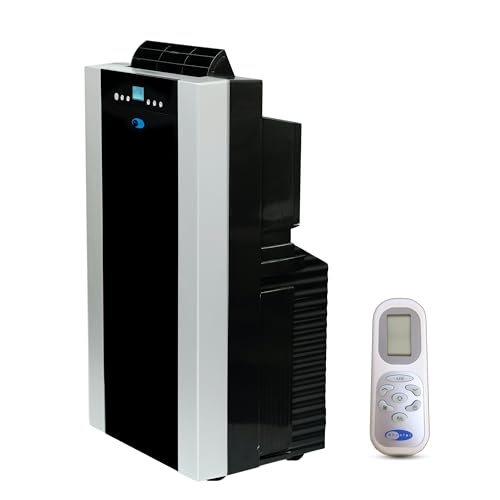
The Whynter ARC-14S is the reference point for buyers who want a portable unit that behaves as much like a real air conditioner as the format allows. Its dual-hose layout draws intake air from outdoors and pushes exhaust air back out, so it does not constantly pull warm air into the room through every crack and doorway the way single-hose designs do. In practice that means steadier cooling in larger bedrooms and living rooms, and less of the frustrating pattern where the air near the unit feels cold while the far side of the room never catches up.
Best for: larger bedrooms and living rooms where a window unit is banned or impossible, and for buyers who will run the machine daily all summer. Not suited for: anyone who needs near-silent sleep cooling, or a room with no workable window for the two-hose kit.
Positioning: this model is sold as a check-price-on-Amazon listing, and because prices move constantly we position it by tier rather than by a number — premium dual-hose flagship. Judge it against the room-matching and venting guidance in this article before judging it against other models.

Midea Duo — premium dual-hose inverter design
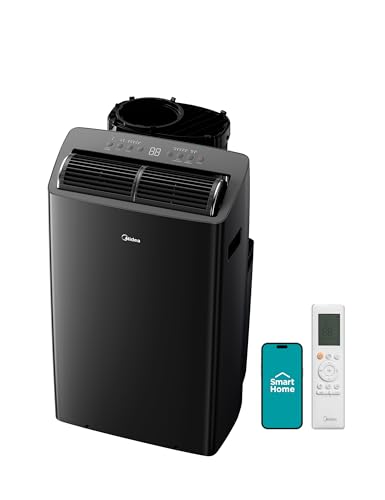
The Midea Duo wraps its two hoses into a single combined hose assembly, which makes the window installation cleaner than traditional twin-hose setups, and pairs that layout with inverter compressor technology that can ramp down instead of cycling fully on and off. Owners who run a unit for long evening and overnight stretches tend to value exactly that behaviour: fewer hard starts, steadier temperatures, and a sound profile that settles instead of surging. It sits at the premium end of the portable category and earns that position through the hose design and the inverter rather than through gimmicks.
Best for: light sleepers who still need real cooling, long daily run times, and buyers who want the neatest possible window installation. Not suited for: tight budgets, or rooms where the combined hose cannot reach a suitable window without strain.
Positioning: this model is sold as a check-price-on-Amazon listing, and because prices move constantly we position it by tier rather than by a number — premium dual-hose inverter design. Judge it against the room-matching and venting guidance in this article before judging it against other models.
Those two dual-hose models are the value picks for buyers who will run a machine hard all summer, because efficiency compounds daily. For a smaller bedroom on a tighter budget, the single-hose options in our full portable air conditioner buying guide and the hands-on notes in the portable air conditioner review may suit better — the worth-it maths changes with the room.
The Decision Checklist
Answer these honestly, out loud if necessary. Do my housing rules forbid window units or fixed installation? Is there exactly one room — or one room at a time — that truly needs cooling? Does that room have a workable window and a wall outlet the unit can plug straight into, with no extension cord involved? Can I live with compressor noise a few feet away, softened by pre-cooling and low overnight speeds? Will I actually seal the window kit and rinse the filter? If you answered yes to all five, a portable air conditioner is worth it for you, and the remaining question is only which model — start with the portable air conditioner pros and cons laid out plainly. If two or more answers were no, your money is better spent on the alternatives above.
Cooling air wrings moisture out of it, and that water has to go somewhere. Most portables collect condensate in an internal tank or evaporate much of it into the exhaust stream, and in moderate conditions many owners rarely think about draining at all. In humid weather, though, evaporation can fall behind, and a full tank will stop the machine — usually at the least convenient hour. Some models offer a continuous drain option through a small hose to a floor drain or a low container, which is the set-and-forget answer for humid climates and for units that run overnight. Build the habit early: know where your model’s tank and drain port are, check them on the schedule the manual suggests, and never ignore a machine that starts cycling off unexpectedly in muggy weather, because a full condensate tank is the most common and most fixable cause.
One more practical consideration is placement within the room. The unit should sit on a level floor, close enough to the window that the hose stays relaxed, with its intake grilles unobstructed by furniture, curtains or laundry baskets. Airflow into the machine is as important as airflow out of it, and a portable wedged into a corner behind a sofa will underperform its rating no matter how impressive the packaging looked. Give it breathing room, keep the path from vent to where people sit reasonably open, and remember that cool air pools low and spreads slowly — a small fan across the room can help distribute what the portable produces.
Renters deserve a specific word, because portables exist largely for them. A window kit that slides into the frame and removes without screws or permanent alteration is usually acceptable where a window unit is banned, but check your lease language about window obstructions and anything visible from outside. Photograph the window before installation and keep the original screens and stops somewhere safe. When you move out, the kit comes away in minutes and the window returns to exactly its previous state, which is precisely why this category survives in buildings that forbid almost every other form of real cooling.
Humidity deserves its own moment in any honest discussion of cooling. A portable air conditioner dehumidifies as a side effect of cooling, because moisture condenses on its cold coils, and in a sticky climate that drying can change how a room feels as much as the temperature drop itself. Skin feels cooler when sweat evaporates, and dry air lets it evaporate. This is also why a room can feel comfortable at a modest temperature once the clamminess is gone, and why running a dry mode on a muggy but not scorching evening sometimes beats blasting full cooling. It is also, of course, why the condensate guidance elsewhere in this article matters.
Think about the hours you actually need cooling, because they shape the right choice more than the worst afternoon of the year does. Many households need a bedroom cooled from evening to morning and a home office cooled through work hours, and almost nothing else. A portable aimed at those two windows of life, moved rarely and run steadily, lives an easy and effective life. A household that expects one machine to chase the family from room to room all day will fight the hose, the weight and the warm-up time constantly, and should think harder about fixed cooling or a second unit rather than a bigger portable.
The second-hand market for portables is large, and it deserves a caution. A used unit with a cracked hose, a missing window kit panel or a filter that has never been cleaned can look like a bargain and perform like a space heater with a fan. If you buy used, insist on seeing the machine run through a full cooling cycle, check that the exhaust air outside the hose is hot, confirm every kit panel is present, and clean the filter and tank before the first night in your home. Missing kit pieces are the most common hidden cost, and replacements are not always easy to match.
Pets and children change the placement maths a little. The exhaust hose gets warm, the unit is heavy enough that it should never be climbed on, and a curious toddler can find the intake grille fascinating. Set the machine where it cannot be tipped, keep the cord path tidy and out of walkways, and remember that a pet who sleeps in the cooled room will vote for the portable with their whole heart on hot nights. None of this is a reason to avoid the category; it is a reason to spend two minutes on placement rather than none.
Finally, keep expectations in their proper frame and the category will treat you well. A portable air conditioner is a compromise appliance: it trades some efficiency and some quiet for freedom from installation, permission and permanence. Judged as a window unit it will always look flawed. Judged as the only real cooling many homes are allowed to have — the machine that makes a rental bedroom sleepable through a heatwave, with no contractor, no bracket and no deposit at risk — it is one of the most useful appliances a household can own. Buy it for what it is, install it with care, and it will do its job.
Consider the shoulder seasons, when a portable earns quiet extra credit. Spring and autumn bring the odd hot week that does not justify opening up a whole fixed system, and rooms that overheat from sun or cooking even when the house overall is comfortable. A portable rolled out for those spells, then stored again, solves a problem that fixed cooling handles clumsily. Owners who think of the machine as a year-round tool with a summer peak, rather than a three-month appliance, consistently rate its value higher — the purchase spreads itself across more days of genuine usefulness.
Sound behaves differently in a furnished room than in the empty rooms of product videos, and this cuts in the portable’s favour. Soft furnishings, curtains, bedding and carpet absorb a share of the machine’s voice, and the steady character of the sound — closer to a large fan than to a rattling appliance, once the compressor has settled — is the kind the ear learns to file as background. None of this rescues a genuinely light sleeper sharing a small room with a hard-working unit, but many owners who braced for the worst report being pleasantly surprised by the third night.
There is a planning habit that separates satisfied owners from frustrated ones: they decide the machine’s home before it arrives. They know which window, which outlet, where the hose will run, where the condensate will drain, and where the unit will live in winter. The buyers who improvise on delivery day discover the awkward outlet, the too-narrow window and the blocked doorway all at once, and blame the category for their logistics. Two measurements and five minutes of thought, taken before ordering, are the cheapest upgrade in this entire article.
Energy behaviour deserves one more honest paragraph. A portable converts electricity into cooling less efficiently than fixed alternatives, and within the category the spread is real: dual-hose and inverter designs waste less of your money on physics. But behaviour still dominates equipment. A well-matched portable cooling one closed room for the hours it is occupied will use less energy in a week than a whole-home system conditioning empty rooms around the clock. Judge energy at the level of the household’s actual pattern, not only the machine’s rating plate, and the portable’s ledger often looks better than its reputation.
Temperature is only half of comfort, and the other half — humidity, air movement, radiant heat from sunlit walls — explains many confusing experiences with this category. A room can read cool on the thermostat and still feel oppressive if the air is saturated, or feel pleasant a degree warmer once the air is dry and moving. This is why the dehumidifying effect of a real compressor machine feels disproportionately good, why curtains that stop sunlight heating the wall change the evening, and why owners who manage the whole comfort picture get more from the same machine than owners who chase the thermostat number alone.
If two people in the household disagree about the purchase, the disagreement is usually about different rooms in their heads. One imagines the bedroom at midnight; the other imagines the living room at four in the afternoon. Both are right about their own picture. Settle it by naming the actual room, the actual hours and the actual sleeper, and most portable decisions resolve themselves — including the decision that the honest answer for that living room is a different kind of cooling altogether, with the portable assigned to the bedroom where it will be loved.
Storage is the unglamorous final chapter of every season, and it decides how the next season begins. A machine put away wet grows smells; a machine put away with a clogged filter starts the summer already behind; a window kit tossed loose into a garage loses the panel you will need in the first heatwave. The half hour of end-of-season care described in this article — dry it, drain it, clean it, coil it, keep the kit together — is the difference between a portable that serves for years and one that becomes a cautionary tale at a yard sale.
A word about buying timing, offered qualitatively because prices are for the listing page to tell you. Demand for portables spikes exactly when the heat arrives, and the models everyone wants sell through first. The buyer who shops in the mild weeks, measures calmly, and has the kit fitted before the first hot night pays less in every currency that matters — money, choice and misery. Heatwave purchases can still be right; emergencies are this category’s home turf. But when the calendar gives you the chance to prepare, preparation is the bargain.
Guests change the cooling equation in ways worth planning for. A spare room that is tolerable for storage all year becomes a bedroom during the exact weeks when family visits and heat peaks coincide. A portable is the only form of real cooling that can be assigned to a room for a fortnight and then recalled, which is why so many households report that the machine bought for one emergency became the household’s flexible reserve. If your home hosts people in summer, that flexibility belongs in the value column alongside everything else.
Last, a note on reading any review of this category, including this one. Judge every claim against the room it was made in. A verdict earned in a small shaded bedroom does not transfer to a loft; a complaint filed from an open-plan living room does not convict a machine in a closed study. The portable category is unusually honest in this way: its physics is fixed, its trade-offs are known, and the variable is always the fit between machine, room and owner. Get the fit right and the reviews you write afterwards tend to be kind.
One more practical consideration is placement within the room. The unit should sit on a level floor, close enough to the window that the hose stays relaxed, with its intake grilles unobstructed by furniture, curtains or laundry baskets. Airflow into the machine is as important as airflow out of it, and a portable wedged into a corner behind a sofa will underperform its rating no matter how impressive the packaging looked. Give it breathing room, keep the path from vent to where people sit reasonably open, and remember that cool air pools low and spreads slowly — a small fan across the room can help distribute what the portable produces.
Renters deserve a specific word, because portables exist largely for them. A window kit that slides into the frame and removes without screws or permanent alteration is usually acceptable where a window unit is banned, but check your lease language about window obstructions and anything visible from outside. Photograph the window before installation and keep the original screens and stops somewhere safe. When you move out, the kit comes away in minutes and the window returns to exactly its previous state, which is precisely why this category survives in buildings that forbid almost every other form of real cooling.
Humidity deserves its own moment in any honest discussion of cooling. A portable air conditioner dehumidifies as a side effect of cooling, because moisture condenses on its cold coils, and in a sticky climate that drying can change how a room feels as much as the temperature drop itself. Skin feels cooler when sweat evaporates, and dry air lets it evaporate. This is also why a room can feel comfortable at a modest temperature once the clamminess is gone, and why running a dry mode on a muggy but not scorching evening sometimes beats blasting full cooling. It is also, of course, why the condensate guidance elsewhere in this article matters.
Think about the hours you actually need cooling, because they shape the right choice more than the worst afternoon of the year does. Many households need a bedroom cooled from evening to morning and a home office cooled through work hours, and almost nothing else. A portable aimed at those two windows of life, moved rarely and run steadily, lives an easy and effective life. A household that expects one machine to chase the family from room to room all day will fight the hose, the weight and the warm-up time constantly, and should think harder about fixed cooling or a second unit rather than a bigger portable.
The second-hand market for portables is large, and it deserves a caution. A used unit with a cracked hose, a missing window kit panel or a filter that has never been cleaned can look like a bargain and perform like a space heater with a fan. If you buy used, insist on seeing the machine run through a full cooling cycle, check that the exhaust air outside the hose is hot, confirm every kit panel is present, and clean the filter and tank before the first night in your home. Missing kit pieces are the most common hidden cost, and replacements are not always easy to match.
Pets and children change the placement maths a little. The exhaust hose gets warm, the unit is heavy enough that it should never be climbed on, and a curious toddler can find the intake grille fascinating. Set the machine where it cannot be tipped, keep the cord path tidy and out of walkways, and remember that a pet who sleeps in the cooled room will vote for the portable with their whole heart on hot nights. None of this is a reason to avoid the category; it is a reason to spend two minutes on placement rather than none.
The Break-Even Question: When a Portable air conditioner Earns Its Space, and When It Honestly Does Not
Worth it is a personal verdict dressed as a product question. The same portable air conditioner can be money well spent for one household and an expensive ornament for another, and the difference is almost never quality — it is frequency of use, fit with the space, and what it replaces. This section gives you a break-even way of thinking about the portable air conditioner: a simple accounting of cost per use, space per benefit, and effort per result, plus the honest signs that your household should skip it, borrow it, or buy the simpler version instead. Run your own numbers through it before you decide.
The Arithmetic That Actually Matters
Start with cost per use. Take the full cost of owning the portable air conditioner — purchase, any consumables, any accessories you genuinely need, and the space it occupies valued honestly — and divide it by a realistic count of uses in its first two years. Realistic is the key word: count the uses your calendar supports, not the uses your intentions promise in January. Then compare that figure with the alternatives you would actually use — hiring, borrowing, a service, or the simpler item you already own. A portable air conditioner that wins that comparison on your real schedule is worth it almost regardless of its badge; one that only wins on an imagined schedule is not.
The Signs on Each Side of the Line
On the worth-it side: you already do the task or feel the gap weekly; you have measured the space and it fits with room to live around; someone besides the buyer will use it too; and you can name what it replaces or retires. On the skip-it side: the purchase is motivated by a rare event, a visitor, or a version of your routine you have never actually kept; the space only works if something else is moved into storage; or the honest plan is to change your habits first and buy later. Neither list is a judgement — households change, and a portable air conditioner that fails the test this year may pass it easily after a move, a new job or a new family member.
Before you buy the portable air conditioner, answer these five questions out loud or on paper:
- How many times did I genuinely need this in the last three months — not wished for it, needed it?
- What exactly does it replace, retire or stop me paying for, starting in its first month?
- Where does it live when idle, measured and checked, and what currently in that spot gets moved?
- Who else in the household will use it without being asked, and who will maintain it?
- If it stopped working in a year, would I replace it immediately, manage without, or feel quietly relieved?
Notice which parts are replaceable and which are not; a portable air conditioner whose wear parts can be swapped cheaply often outlasts a sealed design twice its price in spirit, if not in years. Consider the portable air conditioner from the perspective of the person who cleans around it, because designs that trap dust, block access or demand special products quietly tax every week of ownership. Think about noise, light and heat as neighbours of the portable air conditioner, not afterthoughts, since a choice that performs well but disturbs the room around it rarely stays popular for long. Remember that guests experience your portable air conditioner without instructions, so anything that needs explaining, warning or demonstrating is worth simplifying before it is worth defending. Plan for the portable air conditioner to be moved at least twice in its life — for cleaning, redecorating or a change of room — and favour designs that forgive being shifted, tilted or carried.
The last question is the sharpest: immediate replacement means the portable air conditioner has become infrastructure in your home, and purchases like that are almost always worth it. Quiet relief means the opposite, however good the reviews were. Decide with your own arithmetic and your own answers, and whichever way the verdict falls you will have bought — or saved — with your eyes open, which is the only definition of value that survives contact with real life.
Frequently Asked Questions
Does a portable air conditioner have to be vented out of a window?
Yes. Venting is mandatory, not an optional accessory step. The exhaust hose carries the heat removed from your room — plus the compressor’s own heat — to the outdoors. Without that path outside, the unit returns more heat to the room than it removes from the air stream, so the room warms up overall even though the air directly in front of the machine feels cool. Use the supplied window kit, a sliding-door kit, or another proper vent fitting, and seal around it so the heat you just expelled cannot leak straight back in.
How loud is a portable air conditioner, honestly?
Honestly: noticeable. The compressor lives inside the room with you, so a portable will always be louder in the space than a window unit whose machinery sits partly outside, and far louder than a central system. Fan-only and low settings are gentler, and inverter models avoid repeated compressor start-up surges, but no portable is silent. Light sleepers do best by pre-cooling the room before bed, running the unit on a lower overnight setting, and placing it as far from the bed as the hose reasonably allows.
Can I run a portable air conditioner on an extension cord?
No. Portable air conditioners draw heavy current continuously for hours, and an extension cord under that sustained load can overheat and become a fire risk. Power strips and outlet multipliers are not a safe substitute either. Plug the unit directly into a wall outlet on a circuit that is not already loaded with other heavy appliances. If the outlet near your window is too far from where the unit must sit, rearrange the room or have an outlet added — never solve the problem with a cord.
Is a dual-hose portable air conditioner really better than a single-hose model?
In larger rooms and hotter weather, yes, and the reason is physics rather than marketing. A single-hose unit exhausts air it took from the room, which creates negative pressure that pulls warm air in from the rest of the home. A dual-hose unit draws its intake air from outdoors, so the cooled air in your room stays in your room. In a small, mild-climate bedroom a good single-hose model can still do an honest job, but dual-hose designs hold their cooling better as rooms and heat loads grow.
How often will I need to drain the water from a portable air conditioner?
It depends on your climate and how the model handles condensate. Many units evaporate much of the collected moisture into the exhaust stream, so in drier weather draining may be rare. In humid conditions evaporation can fall behind, the internal tank fills, and the machine stops until it is emptied. Models with a continuous drain option let you run a small hose to a drain and skip the routine entirely. Expect to check more often during muggy spells, and treat unexpected shutdowns in humid weather as a full-tank signal first.
Related Guides
Keep reading with these companion guides from the same cooling series and the wider home-comfort library: