Disclosure: As an Amazon Associate, dailyhomedecorating.com earns from qualifying purchases. Links on this page are affiliate links; they cost you nothing extra. Prices and availability change often, so check the current Amazon listing before you buy.
Laying out living room rug pros and cons honestly means resisting the catalogue version, where rugs only soften, warm and beautify, and the ownership version is never mentioned. A living room rug genuinely does transform a hard-floored room — and it also commits you to vacuuming, spill duty, edge management and the occasional two-person furniture shuffle. Both halves are true at once. This guide gives each side its full weight, then shows how the balance tips for different households, so the decision you make is the one you would still make after a year of living with it.
Key Takeaways
- Pros lead on comfort, quiet, warmth and a seating group that finally reads as one place.
- Cons lead on upkeep: grit, spills, edges and the effort of moving a large textile.
- Most cons shrink with the right fibre, a gripping pad and honest sizing — few disappear entirely.
- The balance tips by household: families gain the most, zero-maintenance households lose the most.
- Buy the construction whose cons you can live with, not the one whose pros photograph best.
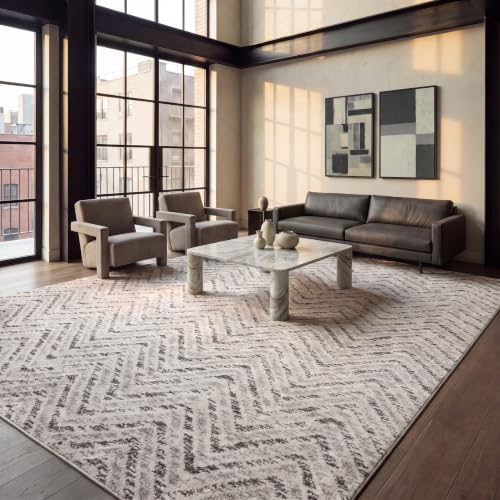
Living Room Rug Pros and Cons at a Glance
The honest value case for a living room rug starts with what it does to the room’s physics. Hard floors reflect sound; a rug and pad absorb a meaningful share of it, so conversation, television audio and footsteps all soften. Floors feel warmer in the months when heating runs, because the rug insulates the exact surface feet touch. And a defined seating island changes behaviour — people gather on it, children play on it, and the room’s most expensive furniture gets used the way its owner intended when they bought it.
Related reading on this site fills in the neighbouring decisions: how to choose a living room rug; how to clean living room rug; is a living room rug worth it; living room rug buying guide. Each of those guides takes one part of the rug decision — size, fibre, pattern or care — and goes deeper than a single overview can.
Pro: Warmth and Comfort Where Life Happens
Feet meet the rug more than any other surface in the room, and the difference between board or tile and a padded rug on a winter evening is the difference between a room people pass through and a room people settle in. Children claim the rug as their territory for games and reading; adults stretch, sit and sprawl on it. That comfort is not a luxury extra — it is the main reason the category exists, and a pad underneath multiplies it.
Pro: A Quieter Room
Hard floors return every sound to the room: footsteps, chair legs, television dialogue, a dropped remote. A rug and pad absorb a real share of that energy, and the effect is immediately noticeable in open-plan homes where the living area shares air with the kitchen and hall. Conversations sit at a lower volume, film sound tightens, and the whole home feels calmer — a benefit guests notice without ever identifying its source.
Pro: The Seating Group Becomes One Place
Placement starts with the conversation, not the walls. Arrange the seating so people can talk without raising their voices, then size and position the rug to serve that arrangement. In most living rooms that means the rug sits centred on the sofa rather than centred on the room, because the sofa is the anchor everyone else faces. A rug floated in the exact middle of the floor while the seating hugs the walls satisfies neither the eye nor the feet that have to cross cold floor to reach it.
Pro: Protection for the Floor Beneath
The busiest square metres of any home are the ones in front of the sofa, and a rug takes that wear instead of the floor finish. Chair feet, grit under shoes and the daily shuffle land on a replaceable textile rather than on boards or stone that are expensive to refinish. With a pad as a barrier and a few under-rug vacuums a year, the floor beneath a long-serving rug often emerges in better condition than the exposed floor around it.
Pro: The Fastest Style Change a Room Can Get
A living room rug is the largest single block of colour and pattern most rooms ever get, which makes it the fastest legitimate way to change how the room feels. Warm, deep tones pull a big, echoing space inward; pale, low-contrast designs open a small room up; a strong border formalises; a faded vintage field relaxes. Because the rug is also the hardest textile in the room to change on a whim, it should be chosen to flatter the furniture you own and love, not the furniture in a photograph.
Pro: A Safer, Softer Landing
A stable rug on a gripping pad gives surer footing than polished boards for sock-wearing children and older adults alike, and it softens the falls that happen anyway — a toddler’s tumble, a slipped cushion, a dropped glass that lands on textile instead of shattering across tile. The safety case depends entirely on installation: flat edges, a pad that grips, and a profile matched to the feet and wheels that cross it.
In this guide
The Cons, Given Their Full Weight
Con: The Cleaning Commitment Is Real
Vacuuming is the single highest-value care habit, and frequency beats intensity. Dry grit that settles to the base of the pile acts like sandpaper every time a foot twists on it, cutting fibres from inside the rug. A weekly vacuum of the whole surface, with extra passes over the traffic lanes, removes that grit before it does damage. Use suction-focused settings on delicate or looped constructions, go slowly enough for the airflow to lift debris, and empty the machine before it loses pull — a clogged vacuum polishes dirt rather than removing it.
Con: Spills Become Urgent
On hard floor, a spilled drink is a mop and a shrug. On a rug it is an event with a clock on it: blot now, test the solution, ventilate, dry fully. Households that entertain often, or live with toddlers and pets, will perform this ritual regularly, and natural fibres raise the stakes by absorbing what synthetics resist. The con is not that rugs stain — the right fibre shrugs most spills off — it is that rugs convert accidents into tasks.
Con: Edges Need Managing
Securing the edges deserves its own moment. Corners that curl upward catch toes and vacuum heads alike, and a curled corner rarely flattens on its own once the backing has taken a set. A grippy pad, furniture weight placed across the corner while it settles, and keeping the rug out of direct heater blast — heat encourages backing to stiffen and curl — will hold most edges down. If a corner resists, address it rather than living with it: tape-free corner grippers made for rugs exist, and a persistently lifting edge in a walkway should be moved out of the walkway entirely.
Con: It Is Heavy, Awkward and Two-Person Furniture
Moving day discipline protects both the rug and the people. Roll the rug rather than folding it for any move longer than a few minutes, pile side out, and carry it with help if it is large — a big rug is heavier and more awkward than it looks, and dragging one end across the floor twists the weave. Furniture follows the same rule: lift pieces with a second person and set them down, rather than dragging legs across the surface, because a dragged leg can tear loops, scuff printed designs and gouge a groove into pile that no amount of steaming fully erases.
Con: The Wrong Fibre Punishes the Wrong Household
Blends try to split the difference, pairing wool with a synthetic for durability, or cotton with polyester for softness plus stain resistance. A blend is only as good as its weakest behaviour, though: a wool blend still wants gentle cleaning, and a cotton blend still moves without a pad. Read the fibre content as a care instruction in disguise — it tells you how the rug will respond to a spilled drink, a muddy dog and a year of afternoon sun long before any marketing line does.
Con: A Large Pattern Is a Long Commitment
Cushions can be swapped in a season; a room-size rug is a multi-year visual decision that anchors every other choice. A pattern bought in a moment of boldness will still be there, at full scale, through every change of taste around it. This is why experienced buyers borrow colours from things they already love, choose the quieter of two finalists more often than the louder, and treat the rug as the room’s longest relationship rather than its newest accessory.
What the Trade-Offs Mean for You
If Your Household Is Busy and Young
The pros compound and the cons shrink to routine. Comfort, quiet and floor protection pay out daily, while the cleaning con is largely designed away by choosing a stain-resilient fibre, a camouflage pattern and a pad that grips — or a washable system that demotes spills to laundry. For this household the balance is not close: the rug is worth it, and the specification matters more than the decision.
If Your Household Is Calm and Adult
The cons barely apply — spills are rare, traffic is light, edges stay put — so the choice becomes purely about which pros you want most: the feel of wool, the texture of a flatweave, or the drama of a deep printed pattern. This household can buy with its heart more than most, needing only the discipline of a pad, gentle cleaning and furniture lifted rather than dragged when the room is rearranged.
If Your Household Prizes Zero Upkeep
Be honest: the cons describe your future accurately. An unvacuumed rug is worse than the bare floor it covers, and no fibre choice rescues a rug nobody maintains. Either choose the lowest-effort route — a washable or shake-out flatweave in the seating zone only — or skip the rug entirely and spend the effort on textiles that go in the washing machine without a strategy meeting.
How the Balance Compares With the Alternatives
| Option | Comfort | Upkeep | Notes |
|---|---|---|---|
| Full living room rug on a pad | Highest | Weekly vacuum, spill duty | Defines the seating zone; protects the floor |
| Washable rug system | Moderate, low profile | Laundry-based | Best spill answer; flatter feel |
| Bare floor with throws and cushions | Lowest underfoot | Sweep and mop only | Zero textile commitment; coldest and loudest |
Layering is an option worth knowing about. A large, inexpensive natural-fibre or low-contrast base rug can define the zone, with a smaller, richer rug centred under the coffee table carrying the pattern and softness where feet actually land. Layering suits renters covering uninspiring floors and anyone whose dream rug only exists in a smaller size. Keep the top layer’s edges inside the seating footprint and both layers on a pad, so nothing creeps, and check that the combined height still clears doors and does not create a step edge in the walkway.
How to Buy Smart if the Pros Win
Buy the construction whose cons your household can absorb. These four lines, in prose at their qualitative tiers, map neatly onto the trade-offs above: camouflage for the busy, washability for the spill-prone, texture for the calm.

SAFAVIEH Adirondack Collection Area Rug — Best For Patterned All-Rounder
The SAFAVIEH Adirondack Collection is one of the most widely chosen patterned rug lines for living rooms because its designs borrow from classic Persian and transitional motifs, then soften them with a slightly distressed finish. That combination reads as intentional decor rather than a busy print, and it anchors a sofa grouping without fighting cushions, throws or artwork for attention. The synthetic fibres resist staining and are straightforward to vacuum, which is why the line keeps appearing in homes with children and dogs.
Position this collection in the entry-to-mid tier: dependable construction, broad size availability through the line, and patterns that forgive the scuffs of daily traffic. It suits open-plan rooms where the rug has to define the seating zone visually, and households that want pattern to do the camouflage work between deeper cleans. It is less suited to minimal, solid-colour schemes, where a tonal or flatweave design would sit quieter, and purists who want natural fibres only should look at the wool and flatweave lines in this cluster instead.
Best for: households that want this line’s particular balance of pattern, care and comfort. Not suited for: rooms whose traffic or taste it was never designed to serve.
nuLOOM Wynn Vintage Area Rug — Best For Vintage-Look Workhorse
The nuLOOM Wynn Vintage line is built around a deliberately faded, vintage-look pattern that hides everyday life unusually well. Crumbs, pet hair and the pale dust that settles on any busy floor blend into the mottled design instead of announcing themselves, which makes this line a forgiving choice for family rooms that never really stop moving. The surface is a low, dense synthetic weave that chair legs and coffee table feet glide over rather than catch on, and vacuum heads pass across it without bogging down.
Treat the Wynn as an entry-to-mid tier line in positioning: it aims at households that want a traditional look with modern, low-effort upkeep. It suits renters who need to soften hard floors without committing to a heirloom piece, and anyone whose seating gets rearranged often, because the rug is light enough to reposition without a struggle. It is not the line for shoppers chasing the deep, springy feel of a thick wool pile underfoot; its comfort comes from pairing it with a good pad, not from pile height.
Best for: households that want this line’s particular balance of pattern, care and comfort. Not suited for: rooms whose traffic or taste it was never designed to serve.
Ruggable Kamran Washable Rug — Best For Washable Two-Piece System
The Ruggable Kamran line takes a different approach from every other pick here: it is a two-piece washable system, with a decorative top layer that detaches from a gripping underlayer so the top can go through a home washing machine. The Kamran pattern is a vintage-inspired medallion design that looks like a conventional woven rug once laid, which is the point — washability without the thin, mat-like appearance washable rugs used to have. For spill-prone rooms, that removability changes the whole care equation.
This is a mid-tier line in positioning, and the premium over a basic synthetic rug buys the system rather than thicker pile. It suits households with toddlers, pets that track in mud, or anyone who hosts often and dreads the red-sauce incident. Because the top layer is intentionally low-profile, doors clear it easily and chairs slide freely, but barefoot luxury seekers should pair it with realistic expectations: comfort is neat and practical rather than plush. Always let the top layer dry fully and lay it back over a rug pad arrangement that keeps edges flat and secure.
Best for: households that want this line’s particular balance of pattern, care and comfort. Not suited for: rooms whose traffic or taste it was never designed to serve.

SAFAVIEH Montauk Area Rug — Best For Flatweave Natural Texture
The SAFAVIEH Montauk line is a flatweave family built around cotton-rich, hand-woven texture and easy stripes, checks and simple geometrics. With almost no pile, it reads as relaxed and coastal or farmhouse in spirit, and it slides into layered looks beautifully — under a coffee table it stays out of the way, and chairs move across it without resistance. Flatweaves are also the easiest rugs to shake out and air, which keeps routine care light.
Position Montauk in the entry tier to mid tier depending on size, and judge it as a texture piece rather than a cushion. It suits low-traffic, adult living rooms, sunrooms and anyone who prefers natural-fibre character over stain armour. Because flatweaves can shift on hard floors, a rug pad is not optional here: it stops the rug creeping, keeps corners from curling into a trip hazard, and protects the floor beneath. Households with clawed pets may find a denser weave more forgiving of snags.
Best for: households that want this line’s particular balance of pattern, care and comfort. Not suited for: rooms whose traffic or taste it was never designed to serve.
Before you finalise anything, the companion pieces are worth a pass: best non shedding area rugs; best kilim rugs; best tonal rugs; best blankets for living room. Together they cover the same living room from the choosing, cleaning and value angles, so the advice stays consistent instead of contradicting itself between pages.
Setup and Care That Reduce the Cons
Pads also protect both surfaces. They stop the rug’s backing abrading the floor finish, prevent dye or latex transfer onto pale timber, and keep grit from being ground between rug and floorboards like sandpaper. Under the rug, the pad’s cushion reduces fibre crushing under sofa legs and slows the wear that turns a traffic lane permanent. When you budget for a living room rug, budget the pad in the same purchase, sized to the same footprint, and treat a missing pad as an unfinished installation.
Spot cleaning rewards speed and restraint. Blot — never rub — a spill with a clean white cloth, working from the outside of the mark inward so it cannot spread, and lift what you can before adding any moisture. Test any cleaning solution on a hidden patch first, under the sofa or along a covered edge, and wait for it to dry before judging the result; some solutions lighten dyes or leave a residue that attracts dirt faster than the original spill would have. Ventilate the room while you work with cleaning products, and keep children and pets off the damp area until it is fully dry.
Rotation is the cheapest wear management there is. Turning the rug twice a year evens out both traffic and sunlight, so the path from door to sofa does not become a permanent pale trench while the corner under the bookcase stays showroom-fresh. Rotation is also the moment to vacuum the underside and the floor beneath, check the pad for crumbling or sticking, and inspect the backing for any damp or musty smell that needs airing before it becomes a bigger problem.
Bottom Line
The pros of a living room rug are about how a room feels every day; the cons are about what you must do every week. Households that will do the weekly part get the daily part at full value, and for them the balance is decisively positive. Households that will not should shrink the commitment — washable, flatweave, smaller zone — rather than buy a demanding rug and resent it. Decide which household yours is before you decide anything about pattern.
The Reading Corner and the Second Rug Question
Many living rooms contain a second, smaller territory: the reading chair by the window, the child’s play corner, the spot where the dog actually sleeps regardless of plans. A small companion rug can serve that territory beautifully — softer, smaller, easier to lift and shake out — as long as it does not fight the main rug’s palette. Related colours at a different scale read as layering; unrelated patterns at similar scale read as clutter.
Keep companion rugs out of the through-routes and pin them on their own grip pads, because small rugs migrate more than large ones and a migrated small rug is a sliding hazard precisely where someone steps off a chair. If the corner belongs to an older reader, treat its rug with the same seriousness as the main one: low profile, flat edges, no spongy thickness to catch a rising foot.
Sometimes the honest answer is that the second territory should stay bare — a play corner on washable hard floor, a dog bed that goes in the machine. Rugs earn their places; a room where every zone is covered has no contrast left, and the main rug loses the definition that made it work. Choose the territories where softness changes behaviour, and rug those.
Furniture Dents, and What To Do About Them
Every rug under furniture collects dents, and the first thing to know is that dents are information, not damage: they show where weight lives. When furniture moves, many fibres recover substantially with time, humidity and gentle encouragement — a careful pass of steam held above the surface, never pressed into it, can coax pile upright, and fibres can be lifted with a soft brush or the edge of a spoon while damp. Test any moisture approach on a hidden patch first, as with any treatment.
Prevention beats revival. Felt pads and wide furniture cups spread a leg’s load across more fibres; rotating the rug moves the dent map before it sets permanently; and choosing dense pile in the first place gives weight something resilient to press on. Sparse pile under a heavy bookcase will keep its dents as souvenirs, which is a specification lesson rather than a cleaning failure.
When rearranging, treat the move as the rug’s maintenance day: lift every piece with help, vacuum the revealed surface and the floor beneath, inspect the pad, rotate the rug if its turn has come, and only then set the furniture down in its new positions. The room gets its new layout and the rug gets its twice-yearly care in the same hour of effort.
Buying Second-Hand and Inheriting Rugs
A used or inherited rug can be the best value in the category — quality wool especially outlives its first home by decades — but it arrives with unknowns. Inspect it in daylight on both sides: backing cracks, musty smells that survive airing, moth damage in wool, and edges that have been cut down all change what the rug is worth and whether it should enter a living room at all. A thorough professional clean before installation is money well spent on any rug whose history you do not know.
Measure an inherited rug against the seating group, not against sentiment. A rug that is too small for the room will look too small every day, whatever its story; layering it over a larger, quiet base rug is the classic rescue, with the heirloom centred under the coffee table where its pattern and meaning get the attention. Keep both layers on a pad and the combined height clear of doors and walkways.
If the rug carries real value — hand-knotted, antique, or simply beloved — treat cleaning conservatively: gentle vacuuming without aggressive beater action, professional advice before any wet cleaning, and no experimental solutions. The hidden-patch test rule applies double to dyes and fibres you cannot identify. Some rugs deserve a specialist the way some furniture deserves a restorer.
Seasonal Rotation and the Two-Rug Household
Some households keep two living room rugs — a deeper, warmer one for the heating months and a flat, cool one for summer — and swap them with the seasons. The strategy works because each rug rests half the year, wear spreads across two surfaces, and the room gets a genuine visual refresh twice a year without a single new purchase after the second rug. Flatweaves store easily; the resting rug, cleaned, dried and rolled pile-side out, waits without complaint.
The swap day is also the perfect maintenance day: floors washed, pads inspected, furniture lifted and felt pads renewed, the incoming rug aired as it unrolls. Build the swap around help — two people, an hour, no dragging — and the whole ritual stays pleasant enough to actually happen every spring and autumn, which is the only schedule that matters.
Households considering a second rug should buy it to the same footprint as the first, so the pad, the furniture layout and the taped outline all stay valid. A different size turns a one-hour swap into a full re-measurement, and quietly kills the habit. Same size, different season character: that is the formula that survives contact with real life.
Measuring and Taping: A Worked Routine
Give measuring its own unhurried half hour. Move the coffee table out, arrange the sofa and chairs exactly where they live, then tape the candidate outline on the floor: front edge where the rug will meet the walkway, sides aligned with the sofa’s arms, back edge sliding under the sofa’s front legs. Sit in every seat with the tape down. Stand in the doorway. Walk the route to the kitchen. The outline will argue with you, and it is cheaper to lose the argument to tape than to a delivered rug.
Record three numbers before you shop: the taped width, the taped length, and the door clearance measured with a sample of pad-plus-rug thickness if you can borrow one. Door clearance is the forgotten measurement — a door that scraped is a door that will fold the rug’s edge daily until the edge gives up and stays folded, creating exactly the trip lip the pad was meant to prevent. If clearance is tight, the answer is a lower profile, not a smaller rug.
Photograph the taped outline from the doorway and from the room’s far corner. Photographs flatten wishful thinking: an outline that felt generous in person often reads mean on screen, and one size up suddenly looks obviously right. Keep the photographs with the measurements; if you order, wait, and doubt yourself during delivery week, the evidence is on your phone rather than in an argument with your memory.
Rug Shapes Beyond the Rectangle
Rectangles dominate because rooms and sofas are rectangular, but round and oval rugs earn their place in specific geometries: a round rug under a curved sofa arrangement, beneath a pedestal coffee table in a square room, or softening a boxy studio where every other line is straight. The rule that survives every shape is the same — the seating’s front legs belong on the rug, and the shape’s edge should echo something in the room rather than inventing a new geometry at random.
Runners have a living room role too, along the back of a sofa that divides an open-plan space, or in the corridor strip between seating and a media wall. A runner there protects the highest-traffic lane in the room and gives the main rug a calmer life. Pin runners on grip pads without exception: narrow rugs migrate, and a migrated runner in a walkway is a slide waiting for a sock-wearing passer-by.
Whatever the shape, edges deserve the same discipline: out of pivot points, flat on a pad, clear of heaters and hearth zones. Shape changes the styling conversation; it does not change the physics of feet, doors and furniture, and the households happiest with unusual shapes are the ones that respected the physics first and the photograph second.
Guests, Parties and the Rug the Morning After
A living room rug’s hardest nights are its most social ones. Before guests arrive, a slow vacuum pass lifts the pile and removes the grit that heels would otherwise grind in; moving one fragile piece — the spindly side table that always wobbles — removes the evening’s most likely spill at its source. Coasters placed where people actually set drinks down, rather than where the styling photograph puts them, quietly protect the fibres all night.
During the event, do nothing. A host who blots theatrically teaches guests to hide the next spill, and hidden spills set. Note the spots mentally, enjoy the evening, and treat the rug the next morning when you can blot properly, test solutions on the hidden patch, ventilate the room and give everything time to dry. Most party evidence — crumbs, a wine splash, tracked-in grit — is entirely survivable at that pace.
The morning-after routine is short: vacuum slowly in two directions, spot-treat what you find one mark at a time, check under the coffee table and along the sofa’s front edge where glasses migrate, and lift any furniture that was moved back into place rather than dragging it. A rug that hosts well is not a rug that never meets a spill; it is a rug whose owner has a calm sequence for the morning after.
The Floor Years: Children Growing Up on the Rug
For a household with young children, the living room rug is not decor; it is the floor of childhood — the surface for first steps, blanket forts, homework sprawls and a thousand small crashes. That role argues for specification over sentiment: dense, low, forgiving fibres, a pattern that camouflages the archaeology of snacks, and a pad that keeps the whole landscape from sliding when a running child lands on it at full commitment.
Safety habits scale with the children. Keep edges flat and check them weekly, because small feet find lifted corners before adults notice them; route the rug so its border is not the finish line of a hallway sprint; and keep cleaning products stored away after spot treatments, with the treated patch dry before play resumes. As children grow, the same rug absorbs desk chairs, gaming marathons and teenage gatherings without any change of specification — which is the quiet genius of buying for traffic early.
When the floor years end, a well-chosen rug simply changes jobs, from play surface to the calm centre of an adult room. The lines that survive the transition are the ones whose pattern was never childish and whose fibres were never precious. Buy the rug for the decade, and let the children borrow it for the first half.
When To Replace a Living Room Rug
Rugs rarely die in a single event; they fade by accumulation. The honest replacement signals are a traffic lane that no longer lifts after cleaning and rotation, backing that cracks or sheds dust when the rug is lifted, edges that will not stay flat despite a fresh pad, and odours that survive a professional clean. Any one of these means the rug’s structure, not its surface, has finished — and no amount of vacuuming negotiates with structure.
Cosmetic tiredness is different and cheaper to answer. A rug that is structurally sound but visually dull may need only a deep clean, a rotation, a better pad and a rearrangement of the furniture over its freshest area. Many rugs are replaced years early for the crime of a flattened lane that a season of rotation would have shared around the room. Diagnose before you shop: surface problems get care, structure problems get replaced.
When replacement day comes, let the old rug teach the new one’s specification. Note where it wore, where it stained, where its edges misbehaved and what its fibres could not forgive, then buy against that evidence. The second rug in a home is almost always better chosen than the first, because the first one spent years writing its review on the floor.
Allergy-Aware Housekeeping for Rug Owners
A rug holds what hard floors circulate: dust, pollen and pet dander settle into pile instead of drifting at ankle height with every footstep. Whether that makes a rug a friend or an enemy to an allergy household depends entirely on extraction — what the vacuum actually removes. A well-maintained rug, vacuumed slowly and often with a machine in good order, functions as a filter that gets emptied; a neglected rug is a reservoir that gets walked on.
Households managing sensitivities should vacuum more often than the standard weekly rhythm, empty or change the machine’s bag or bin outdoors where possible, and schedule the deeper clean on the calendar rather than on inspiration. Washable systems earn special consideration here, because a full machine wash resets the textile in a way surface cleaning cannot. Keep the treated rug fully dry before it returns to service; damp pile undoes the benefit quickly.
None of this overrides medical guidance for a specific household member, and where a clinician advises against large textiles, that advice wins over every comfort argument in this guide. The point is narrower: for the many households managing ordinary dust sensitivity, the variable is not rug or no rug — it is maintained or unmaintained, and maintenance is a choice the owner controls.
Unrolling, Airing and the First Week
A new rug arrives rolled tight, and its first week sets habits that last for years. Unroll it in the room, pile side up, and let it relax for a day before judging the fit — ripples from rolling usually settle under their own weight, helped by the pad going down first and furniture weight arriving gradually rather than all at once. Reverse-rolling a stubborn section gently, or weighing a lifted corner with books for a night, persuades most backings without any force.
New rugs often carry a faint manufacturing smell, strongest in synthetic lines fresh from their packaging. Air is the whole remedy: ventilate the room well for the first days, vacuum the surface to lift loose fibres, and let time do the rest. The smell fades as the rug breathes, and it fades faster in a room that is lived in and aired than in one kept shut. If any odour stays strong and chemical after a week of ventilation, that is a question for the seller, not something to mask with scented products.
Expect some shedding from cut-pile rugs in the early weeks, wool most noticeably. Loose surface fibres are a normal settling behaviour, not a defect, and they decline steadily with regular vacuuming. What should not happen is bare patches, backing showing through, or shedding that stays heavy for months — those are quality signals worth acting on while returns are still simple.
Living With the Rug Under a Coffee Table
The coffee table zone is where a living room rug works hardest and is seen closest. Feet land there, mugs set down there, board games and laptops colonise it, and the rug beneath takes the abrasion of table legs shifting a few millimetres with every lean. A denser pile or a smooth low profile both cope well; a sparse, lofty pile shows the table’s footprint as four permanent dents and a polished traffic sheen around it.
Position the table so its legs sit fully on the rug or fully off it — a leg half on the edge rocks, spills drinks and chews the rug’s border. When you need to move a loaded table, lift it with help and set it down; dragging a heavy table across pile or a printed surface is the single fastest way to scar a rug that vacuuming cannot undo. Felt pads under table legs spread the load and make small adjustments gentler.
Under-table cleaning deserves a routine of its own, because crumbs migrate there and stay invisible from standing height. Slide a vacuum crevice tool under the table weekly, lift the table fully on rotation day, and check for the ring marks and mystery spots that only appear at floor level. The centre of the rug ages at the speed of its least-cleaned square metre, and that square metre is almost always under the table.
Open-Plan Rooms and Zoning With One Rug
In an open-plan space the rug is a boundary that does not block light or movement, which makes it the most civilised zoning tool available. Size it to the conversation group alone, leave clear floor as the corridor between zones, and let the dining or work area keep its own uncovered identity. The moment one rug tries to serve two zones, it serves neither — edges land in walkways, chairs straddle borders, and the room reads as carpeted confusion.
Align the rug to the sofa and the room’s architecture together: parallel to the main wall or fireplace line, centred on the seating rather than on the floor’s full rectangle. In a long room, a rug placed across the width can shorten the visual tunnel; in a square room, a centred island with an even floor border calms the geometry. Tape the outline and view it from the doorway you actually enter by, because that first sightline is the one the zoning has to convince.
Sound zoning follows visual zoning. The rug absorbs the living zone’s noise — television, conversation, play — while the kitchen and hall stay bright and hard, and that contrast is part of what makes the seating feel like a destination. A pad with real cushion deepens the effect. Households that entertain will notice guests gathering on the rug instinctively; a well-zoned floor quietly organises a party.
Where the Trade-Offs Show Up in Daily Use: Living Room Rug in Practice
This section exists to move past the tidy two-column summary and watch where each advantage and disadvantage actually appears during an ordinary week. It adds a layer that a feature list cannot give you, grounded in the living room furniture context this living room rug will actually live in. Where this guide names examples such as SAFAVIEH Adirondack Collection Area Rug, nuLOOM Wynn Vintage Area Rug, Ruggable Kamran Washable Rug, use them as test cases for the checks below rather than as shortcuts past them.
Consider the edge cases that sit just outside normal use, because a living room rug will meet all of them eventually. The unusually large load, the unusually small task, the day you are in a hurry, the day something else in the room is broken and this has to cover for it. Versatility is not about a long feature list; it is about behaving predictably when conditions are imperfect. Where a design offers settings, modes, attachments or configurations, ask what each one is actually for in your home, and be suspicious of flexibility you cannot attach to a real occasion. One well-judged configuration used weekly beats five clever ones used once, and the honest living room rug for your home is the one whose strengths line up with your most frequent edge case, not your rarest.
Build a simple decision checklist and score it in writing. Five lines are enough: fit in the space, fit with the routine, ease of cleaning or upkeep, quality of the parts that move or wear, and how the living room rug will be stored or will look when it is not the centre of attention. Score each contender quickly, then look only at the lowest scores, because purchases are usually ruined by their weakest point rather than saved by their strongest. If two options tie, choose the one whose weakness is cheapest or easiest to live with. This sounds mechanical, and it is meant to: a written checklist is the best defence against the very human habit of falling for the last photograph you looked at.
Finally, plan the first fortnight. Decide where the living room rug will live from day one, what it replaces, what accessory or companion it needs straight away and what small job you will use to learn its habits while returning it is still simple. Keep the packaging until that learning period is over, note anything that surprises you, and deal with a mismatch early rather than adapting yourself around a poor fit for years. The households that end up happiest with a living room rug are rarely the ones that researched longest; they are the ones that checked fit honestly, bought for the ordinary week, and paid attention during the first days instead of assuming the decision ended at checkout.
Frequently Asked Questions
Can a living room rug work with pets?
Yes, with the right construction. Choose low or dense pile that claws cannot easily snag, a pattern busy enough to camouflage hair between vacuums, and fibres known for stain resistance — or a washable system if accidents are frequent. Keep a rug pad underneath so enthusiastic landings do not surf the rug across the floor. Vacuum more often than feels necessary; pet hair works down to the pile base, and removing it regularly is what keeps the rug smelling like a room, not a kennel.
How do I stop a rug corner from curling?
Start with a gripping rug pad, which solves most curl by holding the whole rug under even tension. Weigh the corner down with furniture for a few days while the backing relaxes, and keep the rug away from direct heater heat, which stiffens backings. If a corner still lifts, use purpose-made rug corner grippers rather than household tape, and never leave a lifted edge in a walkway — move the rug or fix the corner before someone catches a toe on it.
Do I really need a rug pad under a living room rug?
Yes — treat the pad as part of the rug, not an extra. It stops the rug sliding on hard floors, which is a genuine safety issue for children and older adults, keeps edges lying flat instead of curling into trip hazards, cushions the pile against crushing, and protects the floor finish from backing abrasion. Trim the pad a little smaller than the rug so it stays invisible, and replace it when it loses grip or starts to crumble.
Can I put a rug over carpet in the living room?
You can, and it is a common renter-friendly way to define a seating zone or cover tired carpet. Choose a low-profile rug so the combined height stays manageable, and use a pad made for rug-over-carpet use, because ordinary rugs creep and wrinkle on carpet pile. Expect some movement and straighten edges regularly so nothing bunches into a trip ridge. Keep the layered area out of the main walkway if anyone in the household has unsteady footing.
What rug colours hide dirt best?
Mid-tone, multi-colour patterns hide everyday life best — especially vintage-look and distressed designs whose built-in fading makes wear invisible. Very pale rugs show every crumb and paw print, and very dark solids display pale lint and pet hair just as honestly. Borrow the rug’s main colour from something already in the room, keep the contrast moderate, and remember that a pattern doing camouflage work is a feature, not a compromise.


