Disclosure: As an Amazon Associate, dailyhomedecorating.com earns from qualifying purchases. Links on this page are affiliate links; they cost you nothing extra. Prices and availability change often, so check the current Amazon listing before you buy.
So, is a holiday wreath worth it? The short answer is that a holiday wreath is worth it for households that will hang it early, light it often, and store it properly — and not worth it for households that would hang it late, ignore it, and crush it in a damp box by January. That answer sounds like a dodge until you see the working underneath it, which is what this article provides: what a wreath actually gives a home, what it quietly costs in space, effort and attention, the households it pays off for, the ones it does not, and a decision checklist that turns the whole question into seven honest yes-or-no answers.
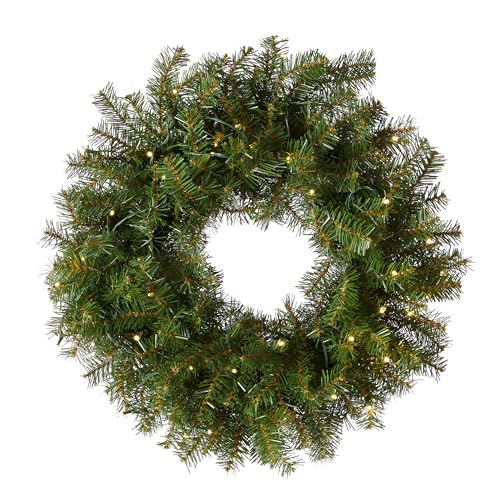
Key Takeaways
- Worth it if: you decorate every year, have dry storage, and enjoy a visible seasonal ritual.
- Not worth it if: storage is damp or nonexistent, or the door’s exposure defeats every rating.
- The value is cost spread across seasons — an artificial wreath improves with every year kept.
- A fresh wreath each year is a legitimate alternative, not a failure of thrift.
- The checklist at the end settles it: five or more yes answers means buy with confidence.
Worth it if your home marks the season visibly and you will give a wreath the small care it asks. Not worth it if the wreath would be a reluctant purchase, hung out of obligation and stored out of sight and out of mind. Decorations earn their keep in enjoyed evenings, and the wreath is either the most-enjoyed piece in the house or an expensive ring in a box — the household, not the product, decides which.
In this guide
Is a Holiday Wreath Worth It? What You Actually Get
A holiday wreath does a job no other decoration quite manages: it turns a flat, functional surface — a door, a wall, a window — into a deliberate seasonal welcome. Because it hangs at eye level and is usually the first decoration a visitor meets, a wreath carries more visual weight per inch than almost anything else in a holiday scheme. That is why the details that seem minor in a product photo, like tip density, symmetry and how the foliage catches light, matter so much in person. A good wreath frames the entrance; a poor one just occupies it, and the difference is obvious within seconds of walking up the path.
Placement options multiply once you stop thinking of a wreath as door-only decor. Over a mantel it becomes a focal point; on an interior door it carries the season into hallways and bedrooms; laid flat with a hurricane candle holder — used carefully and never left burning unattended — it becomes a table centrepiece; hung in a window it shares the season with the street. Smaller wreaths work as chair-back accents at a holiday table or layered over a kitchen cabinet door. Each placement changes what the wreath needs: visibility, depth and lighting all shift with the spot you choose.
The honest maths of an artificial wreath is cost spread across seasons. A well-made wreath used for many years asks for storage space and a few minutes of annual care, and in return it removes a recurring seasonal purchase. A fresh wreath reverses the equation: a new purchase each year, but zero storage, a genuine fragrance and no long-term commitment to one style. Neither is the thrifty choice in the abstract. The thrifty choice is the one you will actually enjoy and, for artificial, actually store properly — a premium wreath crushed in a damp attic is the most expensive outcome of all.
Colour deserves a decision rather than a default. Classic green with red accents suits most homes because it is the palette the season is read in, but winter-white, metallic and natural woodland schemes can be calmer and more distinctive. Look at your door colour first: a deep green wreath disappears against a dark green door, while the same wreath glows against white, red or natural wood. Contrast is what makes a wreath photograph well and read from a distance, so choose foliage, ribbon and ornament with the background in the photograph, not just the wreath on the shelf.
The Real Costs Beyond Money
Storage decides whether an artificial wreath is a one-season purchase or a decade-long one. The enemies are crushing, damp and heat. A wreath stored under heavy boxes loses its shape; one stored in a damp space can pick up musty odours and, on natural decorative elements, even mould. The reliable method is unglamorous: let the wreath dry fully if it has been outdoors, brush off dust, store it in a rigid wreath box or a sturdy bag hung from a hook rather than stacked, and keep it somewhere cool and dry. Ten careful minutes in January buy you a wreath that needs ten minutes of fluffing the following December.
Battery-powered lights free a wreath from outlet geography. Doors, stair rails, mantels without nearby sockets and windows all become possible, and there are no cords to hide or trip over. The discipline required is simple: keep the battery pack somewhere reachable, switch the lights off when nobody is enjoying them, and never leave batteries sitting in a damp location unless the wreath and its light set are clearly rated for outdoor use. A timer setting, where offered, is the feature owners praise most, because it removes the nightly round of switching entirely.
Hanging is the second failure point. Improvised hooks, a nail meant for a picture frame, or an over-door hanger that does not fit the door’s thickness all end the same way: a wreath that slides, tilts or falls. Use a hanger designed for wreaths, check that the door still closes cleanly with it in place, and give the hung wreath a gentle shake test before calling it done. On glass doors and sidelights, suction and magnetic options exist but demand clean surfaces and honest weight limits. Two minutes of testing in November prevents a broken wreath in December.
Add one more cost that rarely gets itemised: decision fatigue. A wreath is a small purchase that touches sizing, exposure suitability, power sources and storage all at once, which is why it generates outsized hesitation. The antidote is to make the decision once, properly, and then let it repeat. A household that chose well in year one spends the following years on pure enjoyment — unbox, fluff, hang — while a household that chose carelessly re-litigates the purchase every December. The checklist below exists to put you in the first group.
Who It Pays Off For
The traditional front-door household
This home wants the classic picture: full green foliage, warm lights, a red bow, visible from the street and welcoming after dark. Prioritise a pre-lit wreath with generous density and a silhouette that holds up at distance, sized to leave a confident margin on the door. Battery power with a timer suits a door without an exterior outlet; plug-in suits a porch that has one. Storage space for a rigid wreath box is part of the deal, and this household usually has it, because the wreath is a fixture of their season rather than an experiment.
The small-space apartment decorator
Apartments reward wreaths that multitask. A mid-sized unlit or battery-lit wreath can move from the door to above a bookcase to the centre of a small dining table across the season, and it stores flat in a closet rather than demanding an attic. Realistic foliage matters more here because the wreath is seen at conversational distance, not from a street. This decorator should favour quality of greenery over diameter, and choose removable accents so one wreath can shift mood between a dinner party and a quiet weeknight.
The porch-first entertainer
For a home whose season happens on the porch and in the garden, the wreath is outdoor equipment first and decoration second. Outdoor suitability is non-negotiable, the hanging must shrug off weather and a busy door, and lights should be on a timer so the welcome is lit before the first guest arrives. A pair of wreaths — door and gate, or door and porch window — often works harder than one oversized piece. This buyer should inspect the battery housing and cord seals with the same seriousness they give the foliage.
Who Should Skip It
The storage-less household
If every cupboard is full and the only storage options are a damp garage corner or a hot attic, an artificial wreath will deteriorate on schedule and feel like money wasted — because in that environment, it is. This household’s honest options are a fresh wreath each season, a small wreath that stores inside a rigid box on a shelf, or skipping the wreath and putting the effort into a mantel or table display instead. There is no shame in the skip; there is only waste in buying decor your home cannot keep.
The reluctant decorator
Some households decorate because they feel they should, and their decorations know it: hung late, lit rarely, resented quietly. A wreath bought reluctantly delivers a fraction of its value, because its value is measured in enjoyed evenings. If that is your household, the worth-it answer is genuinely no — or a deliberate yes to the smallest, easiest version: one unlit wreath, one hanger, two minutes. Sometimes shrinking the commitment is what makes it worth making at all.
The severely exposed door
Outdoor wreaths live a harder life than indoor ones. Rain, condensation and freeze-thaw cycles test foliage, wiring and battery packs alike, so only hang a wreath outside — especially a lit or battery-powered one — when it is clearly described as suitable for outdoor or covered outdoor use. A covered porch is a kinder placement than an exposed wall, and bringing a borderline wreath inside during the worst weather extends its life noticeably. If a battery pack is not rated to sit out in the rain, it should not sit out in the rain; route it somewhere sheltered or choose a different wreath for that spot.
Strengths and Trade-Offs of Owning One
Strengths
- Eye-level seasonal impact for minutes of effort, fully reversible in January.
- Reusable across many seasons, with value improving every year it is kept well.
- Restyleable — one good base follows your taste instead of expiring with a trend.
Trade-Offs
- Demands dry, uncrushed storage for most of the year.
- Lit versions add a small routine of switching, timers or battery changes.
- Fresh versions are temporary by nature and must be kept from heat and retired when dry.
Alternatives to Consider

National Tree Company Pre-Lit Wreath
The National Tree Company Pre-Lit Wreath is a classic pre-lit evergreen wreath from a long-running holiday decor maker, built around dense mixed tips, warm built-in lights and a traditional profile that reads well from the street. It sits in the mid-range tier of this group, and that positioning shows in what it prioritises. Best for: front doors that need one dependable, traditional wreath with the lighting already handled. Not suited for: shoppers who want a heavily decorated, ornament-loaded statement piece out of the box. The alternative-as-answer: if the checklist says yes but you want the classic route, this is the balanced traditional choice. As with every pick in this guide, treat the listing as a living document: check the current Amazon listing for the present specification and availability before you buy, and check price on Amazon rather than relying on any number quoted second-hand, because seasonal listings change often.
Balsam Hill Wreath
The Balsam Hill Wreath is a premium wreath known for carefully shaped, lifelike foliage modelled on real evergreen branches, aimed at buyers who study a wreath up close and want it to pass at arm’s length. It sits in the premium tier of this group, and that positioning shows in what it prioritises. Best for: living rooms, mantels and entryways where guests see the wreath at close range all season. Not suited for: anyone decorating several doors on a tight seasonal budget. The upgrade alternative: worth choosing when the wreath will live indoors at close range and realism is the whole point. As with every pick in this guide, treat the listing as a living document: check the current Amazon listing for the present specification and availability before you buy, and check price on Amazon rather than relying on any number quoted second-hand, because seasonal listings change often.

Nearly Natural Wreath
The Nearly Natural Wreath is an unlit decorative wreath from a maker specialising in realistic faux botanicals, designed to be styled with your own ribbon, picks and ornaments rather than arriving fully dressed. It sits in the mid-range tier of this group, and that positioning shows in what it prioritises. Best for: stylists and DIY decorators who enjoy dressing a wreath themselves and reworking it each year. Not suited for: anyone who wants built-in lights and a finished look straight out of the box. The flexible alternative: worth it for households that would rather restyle yearly than commit to one finished look. As with every pick in this guide, treat the listing as a living document: check the current Amazon listing for the present specification and availability before you buy, and check price on Amazon rather than relying on any number quoted second-hand, because seasonal listings change often.
The other honest alternative is no wreath at all: garland at the door frame, a swag, or the budget and effort redirected to the tree and table. a plain look at holiday wreath pros and cons weighs those trade-offs directly, and households leaning that way will find the comparison fair rather than salesy.
How to Get the Most Value If You Buy
Fluffing is the ritual that separates a stored wreath from a displayed one. Branches compress in storage, and a wreath hung straight from the box looks flat and apologetic. Work around the circle by hand, lifting each tip outward and slightly forward, turning some left and some right so the silhouette fills in three dimensions. Check the wreath from the front at arm’s length as you go; gaps that are invisible from above glare from the front. It is the highest-value ten minutes in the whole wreath routine, and it is also the moment to spot loose ornaments or tired ribbon before guests do.
Cleaning an artificial wreath is a gentle job. A soft brush, a feather duster or a cool, low stream of air lifts the season’s dust without disturbing flocking or glued decoration. Avoid soaking a pre-lit wreath or spraying liquid cleaners across its wiring and battery pack; if a spot needs attention, a barely damp cloth on that area alone is the safer tool. Fresh wreaths ask for the opposite treatment — a mist of water on the foliage in the first days can slow drying slightly — but no amount of misting turns a cut wreath into a permanent one, so plan its farewell as part of its charm.
Ribbon and removable accents are the cheapest refresh in holiday decorating. A wreath base that feels tired in its third year often just needs a new bow, a different cluster of picks or a change of ornament colour to feel current again. This is the structural advantage of buying good greenery first and decoration second: the expensive part, the foliage, stays constant while the inexpensive part, the styling, evolves with your taste. Keep a small box of spare picks and ribbon ends with the wreath in storage, and the refresh takes minutes rather than a shopping trip.
Safety with a decorated wreath is mostly a matter of respecting three things: heat, weather and gravity. Keep any wreath — and a real, drying evergreen wreath above all — well away from open flames, candle arrangements, fireplaces in active use and portable heaters, because dry foliage and decorative materials can catch far more easily than they look capable of. Hang the wreath on a hook or hanger genuinely rated for its weight, seated firmly so a slamming door or a gust cannot work it loose. A wreath that falls can damage the door, the floor and itself, and the fall is almost always preventable at hanging time.
Outdoor wreaths live a harder life than indoor ones. Rain, condensation and freeze-thaw cycles test foliage, wiring and battery packs alike, so only hang a wreath outside — especially a lit or battery-powered one — when it is clearly described as suitable for outdoor or covered outdoor use. A covered porch is a kinder placement than an exposed wall, and bringing a borderline wreath inside during the worst weather extends its life noticeably. If a battery pack is not rated to sit out in the rain, it should not sit out in the rain; route it somewhere sheltered or choose a different wreath for that spot.
Buying timing is a real lever with seasonal decor. Wreaths are most plentiful and most varied early in the season, when the full range of sizes and styles is available, and most heavily promoted at the season’s edges. The risk of waiting for the deepest promotion is that the specific size or style your door needs has sold through. A practical approach is to decide your specification first — size, lit or unlit, indoor or outdoor — and then buy when a wreath matching it appears at a fair point in its range, rather than letting a promotion choose your wreath for you.
The Decision Checklist
- Do you decorate for the season most years, and enjoy it?
- Do you have a cool, dry, uncrushed place to store a wreath?
- Is there a door, wall, mantel or window where a wreath would be seen daily?
- Does that spot’s exposure match a wreath rating you can buy — indoor, covered or outdoor?
- Can you power lights there, by battery or outlet, without awkward cords?
- Will someone happily do ten minutes of fluffing in December and ten in January?
- Would a fresh wreath each year suit you better than owning one? (A yes here points to fresh, not to skipping.)
Count the yes answers. Five or more: buy the artificial wreath with confidence, using the full holiday wreath buying guide to set the specification. Three or four: buy smaller, simpler or fresh, and revisit next year. Fewer than three: skip the wreath this season without guilt and spend the effort where your household will actually enjoy it. The checklist is the article in miniature — everything above it is just the reasoning shown.
More Wreath Judgement Calls Worth Making
For households decorating on a shared or rented door, reversibility is a feature. Over-door hangers, ribbon hangs and removable hooks keep the peace with landlords and leave no trace in January. Weight matters more on rental hardware, and a mid-sized wreath hung properly beats a heavy one hung hopefully. The same logic suits anyone who redecorates often: choose mounting that lets the wreath move rooms without tools, and the wreath becomes a flexible asset instead of a fixed installation.
Consider the wreath’s relationship with light that already exists. A porch light above the door, a lantern beside it, a lit window behind it — the wreath joins a lighting scheme rather than inventing one. Warm wreath lights beside a cool porch bulb can clash in a way neither shows alone, so match tones where you can. In daylight the same thinking applies to shadow: a wreath on a sunlit wall spends half the day in hard shadow and half in glare, and dense foliage handles both better than sparse, delicate decoration.
A wreath on a working door lives a mechanical life. It is swung, bumped by parcels, brushed by shoulders and occasionally caught by the very people it welcomes. That argues for secure attachment of every decorative element and for a hanging method that holds the wreath still rather than letting it swing and knock. Check the wreath after the first windy night and after the first busy weekend; early small corrections — a re-seated pick, a tightened hanger — are what separate a wreath that lasts the season from one that slowly sheds itself across the doorstep.
Households with pets and small children should give the wreath a placement interview. Low-hung wreaths within reach of curious hands and noses invite investigation, and small detachable decorations are the first casualties. Hang the main wreath at adult eye level, keep spare ornaments out of paw range, and consider a second, sturdier, simpler wreath for the playroom door where touching is part of the fun. None of this is about fear; it is about matching the decoration to the household that will actually live around it.
The January question is worth asking in November: where, exactly, will this wreath live for the other eleven months? A named shelf, a labelled rigid box, a hook in a dry cupboard — the households that answer in advance are the ones whose wreaths survive. If the honest answer is nowhere, that is valuable information too, and it points toward a fresh wreath, a smaller wreath, or a wreath borrowed from the category of things your home genuinely has room to keep.
Wreath scale interacts with architecture in ways worth a moment’s thought. Tall doors with transom windows can carry a larger wreath placed higher; cottage doors with low frames want a wreath that sits comfortably within the panel; modern doors with long vertical handles want the wreath offset in the mind’s eye even when centred in fact. Stand across the street and read the whole facade — door, wreath, windows, path — as one composition. The wreath is the punctuation mark; the house is the sentence.
There is a quiet economy in buying one wreath well instead of several wreaths cheaply. One dense, well-finished wreath moved between door and mantel across the season gives two displays for one storage footprint. Several thin wreaths give several slightly disappointing displays and a storage problem multiplied. The exception is the matched pair — double doors and symmetrical porches genuinely reward twinning — and even there, two good wreaths beat four flimsy ones. Concentration, in wreath buying as in most decorating, is what reads as luxury.
Scent is the one sense an artificial wreath cannot serve, and households that miss it have honest workarounds. A small bundle of fresh greenery tucked behind the door wreath, a bowl of pinecones near the entry, or a fresh swag on an interior door can supply the fragrance while the artificial wreath supplies the permanence. Mixing the two categories deliberately — artificial where durability matters, fresh where scent matters — is not a compromise; it is the strategy experienced decorators quietly use.
Weather watching becomes a wreath owner’s small seasonal habit. Before a storm with real wind, a thirty-second check of the hanger and a decision about bringing a borderline wreath in can save the wreath and the door alike. After the storm, a shake to shed water and a quick straighten restores the display. These micro-rituals take almost no time, and they are the difference between a wreath that endures a northern winter outdoors and one that is found in the hedge in the morning.
If you are buying a wreath as a gift, buy the recipient’s door, not your taste. A wreath is gloriously giveable — flat, festive, useful in any home — but the size, the rating and the style must suit their entrance and their storage. An unlit, mid-sized, realistically foliaged wreath is the safest generous choice, because it fits the most doors and can be lit or dressed by its new owner. Include the hanger. A gift that can be hung the same evening is a gift that gets used the same evening.
Second-hand and hand-me-down wreaths deserve a fair hearing. A well-made wreath passed between households, or found in good condition, often has better bones than a new wreath at the friendliest tier. Judge it by the same standards as a new one — density, back finish, light condition, hanging loop — fluff it thoroughly, refresh its ribbon, and it can serve a second household as honourably as its first. Longevity is the whole design brief of a good artificial wreath; a wreath on its second home is the brief fulfilled.
Finally, remember that a wreath is allowed to be simple. Bare greenery, well fluffed, hung straight on a clean door, is a complete and confident seasonal statement that predates every trend in this guide. The elaborate versions exist for households that enjoy elaboration, not because simplicity failed some test. Choose the level of decoration that matches the energy you actually have in December, and the wreath will look like a pleasure rather than an obligation — which, in the end, is the entire point of hanging one.
Photograph your wreath in place during its first season. A single phone picture, taken from the street and from the doorway, becomes next year’s reference for height, bow placement and what worked — and a gentle audit of what did not. Households that keep that small record stop re-solving the same problems every December. It takes ten seconds, and it turns hanging the wreath from an annual improvisation into a practised routine with a known-good result.
The wreath has a longer memory than most decorations. Circular evergreen wreaths have signified continuity and welcome through winter for centuries, which is part of why the shape still reads as sincere rather than fashionable. Knowing that lineage changes how you buy: you are not chasing a trend piece but joining a ritual, and ritual objects reward being chosen slowly and kept long. A wreath bought with that mindset — right size, honest materials, a style your home can repeat for years — tends to be the wreath still hanging, unembarrassed, a decade later.
Flocked wreaths ask for a gentler hand than plain greenery. The snow-effect finish that makes them photograph like a winter morning can shed if the wreath is crushed, dragged or stored against rough surfaces. Fluff a flocked wreath by lifting rather than pulling, store it with nothing pressing on the decorated face, and accept a little fallout in the first season as the loose excess leaving. In return, flocking does something no ribbon can: it makes even a modest wreath look hushed, pale and wintry the moment it is hung.
Symmetry is a wreath superpower on the right house. Paired wreaths on double doors, twin windows or gate posts create a rhythm that a single wreath cannot, and they let each individual wreath be smaller and lighter. The discipline is matching: same wreath, same height, same bow, hung with a level and a measuring tape rather than by eye. Asymmetric houses, by contrast, often look better with one confident wreath placed decisively. Read your facade honestly before deciding whether it wants a soloist or a duet.
Window wreaths are the diplomats of holiday decorating, pleasing the street and the room at once. Hung inside the glass, a wreath is protected from weather, visible lit from within after dark, and free of the exposure questions that govern outdoor pieces. The craft is in the hanging: a ribbon over the window frame or a clear hook keeps the arrangement clean, and the wreath’s back should be tidy because the room will see it. Many households discover their favourite wreath spot was a window all along.
Pairing a wreath with garland is a composition exercise. The garland frames; the wreath punctuates. Keep the foliage family consistent so the two read as relatives, let one of them carry the lights and the other stay quiet, or light both at the same warmth so the doorway glows as one piece. Where the scheme most often fails is competition — decorated garland and decorated wreath shouting over each other. Decide which piece is the soloist before you buy either, and let the other accompany.
Candles and wreaths share a long history and a necessary caution. A wreath used as a table centrepiece around a candle holder looks timeless, but the arrangement demands respect: use a stable holder that keeps flame well clear of foliage, never leave the candle burning unattended, and keep the pairing away from draughts that lean flames sideways. Many households now choose flameless candles for exactly this spot, gaining the glow without the vigilance. Either way, the rule is identical — flame and foliage are neighbours that require supervision.
Warm light flatters evergreen; that is the short version of wreath lighting colour. The longer version is that your door, your porch bulb and your interior lighting all vote too. Walk outside at dusk during the first week and judge the wreath the way a guest meets it, not the way the packaging promised. If the glow reads harsh against your facade, softer accessories — a warmer bow colour, foliage-forward styling — can calm it. Lighting is the wreath’s evening personality, and like any personality it should suit the house it lives in.
Timers quietly transform wreath ownership. A lit wreath on a timer is lit when you come home, lit when guests arrive and dark when the house sleeps, without a single decision being made after the first setup. That reliability is why timer users rarely go back: the wreath stops being a chore with a switch and becomes part of the house’s evening routine. If a wreath you love lacks a timer, an outlet timer on a plug-in setup achieves the same peace. Convenience, here, is not laziness — it is what makes the display actually happen nightly.
Door colour case studies are worth a minute. On a red door, deep green foliage with gold or cream accents reads rich rather than lost. On a black door, lighter greenery, flocking or strong red ribbon supplies the contrast the door withholds. On white and pale doors, almost everything works, and the risk flips to the wreath looking stark, which fuller foliage solves. On natural wood, warm lights and traditional styling harmonise with the grain. The wreath is constant; the door is the variable — shop for the pair.
A wreath over a fireplace carries one extra rule: heat rises. A mantel above a fire that is actually used warms the air around the wreath for hours, which dries fresh foliage quickly and is unkind to any decoration over time. Hang the mantel wreath with clearance, keep it out of the direct rising heat where the design allows, and be especially careful that no part of the arrangement hangs low toward the firebox. The mantel photograph is worth having — it is just worth having safely.
Renters and door-warranty worriers can still wreath with confidence. Over-door hangers sized to the door, ribbon hangs from an interior hook, and removable adhesive hooks rated honestly for the weight all leave January with no evidence. The wreath itself should be mid-weight and mid-sized, because rental-friendly hanging rewards restraint. What renters should skip is improvisation — tape, nails and hope — since the damage those cause is exactly what deposits remember. Reversibility is a feature; buy it deliberately.
Children read a wreath as an invitation, and wise households answer it. A small, inexpensive wreath for a child’s bedroom door — theirs to bow, sticker and rearrange — protects the main wreath and multiplies the joy. The same logic serves craft-loving households generally: one good wreath, treated as the canvas, with a box of changeable accents is a hobby in a box. Decorating energy is a resource; a wreath that absorbs it productively earns its place far beyond its looks.
Scented accents deserve a word of restraint. A few cinnamon sticks or dried orange slices wired into a wreath add fragrance and a handmade note that suits kitchens and hallways beautifully. Their lifespan is one season, their storage rule is separation — they should not sit against foliage for eleven months — and their placement rule is the usual one: natural, drying materials live away from heat and flame. Used with that light discipline, they give an artificial wreath the one thing it lacks, at almost no cost.
If your wreath must share its door with a storm door, the fitting becomes a small engineering problem with a happy answer. Measure the clearance honestly, choose a wreath whose depth respects it, and expect to fluff forward less and sideways more. A wreath pressed flat against glass loses its third dimension and can rub both surfaces; a slimmer profile hung with a low-profile hanger keeps the peace. Some households solve it by moving the wreath to the storm door’s outside face or to the porch wall instead — placement flexibility again.
The mid-season refresh is the wreath owner’s secret weapon. Around the season’s midpoint, tastes and light have both shifted, and a five-minute intervention — re-fluff the flattened side, swap a tired bow, rotate the wreath a quarter turn so a fresher face fronts the street — restores the display’s first-week polish. Wreaths do not fade evenly; the street-facing side works hardest. A household that refreshes once mid-season enjoys, in effect, two new-wreath moments for the price of one purchase.
Buying for a second home, a rental property or a family member’s door adds one criterion: forgiveness. The wreath will be hung by other hands, stored in unknown conditions and possibly lit on unknown schedules. Choose the robust version — unlit or timer-lit, mid-sized, densely but simply built, nothing delicate glued at the edges. Forgiving wreaths are also the right answer for your own busiest years. There is a season of life for the connoisseur wreath and a season for the indestructible one, and matching the wreath to the season of life is wisdom, not surrender.
The Break-Even Question in Real Life: When a Holiday Wreath Pays Its Way
This section exists to ask the break-even question honestly, counting not just the purchase but the space, upkeep and attention the item will claim for as long as it is owned. It adds a layer that a feature list cannot give you, grounded in the seasonal & holiday context this holiday wreath will actually live in. Where this guide names examples such as Balsam Hill Wreath, Nearly Natural Wreath, use them as test cases for the checks below rather than as shortcuts past them.
One more angle is worth your time: the second-order costs. A holiday wreath changes what happens around it. It can demand a different cleaning product, a new storage habit, a moved piece of furniture, a rearranged cupboard or a standing arrangement with the people you live with. List those knock-on effects before you buy and decide whether you accept them as part of the deal. Sometimes the answer is an easy yes, and the holiday wreath earns its place by improving the whole routine around it. Sometimes the honest answer is that the supporting changes are the real project, and the purchase should wait until you are ready for them. Either answer is useful; the only bad outcome is discovering the knock-on effects by accident, one irritation at a time, after the decision can no longer be revisited.
It also helps to separate the problems a holiday wreath can solve from the problems it merely moves. If the underlying difficulty is space, the answer may be a smaller format or a different location rather than a more elaborate model. If the difficulty is time, look for the option that removes steps rather than the one that performs each step slightly better. If the difficulty is that several people want different things, a compromise design that everyone rates as good enough will usually outlast a specialist design that one person loves and everyone else avoids. Naming the real problem in one sentence, out loud, before you order, is a surprisingly powerful filter, and many shoppers find that the sentence itself points at a different holiday wreath than the one they started out researching.
Start with the unglamorous measurements. For a holiday wreath, the numbers that decide satisfaction are rarely the headline ones in a listing; they are storage space in the eleven months when the item is not on display, packaging that survives the loft, and setup time when the calendar is already crowded. Write the real dimensions of your space down, including the awkward constraints you normally work around without thinking, and hold every contender up against that sheet rather than against a showroom photograph. Then walk the route the holiday wreath will take on delivery day and during normal use. A choice that fits on paper but fights you every time it is moved, opened, cleaned or stored will lose its shine quickly, however strong its other qualities look in a comparison table.
Next, rehearse the week, not the ideal day. Picture the holiday wreath inside one busy weekend of visitors, weather that does not cooperate, and the teardown day nobody looks forward to. Most disappointment comes from buying for the best-case scenario: the tidy version of the household, the motivated version of yourself, the weather or the guest list you hope for rather than the one you usually get. If the holiday wreath only makes sense when everything goes to plan, it is the wrong size, the wrong format or the wrong purchase for now. If it still looks useful on the tired, rushed, slightly chaotic version of the day, it has passed the most honest test there is, and the remaining questions are about detail rather than direction.
Frequently Asked Questions
How long does an artificial holiday wreath last?
A well-made artificial wreath, stored dry and uncrushed, can serve for many seasons without visible decline. Its lifespan is decided less by the calendar than by handling: crushing in storage, damp, attic heat and rough hanging do the damage. Fluff the branches each year, inspect the lights and hanging loop before the season, and keep the wreath in a rigid box or hanging bag. Treated that way, the foliage stays full and the wreath remains the same welcoming sight year after year.
Can I restyle the same wreath every year?
Yes, and it is one of the strongest arguments for buying good greenery on an unlit or lightly decorated base. The foliage stays constant while the styling evolves: swap the bow, change the picks, shift the ornament colour, or strip it back to bare greenery for a calmer year. Keep the accents together in storage so restyling takes minutes. A wreath bought for its foliage quality can follow your taste for years, whereas a heavily pre-decorated wreath tends to lock you into one look until you replace it entirely.
How should I store a wreath after the holidays?
Let the wreath dry completely if it has been outdoors, brush off dust with a soft brush, and store it somewhere cool, dry and uncrushed. A rigid wreath container is ideal; a sturdy bag hung from a hook is a good second choice. Avoid damp garages and hot attics, which encourage musty odours, mould on natural elements and tired, flattened foliage. Store removable bows and picks with the wreath so next year’s setup takes minutes. Good storage is the single biggest factor in how long a wreath keeps looking new.
Is a real wreath a fire risk?
A real wreath is made of cut foliage that dries steadily through the season, and dry foliage should always be kept well away from open flames, candles, active fireplaces and heaters. Hang a fresh wreath where it will not sit near a heat source, check it as the weeks pass, and retire it when it turns brittle and sheds freely rather than keeping it up out of habit. Artificial wreaths do not dry out in the same way, but the same common-sense distance from flame and heat is good practice for any decoration.
Can I use a wreath somewhere other than the front door?
Absolutely — a wreath is one of the most flexible decorations in the house. It can anchor a mantel, hang over a mirror or window, dress an interior door, lie flat as a table centrepiece around a carefully supervised candle holder, or add a seasonal note to a kitchen or guest room. Each spot changes the brief slightly: mantels reward width, windows reward a tidy back, and tables reward a wreath that sits flat. Many households end up moving one good wreath around the house across the season rather than buying several.
When is the best time to buy a holiday wreath?
Early in the season offers the widest choice of sizes and styles, which matters because the right size for your door is not negotiable. Promotions cluster at the season’s edges, but waiting carries the risk that your specification has sold through. A sensible approach is to fix your brief first — size, lit or unlit, indoor or outdoor, power source — and buy when a wreath matching it appears at a fair point in its range. Deciding the specification before the shopping prevents the common outcome of a bargain wreath that never quite suits the door.
Keep exploring this wreath cluster: our in-depth holiday wreath review; the comparative holiday wreath reviews roundup; the step-by-step guide on how to choose a holiday wreath. Each companion piece takes one angle — criteria, comparisons, trade-offs or value — so together they cover the whole decision without repeating it.
Related Guides and Ideas
- holiday decor deals worth checking this season
- the best Christmas blankets for the sofa
- Christmas decorative pillows to finish the look
Those companion reads cover the rest of the seasonal picture — the tree, the textiles and the tabletop touches — so the wreath you choose here lands in a home that feels coordinated rather than decorated by accident. Start with whichever piece your room is missing most.