Disclosure: As an Amazon Associate, dailyhomedecorating.com earns from qualifying purchases. Links on this page are affiliate links; they cost you nothing extra. Prices and availability change often, so check the current Amazon listing before you buy.
Every decoration earns its place or it does not, and holiday wreath pros and cons deserve a plainer hearing than they usually get. Marketing shows the doorstep photograph; it does not show the storage box, the battery changes, the needle drop or the third-season fluff. This article lays out the genuine advantages of owning a holiday wreath alongside the genuine drawbacks, explains what each side of the ledger means for different households, and finishes with the buying and care habits that shrink the cons list in practice. If you finish still wanting a wreath, you will want one with your eyes open — which is exactly the kind of wanting that survives January.
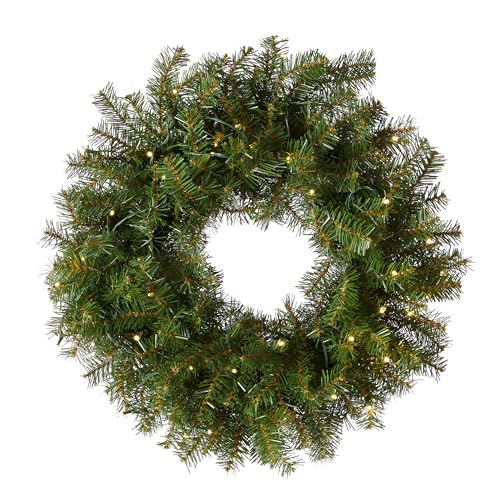
Key Takeaways
- Pro: nothing else turns a plain door into a seasonal welcome as quickly or as reversibly.
- Pro: a good artificial wreath is reusable for many seasons and restyleable every year.
- Con: wreaths demand storage, hanging hardware and a few minutes of seasonal care.
- Con: lit models add batteries or cords to manage; fresh wreaths dry and must be retired.
- Verdict: the pros win for most homes — provided the wreath is sized, rated and stored properly.
Quick verdict. A holiday wreath suits households that enjoy a visible, low-effort seasonal ritual and have somewhere dry to store one. It suits less well anyone with no storage, a door in punishing weather with no covered option, or a genuine dislike of seasonal decorating chores. The sections below unpack both halves of that sentence.
In this guide
Holiday Wreath Pros and Cons: The Pros
An Instant, Reversible Transformation
Few decorations change a home’s face as completely in as little time. A wreath hangs in minutes, needs no tools beyond a hanger, and leaves no trace when it comes down. Compare that with painting a door, changing hardware or installing lighting: the wreath delivers the seasonal version of all three at a fraction of the effort. Because the change is reversible, it is also low-risk — renters, cautious decorators and anyone testing a new style can commit for a season without committing to anything permanent.
A Welcome That Works Day and Night
A wreath is read twice: once in daylight, by its foliage and colour, and once after dark, if it is lit, by its glow. That double duty makes it unusually hardworking decor. Delivery drivers, guests and the household itself all meet the wreath before anything else, so its welcome is the season’s first impression. Even unlit, a wreath at eye level catches attention that ground-level decorations miss, which is why one well-chosen wreath often does more for a home’s seasonal feel than a scatter of smaller pieces.
Reusable Value Across Many Seasons
The honest maths of an artificial wreath is cost spread across seasons. A well-made wreath used for many years asks for storage space and a few minutes of annual care, and in return it removes a recurring seasonal purchase. A fresh wreath reverses the equation: a new purchase each year, but zero storage, a genuine fragrance and no long-term commitment to one style. Neither is the thrifty choice in the abstract. The thrifty choice is the one you will actually enjoy and, for artificial, actually store properly — a premium wreath crushed in a damp attic is the most expensive outcome of all.
Endlessly Restyleable
Ribbon and removable accents are the cheapest refresh in holiday decorating. A wreath base that feels tired in its third year often just needs a new bow, a different cluster of picks or a change of ornament colour to feel current again. This is the structural advantage of buying good greenery first and decoration second: the expensive part, the foliage, stays constant while the inexpensive part, the styling, evolves with your taste. Keep a small box of spare picks and ribbon ends with the wreath in storage, and the refresh takes minutes rather than a shopping trip.
Flexible Placement All Over the Home
Placement options multiply once you stop thinking of a wreath as door-only decor. Over a mantel it becomes a focal point; on an interior door it carries the season into hallways and bedrooms; laid flat with a hurricane candle holder — used carefully and never left burning unattended — it becomes a table centrepiece; hung in a window it shares the season with the street. Smaller wreaths work as chair-back accents at a holiday table or layered over a kitchen cabinet door. Each placement changes what the wreath needs: visibility, depth and lighting all shift with the spot you choose.
A Manageable, Beginner-Friendly Project
A wreath asks almost nothing of its owner in skill. There is no assembly worth the name, no installation beyond hanging, and no maintenance more complex than fluffing and dusting. For households that find full-scale decorating daunting — trees, lights along rooflines, table schemes — a wreath is the achievable version: one decision, one hanger, one visible result. It is also a kind way to include children or older relatives in decorating, since choosing a bow or a placement is participation without ladders or lifting.
The Cons
Storage Is a Real Requirement
An artificial wreath is a bulky, crushable object that needs a home for most of the year. Households short on cupboards, or storing things in damp or very hot spaces, will watch a good wreath deteriorate through no fault of its making. The storage question is therefore a buying question: if you cannot keep a wreath dry, uncrushed and cool, either choose a smaller wreath, plan a rigid container into the purchase, or lean toward a fresh wreath each year and accept the recurring cost instead.
Fresh Wreaths Are Temporary by Nature
Fresh wreaths, cut from real evergreen branches, offer the scent and slight irregularity that many people associate with the season itself. Their limitation is time: a fresh wreath is a living decoration on a countdown, drying gradually indoors and faster near heat. Artificial wreaths trade that fragrance for consistency and reuse, arriving in the same shape every year and asking only for storage space in return. Neither choice is automatically better. The honest question is whether you value the ritual of a fresh wreath each season or the economy and predictability of keeping one good artificial wreath for many seasons.
Lights Add Management
Battery-powered lights free a wreath from outlet geography. Doors, stair rails, mantels without nearby sockets and windows all become possible, and there are no cords to hide or trip over. The discipline required is simple: keep the battery pack somewhere reachable, switch the lights off when nobody is enjoying them, and never leave batteries sitting in a damp location unless the wreath and its light set are clearly rated for outdoor use. A timer setting, where offered, is the feature owners praise most, because it removes the nightly round of switching entirely. None of this is difficult, but it is not nothing: a lit wreath is a small appliance with a small routine attached, and households that ignore the routine get flickering, flat batteries and frustration by mid-season.
Weather Punishes the Wrong Wreath
Outdoor wreaths live a harder life than indoor ones. Rain, condensation and freeze-thaw cycles test foliage, wiring and battery packs alike, so only hang a wreath outside — especially a lit or battery-powered one — when it is clearly described as suitable for outdoor or covered outdoor use. A covered porch is a kinder placement than an exposed wall, and bringing a borderline wreath inside during the worst weather extends its life noticeably. If a battery pack is not rated to sit out in the rain, it should not sit out in the rain; route it somewhere sheltered or choose a different wreath for that spot.
Quality Varies Enormously
Where money shows in a wreath is density and finish. Denser tip counts fill the silhouette so the frame and wiring disappear; better moulded tips hold a realistic shape instead of lying flat like ribbon; sturdier frames keep the circle true after years of hanging and storage. Where money hides is in the back of the wreath — the part nobody photographs — in the hanging loop, the wiring finish and how securely decorations are attached. If you can handle a wreath before buying, handle it: weight, fullness and the tidiness of the back tell you more than the front view in a styled photograph.
Size and Fit Can Go Wrong
Size is the quiet decision that shapes everything else. A wreath should leave a clear margin of door or wall visible around it, so the eye reads it as an accent rather than a covering. On a standard front door, a mid-sized wreath usually looks intentional, while an oversized one can crowd the handle, the knocker and the frame. Indoors the rules soften: a generous wreath over a mantel can anchor a whole room, and a smaller one layered over a mirror or window adds depth without bulk. Measure the surface first, then shop — guessing at scale is the most common and most avoidable wreath mistake.
What the Trade-Offs Mean for You
The traditional front-door household
This home wants the classic picture: full green foliage, warm lights, a red bow, visible from the street and welcoming after dark. Prioritise a pre-lit wreath with generous density and a silhouette that holds up at distance, sized to leave a confident margin on the door. Battery power with a timer suits a door without an exterior outlet; plug-in suits a porch that has one. Storage space for a rigid wreath box is part of the deal, and this household usually has it, because the wreath is a fixture of their season rather than an experiment.
The small-space apartment decorator
Apartments reward wreaths that multitask. A mid-sized unlit or battery-lit wreath can move from the door to above a bookcase to the centre of a small dining table across the season, and it stores flat in a closet rather than demanding an attic. Realistic foliage matters more here because the wreath is seen at conversational distance, not from a street. This decorator should favour quality of greenery over diameter, and choose removable accents so one wreath can shift mood between a dinner party and a quiet weeknight.
The porch-first entertainer
For a home whose season happens on the porch and in the garden, the wreath is outdoor equipment first and decoration second. Outdoor suitability is non-negotiable, the hanging must shrug off weather and a busy door, and lights should be on a timer so the welcome is lit before the first guest arrives. A pair of wreaths — door and gate, or door and porch window — often works harder than one oversized piece. This buyer should inspect the battery housing and cord seals with the same seriousness they give the foliage.
The fresh-wreath loyalist
Some households would not trade the scent of real evergreen for any convenience, and for them the wreath decision is about sourcing and timing rather than storage. Buy fresh as late as practical, hang it away from heat sources, accept the needle drop as part of the season, and retire it promptly when it dries. A loyalist can still borrow one artificial-wreath habit: keep a good hanger and a ribbon you love from year to year, so the fresh wreath arrives to a ready-made welcome and the ritual stays easy.
How a Wreath Compares With the Alternatives
| Option | Strengths | Trade-offs |
|---|---|---|
| Holiday wreath | Eye-level impact, reusable, restyleable, hangs in minutes | Needs storage and correct sizing |
| Garland alone | Frames doors and mantels generously | More length to store, can look sparse without accents |
| Door swag | Vertical shape suits narrow doors | Less presence from the street |
| Fresh wreath yearly | Real fragrance, no storage | Recurring purchase, dries and drops needles |
The table explains why wreaths anchor so many schemes: they sit at the sweet spot of impact per unit of effort. Garland is the natural partner rather than the rival — many of the best-looking doors run a wreath at the centre and garland at the frame — and readers planning the full entrance can pair this article with the full holiday wreath buying guide for the specification work.
How to Buy Smart
The most common wreath mistake is buying by photograph instead of by measurement. Product images are styled, lit and cropped to flatter, and they carry no sense of your door’s proportions. The fix costs nothing: measure the door or wall, decide the diameter that leaves a comfortable margin, and filter every candidate by that size before looking at a single photograph. Shoppers who size first almost never return a wreath; shoppers who fall for a photograph first are the ones writing the disappointed comments about a wreath that looked enormous online and modest on the door.
Ignoring the indoor-outdoor distinction wastes more wreaths than any other error. An indoor wreath hung on an exposed door fades, rusts at its frame and sheds its flocking into the weather, while its lights — if it has them — were never built for rain. Match the wreath’s stated use to the actual exposure of your spot, remembering that a covered porch and an open wall are different climates. If your dream wreath is indoor-only, hang it inside and let it be seen through the glass; it will outlast several outdoor seasons that way.

National Tree Company Pre-Lit Wreath
The National Tree Company Pre-Lit Wreath is a classic pre-lit evergreen wreath from a long-running holiday decor maker, built around dense mixed tips, warm built-in lights and a traditional profile that reads well from the street. It sits in the mid-range tier of this group, and that positioning shows in what it prioritises. Best for: front doors that need one dependable, traditional wreath with the lighting already handled. Not suited for: shoppers who want a heavily decorated, ornament-loaded statement piece out of the box. In pros-and-cons terms, its strength is convenience and its honest trade-off is dependence on its built-in lights ageing well. As with every pick in this guide, treat the listing as a living document: check the current Amazon listing for the present specification and availability before you buy, and check price on Amazon rather than relying on any number quoted second-hand, because seasonal listings change often.
Balsam Hill Wreath
The Balsam Hill Wreath is a premium wreath known for carefully shaped, lifelike foliage modelled on real evergreen branches, aimed at buyers who study a wreath up close and want it to pass at arm’s length. It sits in the premium tier of this group, and that positioning shows in what it prioritises. Best for: living rooms, mantels and entryways where guests see the wreath at close range all season. Not suited for: anyone decorating several doors on a tight seasonal budget. Its strength is foliage realism at close range; its trade-off is a premium tier that only close viewing truly justifies. As with every pick in this guide, treat the listing as a living document: check the current Amazon listing for the present specification and availability before you buy, and check price on Amazon rather than relying on any number quoted second-hand, because seasonal listings change often.

Puleo International Pre-Lit Wreath
The Puleo International Pre-Lit Wreath is a pre-lit wreath from a family-run holiday company with deep roots in seasonal decorating, favouring a full, traditional silhouette and straightforward, familiar construction. It sits in the mid-range tier of this group, and that positioning shows in what it prioritises. Best for: traditional homes that want a generous, full-looking pre-lit wreath without chasing boutique styling. Not suited for: minimalist spaces where a very full wreath would overwhelm a narrow door or small entry. Its strength is a full, traditional silhouette; its trade-off is presence — smaller doors may find it a lot of wreath. As with every pick in this guide, treat the listing as a living document: check the current Amazon listing for the present specification and availability before you buy, and check price on Amazon rather than relying on any number quoted second-hand, because seasonal listings change often.
Setup and Care That Reduce the Cons
Storage decides whether an artificial wreath is a one-season purchase or a decade-long one. The enemies are crushing, damp and heat. A wreath stored under heavy boxes loses its shape; one stored in a damp space can pick up musty odours and, on natural decorative elements, even mould. The reliable method is unglamorous: let the wreath dry fully if it has been outdoors, brush off dust, store it in a rigid wreath box or a sturdy bag hung from a hook rather than stacked, and keep it somewhere cool and dry. Ten careful minutes in January buy you a wreath that needs ten minutes of fluffing the following December.
Fluffing is the ritual that separates a stored wreath from a displayed one. Branches compress in storage, and a wreath hung straight from the box looks flat and apologetic. Work around the circle by hand, lifting each tip outward and slightly forward, turning some left and some right so the silhouette fills in three dimensions. Check the wreath from the front at arm’s length as you go; gaps that are invisible from above glare from the front. It is the highest-value ten minutes in the whole wreath routine, and it is also the moment to spot loose ornaments or tired ribbon before guests do.
Cleaning an artificial wreath is a gentle job. A soft brush, a feather duster or a cool, low stream of air lifts the season’s dust without disturbing flocking or glued decoration. Avoid soaking a pre-lit wreath or spraying liquid cleaners across its wiring and battery pack; if a spot needs attention, a barely damp cloth on that area alone is the safer tool. Fresh wreaths ask for the opposite treatment — a mist of water on the foliage in the first days can slow drying slightly — but no amount of misting turns a cut wreath into a permanent one, so plan its farewell as part of its charm.
Safety with a decorated wreath is mostly a matter of respecting three things: heat, weather and gravity. Keep any wreath — and a real, drying evergreen wreath above all — well away from open flames, candle arrangements, fireplaces in active use and portable heaters, because dry foliage and decorative materials can catch far more easily than they look capable of. Hang the wreath on a hook or hanger genuinely rated for its weight, seated firmly so a slamming door or a gust cannot work it loose. A wreath that falls can damage the door, the floor and itself, and the fall is almost always preventable at hanging time.
Outdoor wreaths live a harder life than indoor ones. Rain, condensation and freeze-thaw cycles test foliage, wiring and battery packs alike, so only hang a wreath outside — especially a lit or battery-powered one — when it is clearly described as suitable for outdoor or covered outdoor use. A covered porch is a kinder placement than an exposed wall, and bringing a borderline wreath inside during the worst weather extends its life noticeably. If a battery pack is not rated to sit out in the rain, it should not sit out in the rain; route it somewhere sheltered or choose a different wreath for that spot.
Bottom Line
Weighed honestly, a holiday wreath’s advantages are structural — impact, reusability, flexibility — while its disadvantages are mostly managerial: storage, sizing, weather-matching and light-keeping. Managerial problems have solutions, and this article has tried to hand you each one. If the cons list reads like a set of chores you would mildly enjoy, buy the wreath. If it reads like a burden, a fresh wreath each year, or a smaller unlit one, trims the list to almost nothing. Either way, the honest answer to is a holiday wreath worth it is the natural next read.
More Wreath Judgement Calls Worth Making
Wreaths reward a household rhythm. Hang early enough to enjoy the whole season, light them when the household is actually home to see them, and build the small rituals — the evening switch-on, the doorstep check after a storm, the January fluff-and-store — into the season itself. Decorations that join the rhythm get used and loved; decorations that fight it get skipped. That is a practical argument for timers, reachable battery packs and hangers that make the wreath effortless to live with day after day.
If two wreaths are competing for your door, run the doorstep test in your head. Picture each one from the street in flat morning light and again at dusk with the house lit. Picture it against your actual door colour, next to your actual hardware, under your actual porch light. The wreath that wins both pictures is the right one, and it is rarely the one that merely photographed best in a studio. Context is the whole game with a piece of decor that exists to frame an entrance.
Neighbours and guests read a wreath as a sentence about the household: cared for, welcoming, settled for the season. That reading is why small maintenance matters — straightening a tilted wreath, replacing a tired bow, brushing off the dust of a dry week. None of it takes long, and all of it compounds. A wreath is a small decoration with an outsized voice, and treating it as the home’s seasonal handshake, rather than as one more box to unpack, is the mindset behind every recommendation in this guide.
For households decorating on a shared or rented door, reversibility is a feature. Over-door hangers, ribbon hangs and removable hooks keep the peace with landlords and leave no trace in January. Weight matters more on rental hardware, and a mid-sized wreath hung properly beats a heavy one hung hopefully. The same logic suits anyone who redecorates often: choose mounting that lets the wreath move rooms without tools, and the wreath becomes a flexible asset instead of a fixed installation.
Consider the wreath’s relationship with light that already exists. A porch light above the door, a lantern beside it, a lit window behind it — the wreath joins a lighting scheme rather than inventing one. Warm wreath lights beside a cool porch bulb can clash in a way neither shows alone, so match tones where you can. In daylight the same thinking applies to shadow: a wreath on a sunlit wall spends half the day in hard shadow and half in glare, and dense foliage handles both better than sparse, delicate decoration.
A wreath on a working door lives a mechanical life. It is swung, bumped by parcels, brushed by shoulders and occasionally caught by the very people it welcomes. That argues for secure attachment of every decorative element and for a hanging method that holds the wreath still rather than letting it swing and knock. Check the wreath after the first windy night and after the first busy weekend; early small corrections — a re-seated pick, a tightened hanger — are what separate a wreath that lasts the season from one that slowly sheds itself across the doorstep.
Households with pets and small children should give the wreath a placement interview. Low-hung wreaths within reach of curious hands and noses invite investigation, and small detachable decorations are the first casualties. Hang the main wreath at adult eye level, keep spare ornaments out of paw range, and consider a second, sturdier, simpler wreath for the playroom door where touching is part of the fun. None of this is about fear; it is about matching the decoration to the household that will actually live around it.
The January question is worth asking in November: where, exactly, will this wreath live for the other eleven months? A named shelf, a labelled rigid box, a hook in a dry cupboard — the households that answer in advance are the ones whose wreaths survive. If the honest answer is nowhere, that is valuable information too, and it points toward a fresh wreath, a smaller wreath, or a wreath borrowed from the category of things your home genuinely has room to keep.
Wreath scale interacts with architecture in ways worth a moment’s thought. Tall doors with transom windows can carry a larger wreath placed higher; cottage doors with low frames want a wreath that sits comfortably within the panel; modern doors with long vertical handles want the wreath offset in the mind’s eye even when centred in fact. Stand across the street and read the whole facade — door, wreath, windows, path — as one composition. The wreath is the punctuation mark; the house is the sentence.
There is a quiet economy in buying one wreath well instead of several wreaths cheaply. One dense, well-finished wreath moved between door and mantel across the season gives two displays for one storage footprint. Several thin wreaths give several slightly disappointing displays and a storage problem multiplied. The exception is the matched pair — double doors and symmetrical porches genuinely reward twinning — and even there, two good wreaths beat four flimsy ones. Concentration, in wreath buying as in most decorating, is what reads as luxury.
Scent is the one sense an artificial wreath cannot serve, and households that miss it have honest workarounds. A small bundle of fresh greenery tucked behind the door wreath, a bowl of pinecones near the entry, or a fresh swag on an interior door can supply the fragrance while the artificial wreath supplies the permanence. Mixing the two categories deliberately — artificial where durability matters, fresh where scent matters — is not a compromise; it is the strategy experienced decorators quietly use.
Weather watching becomes a wreath owner’s small seasonal habit. Before a storm with real wind, a thirty-second check of the hanger and a decision about bringing a borderline wreath in can save the wreath and the door alike. After the storm, a shake to shed water and a quick straighten restores the display. These micro-rituals take almost no time, and they are the difference between a wreath that endures a northern winter outdoors and one that is found in the hedge in the morning.
If you are buying a wreath as a gift, buy the recipient’s door, not your taste. A wreath is gloriously giveable — flat, festive, useful in any home — but the size, the rating and the style must suit their entrance and their storage. An unlit, mid-sized, realistically foliaged wreath is the safest generous choice, because it fits the most doors and can be lit or dressed by its new owner. Include the hanger. A gift that can be hung the same evening is a gift that gets used the same evening.
Second-hand and hand-me-down wreaths deserve a fair hearing. A well-made wreath passed between households, or found in good condition, often has better bones than a new wreath at the friendliest tier. Judge it by the same standards as a new one — density, back finish, light condition, hanging loop — fluff it thoroughly, refresh its ribbon, and it can serve a second household as honourably as its first. Longevity is the whole design brief of a good artificial wreath; a wreath on its second home is the brief fulfilled.
Finally, remember that a wreath is allowed to be simple. Bare greenery, well fluffed, hung straight on a clean door, is a complete and confident seasonal statement that predates every trend in this guide. The elaborate versions exist for households that enjoy elaboration, not because simplicity failed some test. Choose the level of decoration that matches the energy you actually have in December, and the wreath will look like a pleasure rather than an obligation — which, in the end, is the entire point of hanging one.
Photograph your wreath in place during its first season. A single phone picture, taken from the street and from the doorway, becomes next year’s reference for height, bow placement and what worked — and a gentle audit of what did not. Households that keep that small record stop re-solving the same problems every December. It takes ten seconds, and it turns hanging the wreath from an annual improvisation into a practised routine with a known-good result.
The wreath has a longer memory than most decorations. Circular evergreen wreaths have signified continuity and welcome through winter for centuries, which is part of why the shape still reads as sincere rather than fashionable. Knowing that lineage changes how you buy: you are not chasing a trend piece but joining a ritual, and ritual objects reward being chosen slowly and kept long. A wreath bought with that mindset — right size, honest materials, a style your home can repeat for years — tends to be the wreath still hanging, unembarrassed, a decade later.
Flocked wreaths ask for a gentler hand than plain greenery. The snow-effect finish that makes them photograph like a winter morning can shed if the wreath is crushed, dragged or stored against rough surfaces. Fluff a flocked wreath by lifting rather than pulling, store it with nothing pressing on the decorated face, and accept a little fallout in the first season as the loose excess leaving. In return, flocking does something no ribbon can: it makes even a modest wreath look hushed, pale and wintry the moment it is hung.
Symmetry is a wreath superpower on the right house. Paired wreaths on double doors, twin windows or gate posts create a rhythm that a single wreath cannot, and they let each individual wreath be smaller and lighter. The discipline is matching: same wreath, same height, same bow, hung with a level and a measuring tape rather than by eye. Asymmetric houses, by contrast, often look better with one confident wreath placed decisively. Read your facade honestly before deciding whether it wants a soloist or a duet.
Window wreaths are the diplomats of holiday decorating, pleasing the street and the room at once. Hung inside the glass, a wreath is protected from weather, visible lit from within after dark, and free of the exposure questions that govern outdoor pieces. The craft is in the hanging: a ribbon over the window frame or a clear hook keeps the arrangement clean, and the wreath’s back should be tidy because the room will see it. Many households discover their favourite wreath spot was a window all along.
Pairing a wreath with garland is a composition exercise. The garland frames; the wreath punctuates. Keep the foliage family consistent so the two read as relatives, let one of them carry the lights and the other stay quiet, or light both at the same warmth so the doorway glows as one piece. Where the scheme most often fails is competition — decorated garland and decorated wreath shouting over each other. Decide which piece is the soloist before you buy either, and let the other accompany.
Candles and wreaths share a long history and a necessary caution. A wreath used as a table centrepiece around a candle holder looks timeless, but the arrangement demands respect: use a stable holder that keeps flame well clear of foliage, never leave the candle burning unattended, and keep the pairing away from draughts that lean flames sideways. Many households now choose flameless candles for exactly this spot, gaining the glow without the vigilance. Either way, the rule is identical — flame and foliage are neighbours that require supervision.
Warm light flatters evergreen; that is the short version of wreath lighting colour. The longer version is that your door, your porch bulb and your interior lighting all vote too. Walk outside at dusk during the first week and judge the wreath the way a guest meets it, not the way the packaging promised. If the glow reads harsh against your facade, softer accessories — a warmer bow colour, foliage-forward styling — can calm it. Lighting is the wreath’s evening personality, and like any personality it should suit the house it lives in.
Timers quietly transform wreath ownership. A lit wreath on a timer is lit when you come home, lit when guests arrive and dark when the house sleeps, without a single decision being made after the first setup. That reliability is why timer users rarely go back: the wreath stops being a chore with a switch and becomes part of the house’s evening routine. If a wreath you love lacks a timer, an outlet timer on a plug-in setup achieves the same peace. Convenience, here, is not laziness — it is what makes the display actually happen nightly.
Door colour case studies are worth a minute. On a red door, deep green foliage with gold or cream accents reads rich rather than lost. On a black door, lighter greenery, flocking or strong red ribbon supplies the contrast the door withholds. On white and pale doors, almost everything works, and the risk flips to the wreath looking stark, which fuller foliage solves. On natural wood, warm lights and traditional styling harmonise with the grain. The wreath is constant; the door is the variable — shop for the pair.
A wreath over a fireplace carries one extra rule: heat rises. A mantel above a fire that is actually used warms the air around the wreath for hours, which dries fresh foliage quickly and is unkind to any decoration over time. Hang the mantel wreath with clearance, keep it out of the direct rising heat where the design allows, and be especially careful that no part of the arrangement hangs low toward the firebox. The mantel photograph is worth having — it is just worth having safely.
Renters and door-warranty worriers can still wreath with confidence. Over-door hangers sized to the door, ribbon hangs from an interior hook, and removable adhesive hooks rated honestly for the weight all leave January with no evidence. The wreath itself should be mid-weight and mid-sized, because rental-friendly hanging rewards restraint. What renters should skip is improvisation — tape, nails and hope — since the damage those cause is exactly what deposits remember. Reversibility is a feature; buy it deliberately.
Where the Trade-Offs Show Up in Daily Use: Holiday Wreath in Practice
This section exists to move past the tidy two-column summary and watch where each advantage and disadvantage actually appears during an ordinary week. It adds a layer that a feature list cannot give you, grounded in the seasonal & holiday context this holiday wreath will actually live in. Where this guide names examples such as Balsam Hill Wreath, use them as test cases for the checks below rather than as shortcuts past them.
Build a simple decision checklist and score it in writing. Five lines are enough: fit in the space, fit with the routine, ease of cleaning or upkeep, quality of the parts that move or wear, and how the holiday wreath will be stored or will look when it is not the centre of attention. Score each contender quickly, then look only at the lowest scores, because purchases are usually ruined by their weakest point rather than saved by their strongest. If two options tie, choose the one whose weakness is cheapest or easiest to live with. This sounds mechanical, and it is meant to: a written checklist is the best defence against the very human habit of falling for the last photograph you looked at.
Finally, plan the first fortnight. Decide where the holiday wreath will live from day one, what it replaces, what accessory or companion it needs straight away and what small job you will use to learn its habits while returning it is still simple. Keep the packaging until that learning period is over, note anything that surprises you, and deal with a mismatch early rather than adapting yourself around a poor fit for years. The households that end up happiest with a holiday wreath are rarely the ones that researched longest; they are the ones that checked fit honestly, bought for the ordinary week, and paid attention during the first days instead of assuming the decision ended at checkout.
One more angle is worth your time: the second-order costs. A holiday wreath changes what happens around it. It can demand a different cleaning product, a new storage habit, a moved piece of furniture, a rearranged cupboard or a standing arrangement with the people you live with. List those knock-on effects before you buy and decide whether you accept them as part of the deal. Sometimes the answer is an easy yes, and the holiday wreath earns its place by improving the whole routine around it. Sometimes the honest answer is that the supporting changes are the real project, and the purchase should wait until you are ready for them. Either answer is useful; the only bad outcome is discovering the knock-on effects by accident, one irritation at a time, after the decision can no longer be revisited.
It also helps to separate the problems a holiday wreath can solve from the problems it merely moves. If the underlying difficulty is space, the answer may be a smaller format or a different location rather than a more elaborate model. If the difficulty is time, look for the option that removes steps rather than the one that performs each step slightly better. If the difficulty is that several people want different things, a compromise design that everyone rates as good enough will usually outlast a specialist design that one person loves and everyone else avoids. Naming the real problem in one sentence, out loud, before you order, is a surprisingly powerful filter, and many shoppers find that the sentence itself points at a different holiday wreath than the one they started out researching.
Frequently Asked Questions
How long does an artificial holiday wreath last?
A well-made artificial wreath, stored dry and uncrushed, can serve for many seasons without visible decline. Its lifespan is decided less by the calendar than by handling: crushing in storage, damp, attic heat and rough hanging do the damage. Fluff the branches each year, inspect the lights and hanging loop before the season, and keep the wreath in a rigid box or hanging bag. Treated that way, the foliage stays full and the wreath remains the same welcoming sight year after year.
Are pre-lit wreaths better than unlit wreaths?
Neither is better in general; they suit different decorators. A pre-lit wreath looks neater because the lights are placed by the maker, and it hangs in minutes with nothing to wind or arrange. An unlit wreath is more flexible — you can change the lighting, the ribbon and the whole mood each year, and there is no lighting system to age. Choose pre-lit for speed and a finished look, and unlit if you enjoy restyling or want the wreath to work in daylight-only spots where lights add nothing.
Is a real wreath a fire risk?
A real wreath is made of cut foliage that dries steadily through the season, and dry foliage should always be kept well away from open flames, candles, active fireplaces and heaters. Hang a fresh wreath where it will not sit near a heat source, check it as the weeks pass, and retire it when it turns brittle and sheds freely rather than keeping it up out of habit. Artificial wreaths do not dry out in the same way, but the same common-sense distance from flame and heat is good practice for any decoration.
How do I stop a wreath from scratching or damaging my door?
Use a proper wreath hanger that fits your door’s thickness, or a ribbon-and-hook arrangement that keeps metal off the door’s surface. Check that the wreath’s back — frame, wire ends and battery pack — is not pressing or rubbing one spot, and add a small piece of felt or fabric behind any hard edge that touches the door. Confirm the door still opens and closes cleanly with the hanger fitted. Most door damage blamed on wreaths is really damage from improvised hanging, and it is entirely avoidable.
Can I restyle the same wreath every year?
Yes, and it is one of the strongest arguments for buying good greenery on an unlit or lightly decorated base. The foliage stays constant while the styling evolves: swap the bow, change the picks, shift the ornament colour, or strip it back to bare greenery for a calmer year. Keep the accents together in storage so restyling takes minutes. A wreath bought for its foliage quality can follow your taste for years, whereas a heavily pre-decorated wreath tends to lock you into one look until you replace it entirely.
How do I make a plain wreath look more expensive?
Density and restraint. First, fluff the foliage properly so the silhouette is full and three-dimensional — a flat wreath looks inexpensive no matter what is pinned to it. Then add one strong accent rather than many small ones: a generous ribbon bow, a cluster of berries or a few well-placed ornaments in a single colour family. Match the accent to the door or room so the wreath looks composed rather than decorated at random. Finally, hang it at a confident height with a tidy hanger; presentation does as much for perceived quality as the wreath itself.
Keep exploring this wreath cluster: our in-depth holiday wreath review; the comparative holiday wreath reviews roundup; the step-by-step guide on how to choose a holiday wreath. Each companion piece takes one angle — criteria, comparisons, trade-offs or value — so together they cover the whole decision without repeating it.
Related Guides and Ideas
- festive Christmas quilts for guest rooms
- Christmas decorative pillows to finish the look
- tabletop Christmas trees for small spaces
Those companion reads cover the rest of the seasonal picture — the tree, the textiles and the tabletop touches — so the wreath you choose here lands in a home that feels coordinated rather than decorated by accident. Start with whichever piece your room is missing most.