Disclosure: As an Amazon Associate, dailyhomedecorating.com earns from qualifying purchases. Links on this page are affiliate links; they cost you nothing extra. Prices and availability change often, so check the current Amazon listing before you buy.
This hedge trimmer buying guide walks you through everything a homeowner needs to decide before choosing a tool for real garden hedges: power source, blade behaviour, comfort, safety and honest tier positioning. Whether your hedge trimmer buying guide search started with a scruffy privet boundary or a formal boxwood edge, the logic is the same. Measure your hedge, understand your plants, and let those facts choose the tool. The sections below follow that order deliberately, because buying in the wrong order, features first and garden second, is how sheds fill up with nearly right equipment.
Key Takeaways
- Match the power source to your hedge and your distance from an outlet, not to marketing.
- Comfort in minute ten matters more than weight on a specification sheet.
- A trimmer handles seasonal growth; thick old wood belongs to loppers and a pruning saw.
- Safety kit is part of the purchase: eye protection, gloves and firm footwear.
- Buy the tier your hedge justifies: entry for small hedges, mid for most gardens, premium for large or dense boundaries.
Read those points again before you skim the detail, because almost every mistake owners make with a hedge trimmer traces back to ignoring one of them. The sections that follow simply unpack each point with the reasoning, the exceptions and the practical checks behind it.
In this guide
What a Hedge Trimmer Does and the Main Types
A hedge trimmer earns its place in the shed by turning a slow, arm-tiring job with hand shears into a controlled, repeatable pass along a hedge face. Instead of snipping branch by branch, you guide a reciprocating blade in smooth sweeps, and the hedge takes shape in minutes rather than hours. That speed matters most in the growing season, when privet, boxwood, laurel and similar hedging plants push out soft new growth quickly and can look untidy within weeks. Regular light trimming also keeps the plant healthier than occasional drastic cutting, because you remove mostly soft tips and encourage dense branching lower down. A good trimmer does not replace judgment, though. You still decide the line, the taper and how much to take off, and you still stop to step back and look. Think of the tool as an amplifier for technique: good habits produce a crisp hedge quickly, while rushed habits simply produce mistakes faster. That is why the guidance in this article spends as much time on preparation, stance and aftercare as on the tool itself.
Power source is the first real fork in the road. Corded electric models draw steady power from an outlet, never need charging and tend to feel light in the hand, but the cable limits your range and demands constant awareness so you do not cut through it. Cordless battery models free you to work anywhere in the garden, start instantly and store neatly, but runtime depends on the battery you fit and the thickness of what you cut. Petrol models still exist for very large or remote hedges, yet most households find them heavier, noisier and more maintenance-hungry than they need. For a typical suburban garden, battery power has become the default recommendation because it balances freedom, cleanliness and ease of storage. The honest exception is the very small garden with a single short hedge beside the house, where a corded tool can be simpler and lighter. Whichever route you choose, match the tool to the actual hedge you own today, not the estate you imagine owning one day.
How Much Cutting Ability Do You Actually Need?
Blade behaviour matters more than headline marketing. A hedge trimmer blade is a pair of toothed bars that slide past each other, trapping stems against the teeth and shearing them cleanly when the tool is kept moving at a steady pace. Clean cuts heal faster and look better than crushed or torn cuts, which can brown at the tips and invite dieback. Keeping the blade clean, lightly oiled and free of sap build-up is therefore not cosmetic fussiness; it directly affects cut quality and how hard the motor has to work. Dull or damaged blades make the tool vibrate more, cut less cleanly and tempt you to force the tool through branches it should never tackle. Thick, woody stems belong to loppers or a pruning saw, not to a trimmer blade. Respecting that boundary is the single easiest way to extend a trimmer’s life. When you finish a session, brush debris away only with the machine switched off and the battery removed or the plug pulled, then store the blade covered and dry.
Safety deserves its own honest paragraph because a hedge trimmer is a cutting tool that works at arm’s length, often at shoulder height. Always wear eye protection and sturdy gloves, and choose firm footwear with real grip rather than sandals or trainers with worn soles. Keep both hands on the handles while the blade is moving, and never reach across a running blade to pull away a stuck branch. If growth jams the teeth, switch the tool off completely, remove the battery or unplug it, and only then clear the jam with a gloved hand or a stick. Keep children and bystanders well away from the work area, and keep pets indoors until you finish. With a corded model, route the cable over your shoulder and behind you, and check its position before every pass. On a ladder, keep your footing secure, keep your hips inside the rails and never lean out to reach one last branch; climb down and move the ladder instead. Finally, avoid trimming wet growth near any electrical supply, and postpone the job if the hedge is soaked and the ground is slippery.
Which Power Source Fits Your Garden?
The shape you aim for explains many buying and technique decisions. A hedge that is slightly narrower at the top than at the base lets sunlight reach the lower foliage, which keeps the bottom dense instead of bare and leggy. Gardeners call this a batter or taper, and it is far easier to maintain with small regular trims than to restore after years of neglect. Flat tops are popular because they look formal, but they collect debris and can shade the sides if the hedge is wide. Rounded tops shed leaves and snow more kindly and suit informal gardens. Whatever profile you choose, consistency matters more than perfection: a slightly imperfect line repeated calmly looks better than a heroic correction that scalps one section. Use a taut string line or a long straight edge as a visual guide for formal hedges, and work in shallow passes rather than one deep cut. Remember that you can always take a little more off tomorrow, but you cannot put growth back once it is on the ground.
Timing shapes results as much as tool choice. Most hedges respond best to trimming after a flush of growth has hardened slightly, rather than when the new shoots are at their softest and most sappy. Evergreen hedges such as boxwood and yew reward gentle, frequent attention, while vigorous plants such as privet and laurel may need several passes across a long season. Always check for nesting birds before you start, and delay work if a nest is active, because disturbing it helps nobody and may break local rules. Avoid cutting in harsh midday heat when freshly cut foliage can scorch, and avoid frosty mornings when brittle stems shatter instead of cutting cleanly. After trimming, a light feed and a thorough watering during dry spells help the plant recover and push even regrowth. Keep a simple note of when you trimmed each hedge and how it responded; after one full season you will know your own garden’s rhythm far better than any generic calendar can tell you.
How Should the Tool Feel in Your Hands?
Ergonomics decide whether a trimmer feels like help or punishment. Weight matters, but balance matters just as much: a tool that carries its weight close to your body and offers a comfortable rear handle will feel lighter over a long hedge than a nominally lighter tool that pulls your wrists forward. Rotating or multi-position rear handles help when you switch from vertical sides to horizontal tops, because your wrists stay in a more natural line. Vibration is the quiet enemy; it creeps into hands and forearms and shortens comfortable working time, so take regular breaks, shake out your hands and swap tasks when you can. If you have arthritis or reduced grip strength, look for generous handle spacing, soft grips and a tool you can start without wrestling a stiff switch. The best test is brutally simple: pick the tool up in the shop, hold it at working height, and imagine the tenth minute, not the first. Comfort you feel in minute ten is the comfort that finishes the hedge neatly.
Maintenance is short, simple and routinely skipped, which is why so many trimmers underperform. After each session, with the tool switched off and isolated from its power source, brush loose clippings from the blade, wipe away sap with a suitable cleaner or resin solvent, and apply a light film of blade oil before fitting the scabbard. Check the blade for bent teeth or nicks if you struck wire, a hidden staple or a fence; a damaged tooth can tear every cut that follows. Keep ventilation slots clear so the motor cools properly, and store the tool indoors, dry and out of children’s reach. Battery users should store packs partly charged in a cool place rather than leaving them baking in a hot shed or sitting flat for months. Corded users should coil the cable loosely and inspect it for nicks before each use. None of this takes long. Five calm minutes after trimming protects the tool, sharpens your next session and removes the small frustrations that make people dread the job.
What About Blade Care and Longevity?
Choosing between trimming yourself and hiring help is a legitimate part of the decision. A professional with long-reach equipment will finish a tall, long or awkward hedge faster and will take the clippings away, which matters more than people expect, because a big trim produces a surprising volume of green waste. Doing it yourself spreads the cost into your own time, gives you control over the exact line and lets you trim little and often, which most hedges prefer. Many households land in the middle: they own a trimmer for the routine faces they can reach safely from the ground, and they bring in help once a year for the high top or the neglected back boundary. That hybrid approach is sensible, not a compromise to be embarrassed about. Be honest about ladders in particular. If a hedge can only be finished by stretching from the top rung, the correct purchase is not a longer trimmer; it is a safer platform, a long-reach tool used from the ground, or a professional’s visit.
Clippings and cleanup shape the real-world experience more than brochures admit. Laying an old sheet or tarp along the base of the hedge before you start catches most of the fall and turns a tedious raking job into a quick gather-and-carry. Work from the top of the hedge downward on the sides so falling clippings do not lodge in foliage you have already finished. Shake each section gently as you go to dislodge loose pieces hiding inside the canopy. On paths and patios, sweep promptly because wet clippings stain paving and become slippery. Compost healthy clippings if your system runs hot enough, and keep diseased material out of the compost and out of the hedge’s own mulch. A blower can speed the final tidy, but a stiff brush and a little patience usually do the same job more quietly. When the tools are away and the line of the hedge catches the evening light cleanly, the cleanup discipline stops feeling like overhead and starts feeling like part of the craft.
How Do You Prioritise by Use Case?
Formal and informal hedges ask slightly different things of a trimmer and its owner. Formal hedges in boxwood, yew or hornbeam reward precision: shorter, controlled passes, frequent stepping back, and a willingness to stop when the light makes the line hard to judge. Informal flowering hedges need a lighter touch and better timing, because cutting at the wrong moment removes the very buds you planted them for. With flowering hedges, learn the plant before the tool: trim after flowering if it blooms on old wood, and shape by thinning selected stems rather than shearing the whole surface. A trimmer used thoughtlessly can turn a flowering hedge into a green box that never performs. Used thoughtfully, it keeps the outline tidy while the plant still does its seasonal job. The tool does not know your plant; you have to. That knowledge, more than any feature list, separates a hedge that looks managed from one that looks merely attacked.
Long-reach and standard trimmers solve different problems. A standard trimmer is lighter, simpler and easier to control for hedges you can reach comfortably from the ground, which covers most garden boundaries. A long-reach or pole trimmer extends your range for tall hedges and lets you keep both feet planted, but the extended shaft makes the head feel heavier, slows fine corrections and can tire shoulders quickly. Some systems convert between the two, which suits gardens with one tall boundary and several ordinary ones. If you go long-reach, practise the sweeping motion on a low section first, because the geometry feels unfamiliar and the blade is farther from your eyes. Never use reach as an excuse to work under branches you cannot see clearly, and never stand directly beneath the section you are cutting. The safest tool is the one whose working position keeps you balanced, observant and in control for the whole session, not the one with the most impressive reach on the box.
What Shape and Timing Should You Plan For?
Noise, neighbours and storage are unglamorous factors that quietly decide satisfaction. Battery and corded electric trimmers are considerate tools: they start without fuss, run without fumes and are quiet enough for ordinary weekend work without testing anyone’s patience. Petrol tools carry more noise and exhaust, one reason households keep moving away from them for routine hedges. Storage matters too. A trimmer lives most of its life in the shed, so a blade cover, a hanging point out of damp air and a battery stored sensibly will do more for its lifespan than any accessory bundle. If shed space is tight, a tool that hangs flat against a wall earns real points. Think also about who else might use the tool. A partner or older teenager helping with the garden needs controls they can understand at a glance and a weight they can hold safely. Buying for the household that actually exists, rather than for a single confident user, prevents the common outcome where one person does every trim because nobody else trusts the tool.
Cutting capacity is often misunderstood, so let us be plain. A trimmer is designed for the soft and semi-woody growth a hedge produces in a season, plus slightly older wood on vigorous plants. It is not a substitute for loppers, a pruning saw or secateurs, and forcing it through thick branches strains the motor, damages teeth and leaves ugly torn stubs inside the hedge. The practical workflow on a neglected hedge is staged: first remove clearly dead, crossing or over-thick stems with hand tools, then use the trimmer to re-establish the surface, then maintain that surface little and often so it never becomes a rescue job again. Owners who respect that sequence rarely complain about power. Owners who expect one tool to do every job usually complain about everything. When you assess a trimmer, ask whether it handles your hedge’s normal seasonal growth with ease, not whether it can heroically chew the thickest branch you can find. Ease on the normal job is what you will feel every single session.
Which Extras Genuinely Help?
Weather and ground conditions belong in every plan. Trim on a calm, dry day when you can see the line clearly and the foliage is not dripping; wet leaves clump, stick to the blade and make cuts less predictable, and wet ground turns a simple stance into a slip risk. Wind moves long hedges just enough to ruin a straight pass and blows clippings everywhere except onto your sheet. Early morning and late afternoon light reveal the surface honestly, while harsh overhead sun can hide dips until the job is done. If you wear glasses or prescription lenses, fit proper eye protection over them rather than skipping protection altogether. Hydration and breaks sound like filler advice until you have spent an hour holding a vibrating tool at shoulder height; tired arms make sloppy cuts and sloppy decisions. Work in sections, finish one face properly, rest, then move on. A hedge trimmed in two calm sessions looks better than a hedge attacked in one exhausted marathon, every time.
Technique on the vertical faces rewards patience. Hold the blade lightly against the growth and move upward in smooth arcs, letting the teeth do the work rather than pressing the bar into the hedge. Working upward helps clippings fall clear instead of settling into the section you just finished. Keep the blade as flat to the intended plane as you can, and check your line from several paces back after each section, because small drifts compound into visible waves. Corners deserve special care: define them deliberately, trim each face to the corner in turn, and resist the urge to round them off with a casual sweep unless a soft corner is the look you want. For the top, work from a stable position where you can see across the surface, keep both hands on the tool, and use a string line on formal hedges until your eye is trained. If you cannot see the top safely, that is information, not a challenge: use long-reach equipment from the ground or get help.
How Does Storage and Noise Factor In?
Budget thinking works best when it is framed as tiers and seasons rather than a single number. An entry-level corded or small battery trimmer can keep a modest hedge tidy for years if the hedge is genuinely modest. A mid-tier battery tool on a platform you already own often delivers the best value in the whole category, because the battery cost is shared across several tools and the trimmer itself is capable enough for real gardens. Premium tools justify themselves through comfort, stamina on larger properties and the simple fact that you will use them more willingly, not through magic. What rarely pays is buying the cheapest possible tool for a large, dense hedge and then fighting it every session until you replace it. Equally, a premium tool bought for one small shrub is money parked in the shed. Match the tier to the hedge, the season count and the household. That matching exercise, done honestly, is the core skill this whole cluster of guides is trying to teach.
Environmental considerations are straightforward and worth stating plainly. Electric trimming produces no exhaust at the point of use and far less noise than older petrol equipment, which benefits you, your neighbours and garden wildlife. Battery care extends that benefit: charge sensibly, avoid storing packs in temperature extremes, and recycle batteries properly at the end of their life rather than binning them. Sharp, clean blades also have an environmental angle, because efficient cutting wastes less of your effort and less of the plant. Healthy hedges themselves are environmental assets, sheltering birds and insects, filtering dust and softening boundaries better than fences. Trim with that value in mind: check for nests, leave some structure where wildlife depends on it, and avoid turning every boundary into a shaved wall. A tidy garden and a living garden are not enemies. The trimmer, used with restraint and timing, is one of the tools that lets you have both at once.
What Does a Sensible Tier Look Like?
One underrated habit is walking the whole hedge before switching anything on. Look for hidden wire, old fence staples, irrigation lines, wasp activity and the neighbour’s plants pushing through from the other side. Two minutes of inspection prevents the classic mid-session surprises that damage blades and tempers. Note where the hedge is thickest, where it leans, and where last season’s cuts healed unevenly. That mental map tells you where to slow down and where a light pass is enough. It also tells you honestly whether the job is a maintenance trim or a renovation, and those two jobs should never be improvised into each other halfway through. Renovation work is staged across seasons, with hand tools doing the structural cuts and the trimmer restoring the surface afterwards. Confusing the two is how hedges get scalped and owners get discouraged, so decide which job you are doing before the blade ever moves.
Sharpening and blade care divide owners into those who schedule it and those who discover it. A blade that pulls, tears or leaves whiskery tips is telling you it needs attention, whether that means careful cleaning, professional sharpening or replacement of a damaged section. Do not file aggressively at teeth you do not understand; a light clean and oil solves more problems than amateur grinding. If a tooth is bent from striking metal, the honest fix is service or replacement, not hope. Keep the manual for your model, follow its specific guidance, and treat the blade with the same respect you would give a good kitchen knife, because the principle is identical: sharp, clean and dry beats strong and forced. Store the tool with its cover on, hung or shelved where the blade cannot be knocked, and never lend it without the cover and a two-minute safety briefing. Small disciplines like these are why some ten-year-old trimmers still cut beautifully while some two-year-old tools already feel tired.
How Do You Avoid the Classic Buying Errors?
Gloves, eye protection and footwear are sometimes treated as optional garnish, and that attitude deserves a direct answer. Hedges hide thorns, splinters, old wire and occasionally nesting insects, and a trimmer throws small debris in unpredictable directions. Eye protection is therefore not a courtesy suggestion; it is the difference between a finished job and an urgent wash at the tap. Gloves protect against blisters during the job and against thorns during cleanup, when most small injuries actually happen. Firm shoes protect your stance on uneven borders and your feet if the tool is set down carelessly. Dress for the job for the whole job, including the tidy-up, and the work stays pleasant instead of becoming a story. Add hearing awareness on longer sessions, keep long hair and loose sleeves secured, and never let familiarity talk you out of the routine. The routine is precisely what keeps a familiar tool safe.
Keep perspective on what a hedge is for. It is a boundary, a backdrop, a windbreak, a wildlife corridor and often the green frame that makes flowers and lawns look intentional. A trimmer serves that frame. The best-kept hedges in any street are rarely the most aggressively shaped; they are the ones trimmed little and often, by someone who knows the plants, checks the line from the pavement, and stops when the work is done rather than when the tool is empty. Build that rhythm and the tool you choose, within any sensible tier, will serve you well for years. That is the standard every recommendation, comparison and verdict in this article is quietly measured against, and it is a standard any careful homeowner can meet. It also explains why this guide keeps returning to habits rather than heroics: hedges reward rhythm, and rhythm is something you can build in a single season with any sensible tool and a little honest attention.
Why Does Technique Outrank Features?
Different hedge plants change the conversation in ways generic advice misses. Privet grows fast and forgives hard trimming, which makes it a good training hedge but a demanding one across a long season. Boxwood grows slowly, resents being scalped and rewards the lightest, most frequent touch, ideally with clean blades because boxwood blight spreads on dirty tools. Laurel has large leaves that a trimmer can shred unattractively, so many gardeners trim laurel with secateurs on visible stems or accept a softer finish and tidy the worst leaves by hand. Yew is forgiving and can regenerate from old wood, which makes it the classic candidate for renovating an overgrown formal hedge. Conifer hedges such as leylandii must never be cut back into bare brown wood, because they will not regrow from it. Knowing which of these you own changes your timing, your depth of cut and your tool settings more than any brand comparison ever will, so identify your plants before you shop.
Second-hand and shared tools deserve a fair hearing. A used trimmer from a known owner, with a clean blade and honest history, can be a sensible entry point for a small garden, provided you inspect the blade teeth, check the cable or battery health and confirm the safety switches work exactly as they should. Community tool libraries and neighbourly borrowing suit households with one small hedge trimmed a few times a year, though borrowing works best when the tool comes back cleaned, oiled and charged as a matter of courtesy. What does not work is inheriting a neglected tool with a damaged blade and no manual and hoping for the best. If the blade is bent, the guard is missing or the switches feel vague, walk away; a cutting tool is the wrong place for optimism. New or used, the standard is the same: safe switches, sound blade, comfortable handles and a power source you trust.
Top Picks at a Glance: Models to Shortlist
The models below are named in prose only in this draft. Each one is a real product from a recognised brand, placed in a qualitative tier so you can shortlist sensibly. Check the current listing for the model that interests you before you buy, and confirm it suits your hedge, your power setup and your hands.
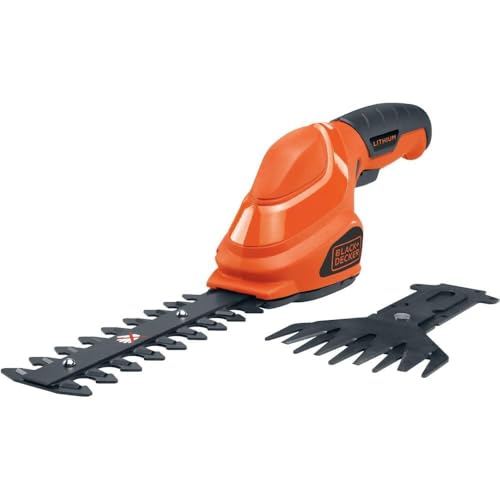
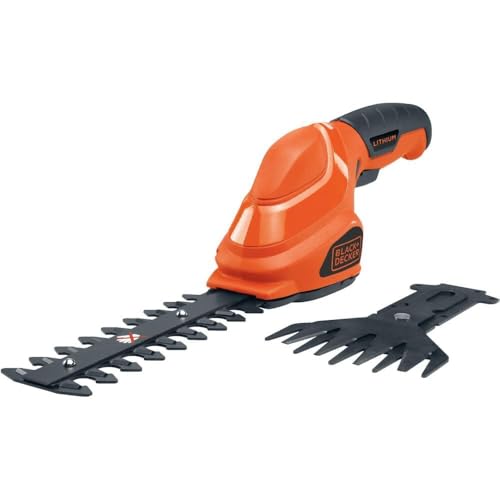
BLACK+DECKER HedgeHog
The BLACK+DECKER HedgeHog is a corded electric hedge trimmer from a brand most homeowners already know from drills and garden tools, positioned as an entry-level, always-ready option for small to medium hedges near an outdoor outlet. In practice that positioning means it suits some gardens far better than others, and the honest way to judge it is against your own hedge rather than against a showroom rival. Consider how often you trim, how thick your seasonal growth becomes, how far the hedge sits from power or storage, and who else in the household will use the tool. A model that matches those answers will feel right within one session; a model that fights them will feel wrong for years, however well it reviewed elsewhere. Treat this shortlist as a starting point for hands-on comparison, hold the tool if you can, and let comfort and control cast the deciding vote.
Best for: homeowners whose garden and habits match the tier described above. Not suited for: anyone expecting a trimmer to do the work of loppers and a pruning saw on thick, old wood, or anyone whose hedge can only be reached by stretching unsafely.

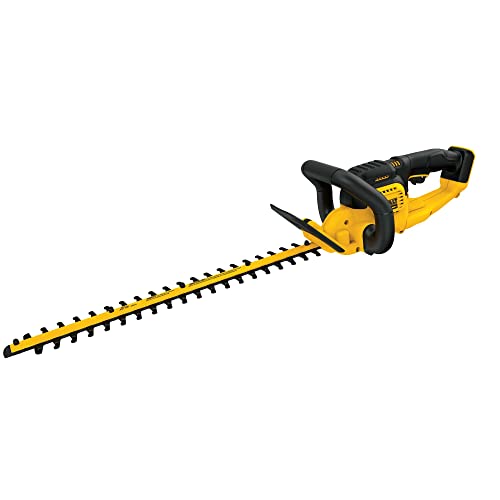
DEWALT 20V MAX Hedge Trimmer
The DEWALT 20V MAX Hedge Trimmer is a cordless hedge trimmer built for people already invested in the DEWALT battery platform, positioned in the mid-to-premium tier for regular, heavier trimming work. In practice that positioning means it suits some gardens far better than others, and the honest way to judge it is against your own hedge rather than against a showroom rival. Consider how often you trim, how thick your seasonal growth becomes, how far the hedge sits from power or storage, and who else in the household will use the tool. A model that matches those answers will feel right within one session; a model that fights them will feel wrong for years, however well it reviewed elsewhere. Treat this shortlist as a starting point for hands-on comparison, hold the tool if you can, and let comfort and control cast the deciding vote.
Best for: homeowners whose garden and habits match the tier described above. Not suited for: anyone expecting a trimmer to do the work of loppers and a pruning saw on thick, old wood, or anyone whose hedge can only be reached by stretching unsafely.

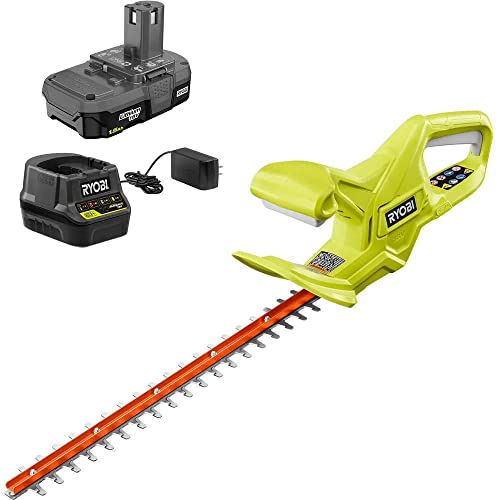
Ryobi 18V ONE+ Hedge Trimmer
The Ryobi 18V ONE+ Hedge Trimmer is a cordless hedge trimmer in the wide Ryobi ONE+ family, positioned as an accessible mid-tier choice for households that already own compatible batteries for other tools. In practice that positioning means it suits some gardens far better than others, and the honest way to judge it is against your own hedge rather than against a showroom rival. Consider how often you trim, how thick your seasonal growth becomes, how far the hedge sits from power or storage, and who else in the household will use the tool. A model that matches those answers will feel right within one session; a model that fights them will feel wrong for years, however well it reviewed elsewhere. Treat this shortlist as a starting point for hands-on comparison, hold the tool if you can, and let comfort and control cast the deciding vote.
Best for: homeowners whose garden and habits match the tier described above. Not suited for: anyone expecting a trimmer to do the work of loppers and a pruning saw on thick, old wood, or anyone whose hedge can only be reached by stretching unsafely.

Greenworks 40V Hedge Trimmer
The Greenworks 40V Hedge Trimmer is a cordless hedge trimmer from a brand focused on battery-powered outdoor equipment, positioned in the mid tier for medium gardens where a step up in cutting confidence matters. In practice that positioning means it suits some gardens far better than others, and the honest way to judge it is against your own hedge rather than against a showroom rival. Consider how often you trim, how thick your seasonal growth becomes, how far the hedge sits from power or storage, and who else in the household will use the tool. A model that matches those answers will feel right within one session; a model that fights them will feel wrong for years, however well it reviewed elsewhere. Treat this shortlist as a starting point for hands-on comparison, hold the tool if you can, and let comfort and control cast the deciding vote.
Best for: homeowners whose garden and habits match the tier described above. Not suited for: anyone expecting a trimmer to do the work of loppers and a pruning saw on thick, old wood, or anyone whose hedge can only be reached by stretching unsafely.
Toro PowerPlex Hedge Trimmer
The Toro PowerPlex Hedge Trimmer is a cordless hedge trimmer from a long-established lawn-care brand, positioned in the mid tier for homeowners who value straightforward controls and familiar dealer support. In practice that positioning means it suits some gardens far better than others, and the honest way to judge it is against your own hedge rather than against a showroom rival. Consider how often you trim, how thick your seasonal growth becomes, how far the hedge sits from power or storage, and who else in the household will use the tool. A model that matches those answers will feel right within one session; a model that fights them will feel wrong for years, however well it reviewed elsewhere. Treat this shortlist as a starting point for hands-on comparison, hold the tool if you can, and let comfort and control cast the deciding vote.
Best for: homeowners whose garden and habits match the tier described above. Not suited for: anyone expecting a trimmer to do the work of loppers and a pruning saw on thick, old wood, or anyone whose hedge can only be reached by stretching unsafely.
EGO Power+ Hedge Trimmer
The EGO Power+ Hedge Trimmer is a cordless hedge trimmer from a premium battery outdoor brand, positioned in the premium tier for larger properties, denser growth and frequent seasonal shaping. In practice that positioning means it suits some gardens far better than others, and the honest way to judge it is against your own hedge rather than against a showroom rival. Consider how often you trim, how thick your seasonal growth becomes, how far the hedge sits from power or storage, and who else in the household will use the tool. A model that matches those answers will feel right within one session; a model that fights them will feel wrong for years, however well it reviewed elsewhere. Treat this shortlist as a starting point for hands-on comparison, hold the tool if you can, and let comfort and control cast the deciding vote.
Best for: homeowners whose garden and habits match the tier described above. Not suited for: anyone expecting a trimmer to do the work of loppers and a pruning saw on thick, old wood, or anyone whose hedge can only be reached by stretching unsafely.
First Setup and Care Essentials
When your trimmer arrives, read the manual before the first cut, charge or test the power source fully, inspect the blade and guard, and make a short practise pass on the least visible section of hedge you own. Clean and oil the blade after that first session so the habit forms immediately. Lay out your safety kit where the tool lives, because kit that is stored with the tool actually gets worn. Finally, note the date of your first trim in a garden notebook; your own record of timing and regrowth will guide next season better than any generic calendar, and it turns buying decisions into an ongoing, improving routine rather than a one-off guess.
Mistakes to Avoid When Buying
The recurring mistakes are buying for a hedge you do not own, choosing on headline promises instead of balance and comfort, ignoring the battery platform you already have at home, forgetting the cost and importance of basic safety kit, and expecting one tool to shear, lop and saw at once. Avoid those five and almost any sensible model in the right tier will serve you well. Buyers who also read the companion guides in this cluster, especially the notes on choosing and on everyday use, consistently report the calmest first season, because expectations were set honestly before money changed hands.
Hedge Trimmer Buying Guide — Closing Assessment
Before the questions below, one closing thought ties the whole guide together: the right outcome comes from matching the tool, the plant and the person, and from building calm, safe habits that repeat every season.
Before You Commit: A Hands-On Fit and Compatibility Check for Hedge Trimmer
This section exists to treat this as the final check before money changes hands, the point where a shortlist stops being a list of features and becomes a decision about one specific home. It adds a layer that a feature list cannot give you, grounded in the garden & lawn context this hedge trimmer will actually live in. Where this guide names examples such as BLACK+DECKER HedgeHog, DEWALT 20V MAX Hedge Trimmer, Ryobi 18V ONE+ Hedge Trimmer, use them as test cases for the checks below rather than as shortcuts past them.
Next, rehearse the week, not the ideal day. Picture the hedge trimmer inside a Saturday catch-up after two weeks of growth, a quick tidy before visitors, and the wet week when everything is heavier and muddier. Most disappointment comes from buying for the best-case scenario: the tidy version of the household, the motivated version of yourself, the weather or the guest list you hope for rather than the one you usually get. If the hedge trimmer only makes sense when everything goes to plan, it is the wrong size, the wrong format or the wrong purchase for now. If it still looks useful on the tired, rushed, slightly chaotic version of the day, it has passed the most honest test there is, and the remaining questions are about detail rather than direction.
Pay close attention to the recurring friction points, because they compound. With a hedge trimmer, owners tend to run into blades, lines and fittings wearing quietly, parts clogging mid-job, and instructions that assume a flat, empty garden that nobody actually has. None of these is dramatic on its own, and that is exactly why they get underestimated at buying time. Ask how the design you are considering handles each one: can the wearing part be replaced, can the awkward part be reached without tools, does the job take two minutes or twenty. A hedge trimmer that makes its own upkeep easy gets maintained; one that makes upkeep a project gets neglected, and neglected products perform badly in ways that then get blamed on the original purchase.
Use the listings as a checklist rather than as entertainment. For each hedge trimmer you shortlist, note the exact variant, the included parts, what is sold separately, and which photographs show the item in a setting like yours rather than in a studio. If a model named elsewhere in this guide catches your eye, treat it as a worked example for this process: run it through the same measurements, the same weekly rehearsal and the same friction list before letting familiarity turn into preference. Consistency is the whole trick. Shoppers go wrong not by choosing the objectively weaker hedge trimmer, but by judging one contender on features, the next on looks and the third on a single enthusiastic anecdote.
Think about who else has a vote. A hedge trimmer is usually shared, moved, cleaned or complained about by more than one person, and the second user’s priorities are often the ones that surface after the return window closes. Check height, weight, reach, noise, heat, sharp edges or sheer visual presence, whichever apply, against the smallest, oldest or least enthusiastic person who will live with it. If you are buying for a household that includes children, pets, elderly relatives or lodgers, run the clumsy scenario too: the spill, the knock, the curious tug, the door left open. A robust hedge trimmer choice survives other people; a fragile one only survives its buyer.
Consider the edge cases that sit just outside normal use, because a hedge trimmer will meet all of them eventually. The unusually large load, the unusually small task, the day you are in a hurry, the day something else in the room is broken and this has to cover for it. Versatility is not about a long feature list; it is about behaving predictably when conditions are imperfect. Where a design offers settings, modes, attachments or configurations, ask what each one is actually for in your home, and be suspicious of flexibility you cannot attach to a real occasion. One well-judged configuration used weekly beats five clever ones used once, and the honest hedge trimmer for your home is the one whose strengths line up with your most frequent edge case, not your rarest.
Frequently Asked Questions
What type of hedge trimmer is best for a typical home garden?
For most households a cordless battery model in the mid tier is the sweet spot, because it reaches every corner without a cable, starts instantly and stores neatly. Choose corded if your only hedge is small and close to an outlet, and consider premium battery models if your boundaries are long, dense or trimmed very frequently across the season.
How do I know if a hedge trimmer can handle my hedge?
Judge it against your normal seasonal growth, not the thickest branch you can find. A trimmer is built for soft and semi-woody seasonal growth; older, thicker stems should be removed first with loppers or a pruning saw. If your hedge is maintained regularly, almost any sound model in the right tier will cope comfortably and cleanly.
Should I buy into a battery platform or a standalone tool?
If you already own cordless garden or DIY tools from one brand, a trimmer on that same platform is usually the smartest value because batteries and chargers are shared. If you are starting from nothing, choose the platform whose wider range you are most likely to use, rather than judging the trimmer in complete isolation.
What safety equipment should I budget for alongside the tool?
Treat eye protection, sturdy gloves and firm footwear as part of the purchase, not optional extras. Add a blade cover for storage if one is not included, keep a tarp or old sheet for clippings, and make sure anyone else who uses the tool has kit that fits them too.
When is the best time of year to buy and to trim?
Trimming follows the plants: work after growth flushes have settled, check for nesting birds first, and avoid soaked or frosty conditions. Buying is calmest when you have measured your hedge and read your options in advance, rather than in a rush the weekend the hedge finally annoys you into action.
Can one hedge trimmer handle both formal and flowering hedges?
Yes, with adjusted technique. Formal hedges reward precise, frequent passes, while flowering hedges need timing that protects next season’s buds and a lighter touch on the surface. The tool stays the same; your calendar and your depth of cut change. Learn each plant you own and the same trimmer will serve both styles well.
Related Guides and Next Steps
Keep building your hedge-care knowledge with the companion guides in this series and the established guides below. Each one approaches the same garden from a different angle, so together they cover choosing, using, judging and maintaining your equipment without repeating the same advice twice.