Disclosure: As an Amazon Associate, dailyhomedecorating.com earns from qualifying purchases. Links on this page are affiliate links; they cost you nothing extra. Prices and availability change often, so check the current Amazon listing before you buy.
If you want to know how to choose a charcoal grill without drowning in specifications, you are in the right place: the method below is short, ordered and honest.
Key Takeaways
- Decide the style from how you cook: kettle for all-round use, kamado for smoking, barrel for crowds, portable for travel.
- Size for your typical cook plus headroom for two-zone cooking — not for your biggest party.
- Vents, ash system and build material predict daily satisfaction more than any accessory bundle.
- Reserve part of the budget for the chimney, cover and tools that make ownership pleasant.
Learning how to choose a charcoal grill is mostly learning yourself: your space, your crowd, your patience and the food you genuinely cook outdoors. This guide on how to choose a charcoal grill turns those answers into a decision in clear steps, so the grill you bring home is the one still earning its place on your patio in three years’ time.
The short answer: most households should start with a well-made mid-size kettle with a proper ash system, and move to a kamado, barrel or portable only when a specific need — smoking, crowds, travel — clearly outweighs the kettle’s all-round competence. The steps below show you how to test whether that default is right for you.
In this guide
What You Need to Know Before Comparing
All charcoal grills cook with the same fire; they differ in how they manage it. Insulation decides fuel efficiency and weather resistance. Vent design decides how precisely you can hold a temperature. Shape decides what fits — a round kettle loves chickens and roasts, a long barrel loves ribs and whole fish, a small portable loves two people and a picnic blanket. And build quality decides how many seasons the whole thing lasts. Hold those four lenses — insulation, vents, shape, build — and every specification sheet you read afterwards becomes simple.
Briquettes are the predictable choice for most home cooks. They are uniform in size, light evenly and burn at a steady pace, which makes learning temperature control much easier. Lump charcoal is irregular pieces of real wood; it lights fast, burns hotter and responds quickly when you open the vents, but its size varies from bag to bag, so heat is less even. Many experienced grillers keep both: briquettes for long, steady cooks and lump for quick, hot searing sessions.
How much charcoal you use is a temperature decision, not a habit. A full chimney gives you a hot fire for searing and for cooking larger loads; half a chimney suits a smaller meal or a gentler fire. Spreading the coals in a single even layer gives direct heat across the grate, while banking them to one side creates the two-zone setup that makes charcoal cooking forgiving: a hot zone for searing and a cooler zone where food can finish gently or wait out a flare-up.
Set the grill on a flat, stable, non-combustible surface outdoors, well away from the house, eaves, fences, dry leaves and anything else that can catch. A charcoal grill throws sparks when you dump a chimney or stir the coals, and radiant heat alone can scorch siding or melt vinyl if the grill sits too close. Give it generous clearance on every side, keep children and pets out of the cooking zone, and never move a lit grill to chase shade or escape a breeze.
How to Choose a Charcoal Grill in 7 Steps
Step 1: Fix Your Space and Rules First
Measure where the grill will stand and where it will live between cooks. Confirm clearance from walls, fences and anything flammable, think about smoke drift toward neighbours and open windows, and check any tenancy, building or local rules about charcoal — some balconies and complexes prohibit it entirely. A grill that breaks the rules or crowds the space will not be used, however good it is. This step eliminates options honestly and early.
Step 2: Name Your Main Cooking Style
Write down the five things you will actually cook most. Mostly burgers, steaks, sausages and chicken pieces point to a kettle. Regular ribs, shoulders and brisket-style projects point toward a kamado or a kettle with a proven indirect setup. Big batches for parties point to a barrel or a larger kettle. Travel and picnics point to a portable. Your list, not a showroom, chooses the style — and if your list is mixed, the all-rounder wins.
Step 3: Size for the Typical Cook
Count the people at an ordinary session, then add headroom for two-zone cooking, where part of the grate is deliberately kept coal-free. That reserve is what makes charcoal cooking forgiving, so a grill that exactly fits your food on paper is too small in practice. For the rare big event, plan batches or borrow capacity from a small second grill rather than heating — and cleaning — an oversized cooker all year.
Step 4: Judge the Vents and Ash System in Person
These two systems are your daily interface with the grill. Vents should move smoothly through their range and stay set; lids should seat without wobble; the ash system should empty without scooping by hand if you can possibly arrange it. If you are shopping in person, work the vents and lift the grate. If you are shopping online, weight reviews that discuss control and cleaning after months of use over unboxing impressions.
Step 5: Choose Materials That Age Well
Enamelled steel is the reliable mainstream; cast aluminium is the premium rust-proof option; thin uncoated steel is the economy to avoid. Check grate weight and material, handle quality, leg stability and wheel size if you will move the grill over grass or gravel. Then verify that replacement grates, handles and ash parts for that exact model are easy to order — the surest sign a design is built to be kept, not replaced.
Step 6: Budget the Whole Setup, Not Just the Grill
List the full kit before you buy: the grill, a chimney starter, a cover, a thermometer, tongs, gloves and a brush, plus your first bags of charcoal. If the total strains the budget, step the grill down a tier rather than skipping the kit — a mid-range grill with proper tools out-cooks and out-lasts a premium grill used with a fork and bare hands. Our notes on protecting your grill between cooks with a fitted cover explain why the cover is not optional for an outdoor life.
Step 7: Decide New, and Decide Once
Charcoal grills reward commitment: the second season on one grill is better than the first, because you know its fire. Buy the best-constructed model your full-setup budget allows, register it, keep the manual, and resist upgrading for at least a season. Most ‘wrong grill’ stories are actually ‘unlearned grill’ stories. The exception is a genuine style mismatch — if you truly bought a portable for party cooking, correct it; otherwise, learn your fire.
Gear for This Guide
Weber Original Kettle — Best Overall
The Weber Original Kettle is the classic kettle that most home grillers learn on. Treat this as a starting point rather than a verdict: what matters is how its size, vent layout and cooking style line up with the way you actually cook outdoors. If it earns a place on your shortlist, check price on Amazon and compare the current listing details against the checklist in this guide before you decide.
Best for: households whose cooking matches the role described above. Not suited for: anyone whose space, fuel preference or typical crowd size points to a different style entirely.

Weber Performer — Best for Frequent Cooks
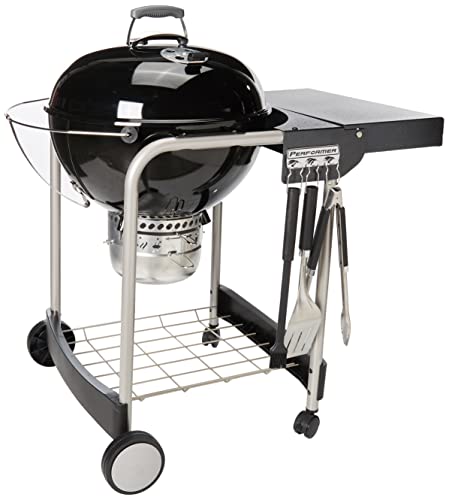
The Weber Performer is a kettle on a cart with a work table for people who grill often. Treat this as a starting point rather than a verdict: what matters is how its size, vent layout and cooking style line up with the way you actually cook outdoors. If it earns a place on your shortlist, check price on Amazon and compare the current listing details against the checklist in this guide before you decide.
Best for: households whose cooking matches the role described above. Not suited for: anyone whose space, fuel preference or typical crowd size points to a different style entirely.

Char-Griller Akorn Kamado — Best Kamado Style
The Char-Griller Akorn Kamado is an insulated kamado-style cooker for low-and-slow and high-heat searing. Treat this as a starting point rather than a verdict: what matters is how its size, vent layout and cooking style line up with the way you actually cook outdoors. If it earns a place on your shortlist, check price on Amazon and compare the current listing details against the checklist in this guide before you decide.
Best for: households whose cooking matches the role described above. Not suited for: anyone whose space, fuel preference or typical crowd size points to a different style entirely.
Weber Smokey Joe — Best Portable
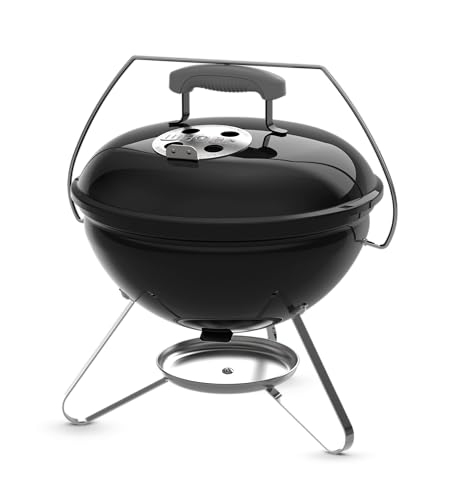
The Weber Smokey Joe is a compact portable kettle for balconies, picnics and tailgates. Treat this as a starting point rather than a verdict: what matters is how its size, vent layout and cooking style line up with the way you actually cook outdoors. If it earns a place on your shortlist, check price on Amazon and compare the current listing details against the checklist in this guide before you decide.
Best for: households whose cooking matches the role described above. Not suited for: anyone whose space, fuel preference or typical crowd size points to a different style entirely.
Common Mistakes
The most common beginner mistake is cooking over coals that are not ready. Food that goes on over black, flaming, smoking charcoal picks up harsh flavours and cooks unevenly, because the fire is still climbing. Wait for the ash-grey stage, when the flames have died and the heat is steady. The second most common mistake is the opposite impatience: spreading too few coals for the job, then wondering why nothing sears. Match the amount of charcoal to the cook, not to optimism.
Lighter fluid deserves its poor reputation. It can leave a chemical taste on food, it encourages dangerous flare-ups when people add more to a slow fire, and it is simply unnecessary when a chimney starter exists. If you have inherited the lighter-fluid habit, the chimney is the upgrade that changes charcoal cooking from a faff into a routine: light it, wait, dump it, cook. No smell, no taste, no singed eyebrows, and a fire that is ready at a predictable time.
Overcrowding the grate ruins more meals than bad equipment does. Food packed edge to edge steams instead of searing, drips fat everywhere at once and leaves you no cool zone to retreat to. Cook in batches if you need to, keep a clear indirect area as your safety valve, and remember that food coming off in waves, properly cooked, beats a whole grate of food that is burnt outside and raw in the middle because there was nowhere sensible to move it.
Skipping the rest is a quiet way to undo good cooking. Meat that rests keeps its juices; meat cut the second it leaves the grill floods the board with them. Tent larger cuts loosely and give them real time — small items need a few minutes, big roasts much longer. Use the resting window to finish vegetables, warm bread on the cooling grate and get everything else to the table, so the rest becomes part of the plan rather than a delay.
Pro Tips
Shop at the end of the season if your timing is flexible, when ranges turn over — but never let a bargain talk you into the wrong style. Handle the floor model: lid fit and vent action tell you more in ten seconds than a specification table does in ten minutes. Plan the grill’s home before it arrives, including a mat from the options in our guide to protecting your deck or patio surface under the grill if it will stand on decking. And photograph your first few fires’ vent settings in your phone notes; your own data, for your own grill, beats any generic chart within a month.
Worked Examples
The family of four, weekends only: a mid-size kettle with an enclosed ash catcher, a cover and a chimney. It handles every family dinner, learns easily, and stores neatly. The smoking enthusiast in a cold climate: an insulated kamado, chosen for fuel efficiency and weather indifference, with the kettle skipped entirely. The balcony cook for two: a compact portable kettle, bought only after the building’s charcoal rules check out, with a small footprint and a plan for cooling ash safely. Three households, three right answers — each produced by the steps above, not by a ranking.
When you are ready to compare the finalists, our charcoal grill buying guide sets out the reference models, the charcoal grill review assesses the category in depth, and the balanced charcoal grill pros and cons will keep you honest about the trade you are making.
Matching the Grill to the Food: A Cook-by-Cook Check
Before you finalise a style, run your five most-cooked dishes through it mentally, in detail. Burgers and sausages forgive everything; any grill in this guide handles them, so they should not drive the decision. A whole chicken is the first real test: it needs indirect space beside the coals, lid height above the bird, and vents that hold a moderate temperature without babysitting — kettles and kamados pass, small portables strain. Ribs and shoulders test endurance: fuel capacity, refuelling access and low-temperature stability over hours. Whole fish and long items test shape: a barrel’s length shines, a small round kettle fights you. Pizza and breads test peak heat and lid clearance. Score your shortlist against your list, not against an imaginary menu, and the right style usually announces itself without further argument.
Then run the same check in reverse: name the cooks you will never do. The household that will never smoke a brisket does not need to pay for insulation. The couple that never hosts twelve does not need a barrel. Every feature you honestly eliminate is money and garden space returned to the parts of the setup you will use weekly — a better grate, a proper cover, a second season’s worth of charcoal. Choosing well is as much about disciplined subtraction as it is about comparison, and the cooks who end up happiest are usually the ones who subtracted bravely.
New vs Used, and When Each Makes Sense
A used charcoal grill is one of the safer second-hand purchases in the garden, precisely because there is so little to hide: enamel either is or is not chipped and rusting, vents move or they do not, the grate is sound or it is thin, and legs stand firm or wobble. Inspect those four things in daylight, price in a new grate if it is marginal, and a mainstream kettle bought used can deliver years of service for a fraction of its new tier. It is an entirely sensible way to test whether charcoal suits your life before committing fully.
Buy new when the model you want is current and parts-supported, when the warranty on the bowl matters to you, or when used examples near you are priced close to new — which happens more often than people expect with popular designs. Buy new, too, if assembly and a clean start appeal to you; there is value in knowing every bolt is tight because you tightened it. Whichever route you take, the rule is the same: mainstream design, honest inspection, parts available. A bargain on an orphaned design with no spares is not a bargain; it is a countdown.
The One-Visit Checklist to Take Shopping
Distil the whole guide into what fits on a phone note. Space measured, rules checked, style chosen from your real menu. Lid seats without rocking. Vents move smoothly and stay set. Ash empties without scooping, if you can arrange it. Grate has weight and, ideally, a hinge. Handles, legs and wheels feel planted. Parts for this exact model are orderable. The full kit — chimney, cover, thermometer, tools — fits the same budget. If a grill passes every line, stop researching and buy it: the remaining differences between good grills are smaller than the difference a season of cooking will make to your skill, and your skill is the ingredient no shop sells.
One last discipline: after you buy, write down what you chose and why, and do not re-open the comparison for a season. Post-purchase research is the enemy of the learning curve — every hour spent re-litigating the decision is an hour not spent learning your fire, and it is the fire, in the end, that makes the food. Choose carefully, then choose completely, and let the cooking begin.
Reading Owner Reviews Like an Investigator
Since most choosing now happens through other owners’ words, learn to read them for signal. Prize reviews written months after purchase, and reviews that describe specific cooks — a chicken that fit, a fire that held, a party that worked — over reviews that describe delivery and assembly. Treat complaints in categories: a complaint about a part that broke and was replaced under a good parts system is a different fact from a complaint about a design that cannot hold temperature, and only the second should move your decision. Notice what owners of each style praise unprompted after a season; it is almost always the daily interface — vents, ash, grate — which confirms where this guide has told you to look.
Discount two kinds of review entirely. The first is the one-star verdict written in the heat of a first, failed cook: charcoal punishes first attempts in ways that say more about the learning curve than the grill. The second is the five-star rave from unboxing day, before the grill has cooked anything at all. Between those poles sits the useful middle — measured, specific, slightly grudging praise from someone three months in — and a shortlist judged by that standard will rarely steer you wrong. If a model has no such reviews because it is new and unproven, that absence is information too: established designs carry a decade of other people’s seasons, and that evidence is worth paying a little for.
A Word on Gifts, Households and Second Cooks
Many charcoal grills arrive as gifts, and gift-buying inverts this guide’s logic dangerously: the giver chooses by impressiveness, the receiver lives with the interface. If you are buying for someone else, choose the mainstream kettle at a sensible tier, include the chimney — the accessory that decides whether the gift gets used — and resist the enormous novelty grill that photographs brilliantly and stores terribly. If the household already has a cook, ask them; the fantasy of surprising a serious griller with an unresearched grill has ended in more polite disappointment than any other purchase in the garden.
And plan, from the start, for more than one cook. A grill that only one household member can light, run and clean concentrates every barbecue on that person’s shoulders and quietly breeds the resentment that ends grilling careers. Choose a model whose operation can be taught in one session — another quiet argument for simple, mainstream designs — and treat the second cook’s first solo fire as part of the purchase. A grill with two competent owners gets used twice as much, cleaned twice as willingly and valued, correctly, as household equipment rather than one person’s hobby.
Your Decision, Summarised in One Pass
Run the whole method once more, quickly, the way you will actually do it in a shop or on a listing page. Space: measured, legal, with clearance and a home for fuel and ash. Menu: your five real dishes, matched against style — kettle for the mixed list, kamado for the smoking list, barrel for the crowd list, portable for the travelling list. Size: your typical cook plus a coal-free zone. Interface: vents that move and stay, ash that empties without scooping, a grate with weight and a hinge. Build: enamel or aluminium, parts orderable, warranty that respects the bowl. Budget: grill plus chimney, thermometer, tools, gloves and cover, all in one honest total. Any grill that passes all six checks is a good grill for you, whatever any ranking says — and the confidence to stop there, and start cooking, is the real product this guide has been selling.
Understanding Vent Design Before You Spend
Since vents are your thermostat, choosing well means understanding the two designs you will meet. On most kettles, a rotating disc or a set of swept blades at the bowl’s base controls intake air and doubles as the ash-sweeping mechanism — simple, effective, and dependent on the blades sitting flat, which is why ash discipline and vent performance are secretly the same topic. The lid vent, usually a simple rotating disc, governs exhaust and fine-tuning. On kamados, a sliding lower vent and a daisy-wheel top give finer, slower control suited to holding low temperatures for hours. Neither system is better in the abstract; they are tuned to their formats. What you are checking, in the shop or the listing, is execution: smooth travel, positive stops, no wobble, no gaps when closed. A vent that cannot close fully is a grill that can never fully calm down, and no amount of cooking skill compensates for it.
Spin and ash systems deserve the same scrutiny. A one-touch system that sweeps ash into an enclosed catcher as you work the lever is the single feature most correlated with owners actually cleaning their grills, and cleaning is the behaviour on which longevity depends. Open ash pans work but invite postponement; bare bowls that must be scooped invite it more. If two grills are otherwise equal for you, choose the one whose ash system you will use on a tired evening, in the dark, without thinking. That unglamorous criterion will do more for your tenth year with the grill than any feature you were excited about in the shop.
Grates, Bowls and the Parts You Will Replace
Choose the grate as if you were choosing a pan, because that is what it is. Plated steel is the standard: serviceable, eventually mortal. Stainless steel costs more and repays it in cleaning ease and life. Cast iron sears magnificently and demands seasoning discipline in return — choose it only if you are the kind of cook who enjoys maintaining it. Whatever the material, weight is information: a grate that feels substantial holds heat through the landing of cold food and resists warping across seasons. Check, too, how the grate lifts — handles, hinges, a centre section that removes for adding coals — because you will perform that lift, hot, with tongs, more times than any other manoeuvre in your grilling life.
The bowl and lid are the parts you should never have to replace, and choosing them well means choosing their finish. Porcelain enamel, properly applied, is glass on steel: it shrugs off heat, weather and washing for years, and its enemies are impact and the thermal shock of water on hot metal — both within your control. Painted finishes are the economy signal; they look fine in the shop and weather visibly within seasons. Aluminium, where it is offered, removes rust from the conversation entirely. Whichever you choose, the ownership contract is the same and it is short: empty the ash, keep it covered, touch up chips. A buyer who accepts that contract can choose on cooking merits alone, confident the grill will hold up its side.
When to Buy: Seasons, Sales and Stock
Charcoal grills are among the most seasonal products in the garden, and timing is a legitimate choosing tool. Ranges refresh and retailers clear space in the autumn, which is when the patient buyer finds established models at their friendliest tiers — with the bonus that an autumn purchase gives you the quiet months to learn the fire before the summer audience arrives. Spring launches carry the newest colours and bundles at full commitment. Neither timing is wrong, but both reward the buyer who has already done this guide’s work: when the right model appears at the right moment, you can move without re-opening the whole decision. Research in the calm, purchase in the opportunity — the same discipline, incidentally, that good cooks apply to the fire itself.
Choosing for the Cook You Are Becoming
One final lens, and it may be the most useful in this whole guide: choose not only for the cook you are, but for the cook you are visibly becoming. If every season your ambitions grow — last year burgers, this year a whole chicken, next year the ribs you keep reading about — buy the grill with headroom for that trajectory, which usually means the versatile kettle or the kamado rather than the specialist that fits only today’s menu. If your life is moving the other way, toward smaller households and simpler pleasures, honour that too, and let a compact, easy grill serve the coming years instead of a monument to the parties of the past. Equipment bought for a life that is ending gets resented; equipment bought for the life that is arriving gets loved, and the difference is visible from the shop floor if you are honest about the direction you are travelling.
That honesty is, in the end, the whole method. The steps in this guide — space, menu, size, vents, materials, budget, commitment — are just structured ways of asking who you are and how you live, and then refusing to buy for anybody else. Do them in order, write the answers down if the decision feels slippery, and trust the result even when it contradicts the ranking you walked in with. Rankings describe other people’s gardens. Your notes describe yours, and yours is the only garden the grill has to succeed in. Choose from your notes, buy once, learn your fire, and spend the following seasons where this guide always intended you to end up: outside, cooking, with the comparison long forgotten and dinner well under way.
The Shop-Floor Test: Ten Minutes With the Grill
If you can stand in front of your finalist, spend ten deliberate minutes before you spend anything else. Open and close the lid twenty times: it should seat the same way every time, without rocking, scraping or drifting. Work every vent through its full travel twice, and leave each at half, then closed, then half again — you are feeling for the smoothness your Tuesday-evening self will depend on. Lift the grate out and put it back wearing the gloves you would cook in. Work the ash system empty, imagining it full and hot-adjacent. Push the grill a metre across the floor and notice whether it tracks like furniture or wanders like a trolley. None of this requires expertise; it requires only that you perform, in miniature, the actions of ownership, and let your hands file their report before your wallet files its own.
Then do the same, in imagination, for the online finalist you cannot touch: find the video of an owner cleaning it, not unboxing it; find the parts diagram and price the grate; find the review written after a winter. The shop floor exists online too, for the buyer willing to look past the photography. Ten minutes of this, on a shortlist of two, will separate them more reliably than another evening of comparison tables — because choosing a charcoal grill was never really an information problem. It is a fit problem, and fit is something you feel, in your hands and in your household’s routines, long before you can prove it on paper.
A closing thought for the buyer still hovering between two good options after all the steps are done: the difference between them is smaller than the difference your first season of cooking will make, and it is acceptable — encouraged, even — to let something as simple as the colour, the handle, or the way the lid sounded when it closed make the final call. Decisions made carefully and then made completely have a way of becoming right, because the owner commits to them, learns them and cooks on them without reservation. What ruins purchases is not the wrong finalist; it is the uncommitted owner, forever comparing, never quite lighting the fire in front of them. You have the method, you have the checklist, and you have your own honest notes. Choose, commit, cook — in that order, starting now.
Finally, a reassurance drawn from watching many households make this exact choice: nobody’s favourite grill is the one a spreadsheet picked. It is the one that was lit on a whim in February because the evening turned mild, the one whose lid bears the seasoning of a hundred small celebrations, the one a friend asks about because the food keeps being good. Every step in this guide exists to make that outcome more likely — the right size on the right patio, with vents that behave and a fire that feels like yours. Trust the steps, make the choice, and then go and earn the patina. It is the only specification that cannot be bought, and the only one that, a few seasons from now, you will actually care about.
A word, before the questions, about the person who will assemble the grill, because assembly is the first act of ownership and it teaches more than any review. Set aside an unhurried hour, lay the parts out, read the manual once fully before touching a bolt, and build it somewhere it can stay while you work. What you are really doing in that hour is inspecting your purchase with your hands: every panel’s finish, every fixing’s quality, the true action of the vents and the ash system, all pass through your fingers before the first fire is ever lit. A grill that assembles cleanly, with parts that align and hardware that feels honest, has passed its first examination, and the confidence you carry into the first cook is real information, earned the right way. A grill that fights its own assembly is telling you something too — believe it early, while returns are still a conversation rather than a campaign.
It is worth saying explicitly, because anxious buyers rarely believe it: there is no secret tier of knowledge beyond this guide that other shoppers possess. The people who choose well are not insiders; they are simply the ones who measured their space, believed their own menu, handled the vents before paying, and included the chimney in the budget. You have now been given each of those moves in the order they should be made, with the reasons attached, and nothing remains between you and a good decision except making it. The grill that results will not be perfect — no grill is — but it will be yours in the fullest sense: chosen for your garden, your food and your people, by the only expert on those subjects whose opinion was ever going to matter.
So finish the choosing the way good cooks finish a sauce: decisively, and then stop adjusting. Place the order or carry the box home, assemble it slowly, cure it with an empty fire, and cook something simple and forgiving for the people whose opinion of dinner actually counts. By the third cook, the questions that filled this guide will have been replaced by better ones — about marinades, timings and who is coming next weekend. That replacement is the sign that the choosing is over and the grilling has begun, which is where this guide has been trying to deliver you all along.
And if, a season from now, you find yourself giving this same advice to a friend standing in a shop — measure first, menu second, vents always, chimney in the budget — you will know the choosing worked. Knowledge that gets passed hand to hand, cook to cook, is the real infrastructure of charcoal grilling, older than any brand and more durable than any model line. This guide has simply written down your share of it. Take it to the shop, take it to the garden, and then take your place in the chain: the cook who chose well, learned the fire, and is now the person others ask. The questions below cover the last practical details; after them, the only thing left to choose is what to cook first.
Carry one sentence out of this guide and into the shop, if the rest of it blurs under the lights: buy the grill whose daily touchpoints — lid, vents, ash, grate — you would still enjoy in year five, sized for the dinners you actually cook, from a maker who still sells its parts. Everything else is commentary. That sentence, honestly applied, has never yet produced a regretted charcoal grill, and it will not start with yours.
The questions below gather the doubts that survive even a careful method, and they are answered the way this guide has answered everything: plainly, with the conditions attached, and in favour of the household doing the asking. Read them with your shortlist beside you. By the last one, the choice should feel less like a gamble and more like what it actually is — a description of your own garden, your own table and your own next several summers, written in the form of a grill.
Measuring and Checking Before You Order: A Pre-Purchase Walkthrough for a Charcoal Grill
This section exists to turn the advice into a sequence you can follow with a tape measure, a phone for notes, and ten unhurried minutes before you commit. It adds a layer that a feature list cannot give you, grounded in the patio & outdoor living context this charcoal grill will actually live in. Where this guide names examples such as Weber Original Kettle, Weber Performer, Weber Smokey Joe, use them as test cases for the checks below rather than as shortcuts past them.
Think about who else has a vote. A charcoal grill is usually shared, moved, cleaned or complained about by more than one person, and the second user’s priorities are often the ones that surface after the return window closes. Check height, weight, reach, noise, heat, sharp edges or sheer visual presence, whichever apply, against the smallest, oldest or least enthusiastic person who will live with it. If you are buying for a household that includes children, pets, elderly relatives or lodgers, run the clumsy scenario too: the spill, the knock, the curious tug, the door left open. A robust charcoal grill choice survives other people; a fragile one only survives its buyer.
Consider the edge cases that sit just outside normal use, because a charcoal grill will meet all of them eventually. The unusually large load, the unusually small task, the day you are in a hurry, the day something else in the room is broken and this has to cover for it. Versatility is not about a long feature list; it is about behaving predictably when conditions are imperfect. Where a design offers settings, modes, attachments or configurations, ask what each one is actually for in your home, and be suspicious of flexibility you cannot attach to a real occasion. One well-judged configuration used weekly beats five clever ones used once, and the honest charcoal grill for your home is the one whose strengths line up with your most frequent edge case, not your rarest.
Build a simple decision checklist and score it in writing. Five lines are enough: fit in the space, fit with the routine, ease of cleaning or upkeep, quality of the parts that move or wear, and how the charcoal grill will be stored or will look when it is not the centre of attention. Score each contender quickly, then look only at the lowest scores, because purchases are usually ruined by their weakest point rather than saved by their strongest. If two options tie, choose the one whose weakness is cheapest or easiest to live with. This sounds mechanical, and it is meant to: a written checklist is the best defence against the very human habit of falling for the last photograph you looked at.
Finally, plan the first fortnight. Decide where the charcoal grill will live from day one, what it replaces, what accessory or companion it needs straight away and what small job you will use to learn its habits while returning it is still simple. Keep the packaging until that learning period is over, note anything that surprises you, and deal with a mismatch early rather than adapting yourself around a poor fit for years. The households that end up happiest with a charcoal grill are rarely the ones that researched longest; they are the ones that checked fit honestly, bought for the ordinary week, and paid attention during the first days instead of assuming the decision ended at checkout.
One more angle is worth your time: the second-order costs. A charcoal grill changes what happens around it. It can demand a different cleaning product, a new storage habit, a moved piece of furniture, a rearranged cupboard or a standing arrangement with the people you live with. List those knock-on effects before you buy and decide whether you accept them as part of the deal. Sometimes the answer is an easy yes, and the charcoal grill earns its place by improving the whole routine around it. Sometimes the honest answer is that the supporting changes are the real project, and the purchase should wait until you are ready for them. Either answer is useful; the only bad outcome is discovering the knock-on effects by accident, one irritation at a time, after the decision can no longer be revisited.
It also helps to separate the problems a charcoal grill can solve from the problems it merely moves. If the underlying difficulty is space, the answer may be a smaller format or a different location rather than a more elaborate model. If the difficulty is time, look for the option that removes steps rather than the one that performs each step slightly better. If the difficulty is that several people want different things, a compromise design that everyone rates as good enough will usually outlast a specialist design that one person loves and everyone else avoids. Naming the real problem in one sentence, out loud, before you order, is a surprisingly powerful filter, and many shoppers find that the sentence itself points at a different charcoal grill than the one they started out researching.
Start with the unglamorous measurements. For a charcoal grill, the numbers that decide satisfaction are rarely the headline ones in a listing; they are ground level, exposure to wind and rain, clearance from walls and planting, and where the item will actually live in winter. Write the real dimensions of your space down, including the awkward constraints you normally work around without thinking, and hold every contender up against that sheet rather than against a showroom photograph. Then walk the route the charcoal grill will take on delivery day and during normal use. A choice that fits on paper but fights you every time it is moved, opened, cleaned or stored will lose its shine quickly, however strong its other qualities look in a comparison table.
Frequently Asked Questions
What is the best type of charcoal grill for most people?
A mid-size kettle. It grills, roasts and smokes competently, lights and cleans easily, and is supported by every accessory and spare part in the category. Specialised styles beat it at their specialities — kamados at insulated smoking, barrels at volume, portables at travel — but as a single grill for a typical household, the kettle’s balance is still unmatched.
How do I know what size to buy?
Count your typical cook, not your biggest. A grill that fits dinner for your household with room left for a coal-free zone is the right size; that reserve space is what makes two-zone cooking work. If you entertain large groups a few times a year, cook in batches on the right-size grill or add an inexpensive portable for overflow rather than oversizing your everyday cooker.
Are expensive charcoal grills worth it for a beginner?
A solid mid-range grill is the beginner’s sweet spot: good enamel, smooth vents and a proper ash system make learning easier and ownership pleasanter. Premium prices buy insulation, materials and refinement that a beginner will appreciate later but does not need now. The poor-value choice is the very cheapest tier, where thin steel and sloppy vents make the learning curve steeper than it should be.
Should I buy a grill with a built-in thermometer?
Treat it as a rough guide, not a measurement. Lid thermometers read the air near the top of the grill, which can differ a lot from the temperature at the grate where food cooks. Use it to spot trends, but base decisions on a grate-level probe or an instant-read thermometer. If a model you otherwise love has a basic dial, that is no reason to reject it.
What if my building bans charcoal on balconies?
Then the decision is made for you, and it is better to know before buying. Ask about electric or gas alternatives permitted by your rules, or use communal grilling areas and parks where charcoal is allowed, possibly with a portable grill. Never use a charcoal grill indoors or in an enclosed space to get around a ban — burning charcoal produces carbon monoxide, which is dangerous without ventilation.
Related Guides
Keep exploring with these guides from the same collection: charcoal grill buying guide; charcoal grill pros and cons; charcoal grill review; charcoal grill reviews; protecting your grill between cooks with a fitted cover; protecting your deck or patio surface under the grill.