Disclosure: As an Amazon Associate, dailyhomedecorating.com earns from qualifying purchases. Links on this page are affiliate links; they cost you nothing extra. Prices and availability change often, so check the current Amazon listing before you buy.
So, is a garden kneeler worth it? Short answer: yes, if a large share of your gardening happens at ground level on reasonably level ground, in sessions long enough that kneeling on bare soil or a thin pad stops being comfortable. No, if your plot is steep or rough, your sessions are five-minute snips, or you would honestly rather work standing with long-handled tools. This article earns that answer properly, looking at what you actually get, what it costs you beyond money, who it pays off for, and which alternatives might serve you better.
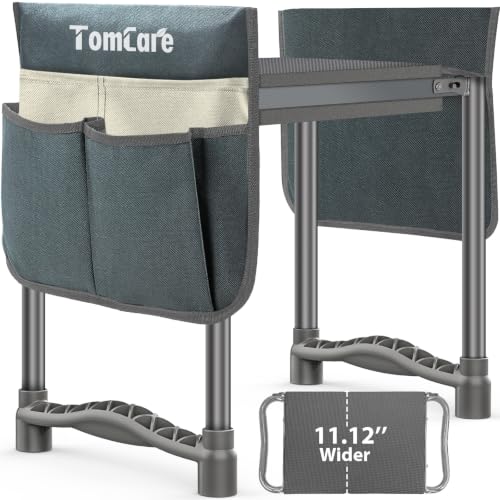
Short Answer and Key Takeaways
Worth it if you weed, plant, and harvest at ground level most weeks and value steadier rising and a low seat in the same tool. Not worth it if your ground fights a frame, your jobs are brief, or a simple pad already keeps you comfortable. The value is not in any single session; it accumulates across a season of small comforts and finished beds. Judge it over a season, not over one afternoon, and judge it against your own garden rather than anyone else’s.
In this guide
What You Actually Get
Weeding is the job that sells most kneelers, and it is easy to see why. Working along a border at ground level, you can see the small seedlings hiding under leaves, get a fork under tap roots at the right angle, and move steadily without the constant up-and-down of working standing and bending. A kneeler shines on long, low, repetitive stretches like this, especially in spring and early autumn when weed growth is relentless and sessions run long. Pair it with a hand fork, a bucket placed within reach, and a plan to work in one direction, and a bed that felt overwhelming becomes a sequence of small, finished sections.
Planting is the second natural fit. Setting out bedding, bulbs, and young vegetables means repeated careful work at soil level: opening a hole, settling roots, firming soil, and watering in, dozens of times in a row. Kneeling close keeps your hands precise and your movements gentle around fragile stems, and the seat mode gives you a perch while you sort trays and labels between rows. Gardeners planting on raised beds should check the geometry, because a kneeler works best on the path beside the bed with the pad at a comfortable reach, not perched awkwardly on the bed edge itself.
Pruning low shrubs, tying in climbers at the base, harvesting strawberries and salad leaves, and edging a lawn all share the same pattern: detailed hand work, close to the ground, for longer than a quick crouch allows. That pattern is the kneeler’s home territory. Jobs that do not fit the pattern, such as hedge cutting at shoulder height, digging large holes, or working on steep or very uneven ground, gain little from a kneeler and may be done more safely standing with the right long-handled tools. Matching the tool to the pattern, rather than forcing every job onto it, is how owners stay pleased with the purchase for years.
The raised side handles are the feature that turns a kneeling pad into a kneeler bench, and they earn their place when you stand up. Gripping both handles and pushing down through your arms lets your legs share the work of rising, and many gardeners find that steadier and more comfortable than pushing off the soil or reaching for a nearby fence. The handles only help if they are rigid, well spaced for your shoulders, and high enough that you are pushing down rather than pulling yourself sideways, so a frame that flexes or creaks under a firm push is telling you something important about its build.
Is a Garden Kneeler Worth It for the Real Costs Beyond Money?
Folding flat is more than a storage trick. A kneeler that folds flat hangs on a shed wall, slides beside a potting bench, and travels in a car boot to an allotment without eating the space your plants need. The folding action itself should be simple enough to do with gloves on and without trapping fingers, and it should not depend on small loose parts that can vanish into long grass. When you first unfold any new kneeler, practise the lock and fold a few times on a patio so the movement is familiar before you take it onto soft soil.
Care is refreshingly simple, which is part of the appeal. Brush soil off the pad after use, wipe the cover down if it is damp or muddy, and let everything dry before folding the kneeler away, because foam and fabric stored wet in a cold shed develop smells and mildew that are hard to shift later. Check the frame feet and handle grips as you put it away; catching a split foot or a loose joint in the shed is far better than discovering it under you in the border. A kneeler looked after this way asks for minutes across a whole season.
Winter storage rewards a little attention. Clean the frame, dry it thoroughly, and touch in any paint chips on metal parts before damp air gets months to work on them. Store the kneeler folded, off a cold concrete floor if you can, and keep the pad out of direct sunlight, which slowly hardens foam coverings. If your model has a tool pouch, empty it before storage; forgotten hand tools rust quietly over winter and can stain the pouch and the pad. In spring, unfold the kneeler, test the locks, press the pad for soft spots, and you are ready for the first weeding run of the year.
The non-money costs are modest but real. Storage: a folded kneeler needs a shed wall or a corner, and a damp one needs drying time before it goes away. Carrying: it is one more item on the trip from shed to bed, and on a large plot that adds up. Learning: the flip between kneel and seat modes, and the habit of testing ground before settling, take a week or two to become automatic. None of these costs is large, but a gardener with a tiny shed, a long carry, and short sessions may find they outweigh the benefits, and that is a legitimate conclusion.
Who It Pays Off For
The Border Gardener
Weeding is the job that sells most kneelers, and it is easy to see why. Working along a border at ground level, you can see the small seedlings hiding under leaves, get a fork under tap roots at the right angle, and move steadily without the constant up-and-down of working standing and bending. A kneeler shines on long, low, repetitive stretches like this, especially in spring and early autumn when weed growth is relentless and sessions run long. Pair it with a hand fork, a bucket placed within reach, and a plan to work in one direction, and a bed that felt overwhelming becomes a sequence of small, finished sections.
Pad comfort is about thickness, density, and how the foam behaves after the first month, not just how soft it feels in a shop. A pad that bottoms out quickly leaves your knees resting effectively on the frame, while a firmer, well-judged foam keeps a cushion of material between you and the ground for the whole session. Gardeners who kneel for long weeding runs often prefer a slightly firmer pad that supports rather than swallows, because deep, squashy foam can make side-to-side movement feel unstable and can tire the muscles around the knee as you keep correcting your balance.
The Vegetable Grower
Planting is the second natural fit. Setting out bedding, bulbs, and young vegetables means repeated careful work at soil level: opening a hole, settling roots, firming soil, and watering in, dozens of times in a row. Kneeling close keeps your hands precise and your movements gentle around fragile stems, and the seat mode gives you a perch while you sort trays and labels between rows. Gardeners planting on raised beds should check the geometry, because a kneeler works best on the path beside the bed with the pad at a comfortable reach, not perched awkwardly on the bed edge itself.
Accessories should be judged coldly. A tool pouch that keeps a trowel, fork, and secateurs at your knee genuinely saves trips back to the shed, but a pouch that hangs where it catches your leg or dumps tools when the kneeler flips into seat mode is decoration. Extra pads, carry bags, and spare covers are worth having only if the basic frame and pad already suit you. Spend your attention, and your budget, on the frame, the pad, and the handles first, because those three decide every session; everything else is garnish.
The Container and Patio Gardener
Surface texture matters more than most listings admit. Gravel looks tidy in a border but presses through a thin pad and works its way under the frame, while decking and smooth slabs let a metal frame slide a fraction each time you lean. A pad with a textured underside, rubber feet in good condition, and a gardener who lifts rather than drags the kneeler between spots will get a steadier, quieter experience. Before a long session, brush loose grit off the pad surface too, because grit ground into foam under your knees shortens the life of the covering and makes the pad feel harder than it should.
Handle height interacts with seat mode in a way worth understanding. Flip the kneeler over and the same legs that formed the handles become the legs of a low seat, so a taller handle usually means a slightly higher seat. That seat is handy for jobs at low hedge height, for potting at a low bench, and for the simple pleasure of sitting to sort seed trays instead of crouching. It is a low seat, though, closer to the ground than a chair, and getting up from it still uses the frame for support. Gardeners who expect a chair-height perch will be disappointed; gardeners who want a rest between kneeling spells usually love it.
Who Should Skip It
A garden kneeler only works as well as the ground underneath it. On a flat lawn, a patio slab, or a level path beside a border, the frame sits square and the pad spreads your weight evenly, so you can settle in and work through a row without constantly repositioning. On soft soil after rain, narrow legs can sink at one corner and tip the pad, which is why experienced gardeners test the spot with a foot first and, if the soil is giving way, slide a flat board or a spare paving slab underneath. That small habit turns a wobbly perch into a stable work station and protects the frame feet from being driven into mud.
Slopes deserve special respect. A kneeler used across a slope puts more load on the downhill handles when you rise, and a seat used facing uphill can feel as though it is tipping you forward. The safer pattern is to work on the level wherever you can, turn the kneeler so its long side runs across the slope rather than down it, and never use the seat mode on a bank where a small shift could roll the frame. If most of your beds sit on sloping ground, a simple flat kneeling pad that follows the ground may suit some jobs better than a framed bench, and being honest about that saves money and frustration.
Long-handled tools are the other honest alternative, because they change the job instead of supporting the posture. A long-handled fork or hoe lets you weed standing, which suits gardeners who prefer not to kneel at all, though the work is less precise for small seedlings and close planting. Many experienced gardeners own both approaches and switch by task: kneeler for planting and detailed weeding, long handles for rough ground and quick passes. Framing the kneeler as one tool in a small system, rather than a cure for every awkward job, leads to better buying decisions.
best garden kneelers and seats
The Strengths and Trade-Offs of Owning One
Strengths of ownership: every ground-level session starts more comfortably; rising has a reliable ritual with two handles; one folding tool covers kneeling, sitting, and carrying. Trade-offs of ownership: you become choosier about where you work, because frames need level ground; you own a wear item whose pad will age; and you may find, honestly, that some jobs were quicker standing up. Owners who thrive are the ones who let the kneeler do its jobs and leave the other jobs to other tools.
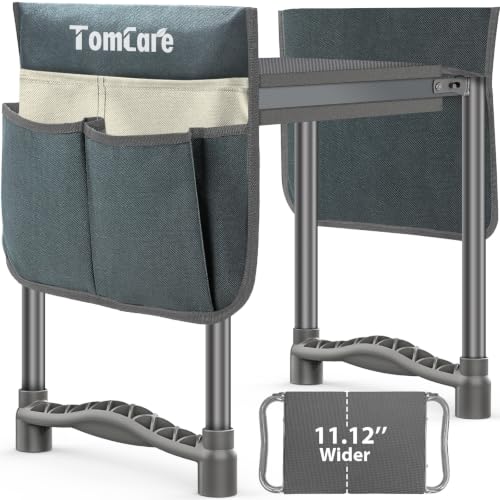
TomCare Garden Kneeler and Seat
Consider the TomCare Garden Kneeler and Seat if you have decided a framed kneeler is worth it and want a balanced design. Treat it as a prose-only pick for now: compare its pad width, handle feel, folding action, and seat-mode behaviour against the checklist in this guide, and check the current Amazon listing for the exact version on offer before you buy, because listings and bundles change. What should decide it for you is fit with your own beds and session length, not a headline claim.
Strengths, in qualitative terms, are the combination this style of kneeler offers: a cushioned kneeling surface, side handles to push against as you rise, and a flip-over seat for low jobs and short rests. Trade-offs are equally consistent: it needs level ground to feel steady, it is one more thing to carry and store, and the low seat will not suit anyone expecting chair height. Judge this model on how cleanly its frame locks, how the pad cover sheds soil, and whether its pouch, if fitted, stays out of your way in both modes.
Best for: gardeners whose work matches the pattern described above and who want one folding unit for kneeling and sitting. Not suited for: steep, rough, or very soft ground, or anyone who needs a high seat. Check price on Amazon when you are ready to compare the current listing.
Burgon & Ball Kneelo Garden Kneeler
Consider the Burgon & Ball Kneelo Garden Kneeler if you have decided the frame is not worth it for you but a quality pad is. Treat it as a prose-only pick for now: compare its pad width, handle feel, folding action, and seat-mode behaviour against the checklist in this guide, and check the current Amazon listing for the exact version on offer before you buy, because listings and bundles change. What should decide it for you is fit with your own beds and session length, not a headline claim.
Strengths, in qualitative terms, are the combination this style of kneeler offers: a cushioned kneeling surface, side handles to push against as you rise, and a flip-over seat for low jobs and short rests. Trade-offs are equally consistent: it needs level ground to feel steady, it is one more thing to carry and store, and the low seat will not suit anyone expecting chair height. Judge this model on how cleanly its frame locks, how the pad cover sheds soil, and whether its pouch, if fitted, stays out of your way in both modes.
Best for: gardeners whose work matches the pattern described above and who want one folding unit for kneeling and sitting. Not suited for: steep, rough, or very soft ground, or anyone who needs a high seat. Check price on Amazon when you are ready to compare the current listing.
Alternatives to Consider
A simple flat kneeling pad is the closest alternative, and for some gardeners it is the right answer. It is light, cheap to replace, follows uneven ground, and hangs on a hook without a thought. What it cannot do is help you rise, because there are no handles, and it offers no seat mode. Gardeners who move around a lot, kneel in short bursts, and rise easily often prefer the pad’s simplicity. Gardeners who stay in one place for long stretches and value support when standing usually get more from the framed kneeler.
Long-handled tools are the other honest alternative, because they change the job instead of supporting the posture. A long-handled fork or hoe lets you weed standing, which suits gardeners who prefer not to kneel at all, though the work is less precise for small seedlings and close planting. Many experienced gardeners own both approaches and switch by task: kneeler for planting and detailed weeding, long handles for rough ground and quick passes. Framing the kneeler as one tool in a small system, rather than a cure for every awkward job, leads to better buying decisions.
A low garden stool or a bucket seat sits between the two. It gives you a perch for sorting, potting, and harvesting at low height, but without a proper kneeling pad it does not help with the ground-level work itself, and flipping between separate stool and pad means carrying two things. The kneeler bench’s whole appeal is combining kneel, rise support, and seat in one folding unit. If you only ever need one of those three functions, a simpler single-purpose tool may serve you better and cost less to replace.
How to Get the Most Value If You Buy
Start any comparison with your own garden, not with a product list. Walk your beds and note where you actually kneel: long borders, a vegetable patch, containers on a patio, or a mix. Note the ground, the distance you carry tools from the shed, and how often you garden in short bursts versus long sessions. Those answers point to pad width, frame weight, and whether seat mode and a tool pouch will earn their keep. A kneeler bought for the garden you have will always beat a kneeler bought for the garden in a photograph.
Try to judge comfort over a realistic session length. Many gardeners feel fine kneeling on almost anything for five minutes; the differences appear at forty minutes, when a thin pad has bottomed out, a narrow frame has fixed your posture, and handles that flex have made every stand-up a small negotiation. If you can, borrow a kneeler from a neighbour or gardening club for one real session before buying. Failing that, choose a model whose pad, width, and handle design match the longest sessions you honestly do, not the shortest.
Small repairs extend life more than owners expect. A loose bolt tightened early prevents a joint wearing oval, a grip re-wrapped stays comfortable, and a pad replaced when the foam finally tires can make an otherwise sound frame feel new again. What you should not do is improvise structural repairs on a cracked or bent frame and then trust it with your weight; at that point the honest options are a maker-supplied part fitted properly or a replacement kneeler. Knowing where that line sits keeps a cheap, cheerful tool from becoming a false economy.
best plants for raised garden beds
The Decision Checklist
Answer honestly: Do most of your sessions involve at least twenty minutes at ground level? Is the ground beside your beds mostly level? Would handles you can push against make rising feel steadier for you? Do you have dry storage for a folded frame? Would a low seat get used for potting, sorting, or resting? Do you garden most weeks across the season? Four or more yes answers mean a garden kneeler is very likely worth it for you. Two or fewer means start with a simple pad or long-handled tools and revisit the question next season.
The Value Question, Season by Season
In spring, the worth-it case is at its strongest. Beds demand hours at ground level, planting rewards closeness and care, and a gardener with a kneeler simply gets more of the important work done while it matters. If a kneeler earns its place in any single season, it is this one, and many owners who doubted the purchase in the shop stop doubting it by the second spring weekend. Judge a spring purchase by finished beds and unhurried sessions, and the value usually announces itself without any arithmetic.
In summer, the case softens and becomes more personal. Work is lighter, sessions shorter, and some gardeners find a pad by the containers covers most of their needs. Yet harvesting, deadheading, and watering checks still happen at ground level, and the seat mode quietly becomes the most-used feature, a perch for sorting, snipping, and supervising. Owners who bought mainly for kneeling sometimes discover they would now miss the seat more. Value that migrates between features is still value, and summer is when versatile tools prove the point.
In autumn, the case strengthens again for the same reason as spring: volume. Bulbs, bed preparation, and the great tidy-up are kneeling work, and they arrive when the gardening year is tiring. A tool that keeps those sessions comfortable protects the gardener’s enthusiasm at exactly the point where gardens are won or lost for next year. There is also a storage dividend in autumn: a kneeler that folds flat and stores dry is one less bulky problem in a crowded shed, and that small orderliness has genuine worth in a busy season.
Across years, the calculation turns on durability. A kneeler that serves five seasons has spread its cost, in money and in shed space, across hundreds of sessions, and few tools in the shed can say the same. A kneeler whose pad dies in a year has not. That is why the worth-it question cannot be separated from the buying question: choose supportive foam, sound joints, and a replaceable pad, and the long-term answer is very likely yes. Choose on novelty or on the thinnest pad in the range, and even an enthusiastic gardener may conclude it was not worth it.
There is a harder, more personal version of the question: worth it compared with changing how you garden? Raised beds, long-handled tools, and ground-cover planting all reduce kneeling itself, and for some gardeners redesigning the work beats supporting the posture. That path costs more effort up front and suits gardeners planning a plot for the long term. The kneeler’s counter-argument is immediacy: it helps this weekend, in the garden as it stands, with no redesign. Many gardeners sensibly do both over time, kneeler now and gradual redesign later, and find the kneeler still earning its hook in the shed at the end.
So the final answer stays conditional, and honestly so. A garden kneeler is worth it when ground-level work is a large, regular, and valued part of your gardening, when your ground is mostly level, and when you buy a design whose pad and handles are genuinely sound. It is not worth it as a novelty, as a seat substitute, or as a fix for ground and jobs it was never built for. Decide by your garden and your habits, using the checklist in this article, and whichever answer you reach will be the right one, because it will be yours.
Getting Full Value From the First Month
The guidance in this section comes from deciding whether the purchase has earned its place, and it applies whichever model you choose, because good habits matter as much as good hardware with a tool this simple. Work through the steps in order the first few times you use a kneeler, and they will quickly compress into a routine you barely notice, which is exactly what a routine is for.
Set up on level ground first
Begin every session the same way: unfold the kneeler on the firmest, flattest spot near your work, check that both locks have engaged with a firm tug, and press the pad once with a hand to remind yourself how it should feel. This ten-second ritual, repeated until it is automatic, prevents nearly every wobble story owners tell. It also gives you a moment to look at the bed and plan a direction of work, which saves the shuffling and re-settling that make ground work feel harder than it is.
Kneel down with intention
Lower yourself onto the pad using the handles for balance rather than dropping the last few inches, because controlled descents are kinder to the pad and steadier for you. Settle your knees at the width that feels natural, not the width the pad suggests, and shuffle the kneeler a fraction if your stance and the pad disagree. Gardeners who take five seconds to settle properly at the start of each stretch consistently report longer, calmer sessions than gardeners who drop and start, and the difference costs nothing but attention.
Rise using both handles evenly
When it is time to stand, plant both hands on the handles, bring one foot forward beside the kneeler if that feels natural, and push down evenly through both arms as your legs straighten. Rising evenly keeps the frame from twisting, keeps your weight over the feet of the frame, and turns standing into a smooth, repeatable movement instead of a heave. Practise it a few times on a patio when the kneeler is new, and by the third real session it will be the way you always get up.
Work in one direction and finish sections
Ground work rewards sequence. Start at one end of a bed, work to a natural landmark, and only then move on, because finished sections are satisfying and half-worked beds invite endless return trips. Keep your bucket, tools, and the kneeler moving together in that same direction, using the pouch or a trug at your side. This sounds like tidiness for its own sake; in practice it is the habit that turns a kneeler from a comfort accessory into a productivity tool, whatever the size of your plot.
Flip to seat mode deliberately
Seat mode works best as a planned pause, not an afterthought. Flip the kneeler on level ground, check it sits square, and use the seat for the jobs it suits: sorting, labelling, potting, pruning low growth, and resting with a purpose. Sitting at working height keeps you in the garden and in the job, which is why so many owners use the seat more than they expected. When you flip back to kneeling mode, brush the pad first, because soil carried onto the seat becomes soil ground into the pad.
Finish with a two-minute reset
End the session by brushing down the pad, wiping the cover if it is damp, checking feet and locks, and folding the kneeler flat for storage. Two minutes, honestly timed, is all it takes, and it is the difference between a tool that is ready next time and a tool that greets you with last week’s mud and a loose joint. Gardeners who keep this reset habit get more seasons from foam, fabric, and frame, and they trust their kneeler more, because they have looked at it recently with their own eyes.
A Fair Trial You Can Run Yourself
If you remain undecided, borrow before you buy. Gardening clubs, allotment neighbours, and tool libraries are full of kneelers, and one borrowed weekend answers the worth-it question better than any article, including this one. Run the trial honestly: use it for your longest typical session, on your most typical ground, for your most typical jobs, and notice three things only. How the last half hour felt compared with the first. How rising felt at the end of the session. And whether you reached for the seat without planning to. Those three observations, from your own garden, settle the matter.
If borrowing is impossible, simulate the decision with the pad you already own. Spend one session on your best current alternative, a cushion or a simple pad, and keep a rough count of how often you stood up to reset, how often you cut a job short, and how the final stretch felt. Then ask whether handles, a better pad, and a seat would have changed those specific moments. Worth-it questions are really questions about specific moments repeated across a season, and counting yours for one session turns a vague debate into evidence you can trust.
Whichever way you decide, decide cleanly. Gardeners who buy a kneeler and use it for its proper jobs get a season of calmer ground work. Gardeners who decline it and invest instead in raised beds, long handles, or a better simple pad also garden happily, because they matched the tool to the truth of their plot. The only losing move is the half-decision: a kneeler bought on a whim, used on the wrong ground, and abandoned in the shed as evidence against a design that never got its fair trial. This article’s checklist and trial exist to spare you exactly that outcome.
And if you do buy, give it the season before you judge it finally. First impressions in week one flatter almost any pad, and the honest verdict forms across spring’s long sessions, summer’s seat-mode discoveries, and autumn’s volume of work. By the time the kneeler is brushed down and stored for winter, you will know, without needing anyone’s article, whether it was worth it for you. Most gardeners whose ground and habits match the profiles in this piece find that it was, and find it in the simplest possible way: they cannot imagine the season without it.
Consider, as a last angle, what a season of ground work actually contains for a typical gardener, because worth is always measured against that real total rather than against an imagined one. There are the spring clearances and plantings, the summer rounds of weeding, deadheading, and harvesting, the autumn bulbs and bed preparation, and the small in-between jobs, tying in, checking, snipping, and tidying, that never make it into anyone’s diary but fill a surprising share of gardening hours. Nearly all of it happens within reach of the soil. A tool that makes that entire spread of work a little calmer and a little more comfortable is not improving one task; it is improving the texture of the gardening year itself, and that is the deepest sense in which owners mean it when they say a kneeler was worth it. Set against that spread, the costs named in this article, a hook in the shed, a two-minute clean, a folded frame carried down the path, look very small indeed, provided the ground is level and the design is sound. That proviso remains the whole decision, and by now you know your own garden well enough to judge it without help.
There is also the question of what happens to the rest of your kit when a kneeler joins it, because worth is partly about the system a tool creates. Owners commonly find that a hand fork, a trowel, and secateurs migrate into the pouch or a trug that travels with the kneeler, and that this small, ready kit changes behaviour: quick jobs actually get done, because the tools are already together at the bed. Gardeners without a system often skip the ten-minute job that needs three tools fetched from three places. That organisational dividend never appears in any product description, yet across a season it may be worth as much as the pad itself, in beds kept tidy by small, frequent, unplanned sessions. The counterpoint is honest too: a kneeler stored far from the beds, or a pouch left empty, delivers none of this. Worth, once again, follows use, and use follows the small logistics of where things live. Set the kneeler up as the centre of a tiny ground-work kit, stored by the door you actually garden from, and the purchase starts repaying you in ways that have nothing to do with foam.
And one small, practical promise closes the case. If you buy, buy the design you would choose again after reading every con in this article, not the design you would choose after reading only the pros. A purchase made with its drawbacks fully in view has a way of satisfying, because nothing that happens later counts as a betrayal. The pad will age and you expected it. The ground will sometimes refuse the frame and you planned for it. The seat will be low and you never wanted a chair. Worth-it, in the end, is less about the tool than about the match between expectation and reality, and gardeners who make that match deliberately almost always conclude that the kneeler earned its money, its space, and its season.
The Earn-Its-Place Test: When a Garden Kneeler Repays the Space It Takes
Worth-it questions about a garden kneeler are really questions about frequency, so start by honestly counting how often the job it does actually arises in your household in a normal month, not in the motivated week when you decided to shop for one. Multiply that frequency by the friction it removes each time — minutes saved, mess avoided, a workaround retired, a room made usable for longer each day — and the value of a garden kneeler stops being a feeling and becomes a rough but usable number. When something about the garden kneeler disappoints, change one variable at a time — position, setting, timing, load, accessory or technique — and give the change a fair trial, because changing three things at once leaves you with a better or worse result and no idea why. Plan the storage home for the garden kneeler before it arrives, naming the exact cupboard, corner, shelf, hook or stretch of floor, because a product without a home migrates around the house and slowly becomes the clutter it was bought to reduce.
Then subtract the standing costs honestly: the floor, shelf, cupboard or counter space a garden kneeler occupies every day, the cleaning and upkeep it asks for, and the small accessories or consumables its ownership quietly requires. Use a simple decision checklist at the end: the garden kneeler fits the measured space, suits the real frequency of the job, matches the household’s cleaning temperament, has obtainable parts, and has a named storage home — five yeses make a confident order. Share the checklist result with anyone who shares the space, since a garden kneeler chosen by one person and resented by another rarely survives, however sensible the purchase looked on paper. Finally, remember that the best garden kneeler for your home is the one whose size, habits and upkeep disappear into your routine, leaving only the result behind — a cleaner surface, a better-lit seat, a tidier shelf, an easier job — week after ordinary week.
Keep the packaging of a larger garden kneeler until those first ordinary tests are done, flattened if space is tight, because re-boxing an awkward shape from scratch is the hidden difficulty inside many otherwise straightforward returns. Check the floor, wall, ground or surface the garden kneeler will meet, since level, texture, moisture and finish decide more about everyday performance in garden & lawn settings than most shoppers expect when they are comparing listings on a screen. For troubleshooting, start with the boring causes first: power, water, fit, blockage, alignment, a full container, a loose connection or a setting changed by the last person who used the garden kneeler, because boring causes account for most apparent failures. Look at replacement parts and consumables for the garden kneeler while you are still comparing, confirming that the pieces most likely to wear, clog, tear, fade or get lost can actually be obtained without replacing the whole product.
The deciding experiment is to live one ordinary week noticing every moment the garden kneeler would have been used, marking each one down, because a week of real tally marks settles the worth-it question better than another evening of comparison shopping. Watch for edge cases in your own home: the pet that investigates everything, the child who treats every new object as furniture, the guest who uses force where you use familiarity, and the weather, light or season that changes how a garden kneeler behaves. Keep a short note of what you adjusted on the garden kneeler during the first month, even just a line on your phone, since those notes turn vague impressions into a setup you can repeat, share or troubleshoot months later. Photograph your setup once the garden kneeler is working well — the position, settings, arrangement or layout you settled on — so that after a move, a deep clean or a seasonal break you can recreate the arrangement that worked instead of rediscovering it.
Seasonal thinking helps more than expected: a garden kneeler bought in one season will meet different light, humidity, mud, heat, guests and routines in another, so judge its size, storage and upkeep against the hardest season it will face. If a problem with the garden kneeler repeats in the same spot or the same stage of the job, treat the pattern as the clue — patterns point to setup, surface or technique, while random problems point more often to the individual unit. Read the manual’s warnings page for the garden kneeler even if you read nothing else, because that page is a compressed list of every way the product has ever been misused, and it tells you exactly which of your own habits needs adjusting. A garden kneeler earns its place fastest in households where the job is frequent and the current workaround is genuinely annoying, and slowest where the job is seasonal, occasional, or already handled well by something you own.
Test the garden kneeler in the first week under deliberately ordinary conditions rather than saving it for a special occasion, so that any problem surfaces while returning, exchanging or adjusting your setup is still simple. Borrowed enthusiasm is the trap here: a garden kneeler can be excellent and still not be worth it for you, if your neighbours, your feed or your guests use theirs weekly while your own routine would reach for it a handful of times a year. Think about who else will use the garden kneeler and what they will do differently: shorter reach, less patience, stronger habits, no interest in the manual, and a tendency to leave things wherever they were last set down. Decide in advance what good enough looks like for the job the garden kneeler does in your home, because chasing a flawless result usually costs more time than the flaw itself, and most households are happier with a reliable ninety percent they actually repeat.
Frequently Asked Questions
How long can you comfortably kneel on a garden kneeler?
It depends on the pad and on you, and honest answers vary. Many gardeners work in stretches of twenty to forty minutes, then use the seat mode or stand and stretch before continuing. A thicker, supportive pad extends comfortable stretches, while thin pads bottom out sooner. Build in movement whatever you buy: shuffle along the border, switch between kneeling and sitting, and treat the kneeler as a way to make ground work more comfortable, not as permission to stay frozen in one posture for hours.
Can you use a garden kneeler on gravel or uneven ground?
Use care. On firm, level gravel with larger stones it can work, but loose gravel presses through thin pads and lets frames shift, and uneven ground makes any framed kneeler feel unsteady. Test the spot first, consider a flat board underneath on soft or loose surfaces, and choose a simple pad instead for rough or sloping patches. The kneeler is at its best on lawns, paths, patios, and the level ground beside borders and vegetable beds.
How do you clean and store a garden kneeler?
Brush soil off the pad, wipe the cover with a damp cloth, and let everything dry fully before folding it away. Check feet, grips, and locking joints as you store it, touch in paint chips on metal frames before winter, and keep it folded in a dry shed out of direct sunlight. Empty any tool pouch before long storage so forgotten tools do not rust against the fabric. That small routine takes minutes and keeps foam, fabric, and frame in good shape season after season.
Is the seat mode on a garden kneeler actually useful?
For low jobs, yes. The flipped seat suits potting, sorting trays, pruning low shrubs, harvesting, and simply resting between kneeling spells without going indoors. Remember it is a low seat, closer to the ground than a chair, and it should only be used on level ground. Gardeners who expect a chair-height perch are often disappointed, while gardeners who want a rest at working height for ground-level jobs usually find they use the seat far more than they predicted.
What should you check first when a garden kneeler arrives?
Unfold it on a flat patio and test the locks, then kneel and rise a few times using both handles before taking it onto soil. Check that the pad feels supportive rather than squashy, that the handles do not flex alarmingly under a firm push, and that folding it flat is easy with gloves on. Confirm the seat mode feels stable on level ground. If anything creaks, slips, or fails to lock positively, that first afternoon is the time to act on it.
Can a garden kneeler be used indoors or on a patio?
Yes, and many owners do exactly that for low indoor jobs, cleaning, and patio container work. Protect delicate floors by checking the frame feet are clean and intact, and avoid dragging metal feet across surfaces that scratch. On smooth slabs and decking, be aware a frame can slide a fraction as you lean, so position it deliberately and rise using both handles evenly. Used with that awareness, a kneeler is as handy among patio pots as it is beside a border.


