Disclosure: As an Amazon Associate, dailyhomedecorating.com earns from qualifying purchases. Links on this page are affiliate links; they cost you nothing extra. Prices and availability change often, so check the current Amazon listing before you buy.
This garden kneeler review looks closely at the framed kneeler-and-seat design as a whole: what it is like to kneel on for a real morning, how the handles feel when you rise for the twentieth time, whether seat mode earns its place, and where the design honestly falls short. Rather than pretending one model is perfect, this review judges the category through the four representative designs marked below, each presented prose-only with a pick slot, so you can see how the same strengths and trade-offs play out across slightly different layouts before checking current listings.
Key Takeaways and Verdict
Verdict: a well-made garden kneeler is one of the most satisfying small tools in the shed, provided your ground is level and your work is low. It suits border gardeners, vegetable growers, and container gardeners who work in unhurried stretches. It does not suit steep plots, rough ground, or anyone wanting a high seat. Pad support and handle rigidity separate the good from the mediocre far more than pouches or colours do. Buy on those two things and the design rarely disappoints.
In this guide
What a Garden Kneeler Is and Where It Fits
Weeding is the job that sells most kneelers, and it is easy to see why. Working along a border at ground level, you can see the small seedlings hiding under leaves, get a fork under tap roots at the right angle, and move steadily without the constant up-and-down of working standing and bending. A kneeler shines on long, low, repetitive stretches like this, especially in spring and early autumn when weed growth is relentless and sessions run long. Pair it with a hand fork, a bucket placed within reach, and a plan to work in one direction, and a bed that felt overwhelming becomes a sequence of small, finished sections.
Planting is the second natural fit. Setting out bedding, bulbs, and young vegetables means repeated careful work at soil level: opening a hole, settling roots, firming soil, and watering in, dozens of times in a row. Kneeling close keeps your hands precise and your movements gentle around fragile stems, and the seat mode gives you a perch while you sort trays and labels between rows. Gardeners planting on raised beds should check the geometry, because a kneeler works best on the path beside the bed with the pad at a comfortable reach, not perched awkwardly on the bed edge itself.
Pruning low shrubs, tying in climbers at the base, harvesting strawberries and salad leaves, and edging a lawn all share the same pattern: detailed hand work, close to the ground, for longer than a quick crouch allows. That pattern is the kneeler’s home territory. Jobs that do not fit the pattern, such as hedge cutting at shoulder height, digging large holes, or working on steep or very uneven ground, gain little from a kneeler and may be done more safely standing with the right long-handled tools. Matching the tool to the pattern, rather than forcing every job onto it, is how owners stay pleased with the purchase for years.
A simple flat kneeling pad is the closest alternative, and for some gardeners it is the right answer. It is light, cheap to replace, follows uneven ground, and hangs on a hook without a thought. What it cannot do is help you rise, because there are no handles, and it offers no seat mode. Gardeners who move around a lot, kneel in short bursts, and rise easily often prefer the pad’s simplicity. Gardeners who stay in one place for long stretches and value support when standing usually get more from the framed kneeler.
Design, Build and Setup
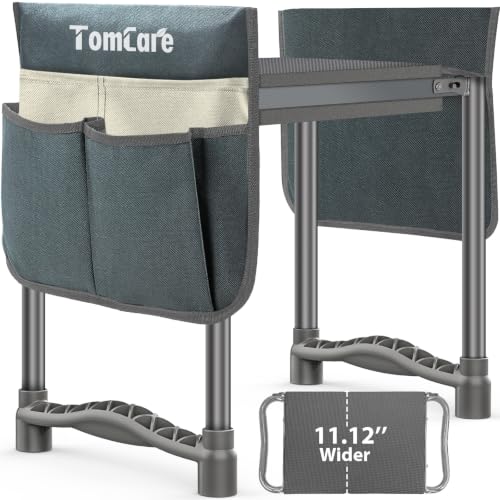
TomCare Garden Kneeler and Seat
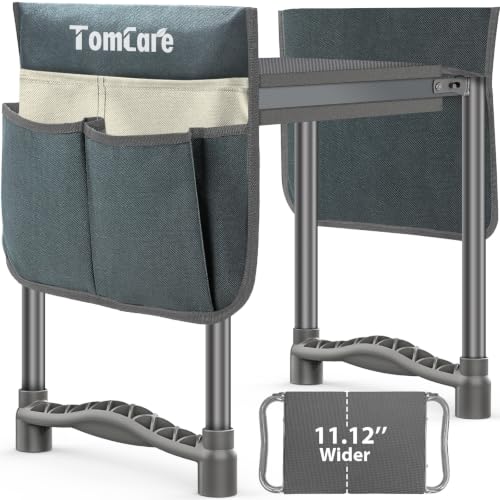
Consider the TomCare Garden Kneeler and Seat if you want the reference framed design this review keeps returning to. Treat it as a prose-only pick for now: compare its pad width, handle feel, folding action, and seat-mode behaviour against the checklist in this guide, and check the current Amazon listing for the exact version on offer before you buy, because listings and bundles change. What should decide it for you is fit with your own beds and session length, not a headline claim.
Strengths, in qualitative terms, are the combination this style of kneeler offers: a cushioned kneeling surface, side handles to push against as you rise, and a flip-over seat for low jobs and short rests. Trade-offs are equally consistent: it needs level ground to feel steady, it is one more thing to carry and store, and the low seat will not suit anyone expecting chair height. Judge this model on how cleanly its frame locks, how the pad cover sheds soil, and whether its pouch, if fitted, stays out of your way in both modes.
Best for: gardeners whose work matches the pattern described above and who want one folding unit for kneeling and sitting. Not suited for: steep, rough, or very soft ground, or anyone who needs a high seat. Check price on Amazon when you are ready to compare the current listing.

Ohuhu Garden Kneeler and Seat
Consider the Ohuhu Garden Kneeler and Seat if you want to compare pad and pouch arrangement against the reference design. Treat it as a prose-only pick for now: compare its pad width, handle feel, folding action, and seat-mode behaviour against the checklist in this guide, and check the current Amazon listing for the exact version on offer before you buy, because listings and bundles change. What should decide it for you is fit with your own beds and session length, not a headline claim.
Strengths, in qualitative terms, are the combination this style of kneeler offers: a cushioned kneeling surface, side handles to push against as you rise, and a flip-over seat for low jobs and short rests. Trade-offs are equally consistent: it needs level ground to feel steady, it is one more thing to carry and store, and the low seat will not suit anyone expecting chair height. Judge this model on how cleanly its frame locks, how the pad cover sheds soil, and whether its pouch, if fitted, stays out of your way in both modes.
Best for: gardeners whose work matches the pattern described above and who want one folding unit for kneeling and sitting. Not suited for: steep, rough, or very soft ground, or anyone who needs a high seat. Check price on Amazon when you are ready to compare the current listing.
Most framed kneelers use a folding steel or aluminium frame, and the honest differences are in the joints rather than the brochure language. Hinges and locking points take the strain every time you kneel, rise, and flip the unit into seat mode, so smooth, positive locking with no sideways play is the sign of a frame that will stay trustworthy. Aluminium keeps weight down for gardeners who carry the kneeler around a large plot, while steel often feels a touch more planted. Either can serve well; a sloppy joint serves nobody, whatever the frame is made from.
Folding flat is more than a storage trick. A kneeler that folds flat hangs on a shed wall, slides beside a potting bench, and travels in a car boot to an allotment without eating the space your plants need. The folding action itself should be simple enough to do with gloves on and without trapping fingers, and it should not depend on small loose parts that can vanish into long grass. When you first unfold any new kneeler, practise the lock and fold a few times on a patio so the movement is familiar before you take it onto soft soil.
Never invent confidence about load figures, and do not buy on a number you cannot verify. Makers publish different guidance for kneeling and seat use, frames age, and ground conditions change what a frame can safely do. The sensible approach is to follow the guidance supplied with the specific model you buy, use the seat only on level ground, and retire or repair a frame that develops cracks, bent legs, or a lock that no longer holds firmly. A kneeler is a simple tool, and treating it with that kind of straightforward respect keeps it a helpful one.
Performance in Real Use
Weeding Long Borders
Weeding is the job that sells most kneelers, and it is easy to see why. Working along a border at ground level, you can see the small seedlings hiding under leaves, get a fork under tap roots at the right angle, and move steadily without the constant up-and-down of working standing and bending. A kneeler shines on long, low, repetitive stretches like this, especially in spring and early autumn when weed growth is relentless and sessions run long. Pair it with a hand fork, a bucket placed within reach, and a plan to work in one direction, and a bed that felt overwhelming becomes a sequence of small, finished sections.
Pad comfort is about thickness, density, and how the foam behaves after the first month, not just how soft it feels in a shop. A pad that bottoms out quickly leaves your knees resting effectively on the frame, while a firmer, well-judged foam keeps a cushion of material between you and the ground for the whole session. Gardeners who kneel for long weeding runs often prefer a slightly firmer pad that supports rather than swallows, because deep, squashy foam can make side-to-side movement feel unstable and can tire the muscles around the knee as you keep correcting your balance.
Planting and Sowing Sessions
Planting is the second natural fit. Setting out bedding, bulbs, and young vegetables means repeated careful work at soil level: opening a hole, settling roots, firming soil, and watering in, dozens of times in a row. Kneeling close keeps your hands precise and your movements gentle around fragile stems, and the seat mode gives you a perch while you sort trays and labels between rows. Gardeners planting on raised beds should check the geometry, because a kneeler works best on the path beside the bed with the pad at a comfortable reach, not perched awkwardly on the bed edge itself.
A garden kneeler only works as well as the ground underneath it. On a flat lawn, a patio slab, or a level path beside a border, the frame sits square and the pad spreads your weight evenly, so you can settle in and work through a row without constantly repositioning. On soft soil after rain, narrow legs can sink at one corner and tip the pad, which is why experienced gardeners test the spot with a foot first and, if the soil is giving way, slide a flat board or a spare paving slab underneath. That small habit turns a wobbly perch into a stable work station and protects the frame feet from being driven into mud.
Rising, Moving, and Seat Mode
The raised side handles are the feature that turns a kneeling pad into a kneeler bench, and they earn their place when you stand up. Gripping both handles and pushing down through your arms lets your legs share the work of rising, and many gardeners find that steadier and more comfortable than pushing off the soil or reaching for a nearby fence. The handles only help if they are rigid, well spaced for your shoulders, and high enough that you are pushing down rather than pulling yourself sideways, so a frame that flexes or creaks under a firm push is telling you something important about its build.
Handle height interacts with seat mode in a way worth understanding. Flip the kneeler over and the same legs that formed the handles become the legs of a low seat, so a taller handle usually means a slightly higher seat. That seat is handy for jobs at low hedge height, for potting at a low bench, and for the simple pleasure of sitting to sort seed trays instead of crouching. It is a low seat, though, closer to the ground than a chair, and getting up from it still uses the frame for support. Gardeners who expect a chair-height perch will be disappointed; gardeners who want a rest between kneeling spells usually love it.
Grip and finish decide whether handles stay pleasant in real weather. Bare metal can be cold in early spring and slippery with wet gloves, while a foam or textured grip stays kinder across the season. Paint and coatings on the frame protect against rust where the handles meet the ground and get scuffed, so check those joints when a kneeler is new and touch in chips before winter storage. A handle that is comfortable in a dry showroom but slick in a damp April garden is a compromise you will notice every single week.
Patio and Container Work
Surface texture matters more than most listings admit. Gravel looks tidy in a border but presses through a thin pad and works its way under the frame, while decking and smooth slabs let a metal frame slide a fraction each time you lean. A pad with a textured underside, rubber feet in good condition, and a gardener who lifts rather than drags the kneeler between spots will get a steadier, quieter experience. Before a long session, brush loose grit off the pad surface too, because grit ground into foam under your knees shortens the life of the covering and makes the pad feel harder than it should.
Pruning low shrubs, tying in climbers at the base, harvesting strawberries and salad leaves, and edging a lawn all share the same pattern: detailed hand work, close to the ground, for longer than a quick crouch allows. That pattern is the kneeler’s home territory. Jobs that do not fit the pattern, such as hedge cutting at shoulder height, digging large holes, or working on steep or very uneven ground, gain little from a kneeler and may be done more safely standing with the right long-handled tools. Matching the tool to the pattern, rather than forcing every job onto it, is how owners stay pleased with the purchase for years.
Strengths and Trade-Offs
Strengths: ground work stays comfortable for longer stretches; rising feels steadier with two handles to push against; kneel, seat, and carry combine in one folding unit. Trade-offs: level ground is a genuine requirement, not a suggestion; the seat is low and will not replace a chair; pads and covers are wear parts that age with use and storage. Held side by side, the strengths are about every session and the trade-offs are about choosing the right ground and keeping expectations honest, which is a favourable balance for the right owner.
best garden kneelers and seats
How It Compares
FLOLX Garden Kneeler Seat
Consider the FLOLX Garden Kneeler Seat if you want a third framed layout to test this review’s conclusions against. Treat it as a prose-only pick for now: compare its pad width, handle feel, folding action, and seat-mode behaviour against the checklist in this guide, and check the current Amazon listing for the exact version on offer before you buy, because listings and bundles change. What should decide it for you is fit with your own beds and session length, not a headline claim.
Strengths, in qualitative terms, are the combination this style of kneeler offers: a cushioned kneeling surface, side handles to push against as you rise, and a flip-over seat for low jobs and short rests. Trade-offs are equally consistent: it needs level ground to feel steady, it is one more thing to carry and store, and the low seat will not suit anyone expecting chair height. Judge this model on how cleanly its frame locks, how the pad cover sheds soil, and whether its pouch, if fitted, stays out of your way in both modes.
Best for: gardeners whose work matches the pattern described above and who want one folding unit for kneeling and sitting. Not suited for: steep, rough, or very soft ground, or anyone who needs a high seat. Check price on Amazon when you are ready to compare the current listing.
Burgon & Ball Kneelo Garden Kneeler
Consider the Burgon & Ball Kneelo Garden Kneeler if you suspect from this review that a frame is more than you need. Treat it as a prose-only pick for now: compare its pad width, handle feel, folding action, and seat-mode behaviour against the checklist in this guide, and check the current Amazon listing for the exact version on offer before you buy, because listings and bundles change. What should decide it for you is fit with your own beds and session length, not a headline claim.
Strengths, in qualitative terms, are the combination this style of kneeler offers: a cushioned kneeling surface, side handles to push against as you rise, and a flip-over seat for low jobs and short rests. Trade-offs are equally consistent: it needs level ground to feel steady, it is one more thing to carry and store, and the low seat will not suit anyone expecting chair height. Judge this model on how cleanly its frame locks, how the pad cover sheds soil, and whether its pouch, if fitted, stays out of your way in both modes.
Best for: gardeners whose work matches the pattern described above and who want one folding unit for kneeling and sitting. Not suited for: steep, rough, or very soft ground, or anyone who needs a high seat. Check price on Amazon when you are ready to compare the current listing.
Long-handled tools are the other honest alternative, because they change the job instead of supporting the posture. A long-handled fork or hoe lets you weed standing, which suits gardeners who prefer not to kneel at all, though the work is less precise for small seedlings and close planting. Many experienced gardeners own both approaches and switch by task: kneeler for planting and detailed weeding, long handles for rough ground and quick passes. Framing the kneeler as one tool in a small system, rather than a cure for every awkward job, leads to better buying decisions.
A low garden stool or a bucket seat sits between the two. It gives you a perch for sorting, potting, and harvesting at low height, but without a proper kneeling pad it does not help with the ground-level work itself, and flipping between separate stool and pad means carrying two things. The kneeler bench’s whole appeal is combining kneel, rise support, and seat in one folding unit. If you only ever need one of those three functions, a simpler single-purpose tool may serve you better and cost less to replace.
Who Should Buy It and Who Should Skip It
Start any comparison with your own garden, not with a product list. Walk your beds and note where you actually kneel: long borders, a vegetable patch, containers on a patio, or a mix. Note the ground, the distance you carry tools from the shed, and how often you garden in short bursts versus long sessions. Those answers point to pad width, frame weight, and whether seat mode and a tool pouch will earn their keep. A kneeler bought for the garden you have will always beat a kneeler bought for the garden in a photograph.
Try to judge comfort over a realistic session length. Many gardeners feel fine kneeling on almost anything for five minutes; the differences appear at forty minutes, when a thin pad has bottomed out, a narrow frame has fixed your posture, and handles that flex have made every stand-up a small negotiation. If you can, borrow a kneeler from a neighbour or gardening club for one real session before buying. Failing that, choose a model whose pad, width, and handle design match the longest sessions you honestly do, not the shortest.
Accessories should be judged coldly. A tool pouch that keeps a trowel, fork, and secateurs at your knee genuinely saves trips back to the shed, but a pouch that hangs where it catches your leg or dumps tools when the kneeler flips into seat mode is decoration. Extra pads, carry bags, and spare covers are worth having only if the basic frame and pad already suit you. Spend your attention, and your budget, on the frame, the pad, and the handles first, because those three decide every session; everything else is garnish.
Setup, Care and Maintenance Essentials
Care is refreshingly simple, which is part of the appeal. Brush soil off the pad after use, wipe the cover down if it is damp or muddy, and let everything dry before folding the kneeler away, because foam and fabric stored wet in a cold shed develop smells and mildew that are hard to shift later. Check the frame feet and handle grips as you put it away; catching a split foot or a loose joint in the shed is far better than discovering it under you in the border. A kneeler looked after this way asks for minutes across a whole season.
Winter storage rewards a little attention. Clean the frame, dry it thoroughly, and touch in any paint chips on metal parts before damp air gets months to work on them. Store the kneeler folded, off a cold concrete floor if you can, and keep the pad out of direct sunlight, which slowly hardens foam coverings. If your model has a tool pouch, empty it before storage; forgotten hand tools rust quietly over winter and can stain the pouch and the pad. In spring, unfold the kneeler, test the locks, press the pad for soft spots, and you are ready for the first weeding run of the year.
Small repairs extend life more than owners expect. A loose bolt tightened early prevents a joint wearing oval, a grip re-wrapped stays comfortable, and a pad replaced when the foam finally tires can make an otherwise sound frame feel new again. What you should not do is improvise structural repairs on a cracked or bent frame and then trust it with your weight; at that point the honest options are a maker-supplied part fitted properly or a replacement kneeler. Knowing where that line sits keeps a cheap, cheerful tool from becoming a false economy.
best plants for raised garden beds
Final Verdict
As a design, the garden kneeler earns a confident recommendation for level-ground, ground-level gardening. It is not innovative and it is not universal, and this review has not pretended otherwise. It is a pad, a frame, and two handles arranged so thoughtfully that a whole class of garden jobs becomes calmer and more comfortable. Choose a model with a supportive, wide pad and rigid handles, use it on ground that suits it, store it dry, and it will quietly become the tool you reach for first from spring through autumn.
Extended Testing Notes: A Full Day in the Garden
Start the day at the vegetable bed, where the kneeler faces its most varied work: kneeling to thin seedlings, rising to fetch a tray, sitting to label rows, then kneeling again to water in. In this rotation the design’s virtues compound. Nothing is searched for, nothing is improvised, and the handles are there every time without thinking. The review judgement that matters forms here, not in any single feature: a good kneeler disappears into the rhythm of the work, and a poor one keeps interrupting it with wobbles, hard spots, and awkward flips.
Move to the long border by mid-morning and the pad faces its endurance test. Shuffling sideways on your knees, working a hand fork with one hand and steadying with the other, you learn quickly whether the pad’s width matches your stance and whether its foam supports or swallows. In this review’s judgement, width is the underrated hero of the category. An extra hand’s breadth of pad changes how often you stand, move, and resettle, and over a two-hour border session that difference is the difference between finishing the bed and leaving the last stretch for another day.
The afternoon belongs to the patio, and to a different set of questions. On slabs, the frame’s feet and the pad’s underside decide whether the kneeler feels planted or faintly mobile, and seat mode comes into its own for potting and dividing. This is also where a tool pouch proves itself or exposes itself: a pouch that holds a trowel and secateurs within reach while you sit is a small joy, while a pouch that tips its contents when the unit flips is a design flaw you will curse weekly. Judge pouches in seat mode, not in the product photograph.
Evening tidy-up sounds trivial and is not. The kneeler must be brushed down, checked, folded, and put away by someone who is tired. Designs that fold with one obvious motion and hang flat earn their keep in this moment, while fiddly locks get skipped, and skipped checks become next spring’s surprises. This review weights that end-of-day experience heavily, because tools are abandoned in sheds far more often than they are rejected in gardens. A kneeler that is easy to put away is a kneeler that stays in service.
After a season, the review verdict refines itself into a short list of tells. Look at the pad for a permanent hollow and you know whether the foam was honest. Look at the handle joints for play and you know whether the frame was. Look at the cover’s seams and the feet, and you know whether the details were finished or merely photographed well. None of this requires expertise, only attention, and it is exactly the attention a buyer should borrow before purchase by reading the guidance that comes with a model and handling it, if possible, with gardening gloves on.
Compared with the way this category is often sold, the reality is calmer and better. No kneeler transforms a garden, and none needs to. The design succeeds by removing small frictions, dozens of times a day, until ground-level work feels like the pleasure it is supposed to be. That is a modest claim, and it is why this review recommends the design confidently to the gardeners it suits while steering others, just as confidently, toward a pad or long-handled tools. Fit, as ever in the garden, is the whole story.
How-To Notes From This Review
The guidance in this section comes from testing a kneeler through a full day of mixed jobs, and it applies whichever model you choose, because good habits matter as much as good hardware with a tool this simple. Work through the steps in order the first few times you use a kneeler, and they will quickly compress into a routine you barely notice, which is exactly what a routine is for.
Set up on level ground first
Begin every session the same way: unfold the kneeler on the firmest, flattest spot near your work, check that both locks have engaged with a firm tug, and press the pad once with a hand to remind yourself how it should feel. This ten-second ritual, repeated until it is automatic, prevents nearly every wobble story owners tell. It also gives you a moment to look at the bed and plan a direction of work, which saves the shuffling and re-settling that make ground work feel harder than it is.
Kneel down with intention
Lower yourself onto the pad using the handles for balance rather than dropping the last few inches, because controlled descents are kinder to the pad and steadier for you. Settle your knees at the width that feels natural, not the width the pad suggests, and shuffle the kneeler a fraction if your stance and the pad disagree. Gardeners who take five seconds to settle properly at the start of each stretch consistently report longer, calmer sessions than gardeners who drop and start, and the difference costs nothing but attention.
Rise using both handles evenly
When it is time to stand, plant both hands on the handles, bring one foot forward beside the kneeler if that feels natural, and push down evenly through both arms as your legs straighten. Rising evenly keeps the frame from twisting, keeps your weight over the feet of the frame, and turns standing into a smooth, repeatable movement instead of a heave. Practise it a few times on a patio when the kneeler is new, and by the third real session it will be the way you always get up.
Work in one direction and finish sections
Ground work rewards sequence. Start at one end of a bed, work to a natural landmark, and only then move on, because finished sections are satisfying and half-worked beds invite endless return trips. Keep your bucket, tools, and the kneeler moving together in that same direction, using the pouch or a trug at your side. This sounds like tidiness for its own sake; in practice it is the habit that turns a kneeler from a comfort accessory into a productivity tool, whatever the size of your plot.
Flip to seat mode deliberately
Seat mode works best as a planned pause, not an afterthought. Flip the kneeler on level ground, check it sits square, and use the seat for the jobs it suits: sorting, labelling, potting, pruning low growth, and resting with a purpose. Sitting at working height keeps you in the garden and in the job, which is why so many owners use the seat more than they expected. When you flip back to kneeling mode, brush the pad first, because soil carried onto the seat becomes soil ground into the pad.
Finish with a two-minute reset
End the session by brushing down the pad, wiping the cover if it is damp, checking feet and locks, and folding the kneeler flat for storage. Two minutes, honestly timed, is all it takes, and it is the difference between a tool that is ready next time and a tool that greets you with last week’s mud and a loose joint. Gardeners who keep this reset habit get more seasons from foam, fabric, and frame, and they trust their kneeler more, because they have looked at it recently with their own eyes.
Review Summary in One Place
Score this design, in words rather than numbers, as follows. Comfort: strong, provided the pad is wide and supportive rather than merely soft. Rising support: the standout feature, and the reason framed models exist. Seat mode: genuinely useful, honestly low. Build: entirely dependent on joints and locks, which a buyer can and should test. Portability: good when folded, with weight varying by frame material. Care: as easy as garden tools get. Ground tolerance: the one true weakness, shared by every framed design in the category and manageable by choosing your spots with care.
That summary is deliberately unglamorous, because the product is unglamorous in the best way. It does not promise transformation; it promises that weeding, planting, and harvesting on level ground will feel calmer and more sustainable, session after session. In a market full of louder claims, a tool that delivers a modest promise completely is worth a warm review, and that is the review this design gets. Buy the version with the honest pad and the rigid handles, use it where it belongs, and it will earn its place in the shed within a fortnight.
A final note on expectations for anyone reading this review as their only research. Spend the time you save here in the garden itself: look at your beds, your paths, and your shed, and picture the kneeler in each. If the pictures come easily, with level ground and long low jobs, proceed with confidence. If every picture involves a slope, a rough track, or a five-minute job, let this review talk you out of the framed design and toward a pad or long handles instead. A review that only sells is a poor review; this one would rather fit you than flatter the product.
Durability, revisited after all the performance notes, deserves a final review paragraph of its own, because it is where money is truly saved or lost in this category. The frame’s welds and joints, the pad’s foam, and the cover’s seams age at different rates, and the design that lets you address the fastest-ageing part, usually the pad, without discarding the rest is the design that wins the long game. When you handle a kneeler before buying, you are really inspecting those three ageing paths: flex in the joints, recovery in the foam when you press and release it, and stitching where the cover meets its edges. A kneeler that passes those three inspections, in a shop or on a patio within its return window, has told you most of what a season would. This review’s confidence in the category rests on how many current designs pass them, and its caution rests on how many buyers never run them at all.
A note on value, since reviews should address it even without naming figures. The framed kneeler sits in that healthy middle ground of garden tools where sound construction is affordable and cheap construction is a false economy, because the difference between the two is felt in joints and foam every single session. This review’s advice is to buy once, at the level where locks engage cleanly and foam recovers when pressed, rather than twice at the level where they do not. Judged that way, the design is not merely pleasant but economical, and few tools in the shed repay a little extra care at purchase as reliably as this one does across a long season.
What a Longer, Slower Check Reveals About This Garden Kneeler
A single review session can flatter or condemn a garden kneeler unfairly, so this section slows the judgement down and looks at what only repeated, ordinary use tends to reveal. Run the garden kneeler through your least favourite version of its job first, not the easiest demonstration: the awkward corner, the rushed weekday timing, the fuller load, the lower light, or whatever condition in your routine makes this category work hardest. Use a simple decision checklist at the end: the garden kneeler fits the measured space, suits the real frequency of the job, matches the household’s cleaning temperament, has obtainable parts, and has a named storage home — five yeses make a confident order. Notice the small recovery moments: how the garden kneeler behaves when you pause mid-task, change your mind, need to move it, clean it sooner than planned, or hand it to someone in the household who has never used it before.
If a problem with the garden kneeler repeats in the same spot or the same stage of the job, treat the pattern as the clue — patterns point to setup, surface or technique, while random problems point more often to the individual unit. Read the manual’s warnings page for the garden kneeler even if you read nothing else, because that page is a compressed list of every way the product has ever been misused, and it tells you exactly which of your own habits needs adjusting. A well-judged garden kneeler explains itself to that second person without a lecture, with controls, grips, openings or adjustments that make sense on contact, and that intuitiveness is worth recording because guests, partners and teenagers will all test it. Look at replacement parts and consumables for the garden kneeler while you are still comparing, confirming that the pieces most likely to wear, clog, tear, fade or get lost can actually be obtained without replacing the whole product.
For troubleshooting, start with the boring causes first: power, water, fit, blockage, alignment, a full container, a loose connection or a setting changed by the last person who used the garden kneeler, because boring causes account for most apparent failures. When something about the garden kneeler disappoints, change one variable at a time — position, setting, timing, load, accessory or technique — and give the change a fair trial, because changing three things at once leaves you with a better or worse result and no idea why. Plan the storage home for the garden kneeler before it arrives, naming the exact cupboard, corner, shelf, hook or stretch of floor, because a product without a home migrates around the house and slowly becomes the clutter it was bought to reduce. Decide in advance what good enough looks like for the job the garden kneeler does in your home, because chasing a flawless result usually costs more time than the flaw itself, and most households are happier with a reliable ninety percent they actually repeat.
Photograph your setup once the garden kneeler is working well — the position, settings, arrangement or layout you settled on — so that after a move, a deep clean or a seasonal break you can recreate the arrangement that worked instead of rediscovering it. Think about who else will use the garden kneeler and what they will do differently: shorter reach, less patience, stronger habits, no interest in the manual, and a tendency to leave things wherever they were last set down. Finish the longer check by looking at wear points rather than features: the hinge, seam, edge, wheel, latch, surface or joint on a garden kneeler that moves, flexes or gets handled most is where its second year is decided, whatever its first week felt like. Pay attention to the second and third use rather than the first, because the first use of a garden kneeler measures your learning curve while the later uses measure the product itself, and confusing those two is the commonest reviewing mistake.
Seasonal thinking helps more than expected: a garden kneeler bought in one season will meet different light, humidity, mud, heat, guests and routines in another, so judge its size, storage and upkeep against the hardest season it will face. Share the checklist result with anyone who shares the space, since a garden kneeler chosen by one person and resented by another rarely survives, however sensible the purchase looked on paper. Watch for edge cases in your own home: the pet that investigates everything, the child who treats every new object as furniture, the guest who uses force where you use familiarity, and the weather, light or season that changes how a garden kneeler behaves.
Frequently Asked Questions
How long can you comfortably kneel on a garden kneeler?
It depends on the pad and on you, and honest answers vary. Many gardeners work in stretches of twenty to forty minutes, then use the seat mode or stand and stretch before continuing. A thicker, supportive pad extends comfortable stretches, while thin pads bottom out sooner. Build in movement whatever you buy: shuffle along the border, switch between kneeling and sitting, and treat the kneeler as a way to make ground work more comfortable, not as permission to stay frozen in one posture for hours.
Can you use a garden kneeler on gravel or uneven ground?
Use care. On firm, level gravel with larger stones it can work, but loose gravel presses through thin pads and lets frames shift, and uneven ground makes any framed kneeler feel unsteady. Test the spot first, consider a flat board underneath on soft or loose surfaces, and choose a simple pad instead for rough or sloping patches. The kneeler is at its best on lawns, paths, patios, and the level ground beside borders and vegetable beds.
How do you clean and store a garden kneeler?
Brush soil off the pad, wipe the cover with a damp cloth, and let everything dry fully before folding it away. Check feet, grips, and locking joints as you store it, touch in paint chips on metal frames before winter, and keep it folded in a dry shed out of direct sunlight. Empty any tool pouch before long storage so forgotten tools do not rust against the fabric. That small routine takes minutes and keeps foam, fabric, and frame in good shape season after season.
Is the seat mode on a garden kneeler actually useful?
For low jobs, yes. The flipped seat suits potting, sorting trays, pruning low shrubs, harvesting, and simply resting between kneeling spells without going indoors. Remember it is a low seat, closer to the ground than a chair, and it should only be used on level ground. Gardeners who expect a chair-height perch are often disappointed, while gardeners who want a rest at working height for ground-level jobs usually find they use the seat far more than they predicted.
What should you check first when a garden kneeler arrives?
Unfold it on a flat patio and test the locks, then kneel and rise a few times using both handles before taking it onto soil. Check that the pad feels supportive rather than squashy, that the handles do not flex alarmingly under a firm push, and that folding it flat is easy with gloves on. Confirm the seat mode feels stable on level ground. If anything creaks, slips, or fails to lock positively, that first afternoon is the time to act on it.
Can a garden kneeler be used indoors or on a patio?
Yes, and many owners do exactly that for low indoor jobs, cleaning, and patio container work. Protect delicate floors by checking the frame feet are clean and intact, and avoid dragging metal feet across surfaces that scratch. On smooth slabs and decking, be aware a frame can slide a fraction as you lean, so position it deliberately and rise using both handles evenly. Used with that awareness, a kneeler is as handy among patio pots as it is beside a border.