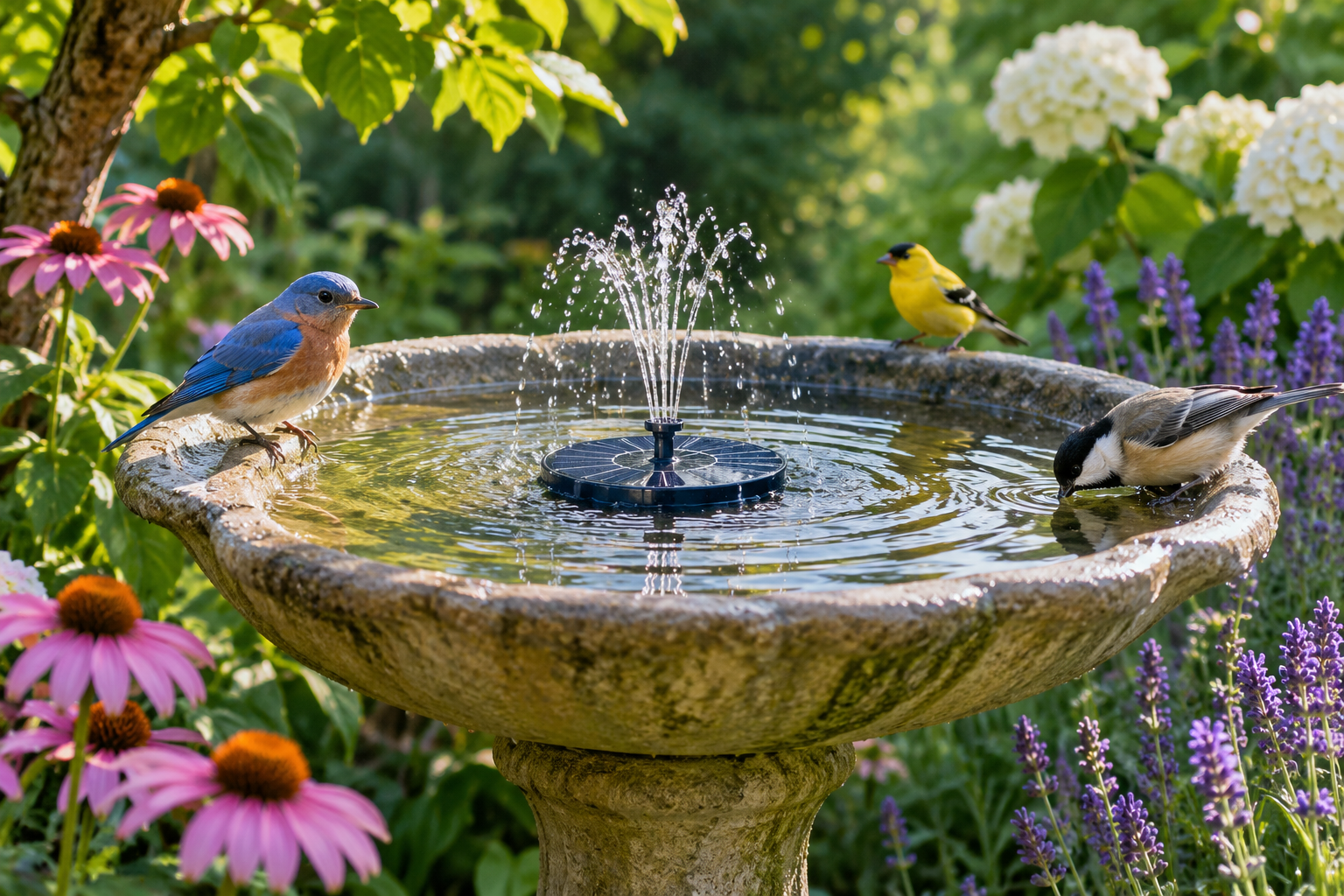
The best solar bird bath water pumps add a gentle, visible ripple to a backyard water source without needing a permanent electrical outlet. Birds may notice moving water more readily than a silent, still basin, and a small fountain can give a garden a pleasant focal point. The pump itself is only one part of a successful setup, though. A bird-friendly bath needs shallow water, secure footing, a suitable location, and regular cleaning. A fountain that splashes most of its water onto the patio or runs dry in afternoon sun is not a useful upgrade.
This guide explains the main solar pump designs, how to match a pump to a bird bath, which features make maintenance easier, how to install and tune the fountain, and what to check when it stops working. Solar kits vary: some float directly on the water, some put the pump underwater and connect it to a separate panel, and some store energy in a rechargeable battery. Choose based on the light, depth, and shape of your basin rather than the largest flow number on a product listing.
Affiliate disclosure: DailyHomeDecorating.com may earn a commission from qualifying purchases through links in this article. This does not change the price you pay.
Amazon solar bird bath pump examples
The following product titles, ASINs, and images were retrieved through Amazon Creators API. They are examples for comparing fountain styles and setups, not lab-tested rankings. Check each listing for current kit contents, basin compatibility, and availability.


Certain content that appears on this site comes from Amazon. This content is provided “as is” and is subject to change or removal at any time.
What does a solar bird bath pump do?
A small pump draws water from the basin and sends it through a nozzle to create a bubbling effect, low spray, or short stream. Water falls back into the basin and circulates until it evaporates, splashes out, or is replaced during cleaning. A direct-solar pump uses electricity from a panel while the panel receives sufficient light. A battery-backed kit can store some energy for later operation, although its runtime depends on its battery, solar exposure, and selected mode.
A fountain does not filter or disinfect the water. Leaves, bird droppings, dust, algae, and sediment can still collect, and moving water does not make the bath self-cleaning. Think of the pump as a way to add motion and sound to an already well-designed bath. Clean water and safe access matter more to birds than a tall spray or elaborate display.
For broader pump types and non-solar basin setups, see our guides to water fountain pumps and pond pumps. Those products may be designed for larger water volumes or continuous operation, so check that any pump you consider is appropriate for a shallow bird bath. If your project is a larger off-grid water feature, our guide to solar water pumps explains broader solar pumping setups.
Start with the bird bath, not the pump
Before shopping, inspect the basin. Measure its inside diameter and water depth, check whether the bottom is level, and note where sunlight reaches during the hours you want the fountain to run. A small, shallow dish may not have enough water depth for a floating pump whose intake sits below the surface. A broad basin gives you more room to position a pump and catch its spray, but an oversized spray can still send water over the rim.
Birds generally prefer shallow water with a gradual edge and a place to stand. Cornell Lab of Ornithology’s bird bath guide describes a useful bath as similar to a shallow puddle and recommends a basin that is easy to clean. The Washington Department of Fish & Wildlife describes shallow water, typically one to three inches at its deepest point, as suitable for songbird habitat. Check the basin against the birds in your region, and provide a gentle slope or secure stones so a visitor can wade rather than step into a sudden deep center.
Texture is important. Glazed ceramic, smooth plastic, and polished stone can become slippery when wet. A rough basin surface, a textured insert, or a few stable flat stones can provide footing. Arrange stones so they cannot roll or tip when a bird lands. Keep some open water around them, because birds also need room to drink and bathe.
A solar pump can change the depth available in the bath as water splashes outward. Choose a water level that keeps the intake submerged but does not make the basin too deep for small visitors. If there is no overlap between the pump’s minimum depth and a bird-friendly shallow level, that pump is the wrong size for that basin. Consider a smaller pump or a different fountain design.
Types of solar bird bath water pumps
Floating solar fountain pump
A floating unit puts the pump, solar cells, and nozzle together in a disk that rests on the surface. It is usually the simplest design to set up: place it in water and let its panel receive sunlight. There is no cable to route, and the complete unit is easy to lift for cleaning. The trade-off is that the entire fountain follows the sun’s availability. Many direct-solar models slow down or stop in cloud and shade.
Floating disks may drift toward the basin edge. If the jet then points beyond the rim, water can spill onto the ground and lower the level until the pump runs dry. A circular basin with enough width around the device helps, but it does not guarantee that the unit stays centered. Some products include stabilizers or arms; inspect the dimensions and instructions to see whether those parts fit your basin.
These floating kits are most appropriate for a broad, open bath with reliable sun and enough depth under the unit. They may be a poor fit for a narrow dish, a bath placed beneath a tree, or a garden where a cable-free but intermittent fountain would be frustrating. A low nozzle pattern is usually more suitable than a high spray for a shallow birdbath.
Submersible pump with a separate solar panel
In this arrangement, the pump sits in the water while a cable connects it to a solar panel that can be placed in a brighter spot. The design makes it easier to keep the fountain centered and can work when the bath itself sits in partial shade. Check the panel cable length, mounting stake, and permitted cable routing. Do not run a cable across a walkway or where a mower, trimmer, or garden cart could catch it.
A separate-panel system can include a weighted pump base, suction cups, a filter, or a nozzle kit. These features help with placement and cleaning, but confirm what is actually included rather than relying on an image. The pump must remain at the manufacturer’s specified depth, and the panel should be positioned according to its manual. Avoid burying connectors or placing them where standing water collects unless the system is specifically designed for that installation.
This setup suits a shaded bath with a nearby sunny location for the panel, as long as the cable can reach safely. It is also useful when you want the pump to remain in one position while cleaning debris from the basin. The cable and pump still need inspection, and all electrical connections should remain as protected as the manufacturer requires.
Solar pump with battery storage
A battery-backed fountain can continue to run for some time when direct sunlight drops, depending on the stored charge and operating mode. Some kits let you select a continuous, intermittent, or timed pattern. Battery features vary widely, so do not assume that every battery model will run through the evening or overnight. Look for the listed battery capacity, expected runtime conditions, charging time, and whether the battery can be replaced.
A battery adds convenience but also another component to maintain. Follow the manual for charging, winter storage, and exposure to rain. Do not open a sealed battery pack or replace it with a part that the maker does not approve. If the battery is replaceable, record the model number so you can find the correct replacement later. A panel still needs usable sunlight to replenish stored energy.
Separate panel and pump components
Some kits use a panel, controller, cable, and pump that can be replaced individually. This modularity may make repairs easier, but it creates a compatibility issue. Voltage, connector polarity, power rating, and control features must match. A plug that fits physically does not prove that two parts are electrically compatible. Use the manufacturer’s parts list or support guidance before substituting a panel or pump.
How to size a pump for a shallow bath
Small bird baths rarely need a forceful jet. A low bubbling pattern can move the surface and add a soft sound while leaving much of the basin calm. Start by comparing the pump’s recommended basin size, minimum submersion depth, stated flow rate, and maximum lift height. These figures describe different things and should not be treated as interchangeable.
Flow rate, often shown in gallons per hour, describes how much water a pump can move under stated conditions. Actual flow at the nozzle may decrease as water is lifted or passes through a tube. Maximum lift height is the vertical distance the pump can push water under specified conditions. A large maximum lift does not automatically make a better birdbath pump. The useful question is whether the pump can create a gentle pattern at the height and flow you need.
Look for adjustable flow or a selection of low-profile nozzles. Begin with the gentlest setting and watch the water return to the basin. The fountain should not soak nearby soil, make a path slippery, or force every bird to stand in the spray. Wind affects where droplets land, so observe the bath on a breezy day as well as in calm weather.
Solar output depends on panel orientation, season, shade, cloud cover, dust, and nearby reflective surfaces. A listing’s maximum performance is measured under particular conditions; it should not be read as a promise for a shaded patio. If the bath is under a tree, a separate panel can be positioned elsewhere, but only when its cable can be routed safely. Trim nothing near overhead utility lines just to improve sunlight; use a different panel location or consult a qualified professional for hazardous branches.
Features worth comparing before purchase
- Minimum water depth: The pump should remain submerged at a water level that is still shallow and comfortable for birds.
- Low-water protection: A dry-run shutoff or sensor may reduce the chance of pump damage if the basin level falls. It does not eliminate the need to check the water.
- Adjustable flow: A way to lower output can help limit splash, suit a small basin, and keep a quiet drinking area.
- Cleanable intake: A removable filter or accessible impeller is useful when leaves, grit, or algae obstruct the pump.
- Panel placement: A separate panel, a stable stake, and a cable of practical length can help when the bath itself is shaded.
- Battery information: Confirm whether a battery is included, how it charges, whether it can be changed, and how the pump operates without sunlight.
- Replacement parts: Check availability of filters, impellers, tubing, connectors, and batteries before committing to a model.
- Outdoor care instructions: The manual should explain allowed submersion, rain exposure, freezing conditions, cleaning, and storage.
Compare the assembled size and weight, not just a product photo. A floating disk can take up more surface area than expected, and a separate panel needs a stable mounting location. Read recent reviews for recurring comments about clogging, cable length, battery performance, and water escaping the bath. Product listings change, so confirm that a review refers to the same model and kit version you plan to buy.
Targeted Amazon searches
For an open, sunny bath, compare floating solar fountain pumps with adjustable, low-spray nozzles. Verify the diameter of the float and the minimum water depth. A product designed for a garden pond may be too large for a small pedestal bath.
Search Amazon for floating solar bird bath water pumps.
If the basin is shaded but a sunny spot is nearby, look for a submersible kit with a separate panel, cable, and secure pump base. Confirm that the cable reaches without crossing a path or equipment route.
Search Amazon for solar bird bath pumps with a separate panel.
For operation through short periods of cloud or shade, compare battery-backed bird bath pumps. Check the battery size, runtime claims, replacement policy, and selected mode in the exact product listing.
Search Amazon for battery-backed solar bird bath pumps.
We have not independently verified an ASIN for a particular pump in this guide, so these are search links rather than direct product links. If you compare a branded model, include the brand and full model number in the search and make sure the result matches the manufacturer’s current manual and specifications.
Choose a bird-friendly location
Set the bath on a stable, level surface that can support its weight when full. Choose a spot where you can refill and clean it without dragging hoses or buckets through the garden. Birds benefit from a view of the surrounding area and access to nearby cover, such as a shrub or small tree, but dense vegetation immediately next to the bath can give a cat or other predator a hiding place. Leave open sight lines and avoid placing the bath beside a fence or ledge where predators can leap directly onto visiting birds.
Keep the basin away from heavy seed drop if possible. A bath directly beneath a feeder tends to collect hulls and droppings faster. If you have windows nearby, consider collision-safe placement and visible window treatments. A fountain does not offset the risk of a bird striking glass. You may also place a second shallow drinking dish away from the moving spray so a wary bird has another option.
Think about the panel separately from the basin. A separate panel should receive useful sunlight without creating glare into a neighboring home or becoming a trip hazard. Secure it against wind and keep the cable tucked along a wall or garden edge. Do not route it through a mowing path where a blade or wheel could damage it.
Observe the site at different times of day. Morning sun may be blocked by a building in winter, while a tree that is leafless now may shade the panel in summer. Seasonal changes can alter how long the fountain runs. If consistent operation matters, choose a setup that can be repositioned or has battery storage suited to your conditions.
Installation and first-day tuning
- Read the pump and panel instructions before assembly, and check the minimum basin depth and outdoor-use limits.
- Rinse the basin and pump parts with clean water. Do not put soap, detergent, or garden chemicals into water that birds may drink or bathe in.
- Place the pump on a stable, flat part of the bath and connect only the tubing or nozzle approved for that kit.
- Fill the basin enough to cover the intake and meet the manufacturer’s minimum depth. Keep the water shallow for birds.
- Position a separate solar panel in a bright place and secure its stake or mount. Route the cable away from foot traffic and yard equipment.
- Start with the lowest flow and shortest nozzle. Check that most droplets return to the basin rather than landing on the surrounding ground.
- Observe the water level and spray after several minutes, then check again later as sunlight changes and water evaporates.
If the pump starts and stops as clouds move, that may be normal for a direct-solar model. Repeated dry running is different: it can damage some pumps. Never run it outside water to test it. If the fountain stops, switch it off or shade the panel while you inspect the water level, intake, and connections.
Adjust the fountain so it leaves a calm edge and open water. A high bubbling column can be attractive to a person but uncomfortable for a small bird to approach. Reduce output if the spray blocks the whole surface or if water lands on a path. The finished setup should make drinking and bathing easier, not turn the basin into a noisy obstacle.
Routine care: water, pump, and solar panel
Check the water level frequently, especially in hot, dry, or windy weather. Solar pumps may run hardest on the brightest days, when evaporation is also faster. A low-water sensor is useful but should not replace visual checks. Keep a refill bottle or small watering can nearby so topping up is easy.
Refresh the water and clean the basin regularly. Audubon’s birding FAQ recommends routine cleaning of bird baths; Cornell Lab emphasizes a cleanable basin. Remove leaves and visible debris as soon as practical, then scrub the surface and rinse thoroughly. Follow trusted bird-conservation guidance and the product manual for any cleaning solution. Do not leave cleaner residue in the basin, and never mix chemicals. If there is algae or a persistent film, empty the bath and clean it rather than simply adding fresh water on top.
Disconnect or switch off the pump before removing it. Lift by the housing or designated handle, not by pulling the cable. Open only parts the manual describes as user-serviceable. Use a soft brush to remove grit or algae from the intake and impeller. Rinse a washable filter as directed, and check the nozzle for mineral buildup. Do not scrape delicate parts with a knife or force a cover that is not meant to open.
Dust on a solar panel can reduce the light it receives. Wipe it gently with a damp, soft cloth when needed, following the manufacturer’s instructions. Do not use abrasive pads or solvents unless the manual says they are safe. Inspect cable insulation and connectors periodically for damage, moisture, or animal chewing. If a cable is damaged, discontinue use and contact the maker rather than patching a wet electrical connection with improvised tape.
Before freezing weather, follow the model’s storage instructions. Many small pumps should be removed, cleaned, dried, and stored indoors. Empty a basin that could crack when water freezes. Store batteries and panels under the conditions specified by their makers, and do not leave a pump running in ice unless the product is specifically designed for that use.
Troubleshooting common problems
The pump does not start
Check that the panel receives light, the pump intake is submerged, and any switch or battery mode is set correctly. Clean the intake and inspect the connector. A direct-solar pump can stop in shade or cloud. For a battery unit, allow the recommended charge time and verify that the battery is installed correctly. Do not test the pump dry.
The spray is weak or uneven
Debris in the filter, intake, or impeller can slow the pump. Clean those parts according to the manual. Check for a kinked tube, blocked nozzle, or loose connection. If the system allows flow adjustment, try the lower setting first and see whether the surface pattern improves. Confirm the panel is in sun and the battery is charged before assuming that the pump has failed.
The fountain empties the basin
Reduce the flow, choose a lower nozzle, or reposition the unit toward the middle. Wind can send a spray away from the basin even when the nozzle points straight up. Check the fountain during the breeziest part of the day and adjust it accordingly. If the pump has no low-water protection, pay close attention after installation; repeated dry running can shorten its life.
The floating unit drifts
Check whether the basin is wide enough and whether the product includes stabilizers. A floating unit that cannot stay away from the rim may not fit that bath. Do not wedge it tightly against a surface if that blocks the intake or traps debris. Consider a submersible pump with a separate panel and a fixed base.
Birds are not visiting
Give birds time to discover a new bath. Check that the basin is shallow, the surface offers stable footing, and the location has a clear view without being too exposed. Turn the fountain down or off temporarily if its sound or spray seems to startle visitors. Make sure the bath is clean and not constantly disturbed by people or pets. A quiet, clean basin nearby can offer an alternative while birds become used to the moving water.
Seasonal use and realistic expectations
Solar performance changes with the season. Short winter days, a low sun angle, and cloud cover can reduce charging time; summer leaves may shade a panel that was sunny in early spring. A battery can smooth brief interruptions but does not make a small fountain independent of sunlight indefinitely. If the bath is important during a season with hard freezes, a solar pump may be only one part of your plan. Follow local wildlife guidance and the equipment manufacturer’s limits.
Do not add antifreeze, salts, or unapproved additives to make the water remain liquid. Such substances may harm birds or other wildlife. If you use a heated bird bath in winter, choose a product designed for that purpose and install it according to its manual. Keep the basin clean and provide safe access. A solar fountain and a heated basin are different equipment categories; make sure a pump is not exposed to conditions outside its rating.
During migration or nesting periods, activity can change from week to week. A bath that appears quiet for a few days may still be useful. Avoid interpreting lack of immediate visitors as a pump failure. Water availability, placement, local habitat, predators, weather, and the species in your area all influence whether birds use a particular feature.
How to choose among the options
For a broad bath in direct sun, a floating solar fountain can be the simplest option. For a shaded basin with a sunny spot nearby, a separate-panel kit gives you more flexibility. For brief interruptions in sunlight, consider battery storage, but read the runtime conditions and replacement details. If your bath is small or shallow, make minimum depth and low-splash performance the first filters in your comparison.
Think about ownership costs and upkeep. A cleanable pump with a replaceable filter or impeller can be easier to maintain than a sealed one. A battery that cannot be replaced may make the unit disposable when its capacity fades. A very inexpensive fountain can still be a reasonable choice for occasional summer use, while a higher-priced kit may make sense if it has serviceable parts and a panel that solves a real shade problem. Avoid paying for features that do not match your yard.
Before checkout, verify the exact model name, kit contents, minimum submersion depth, battery inclusion, cable length, warranty, and return policy. Search results can change, and similar product photos may show different versions. If a listing does not clearly state its depth or operating behavior, check the manufacturer’s manual or contact support. The label “solar bird bath pump” alone is not enough to establish that a product is suitable for a shallow wildlife bath.
Frequently asked questions
Do solar bird bath pumps work on cloudy days?
Direct-solar models may slow or stop when the panel receives less light. Battery-backed models may continue for a limited time depending on stored charge and mode. Check the product manual for the conditions behind any runtime estimate.
Can a solar pump run in a shallow bird bath?
It can if its minimum operating depth fits the basin and the intake stays submerged. Check that measurement before buying. Do not make the water too deep for birds simply to accommodate an oversized pump.
Does moving water remove the need to clean the bath?
No. Circulation does not remove droppings, leaves, algae, or sediment. Refresh the water, clean the basin, and rinse thoroughly on a regular schedule.
Can I leave the pump running overnight?
Follow the instructions for your exact model. A direct-solar pump usually stops when light fades. A battery model may have a timer or continue for a period, but overnight operation is not required for birds to use a clean bath.
How deep should water be for backyard birds?
Birds generally use shallow water with a gradual edge and places to stand. Cornell Lab and state wildlife guidance describe shallow basins and footing as important. Provide different depths with secure stones if needed, while keeping the bath easy to enter and exit.
Is a fountain better than a still bird bath?
Not necessarily. A fountain can add motion and help some birds notice a water source, but a still, clean, shallow basin can also serve birds. The best choice is one you can maintain and that the birds in your yard can use safely.
Final thoughts
The best solar bird bath water pumps match the depth and size of the bath, receive enough sunlight, and create a gentle pattern without sending water over the rim. Choose between a floating, separate-panel, or battery-backed design based on your site’s light and the level of operation you expect. Then install it carefully, keep the water shallow and clean, and check the pump before it runs dry. A modest fountain can add movement to a wildlife-friendly garden, but safe access and fresh water are what make the bath valuable to birds.