Amazon product examples to compare
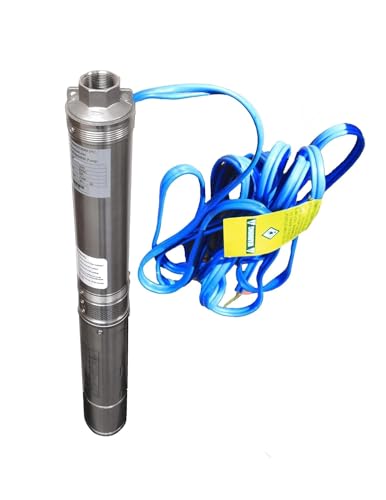
ASIN: B00NTT2JQMView on Amazon

ASIN: B0BJV2HPPHView on Amazon

ASIN: B00NTT2JMGView on Amazon
Certain content that appears on this site comes from Amazon. This content is provided “as is” and is subject to change or removal at any time. Product examples and images are supplied through Amazon Creators API; check the current listing for specifications and availability.
As an Amazon Associate, DailyHomeDecorating.com earns from qualifying purchases.
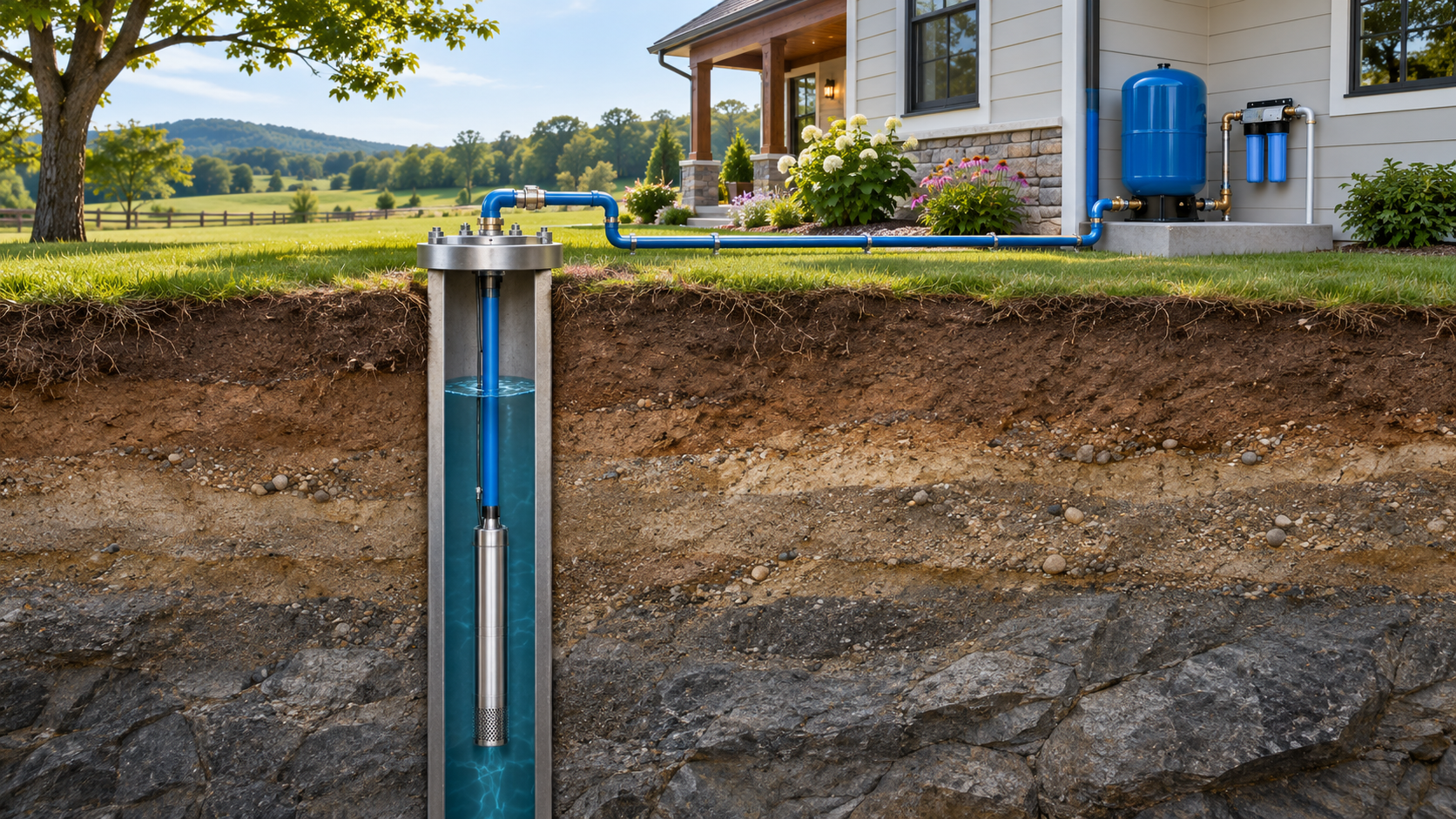
A submersible well pump sits deep underground, fully submerged in your well, and pushes water up to your pressure tank, taps, and showers every day for years. When it is sized correctly, you forget it exists: pressure stays steady and the pump cycles calmly. When it is sized wrong, the symptoms are hard to ignore: weak showers, a pump that clicks on and off constantly, sand in the water, tripped breakers, or a pump that runs dry and damages itself out of sight, far below your yard.
That is why shopping for the best submersible well pumps is an exercise in matching. The right pump is not the most powerful or the cheapest one. It is the one whose flow and head capacity fit your well’s depth and yield, whose diameter fits your casing, and whose controls fit how your household uses water. This guide walks through each decision in plain terms, without rankings or unverified claims, so you can build a short list and talk intelligently with a well professional.
What to Look for First
Every well is different, so start with four facts: how much water you need, how far the pump must lift it, how much power is available, and what the pump is made of. Get these right and most other decisions fall into place.
Flow Rate
Flow rate is the volume a pump can deliver in a given time, usually expressed in gallons per minute for residential well pumps. Your household demand sets the target, and you should think in terms of simultaneous use: a shower running while a washing machine fills and a dishwasher runs asks far more than any single fixture. Count bathrooms, major appliances, irrigation zones, and any outbuilding or livestock water, then add the peak uses that realistically happen at once.
Just as important is what your well can give. A well has a yield, the rate at which water flows into it, and a recovery rate. A pump that demands far more than the well can sustain will draw the water level down toward the intake, risking dry running and stirring up sediment. If you do not know your well’s yield and static water level, a well professional can measure them, and that information is worth more than any guess. Remember, too, that stated flow falls as lifting distance grows, so judge a pump by the flow it delivers at your actual working conditions.
Head Height and Total Dynamic Head
Head is the measure that most often decides success or failure, and the one buyers most often underestimate. Professionals use total dynamic head: the depth from the pump up to the pressure tank, the system pressure expressed as an equivalent height, and friction losses through pipe, fittings, and any treatment equipment.
Start with the physical facts. How deep is the well? Where is the static water level, and how far does it drop when the pump runs, which is called drawdown? Where will the pump be set, usually some distance above the well bottom so it does not pull in settled sediment? Then add the working pressure your home needs: a pressure tank system cycles between a lower cut-in and a higher cut-out pressure, and the pump must still deliver your target flow at the higher end of that range.
Friction matters more than most people expect, especially on long runs or smaller pipe. This is why a flow-versus-head chart, called a pump curve, is the most useful document in the buying process. Find your total dynamic head on the curve and read off the flow the pump actually delivers there. Choose a pump whose comfortable working range covers your conditions with room to spare, rather than one straining at its limit, which runs hotter, wears faster, and leaves no margin if the water level drops in a dry season.
Power, Horsepower, and Voltage
Horsepower is the motor’s power rating, but more is not a goal in itself. Power should follow from your flow and head requirements: lifting more water, or lifting it farther, takes more power. An oversized motor wastes energy and can cycle awkwardly; an undersized one struggles, overheats, and delivers disappointing pressure.
Check the electrical supply before you shop. Residential submersible pumps commonly run on 230-volt service, though smaller models for shallower wells may run on 115 volts. Confirm what your panel and the wiring down the well can support. The power cable itself must be sized for the length of the run and the motor’s draw, or voltage drop along the cable will starve the motor, reduce performance, and shorten its life. Cable sizing is a place where cutting corners underground, where you cannot see or easily fix the problem, is especially unwise.
Materials and Build Quality
A submersible pump lives permanently underwater, under pressure, in water that may carry sand, minerals, or mild acidity. Materials decide how long it survives there. Look for corrosion-resistant construction, commonly stainless steel for the housing, shaft, and intake screen, with engineered thermoplastic or stainless impellers and diffusers depending on design.
Pay attention to abrasives. Wells that produce even a little sand are hard on internal parts, because every grain passes through the pumping stages at speed. Designs intended for sandy conditions use wear-resistant materials and abrasion-tolerant stage designs. If your well produces sand, raise it early in every conversation, because it changes which pumps are suitable. Check valves, cable guards, and the intake screen should also feel like considered parts of the design, because the cost of pulling a pump from a deep well for a small failed part is mostly labor, and it is never small.
Types of Submersible Well Pumps Explained
3-Inch vs. 4-Inch Pumps
Diameter is the first filter, because the pump must physically fit inside your well casing with room for the cable and safe lowering. Four-inch pumps are the common residential standard and fit casings of that size or larger. Three-inch pumps exist for narrower wells and older, smaller casings where a 4-inch pump will not go. A narrower pump in a narrow well is not a lesser choice; it is the correct choice for that casing, though the format can limit flow options at the highest demands. Confirm your casing’s inside diameter before anything else. If you are replacing a pump, the old pump’s diameter and your well record are good starting points, but verify rather than assume, especially on older wells with incomplete paperwork.
Multi-Stage Centrifugal Pumps
Almost all deep-well submersibles are multi-stage centrifugal designs. Inside the pump end, a stack of impellers and diffusers, called stages, each adds a portion of the total pressure. More stages generally means the pump can lift water from greater depths or against higher pressure, while motor size and stage design together shape how much flow it delivers at that head. This is why two pumps with the same horsepower can suit very different wells: one may be staged for high flow at moderate depth, the other for lower flow from much deeper. Compare curves at your conditions, not just stage counts.
Two-Wire vs. Three-Wire Motors and Control Boxes
In a two-wire design, the starting components are built into the sealed motor, so installation is simpler and there is no separate box on the wall. In a three-wire design, those components live in a separate control box, usually mounted near the pressure tank, where they can be inspected and replaced without pulling the pump out of the well. That serviceability is the main appeal: if a starting component fails years later, the fix happens at the surface. The trade-off is an extra wire in the run and a box to mount correctly. For deep wells, where pulling the pump is expensive, surface-serviceable controls are attractive; for simpler, shallower installs, the self-contained design reduces parts.
Key Features That Actually Matter
Beyond the headline numbers, a few features determine how a pump behaves on its bad days: dry spells, power surges, and the slow arrival of wear.
Dry-Run and Low-Water Protection
Running without water is one of the fastest ways to damage a submersible pump, because the water it pumps also cools the motor and lubricates internal parts. Protection can take several forms: probes or electrodes that sense the water level in the well, controls that detect the electrical signature of an unloaded pump and shut it down, or timers that let the well recover before restarting. If your well’s yield is modest, your water level swings with the seasons, or the property is ever left unattended, treat low-water protection as essential. A control that stops the pump, waits, and retries after the well recovers can turn a pump replacement into a temporary inconvenience.
Cable, Pipe, and Torque Protection
The pump hangs in the well on its discharge pipe, powered by a submersible cable strapped along that pipe, often with a safety rope or cable as backup. Discharge pipe must be rated for the depth and pressure, and fittings must be corrosion-resistant and rated for potable water. A torque arrestor helps keep the pump centered and absorbs the twist the motor produces each time it starts, protecting the pump and cable from chafing against the casing. Cable splices must be made with proper waterproof submersible splice kits. Many failures blamed on a pump trace back to this supporting cast: a chafed cable, a failed splice, a dropped pump with no safety line. Budget attention here, not just money on the pump itself.
How to Choose by Use Case
Deep Wells
Depth changes everything: more stages, more cable, heavier pipe loads, and a bigger cost every time the pump must be pulled. In deep wells, the pump curve at your true total dynamic head is non-negotiable, surface-serviceable controls gain appeal, and surge and dry-run protection earn their place quickly. Professional installation is strongly advisable, because the equipment to safely lower and retrieve a pump hundreds of feet down is specialized, and a dropped string of pipe and pump is a crisis, not a weekend project.
Safety: Electricity and Water at Depth
A well system combines water, electricity, pressure, and heavy equipment hanging in a deep hole. Respect each part. All electrical work for a well pump, including wiring at the pressure switch, control box, and panel, should follow local code and, in most sensible households, be done or at least inspected by a licensed electrician or well professional.
Turn off the power at the breaker before any work on the pump, pressure switch, or control box, and verify it is off rather than trusting the switch position. Capacitors in control boxes can hold a charge even after power is cut, which is one more reason untrained hands should stay out of them. The circuit serving the pump should have ground-fault protection appropriate to the installation as required by local code; a GFCI-protected circuit can cut power quickly if current leaks where it should not, protecting people working around water and grounded plumbing. Ask your electrician what protection your code requires and confirm it is actually in place, rather than assuming an older installation meets current standards.
Installation: What Good Work Looks Like
Most submersible pumps should be installed by a well professional, but knowing what good work includes helps you choose and check an installer. Good installation starts before the pump goes down: confirming the well’s depth, water level, and yield, inspecting older wells when condition is uncertain, and disinfecting as needed.
The pump is typically set below the expected pumping water level with margin for drawdown and dry seasons, yet kept off the bottom, clear of settled sediment. The drop pipe, cable, safety line, torque arrestor, and any level probes are assembled and checked as the string is lowered, and splices are sealed carefully. At the surface, the pitless adapter, where used, must seal correctly so the water line to the house can run below frost depth and the pump can still be pulled later. The pressure tank is sized to the pump so run times are healthy, generally at least a minute or two per cycle, and the pressure switch settings match the pump’s comfortable range.
Care and Maintenance
A submersible pump needs little routine attention from the homeowner, which is fortunate, because it is not exactly accessible. What you can maintain is everything around it, and watching the system’s behavior is the real maintenance skill.
Check the pressure tank periodically. A waterlogged tank, one whose air charge is lost, makes the pump cycle rapidly, and rapid cycling is a leading cause of premature motor and switch wear. If you notice the pump clicking on and off in quick succession, short run times, or pressure that surges and sags sharply, have the tank charge and switch checked. Keep the area around the wellhead clear, protected from vehicles and flooding, and confirm the cap stays sealed. After any work that opens the well or plumbing, follow disinfection and water-testing guidance; testing well water on a regular schedule is good practice for any private well household.
Common Mistakes to Avoid
The most common buying mistake is choosing by horsepower alone, as if the bigger number were a quality grade. Horsepower without the pump curve says almost nothing about what arrives at your taps. The second mistake is copying a neighbor’s or a previous owner’s pump without checking your own well’s depth, water level, and yield; wells differ, water levels move over the years, and a replacement chosen by habit can be wrong for the well as it exists today.
Other frequent errors include ignoring total dynamic head, so the pump delivers a trickle at cut-out pressure; setting the pump too deep, into sediment, or too shallow, into the drawdown zone; undersizing the pressure tank and short-cycling the motor to an early death; skimping on cable size and suffering voltage drop down a long run; and omitting dry-run protection on a low-yield well. On the safety side, the recurring mistakes are working on the system without cutting and verifying power, opening the well without sanitary precautions, and attempting a deep pump pull without proper equipment. Finally, keep records: write down what was installed, where, and when, because future troubleshooting depends on it.
Frequently Asked Questions
How long does a submersible well pump last?
Lifespan depends heavily on water quality, cycling frequency, sizing, and electrical conditions. A correctly sized pump on a healthy system generally serves for many years, while short-cycling, sand, dry running, and voltage problems shorten life dramatically. The most useful thing an owner can control is the system around the pump: a sound pressure tank, correct switch settings, and protection against dry runs and surges.
What size pump do I need for my well?
You need the pump whose curve delivers your household’s peak flow at your well’s total dynamic head, which combines pumping depth, pressure requirements, and friction. Start from your well’s depth, static and pumping water levels, and your fixture count, then compare pump curves at those conditions, or have a well professional do that sizing, which is standard practice for this equipment.
Should I choose a 3-inch or 4-inch pump?
Choose the diameter that fits your well casing with proper clearance. Four-inch pumps are the common residential standard; three-inch pumps serve narrower casings where a larger pump cannot go. The casing decides this question, not preference, so confirm your casing’s inside diameter first.
What is a control box, and do I need one?
A control box holds the starting components for a three-wire submersible motor, mounted at the surface near the pressure tank. Two-wire motors contain those components inside the motor instead. The practical difference is service: with a control box, a failed starting component can be replaced at the surface without pulling the pump from the well.
How do I protect my pump from running dry?
Options include water-level probes in the well, electronic controls that detect the unloaded condition of a pump drawing no water and shut it down, and restart timers that allow the well to recover before trying again. On any well with modest yield or a swinging water level, one of these protections is strongly worthwhile.
Submersible Well Pump to Compare
- Franklin Electric J-Class 3200, 7JR1S4-2W230 (item 96330720): A 7-gpm, 1-hp, 230-volt, two-wire stainless-steel model with a published 586-foot shutoff head. Select from the full curve at the needed flow and dynamic head; shutoff head is not a normal operating point. Amazon exact-model search · Manufacturer specs.
Have a well contractor size it to static level, drawdown, pressure tank, and demand.
Conclusion
The best submersible well pumps are the ones matched to a specific well and a specific household: enough flow at the true total dynamic head, the right diameter for the casing, staging and power chosen from the pump curve rather than the horsepower badge, materials that suit your water, and protections in place for the dry spell and the power surge. Get the well measured, size from the curve, invest in the unglamorous supporting parts — cable, tank, controls, and protection — and keep a written record of what went down the hole. A pump chosen that way asks for little attention and repays it the best way a well pump can: water, at pressure, every time you open the tap, for years on end.