Amazon product examples to compare

ASIN: B000WQZCQOView on Amazon

ASIN: B09K45MLL4View on Amazon

ASIN: B092SJB5Z1View on Amazon
Certain content that appears on this site comes from Amazon. This content is provided “as is” and is subject to change or removal at any time. Product examples and images are supplied through Amazon Creators API; check the current listing for specifications and availability.
As an Amazon Associate, DailyHomeDecorating.com earns from qualifying purchases.
A pool cover does its job quietly all winter or between swim seasons, but it has one predictable weakness: it collects water. Rain and melting snow pool on top of the cover, and that standing water is heavier than it looks. A shallow layer spread across a whole cover can weigh hundreds of pounds, sagging the cover toward the pool water, straining its edges and anchors, stretching the material, and creating a dirty, stagnant puddle that dumps straight into your clean pool water the moment you try to remove the cover. In freezing weather, that puddle can also turn to ice and damage the cover further.
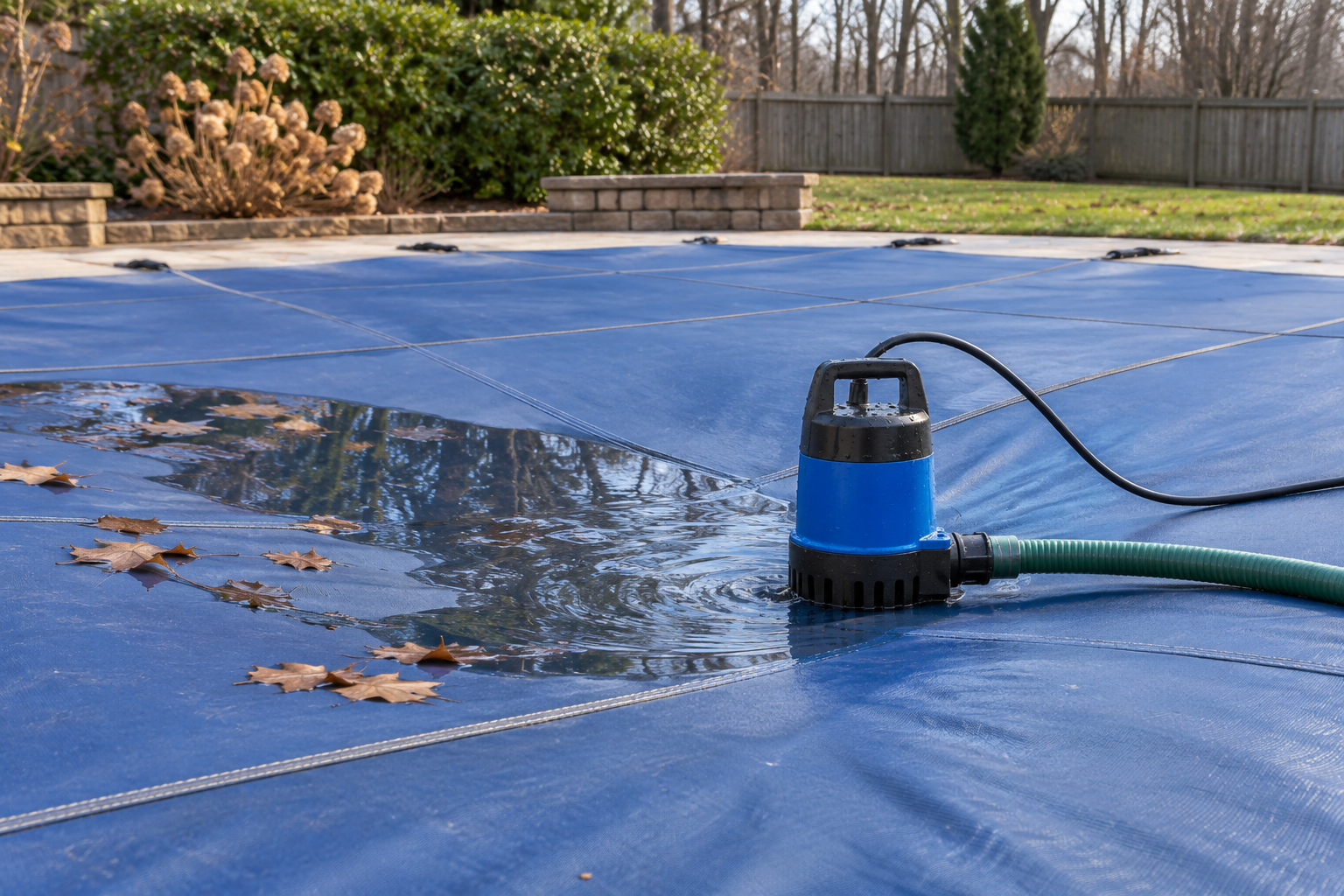
A pool cover pump exists to prevent exactly that. It is a small pump designed to sit on top of the cover and move accumulated water off to a safe drainage point, either when you switch it on or automatically whenever water collects. Shopping for the best pool cover pumps is less about raw power — this is one job where moderate, steady flow is ideal — and more about how the pump switches on and off, how it handles leaves and cold weather, how safely it sits on the cover, and where the water goes. This guide walks through those decisions so you can choose a pump that keeps your cover light, clean, and intact season after season.
What to Look for First
Flow Rate: Steady Removal, Not Maximum Power
Flow rate is usually expressed in gallons per hour, or GPH, and for cover duty the right number is moderate. The pump’s job is to keep up with rain and meltwater as they collect and to clear a typical accumulation in a reasonable time, not to empty a pool. Excessively strong flow is unnecessary here and can come with downsides: a powerful intake can pull at the cover material, stir debris, and, if the pump shifts, risk drawing pool water from beneath a cover that has a tear or a low edge.
Head Height: A Short but Real Lift
Head height — the vertical distance the pump must lift water — is smaller for cover pumps than for many other pump types, but it is not zero. The pump sits on the cover, often in a depression below the pool deck, and must lift water up over the edge of the pool and then along the hose to wherever it drains. Measure that rise honestly, including any slope the hose climbs across a deck or lawn, and choose a pump whose comfortable range covers it with room to spare. A pump working at its absolute limit will clear water slowly, run longer, and wear faster, while a modest margin makes the whole system feel effortless.
Power and Cord Considerations
Most pool cover pumps are electric, powered through a cord from a nearby outdoor outlet. Cord length therefore decides where the pump can sit and whether you need an outdoor-rated extension arrangement, which should be minimized, kept out of standing water, and arranged safely. A cord that is too short tempts bad setups; a pump positioned where its cord reaches easily is both safer and more likely to be used correctly. Battery and other alternative power options exist in the broader market for light duty, but for dependable, automatic, all-season cover protection, a properly installed corded pump on a protected outlet remains the practical standard for most owners. Whatever you consider, confirm the pump is designed and rated for outdoor, wet-location pool use — a general indoor utility pump is not automatically suitable for life on a pool cover.
Materials and Build Quality
A cover pump lives a hard outdoor life: ultraviolet exposure, rain, freezing nights, leaf debris, and long idle stretches in storage. Look for a housing made from durable, weather-resistant material that does not become brittle in cold, a stable, broad base that keeps the pump upright on a flexible cover surface, and a screened or guarded intake that resists clogging from leaves and grit. The discharge connection should accept a standard garden hose or supplied hose securely, since a hose that pops off mid-job quietly returns all the water to the cover. Check, too, how easily the intake screen comes off for cleaning, because on a cover, clogging is not a possibility but a schedule — the pump that is easy to clear is the pump that keeps working.
Types of Pool Cover Pumps Explained
Manual Pool Cover Pumps
A manual pump runs when you place it on the cover, plug it in, and switch it on, and it stops when you switch it off and remove it. Manual models are simple, there is less to go wrong, and you are present for the whole job, so you can reposition the pump as the puddle shrinks and stop it the moment the water is gone. For owners who are home through the closed season, check the pool regularly, and deal mainly with occasional rain rather than continuous accumulation, a manual pump can be entirely sufficient.
Automatic Pool Cover Pumps
An automatic pump stays on the cover, plugged in and ready, and switches itself on when water around it reaches a certain depth and off again when the level falls. That automation is the main reason many owners choose this type: protection continues during storms, vacations, and the long unattended stretches of winter, and the cover never gets the chance to accumulate a deep, heavy pool of water in the first place.
Submersible Utility Pumps Used on Covers — With Caution
General submersible utility pumps are sometimes pressed into cover duty, and a suitable one can move water effectively for an attended, one-off job. Caution is needed, though: a utility pump may be heavier than a cover wants to carry in one spot, may lack automatic shutoff, may not draw water down to a shallow level, and may not be rated or designed for continuous outdoor cover placement. If you use one, confirm it is appropriate for the task, place it carefully on a protective base, attend it while it runs, and never leave it running dry. A purpose-built cover pump avoids most of these compromises.
Key Features That Actually Matter
Automatic On and Off Switching
For automatic models, the details of the switching matter more than the headline claim. Note how deep water must get before the pump starts — a pump that waits for a deep puddle allows more weight on the cover than one that starts shallow — and how low it pumps before switching off. Reliable shutoff protects the motor from dry running, which is one of the most common ways small cover pumps are damaged. If the maker describes freeze protection or periodic self-check behavior, read exactly what it does rather than assuming, because implementations vary.
Freeze Protection and Cold-Weather Behavior
Standing water on a cover freezes, and a pump caught in ice faces risks: a blocked intake, a frozen discharge hose that makes the pump work against a dead end, and housing stress as ice expands. Some automatic pumps are designed with cold-weather features intended to reduce freeze damage risk, but no feature makes a pump invincible in ice. Good practice still applies: keep the discharge hose arranged so it drains rather than holding water, clear heavy snow and ice loads off the cover by safe means rather than expecting the pump to cope, and follow the manufacturer’s guidance for your climate — which in the coldest regions may mean removing and storing the pump during the deepest freeze and relying on it for the rainy shoulder seasons instead.
Base Design and Cover Safety
The pump sits directly on your cover for weeks or months, so its base is a cover-protection feature, not a detail. A wide, flat, smooth base spreads the pump’s weight, resists tipping when the cover shifts under water movement, and avoids pressure points or sharp edges that could wear or puncture cover material. Some designs include or suit a stabilizing platform for covers that sag into a deep bowl shape. A pump that tips over on a flexing cover stops pumping and may run dry, so stability genuinely affects performance, not just convenience.
Intake Screening and Debris Handling
Leaves are the cover pump’s daily enemy. A well-designed intake screen keeps leaves, twigs, and grit out of the impeller while still letting water in freely, and it should be easy to lift off and rinse without tools. Position also matters: a pump placed directly in the deepest leaf-collecting spot will clog fastest, and a quick clearing of loose debris around the pump whenever you check the pool noticeably extends the time between clogs.
Discharge Hose and Drainage Options
Confirm what hose the pump needs and what is supplied, how it attaches, and whether a standard garden hose fits if you need more length. Then plan where the water actually goes: a spot that drains away from the pool, the house foundation, and walkways where it could freeze into a hazard. Pumping cover water back into the pool defeats the purpose, and discharging it beside the pool edge often returns it as groundwater or splash. A short, smooth, gently downhill hose run keeps flow close to the pump’s rated performance.
How to Choose by Use Case
In-Ground Pools Closed for Winter
For an in-ground pool under a solid winter cover, automatic operation, freeze-aware design, and a long enough cord to reach a protected outlet are the priorities. Water accumulates over months, often far from where anyone checks daily, and the cost of a sagging, overloaded solid cover — or of dirty cover water dumping into the pool at opening — is high. Place the pump where water naturally collects, typically the cover’s low area, and confirm drainage reaches well away from the pool shell.
Above-Ground Pools
Above-ground covers are easy to reach and inspect, which makes both manual and automatic pumps workable. Automatic models still earn their keep during rainy stretches, but whichever you choose, pay attention to weight distribution and edge strain: on an above-ground cover, accumulated water pulls the cover inward and stresses the walls and top rails, so keeping accumulation shallow matters even more than total volume removed.
Safety Covers and Mesh Covers
Mesh safety covers let water pass through into the pool by design, so they generally do not need a cover pump the way solid covers do — standing water on mesh is usually a sign of debris clogging the mesh rather than a pumping problem. If your cover is mesh, confirm whether a pump is appropriate at all before buying one, and focus instead on keeping the mesh clear. Solid safety covers, by contrast, collect water like any solid cover and benefit from a pump in the same way.
Rainy Climates and Frequent Light Accumulation
Where the pattern is frequent rain rather than occasional storms, the winning feature is a pump that starts at a shallow depth and runs reliably in short, regular cycles, keeping the cover nearly dry as a matter of routine. Where accumulation is rare and you are always home, a simple manual pump used promptly after storms can achieve the same result with less equipment sitting outdoors all season.
Safety: Electricity and Water Together
A pool cover pump runs outdoors, in water, often in rain, so electrical safety is the first topic, not an afterthought. Plug the pump only into a ground-fault circuit interrupter (GFCI) protected outdoor outlet, and test that GFCI regularly. Never use a damaged cord, never let connections or plugs sit in the standing water on the cover or in puddles on the deck, and route the cord so it cannot be pinched, driven over, or pulled into the pool. If an extension cord is unavoidable, it must be outdoor-rated, heavy enough for the load, as short as possible, and arranged so its connections stay dry and elevated — and a better outlet location is always the preferable fix. Always disconnect power before placing, moving, cleaning, or removing the pump, and never reach for a pump in the water while it is connected to power.
Installation Tips That Prevent Problems
Installation on a cover is gentle work, but a few habits make it reliable. Lower the pump onto the cover’s natural low spot — where water already gathers — rather than forcing it into a position the cover does not support, and set it on its base or platform so it sits level and stable. If the cover has sagged into a deep pocket, easing the pump in gradually avoids sudden shifts of water weight.
Care and Maintenance
Cover pumps ask for little, but they do ask regularly. Lift the pump off the cover periodically — power disconnected first — and rinse the intake screen and base, clearing the leaves, seeds, and grit that inevitably collect. Check the impeller area as the manual directs if flow has fallen, and confirm the float or sensor moves and responds freely. Inspect the cord along its length for cuts, stiffness, or damage from sun and cold, and inspect the hose for kinks, cracks, and blockages, especially after any freeze.
Common Mistakes to Avoid
The most common mistake is waiting too long. Owners let a deep pool of water sit on the cover for weeks — adding enormous weight, stretching the cover, and breeding a stagnant layer that ruins pool water at opening — when a small pump running early and often would have kept the cover nearly dry. Buy and place the pump when the cover goes on, not after the first major storm.
Frequently Asked Questions
How often should a pool cover pump run?
It should run whenever water accumulates on the cover, which is why automatic models are so convenient: they cycle on as rain or meltwater collects and off when the cover is nearly dry. With a manual pump, run it promptly after rain and whenever you can see standing water, rather than letting a deep pool build up over weeks.
Can a pool cover pump damage my cover?
A purpose-built cover pump with a wide, smooth base is designed to sit safely on cover material. Damage usually comes from the opposite problem — the weight of unpumped water — or from improvised setups: a heavy utility pump concentrated on one spot, a tipped pump, or dragging a pump across the cover. Place and lift the pump gently, and use a stabilizing base if your cover sags deeply.
What happens if my cover pump freezes?
Ice can block the intake and discharge, strain the housing, and prevent the pump from running correctly until it thaws. Freeze-aware automatic designs reduce some risk, but the safer habits are universal: keep the hose self-draining, remove heavy snow and ice loads from the cover safely, and follow the manufacturer’s cold-climate guidance, which may include removing the pump during the coldest period.
Where should I drain the water from my pool cover?
Drain it to a spot that carries water away from the pool, the house foundation, and paths or decks where it could refreeze — a lawn area that slopes away or an appropriate drainage point, following any local rules. Do not drain it into the pool, which returns dirty water to your clean pool, and avoid dumping it right at the pool’s edge.
Do I need a cover pump with a mesh safety cover?
Usually not. Mesh covers are designed to let rain pass through into the pool while keeping debris out, so water should not pool on top unless the mesh is clogged with debris. Solid covers are the ones that collect standing water and need a pump. Confirm your cover type before buying, and clear clogged mesh rather than adding a pump it does not need.
Can I leave an automatic cover pump out all winter?
Many owners do, and automatic pumps are designed for extended outdoor placement on the cover, provided the outlet is GFCI protected, the cord is sound, the hose drains freely, and you check the pump periodically — after major storms, thaws, and leaf falls — to clear the intake and confirm it still cycles correctly. In the coldest climates, follow the manufacturer’s guidance on winter removal and storage.
Pool-Cover Pump to Compare
- Little Giant APCP-1700 (item 577301): An automatic 1/3-hp pool-cover pump with a 25-foot cord and garden-hose adapter. Its float starts at about 2 inches of water; the maker lists 1,700 gallons per hour at one foot of head. Amazon model search · Manufacturer specs.
Keep electrical connections dry and follow the pump and pool-cover manuals.
Conclusion
The best pool cover pumps are the ones that keep standing water from ever becoming a problem: moderate, steady flow delivered through your real hose run, switching that matches how often you can attend to the cover, a stable base that treats the cover gently, and cold-weather habits that respect what ice can do. Decide first between manual simplicity and automatic vigilance, place the pump where water truly collects, drain that water well away from the pool, and give the intake and cord a quick check whenever you pass the pool. Chosen and cared for that way, a small cover pump protects a much larger investment — your cover, your pool water, and an opening day that starts clean instead of with a swamp to clean up.