Where to buy
This guide to the best baby security camera for small homes under $300 — what it buys, what it costs to own, and which model fits which home — starts with the shortlist. Check the latest price, availability and delivery options on Amazon for each pick below. Prices and stock change often, so confirm the current listing before you buy — every pick in this guide was chosen to sit at or under the $300 ceiling in its standard single-camera form, and where a popular bundle runs over that ceiling we say so in the review rather than hide it. Orders are placed on Amazon. We may earn a commission from qualifying purchases.
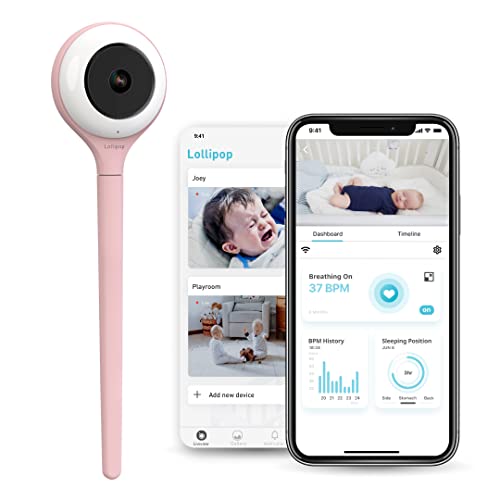
- Best for tight, awkward rooms: Lollipop Baby Monitor (Cotton Candy) — Check on Amazon
- Best compact wide-view camera: Owlet Cam 2 (Gen 2) — Check on Amazon
- Best all-in-one for small homes: eufy Baby Monitor E21 — 4K Camera with 5-Inch Display — Check on Amazon
- Best stand-based overhead view: CuboAi Smart Baby Monitor 3 — Floor Stand Set — Check on Amazon
- Best simple screen setup: Infant Optics DXR-8 PRO — Check on Amazon
- Best data, if wall space allows: Nanit Pro Smart Baby Monitor — Camera & Wall Mount — Check on Amazon
Read the full guide ↓
Disclosure: As an Amazon Associate, dailyhomedecorating.com earns from qualifying purchases. Links to Amazon on this page are affiliate links; they cost you nothing extra. Listing details such as price and availability change often, so check the current Amazon listing before you buy.
The search for the best baby security camera for small homes under $300 starts with a tape measure, not a spec sheet. In a compact house the nursery is close to everything: the crib shares a wall with your bed, the camera perch is a metre from the mattress instead of three, there is one sensible outlet and it is already spoken for, and any stand, screen or cable run competes with furniture you actually need. Flagship money is genuinely useful here — but only when it buys small footprints, wide lenses, flexible mounts and quiet operation, rather than bulk and features designed for a dedicated nursery wing.
Small homes also blur the line between nursery camera and whole-home camera. When the crib is in your bedroom or the living room becomes the playroom by day, one well-placed camera often covers both jobs across the day, and a model that moves easily — or watches a wide angle from a corner — outearns a fixed overhead system that can only ever see one crib. Sound behaves differently too: in a small home you will hear the baby directly most of the time, so the monitor’s real job is the picture, the check-in from the garden or the shop, and alerts you can trust not to cry wolf in a house where every noise is close.
That is why our small-homes ranking leads with the Lollipop — a camera whose bendy mount fits rooms with no shelf and no floor space to spare — followed by the Owlet’s compact wide-angle design and the eufy E21, the one-box answer when you want a screen without another shelf of equipment. The CuboAi’s stand brings overhead alerts if your floor plan can spare its footprint, the Infant Optics is the simple screen solution, and the Nanit remains the data champion for small-home parents who have the wall and want the numbers.
There is also good news buried in the small-home brief: proximity is a feature. Your router is never far from the crib, so Wi-Fi cameras perform at their best; your own ears are a genuine backup sensor, so alert false alarms cost you less; and a single camera honestly can cover a whole small home’s worth of childhood, from crib to play corner to homework desk. The picks below were chosen to exploit those advantages rather than fight your floor plan — small-home parents should feel like this tier was designed for them, because in several cases it effectively was.
In this guide
Quick Picks
In a hurry? This table matches each camera to the job it does best in this guide. Every model is reviewed in full below, including its subscription and storage arrangements.
| Best for | Pick | Why it stands out | Link |
|---|---|---|---|
| Best for tight, awkward rooms | Lollipop Baby Monitor (Cotton Candy) | 1080p Wi-Fi camera, flexible wrap-around mount, true crying detection (maker), two-way audio, infrared night vision, in-app plan extras | Check on Amazon |
| Best compact wide-view camera | Owlet Cam 2 (Gen 2) | 1080p Wi-Fi camera, 4x zoom, wide-angle view, two-way talk, sound/motion/cry notifications, temperature and humidity sensor | Check on Amazon |
| Best all-in-one for small homes | eufy Baby Monitor E21 — 4K Camera with 5-Inch Display | 4K UHD camera, 5-inch 720p parent display, hybrid Wi-Fi and no-Wi-Fi modes, pan-tilt, 8x zoom, local recording, built-in camera battery | Check on Amazon |
| Best stand-based overhead view | CuboAi Smart Baby Monitor 3 — Floor Stand Set | 2.5K QHD Wi-Fi camera, floor stand included, covered-face and rollover alerts (maker AI), cry detection, humidity sensor | Check on Amazon |
| Best simple screen setup | Infant Optics DXR-8 PRO | 720p camera with dedicated 5-inch display, no Wi-Fi, Active Noise Reduction, pan-tilt-zoom, interchangeable lenses | Check on Amazon |
| Best data, if wall space allows | Nanit Pro Smart Baby Monitor — Camera & Wall Mount | 1080p Wi-Fi camera, overhead wall mount, app viewing, two-way audio, temperature and humidity sensing | Check on Amazon |
How we chose
Our small-homes criteria began with physical fit: camera footprint, mount footprint, minimum useful distance to the crib, and how much of a small room the lens can actually see. Wide-angle and close-range-friendly designs scored up; anything needing a large clear floor area or a long throw was marked down unless its other strengths compensated. We also favoured cameras that can serve a second room or a second job, because in a small home a single-purpose device has to justify its shelf twice over.
Noise and network realities came next: night vision that behaves at close range instead of blowing out the picture, audio that does not amplify a whole small house into the parent unit, and — because compact homes often mean one hard-working router — at least some picks that keep working on a dedicated screen if the Wi-Fi is busy. The standing rules of this series applied unchanged: subscription and storage arrangements stated plainly, maker-described detection features labelled as claims rather than guarantees, and every camera installable with its cord fully out of the crib and out of reach — a rule that matters most where everything is within reach.
A note on language, because it matters in this category: where a maker describes a detection or monitoring capability — crying detection, covered-face alerts, breathing-motion monitoring — we describe it as a maker claim. None of the cameras in this guide is a medical device, none of them can guarantee an outcome, and none replaces safe-sleep practice or a parent checking in person. We also verified every model, specification and ASIN in this guide against the maker’s materials or the live retail listing before including it; the companion sources file for this article records what we checked for each pick.
Lollipop Baby Monitor (Cotton Candy)
The Lollipop is the design object of the group: a 1080p Wi-Fi camera on a flexible, bendable stem that wraps around a crib rail, a shelf edge or a floor lamp, or stands on a surface with its tail as a tripod. That mount is not a gimmick — it solves the most common nursery problem, which is that the perfect camera position is rarely where a shelf happens to be. The maker’s headline software feature is true crying detection, designed to distinguish an actual cry from a barking dog or a door slam before it pings your phone, alongside two-way audio, infrared night vision, lullabies and white-noise playback, and event clips in the app. There is no parent unit; like the Nanit and Owlet, your phone is the screen.
Two honesty notes belong with the Lollipop. First, the app sells an optional paid plan that unlocks extras such as the maker’s breathing-monitoring and sleep-tracking features (maker-described, camera-based estimates — not medical measurements, and no substitute for safe sleep or in-person checks); the camera’s core live view and crying detection are the free foundation, but confirm the current plan split on the maker’s page before purchase, because the line between free and paid has moved before. Second, the wrap mount tempts people to attach the camera directly to the crib rail with its cable nearby — resist sloppy versions of this. The camera body may grip the rail, but the power cable must still be routed away from the crib interior and out of reach, and once your baby can stand and grab, a rail-mounted camera is within range of determined hands; move it further back and re-check the view. Cloud dependence applies here too: no local card recording, so the app and your Wi-Fi are the whole system.
Where the Lollipop shines is flexibility across the first two years: crib-side now, playroom shelf later, wrapped around a travel crib at a relative’s house in between. Its picture and night vision are solid rather than class-leading, and data people will find its sleep features thinner than Nanit’s. But as the one camera in this guide that can perch almost anywhere without a stand, a shelf or a drill, it solves real rooms that defeat fixed-mount rivals — which is why it closes out this pool.
In a small home the mount is the product, and nothing here mounts in less space than the Lollipop: a wrap around a rail or lamp uses zero floor and zero shelf. It is the only pick that fits literally every room layout we could sketch.
What we like:
- Flexible stem mounts almost anywhere — no shelf, stand or drilling needed
- True crying detection aims to cut false alerts (maker feature)
- Doubles as a travel and playroom camera as your child grows
- Lullabies and white noise built in
Honest limitation: Best extras sit in a paid in-app plan, and there is no local recording or parent screen.
Choose it if: Choose the Lollipop if your nursery has no good shelf or wall for a camera and you need the mount itself to be the solution.
Skip it if: Skip it if you want deep sleep analytics or an offline fallback screen.
Owlet Cam 2 (Gen 2)
The Owlet Cam 2 is the compact, good-looking Wi-Fi camera in this tier — a small 1080p unit with a wide-angle lens, 4x digital zoom, night vision, two-way talk and sound, motion and cry notifications through the Owlet app, with temperature and humidity sensing built in. It is the camera-only member of a family whose famous sibling is a wearable sock (sold separately and not part of this pick); judged purely as a camera, its appeal is a clean picture, a tidy magnetic-base design that sits neatly on a shelf or wall mount, and an app experience built for exhausted one-handed use at 3 a.m. Video is encrypted in transit per the maker, and the app is where everything lives: there is no parent screen and no local memory-card slot, so the Cam 2 is a cloud-app monitor through and through.
Cost honesty for the Owlet: the camera itself has historically worked without a mandatory subscription for live viewing and basic alerts, and Owlet has been adding optional in-app extras over time — so check the current app plan page before you buy and confirm which features are free today, because packaging in this category shifts. Also be clear-eyed about what a camera can and cannot tell you: cry and motion notifications are convenience alerts, and any breathing or wellness language around the wider Owlet ecosystem refers to separate wearable products with their own instructions and limitations — the Cam 2 on its own is a video monitor, not a health device, and nothing it shows replaces safe-sleep practice or your own checks. The wide-angle lens is a genuine practical plus in small nurseries, where a camera often sits closer to the crib than the textbooks assume and narrower lenses crop the mattress edges.
Living with the Cam 2 is easy in the ways that matter nightly: background audio options, quick talk-back, and a picture that holds up well in a dark room. Its weaknesses are the category’s usual ones — total dependence on your Wi-Fi and phone, no offline fallback screen for a sitter who does not have the app, and no sleep analytics depth to rival the Nanit if data is your thing. Mount it or place it with the cable routed down and away from the crib, never draped where a standing child can reach it. As a first smart camera for parents who want the nursery on their phones and nothing more complicated, it earns its place here on simplicity.
The Owlet’s wide lens was made for the crib-a-metre-away problem: it frames the whole mattress from distances that crop other cameras’ pictures, and the unit itself is small enough to disappear on a crowded shelf or bookcase.
What we like:
- Clean 1080p picture with a genuinely useful wide-angle lens
- Temperature and humidity sensing plus cry notifications in one tidy unit
- Small, neat design that disappears on a shelf
- Simple app that is easy to operate one-handed overnight
Honest limitation: App-only viewing: no parent screen, no local recording, and feature packaging can change with app updates.
Choose it if: Choose the Cam 2 if you want a straightforward phone-based monitor from an established nursery brand and do not need sleep analytics.
Skip it if: Skip it if you want recordings stored at home or a screen a babysitter can use without your phone.
eufy Baby Monitor E21 — 4K Camera with 5-Inch Display
The eufy E21 is the pick for parents who want flagship picture quality without handing the nursery to a subscription. The camera shoots 4K UHD and pans and tilts under remote control with up to 8x zoom, while the box includes a proper 5-inch parent display — so the monitor keeps working on its own screen even if you never connect it to Wi-Fi at all. That hybrid design is the E21’s signature: run it as a closed local system on the included display, or link it to the eufy app for phone viewing and 24/7 recording in the app when you want remote access. Active noise reduction keeps nursery sound from turning into a hiss of white noise on the parent unit, and the camera itself carries a built-in battery, so it can ride out a short outage or work for naps in a room with an awkward outlet.
On the money question, the E21 is refreshingly plain: no subscription is required for its core monitoring, and recording is handled locally rather than sold back to you as a cloud plan. That changes the real cost of ownership across two or three years of use more than any single feature on this page. The trade-offs are equally plain. The parent display is 720p, so the 4K detail is best appreciated in the app feed and in zoomed views rather than on the handheld screen, and families who want sleep analytics, cry diaries or milestone tracking will find none of that here — eufy sells you an excellent camera and screen, not a data service. App features also depend on eufy’s ecosystem and account, so read the current privacy and app terms the way you would for any connected camera, and keep firmware updated.
In daily use the E21 behaves like the grown-up security-camera brand it comes from: motion and sound alerts, two-way talk, temperature awareness and straightforward pan-tilt controls. The camera needs a stable perch or mount with its power cable dressed safely away from the crib — the battery is a bridge, not a lifestyle, and a camera within grabbing range of a standing baby will eventually be grabbed. For twins or a nursery-plus-playroom setup, confirm how many cameras the display and app support before building a multi-room plan around it. If your shortlist question is “which of these will still be fully mine in three years with no monthly bill,” the E21 is the answer in this tier.
The E21 is the small home’s one-box flagship: camera, screen and local recording with no extra hub on the counter, and a battery in the camera that forgives the one-outlet problem during naps and room reshuffles.
What we like:
- Best-in-guide camera resolution with pan, tilt and 8x zoom
- Included 5-inch display works with Wi-Fi switched off entirely
- No subscription needed for core monitoring or local recording
- Built-in camera battery bridges outages and awkward outlets
Honest limitation: No sleep analytics or smart diary features, and the parent screen is 720p despite the 4K sensor.
Choose it if: Choose the E21 if you want premium hardware, a real parent screen and zero ongoing fees, and you do not care about sleep data.
Skip it if: Skip it if nightly sleep reports are the whole point of spending at this tier.
CuboAi Smart Baby Monitor 3 — Floor Stand Set
The CuboAi Smart Baby Monitor 3 is the challenger built around one idea: proactive alerts. Its 2.5K QHD camera watches the crib and, per the maker, uses on-device AI to flag a covered face or a rollover onto the stomach, to distinguish a true cry from background noise, and to warn you if the baby enters a danger zone you draw in the app once they start standing and roaming. This floor-stand set puts the camera on a tall stand behind the crib for the overhead angle those alerts are designed around, with no drilling. Two-way audio, lullabies, night vision and a room humidity sensor round out the nursery basics, and the bird-shaped camera is deliberately the least clinical-looking device in this guide.
The honest framing for those headline alerts: they are manufacturer-described detection features, not medical monitoring. A covered-face alert is a prompt to go and look — it is not a guarantee of detection in every bedding arrangement, lighting condition or network state, and CuboAi does not sell this as a medical device. Treat the AI as an extra set of eyes that sometimes blinks, keep the crib bare per safe-sleep guidance, and never let an app notification substitute for your own checks. Where CuboAi scores well on ownership cost is that its core alerts and a rolling window of playback have historically been usable without a mandatory paid tier, with an optional premium plan adding longer history and extras; check the current plan page before buying, because app feature packaging in this category changes often. Video runs through CuboAi’s cloud app — there is no local memory-card recording and no dedicated parent unit — so, like the Nanit, it lives or dies by your Wi-Fi and your feelings about cloud accounts for nursery footage.
Setup is genuinely renter- and grandparent-friendly: assemble the stand, place it so its base cannot be pulled into the crib, route the cable down the stand and away from small hands, and keep the whole assembly far enough back that a standing toddler cannot grab the camera or the cord. The floor stand also makes the CuboAi easy to move between rooms or take to a caregiver’s house, though the overhead alerts are calibrated for the stand’s crib view and will not perform the same way aimed across a playroom. Picture quality from the QHD sensor is a real step up from 1080p when you pinch-zoom on a phone screen, which is how most parents actually check whether eyes are open or closed.
The CuboAi is the footprint question in this list: its stand needs a real patch of floor behind the crib. If your small home can spare it, you get the full overhead alert system; if not, no feature list makes a stand fit where it does not.
What we like:
- Covered-face and rollover alerts are the headline act (maker AI claims)
- Floor stand included — overhead view with no drilling
- 2.5K QHD picture is visibly sharper when zooming on a phone
- Core alerts usable without a mandatory subscription (verify current plan terms)
Honest limitation: No local storage and no parent screen: if your Wi-Fi or CuboAi’s cloud stumbles, so does your monitor.
Choose it if: Choose the CuboAi 3 if proactive crib-safety alerts matter more to you than sleep diaries, and you want the overhead view without touching a wall.
Skip it if: Skip it if you want recordings kept inside your home, or a screen that works when the internet does not.
Infant Optics DXR-8 PRO
The DXR-8 PRO is the veteran of this roundup and the value pick at this tier: a deliberately offline monitor in a lineup of cloud cameras. There is no Wi-Fi, no app, no account and no subscription — the camera talks directly to its dedicated 5-inch parent display over a closed wireless link, and that is the entire system. Resolution is 720p, which sounds modest next to 4K badges, but the PRO’s party trick is Active Noise Reduction, which filters the hiss, hum and static that make most audio monitors fatiguing to listen to all night. Interchangeable lenses (a standard lens in the box, with optical zoom and wide-angle lenses available from the maker) let you tune the view to a small nursery or a wide toddler room, and the camera pans, tilts and zooms from the parent unit.
Why does a 720p offline monitor belong in an under-$300 guide at all? Because for a large group of parents it removes every recurring complaint about the smart cameras: nothing to hack through the home network, nothing that stops working when the internet drops, no plan quietly renewing, no firmware update changing the app the week the baby arrives, and a screen that is always a screen — never a phone you also need for everything else. Grandparents and babysitters can use it with zero instruction, which is a feature no app has ever matched. The honest limitations are the mirror image of those strengths: you cannot check in from work or the driveway, there are no cry-detection smarts, no sleep data, no recordings to review, and the picture will not reward pinch-zooming the way the eufy or CuboAi will. Range is also a physical fact — thick walls and distance between nursery and parent unit matter in a way they do not for Wi-Fi systems.
Setup is the simplest here: place the camera where it sees the crib, keep it and its cord well out of reach (the same cord discipline applies — out of the crib, secured, at least a full arm’s length plus growth margin from small hands), pair nothing, create no account, and you are monitoring in minutes. Battery life on the parent unit, the availability of a second camera for siblings, and the lens options are the three things to verify on the listing for your household’s layout. As the second monitor in a house that already owns a smart camera — the travel unit, the grandparents’ house unit, the just-works backup — it has no real rival in this guide.
A dedicated screen suits small homes better than expected: it lives on the kitchen counter, moves room to room, and never asks the household’s one good tablet to be the monitor. Its interchangeable lenses help tune one camera to a tight nursery view.
What we like:
- Completely offline: no Wi-Fi, no app, no account, no subscription, ever
- Active Noise Reduction makes overnight audio far less fatiguing
- Instant, babysitter-proof setup on a dedicated screen
- Interchangeable lenses adapt it from crib close-up to whole-room view
Honest limitation: 720p picture, no remote viewing, no recordings and no smart alerts of any kind.
Choose it if: Choose the DXR-8 PRO if privacy, simplicity and zero running costs outrank apps and analytics in your house.
Skip it if: Skip it if you need to see the nursery from outside the home or want any form of sleep tracking.
Nanit Pro Smart Baby Monitor — Camera & Wall Mount
The Nanit Pro is the camera this price tier is really about. It mounts on the wall directly above the crib and looks straight down, so instead of the angled, half-obscured view you get from a camera parked on a dresser, you see the entire mattress in one frame. The feed is 1080p over Wi-Fi to the Nanit app, with two-way audio, background audio so you can listen while your phone does other things, a built-in nightlight and white-noise sounds, plus temperature and humidity readouts for the nursery. There is no dedicated parent screen in the box; your phone or tablet is the monitor, which is either the Nanit’s biggest convenience or its biggest drawback depending on how you feel about handing your phone a full-time job overnight.
What separates the Nanit from cheaper Wi-Fi cameras is the layer of software sold as Nanit Insights, and this is where you must read the fine print before you buy. Live video, sound and motion alerts, two-way talk and the maker’s breathing-motion monitoring (which works with Nanit’s Breathing Wear garments, sold separately) run without a paid plan. But sleep analytics, saved video history and clips, milestone tracking and smart alerts such as cry detection sit behind the Insights subscription, which is billed annually; a short trial of the entry plan is included with a new camera and then renews automatically unless you cancel. In plain terms: the hardware price buys an excellent camera, and the ongoing plan buys the diary. Budget for both, or be honest with yourself that you will use it as a live monitor only. Nanit also states plainly that the camera is not a medical device; its breathing-motion feature is a maker-described convenience for awareness, not a health or life-safety guarantee, and it never replaces safe-sleep practices or checking on your baby in person.
Practical notes matter with an overhead mount. The wall mount needs a wall you are allowed to drill into and an outlet within cord reach, and the cord must be routed completely out of the crib and out of reach, secured flat to the wall — a dangling cable near a crib is a genuine strangulation hazard, and Nanit’s own mounting guidance treats cord management as part of the install, not an afterthought. Sleep features also require that overhead view, so a Nanit perched on a shelf at an angle will not deliver the analytics you paid for. Video is cloud-assisted through the app rather than stored on a local card, so your home Wi-Fi quality and your comfort with a cloud account are part of the purchase.
The Nanit asks a small home for its scarcest asset — a clear wall above the crib and permission to use it — and repays it with the deepest sleep data here. In a one-room nursery corner, be honest about whether the overhead view is achievable before paying for it.
What we like:
- True overhead view of the whole crib from the included wall mount
- Deepest sleep-tracking ecosystem in this roundup when paired with an Insights plan
- Background audio, nightlight and white noise built in
- Temperature and humidity sensing in the app
Honest limitation: The features most people buy it for — sleep analytics and video history — require the paid Insights plan after the trial; live viewing alone does not.
Choose it if: Choose the Nanit if you want the data: nightly sleep summaries, a growth-and-moments record, and the clearest overhead picture of the crib, and you accept an annual plan as part of the real cost.
Skip it if: Skip it if you refuse subscriptions on principle, if you cannot drill into the nursery wall, or if you want a screen that is not your phone.
Side-by-side comparison
The table below compresses the differences that actually decide this purchase: how you watch, how recordings are kept, and whether a plan is part of the deal. Read it alongside the reviews — the right choice is the row whose compromises you mind least.
| Pick | How you watch | Recording / storage | Plan needed? |
|---|---|---|---|
| Lollipop Baby Monitor (Cotton Candy) | Phone app (Wi-Fi) | App event clips | No for core use; extras are paid |
| Owlet Cam 2 (Gen 2) | Phone app (Wi-Fi) | App-based, no local card | No for core use (check app extras) |
| eufy Baby Monitor E21 — 4K Camera with 5-Inch Display | Included 5-inch screen + app | Local recording | No |
| CuboAi Smart Baby Monitor 3 — Floor Stand Set | Phone app (Wi-Fi) | Cloud app playback | No for core alerts (optional premium) |
| Infant Optics DXR-8 PRO | Dedicated 5-inch screen only | None — live only | No, never |
| Nanit Pro Smart Baby Monitor — Camera & Wall Mount | Phone app (Wi-Fi) | Cloud history with Insights plan | Yes, for sleep analytics & history |
How to choose the best baby security camera for small homes under $300
Measure the room before you read another review. Note the crib’s position, the distance to the nearest shelf, wall and outlet, and the floor patch behind the crib. Those four numbers eliminate half of every shortlist: stands need the floor patch, wall mounts need the wall, shelf cameras need the distance, and everything needs a cable path that never crosses the crib. In a small home, the winning camera is usually the one whose mount matches the room you measured, not the one with the longest feature list.
Then optimise for double duty. A camera that can watch the play area by day (pan-tilt, wide lens, easy repositioning) effectively costs half as much in a small home, because it replaces a second device you have no room to store. Prefer models whose screen or app you will still use when the crib becomes a toddler bed, and be sceptical of accessories — extra stands, spare mounts, second screens — that a compact home has nowhere to put.
Finally, manage sound and light like a small-home native: choose night vision that does not flood a shared bedroom, keep status lights in mind if the camera shares your sleeping room, and route every cable flat and out of reach — in tight rooms the temptation to drape a cord ‘just for tonight’ is strongest and the reach of a standing toddler is shortest. Test the full setup for a week of real nights before the return window closes.
Living with it: the first month
Small-home camera life settles into a pattern by the end of the first month. The camera migrates: crib-side for naps, re-aimed or carried to the living room for play, back again for the night — which is why the flexible and pan-tilt picks here earn their ranking in practice, not just on paper. You will also learn your home’s two or three magic perches, the spots that see everything and need no furniture moved, and you will guard them. Mark them mentally now; every future device in this house will want the same spots.
The other first-month lesson is cable choreography. In a compact home every cord run is short, visible and within a determined toddler’s expanding range, so the tidy install — flat against the wall, secured, exiting behind furniture — is not fussiness, it is the only version that survives contact with a one-year-old. Re-run the reach test monthly during the pulling-up stage: kneel at crib height, look at what a standing child can touch, and move anything that fails the test that day, not next week.
Common mistakes to avoid
- Buying a stand for a room with no floor to spare. Overhead stands are excellent — in rooms that fit them. Measure the patch behind the crib first; a crowded stand gets bumped, wobbles, and ends up in reach.
- Choosing a narrow lens for a close crib. At a metre’s distance, standard lenses crop the mattress. Small rooms need wide views or adjustable lenses, or you will spend months re-aiming.
- Forgetting the camera shares your room too. Status lights, alert sounds and screen glow matter when the nursery is also your bedroom. Check night behaviour before the first shared night, not during it.
- Draping the cord ‘temporarily’. Small rooms make lazy routing tempting and toddler reach short. Every cable goes out of the crib and out of reach, secured, from the first night — no exceptions for tight spaces.
- Buying single-purpose in a multi-purpose home. If the camera cannot graduate to playroom or toddler duty, its cost per use in a small home is steep. Favour flexible mounts and pan-tilt designs.
Final recommendation
For most small homes, start with the Lollipop if your room defeats conventional mounts, or the eufy E21 if you want the complete one-box system with a screen. The Owlet is the compact middle path, and the CuboAi and Nanit are worth their footprint and wall demands only when you know you will use the alerts and sleep data they exist to provide. The Infant Optics remains the quiet, simple answer when a screen and zero fuss beat every smart feature.
Measure first, mount honestly, route the cord like you mean it, and buy the camera that fits the home you have. In a small house, fit is not a compromise category — it is the whole game, and every pick in this guide wins it in a different room shape.
Our shortlist, in order: Lollipop Baby Monitor (Cotton Candy); Owlet Cam 2 (Gen 2); eufy Baby Monitor E21 — 4K Camera with 5-Inch Display. Check the current listing for each before you decide, and re-read the subscription and storage notes in their reviews above — at this tier, those two lines matter as much as the camera.
Frequently asked questions
What type of camera suits a very small nursery?
A compact camera with a wide lens and a flexible or minimal mount — the Lollipop and Owlet in this guide are built for exactly that. Avoid anything whose stand or viewing distance assumes a large room, and confirm the night-vision picture at your actual crib distance before the return window closes.
Can one camera cover the nursery and the play area in a small home?
Often, yes: pan-tilt models like the eufy E21 can sweep both zones from one perch, and easily moved cameras like the Lollipop can change posts in seconds. In compact layouts that double duty is one of the best reasons to spend at this tier.
Is an overhead camera worth it in a small home?
Only if the mount genuinely fits — a clear wall for the Nanit, or spare floor behind the crib for the CuboAi’s stand — and you will use the sleep or alert features it enables. An overhead camera forced into an angled position delivers neither, and the money is better spent on a flexible wide-view model.
How do I handle the cord when everything is close together?
Route it down the wall or mount, flat and secured, exiting away from the crib side, with zero slack near the mattress. Then re-check the entire run when your baby starts standing — in a small room, ‘out of reach’ shrinks fast.
Will the camera’s lights and sounds disturb a shared bedroom?
They can. Check for status-light controls and screen brightness in the model’s settings, position the parent screen face-down or dimmed if it shares your room, and prefer cameras whose night vision does not click or glow noticeably — details worth verifying during your first-week test.
Do I still need a monitor if I can hear the baby through the wall?
Hearing tells you the baby is awake; the camera tells you why, and whether you need to go in — the difference between a lost dummy and a leg through the crib bars. In small homes the picture, plus remote check-ins when you are out, is the real product; the audio is the backup.
Related guides
Still deciding on budget or fit? These companion guides in the same series cover the neighbouring tiers and lenses:


