Disclosure: As an Amazon Associate, reviewstook.com earns from qualifying purchases. Links to Amazon on this page are affiliate links; they cost you nothing extra. Listing details such as price and availability change often, so check the current Amazon listing before you buy.
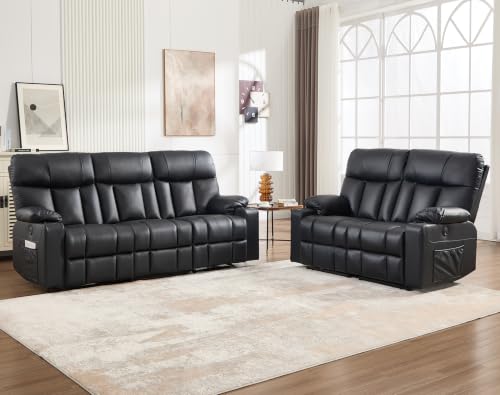
The best home theatre sofas have three things in common: seats that recline, a place for a drink within reach, and a layout that lets everyone see the screen. Our top overall pick is the Homall Reclining Sofa Home Theater Seating, a manual three-seat design with built-in cup holders, and the Signature Design by Ashley Party Time Power Reclining Sofa is the one to look at if you prefer a powered, living-room style piece.
This guide is for people turning a spare room, basement corner or main lounge into a proper movie spot. We compare five sofas that suit that job, explain who each one is for, give three strengths and one honest limitation per pick, and finish with a checklist for judging any theatre-style sofa listing. We have not handled these products; the information below comes from maker listings and published specifications.
In this guide
Quick Picks for Movie Nights
| Buyer | Pick | Why it stands out | Where to look |
|---|---|---|---|
| Best overall | Homall Reclining Sofa Home Theater Seating | Manual recliners with cup holders in a sofa-style frame | Check on Amazon |
| Best for a dedicated cinema room | Esright Home Theater Seating Recliner Row | Row layout designed for a media room | Check on Amazon |
| Best for a plain living room | Signature Design by Ashley Party Time Power Reclining Sofa | Powered seats in a traditional living room shape | Check on Amazon |
| Best for a small media room | HOMCOM Reclining Sofa | Compact reclining set with a straightforward design | Check on Amazon |
| Best for shared sofa space | Bonzy Home Theater Seating Recliner | Individual reclining seats with storage and cup holders | Check on Amazon |
What Makes a Sofa Right for a Home Theatre
A theatre sofa is a different animal from an everyday sofa. It needs to recline smoothly, hold a drink steady, sit at a height that suits a screen across the room, and still look reasonable when the lights come up. Many models add a centre console, USB charging or storage, though those extras vary widely and must be checked on each listing.
We chose products that clearly advertise reclining seats and sit in the home cinema category, favouring brands with a stable, easily found product page. We did not use review counts or numeric scores, and we left out figures that shift all the time. Where a detail is not clearly stated by the maker, we say to check the listing.
The Best Home Theatre Sofas, One by One
1. Homall Reclining Sofa Home Theater Seating Manual Recliner
Homall is a brand known for its straightforward recliners, and this model brings the same thinking to a three-seat sofa-style frame. It aims at buyers who want a shared recliner without paying for motors or a custom install.
Who it suits: a family or group of friends who want room for three in a basement, den or spare room.
- Manual reclining seats mean no wall plug is needed for the motion.
- Cup holders are built into the design, which keeps drinks off the floor.
- A sofa-style layout ties the seats together so the room reads as one furnishing.
Because the seats are tied together as one piece, moving the sofa later is a two-person job, which is worth remembering if you rearrange rooms often. One honest limitation: manual levers and handles take a little physical effort, so it may not suit someone who wants one-button operation.
Choose it if you want a simple, shareable theatre sofa. Skip it if you prefer electric controls.
2. Esright Home Theater Seating Manual Recliner Row of 3
Esright sells seating aimed at dedicated cinema spaces, and its row of three recliners is the closest thing on this list to a small movie theatre. Each seat is a separate recliner, so one person can stretch out without disturbing the neighbours.
Who it suits: someone building a proper media room where the seating will face a screen and rarely move.
- Separate seats let each viewer recline independently.
- Cup holders and storage are part of the cinema-style design.
- A row layout is easy to place against a back wall facing a television or projector.
It also gives each person a defined space, which helps when viewers have different ideas about how far back to lean. One honest limitation: the layout looks very much like theatre seating, which suits a media room better than a mixed-use lounge.
Choose it if the room is dedicated to watching films. Skip it if the space doubles as a guest living room.
3. Signature Design by Ashley Party Time Power Reclining Sofa
Ashley is one of the best-known furniture makers in the United States, and the Party Time line is built for entertainment rooms. It looks like a regular living-room sofa until you press the button and the seats move.
Who it suits: a household that wants a good-looking sofa for everyday sitting that also performs as a movie couch.
- Powered reclining worked by buttons rather than levers.
- Cup holders in the central area, a feature that gives the line its name.
- A familiar living-room shape that blends into most decorating schemes.
The sofa also keeps its place in the room as a normal piece of furniture once the film is over. One honest limitation: powered seats need a nearby outlet and room behind the sofa for the reclining motion, which narrows where it can go.
Choose it if you want one sofa for both daily life and film nights. Skip it if you have no outlet near the planned spot.
4. HOMCOM Reclining Sofa Home Theater Seating
HOMCOM sells practical furniture with a focus on straightforward designs, and its theatre seating follows that idea. It suits people who want a simple recliner set without extra complexity.
Who it suits: a smaller media room or den where space is limited and the patience for fuss is low.
- A direct, uncomplicated design that is easy to understand from the listing.
- Reclining seats that give a movie-night feel.
- A modest footprint compared with large sectional-style options.
A lighter feature list can also mean fewer parts that need attention over the years. One honest limitation: simpler seating may skip extras such as USB ports or lighting that other cinema sets include, so check what is listed.
Choose it if you want an uncluttered set for a smaller room. Skip it if you want every extra feature built in.

5. Bonzy Home Theater Seating Recliner Sofa
Bonzy designs cinema seating with generous extras in mind, such as storage, cup holders and a centre console. It is the pick for a household that likes to have snacks, remotes and drinks within reach.
Who it suits: a family that wants a single lounge area with all the movie-night kit close to hand.
- Cup holders and storage keep remotes and snacks tidy.
- Individual reclining seats make it easy for each person to find a position.
- The design suits a media room with a television or projector on one wall.
Seats that work independently also suit households where one person leans far back while another sits upright. One honest limitation: with many parts and features, the assembly steps may take longer than a basic sofa, so allow time and read the instructions first.
Choose it if you like an all-in-one setup. Skip it if you prefer a minimalist lounge.
Comparison of All Five
| Model | Layout | Operation | Key feature | Best use | Link |
|---|---|---|---|---|---|
| Homall Reclining Sofa | Three-seat sofa | Manual | Built-in cup holders | Family den | Check on Amazon |
| Esright Row of 3 | Row of recliners | Manual | Cinema-style layout | Dedicated media room | Check on Amazon |
| Ashley Party Time | Three-seat sofa | Power | Cup holders, button control | Living room | Check on Amazon |
| HOMCOM | Compact set | Manual | Simple design | Small media room | Check on Amazon |
| Bonzy | Row with console | Manual | Storage and cup holders | Snack-friendly cinema nook | Check on Amazon |
Sofa Layout or Separate Seats: Which Suits You
A sofa-style theatre piece reads as furniture and is easier to blend into a living room. Separate recliners in a row feel more like a cinema, and each person controls their own seat. If you often watch in pairs, a sofa-style design keeps people close. If you often watch with a group that likes their own space, separate seats are the better fit.
Think about how the room is used the rest of the week. A dedicated media room can carry theatre seating without fuss, while a mixed-use lounge usually looks better with a piece that could pass for an ordinary sofa when the screen is off.
Manual or Powered Reclining
The choice also shapes how the room feels in daily use. Manual seats make a soft mechanical sound and rely on your own leg movement or a handle. Powered seats whirr gently and let you stop at any angle, which some viewers prefer for reading as well as watching.
Manual recliners use a lever, handle or push-back action; they are simple, quiet and do not need a plug. Powered models use a motor and buttons, so you can recline in small steps and from a seated position, but they need an outlet and a spot near it. Neither is better; each fits a different room and temperament.
If the sofa will sit in the middle of a room, think about the power cable route and avoid a long extension lead stretched across the floor. If it will sit against a wall near an outlet, power is easier to live with.
Seating Distance and Screen Size
Eye level matters too. Seat backs that sit very high or very low in relation to the screen force you to tilt your head, so check that the television or projector screen is centred roughly at the height of your eyes when you sit upright.
Seat distance from the screen shapes the experience more than any cup holder. A large screen across a short room looks overwhelming, while a small one at the end of a long room feels lost. A rough first idea is to sit at a distance of about one and a half to two and a half times the screen diagonal, though personal taste varies, so use it as a guide rather than a rule.
Plan where the reclined seat will end up, because the footrest extends towards the screen. Leave enough floor to walk in front of the seats without stepping over a raised leg rest.
Room Size, Clearance and Layout
Rooms in basements and spare bedrooms often have low ceilings, a window on one wall and a door that opens inward. Each of those details can interfere with a long sofa or a row of seats, so draw a quick sketch with the door swing and window sill marked before you commit to a layout.
Recliners need space to move. Check the maker’s listed wall clearance, the length of the footrest when extended, and the width of the whole row. Lay out painter’s tape on the floor to represent the footprint with the seats upright and again with them fully reclined.
If the room is small, a compact set or a two-seat loveseat style may fit better than a long row. Leave space beside the end seats for a small table or lamp.
Fabric, Faux Leather or Leather-Look Surfaces
Think about the people in the room as well as the surface. A household with young children may value a cover that wipes clean in seconds, while adults who watch long films may prefer a softer feel against the skin. Colour matters too: mid-grey and brown hide small marks better than pale shades.
Theatre sofas commonly use fabric, a polyurethane leather-look cover, or a mix. Fabric feels warmer and softer, while leather-look covers wipe clean quickly after spilled drinks and popcorn butter. Read the material description carefully, since terms like “leather air” or “bonded” describe particular constructions.
If the room gets warm during long film sessions, a breathable fabric might be more comfortable than a smooth surface. If children are involved, a wipe-clean cover may matter more.
Extras Worth Having, and Extras to Ignore
Extras can add enjoyment, but each one is also another part that can be fiddly. Decide which two or three really matter to you, then ignore the rest so the choice stays simple.
- Cup holders: almost essential for a theatre sofa.
- Storage in an arm or console: handy for remotes and chargers.
- USB ports: useful if an outlet is close to the seats; check what the listing says.
- Lighting under the console: a nice touch, rarely a deciding factor.
- Massage or heat functions: only buy if the listing clearly includes them and you actually want them.
It is worth planning for the lifespan of the room as well. Children grow, hobbies change and a media room may become a gaming space or a guest room. A modular or sofa-style piece is easier to adapt than a fixed row of cinema seats, while a row suits someone who is sure the room will stay a cinema.
If you are splitting the cost with a partner or housemates, agree on the layout, the reclining style and the cover material before you open the listings. Disagreements are much easier to resolve on paper than once the boxes have arrived.
Assembly, Delivery and Moving Day
Theatre seating often arrives in several boxes with seats, backs, arms and a console to join. Clear a space before the boxes arrive, check the parts against the packing list and ask a second person to help lift awkward pieces. Read the maker’s instructions in full before building.
Measure your door and stairwell before ordering. If it is too tight, look for a model that ships in modules rather than as one large unit.
Setting the Mood Around the Seats
Seating is only half of a home cinema. Once the sofa is in place, think about the walls, the floor and the light. Dark or muted paint reduces glare on the screen, a thick rug softens echo, and curtains or blinds stop afternoon light from washing out the picture. Even a small room improves when the lighting can be dimmed in steps.
Sound matters just as much. A soundbar or speaker set placed at ear level makes a more convincing difference than an expensive screen in a noisy, echoing room. Keep speaker cables tidy and away from the reclining path of the footrests, so no one trips on a wire while the seats are moving.
Finally, give yourself a side table or a sturdy tray for snacks if the sofa lacks a console. A small touch like this keeps drinks off the floor and makes the room feel finished.
Common Buying Mistakes
- Forgetting to measure clearance behind and in front of the seats when reclined.
- Choosing powered seats without checking where the outlet is.
- Choosing a row of separate recliners for a room that doubles as a guest lounge.
- Ignoring the material description and then being surprised by how the cover feels.
- Buying the largest set that technically fits and leaving no space to walk.
- Skipping the return terms for oversized furniture.
One more point deserves a mention: visitors. A theatre sofa is a magnet for guests, so think about how many people will use it at once. A three-seat sofa-style piece usually seats a small family comfortably, while a longer row may suit parties but fill the room when empty. Choose for the usual evening, not the busiest night of the year.
Which Pick for Which Buyer
Before you decide, ask three quick questions: how many people usually watch, does the room need to look like a normal lounge, and is there a plug where the sofa will sit. The answers narrow the field faster than any specification sheet.
For a family den, the Homall is the straightforward answer. For a dedicated cinema room, the Esright row is the more convincing layout. For an ordinary living room that also hosts movies, the Ashley Party Time makes the most sense. For a smaller space, HOMCOM is simple and compact, and for the snack-and-remote crowd, Bonzy provides the most conveniences in one package.
Final Recommendation
Buying a theatre sofa should feel like choosing a long evening, not a chore. Imagine the room on a normal Friday: who sits where, what they hold, where the remote lives and how the lights behave. The pick that matches that picture will serve you better than the one with the longest feature list.
If you want one recommendation without more thought, choose the Homall Reclining Sofa Home Theater Seating for its balance of shared seating, cup holders and manual simplicity. If your priority is a polished living-room look with powered reclining, the Signature Design by Ashley Party Time Power Reclining Sofa is the stronger match.
Whichever you pick, measure the room and the entry route, check the clearance numbers, and read the return terms for large items. Then compare the live listings below.
Living With a Home Theater Sofas Week After Week
Unboxing day tells you almost nothing about a sofa. The real verdict arrives a few weeks later, once the cushions have settled and the whole household has claimed its favourite spots. With a home theater sofas, that longer test is mostly about rhythm: how the seat feels at breakfast with a laptop, how it holds up through a long film, and how quickly it recovers after guests, children or pets have rearranged it. Pay attention to the small frictions. A cushion that needs plumping every single day is not a disaster, but it is a chore you are signing up for, and it is worth deciding in advance whether that chore fits your household or will quietly irritate you by month three.
Try, during the first few weeks, to spread your sitting across the seats rather than always landing in the same corner. Foam and fibre fills settle where the weight lands, so the favourite spot softens faster than the rest. Rotating seats evens that process out and keeps the whole piece feeling consistent for longer. The same logic applies to cushions you can flip or swap: if the design allows it, exchanging the left and right seat cushions every month or so is a two-minute job that pays back in even wear. None of this is complicated, but it is much easier to build the habit at the start than to correct a lopsided seat later.
Sound is another detail nobody mentions in a showroom. Frames and mechanisms that are silent in week one should stay silent, so if a creak appears, find its source early while adjustments are simple. Sometimes it is a foot that is not fully tightened, sometimes a cushion zip rubbing against the frame, and sometimes the floor itself. Work through the boring explanations first before assuming the worst. Keeping a short note on your phone of when a noise happens — turning, sitting down, getting up — makes any conversation with the seller far more productive, because you can describe a pattern instead of a vague complaint.
Measuring Again, Properly: The Route In and the Room Itself
More home theater sofas purchases go wrong on measurements than on comfort, fabric or colour combined. The room measurement is the one everyone takes; the route measurement is the one everyone forgets. Walk the full path from the street to the final spot with a tape measure: front door, hallway turns, stairwell corners, lift doors if you have them, and any low beams or tight landings. Write down the narrowest point, not the average. Then compare that figure against the smallest dimension of the packaged piece, remembering that packaging adds bulk on every side. If the numbers are close, ask the seller before ordering whether the piece can travel on its back or side, whether feet or backs come off, and whether the delivery team will attempt a difficult turn or simply leave the box at the door.
Inside the room, tape the footprint on the floor before you commit. Painter’s tape is cheap and honest: mark the full outline, leave it down for a day, and live around it. You will quickly learn whether the coffee table still works, whether the walkway to the kitchen feels pinched, and whether doors and drawers still open fully. Sit on the floor inside the outline at the height the seat will be, and check the sightline to the television, the window and the people you will talk to. A home theater sofas that fits the tape test almost always feels right on delivery day; one that fails it rarely grows on you.
Leave breathing room in the plan as well. A few centimetres behind the back lets curtains hang properly and keeps radiators or vents from baking the upholstery. Space at the sides makes vacuuming possible without dragging the whole piece across the floor. If the design reclines or converts, measure that extended shape too, in both directions, with someone standing where a passer-by would walk. The extended footprint is the one your shins will meet in the dark, so it deserves the same care as the closed one.
How the Picks in This Guide Differ in Daily Use
Comparison tables are good at dimensions and materials, but daily life separates these picks in subtler ways. Take Homall Reclining Sofa Home Theater Seating Manual Recliner: the character described in its review above — its seat feel, its proportions, the household it suits — plays out differently on a weekday morning than on a Saturday with visitors. Set it beside Esright Home Theater Seating Manual Recliner Row of 3 and the contrast is rarely about which is better in the abstract. It is about which set of trade-offs you will notice least. A firmer seat that feels strict in week one often wins by year two, because it asks less of you in plumping and support. A softer, deeper seat wins every single evening and asks for a little more upkeep in return.
Signature Design by Ashley Party Time Power Reclining Sofa is worth a second look for a different reason: buyers often skip past it because another pick matches their first instinct, then come back to it once they think about the room they actually have rather than the room in the photograph. Re-read its section above with your tape measurements and your household in mind. If your home includes shift workers sleeping at odd hours, enthusiastic dogs, toddlers with sticky hands or a teenager who treats every seat as a bed, the practical details — cover care, cushion construction, frame feel — matter more than the silhouette. The best home theater sofas for you is the one whose weaknesses land in places your household will never test.
A final way to choose between close picks: imagine the worst ordinary day, not the best one. It is raining, everyone is home, someone is working from the sofa, someone else is napping, and the dog has claimed the warmest seat. Which pick handles that day with the least negotiation? That mental picture is surprisingly decisive, and it tends to favour honest comfort and easy care over showroom drama. If two picks still tie after that test, choose the one with the simpler delivery, assembly and returns story, because a calm first week colours how you feel about a piece for years.
Care Routines That Actually Fit a Busy Household
Care advice fails when it asks for more discipline than a real household has. Build the routine around things you already do. When you vacuum the room, run the upholstery tool across the seats in the same pass; it takes minutes and lifts the grit that slowly abrades fabric and dulls leather. When you rotate cushions, shake them outside or by an open window rather than beating them indoors and redistributing the dust. Keep a small kit where the sofa lives — a soft cloth, a suitable cleaner for your cover type, a lint roller — because a spill treated in two minutes is a non-event, while the same spill found on Sunday evening becomes a project.
Sunlight deserves a standing rule. Direct sun fades every upholstery eventually, and it does so unevenly, which looks worse than honest overall fading. If one end of your home theater sofas sits in a bright window, rotate the piece or the cushions seasonally, and use curtains or a throw on the exposed section during the harshest weeks. Throws are not just decoration here: they take the wear of daily lounging, they wash easily, and they let the seats underneath age at the same pace. The same thinking applies to armrests, which receive more contact than almost any other surface and benefit from a cover or throw long before they show it.
Spills follow a simple order of operations: lift, blot, then treat. Scoop or lift solids first so nothing is pushed deeper, blot liquids with a clean cloth rather than rubbing them wider, and only then use a cleaner appropriate to the cover, tested in a hidden spot. Work from the outside of a mark towards the centre to avoid spreading it. For leather and leather-look covers, keep the surface clean and conditioned according to the maker’s guidance, and keep heat sources at a sensible distance, since dry heat is a slow enemy of any coated or natural hide. Write down what worked on a note in the kit; six months later you will not remember which cloth and cleaner solved the coffee incident, and future-you will be grateful.
Troubleshooting: Small Problems and What They Usually Mean
Cushions that feel uneven in the first month are usually settling, not failing. Fills compress where weight concentrates, and a week of deliberate rotation plus firm plumping — lift, shake, and pat the cushion back into shape rather than punching it — restores most of the balance. If one seat keeps collapsing long after its neighbours have stabilised, photograph it beside an unused seat and contact the seller while the purchase is recent; a clear comparison makes the conversation simple. Pilling on woven fabrics is similarly normal early on, as loose fibres work free; a fabric shaver or a gentle pass with the upholstery tool manages it, and it slows markedly once the surface has settled.
Wobbles almost always trace back to the floor or the feet rather than the frame. Check that every foot is fully seated and tightened, then check the floor itself with a level or a marble; older floors slope in ways that make even a perfect frame rock. A thin felt pad under the short foot is a legitimate fix, not a compromise. Squeaks when someone sits down point to a joint or mechanism that needs attention; note whether the sound comes from one side, whether it happens under movement or under still weight, and whether it changes after the room warms up. That pattern separates a dry joint from a loose fixing, and both are easier to resolve early than after a season of use.
If a reclining or moving section starts to feel stiff, resist the urge to force it. Work the mechanism slowly through its full travel a few times, check underneath for anything that has migrated into the mechanism’s path — toys, blankets and charging cables are the usual suspects — and make sure the piece is sitting level, since a twisted stance binds moving parts. Keep the area under a home theater sofas on your regular cleaning route for exactly this reason: what collects underneath does not stay harmless once mechanisms and cables live there too.
More Questions Buyers Ask About This Kind of Sofa
How long should a sofa like this realistically last?
Longevity is set more by the frame and the quality of the seat construction than by the cover, and more by your household than by the calendar. A well-built frame with honest joinery can serve through several cover refreshes, while cushions are the consumable part: expect to plump, rotate and eventually consider refill or replacement of inserts as the years pass. Households with heavy daily use will move through that cycle faster. Treat the frame as the long investment and the cushions as maintainable parts, and the piece will age gracefully instead of all at once.
Is it better to prioritise seat depth or seat height?
Prioritise the dimension your body meets first. Seat height decides how easily you sit down and stand up, which matters every single time, and it matters more with every year and for any household member with stiff knees. Seat depth decides how you lounge once you are down: deeper seats invite curling up and suit taller legs, while shallower seats keep feet on the floor and posture honest for working or eating. If the household spans both needs, look for the middle ground and use cushions and throws to tune the deep end rather than choosing an extreme that only suits one person.
What should I check in the first week after delivery?
Inspect the piece in daylight before the packaging leaves: seams, corners, feet, mechanisms and every moving section through its full travel. Sit in every seat, not just your usual one. Photograph anything that looks off, even if you decide it is acceptable, because a dated photograph settles later questions instantly. Then live with the piece normally for the rest of the week — a sofa should be tested by real evenings, not preserved like an exhibit — while keeping the paperwork and order details somewhere you can find them.
Can I make a firm sofa feel softer without replacing it?
Yes, within limits. A quality topper cushion, a throw with some loft, and back cushions arranged to shorten the effective seat depth all soften the experience without touching the structure. What you cannot do is turn a genuinely unsupportive seat into a supportive one with accessories, which is why the reviews above distinguish between firm-and-supportive and simply hard. Tune comfort at the surface first; if the underlying support is wrong for your back, that is a returns conversation to have early, not a problem to decorate over.
A Final Round of Practical Notes on the Home Theater Sofas
Before you order, re-read the comparison section above one last time with a short written list beside you: the measurements of your space, the habits of your household, and the one or two qualities you refuse to compromise on. Purchases like a home theater sofas go wrong when the list in the buyer’s head changes between reading and ordering — a photograph catches the eye, a feature sounds appealing, and the original priorities quietly leave the room. Your written list is the anchor. If the pick you are about to choose satisfies it, the opinions of the internet, however confident, are entitled to very little further say in the matter.
After the purchase, give the decision a fair settling period before judging it. Almost every substantial home purchase passes through a week of heightened scrutiny in which every small imperfection feels larger than it is, followed by a calmer period in which the piece simply becomes part of the home. Judge it at the end of that calmer period, on the criteria you wrote down, in the situations you bought it for. That is the honest test — and it is the same test the picks in this guide were chosen to pass: not perfection in a showroom, but dependable, repeatable satisfaction in an ordinary home, on ordinary days, for a long time.
Hosting, Guests and the Sofa as the Room’s Social Centre
A home theater sofas rarely serves only the people who live with it. Sooner or later it hosts the film night, the visiting relatives, the neighbour who stayed for one drink and remained for three hours. Judge your shortlist partly by that social test. Can two people sit at the corner without negotiating for the same cushion? Is there a seat a guest with a bad back can use without help getting up? Does the layout invite conversation — people facing each other at least partly — or does every seat point at a screen like a row of passengers? Neither answer is wrong, but the household that entertains often should weight the social shape as heavily as the solitary lounge, because guests remember an awkward room long after they forget a beautiful fabric.
Small additions change how a sofa hosts. A side table within reach of each end removes the balancing of drinks on cushions. A spare throw folded over the back gives a chilly guest comfort without a household expedition for blankets. Cushions that can move — genuinely move, not wedged in place — let visitors tune a seat to their own body in seconds, which is the difference between a guest who settles and a guest who perches. None of these details appear in a comparison table, yet together they decide whether your living room is the one friends drift towards or the one they admire politely from the doorway.
Sleeping guests are the other honest test. Few sofas make a genuinely good bed, and this guide does not pretend otherwise, but some make a far better emergency one than others: a level seat, cushions that do not slide apart at midnight, and enough length that a tall guest is not folded. If your home regularly hosts overnight visitors, test your favourite pick against that scenario honestly — lie down on it in the showroom or during the returns window, in daylight, without embarrassment. Ten minutes of honesty then is worth more than a apologetic air mattress bought in a panic later.
Seasons, Light and Living With Colour
The room a sofa lands in changes across the year, and the piece has to hold its own in every version. In winter the sofa is a refuge: lamps are on early, throws come out, and everyone sits for longer, so seat support and the warmth of the fabric under bare hands matter more than they did in a bright showroom. In summer the same seat can feel very different — covers that breathe, colours that do not glare in strong light, and a layout that does not block the breeze from an open window all earn their keep. If you are choosing between two finalists, picture each of them in February and in July; the one that works in both pictures is usually the right one.
Colour deserves a decision made in your own light, not the shop’s. Order swatches where they are offered and live with them for several days: tape them to the sofa’s future wall, look at them in morning light, lamplight and the grey middle of an overcast afternoon. Colours shift dramatically between those conditions, and a tone that looked calm under retail lighting can turn loud at home — or the reverse. Live with the swatch beside your existing floor and curtains too, because a home theater sofas does not need to match the room so much as it needs to belong in it, and belonging is judged against the things that are already staying.
Finally, plan for the room to evolve around the piece rather than expecting the piece to survive every redesign untouched. A sofa in a settled, confident colour can anchor several generations of cushions, throws, rugs and paint, each refresh making the room feel new while the expensive element stays put. That is the quiet economics of buying well in this category: the frame and seat you chose carefully become the constant, and the cheap, changeable layers do the fashionable work. Choose the constant with patience, and the rest of the room becomes easy.
Frequently Asked Questions
What is the difference between home theatre and home cinema sofas?
Nothing in practice; theatre is the American spelling and cinema the British. Both describe sofas or seat rows with reclining action and entertainment extras.
How much space do I need behind a reclining sofa?
It depends on the model. Some are marketed as wall-hugger designs that need only a small gap, while others need a larger one. The listing gives the clearance figure.
Can I use a theatre sofa as my everyday living-room sofa?
Yes, especially with a sofa-style design such as the Ashley Party Time. A row of separate recliners works better in a dedicated media room.
Are cup holders hard to clean?
Most are removable or wipeable. Check the listing, and clean spills soon after they happen using the method the maker recommends. A removable insert makes the job quick, while a fixed holder usually needs a cloth and a little patience.
Is power or manual reclining easier to live with?
Power is easier for smooth, small adjustments, while manual is simpler and works without an outlet. Pick based on your outlet position and preference.
Do these sofas come assembled?
Most ship in boxes and need some assembly. Read the listing for details, set aside a few hours, and ask someone to help with the heavier sections. Keep the small hardware in a tray so nothing goes missing during the build.
Which fabric is best for a movie room?
Wipe-clean covers suit snack-heavy households, while breathable fabric suits warm rooms. Choose according to how the room is used.
What if the sofa does not fit?
Check the return terms before ordering. Keep the packaging until you are sure you are keeping it, and measure again once the sofa is assembled.