Disclosure: As an Amazon Associate, reviewstook.com earns from qualifying purchases. Links to Amazon on this page are affiliate links; they cost you nothing extra. Listing details such as price and availability change often, so check the current Amazon listing before you buy.
The best small stick vacuums are slim, light and quick to grab, and they tuck into a corner or a closet door without a second thought. If your home is an apartment, a studio, a dorm-sized room or just a place where a full upright feels like overkill, a compact stick can handle daily floors, stairs and a bit of upholstery with a fraction of the storage space.
This guide compares five compact sticks: a lightweight corded model, a corded stick with a lift-away design, and three cordless options. For each one we cover who it suits, three specific strengths, one honest limitation and a clear choose-it or skip-it line. After that you will find a comparison table, a buying checklist, common mistakes, care habits and answers to the questions buyers ask most about size, battery care, compatibility and returns.
In this guide
Quick Picks for Compact Stick Buyers
| Pick | Best for | Link |
|---|---|---|
| Best overall | A small home that wants a light, no-battery routine | Check on Amazon |
| Best for tight closets | Very light handling and narrow storage | Check on Amazon |
| Best premium cordless | People who want a polished cordless stick | Check on Amazon |
| Best value-for-money wording | Cordless convenience with a familiar tool brand | Check on Amazon |
| Best for stairs and furniture | Light handling for jobs above the floor | Check on Amazon |
How We Chose These Sticks
We have not run these vacuums ourselves, and we do not quote lab numbers. The list is built from maker descriptions, published specifications and listing details, and from the practical question that matters in a small home: does the machine store easily, feel light and do the jobs a small space needs?
We aimed for variety, so you see both corded and cordless routes. Features and accessories can differ between listings, so read the product page to confirm the model code and the tool set before you order. Where a detail is not something we can state with confidence, we leave it out and point you back to the page.
1. Shark Rocket Pet Plus Corded Stick Vacuum HV302
Shark’s Rocket line is built around a slim, corded stick that is light enough for daily use. The Pet Plus version adds tools aimed at upholstery and stairs, and the corded format means you do not need to think about a battery.
Who it suits: small-home owners who want a light daily vacuum and do not mind a cord.
Three strengths:
- A slim stick body that is easy to push around furniture and to store upright.
- A corded power source, so it never runs out partway through a room.
- A tool set that extends the machine beyond floors to stairs and upholstery.
One limitation: the cord restricts how far you can roam from an outlet, and it can be awkward in a long room.
Choose it if you want a light stick without battery worry. Skip it if you want to move freely around the home without plugging in.
Where it fits: this is the practical, no-surprises pick. It suits someone who values consistent power and a simple routine over a feature-packed battery pack. Check the listing for the exact tool kit, since sets can vary.

2. Bissell Featherweight Stick Lightweight Bagless Vacuum 2033M
As the name hints, the Featherweight is built around low weight. It is a corded, bagless stick with a narrow body, and it is one of the easiest machines to lift in this category.
Who it suits: anyone who wants a machine for quick tidy-ups, especially in a small flat with hard floors and low rugs.
Three strengths:
- Very low weight, which makes it easy to carry between rooms or floors.
- A bagless bin that you can empty without refills.
- A slim shape that slides into a closet or beside a fridge.
One limitation: a very light machine usually has a small bin, so you will empty it often.
Choose it if you want a grab-and-go vacuum for quick jobs. Skip it if you have a big area or thick carpet to clean regularly.
Where it fits: the Featherweight is the second vacuum that many households end up loving. It is perfect for daily crumbs and entry mats, and it pairs well with a heavier machine for deep cleaning.

3. Tineco A10 Hero Cordless Stick Vacuum
Tineco makes a range of cordless sticks that lean towards design and ease of use. The A10 Hero is one of the entry points to that range, and it is a good fit for those who want a cordless stick without stepping up to a flagship.
Who it suits: a small-home owner who wants cordless freedom and a tidy look.
Three strengths:
- A cordless design that lets you move between rooms and onto stairs without an outlet.
- A slim, upright-storing body that fits in a small corner.
- A removable battery on many models in the range, which is worth confirming on the listing.
One limitation: runtime depends on the mode you use and the battery, so check the listing before assuming it covers your whole home in one go.
Choose it if you want a polished cordless stick for a small home. Skip it if you need unlimited runtime.
Where it fits: this is the cordless pick for readers who care about style as well as function. Confirm the charging method and accessories on the listing.
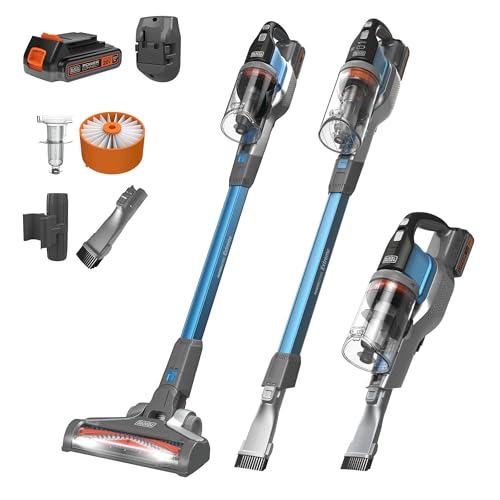
4. BLACK+DECKER POWERSERIES Extreme Cordless Stick Vacuum BSV2020G
Black and Decker is a name known for handheld vacuums and power tools, and the POWERSERIES Extreme brings that experience to a cordless stick. It tends to appeal to shoppers who already own tools from the brand.
Who it suits: buyers who want a cordless stick from a familiar household name.
Three strengths:
- A cordless layout that is easy to pick up for a quick clean.
- A convertible design on many stick-and-handheld models, so the unit can detach for small jobs.
- A brand with a wide support network for accessories and batteries.
One limitation: battery runtime and bin size are modest for the class, so a larger home will need recharging between sessions.
Choose it if you want a straightforward cordless stick with handheld capability. Skip it if you want the longest possible runtime.
Where it fits: this is a good middle path between a bare-bones corded stick and a premium cordless model. Read the listing to confirm whether the handheld conversion is part of this version.
5. Eureka RapidClean Pro Cordless Vacuum Cleaner NEC180
Eureka’s RapidClean Pro is a light cordless stick designed for quick, frequent cleaning. Since several versions have appeared under similar names, check the model code on the listing matches the one here.
Who it suits: small homes with a mix of hard floors and low rugs and a need for a light machine.
Three strengths:
- A light cordless stick that is easy to carry up and down stairs.
- A slim body that stores upright without taking much room.
- A convertible layout on many models, which lets you use the main unit as a handheld.
One limitation: as with most light cordless sticks, battery life and bin size are the trade for low weight.
Choose it if you want an easy-to-carry cordless stick. Skip it if your main surface is thick carpet.
Where it fits: the RapidClean Pro is the stairs-friendly option. It suits households that move between floors and want one machine to follow them.
Comparison of All Five Compact Sticks
| Product | Power | Size and weight class | Key feature | Best use | Link |
|---|---|---|---|---|---|
| Shark Rocket Pet Plus HV302 | Corded | Slim, light | Pet and upholstery tools | Daily floors and stairs | Check on Amazon |
| Bissell Featherweight 2033M | Corded | Very light | Low carrying weight | Quick tidy-ups | Check on Amazon |
| Tineco A10 Hero | Cordless | Slim, light | Polished cordless design | Small homes, no outlet hunt | Check on Amazon |
| BLACK+DECKER BSV2020G | Cordless | Slim, light | Familiar tool brand | Quick cleaning with handheld use | Check on Amazon |
| Eureka RapidClean Pro NEC180 | Cordless | Slim, light | Easy to carry | Stairs and mixed floors | Check on Amazon |
One more note on how to read the sections above. The “choose it if” and “skip it if” lines are meant to be taken together. If the skip line describes your home, move on to the next product without guilt. If the choose line describes your home and the limitation does not bother you, you have found your match, and there is no need to keep reading reviews for hours. A small stick vacuum is a modest purchase in terms of effort, and the right one is the one that fits your corner, your floors and your routine.
It can also help to consider a second, complementary tool. A handheld vacuum on the kitchen counter or in the car handles spills and seats, while the stick handles floors. Together they cover a small home thoroughly without needing a full-size machine at all.
Corded or Cordless for a Small Space
In a small space, the choice between a cord and a battery is more about habits than about size. A corded stick gives you steady power for as long as you want, and it removes the need to charge. The cost is the cord itself, which you have to manage and unplug when you change rooms.
A cordless stick gives you freedom. You can grab it, clean a room, hang it back on the wall and be done in a few minutes. The cost is the battery, which has finite runtime and will eventually age. For a studio or a one-bedroom flat, runtime is rarely a problem, and the convenience of cordless is easy to love.
There is a middle path. Many households keep a corded stick for the weekly deep clean and a cordless unit for daily crumbs. If you have room for only one, think about which job you do more often and pick accordingly.
How to Choose a Small Stick Vacuum
- Decide on power. Corded means steady power. Cordless means freedom and a battery to look after.
- Check the weight. If you will carry it on stairs, a lighter machine pays off.
- Look at the bin size. A bigger bin means fewer trips to the bin. A smaller bin keeps the body slim.
- Check the floor head. A head with a brush roll suits carpet. A soft roller suits bare floors.
- Look for handheld conversion. It adds flexibility for car interiors and furniture.
- Read the battery details. For cordless models, check whether the battery is removable and how it charges.
- Plan the storage spot. A wall mount or a corner with an outlet makes cordless charging simple.
Treat the checklist as a filter, not as a score. If two machines both pass, the one that costs less effort to live with is usually the better pick, which means the one that is easiest to grab and put away.
Matching a Stick to the Way You Live
Picture the routine you actually have. In a studio, the vacuum usually lives within arm’s reach of the kitchen, and the main enemies are crumbs, shoe grit and the odd spill of cereal. A light stick that you can fetch in five seconds fits that life far better than a heavy machine hidden in a cupboard. That is where the Featherweight and the cordless models shine.
In a one-bedroom flat with a hallway and a bedroom rug, you need a little more range. A corded stick with a long enough cord, such as the Rocket Pet Plus, can cover the whole home from one or two outlets. A cordless stick can do the same job without outlet hunting, as long as the battery lasts through your usual session.
In a two-storey townhouse, the stairs are the hinge. If you carry the vacuum up and down daily, weight becomes the headline spec, and the lightest sticks pull ahead. If you keep one stick on each floor, the choice is mostly about the effort of switching floors, not weight.
In a home with a car, a stick that converts to a handheld earns bonus points. You can pop the main unit off, grab a crevice tool and do the seats without buying a second vacuum. Check the listing to see whether the handheld conversion is part of the model you choose.
Questions to Ask Before You Order
- Where will the vacuum live, and does it stand upright without support?
- Do I want to put up with a cord, or would I rather watch a battery indicator?
- How often will I carry it up stairs, and is it light enough for that?
- Does the listing include a crevice tool and an upholstery brush?
- For cordless models, is the battery removable and are replacements sold?
- Does the model code on the listing match the one in this guide?
Answering these takes a minute and often removes two of the five choices immediately. For example, a buyer who dislikes cords can cross off the two corded models, and a buyer who needs unlimited runtime can cross off the cordless ones. What remains is a short list you can compare on weight and tools.
When you read a listing, scroll past the headline bullets and look at the image gallery and the product details block. Photos of the dust bin, the head and the charging arrangement tell you more about daily life with the machine than a list of adjectives does. If the listing has questions and answers from other buyers, skim them for comments about storage and attachments, remembering that experiences vary.
Common Buying Mistakes
- Expecting a stick to replace a deep-cleaning machine. Sticks excel at upkeep. Heavy carpet may need a stronger tool.
- Ignoring battery care. Follow the manual on charging and storage so the battery lasts.
- Forgetting the cord reach. A corded stick in a long room needs a plan for outlets.
- Buying by name only. Brands release many similar names. Match the model code on the listing.
- Skipping the tool list. If you need a crevice tool or upholstery brush, confirm it is included.
Care and Storage Habits
A stick vacuum is easy to look after. Empty the bin regularly, clean the filter following the manual and check the brush roll for hair or thread. Wipe the body with a dry cloth when it gets dusty.
Set a gentle rhythm for upkeep. A quick look at the brush roll once a week stops hair from building up. A rinse of any washable filter, followed by full drying before it goes back in, is another habit the manual usually recommends. Wipe the charging contacts if the machine has them, and keep the dock area clear so the machine sits straight when you hang it up.
For cordless models, follow the maker’s advice on charging and storage. Avoid leaving the battery in a very hot or cold place. For corded models, loop the cord loosely and avoid tight kinks. Hang the machine on a wall hook or stand it upright in a corner so the floor head sits flat.
Final Recommendation
Here is the shortlist by buyer type.
- Best all-round corded pick: the Shark Rocket Pet Plus HV302.
- Best for very light handling: the Bissell Featherweight 2033M.
- Best polished cordless: the Tineco A10 Hero.
- Best cordless from a tool brand: the BLACK+DECKER BSV2020G.
- Best for stairs: the Eureka RapidClean Pro NEC180.
Each of the five asks you to accept one trade. The Rocket Pet Plus asks you to live with a cord. The Featherweight asks you to empty a small bin often. The Tineco asks you to watch battery time. The Black and Decker asks you to accept modest runtime for its familiar toolkit feel. The RapidClean Pro asks you to accept light-duty power for light carrying weight. Decide which of those compromises you can happily ignore, and that is your answer.
Think, too, about how long you want to keep the machine. A corded stick has no battery to age, which can make it the longer-lasting choice in principle. A cordless stick will eventually need a new battery, so check that replacements are sold for the model before you commit. Either way, treat the vacuum as a tool you will pick up several times a week, and choose the one you will not mind picking up.
If you want one decision rule, pick the Rocket Pet Plus when you want steady power and the Tineco when you want cordless polish. Open the listing, confirm the model code, the tool list and, for cordless units, the charging details, then choose the one that fits how you clean.
Using a Small Stick Vacuums Well: Technique Matters More Than Power
Technique, not raw power, is what separates a floor that looks clean from one that actually is. Move the head slowly enough for airflow to do its work, and overlap each pass by roughly a third so no strip is left untouched. On hard floors, a slower pass also stops larger crumbs being pushed ahead of the head instead of collected. On carpet, work in two directions — with the pile, then across it — because grit sits at the base of the fibres and only releases when the fibres are disturbed from more than one angle. Around furniture legs and along skirting boards, slow down further; edges are where dust concentrates and where a rushed pass leaves the most behind.
Rhythm helps in a small home. Rather than one heroic weekly session, short and frequent passes keep a small stick vacuums in its comfort zone: the bin stays small, the filter stays clear, and the machine never faces a week’s worth of ground-in grit at once. Ten unhurried minutes twice a week will outperform a frantic half hour, and the machine will sound healthier doing it, because a vacuum under moderate load keeps its airflow closer to the level the designers intended. If the note of the motor climbs and stays high, treat that as information: something — bin, filter, brush or hose — is asking for attention before the next session, not during it.
Attachments are not accessories; on a compact machine they are half the product. The crevice tool reaches the grit line where floor meets skirting, the brush softens dust on shelves and vents instead of scattering it, and the upholstery tool lifts hair from fabric far better than the main head. Keep the two you use most on the machine or in the same cupboard, because an attachment stored in another room effectively does not exist during a quick clean. When you finish, empty the bin over an outside bin where possible, tap the filter clean according to the maker’s guidance, and coil or dock the machine the same way every time — small rituals are what make a compact cleaner feel effortless rather than fiddly.
Filters, Bins and Brushes: The Maintenance That Protects Suction
Every compact vacuum slowly strangles itself if its airflow path is neglected. The bin is the obvious part: empty it before it passes the fill line, not after, because an overfilled bin forces air through the debris itself and performance falls off a cliff rather than gradually. Wipe the bin and its seals occasionally so fine dust does not build into a crust that stops the lid seating properly. A seal that does not seat leaks suction silently — the machine sounds busy, works hard, and picks up less, which is the exact combination owners describe when they say a vacuum has lost its power with age.
Filters decide how much of that story ends well. Washable filters must be fully dry before they go back — a damp filter restricts airflow and can smell musty within days — so many owners keep a spare and rotate them, letting one dry properly while the other works. Non-washable filters should be tapped clean outdoors and replaced on the maker’s schedule rather than when they look grey, because the fine particles that matter are invisible. Note the replacement date on the filter itself with a marker; memory is unreliable, and a dated filter turns a guess into a fact the next time performance dips.
The brush roll deserves a monthly appointment. Hair and thread wind tighter with every session, raising the brush, straining the belt or motor, and eventually leaving a scorched smell that owners mistake for electrical failure. Cut the wrap free with small scissors, taking care not to nick the bristles, and check the end caps spin freely. While the machine is open, look at the intake path and hose for the partial blockage that explains a machine which still roars but no longer lifts: a single sock, toy part or clump of hair at a bend is the most common cause of sudden disappointment with any small stick vacuums.
How the Picks in This Guide Differ in Real Homes
The specifications separate these machines on paper, but homes separate them differently. How small is a compact stick vacuum? earns its place for the pattern of use described in its review — think about when you would actually reach for it, not when you imagine you might. Set against Can a stick vacuum handle carpet?, the honest question is which inconvenience you would rather live with: the one that asks for a cord, a charge, a bin empty or a filter rinse more often, in exchange for the thing it does best. There is no universal winner in this guide, only matches and mismatches between a machine’s habits and a household’s habits.
Do cordless sticks need special batteries? rewards a second reading for the opposite reason: it is easy to overlook when another pick matches your first instinct, yet it often suits the home you actually have — the floor mix, the storage corner, the pets, the stairs — better than the headline choice. Re-read its section with your own rooms in mind. If your cleaning is mostly quick passes between longer sessions, prioritise the machine that is fastest to grab, use and put away, because the cleaner you reach for without thinking is the one that keeps the home clean. If your sessions are rarer and deeper, prioritise sustained performance and capacity instead, and accept a little more setup as the fair price.
One more test before you decide: picture the worst ordinary cleaning day. Guests are coming, the hallway is gritty, something has spilled under the table, and you have fifteen minutes. Which pick in this guide handles that quarter hour with the least friction — quickest to start, easiest to manoeuvre in the tight spots this guide is about, simplest to empty afterwards? Buyers consistently overvalue peak performance and undervalue that fifteen-minute test, yet the fifteen-minute test is the one your life will actually run, week after week.
Storing a Compact Vacuum in a Compact Home
Storage is the hidden specification of every small stick vacuums. Measure the cupboard, closet corner or under-stairs space before ordering, including its height and the swing of its door, and compare it with the machine’s stored shape rather than its working shape. A vacuum that must be partially dismantled to fit its cupboard will, in practice, live in the hallway — and a machine that lives in the hallway gets resented, however well it cleans. Wall mounts solve this elegantly where the wall allows, and they put charging points at a natural height, but check what the wall is made of before counting on one; plasterboard, solid masonry and stud walls each ask for different fixings.
Keep the machine where the mess is. In most homes that means near the kitchen and hallway rather than in a distant utility room, because the distance between the spill and the vacuum decides whether the vacuum gets used at all. If the home has more than one floor, be honest about carrying: weight matters most on stairs, and a machine that is light in the hand for a room can feel very different halfway up a flight with the attachments in the other hand. Handles, balance and where the weight sits matter as much as the number on the listing, which is why the reviews above describe how each pick feels to move, not only what it weighs.
Cords and charging cables deserve the same forethought. A cord that reaches from one socket across the whole floor saves more time than any marginal difference in cleaning power, so map your sockets against your rooms before choosing between corded and cordless convenience. For cordless models, place the charger where the machine will genuinely live, on a socket that is not already contested by three other devices, and let the battery live in its comfortable middle — regular use and regular charging suit modern batteries far better than being left flat in a cupboard for months between heroic cleans.
Troubleshooting: When a Small Vacuum Disappoints
Weak pickup almost always has a boring cause, and boring causes are good news. Work the airflow path in order: empty bin, clean filter, clear brush, check the hose and intake for a partial blockage, confirm every section is clicked fully home. Each step takes minutes, and one of them resolves the great majority of complaints. If performance returns after cleaning a filter, shorten your filter interval rather than blaming the machine — your home simply produces more fine dust than average, which is common with pets, rugs, nearby traffic or renovation work anywhere in the building.
A machine that scatters debris on hard floors is usually being pushed too fast, or its brush is spinning where a softer touch is needed; slow down, and use the setting or head the maker intends for bare floors. A machine that leaves a line of grit at the edge of the head wants the edge technique described earlier — approach skirting slowly and let the crevice tool finish the last centimetre rather than ramming the head against the board. Runtime that fades on a cordless model points first to a clogged filter making the motor work harder, and only later to an ageing battery; clean the airflow path fully before pricing a replacement battery you may not need.
Smells have causes too. A musty note means something damp was vacuumed or a washed filter went back too soon; dry everything thoroughly and the smell usually leaves with the moisture. A hot, sweet smell during use means the brush or belt is straining against wrapped hair; stop, clear it, and the smell should not return. Keeping a short note of what you cleaned and when turns troubleshooting from folklore into a pattern you can act on — and if you do need to contact the seller, that note makes you the customer whose problem gets solved in one exchange instead of five.
More Questions Buyers Ask About Compact Vacuums
How often should I empty and clean everything?
Empty the bin whenever it approaches its fill line, which in a busy small home may be every session or two — compact bins are the deliberate trade for a compact machine. Give the filter attention on the maker’s schedule, sooner if the motor note climbs or pickup fades, and clear the brush monthly, sooner in homes with long hair or pets. None of these jobs is long; their power is in being done before performance drops, because a vacuum maintained ahead of its problems never gives you the frustrating session that makes owners start shopping for a replacement they do not need.
Can a small vacuum be the only vacuum in a home?
For many small homes, yes — provided the match is honest. A compact machine handles hard floors, rugs, upholstery and edges happily when its airflow path is maintained and its technique is unhurried. Deep-pile carpet throughout a large house is the scenario that stretches the format, and even there the question is patience rather than possibility. Judge by your floor mix and your tolerance for emptying a small bin often, and remember that a second inexpensive handheld for spills can complement a main compact machine better than one oversized machine that lives in a cupboard because it is a chore to fetch.
What should I check in the first week of ownership?
Run the machine on every floor type in the home, use every attachment once, and practise emptying the bin and removing the filter while the instructions are fresh — these small rehearsals pay off the first time you do them in a hurry. Check that the machine stores where you planned, charges or coils as expected, and reaches the far corners from the sockets you intended. Photograph anything that arrives damaged and keep the packaging until you are sure the fit is right; a calm first week of testing is worth far more than a month of assuming and a dispute later.
A Final Round of Practical Notes on the Small Stick Vacuums
Before you order, re-read the comparison section above one last time with a short written list beside you: the measurements of your space, the habits of your household, and the one or two qualities you refuse to compromise on. Purchases like a small stick vacuums go wrong when the list in the buyer’s head changes between reading and ordering — a photograph catches the eye, a feature sounds appealing, and the original priorities quietly leave the room. Your written list is the anchor. If the pick you are about to choose satisfies it, the opinions of the internet, however confident, are entitled to very little further say in the matter.
After the purchase, give the decision a fair settling period before judging it. Almost every substantial home purchase passes through a week of heightened scrutiny in which every small imperfection feels larger than it is, followed by a calmer period in which the piece simply becomes part of the home. Judge it at the end of that calmer period, on the criteria you wrote down, in the situations you bought it for. That is the honest test — and it is the same test the picks in this guide were chosen to pass: not perfection in a showroom, but dependable, repeatable satisfaction in an ordinary home, on ordinary days, for a long time.
Floor by Floor: Getting the Best From Each Surface
A small stick vacuums usually serves several surfaces in a single session, and each surface quietly wants something different. Hard floors reward airflow and a soft touch: the goal is to lift grit without scattering it, so approach slowly, let the head’s seal do the work, and resist pressing down, which only pushes debris ahead of you. The grit line along skirting boards and under kitchen units is where hard floors hide most of what they hold, and it yields to the crevice tool and patience rather than to repeated fast passes with the main head. Under appliances and radiators, a low pass with the machine’s flattest configuration reaches dust that has been undisturbed for months — and in a kitchen, that dust is mixed with grease, so it is worth reaching more often than instinct suggests.
Rugs and carpet ask for the opposite temperament: slower passes, a second direction, and time for the brush to disturb the base of the pile where grit actually lives. Work the high-traffic lanes — doorway, hallway, the strip in front of the sofa — more thoroughly than the corners nobody walks on, because that is where abrasive grit concentrates and where it does its slow damage to the fibres themselves. On stairs, technique becomes safety: work from a stable stance, keep the machine below you where the design allows, use the handheld or hose configuration the maker intends rather than balancing the full machine on a tread, and never rush the one surface in the home where a stumble has consequences.
Upholstery, curtains and the car, if your machine travels that far, benefit from the gentlest settings and the brush attachment rather than raw suction against fabric. Work in sections, support loose fabric with your free hand so it is not dragged into the intake, and empty the bin more often than feels necessary — fine dust from fabric blinds filters quickly. This is where a small vacuum earns its keep: not in one dramatic clean, but in being right for almost every dusty job in the home.
Teaching the Household: Shared Habits That Keep Floors Clean
The best-kept small homes rarely depend on one person’s heroic effort; they run on small shared agreements. A doormat that is actually used, shoes that mostly stay near the door, and a two-minute rule for spills — deal with it now, briefly, rather than thoroughly later — remove more dirt from a home than any vacuum upgrade. Where the machine lives matters here too: if everyone in the household knows where the small stick vacuums is stored, how to empty it and where its attachments belong, it gets used by everyone, briefly and often, which is precisely the pattern compact machines are built for.
Make the maintenance shareable as well. Emptying the bin is a thirty-second job anyone can do at the end of a session, and a household where that is simply part of finishing — like switching the machine off — never lets the bin reach the state where performance falls and tempers follow. Keep the spare filter, if you rotate filters, in a labelled spot rather than a mystery drawer. Write the simple schedule — filter, brush, deep clean of the machine itself — on a card kept with the attachments. It sounds humble, and it is, but homes stay clean on humble systems repeated reliably, not on good intentions renewed every spring.
Children and pets fit into this picture as participants rather than problems. Children who are allowed to use a lightweight machine on their own crumbs take to it surprisingly willingly, because the tool is their size and the feedback is instant. Pet hair, meanwhile, is a rhythm problem rather than a power problem: frequent short passes during shedding season keep hair from weaving itself into rugs and upholstery, after which no domestic machine removes it easily. Match the rhythm to the season and the household, and the small stick vacuums you already own will feel more capable than a stronger machine used rarely and reluctantly.
Frequently Asked Questions
How small is a compact stick vacuum?
Most compact sticks are slim and stand upright in a corner. Check the dimensions on the listing to compare with your space.
Can a stick vacuum handle carpet?
Many handle low and medium pile. For thick carpet, look for a model with a brush roll and expect extra passes.
Do cordless sticks need special batteries?
They use the maker’s battery. Check whether the battery is removable and whether replacements are sold.
Are the attachments interchangeable between brands?
Not usually. Attachment fittings vary by maker, so buy accessories made for your model.
How do I clean the filter?
Follow the manual. Some filters rinse and air-dry, while others are replaced on a schedule.
Where should I keep a cordless stick?
Near an outlet if it charges on a dock or with a cable. A wall mount saves floor space.
What if it does not suit me?
Return terms depend on the seller and listing. Read the return window before you order and keep the packaging until you are sure.