Disclosure: As an Amazon Associate, reviewstook.com earns from qualifying purchases. Links to Amazon on this page are affiliate links; they cost you nothing extra. Listing details such as price and availability change often, so check the current Amazon listing before you buy.
The best soft queen mattresses share one trait: a thick, yielding comfort layer on top that lets your shoulders and hips settle in instead of sitting on a hard surface. If you want that cushioned, cloud-like feel in a queen size that fits two adults, the seven mattresses below are the ones worth comparing. Each is a real, current listing, and each takes a slightly different route to softness.
Our short answer: pick a memory foam model if you like a slow, hugging feel, pick a hybrid if you want a softer top with a bit more lift and airflow from springs underneath, and pick a thinner foam bed if the room or the frame cannot handle a very tall mattress. Everything here ships compressed in a box, which matters if you have a narrow stairwell or no help with carrying.
Below you will find a quick picks table, a full write-up of every mattress with an honest limitation, a side-by-side comparison, a buying checklist, the mistakes that lead to returns, and answers to the questions buyers ask before they order.
In this guide
Quick Picks
| If you want | Our pick | Link |
|---|---|---|
| The most talked-about soft foam feel | Nolah Original 10 Inch | Check on Amazon |
| A simple gel foam bed for a guest room | Novilla 12 Inch Gel Memory Foam | Check on Amazon |
| Soft comfort with springs underneath | Vesgantti 12 Inch Hybrid | Check on Amazon |
| A well-known brand name with a cooling-style cover | Cocoon by Sealy Chill | Check on Amazon |
How We Picked These Mattresses
We built this list from manufacturer listings, published specifications and the way each brand describes its layers. We have not slept on these mattresses ourselves, so we do not make claims about how they feel over months of use. Instead we focus on construction, thickness, size and the kind of buyer each design makes sense for. Check each listing for current firmness wording, trial terms and the exact cover material.
The 7 Best Soft Queen Mattresses
Nolah Original 10 Inch Foam Mattress
Nolah built its name on a foam it calls AirFoam, a layered design meant to feel soft on top without the slow sink of traditional memory foam. It is a pure foam bed with no springs, which keeps the profile at about ten inches and the weight manageable for a queen.
Who it suits: couples who like a soft surface but dislike the feeling of foam gripping them in place, and anyone replacing an old bed who wants a lighter box to carry. A foam queen at this height is also easier to fit into rooms with low ceilings or lofted frames, where a very tall hybrid would feel out of proportion.
- Layered foam build with a soft top feel that brand listings describe as responsive rather than sticky.
- Ten-inch height works with most standard frames and sheets.
- No coils, so there is nothing to creak when two people shift.
Honest limitation: if you want a deep, slow hug, this is lighter and bouncier than classic memory foam, so it may feel less dramatic. Choose it if you like a soft surface that still lets you move easily. Skip it if you want a very tall mattress.
Mellow 12 Inch Memory Foam Mattress
Mellow sells straightforward memory foam beds in a box, and the 12 inch queen is a layered build with a gel-infused top foam under a quilted cover. It is the sort of mattress that suits a buyer who wants a familiar memory foam feel without a luxury label.
Who it suits: first-time buyers of a boxed mattress, new graduates furnishing a first adult bedroom, and households that want a soft surface without researching a dozen premium brands. The quilted cover gives the bed a more finished look than a plain stretch cover, which matters if you do not plan to add a heavy topper.
- Memory foam top layer with a visible quilted cover for a plusher first look.
- Twelve inches of height gives a full, finished look on a platform frame.
- Arrives compressed, so one person can move it into the room.
Honest limitation: all-foam beds hold warmth more than coil designs, so check the cover and foam wording if you run warm. Choose it if you want a classic foam feel in a mid-height bed. Skip it if you prefer a springy surface.

Novilla 12 Inch Gel Memory Foam Mattress
Novilla is a familiar name among bed-in-a-box shoppers, and its twelve inch gel memory foam queen is aimed at people who want a soft, quiet surface for a main bedroom or a guest room. The listing describes a multi-layer foam stack with a gel-infused comfort layer.
Who it suits: hosts who want the guest room to feel cushioned, parents setting up a spare room for visiting family, and renters who need a simple bed they can unroll and set up without tools. Because the design is plain, it works with almost any bedding style, from crisp white sheets to heavy patterned quilts.
- Gel-infused memory foam on top for a cushioned, contouring feel.
- Quiet surface with no springs to squeak.
- Simple, plain styling that sits well under most bedding.
Honest limitation: very soft foam beds can feel hard to turn over on for some people, so think about how much you move at night. Choose it if you want a plain soft foam bed for a spare room. Skip it if you want a bouncy, springy feel.
Signature Sleep Memoir 12 Inch Memory Foam Mattress
The Memoir is a twelve inch memory foam bed from Signature Sleep, a brand known for mattresses that ship in a box and for wording its listings around foam layers rather than marketing slogans. It is a good fit when you want a familiar, mid-height foam bed in the queen size.
Who it suits: shoppers who prefer a mid-height mattress that looks proportional on a standard frame, and who would rather read about foam layers than marketing claims. It also fits a bedroom with a slim headboard, where an extra-tall mattress would sit awkwardly against the wall or window.
- Multi-layer memory foam build with a soft top surface.
- Twelve-inch height gives a balanced look on most frames.
- Boxed delivery makes stairs and tight hallways less of a problem.
Honest limitation: it is a fairly traditional foam design, so it does not add anything new if you have already owned a similar bed. Choose it if you want a no-surprises foam mattress. Skip it if you are chasing a novelty feature.
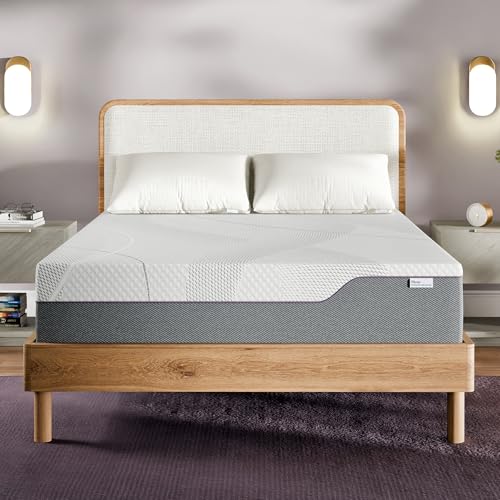
Sleep Innovations Shiloh 12 Inch Memory Foam Mattress
Sleep Innovations has been selling foam mattresses and toppers for a long time, and the Shiloh is its twelve inch memory foam queen. It is a calm, conventional choice for a household that wants a recognizable brand and a soft top layer.
Who it suits: buyers who already know the Sleep Innovations name from toppers or pillows and want a full mattress from the same maker. It is a sensible choice for a second bedroom, a vacation home or a teenager’s room where a cushioned bed matters more than a long list of special features.
- Memory foam comfort layer over a firmer base foam.
- Twelve inches of height with a clean, plain cover.
- Comes rolled in a box, so delivery is easy to manage alone.
Honest limitation: the cover is a standard design, so there is little to talk about beyond the foam itself. Choose it if you like a long-established name. Skip it if you want a hybrid or coil feel.
Cocoon by Sealy Chill Memory Foam Mattress
Cocoon by Sealy is the brand’s bed-in-a-box line, and the Chill is built around a cooling-style cover over memory foam. It suits shoppers who like the Sealy name but want a compressed delivery instead of a showroom purchase.
Who it suits: shoppers who trust the Sealy name and want a soft foam bed delivered in a box. If you have owned a Sealy innerspring in the past and want a different, cushier feel without going to a store, this is the natural step across. The cover is the design talking point, so read the listing for its exact fabric description.
- Memory foam layers with a soft, contouring surface.
- Cover designed to feel cool to the touch when you first lie down.
- Backed by a large, established mattress maker.
Honest limitation: the cooling feel on a cover is a first-touch effect, so do not expect it to change how warm a foam bed runs overnight. Choose it if brand familiarity matters. Skip it if you want the thickest possible bed.

Vesgantti 12 Inch Hybrid Mattress
The Vesgantti twelve inch hybrid pairs a foam comfort layer with a set of individually wrapped coils underneath. It is the pick for people who want a soft top but dislike the sunk-in feeling of an all-foam bed.
Who it suits: couples who share a queen and want a soft top that still feels lively, and people who find all-foam beds too enclosing. The coil layer also appeals to anyone who sits on the edge of the bed to put on shoes, since a coil edge tends to hold its shape better than foam alone.
- Foam on top for cushioning, coils below for lift.
- Coil layer allows more airflow than solid foam.
- Edges tend to feel more stable than on pure foam beds.
Honest limitation: hybrids weigh more than foam beds, so moving one upstairs takes more effort. Choose it if you want soft comfort with a springier base. Skip it if you want the lightest box to carry.
Soft Queen Mattress Comparison
| Mattress | Size | Material | Key feature | Best use | Link |
|---|---|---|---|---|---|
| Nolah Original 10 Inch | Queen | Layered foam | Soft but responsive top | Main bedroom | Check on Amazon |
| Mellow 12 Inch | Queen | Memory foam | Quilted cover | Everyday bed | Check on Amazon |
| Novilla 12 Inch | Queen | Gel memory foam | Gel-infused top layer | Guest room | Check on Amazon |
| Signature Sleep Memoir | Queen | Memory foam | Multi-layer foam stack | Spare bedroom | Check on Amazon |
| Sleep Innovations Shiloh | Queen | Memory foam | Established foam brand | Family bedroom | Check on Amazon |
| Cocoon by Sealy Chill | Queen | Memory foam | Cooling-style cover | Brand-minded buyers | Check on Amazon |
| Vesgantti 12 Inch Hybrid | Queen | Foam and coils | Wrapped coil base | Couples who share | Check on Amazon |
What Soft Really Means on a Queen Mattress
Softness is a feel, not a measurement, and brands do not describe it in a shared language. One listing says plush, another says medium-soft, a third simply says gel memory foam. The useful clue is the top layer: thick, low-density foam feels soft and slow, while a thinner layer over coils feels softer at first and springier after a moment.
On a queen mattress, softness also depends on the frame. A slatted frame with wide gaps lets soft foam sag between boards, while a solid platform or closely spaced slats keeps the surface even. If you are unsure, check the maker’s frame guidance on the listing.
Foam or Hybrid for a Soft Feel
All-foam beds are quieter, lighter and easier to ship, and they give the most cushioned feel for the money you spend. Hybrids add a coil layer, which means more lift, more airflow and a more stable edge, but also more weight and a firmer overall character beneath the soft top.
If you share the bed with a partner who moves around, a foam bed keeps movement quieter. If you tend to sit on the edge of the mattress, a hybrid tends to hold its shape better there. Neither is better in every case, so decide which of those two habits describes your bedroom.
How to Choose a Soft Queen Mattress
- Confirm the size is a true queen, which is the common choice for two adults and fits a standard queen frame.
- Check the thickness against your bed frame and sheets; deeper beds may need deep-pocket sheets.
- Read the top layer description rather than a single word like plush.
- Decide between all foam and a hybrid based on weight, noise and how you sit on the edge.
- Look at the trial and return terms on the listing before you order.
- Measure doorways, hallways and stairs, because a boxed queen is long and heavy.
- Confirm the cover is removable or spot-cleanable, if that matters to you.
Delivery, Weight and Moving Day
Every mattress on this list is designed to travel compressed, which makes delivery far easier than with a traditional store-bought bed. Even so, a queen in a box is long and awkward, and the hybrid is noticeably heavier than the foam models. Clear the route from the front door to the bedroom, remove wall hangings that you might clip with a corner, and ask a second person to help at the stairs. Use a blade with a short exposed edge, and cut only the outer plastic as the instructions say, so you do not nick the cover.
Common Buying Mistakes
The first mistake is judging softness by a single word. A bed labeled plush from one brand may feel quite different from another, so read the layers. The second is ignoring the frame; a soft mattress on widely spaced slats will not look or feel right.
The third is unpacking too late. Boxed foam needs time to expand, and some owners judge the bed on the first day before it has fully opened. Follow the maker’s instructions for unboxing and give it the recommended time before you decide. The fourth is skipping the return terms, which you will want to understand before the box is opened.
Sizing and Room Planning for a Queen
A queen is a generous but not enormous size, and it is the one most bedrooms are laid out around. Before you order, measure the room, the bed frame and every doorway the box has to pass through. Leave comfortable walking space on both sides of the bed, because a soft mattress sits lower on the frame once you press into it and you will want room to get in and out without squeezing past a dresser.
Think about height as well. A ten inch bed on a low platform frame looks tidy and keeps the room open, while a twelve inch hybrid on a tall frame can reach well up the wall. If you use a bed skirt, a headboard with slots or a footboard, confirm that the total height still works. These small details decide whether a new mattress looks right on the day it opens up.
Who Should Skip a Very Soft Mattress
A soft surface is a personal preference, not a universal upgrade. If you like to feel held up on top of the bed instead of settled into it, a very soft model may disappoint you. Partners who disagree strongly about firmness should look for a compromise, such as a hybrid with a modest comfort layer, rather than assuming one soft bed will please both. If you are unsure, pick a listing with a clear return policy so you are not stuck with a feel you dislike.
Setting Up and Caring for a Soft Mattress
Unbox the mattress in the room where it will live, lay it on a clean flat surface and cut the plastic as the instructions say. Foam beds often have a short smell when new, so open a window if you can. Use a mattress protector to keep the cover clean, and rotate the mattress head to foot on the schedule the maker recommends. Spot-clean with mild soap and a damp cloth, and let the surface dry fully before making the bed again.
Reading the Picks Side by Side: A Deeper Comparison
Nolah Original 10 Inch Foam Mattress rewards a particular kind of buyer, and its section above is worth rereading with your own household in mind. Set it against Mellow 12 Inch Memory Foam Mattress and ask which description sounds more like your rooms, your routine, and the people who will actually use it. Shoppers often choose on the most impressive-sounding feature and then live with the everyday details, so reverse that order: decide on size, care, storage, and day-to-day fit first, and only then let the headline feature break a tie between two picks that both suit your life.
For Mellow 12 Inch Memory Foam Mattress, the choose-or-skip question comes down to fit rather than quality. Choose it if the use case in its review is the use case you have most weeks, if its care and storage demands fit your space, and if its limitation is one you can accept without a workaround. Skip it if you found yourself hoping it would behave like Nolah Original 10 Inch Foam Mattress instead, because that hope usually means the other pick is your real answer. A guide like this one earns its keep not by crowning one winner for everyone, but by steering each reader to a different, correct winner.
For Novilla 12 Inch Gel Memory Foam Mattress, the choose-or-skip question comes down to fit rather than quality. Choose it if the use case in its review is the use case you have most weeks, if its care and storage demands fit your space, and if its limitation is one you can accept without a workaround. Skip it if you found yourself hoping it would behave like Nolah Original 10 Inch Foam Mattress instead, because that hope usually means the other pick is your real answer. A guide like this one earns its keep not by crowning one winner for everyone, but by steering each reader to a different, correct winner.
For Signature Sleep Memoir 12 Inch Memory Foam Mattress, the choose-or-skip question comes down to fit rather than quality. Choose it if the use case in its review is the use case you have most weeks, if its care and storage demands fit your space, and if its limitation is one you can accept without a workaround. Skip it if you found yourself hoping it would behave like Nolah Original 10 Inch Foam Mattress instead, because that hope usually means the other pick is your real answer. A guide like this one earns its keep not by crowning one winner for everyone, but by steering each reader to a different, correct winner.
For Sleep Innovations Shiloh 12 Inch Memory Foam Mattress, the choose-or-skip question comes down to fit rather than quality. Choose it if the use case in its review is the use case you have most weeks, if its care and storage demands fit your space, and if its limitation is one you can accept without a workaround. Skip it if you found yourself hoping it would behave like Nolah Original 10 Inch Foam Mattress instead, because that hope usually means the other pick is your real answer. A guide like this one earns its keep not by crowning one winner for everyone, but by steering each reader to a different, correct winner.
Looked at alongside the rest of the shortlist, Cocoon by Sealy Chill Memory Foam Mattress is best understood by the job it does most confidently rather than by any single feature. Compare it directly with Nolah Original 10 Inch Foam Mattress on the points this guide has already laid out: who it suits, where it feels most at home, and what its stated trade-off is. If your needs match its strengths, that trade-off will rarely trouble you. If your needs sit closer to the limitation noted in its review, one of the neighbouring picks will almost certainly serve you better, and recognising that before you order is the whole point of a comparison guide.
Temperature control deserves a place in the decision even if you do not consider yourself a hot sleeper. Dense foam layers tend to hold warmth closer to the body, while coil-based builds usually allow more air to move through the structure. Covers, protectors, sheets, and even the duvet weight can shift the result by a surprising amount, so think of temperature as a system rather than a single material claim. If you tend to warm up in the second half of the night, pair any pick with breathable bedding and avoid thick, waterproof-feeling protectors that seal the surface. If you sleep cold, the same bed may feel perfect with a warmer duvet, which is a cheaper adjustment than changing the mattress itself.
Give any new mattress a fair adjustment window before judging it, especially if you are changing firmness level or construction type. Your body adapts to a new sleeping surface over days and weeks, not hours, and muscles that were compensating for an old, sagging bed may complain briefly while they readjust. Keep your pillow in the experiment too: a new bed height and a new shoulder sink depth often call for a different pillow loft. Change one variable at a time where you can, note how you feel on waking for a week rather than relying on the first night, and use the full trial window the seller allows instead of making a rushed verdict in the first forty-eight hours.
How to Judge Best Soft Queen Mattresses With Cushioned Comfort for Two in Real Life
Sharing the bed adds a second set of requirements that solo testing never reveals. Motion transfer matters when one person turns over, gets up early, or comes to bed late. Edge support matters when two sleepers spread out and use the full width rather than crowding the middle. Heat build-up matters more with two bodies under one duvet than with one. For couples, the most useful question is not which pick is best in isolation, but which pick compromises least across both sleepers’ positions, weights, and temperature preferences. If your preferences differ sharply, favour the option that protects the more vulnerable sleeper’s back first, because pressure discomfort can often be softened with bedding while poor spinal support cannot.
Body weight changes how any given mattress will actually feel in your home, even when the label uses the same firmness word as another model. A lighter sleeper rests more on top of the comfort layers, so a bed described as firm may feel firmer still. A heavier sleeper compresses those same layers further and reaches the support core sooner, which can make the same bed feel more balanced or, if the core is soft, less supportive. That is why two households can honestly describe the same mattress in opposite ways. When you read the picks in this guide, translate each description through your own build and your partner’s build rather than treating the label as absolute.
Your sleep position should narrow the shortlist before brand or construction does. Back sleepers usually do well when the surface stays even under the lumbar area while still allowing the heels and shoulder blades to settle slightly. Stomach sleepers generally need the flattest, steadiest plane of all, because extra sinkage at the hips can arch the lower back through the night. Side sleepers need the most careful balance: enough give at the shoulder and hip to avoid pressure points, but enough pushback underneath that the waist does not collapse downward. Combination sleepers should pay special attention to how easy it is to roll across the surface, since a bed that grips too much can disturb sleep every time you change position.
A Practical First-Week Routine
Think about the next several years, not just the next several nights. Weight changes, new training routines, back niggles, a partner moving in, or a child climbing in on weekend mornings all change what you ask of a bed. A mattress is one of the longest-lived purchases in the home, so favour the option whose support profile will still make sense if your body changes a little. Very specialised feels suit a narrow set of sleepers brilliantly and everyone else poorly, while balanced builds forgive more change over time. Neither is automatically better; the right answer depends on how stable your needs are likely to remain.
Rotation and everyday care extend the useful life of the bed far more than occasional deep cleaning does. Rotate the mattress head-to-foot on a regular schedule unless the maker says otherwise, so the same shoulder and hip zones are not compressed every single night. Use a breathable protector from day one to keep moisture and spills out of the comfort layers, and wash that protector often enough that it stays pleasant. Vacuum the surface gently when you change sheets, allow the bed to air with bedding pulled back on laundry day, and never fold or bend a structured mattress to force it through a tight corner during a move.
Start by separating firmness from support, because the two ideas are often confused when people shop for best soft queen mattresses with cushioned comfort for two. Firmness is what you notice in the first few seconds: how much the surface gives under your shoulders and hips. Support is what you notice after a full night: whether your spine stayed in a reasonably straight line and whether you woke up feeling held up rather than hammocked. A bed can feel firm on top and still support well, and a bed can feel soft at first touch yet keep your midsection from sinking too far. Judging both layers of the experience, instead of pressing a hand into the showroom surface, leads to far better decisions.
Care, Troubleshooting and Getting More From Your Choice
Avoid the common mistake of shopping by a single word on the label. Firm, plush, medium, and luxury firm are not standardised across brands, so the same word can describe noticeably different feels from different makers. Use the word only as a starting filter, then read how each pick in this guide is positioned relative to the others, what kind of sleeper it suits, and what its trade-off is. The honest limitation noted for each pick is often the most useful sentence in its review, because it tells you exactly who should walk away, and a pick you correctly skip is as valuable as a pick you correctly choose.
Troubleshooting early disappointments usually starts with simple checks. If the bed feels firmer than expected, confirm the protector is not drum-tight, try thinner or softer sheets, and check that the base is not an unyielding platform when the design expected some flex, or the reverse. If it feels softer than expected, check for a plush topper or an old, giving foundation underneath. If you notice a dip, measure it with bedding removed and a straight edge across the surface rather than judging by eye. Many apparent faults turn out to be bedding, base, or room-temperature issues that can be corrected in an afternoon.
The foundation is not an afterthought, and it can change how the mattress performs. A solid, even base lets the support core do its job, while widely spaced slats, a worn box spring, or a sagging frame can create dips that get blamed on the mattress. Before the new bed arrives, check your frame for loose joints, bent rails, and centre support under the middle of the span. Run a straight edge or a taut string across the base to spot low areas. If the base is tired, replacing or reinforcing it is part of the purchase, not an optional extra, and it protects the warranty position on many models as well.
Mistakes That Lead to Returns, and How to Avoid Them
Finally, use bedding as fine-tuning rather than expecting it to rescue a wrong choice. A thin, soft topper can take the edge off a surface that is slightly too firm; it cannot create support that is missing underneath. A firmer-feeling sheet set and a low-loft pillow can make a bed feel a touch crisper; they cannot turn a soft bed into a firm one. Buy the mattress whose core support matches your body, then adjust the last few percent of feel with the layers you already own. That order of operations, support first and surface tweaks second, is the single most reliable rule in this entire category.
Measure the room and the route into the room before you fall in love with any option. Note the doorway widths, hallway turns, stairwell clearance, and the footprint left once bedside tables and walking space are accounted for. A queen-size bed dominates a small bedroom if there is no comfortable margin on at least two sides, and that affects everything from changing sheets to getting dressed. Also measure the height stack: foundation, mattress depth, and bedding together decide how high you will climb in and out, which matters for shorter sleepers, older sleepers, and anyone recovering from an injury. A few minutes with a tape measure prevents the most avoidable returns.
Delivery day goes better with a little preparation. Clear the route from the door to the bedroom, remove pictures or lamps that could be knocked on tight turns, and decide in advance what happens to the old mattress so the new one is not balanced in a hallway while you improvise. Once the bed is in place and expanded or settled as its type requires, inspect the surface in good light, check the seams and corners, and lie on it in your normal sleep position before the delivery team or the return window momentum carries you past the easy-fix stage. Keep packaging and paperwork until you are sure the bed is staying.
More Questions, Answered
Can bedding make a mattress feel firmer or softer?
Yes, within limits. A thick, plush topper or padded protector softens the first impression noticeably, while a thin, taut protector and crisp sheets make the same bed feel slightly firmer and cooler. Bedding can adjust the surface feel by a modest step, which is useful for fine-tuning. It cannot repair missing support, fill a sag, or turn a genuinely soft bed into a firm one, so treat bedding as the final adjustment after choosing the right core support, not as the main decision.
Does a firm mattress need a special pillow?
It often pairs best with a pillow matched to your sleep position rather than to the mattress label alone. Side sleepers on a firm surface usually need enough loft to fill the space between ear and shoulder, because the shoulder sinks less into the bed. Back sleepers usually do better with a lower, supportive pillow that does not push the head forward. Stomach sleepers generally need the thinnest option of all. If you change mattress firmness, expect to revisit the pillow, since the two work as one system for neck alignment.
What should couples do when they disagree on firmness?
Start by protecting the sleeper whose back is most sensitive, because support problems are harder to compensate for than surface softness. Then fine-tune the other side with bedding: a slim topper on one half, a different pillow, or a separate light blanket for temperature differences. Test any compromise together for several nights rather than deciding in a shop. If your needs remain far apart after honest testing, look at split or dual-comfort arrangements rather than forcing one person to endure a bed that reliably leaves them sore.
How long should I give a new mattress before deciding it is not right?
Give it at least a few weeks of regular sleep unless it is clearly causing pain that worsens night after night. Your body needs time to adapt, especially when firmness or construction changes from your old bed. Keep notes on how you feel on waking rather than judging by the first impression when you lie down, swap pillow height if your shoulder position has changed, and check the base and protector before blaming the mattress itself. If discomfort is still consistent after a fair adjustment period, use the trial or return route while you are still inside its window.
How do I know whether my base is harming a new mattress?
Remove the bedding and look along the base for dips, bent slats, loose joints, or a missing centre support. Lay a straight edge or pull a string taut across the sleeping area and check for low spots. If the mattress feels different when you rotate it head-to-foot, or if a dip follows the base rather than the mattress when you swap their positions, the base is implicated. Correcting the base is usually far cheaper than replacing the bed, and it also protects your position if you later raise a warranty question.
Planning for the Longer Term
Consider how this choice plays out across an ordinary month rather than a single first impression. In week one, everything is new and carefully handled. By week three, the routines in this guide, the storage reality, and the care demands are what determine whether you still feel you chose well. Readers shopping for best soft queen mattresses with cushioned comfort for two often focus on the day of delivery, but satisfaction in this category is a slow verdict delivered by dozens of ordinary uses. Revisit the pick descriptions with that longer horizon in mind, and favour the option whose daily habits you can picture yourself keeping without effort or resentment.
Planning for the Longer Term
It also helps to write down your two non-negotiables before you order, and to refuse to let a third, less important feature talk you out of them. For one household that might be size and easy care; for another it might be quiet operation, storage, or suitability for a particular sleeper, guest, room, or season. The picks in this guide each win on a different combination, which is why a clear personal ranking beats a general ranking every time. If a pick fails one of your non-negotiables, cross it off without regret and compare the survivors closely; that short, honest process is faster and far more reliable than rereading every review hoping a compromise will disappear.
Planning for the Longer Term
When the choice finally arrives, set it up exactly as its own instructions direct before improvising improvements of your own. Many early complaints in this category trace back to a skipped setup step, a protector, base, floor, or storage detail that did not match what the product expected, or an accessory borrowed from a different product entirely. Give the pick a fair first trial in the conditions it was designed for, note anything that genuinely bothers you in the first days rather than relying on memory later, and only then adjust bedding, position, routine, or accessories one change at a time so you can tell what actually helped.
Planning for the Longer Term
Keep the paperwork, order details, and care instructions together in one place, digital or physical, for as long as you own the product. If you need help later, the fastest route to a useful answer, whether from a seller, a maker, or a repair guide, is knowing exactly which model you have, when it arrived, and how it has been used and cared for. That small administrative habit, unfashionable as it sounds, saves more time and money across the life of household purchases than almost any shopping trick, and it turns a vague complaint into a specific, solvable question.
Living With Your Choice: Practical Notes
Do not overlook the small accessories and household items that make the main purchase work properly. The right protector, sheet, storage bag, patch kit, attachment, or anchoring weight rarely costs attention in the headline comparison, yet those supporting details often decide whether the headline product feels like a success. Before ordering, list what your chosen pick needs in order to be used well in your home, check what you already own that genuinely fits, and plan for any gap. That short list prevents the common frustration of a good product sitting unused while a minor supporting item is missing.
Take a moment to think about who else will interact with this purchase and what they need from it. A partner may have a different temperature preference, a guest may not know the setup routine, a child may treat the item as furniture, and a pet will certainly treat it as an invitation. The most successful household purchases are the ones that work without a briefing: intuitive to use, forgiving of slightly rough handling, and easy to return to a tidy state afterwards. If your pick needs a particular technique, plan to demonstrate it once or leave the essentials where the next user will naturally find them, rather than discovering the confusion at midnight.
Another useful test is to imagine the least convenient version of using this product, not the easiest one. Picture the tired evening, the rushed morning, the unexpected guest, the sudden cold snap, or the mess discovered five minutes before someone arrives. Does your chosen pick still work in that moment, with the space, time, and energy you will actually have? Products in this category are rarely abandoned because they failed in ideal conditions; they are abandoned because they were awkward in real conditions. Choosing the pick that survives your worst plausible Tuesday, rather than the one that shines in a staged photograph, is a far more dependable way to shop.
Final Recommendation
Pick the Nolah Original 10 Inch if you want a soft foam bed with a livelier feel. Pick the Novilla 12 Inch Gel Memory Foam for a plain, soft guest room bed. Pick the Vesgantti 12 Inch Hybrid if you want soft comfort with a coil base. Pick the Cocoon by Sealy Chill if a familiar brand name settles the decision. Whichever you choose, read the layer description and the return terms before you order.
Our two top picks if you want to move forward today:
Frequently Asked Questions
Is a soft queen mattress right for two adults?
It can be, as long as you both like a cushioned surface. If one person prefers a firmer feel, a hybrid with a coil layer gives a little more structure beneath the soft top.
Will a 12 inch queen fit my existing bed frame?
Most standard queen frames accept it, but check the frame’s mattress depth rules if it has side rails or a lip. Sheets may need to be deep-pocket for taller beds.
Do I need a box spring?
Usually no. Most boxed foam and hybrid beds sit on a platform, closely spaced slats or a flat foundation. Check the listing for the maker’s guidance on the base.
How long does a boxed mattress take to expand?
Makers give their own timing on the listing, often a number of hours, with full shape taking longer. Unbox it as soon as it arrives so it has time to open fully.
Can I return a mattress if the feel is wrong?
Many sellers offer a trial or return window, but terms vary by brand and listing. Read them before ordering and keep the original packaging details if the seller asks.
How do I clean a soft foam mattress?
Use a protector, spot-clean spills with mild soap and a damp cloth, and let it air-dry. Do not soak foam, and check the cover care label before you wash anything.
Is a hybrid heavier than a foam queen?
Yes. The coil layer adds weight, so plan for two people if you need to carry it upstairs.
Which of these suits a guest room best?
The Novilla 12 Inch Gel Memory Foam and the Signature Sleep Memoir are plain, familiar foam beds that work well in a spare room.