Disclosure: As an Amazon Associate, reviewstook.com earns from qualifying purchases. Links to Amazon on this page are affiliate links; they cost you nothing extra. Listing details such as price and availability change often, so check the current Amazon listing before you buy.
The best chill towels are the ones that feel properly cool the moment you wring them out, stay manageable in your bag, and suit the way you actually spend your time outdoors. For most people that means a long, narrow cooling towel from a known brand such as Mission or Frogg Toggs, with a larger flat sheet or a multi-pack as the alternative if you share towels around a household or a work crew.
This guide is for anyone shopping for a chill towel to carry on a walk, a garden day, a ball game, a job site or a hot commute. It compares six cooling towels, explains why a damp towel feels cold, and sorts them by format and use so you can choose without reading dozens of listings. If you have also searched for cold towels, cooling down towels or cooling towels that really work, those questions are answered further down.
Everything here is based on maker listings and published specifications. We have not used these towels ourselves, so treat the sections below as an organized shortlist, and read the listing for current sizes, colors and pack contents before you order.
In this guide
Quick Picks
| Pick | Product | Why it stands out | Link |
|---|---|---|---|
| Best overall | Mission Original Cooling Towel | Well-known brand with a simple scarf-style format | Check on Amazon |
| Best for large coverage | Frogg Toggs Chilly Pad Cooling Towel | Wider sheet that comes with its own storage tube | Check on Amazon |
| Best for work crews | Ergodyne Chill-Its 6602 Evaporative Cooling Towel | Built by a workwear brand for job site use | Check on Amazon |
| Best for sharing | Sukeen Cooling Towel | Often sold as a multi-pack for a family or team | Check on Amazon |
| Best premium pick | Techniche HyperKewl Evaporative Cooling Towel | From a company that specializes in evaporative cooling gear | Check on Amazon |
How These Picks Were Chosen
We started with the cooling towels that appear most often in buying conversations and on maker websites, then dropped anything whose name or product line we could not confirm. From what was left we kept six that differ in a useful way: a scarf-style towel, a wide sheet with a tube, a work-oriented towel, a multi-pack, an activity-focused premium option and a lightweight option for travel bags.
We read the manufacturer descriptions and looked at what each brand says about its fabric and how to activate it. We do not quote numbers we cannot confirm, and we do not claim any towel was tried in the heat. Where a size or fabric detail varies by listing, we say so rather than guess.
The Best Chill Towels Reviewed

Mission Original Cooling Towel
Mission is a brand built around cooling gear, so its original towel is a natural first stop. It comes in a long, narrow shape that you can drape over your neck, tie loosely around a wrist or lay across your forehead, which is the way most people use a chill towel in practice.
- The scarf-style format stays in place around the neck better than a flat sheet does.
- You wet it, wring it and snap it, a routine the brand explains on its listing.
- It is sold in several colors, so a household can tell towels apart.
The honest limitation is the same one every evaporative towel has: it relies on moisture leaving the fabric, so it feels much less dramatic in a humid, still afternoon than in dry air with a breeze. Choose it if you want a recognized name and a format that is easy to carry. Skip it if you need a wide sheet to wrap around your shoulders.
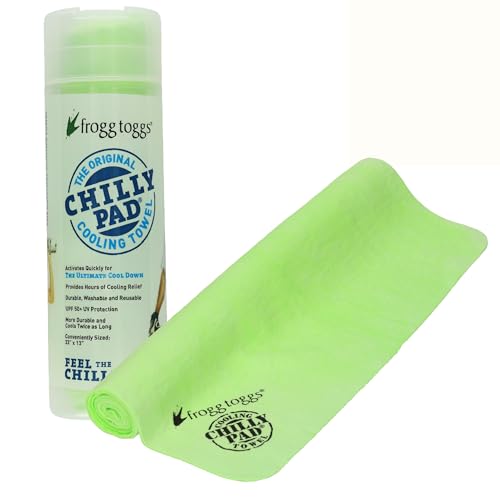
Frogg Toggs Chilly Pad Cooling Towel
The Chilly Pad is the best-known wide chill towel, and it has been a familiar sight at fairs, ball fields and farm stands for years. Frogg Toggs supplies it in a plastic storage tube, which is useful because a damp towel stored loose in a bag can leave everything else wet.
- The flat, wider shape covers more of the neck and shoulders than a thin scarf.
- The tube keeps it contained between uses and in a cup holder.
- The fabric has a chamois-like feel that wrings out quickly.
The trade-off is handling. The material can feel stiff when dry and takes a moment to loosen once damp, and it is not designed to double as a towel for drying your face. Choose it if you want broad coverage and tidy storage. Skip it if you prefer a soft, cloth-like feel against the skin.

Ergodyne Chill-Its 6602 Evaporative Cooling Towel
Ergodyne makes gear for people who work outdoors, and the Chill-Its 6602 is its evaporative cooling towel. The model number matters here because Ergodyne sells several Chill-Its items, such as bandanas and headbands, so searching for the exact code helps you land on the towel.
- It is aimed at tradespeople, landscapers and anyone who spends long hours on site.
- The maker pairs it with other Chill-Its items, so a crew can standardize on one line.
- The design focuses on being worn rather than carried, which suits a long shift.
The compromise is that work-focused gear is practical rather than pretty, and color choices can be narrow. Check the listing for the size and the colors currently offered. Choose it if you need something that can be reordered by the dozen for a team. Skip it if you want a stylish towel for the beach.

Sukeen Cooling Towel
Sukeen is one of the Amazon-focused brands that made the multi-pack cooling towel popular, and its towels are usually offered in sets of several. That makes sense for a family outing, a sports team or a group of friends, because you can hand one out to each person.
- The multi-pack format lets one order cover several people at once.
- Lightweight microfiber-style fabric packs small in a pocket or a purse.
- Color sets help you tell whose towel is whose.
The limitation is that multi-pack towels vary by listing. Pack counts, sizes and colors change, so read the current description closely. Choose it if you want to equip a group in one order. Skip it if you want a single towel from a specialist cooling brand.
Techniche HyperKewl Evaporative Cooling Towel
Techniche is a company known for evaporative cooling products, including vests that many gardeners and athletes know by name. The HyperKewl towel carries that brand focus into a simple towel format.
- A specialist brand means the care and activation steps are clearly explained.
- The towel is part of a larger HyperKewl range, which is handy if you later add a vest or a cap.
- It is well suited to people who already know they want evaporative cooling and will use it often.
The honest limitation is that the format works much like any other evaporative towel, so the main benefit is the specialist brand and range, not a different way of cooling. Choose it if you are building a heat kit around one brand. Skip it if you only need a towel for an occasional hot weekend.
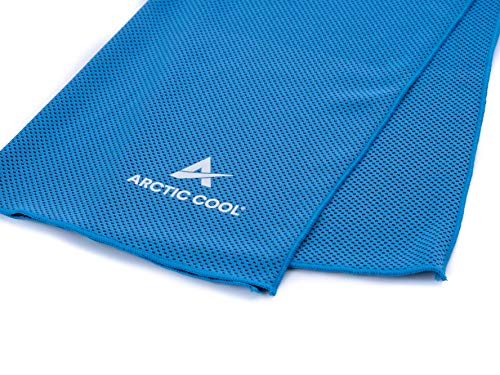
Arctic Cool Instant Cooling Towel
Arctic Cool makes sun and heat gear, and its instant cooling towel is a lightweight option that fits in a bag, a glove box or a stroller pocket. It suits shorter outings where you want something compact for a quick refresh.
- It is light and slim, so it takes almost no room in a day bag.
- A brand known for sun gear pairs well with a hat or sleeves if you build a kit.
- The towel format is easy to rinse and hang to dry after a trip.
The limitation is that a thin towel holds less moisture, so it may need re-wetting more often on a long day. Choose it if you want a compact backup for walks, theme parks or travel. Skip it if you will wear it for hours on a job site.
Comparison Table
| Product | Format | Fabric | Key feature | Best use | Link |
|---|---|---|---|---|---|
| Mission Original Cooling Towel | Long scarf style | Technical cooling fabric | Easy to wear on the neck | Everyday outdoor use | Check on Amazon |
| Frogg Toggs Chilly Pad Cooling Towel | Wide flat sheet | Chamois-style absorbent material | Comes in a storage tube | Fairs, sports and farm work | Check on Amazon |
| Ergodyne Chill-Its 6602 Evaporative Cooling Towel | Worn towel | Evaporative fabric | Made by a workwear brand | Job sites and crews | Check on Amazon |
| Sukeen Cooling Towel | Multi-pack towels | Microfiber-style fabric | Sets for groups | Families and teams | Check on Amazon |
| Techniche HyperKewl Evaporative Cooling Towel | Towel from a cooling range | Evaporative fabric | Part of a wider heat kit | Frequent heat users | Check on Amazon |
| Arctic Cool Instant Cooling Towel | Slim light towel | Lightweight cooling fabric | Packs very small | Travel and short outings | Check on Amazon |
How to Choose a Chill Towel
Use this checklist before you add a towel to your cart. It takes a couple of minutes and avoids the most common disappointments.
- Format. A narrow scarf style stays put on the neck. A wide sheet covers more but may slide.
- Climate. Evaporation is strongest in dry air. In a humid region, expect a gentler effect and re-wet more often.
- Fabric feel. A chamois-like material is stiff and quick to wring. A microfiber-style cloth is softer against the skin.
- Storage. A tube or pouch stops a damp towel from soaking the rest of your bag.
- Quantity. One brand-name towel suits a single user. A multi-pack suits a household or a team.
- Colors. If several people share a bag, different colors avoid mix-ups.
- Return window. Check the seller return terms on the listing so you can swap a towel that does not suit.
Cold Towels Versus Cooling Towels
People search for cold towels when they mean a towel that feels cold, and a chill towel is the everyday answer. The towels in this guide do not arrive cold. They feel cool once they are wet, because water leaving the fabric carries warmth away from the surface. The result is a gentle, lasting coolness, not the sudden chill of an ice pack.
If you want something colder for a short moment, some people keep the damp towel in a small cooler bag before using it. That is a personal choice, and the maker instructions on each listing are the right place to check what a particular fabric allows.
Cooling Towels That Really Work: What to Expect
The honest answer is that cooling towels work well within limits. They feel good on the back of the neck, on the wrists and across the forehead, and many people use them between tasks or during breaks. They are less impressive in thick, humid air where water does not evaporate easily, and in that setting a basic damp cloth can feel almost as pleasant.
When you read a listing, look for a clear explanation of how to activate the towel, how long the cooling feeling is described as lasting and how to re-wet it. Be wary of vague claims about temperature drops. We do not quote any, because we have not measured these towels ourselves.
- Wet the towel fully with cool water.
- Wring it until it stops dripping.
- Snap it a few times if the maker suggests it.
- Drape it over your neck or shoulders and keep it in the breeze.
Cooling Down After Exercise, Work or Travel
Where you plan to use the towel changes which one you should pick. For a walk or run, a slim scarf-style towel is easy to hold or tie. For a landscaping job or a garden day, a wide sheet or a work-oriented towel gives more coverage. For a trip, a thin towel in a zip pouch beats a bulky one.
Think about the whole session too. If you will be away from water for hours, a bottle for re-wetting is as important as the towel itself. A pack of two or more towels lets you rotate while one dries out, which is why group-friendly multi-packs are popular for sports days and outdoor events.
Matching a Chill Towel to Your Day
A chill towel earns its place when it fits a routine, so it helps to picture a typical day before you buy. Here are four common situations and the style that tends to suit each.
- A garden or yard day. You are bending, lifting and moving between sun and shade. A neck-friendly towel that stays put, such as a scarf-style design, keeps your hands free.
- A ball game or school sports day. Several people need towels at once, which is where a multi-pack such as the Sukeen set is practical, and a tube-stored towel like the Chilly Pad is easy to toss in a team bag.
- A shift on site. A work-oriented towel like the Ergodyne Chill-Its 6602 fits a crew that wants to reorder the same item and keep things consistent.
- Travel and theme parks. Queues and long walks reward a slim towel that packs small, so a lightweight option such as the Arctic Cool towel earns its space in a day bag.
If you hesitate between two styles, think about which part of the routine annoys you most. If it is carrying wet gear, choose the one with storage. If it is slipping, choose the narrow scarf shape. If it is running out of towels, choose a pack.
Colors, Sizes and Sets
Chill towels come in a wider range of looks than people expect. Solid colors are practical for work, bright colors help a team keep track of their own, and printed versions suit gifts and children. Whatever you choose, remember that a color which looks bold when dry will usually appear darker once the towel is wet.
Sizes vary even inside one brand. Some listings show a long, narrow towel that is sized for the neck, while others show a larger flat sheet. We do not quote dimensions here because they can change by listing, and the easiest way to avoid a surprise is to compare the numbers on the product page with a towel you already own.
Sets are worth a thought if you plan to give the towels as gifts. A tube or tin makes a cooling towel feel like a finished present, and a multi-pack makes it easy to cover a whole family.
Care and Reuse
Good care keeps a chill towel working across a season. Rinse it after use in plain water, wring it, and hang it in the air rather than stuffing it into a tube while still dripping. A towel stored wet for days can develop a stale smell, so let it dry fully before it goes back in its container.
Follow the maker instructions on the listing for washing. Many cooling fabrics do not like fabric softener or harsh detergent, and some should never go in a dryer. If a towel stiffens as it dries, that is normal for several fabrics; it softens again when wet.
Common Buying Mistakes
- Buying for the wrong climate. A towel that shines in dry heat may feel flat in humid air.
- Ignoring the format. A wide sheet is awkward on a run, and a skinny scarf feels small on a work day.
- Expecting an ice pack. These towels cool by evaporation and feel cool, not frozen.
- Skipping storage. Without a tube or pouch, a damp towel will wet your bag.
- Trusting vague claims. Choose listings that explain activation and care plainly.
How Evaporative Cooling Actually Feels in Practice
A chill towel does not work like an ice pack, and understanding that difference prevents most disappointment. The cloth holds water in its fibers, and as that water slowly evaporates it draws warmth from the surface of your skin. The result feels cool and damp rather than cold and dry, a bit like stepping out of a swimming pool into a light breeze. On a still, scorching afternoon the effect is gentle. In moving air, even the air created by walking or cycling, the same towel feels noticeably cooler because evaporation speeds up. This is why two people can use the same towel on the same day and describe it quite differently.
The Mission Original Cooling Towel and the Arctic Cool Instant Cooling Towel in this guide are built around that soak-and-evaporate idea in a smooth, sporty fabric, while the Frogg Toggs Chilly Pad uses a spongier material that holds more water and feels thicker against the neck. Neither approach is wrong. The thinner cloths are easier to wear under a collar or helmet strap, while the thicker pad style suits breaks, benches and stationary work where you can drape it and leave it in place. Judging a chill towel in the first thirty seconds is a mistake either way, because the cooling builds as evaporation settles into a rhythm.
Expectations matter most in humidity. When the air is already heavy with moisture, evaporation slows and every towel in this category works less dramatically. The towel still shades the neck, wicks sweat and feels cooler than bare skin in most conditions, but it will not reproduce the sharp chill it gives in dry heat. Planning around that reality, by wetting the towel again more often and seeking shade at breaks, gets far better results than blaming the fabric.
It also helps to think of the towel as one part of a cooling routine rather than the whole routine. Water to drink, a hat, shade when you can find it and sensible pacing do the heavy lifting on a hot day. The towel adds comfort at the neck, forehead and wrists, places where a cool touch is felt strongly. Used that way, as a comfort tool inside a sensible day, a chill towel earns its place in the bag.
Soak, Wring, Snap: Getting Activation Right Every Time
Most chill towels follow the same ritual, and small errors in that ritual explain most poor results. Begin by soaking the towel thoroughly, not just splashing the surface. The fibers need to take up water through their whole thickness, which takes a little patience with a denser cloth such as the Ergodyne Chill-Its 6602. Then wring the towel out firmly. This step feels counterintuitive, because it seems as if more water should mean more cooling, but a dripping towel mostly makes your shirt wet. The cloth should feel evenly damp, like a well-wrung dishcloth, with no streams running from the corners.
The final step, shaking or snapping the towel in the air, spreads the fibers and starts air moving through them. Give it a few firm shakes, then drape it where you want it. If the cooling fades after a while, the towel has usually dried out or warmed through, and the fix is simply to repeat the sequence: rewet, wring, shake. On a long shift or a long ride, building that refresh into natural pauses, at water stops, fuel stops or the turn of a match, keeps the towel working without any fuss.
Water source matters less than people fear. Clean tap water is the everyday choice, a water fountain works on the move, and a bottle can revive a towel anywhere. Avoid soaking a chill towel in sugary drinks or leaving it sitting in stagnant water in a hot bag, both of which invite smells and a slimy feel. If the only water available is very warm, the towel will still help once evaporation begins, though the first minutes will feel less refreshing than a cold soak.
Storage between uses completes the routine. Some towels come with a tube or pouch, which is handy for keeping a damp cloth away from the rest of your kit, but a sealed container is a poor long-term home for a wet towel. Once you are home, rinse the towel, let it dry fully in the open air, and only then put it away. That single habit prevents the musty odor that owners most often complain about.
Chill Towels at Work: Yards, Warehouses, Roofs and Roads
Outdoor and physical work is where chill towels quietly prove themselves, because the wearer cannot retreat to air conditioning when the heat builds. A towel worn around the neck shades skin that would otherwise take the sun all day, catches sweat before it reaches the eyes and gives a worker something cool to press against the forehead during a pause. The Ergodyne Chill-Its line in this guide comes from a workwear background, and that shows in the way such towels are sized and sold for job sites, depots and crews rather than for leisure alone.
Different jobs ask different things of the cloth. A gardener or landscaper moves between sun and shade and benefits from a towel that reactivates quickly at the tap. A delivery driver steps in and out of a hot cab and may prefer a thinner towel that can be worn comfortably with a seat belt and re-wet at each long stop. Warehouse staff working near loading doors get moving air whenever the doors open, which suits evaporative fabric well. Roofers and road crews, working in full sun with little breeze, should expect a gentler effect and plan on more frequent rewetting.
Workplace routines help. Wetting the towel at the start of a shift, again at the main break and once more in the hottest part of the afternoon creates a rhythm that matches the day. Supervisors who provide a clean water point and a place to hang towels between shifts make adoption far more likely than any instruction sheet. For the individual worker, keeping a spare dry towel in the locker means a forgotten or sour-smelling cloth never ruins the plan.
Safety awareness still comes first, and a towel is never a substitute for it. Heat illness is a serious risk in physical work, and feeling more comfortable can mask how hard the body is working. Keep drinking water, take the breaks your workplace schedules, and treat dizziness, confusion or a sudden stop in sweating as warning signs to stop and seek help, not as problems a cooler towel can fix. The towel is for comfort within a safe routine, never a reason to extend a shift in dangerous heat.
Matching a Chill Towel to Your Sport
Runners were among the earliest adopters of cooling towels, and their use pattern is distinctive: the towel often waits at the finish or at a crew point rather than traveling the whole route. A light cloth such as the Sukeen Cooling Towel, sold in multi-packs that suit training bags and family sports kits, can be soaked before a race and kept in a sealed pouch until it is needed. After a hard effort, draping it over the neck and shoulders while walking and drinking helps the cool-down feel civilized, even on a crowded finish straight.
Cyclists and golfers meet heat differently, in long, steady exposure with regular pauses. A cyclist can wear a slim towel under a jersey collar on climbs and rewet it at cafe stops, while a golfer drapes one over the neck between shots and keeps it in the cart or bag while swinging. In both sports the towel must stay out of the way of movement, so thinner, smoother fabrics usually beat thick pads. The Techniche HyperKewl style of towel, with its more technical construction, appeals to buyers who spend whole days outdoors and want a cloth that feels engineered rather than improvised.
Team sports and court sports create short, intense bursts of heat. Here the towel lives on the bench, and its job is to cool a player quickly during substitutions and time-outs. A larger cloth that can cover the head, neck and shoulders at once is more useful than a slim strip, and multi-packs make sense because several players reach for a towel at the same moment. Coaches who rotate two sets, one in use and one soaking, keep the bench supplied without anyone waiting.
Whatever the sport, test the towel in training before relying on it in competition. Learn how long yours stays cool at your pace, how it sits with your kit, and where you will rewet it. A towel that annoys you at mile two of a practice run will not improve on race day, while one you have dialed in becomes as automatic as tying your shoes.
Travel, Festivals and Long Days on Foot
A chill towel takes up almost no room in a day pack, which makes it a natural travel companion for hot destinations. Sightseeing on foot, queuing for attractions and riding crowded transport all build heat slowly, and a damp towel around the neck makes those waits far more pleasant. Because the towel only needs water to work, it suits places where buying ice or finding air conditioning is not practical. Travelers often discover that the same towel also serves as a light scarf on a cool evening bus ride or as a makeshift pillow cover, which is the kind of double duty that earns space in a small bag.
Festivals and outdoor events reward a little preparation. Wet the towel before you enter, carry it in its pouch or a simple zip bag, and know where the water points are so you can refresh it through the day. A multi-pack such as the Sukeen set lets a group share the idea without arguments, and different colors help everyone keep track of their own towel in a shared tent or rental house. At the end of the day, rinse the towel wherever you are staying and hang it where air can reach it overnight.
Theme parks and family days out deserve a special mention, because children and older relatives often feel heat sooner than the person who planned the day. A spare towel, already soaked and ready, can rescue a fading afternoon. Keep expectations gentle: the towel adds comfort, but shade, drinks and a slower pace after lunch still matter more. Planning a sit-down break in the hottest hour does more for a family than any single product.
On the journey home, a damp towel sealed in a bag for many hours can emerge smelling stale, so rinse and dry it before a long travel day when you can. If that is not possible, open the bag as soon as you arrive and wash the towel before storing it. These small courtesies to your future self are what keep a travel towel pleasant season after season.
When a Chill Towel Is the Wrong Tool
Honest guidance includes the limits. A chill towel will not cool a room, chill a drink or replace shade, and it does very little in a steamy indoor space where the air cannot take up more moisture. In those settings, moving air from a fan, a cold drink and lighter clothing will do more. The towel also needs water to work, so on a dry trail with a strictly rationed supply, drinking that water matters more than soaking a cloth. Carrying the towel for the descent or the finish, when water is available again, is the smarter plan.
Shared towels are another poor idea. A cloth that sits damp against skin should belong to one person for the day, then be washed. Multi-packs exist partly for this reason: everyone gets their own color, and nobody has to negotiate. In workplaces and teams, labeling or color-coding towels is a small system that prevents a genuinely unhygienic habit.
People with sensitive skin should also pay attention to how any new fabric feels over a full day, and stop using a towel that irritates. Rinsing a new towel before first use, washing it regularly and letting it dry fully between uses keeps the cloth itself fresh. These are ordinary textile habits, but a towel worn against the neck for hours deserves the same care as the shirt worn under it.
Finally, a chill towel is not protective equipment. It does not block the sun like a hat or sunscreen, and it does not make extreme heat safe. Treat it as what it is, a simple, effective comfort aid, and it will rarely disappoint you.
Comparing the Picks in This Guide, Head to Head
Buyers usually narrow this list to a style first and a brand second. The spongy Frogg Toggs Chilly Pad feels substantial and holds a generous amount of water, which suits stationary work, fishing, spectating and anyone who likes a towel with real presence on the shoulders. The smoother sport towels, represented here by the Mission Original and the Arctic Cool, feel sleeker, pack smaller and sit more neatly under clothing, which suits runners, cyclists and travelers. Choosing between those two families is the main decision in this whole category.
The Ergodyne Chill-Its 6602 speaks to the work buyer, with a job-site pedigree and a design meant to be worn for a full shift. The Techniche HyperKewl towel speaks to the technical buyer who spends long days outside and reads construction details closely. The Sukeen towels speak to the household buyer, where value in a multi-pack, a choice of colors and enough towels for the whole family matter more than any single feature. None of these positions is a compromise; each is the right answer for a different drawer, bag or locker.
If you are buying your first chill towel, the safest route is one mid-sized towel in the style that matches your main activity, used for a few hot days before you buy more. You will quickly learn whether you prefer thick or thin, long or compact, and whether a pack would serve you better. A second purchase made with that knowledge is almost always more satisfying than a large first order made on guesswork.
Whichever pick you choose from this guide, judge it after several proper uses, soaked, wrung and aired as described above. A chill towel assessed fairly, in the conditions it was designed for, usually turns out to be a modest product that does a simple job well, and that is exactly what a hot day asks for.
Building a Small Hot-Weather Kit Around Your Towel
A chill towel works best as part of a small, deliberate kit rather than as a lone purchase tossed into a bag. The other members of that kit are humble: a refillable bottle you actually like drinking from, a hat that shades the neck as well as the face, and a simple plan for where shade and water will be found during the day. Put together before the heat arrives, those four things change the character of a hot afternoon. You stop reacting to discomfort and start managing it, refreshing the towel at the same stops where you refill the bottle and rest in the shade.
Where you keep the kit matters too. A towel stored with sports gear gets used for sport, while one kept in a work bag or car door pocket gets used on the days that ambush you, the unexpectedly hot commute, the delayed train, the sideline of a child’s game. Many owners end up with two towels for exactly this reason, not because one wore out but because heat turns up in more than one part of life. A multi-pack bought once and split between locations is often the most practical way to cover both.
At the end of the season, give the kit ten minutes of attention. Wash the towels, dry them completely, check the bottle and hat, and store everything where you will find it when the first hot day returns. That small ritual is the difference between a towel that serves for years and one that is rediscovered, stiff and stale, at the bottom of a bag next summer.
Final Recommendation
Pick by the way you will use it. For most readers, the Mission Original Cooling Towel is the best all-round choice because its format is easy to wear and the brand is easy to recognize. If you want broad coverage and tidy storage, the Frogg Toggs Chilly Pad is the better fit.
- Everyday outdoor use: Mission Original Cooling Towel.
- Wide coverage: Frogg Toggs Chilly Pad Cooling Towel.
- Job sites: Ergodyne Chill-Its 6602 Evaporative Cooling Towel.
- Families and teams: Sukeen Cooling Towel.
- Heat kit builders: Techniche HyperKewl Evaporative Cooling Towel.
- Travel and short outings: Arctic Cool Instant Cooling Towel.
Check the current listing for size and colors, then order the one that matches your day. Our two top picks are right here.
Frequently Asked Questions
How do I choose the right size of chill towel?
Think about where you will wear it. A narrow towel fits the neck and wrists, while a wider sheet covers the neck and shoulders. Check the dimensions on the listing, because sizes vary between brands and between packs.
Do chill towels come already cold?
No. They are activated with water and feel cool as the water evaporates. If you want a colder start, some people keep the damp towel in a cooler bag, but check the maker instructions first.
How do I care for a cooling towel?
Rinse it in plain water, wring it, and let it air dry before storing it. Look at the care notes on the listing, since some cooling fabrics should not be put in a dryer or washed with softener.
Can I return a towel that does not suit me?
Return terms depend on the seller and the date you order. Read the return policy on the listing before buying, and keep the packaging until you are sure the towel is right for you.
Will a chill towel work in humid weather?
It will still feel pleasant, but the effect is generally gentler in humid, still air because water evaporates more slowly. A breeze or a fan helps a lot.
Is a multi-pack better than a single towel?
A multi-pack is better when several people will use towels or when you want to rotate one while another dries. A single towel from a specialist brand is better when you want a specific format.
Can I use a chill towel as a regular towel?
Most are designed for cooling, not for drying after a shower. Treat them as a separate item and use a regular towel for drying your face or body.
Which towel is easiest to pack for a trip?
The slim, lightweight options pack smallest, and a towel with its own tube or pouch keeps a damp towel from wetting your bag. Compare the format column in the table above.
Can I wear a chill towel while driving?
Many people do on long, hot drives, wearing it loosely around the neck and rewetting it at rest stops. Keep it clear of anything that could catch, take it off if it distracts you, and remember that air conditioning and regular breaks do more for alertness than any towel.
Will a chill towel work over sunscreen?
Yes, though sunscreen can transfer to the fabric over a day of wear. Rinse the towel after use and wash it regularly so residue does not build up. Applying sunscreen a little before you set out, so it settles on the skin, also reduces transfer.
How do I stop my chill towel smelling after a few uses?
Rinse it after each use, wash it according to its care guidance, and always let it dry fully in open air before storing it. A towel put away damp is the usual cause of odor. A towel that already smells should be washed and dried thoroughly in moving air before its next outing.
Can children use chill towels?
Families commonly use them for sports days and trips, with an adult handling the soaking and wringing. Choose a size the child can wear comfortably, supervise younger children as you would with any item worn around the neck, and make sure drinks and shade remain the first response to a hot, tired child.
Is a chill towel useful in winter or indoors?
Its main season is warm weather, but some people use one in hot indoor settings such as busy kitchens, workshops or gyms where the air is warm and moving. In a cool room it simply behaves like a damp cloth, so most owners pack theirs away until the weather turns.
How long should a chill towel last?
With rinsing after use, regular washing and full drying between outings, a well-made towel should serve through many hot seasons. Retire a towel that has thinned, torn or kept an odor after a thorough wash, since the fabric itself is then past its best.
Can I cut a large chill towel to a smaller size?
Some owners do trim a towel for a child or for a specific bag, but cutting can affect hems and how evenly the cloth holds water, and it may affect any return options. Check the maker’s guidance first, and consider simply folding a larger towel, which keeps all your options open.
Should I keep a chill towel in the car?
A dry towel in the car is a sensible hot-weather habit, ready to soak at a tap or from a water bottle when you need it. Store it dry rather than damp, and bring it indoors for a wash after a trip rather than leaving it in a hot vehicle for weeks.