Disclosure: As an Amazon Associate, reviewstook.com earns from qualifying purchases. Links to Amazon on this page are affiliate links; they cost you nothing extra. Listing details such as price and availability change often, so check the current Amazon listing before you buy.
The best hammock chairs give you the relaxed sway of a hammock in a shape you can sit up in, with a seat that cradles you and a rope or strap that hangs from a beam, a stand or a sturdy branch. If you want a reading perch on the porch, a lazy corner in the garden or a hanging seat for a sunroom, this guide compares six hanging hammock chairs and tells you who each one is for.
A hammock chair is a very different purchase from a regular outdoor chair. Most of what matters happens before you sit down: where you hang it, what you hang it from, how it is fitted and whether the seat style suits you. We cover those practical points alongside the chairs themselves.
For every product you will find who it suits, three strengths, one honest limitation and a choose-it or skip-it line, followed by a comparison table, a buying checklist, hanging notes, common mistakes and answers to the questions shoppers ask most.
In this guide
Quick Picks
| Need | Pick | Why it stands out | Check it |
|---|---|---|---|
| Best overall rope hammock chair | Lazy Daze Hammocks Hanging Rope Chair | Classic woven rope look with a roomy seat | Check on Amazon |
| Best for small spaces | Y-Stop Hammock Chair Hanging Rope Swing | Compact hanging seat that folds down small | Check on Amazon |
| Best value-for-money entry pick | Best Choice Products Hanging Rope Hammock Chair Swing | Straightforward design from a mainstream brand | Check on Amazon |
| Best for a modern look | SUNCREAT Hammock Chair | Fabric seat with a contemporary profile | Check on Amazon |
| Best traditional woven pick | Hatteras Hammocks Hanging Chair | Heritage rope-hammock styling | Check on Amazon |
How We Picked These Hammock Chairs
We have not hung, sat in or swung on any of these chairs. The list is built from manufacturer listings, product descriptions and the general standing of each brand. We looked for hammock chairs that are sold as complete hanging seats, with clear descriptions of materials and a style that suits home use.
We chose a mix of cotton rope, polyester rope and fabric designs so that you can compare looks and care routines. We do not make claims about weight limits, strength or long-term durability, because those belong to the maker’s label and instructions. Read them in the listing, and always check that your hanging point and hardware are suitable.
Listings change, and the same product name can include different colours, sizes and hardware kits. Treat the current page as the final word on what comes in the box.
One more point on how we compared. A hammock chair is partly a product and partly a plan, so we gave extra weight to listings that explain what is included, how the chair hangs and which materials it uses. Where a listing is thin on detail, we say so in the product section, and we suggest the questions to look for in the customer answers before you order. If a seller cannot tell you how the chair is meant to be hung, that is a reason to look at another option.
6 Best Hammock Chairs
Lazy Daze Hammocks Hanging Rope Chair
Who it suits: Garden and porch owners who like the traditional look of woven rope and want a roomy seat.
Lazy Daze Hammocks is a brand known for hammocks and hanging seats, and its rope chair follows the classic pattern of a spreader bar with woven rope sides. The shape has a relaxed, holiday feel and works equally on a covered porch or beneath a tree.
- A woven rope design gives a classic, breezy appearance.
- A wooden spreader bar keeps the seat open and easy to sit in.
- A wide seat style suits sitting upright or leaning back with a cushion.
Honest limitation: Rope can feel firm against bare skin, so most buyers add a cushion or throw.
Check the listing to see which hanging hardware is included and what it is made from. Plan where you will hang it, and have any ceiling or beam fixing done by a qualified person if you are not sure what your structure can take.
Choose it if you want the classic rope hammock look. Skip it if you want a fully padded seat out of the box.

Y-Stop Hammock Chair Hanging Rope Swing
Who it suits: Anyone with limited space who wants a hanging chair that packs down and moves with them.
Y-Stop sells a range of hanging chairs and hammock accessories. Its hanging rope swing chair is typically offered with a seat that folds small, so you can take it down in the winter or bring it on a trip.
- A foldable seat makes it easier to store than a rigid frame.
- A simple rope and fabric design keeps the look light.
- Colour options in the listing help you match your outdoor space.
Honest limitation: A lighter, simpler chair may offer less structure than a heavier woven rope design, so it suits relaxed sitting rather than long lounging.
Check what hanging hardware is included and whether the listing mentions extra items such as cushions. Because this chair is easy to take down, it is a good choice if you rent or move often.
Choose it if you want portability. Skip it if you want a chair with a heavy, solid frame.
Best Choice Products Hanging Rope Hammock Chair Swing
Who it suits: First-time buyers who want a recognisable online brand and a simple chair.
Best Choice Products is a mainstream online furniture brand with a broad range of outdoor items. Its hammock chair swing is a straightforward design that appears in many first-time buyer lists.
- A simple structure is easy to understand and set up.
- Rope and fabric combine to give a soft, relaxed look.
- A mainstream brand can make it easier to find answers and customer feedback.
Honest limitation: A basic design means fewer extras, such as padded seat options or special finishes.
Read the product description and look at customer photos to see how the chair looks when hung. A hammock chair is only as good as its hanging point, so spend time planning the location before you worry about the colour.
Choose it if you want a simple first hammock chair. Skip it if you want high-end materials.
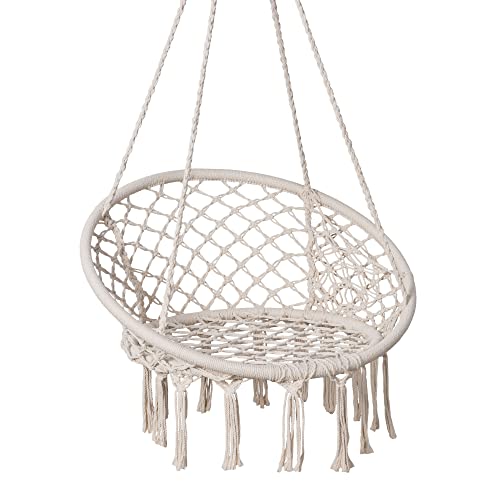
SUNCREAT Hammock Chair
Who it suits: Buyers who prefer a modern fabric look to a traditional rope weave.
SUNCREAT sells hanging chairs aimed at contemporary patios and indoor spaces. A fabric seat gives a smoother surface than rope and suits a cleaner, minimalist style.
- A fabric seat gives a smooth, modern appearance.
- The design suits balconies, patios and indoor reading corners.
- Padded or cushion options may be offered, depending on the listing.
Honest limitation: Fabric needs more care than rope, particularly outdoors, and may fade or stain if left in the weather.
Check whether the listing describes the chair for indoor, outdoor or both. If it will hang outdoors, take it down in heavy weather and store it dry when you are not using it.
Choose it if you like a clean, modern look. Skip it if you want a classic woven rope style.
Hatteras Hammocks Hanging Chair
Who it suits: Anyone who values a traditional rope-hammock heritage and a sunny porch look.
Hatteras Hammocks is associated with traditional hand-woven rope hammocks from the American South, and its hanging chair follows the same tradition. The brand is a natural choice for buyers who prefer classic materials.
- A traditional woven construction fits a porch or garden setting.
- A rope design gives a breathable, open feel in warm weather.
- The brand story appeals to buyers who like heritage products.
Honest limitation: Traditional rope chairs tend to sit at the premium end compared with basic fabric ones, and the weave needs care to keep looking its best.
Look at the listing for the rope type and the hardware included. Keep the chair dry when you are not using it, and follow the maker’s instructions for storage and cleaning.
Choose it if you want a classic porch hammock chair. Skip it if you prefer a modern fabric design.
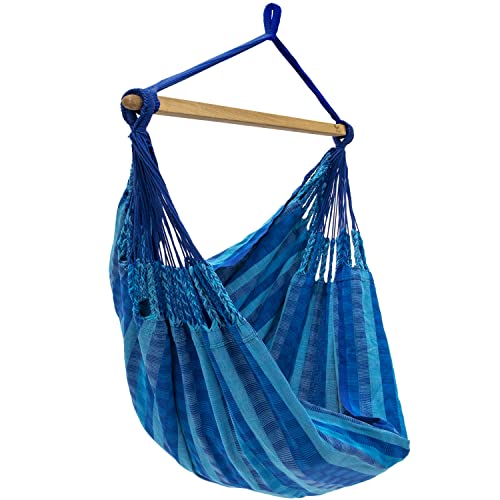
Vivere Hammock Chair
Who it suits: Households that want a hammock chair from a brand better known for hammocks, with a relaxed deck or patio feel.
Vivere is a hammock brand that sells hammocks, stands and hanging seats. A hammock chair from the range suits buyers who want a recognisable name in the category and an easy match with other hammock gear.
- A hammock-first brand focuses on hanging comfort.
- It can pair with stands and accessories from the same maker.
- A relaxed shape suits sunny decks and patios.
Honest limitation: The range of designs is wide, so you need to be sure which version you are ordering.
Check the listing for the stand or hanging method, as some designs need a separate stand. Confirm that the hardware included matches the way you plan to hang it.
Choose it if you like buying from a hammock specialist. Skip it if you want a chair that arrives with every accessory included.
Comparison of All Six Chairs
| Chair | Material | Key feature | Best use | Check it |
|---|---|---|---|---|
| Lazy Daze Hammocks Hanging Rope Chair | Woven rope, wood bar | Classic spreader bar | Porch or garden | Check on Amazon |
| Y-Stop Hammock Chair Hanging Rope Swing | Rope and fabric | Folds small | Small spaces and renters | Check on Amazon |
| Best Choice Products Hanging Rope Hammock Chair Swing | Rope and fabric | Simple design | First hammock chair | Check on Amazon |
| SUNCREAT Hammock Chair | Fabric | Smooth modern seat | Patios and indoor corners | Check on Amazon |
| Hatteras Hammocks Hanging Chair | Woven rope | Traditional heritage | Sunny porches | Check on Amazon |
| Vivere Hammock Chair | Hammock fabric or rope | Hammock-specialist brand | Decks and patios | Check on Amazon |
How to Choose a Hammock Chair
Use this checklist to compare listings:
- Hanging method. Decide whether you will hang from a ceiling beam, a tree branch, a stand or a porch frame.
- Included hardware. Check whether the listing includes a hanging kit and what it is made from.
- Seat style. A spreader bar holds the seat open, while a bare fabric sling folds around you.
- Material. Rope is breathable and classic, and fabric is smooth and modern.
- Cushions. Confirm whether cushions are included, since many chairs are sold without them.
- Indoor or outdoor. Read what the maker describes the chair for.
- Folded size. Compare packed dimensions if storage space is limited.
- Return terms. Read the seller’s policy before you order.
Where and How to Hang a Hammock Chair
The hanging point is the most important part of owning a hammock chair, so it deserves careful thought. A ceiling beam, a purpose-built stand and a well-chosen tree limb are common choices. Each has its own requirements, and none should be treated casually.
Follow the maker’s instructions and use the hardware that is recommended for your type of ceiling, beam or frame. If you are not sure about your structure, or if the installation involves drilling into ceilings, joists or masonry, ask a qualified professional to do the work. Check local rules and, if you rent, ask your landlord first.
Give the chair room to swing. Leave clear space on all sides, avoid hanging it above hard surfaces or close to walls, and keep furniture and plants out of its arc. Inspect the rope, hardware and fixings from time to time, and replace anything that looks worn.
Rope or Fabric: Which Seat Suits You
Rope seats have a breezy, open feel and a timeless look. They suit warm climates and covered porches, and they pair well with soft cushions. The weave can pattern the skin if you sit without a cushion, so add padding if you like to stay a while.
Fabric seats are smooth, cleaner in line and often easier to wipe. They suit modern balconies and indoor spaces. They need more care outdoors, since sun and damp can affect them, and they can feel warmer in hot weather.
If you cannot decide, think about where the chair will hang and how you will use it. A covered porch with a cushion can host a rope chair for years, while an indoor reading corner suits a fabric seat. Choose the one that matches your space rather than just the picture.
Making a Hammock Chair More Comfortable
Most hammock chairs benefit from a few simple additions. A large cushion adds softness to the seat, a smaller one supports your back, and a throw adds warmth on cool evenings. Choose cushions designed for outdoor use if the chair will be outside.
A footrest or small ottoman lets you stretch your legs. A side table within reach turns the chair into a proper reading spot. Place a rug under the chair to define the area and to protect the floor from scuffs.
Hammock Chair Styles Explained
Spreader bar chairs use a horizontal wooden bar to hold the seat open. They are easy to climb into and sit in because the fabric or rope does not collapse around you. The bar adds a classic look, but it also adds weight and bulk when you store the chair.
Sling chairs have no bar. The fabric or rope forms a pouch that wraps around you, which many people find cozier. They fold down very small, but they take a moment to get used to, because the seat hangs closer around the body.
Macrame and egg-style chairs use decorative knotting or a rounded frame for a more interior-design look. They suit sunrooms and bedrooms, and the listing will usually say whether they are meant for indoor or outdoor hanging.
Think about how you want to sit. If you like to perch and read, a bar chair gives a steady, open seat. If you like to curl up, a sling is more enveloping. If you want the chair to be a decorative feature, a macrame or egg style is hard to beat.
Hammock Chairs for Different Spaces
Covered porch: A rope chair such as the Lazy Daze or Hatteras designs suits the shade and the airflow, and a cushion keeps it welcoming. Make sure the beam you hang from is suitable, and leave room around the swing arc.
Garden or tree: If you hang from a tree, use hardware designed for the purpose and inspect the branch regularly. Many buyers prefer a stand because it avoids any question about the tree and can be moved around the lawn.
Balcony or small patio: A foldable chair such as the Y-Stop design makes sense when space is tight. Check any building rules before you hang anything from an overhead structure.
Indoor reading corner: A fabric chair such as the SUNCREAT is easy to style with a rug and a lamp. Make sure the ceiling fixing is suitable and installed by someone qualified.
Kids and family areas: Hammock chairs are popular with children, so read the maker’s instructions about who may use the chair and whether adult supervision is expected.
Weather and Seasonal Care
Sun, rain and damp are the main enemies of outdoor soft goods. Rope can mildew when stored damp, and fabric can fade under strong sun. A simple routine solves most problems: bring cushions inside after use, take the chair down in heavy weather, and let it dry fully before you pack it away.
In winter, store the chair in a dry place such as a closet, a garage shelf or a storage bin. Fold it according to the maker’s instructions, and avoid compressing it under heavy items. When the season returns, check the rope, seams and hardware before you hang it again.
Care and Storage
| Material | General care idea |
|---|---|
| Cotton rope | Keep it dry, brush off dirt and store indoors in damp seasons |
| Polyester rope | Wipe with mild soap and water, then air dry |
| Fabric seats | Spot clean gently and follow the maker’s care label |
| Wood spreader bar | Wipe clean and keep out of standing water |
Always follow the maker’s instructions for cleaning and storage, and bring the chair indoors if the forecast is harsh.
Common Buying Mistakes
- Buying before planning the hanging point. Decide where and how it will hang first.
- Assuming hardware is included. Read the listing carefully.
- Forgetting cushions. Many chairs are sold without them.
- Ignoring the weather. Match the material to the climate and shelter.
- Skipping clearance. A swinging chair needs space on every side.
Final Recommendation
Here is how we would match chair to buyer:
- For a classic porch look: Lazy Daze Hammocks Hanging Rope Chair.
- For small spaces and renters: Y-Stop Hammock Chair Hanging Rope Swing.
- For a first purchase: Best Choice Products Hanging Rope Hammock Chair Swing.
- For a modern fabric look: SUNCREAT Hammock Chair.
- For traditional heritage: Hatteras Hammocks Hanging Chair.
If you want to narrow it down to two, these are the listings we would open first.
The Physics of Sitting in Air: How a Hammock Chair Holds You
A hammock chair looks like the simplest furniture in this entire series and behaves like the most engineered, because its structure is tension itself. Your weight travels from the fabric or ropes into a spreader bar or a gathered point, then up a single suspension to whatever holds it, and every part of that path shapes how the chair feels. A wide spreader bar opens the seat into a chair shape with a defined back; a gathered design wraps closer, cocooning the sitter and swinging more freely. Neither is better, but they are different experiences wearing the same name, and the picks in this guide divide along exactly that line, so the first decision is which embrace you want: the open chair or the close wrap.
Swing, sway and stillness
Every hanging chair moves, and the character of its movement is set by the suspension length and the seat design. A longer drop swings in a slower, grander arc; a shorter drop feels tidier and calmer. Rope seats stretch subtly over their first weeks and settle into their true shape, which is why a new rope chair can feel higher and tighter than the same chair a month later. Sitters who love motion choose the freer designs; sitters who want to read, work or hold a drink choose the calmer end, add a footrest on the ground to damp the swing, and position the chair where a toe can reach a post or a floor to steady it. Knowing which sitter you are is worth more than any single feature in this guide.
The sit itself: getting in and out gracefully
There is a small technique to a hanging chair, learned in a day and useful for every guest you ever hand the chair to. Back up to the seat, take the fabric or the ropes in both hands, sit into the lowest point rather than onto an edge, and let the chair take your weight before arranging your legs. Getting out reverses it: feet planted, hands on the sides, stand out of the low point rather than rolling sideways. Teach guests with a sentence and a demonstration rather than letting them discover the physics mid-embarrassment, because a hanging chair that tips a first-time sitter is remembered for the wrong reason, while a hanging chair entered confidently becomes the seat everyone asks for.
Hanging the Chair: Beams, Branches, Stands and Ceilings
The chair is only half the purchase; the other half is whatever it hangs from, and that half deserves a full measure of respect. Indoors, a ceiling joist is the honest anchor, found with a stud finder and confirmed, because plaster and drywall alone hold nothing but their own weight. The hardware should be made for suspension loads, installed into the structure, and checked by loading it gradually with your own weight before the first full sit. On a porch, a beam that carries the roof is the equivalent anchor, and the same gradual test applies. In a garden, a healthy, substantial branch can serve, chosen for its thickness and its angle, with the strap or rope arranged so it does not saw into the bark through a summer of small movements.
A stand removes every structural question at the price of a footprint, and for renters, for rooms whose joists run the wrong way, and for anyone who wants the chair to migrate between sun and shade, the stand is often the wisest half of the purchase. Judge a stand as furniture in its own right: its arc decides the chair’s swing clearance, its base decides its stability on your floor or lawn, and its finish decides whether it lives outdoors or rusts there. The Vivere approach in this guide, pairing chair and stand thinking from the start, suits buyers who want one decision instead of two. Whichever route you choose, leave the swing its space: a hanging chair needs a clear circle around it, and the radius that feels generous on day one feels merely adequate once the chair is loved and swinging properly.
How the Six Picks Suit Different Sitters and Spaces
The Lazy Daze and Hatteras chairs represent the rope tradition at its most established, hammocks from makers whose names are attached to the craft itself, and they suit buyers who want the classic open rope seat, its airflow on hot days and its honest, stretch-and-settle character. The Y-Stop and Best Choice Products chairs bring the hanging chair to a wider audience, designs that pair the rope seat with cushions and a more furnished feel, suiting sitters who want the sway with a softer landing and porches where the chair is part of a decorated scheme. The SUNCREAT leans into comfort features and a generous seat, a good match for larger sitters and for anyone whose hammock chair will be a daily reading station rather than an occasional delight. The Vivere, as noted, thinks in systems, chair and hanging solution together, and suits the buyer furnishing a corner completely in one decision.
Space referees the final choice as much as taste does. A rope chair in a small room reads as a sculpture and swings in a tight, precious arc; the same chair under a garden tree becomes the property’s best feature. Indoors, measure the swing circle against the furniture honestly and give the chair the corner where its movement is a pleasure rather than a negotiation with a bookshelf. Outdoors, hang it where the view rewards lingering, because a hanging chair is a lingering machine, and a chair hung facing a fence will be admired and unused while a chair hung facing the garden’s long view will be occupied every fine evening of the year.
Making the Chair Yours: Cushions, Footrests and Shade
A hammock chair accepts accessories gratefully, and three of them transform it. The first is a cushion chosen for the seat’s actual shape, thin enough to keep the chair’s embrace and firm enough to spread the pressure of the ropes or the fabric’s seams; many sitters find a simple folded throw does the same job and washes more easily. The second is a footrest solution, which can be as simple as a low stool or a pouf placed at the swing’s resting point, turning the chair from a seat into a near-recline and giving the sitter a way to still the swing without a foot on the ground. The third is shade, because a hanging chair in full afternoon sun is a beautiful object nobody sits in; hang it where the day’s kindest light falls, or arrange the shade as deliberately as the chair itself.
Beyond those three, restraint is the styling rule. A hanging chair is already the most expressive object in any space it occupies, and it needs no competition: one plant, one small table within the swing’s reach but outside its arc, one light for the evening, and the corner is complete. The table’s placement deserves its sentence, because a table inside the swing’s path will be met, eventually, by the chair, and the meeting is always won by momentum. Place it where a seated hand reaches at rest, and test the full swing empty before the first drink is entrusted to it.
Weather, Seasons and the Rope Chair’s Year
A hanging chair’s relationship with weather is simpler than most outdoor furniture, because it can leave. Rope and fabric seats unclip or untie and come indoors in minutes, and the households that enjoy their chairs longest are the ones that treat that as the design’s central virtue rather than an inconvenience. Through the season, hang the chair dry after rain before sitting, because a rope seat holds water in its fibers and rewards patience with a longer life; a chair stored damp, in a shed or a bag, will develop the musty smell and the weakened fibers that end rope furniture’s lives early. Sun is the slower adversary: fibers fade and eventually tire under years of ultraviolet, and a chair hung in dappled shade will outlast its twin in full sun by a margin that justifies choosing the shadier branch.
Winter asks for one clean, dry storage: wash the seat if the maker permits, dry it completely in moving air, coil ropes loosely rather than in tight knots that set into the fibers, and store the whole chair somewhere dry and aired. In spring, hang it and load it gradually the first time, checking the suspension and the seat’s attachment points with your hands before your weight. That five-minute spring ritual, repeated yearly, is the entire maintenance contract of a well-made hanging chair, and it is a lighter contract than almost any other furniture in this series carries.
More Questions Hammock Chair Buyers Ask
Can a hammock chair be a real reading chair?
Yes, and for many owners it becomes the reading chair, because the slight motion keeps the body awake while the mind wanders into a book. Set it up for the purpose: the swing damped by a footrest, the light arranged over a shoulder, the cushion supporting the lower back, and a table at the resting point for the book and the drink. Readers who arrange those four things stop migrating between seats and simply live in the chair for whole afternoons.
Is a hanging chair safe for children?
With the ordinary supervision any moving furniture deserves, yes, and children generally adore them. The rules are simple and enforceable: one child at a time, sitting rather than standing or launching, no twisting the chair up to spin it down, which stresses the suspension and the sitter alike, and an adult installs and checks the hanging rather than treating it as a toy’s accessory. Set the chair’s height so small feet can reach the ground, and the chair becomes one of the garden’s kindest seats for them.
What if my chair swings more than I want?
Shorten the effective suspension if your setup allows it, add the footrest to damp the motion, and check that the chair is not hanging from a point that lets it rotate freely if rotation is the problem rather than swing. A chair that turns slowly like a weather vane usually wants its suspension arranged as the maker intends, in a configuration that resists twisting. Small adjustments change the character completely, so experiment before concluding the chair is wrong for you.
How do I know the hanging point is strong enough?
Use structure, never surface: a joist, a beam, a sound branch, hardware made for the purpose, and a gradual test with your own weight, bouncing gently before sitting fully. If any element is a guess, the stand is the honest answer, and there is no shame in it; a stand turns an uncertain installation into a certain one and lets the chair move house with you. When in doubt, have the point checked by someone who works with structures for a living, because this is the one part of the purchase where caution is the whole game.
Hammock Chairs Indoors: The Winter Room’s Best Trick
Buyers often meet these chairs as garden furniture and miss their second career: the indoor hanging chair is one of the most effective ways to change a room’s feeling without changing its furniture. A spare corner in a living room, a wide landing, a child’s bedroom, a conservatory, any of these gains a destination when a chair hangs in it, because a hanging seat signals permission to linger in a way a standing room rarely does. Indoors, the chair asks for the same structural honesty as outdoors, a joist and proper hardware or a stand, and it repays the effort by being the seat guests ask about and children negotiate for. In a rental, the stand version keeps the ceilings innocent and the chair portable between homes, which is why so many indoor hanging chairs live on stands even where a joist was available.
Styling indoors follows the outdoor rule of restraint with one addition: mind the floor. A hanging chair’s sitter arrives with feet that swing slightly before they settle, and a rug beneath the chair both defines its territory and protects the floor from the gentle traffic of heels and chair legs of nearby furniture being nudged. Give the indoor chair its light and its small table as you would outdoors, keep its swing circle clear of anything fragile or beloved, and the room gains a piece of furniture that behaves like a small holiday, available every evening of the year regardless of weather.
Hosting Around a Hanging Chair
A hanging chair changes a gathering’s social physics in ways worth planning for. It becomes, instantly, the seat of honor, and guests will rotate through it all evening if the host lets the rotation happen gracefully: place it where its sitter remains part of the conversation’s circle rather than exiled to a scenic corner, because a guest swinging alone with a view is a guest lost to the party. Face the chair’s resting position toward the group, keep its drink table stocked, and let people discover that the chair’s gentle motion is compatible with talking, laughing and holding a plate with care. Children will claim it in shifts that need light refereeing, one at a time, sitting properly, and the chair survives the evening easily when those two rules are held kindly from the start.
When the gathering ends, the chair asks for the least of any furniture you own: a check that it hangs dry or a trip indoors if rain is coming, and nothing else. Hosts who add a hanging chair to a patio set often find it becomes the piece the whole set is remembered by, the seat in the photographs, the one described to friends afterward. That is a large return on a chair that stores in a cupboard, and it explains why so many owners, having bought one for a quiet corner, end up hanging a second where the people are.
Troubleshooting: Stretch, Twist and the Chair That Hangs Crooked
A new rope chair that sits higher than expected is not faulty; it is unstretched, and a week of honest use settles it to its working height, which is why hanging height should be judged after that week rather than adjusted hourly on day one. A chair that hangs crooked usually has an uneven cause: ropes settled differently on each side, a suspension point slightly off center, or a spreader bar seated unevenly in its cords. Work through it seated, with a helper watching, adjusting the suspension’s arrangement rather than forcing the seat, and the chair levels itself once the true cause is addressed. A chair that twists persistently wants its hanging configuration reviewed against the maker’s intention, because twist is the suspension telling you it would rather be arranged another way.
Fibers tell their own story over time. Surface fuzz on rope is cosmetic and normal; broken strands at a load point are not, and they are the chair’s retirement notice at that component, to be answered by replacing the affected part where the maker allows or retiring the seat where they do not. A hanging chair’s safety lives in its fibers and its hardware, and the spring check described in this guide, hands on every attachment, eyes on every strand, is what keeps a beloved chair a safe one. Treat that check as part of the pleasure of ownership, the first hang of the year, and the chair will reward the attention with season after season of unbothered sway.
Choose the chair by the embrace you want, hang it from something you trust completely, give it the view and the shade, and keep it dry when it rests. Do those four things with any of the six picks above and you will own the seat your household talks about, the one that turns an ordinary corner into the place everyone is quietly hoping will be free.
A First Evening, Done Right
When the chair is hung and checked, resist the urge to declare the project finished and instead give it one deliberate first evening. Hang it in the day’s last good light, make the drink of your choice, bring the book you are actually reading rather than the one you mean to read, and sit for a full unhurried hour while the light changes. That hour teaches you the chair’s true character, its swing’s period, its seat’s settle, the exact spot where your feet rest, and it converts a purchase into a habit in a single sitting. Owners who take that hour rarely let their chairs hang idle afterward, because the chair has stopped being furniture and become an appointment they keep with the day’s best hour.
And if the chair is a gift, hang it for the recipient and take that first sit together if the moment allows. A hanging chair given fully installed, tested and swaying gently in its corner is a gift of rest itself, while the same chair in a box is a weekend of hardware. The difference is an hour of your time, and it is the hour the gift is remembered by.
Trust the structure, test the hang gradually, and let the first week’s stretch settle before you judge the height. Those three small disciplines are the difference between a chair that merely hangs and a chair that holds you, and every owner who keeps them ends up with the same opinion of this category: it is the most pleasure per square foot that furniture offers.
Hang it once, hang it properly, and the chair will do the rest every day afterward.
One more consideration belongs to buyers with two good spots and one chair: hang the chair where the evenings are, not where the photographs would be. A hanging chair lives on use, and the spot by the kitchen door, under the porch’s working corner, in the garden’s everyday shade, will give it a hundred sittings for every one it would get in the prettier, remoter place. Beauty follows use in this category; the most photographed hammock chairs in the world are the ones that happen to hang where their owners actually spend their lives.
Pick the spot by your evenings, and the chair will take care of the photographs itself.
That is the whole method, and it has been making quiet corners into favorite places for a very long time.
Choose well, and enjoy the sway.
It really is that simple once the hanging is sound.
Frequently Asked Questions
Do hammock chairs come with hanging hardware?
Some do and some do not. Read the listing carefully, and if hardware is not included, buy items recommended by the maker for your structure.
Can I hang one indoors?
Yes, if the structure suits it. Ask a qualified person to install the fixing and follow the maker’s instructions.
Can I leave it outside all year?
That depends on the materials and the maker’s guidance. Most buyers bring chairs indoors during harsh weather to keep the rope or fabric looking its best.
Do I need a stand?
Only if you do not have a suitable hanging point. Stands are sold separately or with some chairs.
How do I clean a rope hammock chair?
Brush off dirt, spot clean with mild soap and water where the maker allows, and air dry.
Are cushions included?
Usually not, though some listings bundle them. Check the product description.
Can I return it if it does not fit my space?
That depends on the seller. Read the return terms before ordering.
Is a hammock chair the same as a swing chair?
The terms overlap. A hammock chair is usually a fabric or rope sling, while a swing chair can have a more rigid frame.
Bottom Line
A hammock chair is easy to love and easy to get wrong, so plan the hanging point first. Choose rope for a classic feel, fabric for a modern one, add a cushion and follow the maker’s guidance for installation and care. Use the comparison table to narrow it down to two chairs, then read their listings.