Disclosure: As an Amazon Associate, reviewstook.com earns from qualifying purchases. Links to Amazon on this page are affiliate links; they cost you nothing extra. Listing details such as price and availability change often, so check the current Amazon listing before you buy.
Coastal decorating is mostly about light. Sand tones, sea blues, driftwood greys and plenty of texture give a room the relaxed feeling of a seaside cottage, even when the nearest shoreline is a long drive away. The floor plays a big part in that look, and the best coastal rugs do it with woven fibres, soft stripes and washed colours rather than heavy patterns.
This guide is for readers who want a beach inspired rug for a living room, bedroom or sunroom, and who would like some honest advice about how different materials behave near salt air and humidity. We compare five rugs from familiar brands, from a chunky jute weave to a flat striped cotton look and an indoor and outdoor rug for a lanai.
Along the way you will find notes on colour choices, rug shapes, sizing and the questions that come up most often when people style a coastal home.
Quick Comparison
| Product | Best for | Main point | Link |
|---|---|---|---|
| nuLOOM Rigo Hand Woven Jute | Living rooms with a natural texture | Chunky braided jute in neutral tones | Check on Amazon |
| Safavieh Natural Fiber NF447 | Layering under a sofa or bed | Woven natural fibre with a flat look | Check on Amazon |
| Safavieh Madison MAD603 | Bedrooms with a blue and white scheme | Geometric pattern in a soft pile | Check on Amazon |
| Safavieh Montauk MTK340 | Cottage style bedrooms and halls | Flatwoven stripes in cotton | Check on Amazon |
| Nourison Aloha ALH04 | Lanais, sunrooms and covered decks | Synthetic weave meant for indoors and outdoors | Check on Amazon |
In this guide
How These Options Were Chosen
We worked from brand listings, published specifications and the descriptions that makers give for each line. We have not used these rugs ourselves, so we do not describe long term results by the sea. We chose products that cover the main coastal looks: natural fibre, striped flatweave, blue and white pattern and an outdoor friendly synthetic.
We looked for neutral and ocean toned colourways because they are what coastal decorators usually ask for, and we avoided anything that relied on loud, tropical prints.
The Best Coastal Rugs for Beach Style Rooms
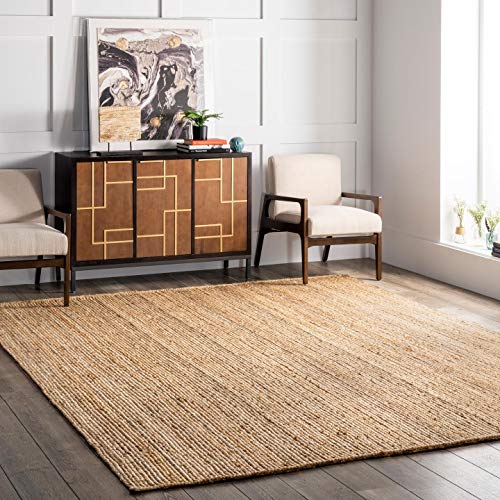
nuLOOM Rigo Hand Woven Jute
Few materials say beach house as clearly as jute. The nuLOOM Rigo is a braided jute rug with a thick, rope-like surface, and it works as the anchor for a coastal living room where wood, linen and white upholstery are already in play.
Jute is a plant fibre, so it brings an earthy, sandy shade and a lot of texture. The rug lies flat and sits well under a coffee table and sofa legs. People who want the best jute rugs for a coastal home often begin with a chunky weave like this one, since it looks substantial and relaxed at the same time.
The cautions are real. Natural fibres can react to damp, so jute is better kept away from wet entryways, and it is not forgiving of spilled drinks. The surface is coarse underfoot, and it sheds a little at first. Use it indoors, in a dry, well aired room, and skip it if you want a soft barefoot feel.
Safavieh Natural Fiber NF447
If the Rigo is the bold choice, the Safavieh Natural Fiber line is the quiet one. These rugs are made from woven natural fibres with a flat, tight appearance, and NF447 is a good option when you want the sandy texture without a chunky braid.
It layers well. Many people lay a natural fibre rug as the base and put a smaller, softer rug on top, which gives a bedroom or sitting area both warmth and structure. The neutral tone suits blue accents, white slipcovers and rattan furniture.
On the downside, flat natural weaves can feel firm and are best with a pad underneath. They can also show marks from spills, and the edges may fray with time. Check the care guidance on the listing and keep it out of damp rooms. Skip it if you expect it to be soft or easy to scrub clean.
Safavieh Madison MAD603
Some coastal rooms lean toward navy and white instead of beige. The Madison collection offers pattern and colour in a soft synthetic pile, and MAD603 is a good example of a geometric design that evokes classic seaside style without being theatrical.
The pile is softer than jute, so it is comfortable on bare feet beside a bed. The pattern is calm enough to sit under a patterned quilt or striped curtains, and the navy tones tie in with sea-glass accents or a nautical lamp.
The compromise is that synthetic piles are less textured, so the room may feel a little more polished than rustic. Check the colour in the listing photos, since blue shades vary between lines and screens. It is also meant for indoor use. Skip it if you want an authentic natural fibre look.
Safavieh Montauk MTK340
Montauk takes its name from a famous stretch of coast, and the line is a good match for cottage style rooms. It is a flatwoven rug in cotton, with simple stripes or patterns, and it lies close to the floor without any pile to catch on door bottoms.
Striped flatweaves are popular for beach decorating because they look breezy and casual, and they sit well in bedrooms, kitchens and hallways. The thin profile makes them easy to fold back for cleaning, and the maker positions the line as a casual, relaxed choice.
Because it is flat and thin, it gives almost no cushioning, and a pad is usually worthwhile on a hard floor. Cotton can also hold moisture, so keep it away from wet areas and give it time to dry if it gets splashed. Skip it if you want a deep, cushioned surface.
Nourison Aloha ALH04
Not every coastal home has a dry, shaded living room. A lanai, enclosed porch or sunny sitting area needs something that copes with humidity and light. The Nourison Aloha line is made for indoor and outdoor use, with synthetic fibres chosen to handle moisture better than natural ones.
That makes it a smart answer for beach rugs that need to live near sliding doors or a covered deck. The design in ALH04 offers a gentle pattern in tones that work with wicker, cushions and rattan.
The trade-off is feel and look. Synthetic fibres do not have the earthy richness of jute, and the surface is firmer. It is best treated as a practical outdoor friendly rug, not a luxury piece for the main living room. Skip it if you want the warm, natural look of woven grass.
Best for a Natural Beach House Look
The nuLOOM Rigo is the clearest answer. Its chunky jute weave reads as casual and sun-bleached, and it grounds a room that has plenty of white and light wood. Layer a soft cotton throw over a nearby chair to balance the rough texture.
Best Coastal Rug for Bedrooms
Bedrooms favour comfort, so the Safavieh Madison with its softer pile or the Safavieh Montauk with its crisp stripes both suit. Position the rug so that at least the lower third of the bed sits on it, and the edges peek out on either side.
Best Rugs for Beach Coastal Weather
Near the sea, air carries humidity and sand. The Nourison Aloha is the better pick for areas that open to the outdoors, because synthetic fibres tolerate moisture and can be shaken or hosed off. Keep natural fibre rugs indoors, away from doors that open to the beach.
Best for Layering
Try the Safavieh Natural Fiber NF447 as a base layer with a smaller patterned rug on top. This adds depth and lets you swap the top layer with the seasons without replacing the whole rug.
How to Choose a Coastal Rug
Colour comes first. Sand, ivory, soft blue, seafoam and washed grey are the base palette. Navy and white give a classic nautical look, while greys give a modern coastal one. Avoid dark, heavy colours if the room is small, because they work against the airy feeling.
Next, decide on material. Natural fibres such as jute and sisal bring texture and a beach house feel, but they respond to moisture and are harder to clean. Cotton flatweaves are light and casual, and easy to fold, but can soak up spills. Synthetic rugs, particularly polypropylene, handle humidity best and suit sunrooms and covered outdoor areas.
Humidity and Salt Air
In a coastal home the air is often damp, so a rug can pick up a musty note if it never dries out. Give any rug some airflow, lift it occasionally to let the floor breathe, and avoid placing natural fibres where water collects. Reading what the maker says about care is the best guide.
Size and Shape
For a living room, choose a size that lets the front legs of the sofa and chairs rest on the rug. In a bedroom, extend the rug beyond the sides of the bed. Round and oval shapes can soften a boxy room, and runners suit long hallways.
Common mistakes include picking a rug that is too small, ignoring humidity, and choosing a pattern that fights with the rest of the room. Order the colour you can see in a photo, and compare against paint and fabric swatches in daylight.
Matching the Rug to the Rest of the Room
A coastal room usually works best when one element carries the texture and the others stay calm. If the rug is a chunky jute, keep curtains light and plain. If the rug has stripes or a pattern, let the sofa and walls stay quiet. Wood tones matter too: whitewashed boards pair well with sandy fibres, while darker floors look better with a lighter rug that brings the brightness back into the room.
It also helps to hold a sample of your cushion fabric against the rug photo in daylight. Blues in particular shift noticeably between a warm lamp and a sunny window.
Placement and Setup Notes
Lay the rug on a clean, dry floor and follow the maker’s guidance on pads. Natural fibre rugs often benefit from a breathable pad, while rubber pads can trap moisture, so read the instructions. If your home is rented, check the lease before using any adhesive, and ask a qualified professional about any floor work.
Care and Troubleshooting
Vacuum natural fibre rugs gently, blot spills at once, and avoid soaking them. Rotate rugs now and then to even out sun exposure.
| Problem | Likely cause | What to try |
|---|---|---|
| Musty smell | Humid room with no airflow | Lift, air out and run a fan nearby |
| Faded patches | Strong sun | Rotate the rug and use curtains in peak hours |
| Rough, loose fibres | Normal shedding in new jute | Vacuum lightly and remove loose strands |
Rug Materials Compared for a Seaside Look
Coastal style leans on natural texture, but the material you choose changes how the rug looks, feels and wears. The five rugs in this guide span several types, and it helps to understand the differences before you commit.
Jute
Jute is a soft plant fibre with a golden, sandy tone. It looks warm and relaxed and is usually the first choice for a beach house feel. It is gentler underfoot than some other natural fibres, but it is also absorbent, so spills and damp spots can leave marks or encourage mildew. It suits dry living rooms and bedrooms.
Sisal and seagrass
These are tougher, tighter fibres, often woven in flat patterns. They stand up to foot traffic but feel harder and less cozy. Check each listing to see what the rug is actually made from, because the term natural fibre can cover several materials.
Cotton flatweave
Flatwoven cotton, as in striped cottage styles, is thin, flexible and easy to move around. It adds color without bulk and is often easier to clean than coarse fibre. It also tends to shift, so it benefits from a pad.
Synthetic blends
Polypropylene and similar materials resist moisture and fading better than plant fibres, which is why they are common in indoor and outdoor rugs. They may feel less rich to the touch, but they are far more practical in a humid sunroom or a covered porch.
- Choose jute for texture in a dry, calm room.
- Choose flatweave cotton for color and easy movement.
- Choose synthetics for humid, sunny or high-traffic spaces.
Layering Combinations That Work
Layering is a popular coastal technique, and it solves several problems at once. A large natural fibre rug establishes the room’s base, and a smaller, softer rug on top supplies comfort and pattern. Done well, it looks collected rather than cluttered.
Start with scale. The base rug should be large enough to anchor the main furniture, with the front legs of sofas and chairs resting on it. The top rug should be noticeably smaller, leaving a border of the base visible on all sides. A border of several inches reads as deliberate, while a sliver looks like a mistake.
Next, mix textures rather than too many patterns. A chunky jute base pairs well with a flat striped or solid top layer in blue, white or soft gray. A patterned rug, such as a geometric design, can sit over a plain natural weave for contrast. If you use two patterns, keep the scale of each distinct and stay inside a narrow palette.
Pay attention to thickness. Placing a plush rug on a thick one can create a bump that people trip over, so use a thinner top layer where there is foot traffic. A non-slip pad between layers keeps the top rug from creeping.
In a bedroom, layering works well at the foot of the bed, where a small rug adds warmth for bare feet. In a living room, a layered pair can define a conversation area inside an open plan.
Rug Pads, Safety and Floor Protection
A rug pad is one of the least glamorous but most useful items in a room. It prevents slipping, adds cushion, protects the floor below and helps the rug keep its shape.
Choose a pad that suits both the rug and the floor. Natural fibre rugs often benefit from a thin, breathable pad that lets air circulate, since trapped moisture can encourage mildew. Flatweave rugs usually need a firmer pad with grip to stop them sliding. Some pads can discolor or damage certain floor finishes, so read the pad’s instructions and test an inconspicuous spot if you are unsure about hardwood or vinyl.
Size the pad slightly smaller than the rug, so the edges do not peek out. Trim it with scissors if needed. Check that corners lie flat, since a curled corner is a trip hazard, particularly in hallways and near stairs.
If a rug has a rough or scratchy back, a pad also prevents it from abrading floors as people walk across it. Lift the rug now and then to vacuum underneath and check for trapped dust and dampness.
Styling the Room Around the Rug
Once the rug is down, a few small decisions complete the coastal look without turning the room into a theme park. Keep furniture lines simple, with light wood, rattan or painted finishes. Choose linen or cotton upholstery in white, cream or soft blue, and add texture through woven baskets, driftwood and ceramics rather than literal shells and anchors.
Use color sparingly. A rug in sand tones lets you bring blue in through cushions and curtains, while a blue and white rug might call for plainer surroundings. Let natural light do the work, with sheer curtains that let the sun through.
Finally, remember that the rug will evolve. Natural fibres soften and shift in color with time, and edges may fray. Rotate the rug occasionally so that wear and sunlight are even, and accept some imperfection as part of the relaxed style.
Comparing the Coastal Picks by Room, Light and Foot Traffic
Coastal rugs succeed by atmosphere, so compare these picks by the room they must create. The nuLOOM Rigo Hand Woven Jute is the naturalist of the group, its woven texture and plant fibre giving a room the barefoot, beach-house honesty that printed patterns only imitate, and it suits living rooms and bedrooms where the rug is the room’s foundation rather than its decoration. The Safavieh Natural Fiber NF447 works in the same natural family with a more composed, bordered presentation, the choice when the room needs the coastal texture but also a sense of order, such as a dining space or a hallway that must look deliberate. The Safavieh Madison MAD603 takes the coastal palette into a patterned, practical rug, better for households that need pattern to forgive the daily evidence of children, dogs and sandy feet.
The Safavieh Montauk MTK340 brings the flat, casual, layered quality of a beach house where nothing is precious, suiting bedrooms and relaxed living spaces and serving beautifully as the top layer in a layered scheme. The Nourison Aloha ALH04 is the indoor-outdoor performer, the pick for porches, sunrooms, kitchens and the rooms where the coast’s weather, sand and wet feet are not a metaphor but a daily fact. Choosing among them begins with traffic and moisture, not colour: the natural fibres reward dry, barefoot rooms and punish wet, muddy ones, while the practical and outdoor-capable picks forgive almost everything except being asked to look like woven jute at close range.
Sizing and Placing a Coastal Rug So the Room Breathes
Coastal style lives on air and light, and a rug that is too large or too small suffocates it faster than any colour mistake. In a living room, the rug should gather the seating into one island, with at least the front feet of sofas and chairs resting on it, leaving a border of floor visible around the room that reads as breathing space. In a bedroom, the rug earns its place where feet land: a generous rug under the lower two-thirds of the bed, or runners either side, so the first step of the morning is onto texture rather than boards. Dining rooms need the rug to contain the chairs in their pulled-out positions, because a chair leg catching a rug edge at every meal will sour the household on the whole arrangement within a month.
Natural fibre rugs deserve a particular placement note: their texture and slight irregularity are the point, so give them room to be seen rather than burying them under furniture, and accept that a woven jute rug under a heavy sofa will take the furniture’s imprint as part of its character. In hallways and entrances, weigh the coastal wish against the entrance’s reality, because grit is the natural enemy of natural fibres, and a hard-working entrance mat at the door is what allows a beautiful natural rug to survive a few steps further inside. Place the rug for the life the room lives, and the style will follow.
Layering, Colour and the Rest of the Room
Layering is where coastal rugs become interesting rather than merely tasteful. A large natural base, jute or a similar weave, with a smaller patterned or flatwoven rug over it in the seating zone, gives a room depth, defines the conversation area, and lets each layer be a modest purchase instead of one large commitment. Keep the top layer light enough to lift for cleaning, because sand and dust migrate downward through both layers and the base rug will need its day in the sun and a thorough shake more often than a single rug would. In bedrooms, a small soft layer beside the bed over a natural base combines the morning comfort bare feet want with the woven look the room was chosen for.
Colour in a coastal room should be borrowed from the shore rather than from a catalogue: the neutrals of sand, rope, driftwood and shell, with blue and sea-green used the way the sea itself uses them, in depth and variation rather than in one flat note. A rug in those natural neutrals will accept almost any cushion, throw or artwork the household already owns, which is the practical secret of the style’s endurance. Rooms that commit every surface to blue and white can feel like a theme; rooms that build on natural texture and add the sea’s colours in the movable pieces feel like a place, and they can evolve season by season without the rug becoming the problem.
Care in a Coastal Climate: Salt, Sand and Humidity
A rug in a genuine coastal home works in conditions inland rugs never meet, and its care should be planned accordingly. Sand is the constant: it arrives daily, works down into every weave, and acts as an abrasive underfoot, so frequent shaking or vacuuming without a beater bar is not housekeeping vanity but fibre preservation. Take smaller rugs outside for a proper shake weekly in season, and give larger ones a thorough vacuum in both directions, because what the first pass loosens the second removes. Humidity is the second condition: natural fibres in a damp room can take on a stale smell and, left wet, real damage, so a coastal rug should be lifted periodically to check the floor beneath, dried fully after any soaking, and never left under a leaking window or a plant pot that overflows.
Salt air is the slow condition, dulling colours and working on fibres and backings over years rather than weeks. Rotating a rug end to end evens the exposure of light and traffic, and keeping the most delicate natural pieces for bedrooms rather than the entrance hall is a placement decision that buys years. After storms and beach-heavy weekends, treat the rug as you would the rest of the house’s defences: a prompt, thorough clean now rather than a heroic one later, because sand ground in over a month of feet is sand that has been cutting fibres for a month. None of this is onerous, but it is a rhythm, and households that keep it find their coastal rugs ageing like the shoreline itself, gradually and attractively, instead of simply wearing out.
Coastal Rugs in Inland Homes and Small Spaces
The coastal look travels inland perfectly well, because what it really offers is light, texture and calm rather than a postcode. In a city flat, a natural rug under a coffee table, pale wood and uncluttered surfaces will read as serene rather than thematic provided the literal seaside imagery is kept to a minimum: one shell in a bowl is a memory, while a room of anchors and ropes is a costume. Small spaces benefit most from the style’s discipline, since a single textured rug, a restrained palette and clear floor borders make a compact room feel larger and quieter, and the flatwoven and layered options in this guide suit small rooms better than a deep pile ever will.
Renters and first homes deserve a specific word, because a coastal rug is one of the highest-impact, lowest-commitment changes available to them. It covers a landlord’s flooring without altering it, given a proper pad beneath to protect both rug and floor, it warms and quiets a room that furniture alone cannot, and it moves house as easily as a suitcase relative to most furnishings. Choose the size for the room you have rather than the room you hope for, keep the natural fibres away from a damp-prone rental’s problem corners, and the rug will serve through several addresses, gathering the relaxed character that the style promises and that new furniture rarely has.
Buying a Coastal Rug in Stages and Knowing When to Replace One
A room rarely needs its final rug on the first day, and buying in stages protects both the budget and the scheme. Start with the largest decision, the base rug for the main room, live with it through a change of light and a few weeks of traffic, and only then add the layered piece, the runner or the bedroom rug, because the base will teach you your household’s real tolerance for texture, shedding and sand. Order the smaller pieces to harmonise with a base you know rather than a base you imagine, and keep the receipts of your own experience, which rooms stay dry, which doorways grind grit, where the dog actually sleeps, as the specification for every later purchase.
Replacement should be judged by the rug’s service rather than its looks alone. A coastal rug has finished when its fibres break down underfoot, when it holds a stale smell after a thorough clean and a day in the sun, when its backing crumbles or its edges fray into the walking path, or when it has become impossible to keep hygienic in a house with children or animals. A rug that is merely faded or softened by years of light has not failed; it has become what the style quietly promises, a piece that looks lived with. Cascade a retired-from-the-living-room rug to a bedroom, a study or a covered porch before discarding it, and the household gets the full value of a textile that was chosen, in the beginning, for exactly that kind of graceful ageing.
Stand in the doorway of the finished room before you call the decision made, ideally in the evening, and ask the only question that matters in this category: does the room feel like somewhere you would take your shoes off? Coastal rugs are not bought for admiration at a distance but for that exact sensation, texture underfoot, light in the room, and nothing in the scheme asking for careful behaviour. If the rug delivers it, the choice was right whatever its fibre or price; if it does not, the honest adjustments are size, position and layering, in that order, and they cost little compared with replacing a rug that was only ever wrong by a foot in each direction.
Rug Pads and Floor Protection Under Coastal Rugs
The pad beneath a coastal rug does three jobs at once and should be chosen as deliberately as the rug. It stops the rug creeping on smooth floors, which natural and flatwoven rugs are prone to do; it adds a thin cushion that makes a woven rug kinder underfoot and quieter in the room; and it protects the floor beneath from the abrasive back of a natural fibre rug and from any grit that works through the weave. On wood and laminate, choose a pad made for hard floors that will not mark or stick to the finish, and cut it slightly smaller than the rug so it stays invisible. On carpet, a different grip is needed, and on heated floors the pad must be one the heating maker accepts, because a thick insulating pad over underfloor heating helps nobody.
Check the pad whenever the rug is lifted for its seasonal clean, because a pad that has crumbled, stuck or bunched has stopped doing all three of its jobs and can begin doing harm. Replacing a pad is a small, unglamorous expense that extends the life of both the rug and the floor, and it is the right first response when a rug begins to wander, ripple or feel thin, before the rug itself is blamed and replaced.
One last scenario deserves a plan: the holiday let, the beach house shared between families, or the coastal home that hosts constantly. In those houses the rug should be chosen for the guests it will actually receive, which means the forgiving, practical end of this guide in the living spaces, natural fibres reserved for the quiet bedrooms, and a spare, inexpensive runner at the door that can be shaken daily and replaced without grief. Keep the care rhythm written down where a departing family can see it, shake, vacuum, lift and check, because a rug’s worst damage in a shared house is usually done by kindness deferred, a spill everyone assumed someone else had cleaned. Chosen and kept that way, a coastal rug survives the happiest, sandiest households and still greets the owners, when they finally have the house to themselves, with the calm it was bought for.
A Note on Renting the Look Before Owning It
Households unsure whether coastal calm suits their life can trial the style with the smallest commitment in this guide: one flatwoven or natural runner in the room’s hardest-working path, lived with through a month of real weather and real feet. The trial will report honestly on the household’s tolerance for texture, shedding and sand, on the dog’s opinion, and on whether the palette settles the room or merely pales it. If the runner is loved, the larger rug can be bought with the confidence of experience and in the fibre the trial vindicated. If it is not, the household has spent a runner’s price to avoid a room-size mistake, and the runner itself will find honourable work in a hallway, a kitchen or a porch. Few decorating decisions offer so cheap an education, and the coastal style, being a way of living with a room rather than a look imposed on it, is exactly the kind that should be trialled in person.
The coast, in the end, is not a place but a pace, and the rug that brings it into a room succeeds by slowing the room down: bare feet, unhurried mornings, furniture that invites sitting on the floor. Choose the piece that makes your household linger a little longer in the room it serves, keep the sand and the seasons honestly managed, and the style will take care of itself, because it was never really about the rug. It was about the life the rug makes room for.
Frequently Asked Questions
Is jute a good rug for a coastal home?
It suits dry, indoor rooms and offers the classic beach look. Keep it away from damp areas.
What colours work for beach rugs?
Sand, white, soft blue and grey are the most common. Navy gives a crisper nautical effect.
Can I use these rugs outside?
Only the Nourison Aloha is described for indoor and outdoor use here. Check each listing before placing a rug outdoors.
Do coastal rugs have to be blue?
Not at all. Many coastal rooms use neutral tones and add blue through cushions and artwork.
Are Beachcrest Home rugs worth looking at?
Beachcrest Home is a coastal style house label sold through some retailers, so it is worth comparing against the lines above. Confirm availability on your preferred store.
How do I keep sand out of a rug?
Use a mat at the door, shake the rug outdoors and vacuum regularly.
Do I need a rug pad under a jute rug?
A pad is a good idea for most jute rugs. It stops slipping, protects the floor from the coarse back and adds a little cushion. Choose a thin, breathable pad rather than a thick rubber one, so air can move under the rug. Check the rug maker’s guidance too.
How do I clean a jute or natural fibre rug?
Vacuum regularly without a harsh beater bar, and blot spills right away with a dry cloth rather than rubbing. Avoid soaking natural fibres, since water can leave rings or cause mildew. For stains, follow the maker’s cleaning instructions or consult a professional rug cleaner.
Can I layer a rug over wall to wall carpet?
Yes, but it can shift and bunch. Choose a flat, firm rug and a grip pad made for carpet to keep it in place. Pick a clear color or texture contrast so the layer reads as intentional, and avoid very thick rugs that create a tripping edge.
Are flatweave rugs good for homes with kids and pets?
Flatweaves are low to the ground, so they are easy to vacuum and less likely to trap crumbs than deep pile. Cotton versions can often be cleaned more easily than coarse fibres, but check each rug’s care instructions. A pad helps them stay put during active play.
Will a jute rug work in a home with a dog?
It depends on the dog and the room. Jute handles dry, sandy paws and general traffic with grace, and its texture hides a great deal, but it dislikes moisture, is hard to clean deeply after an accident, and can tempt dogs that like to chew or scratch at fibrous textures. For a dog-heavy household, the practical and outdoor-capable picks in this guide forgive far more, and a natural rug can be kept for a bedroom or a quieter room where the dog’s life is calmer.
How do I stop a flat coastal rug curling at the corners?
Curling usually comes from the rug being rolled in storage, from furniture weight on part of the rug, or from a rug that is slightly too light for its position. Reverse-roll a stored rug briefly, weigh a lifted corner down overnight with something flat and heavy, and use a proper rug pad, which solves most curling by giving the rug grip and body. A corner that lifts again and again in a walkway is a trip hazard rather than a styling issue and should be taped, padded or the rug moved to a calmer position.
Can a coastal rug work in a dining room?
Yes, with the practical picks favoured over the delicate ones. Choose a flat weave that chairs slide across without catching, size it so every chair stays on the rug even when pulled out, and favour pattern or an outdoor-capable construction where meals, children and the occasional spill are part of the room’s life. A natural jute dining rug looks beautiful and suits a calm, adult dining room, but it will record every dropped dinner in its fibres, so choose it with open eyes.
Should a coastal rug be the lightest thing in the room?
Not necessarily, but it should usually be among the calmest. A natural rug slightly deeper than the walls gives a room grounding and makes pale furniture look deliberate, while a very pale rug in a bright room can disappear and take the scheme’s structure with it. Judge the rug against the floor it covers as much as against the walls: on pale boards a mid-tone natural weave defines the space, and on dark boards a lighter rug lifts the whole room.
How often should a coastal rug be professionally cleaned?
For most homes, thorough home care, regular shaking or vacuuming, prompt attention to spills and a seasonal lift-and-check, keeps a coastal rug in good order for years without professional intervention. Consider a professional clean when a rug carries a smell that home cleaning and a day in moving air cannot clear, after a major spill or flood event, or when a natural fibre rug has ground-in soil that domestic equipment cannot reach. Choose a cleaner experienced with the rug’s fibre, and be honest about stains and past treatments, because natural fibres reward a cleaner who knows what they are holding.
Bottom Line
The nuLOOM Rigo and Safavieh Natural Fiber rugs suit a natural beach house look, the Madison and Montauk offer pattern and stripes for bedrooms, and the Nourison Aloha covers sunrooms and lanais. Match the material to the humidity of the room, choose calm colours and confirm sizes in the listing.