Disclosure: As an Amazon Associate, reviewstook.com earns from qualifying purchases. Links to Amazon on this page are affiliate links; they cost you nothing extra. Listing details such as price and availability change often, so check the current Amazon listing before you buy.
Few things make a bathroom look more finished than a stack of white towels. They suit a spa-like space, a guest room, a rental or a plain, bright kitchen, and they work with almost any wall color. The best white towels feel soft, hold up to many washes and keep their crisp look without much fuss.
This guide is for anyone who wants that classic look, whether you are setting up a new bathroom, refreshing a guest bath or choosing plain white dish towels for the kitchen. We compare five options across different fabrics and uses, and we explain how each one wears.
You will also find notes on fluffiness, fabric, bleaching, color pairing and care, along with a quick comparison table and answers to common questions.
Quick Comparison
| Product | Best for | Main point | Link |
|---|---|---|---|
| White Classic Luxury Cotton Bath Towels | Hotel-style bathrooms | Plush white cotton towel set | Check on Amazon |
| Charisma Classic Bath Towel | Soft, simple everyday use | Well-known cotton bath towel line | Check on Amazon |
| Utopia Towels Premium Ring Spun Cotton Bath Towels | Households and rentals | Plain cotton set in white | Check on Amazon |
| ARIV Premium Bamboo Cotton Bath Towel | Fluffy, soft feel | Bamboo and cotton blend | Check on Amazon |
| Aunt Martha’s Flour Sack Towels | Plain white dish towels | Lightweight cotton kitchen towel | Check on Amazon |
In this guide
How These Options Were Chosen
We chose these products from manufacturer listings and published product details, looking for white versions from recognizable brands. We have not used them ourselves, and we cannot speak to how they feel after a year. Weight, size and fabric blend can differ between versions and sets, so check the current listing before you order.
We also included a kitchen towel, because many people who search for white towels want both bath and dish options.
The 5 Best White Towels for the Bath and Kitchen

White Classic Luxury Cotton Bath Towels
White Classic is a brand that markets itself on a hotel-style feel, and this set leans into that idea. The towels are cotton, sold as a set and available in white, which gives a bathroom a clean, uniform appearance.
This is a good fit if you want a spa look with towels that match from the tub to the sink. Sets help with consistency, because the washcloths, hand towels and bath towels all come from the same line.
The trade-off is that white shows marks. Makeup, tan lotion and hair dye can leave stains, so use darker cloths for those jobs. Check the listing for the size of each piece and the set contents.

Charisma Classic Bath Towel
Charisma has been making towels for a long time, and the Classic line is a familiar choice with a soft, cotton feel. It comes in white and a range of other colors, so you can mix and match later without changing brands.
It suits a household that wants simple, well-made towels without paying close attention to technical details. The look is clean and traditional, which suits a classic bathroom.
It is a mid-weight towel rather than an ultra-thick one, so it dries a little faster than very plush styles. If you want a deep, cushy feel, you may prefer a heavier option. Check the listing for size, weight and the available packs.
Utopia Towels Premium 100 Percent Ring Spun Cotton Bath Towels
Utopia Towels sells simple cotton linens in sets, and this is one of its best-known towel lines. The ring-spun cotton is meant to give a soft feel, and white is one of the available colors.
It suits rentals, guest rooms and families who need a stack of towels that can be washed often. White towels also make it easy to wash on a hot cycle when the label permits, so you can keep them looking fresh.
The finish is plain and practical rather than luxurious. If you need a hotel-level plush feel, you may find it a little basic. Check the listing for the set size and the weight of the towel.
ARIV Premium Bamboo Cotton Bath Towel
ARIV sells towels made from a blend of bamboo-derived fiber and cotton. People who search for fluffy white bath towels often land on this style because the blend is marketed as soft and thick.
It is a pick for those who want a plush feel and a luxury-spa look at home. The weight gives you a wrap-around cuddle after a bath, and white keeps it bright.
A thick towel takes longer to dry, so hang it open. It also needs gentle washing, so follow the label and avoid heavy fabric softener. Check the listing for size, available white shades and any care notes.
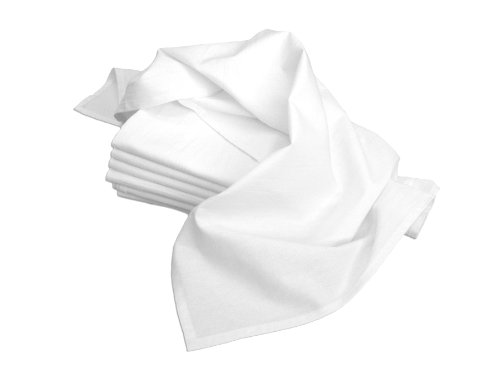
Aunt Martha’s Flour Sack Towels
Not every white towel lives in the bathroom. Aunt Martha’s makes flour sack towels, which are thin, plain cotton cloths used in kitchens for drying dishes, covering bread dough and wiping counters.
They are the answer if you are looking for plain white dish towels. The fabric is lightweight, so it dries quickly, and it is easy to bleach on a hot wash when the label allows it. You can use them as straining cloths or as a base for embroidery too.
They are not very thick, so they do not absorb as much as a terry towel. Many cooks keep a stack and swap them often. Look at the listing for the number in the pack and the size.
Best for a Hotel-Style Bathroom
White Classic Luxury Cotton Bath Towels fit the look. A uniform white set on matching hooks gives a room a clean, finished feel that photographs nicely.
Best for Everyday Households
The Charisma Classic Bath Towel is a reliable, familiar choice. It is soft enough to enjoy and plain enough to match anything you already own.
Best Fluffy White Bath Towels
ARIV Premium Bamboo Cotton Bath Towels are the plush option. If your first priority is a thick, soft wrap after the shower, this is the one to consider.
Best White Towels for the Kitchen
Aunt Martha’s Flour Sack Towels are the simple pick. They dry fast, wash easily and stay bright when you follow the care label.
White Towels in a Black and White Bathroom
A black and white bathroom looks crisp when the towels follow a clear scheme. If your tile or walls are black, white towels become the focal point, so choose a fabric with a nice sheen and a clean edge. If the bathroom is mostly white, add black or charcoal hand towels for contrast.
Think about color balance. Too much contrast can feel harsh, so a single stripe of gray or a softer ivory can bridge the two shades. Stick to one or two accent colors, and keep metal fixtures in a similar finish.
If you wonder which color towels go with black and white decor, the answer is usually gray, soft sand or a muted blue. Keep patterned towels for a single accent piece, not the entire stack.
Sheen and texture also play a role. A matte, fluffy white feels relaxed and cozy, while a tightly woven white with a smooth finish looks sharper and more formal. In a small room with little daylight, the fluffier choice tends to look warmer, and it softens hard surfaces such as tile and chrome. In a bright, modern bathroom the crisp finish looks cleaner against dark fixtures.
When you buy, think in sets of three: bath towel, hand towel and washcloth. A white scheme only looks deliberate if the pieces match in tone, because different brands of white can lean cool, warm or slightly cream. Order the whole set from one line when you can, and add extras from the same maker later.
White Cotton Towels Versus White Microfiber
Cotton and microfiber are both sold in white, but they do different jobs. White cotton towels are the standard for bathing because they absorb well, feel familiar against the skin and can be washed warm or hot when the label allows. They are the ones to buy for a bath, a pool bag or a guest room.
White microfiber towels are usually cleaning cloths. They are thin, light and dry fast, and they show every smudge, which is useful if you want to know when a cloth is dirty. Treat them as household tools and keep them apart from the bath linens so that lint and cleaning products never reach your bath towels.
Plain white dish towels sit between the two. Cotton flour sack cloths are light, quick to dry and easy to wash, so they suit the kitchen better than thick terry. A stack of a dozen lasts through plenty of meals and is simple to bleach back to bright when the maker allows it.
How to Choose White Towels
Begin with fiber. Cotton is the classic. Ring-spun and combed cotton are terms for smoother yarn. Turkish and Egyptian cotton are marketed for longer fibers. Bamboo blends are marketed for softness. Read the listing to see what you are actually getting.
Weight and thickness come next. Heavy towels feel plush but dry slowly. Lighter ones dry quickly and are easier to launder. A middle weight suits most homes.
Consider the weave. A plain terry weave is the standard. A waffle weave looks textured and dries faster, but it feels different. Check photos to see which you prefer.
Look at the edges and stitching. Neat, double-stitched hems stand up to hard washing. Thin hems may fray.
Think about care. White towels can be washed warm or hot when the label allows it, which helps them stay bright. Wash them with other whites and avoid mixing with new dark items that may release dye.
Common mistakes include buying only one white towel and then trying to match it later, washing new towels with fabric softener, and keeping white towels in a damp heap, which can lead to a stale smell.
Keeping White Towels Bright
White shows what other colors hide, so a few habits pay off. Rinse off makeup and self-tanner before drying, use a separate dark towel for hair color, and never let a damp white towel sit against a colored item for long, since dye can transfer.
Follow the maker’s instructions. Wash whites together, use a gentle detergent, and do not overload the machine. Skip fabric softener, as it can reduce absorbency, and use bleach only if the label allows it.
| Problem | What to try |
|---|---|
| Towels look gray | Wash whites together and use enough detergent |
| Towels feel stiff | Rinse again and skip softener |
| Makeup or dye stains | Keep a dark set for those tasks |
| Musty smell | Dry fully between uses and between loads |
Towel Weight, GSM and Thread Quality
When a white towel is described as heavy or lightweight, the number behind that description is usually GSM, or grams per square meter. Lower figures, roughly 400 to 500, mean a thinner towel that dries quickly and folds small. Mid-range towels around 500 to 650 balance absorbency and quick drying and suit most households. Figures above 700 produce a plush, spa-like feel but take longer to dry and can be heavy to launder.
GSM is only part of the picture. Fiber length matters, because longer cotton fibers make smoother, stronger yarn that sheds less lint. Ring spun and combed cotton, such as the type noted in the Utopia Towels listing, removes shorter fibers during processing and yields a softer, more durable towel. Twist level also plays a role: lower-twist yarns feel softer and more absorbent, while tighter twist adds durability but a firmer feel.
- Light: quick drying, suited to guest baths and travel.
- Medium: dependable everyday balance.
- Heavy: luxurious feel, slower to dry, higher laundry load.
Setting Up a Linen Closet Rotation
White towels look best when they are not overworked, and a simple rotation helps them age evenly. Keep a set for each person in the household, plus a few for guests, and rotate in newer towels so none is always the one on top. Towels that are used equally wear at about the same pace and fade together, which keeps a set looking matched.
Plan for laundry frequency as well. Bath towels are typically washed after three or four uses if they dry fully between uses, while hand towels and kitchen towels need more frequent washing. If you launder weekly, owning three towels per person usually works: one in use, one in the wash and one spare.
Store towels in a dry, ventilated space. Stacking them folded with the newest at the bottom keeps the older ones in circulation first. Avoid cramming a closet so full that air cannot move, since trapped moisture can produce musty odors.
Matching White Towels to Bathroom Style and Color
White is flexible, but different whites suit different rooms. Bright, optical white looks crisp next to cool tones like gray, navy and black. Warmer, cream-leaning whites look softer in rooms with wood, brass or beige. Most manufacturers describe the shade, and photographs can help, though screens vary and the first towel in hand is the best test.
Texture changes the look as much as color. Plain terry gives a classic appearance, waffle weave adds a spa-like feel, and a dobby border or stripe adds subtle detail. In small bathrooms, a single consistent white often feels calmer and larger than a mix of patterns.
Consider the other fabrics in the room, too. A white towel against a white wall may look washed out, while contrast from a dark rug, wooden shelf or colored accent brings it into focus. If you want a hotel look, fold towels in thirds and stack them neatly, or roll hand towels in a basket.
Washing the First Time and Reducing Lint
New towels often shed lint for the first several washes, and some carry a finishing treatment that reduces absorbency until it is washed out. Wash new towels once or twice before first use, alone or with other lint-releasing items, and skip fabric softener at this stage. This helps them absorb well from the start.
Lint comes from loose fibers released during washing and drying. Cleaning the dryer lint trap each load helps, and so does avoiding overloading the machine. Washing towels apart from clothes, particularly dark items and anything with static, keeps lint from clinging elsewhere.
If lint persists after several washes, it may reflect fiber quality rather than technique. Some budget towels shed more than others, and the issue usually lessens but may not vanish entirely.
Drying habits also influence how white towels last. Towels left damp in a heap are prone to mildew and a sour smell, which is hard to remove once it sets in. Hang them to dry fully between uses, with enough space between each so air can move through the fabric. A towel bar that spreads the towel open works better than a hook that bunches it up. In the dryer, use medium heat and remove the load while it is still slightly warm, since over-drying can stiffen fibers and shorten their life. Shake each towel out before drying to help the loops stand up and feel softer.
If a towel has begun to feel flat or less absorbent, a wash with a cup of white vinegar in place of softener can help remove built-up residue.
Comparing the White Towel Picks by Bathroom and Laundry Reality
White towels simplify one decision, colour, and complicate another, laundry, so compare these picks by the life they will lead. The White Classic Luxury Cotton Bath Towels are the hotel-style anchor: a full white presentation that suits a household ready to wash whites together, inspect honestly and replace pieces without matching anxiety, because white from the same range blends across orders better than any dye lot. The Charisma Classic Bath Towel suits the buyer dressing a calmer, more traditional bathroom, where the towel is part of a composed scheme and the household’s laundry already runs in sorted loads. The Utopia Towels Premium 100 Percent Ring Spun Cotton Bath Towels are the rotation builder’s choice, the set you buy in enough quantity that no towel is ever pressed back into service half-dry, which is where white towels earn their grey, tired look in the first place.
The ARIV Premium Bamboo Cotton Bath Towel introduces a blended fibre into an otherwise cotton line-up, appealing to bathers who like a particularly smooth, soft hand feel and a towel that behaves a little differently in the wash and on the rail; it rewards owners who will follow its care guidance rather than treating it as identical to the cotton sets. The Aunt Martha’s Flour Sack Towels close the guide at the opposite pole: thin, plain, quick and invaluable in the kitchen and for glass, proof that white in this category is not only about bath luxury but about honest utility. A household can reasonably own the bath luxury and the flour sack utility at once, and most white-towel homes quietly do.
The White Load: A Laundry Routine That Keeps White White
White towels stay white inside a routine, and the routine has four parts. The first is separation, absolute rather than approximate: whites wash with whites, and the pale blue shirt that looks harmless is the beginning of the grey cast everyone blames on the towels. The second is proportion: modest detergent for the load size, because excess product deposits on fibres and dulls them, and room in the drum for the load to rinse properly. The third is promptness: white towels left damp in a heap, or stored unwashed while a load accumulates, yellow and stale in ways that later washing only partly reverses, so whites should move through the laundry rather than waiting for a weekly ceremony.
The fourth part is drying and light. Thorough drying, in a machine or in moving air and daylight, keeps whites fresh, and daylight itself is a gentle ally of white cotton. What the routine should avoid is escalation: harsher products, hotter washes and longer cycles applied in frustration to towels whose real problem was mixed loads and damp storage. Bleaching has its place for cotton whites when the care label allows it and the need is genuine, such as illness in the house, but as a weekly habit it is hard on fibres and shortens the life of the very towels you are trying to keep beautiful. Run the calm routine from the first wash and most white towels will never need rescuing.
Styling With White: Making the Simplest Colour Look Intentional
White towels look luxurious only when the rest of the presentation agrees, because white exposes every inconsistency around it. Fold or hang the set one way, consistently, keep sizes together, and let the stack or the rail be the room’s calm centre. Against that calm, texture does the decorating: a waffle hand towel among terry bath towels, a woven basket holding rolled spares, a single plant or wooden stool nearby. Colour, when it comes, should arrive in things that are easy to change, a bath mat, a soap dish, a picture, so the towels can remain the permanent, restful element while the room evolves around them.
White also asks honesty about the room’s fixed points. In a bathroom with warm, cream tiles, a blue-white towel can look faintly cold and mismatched, while a softer white sits comfortably; in a grey or marble scheme, a crisper white looks deliberate. Take a towel home, or order one first, and judge it in your bathroom’s actual light, morning and evening, before committing to a full set. That small test prevents the most common white-towel disappointment, which is not greying at all but discovering that your white and your bathroom’s white were never the same colour.
White Towels Beyond the Bathroom: Kitchen, Guests and Occasions
The white system extends naturally through the house once a household trusts it. In the kitchen, white flour sack and plain cotton towels do the glass, dish and hand work while showing every stain honestly, which is a virtue where food is prepared: a kitchen towel that hides its history gets used longer than it should, while a white one asks to be washed exactly when it needs it. Keep the kitchen whites as their own load, separate from bath whites if your household prefers, and retire them downward to cleaning duty as they tire, because a white towel’s whole life can be lived usefully inside one colour discipline.
For guests, white carries a message no coloured set can match: this towel is demonstrably clean, freshly laundered and part of a considered set. That is why hotels, clinics and good hosts converge on it independently. At home the message only survives if the whites are genuinely at their best, so the guest set should be drawn from the front of the rotation, refreshed shortly before visitors arrive, and inspected in daylight, where a towel’s true condition cannot hide. Occasions make the same point seasonally: the holiday table’s hand towels, the christening, the house full of family, all look calmer against white linen that has been kept properly than against a special set brought out, slightly stale, once a year.
Replacing White Towels: Timing, Matching and the Cascade
White towels should be replaced by condition, judged in daylight on three tests: brightness against a genuinely new white, absorbency at the sink, and the state of edges and centres. A towel failing one test can often be cascaded: the slightly greyed but absorbent towel moves to family everyday use, then to the kitchen’s rougher work or the cleaning caddy, while a towel failing absorbency has finished its useful life wherever it hangs. Cascading by condition rather than replacing whole sets at once keeps the guest-facing stock perpetually strong and the household’s spending modest.
Matching replacements is where white repays its discipline. A new white towel beside a two-year-old white towel will differ slightly, so place new purchases together in one bathroom or one role, and let the older set live together elsewhere, rather than scattering singles through every room. Buy the household’s preferred white in enough depth to run the rotation without stress, because the commonest cause of tired-looking whites is not age but overuse: too few towels, washed too often, never rested, and pressed back into service half-dry. Depth of stock is the unglamorous luxury underneath every photograph of a serene white bathroom.
Troubleshooting White Towels: A Problem-by-Problem Pass
Most white towel complaints belong to a short list, and each has a characteristic cause worth checking before any product is bought. Grey towels point to mixed washing or overloaded loads; the remedy is separation and drum space, applied consistently for several washes before improvement is judged. Yellow towels point to oils, products and damp storage, answered by prompt washing, thorough rinsing and complete drying. Stiff towels point to residue and mineral build-up, answered by modest detergent, an extra rinse and, in hard-water homes, accepting that towels will need their routine adjusted rather than their brand changed every season. Towels that smell clean dry and stale when damp were stored before they were fully dry, and no subsequent fragrance will fix what a complete dry would have prevented.
Stains deserve a calm protocol of their own. Treat a fresh mark before the towel enters a hot wash or a dryer, because heat sets many stains permanently, and keep the treatment proportionate: most everyday marks yield to prompt washing, while dye, rust and certain cosmetics may not, which is why the demoted set for risky duties exists. Towels with a single stubborn mark are not ruined; they are reassigned, to the family rotation, the kitchen or the cleaning caddy, and the guest set is replenished from the rotation’s strongest members. A white system stays serene when every problem has a next step that is not panic.
White Towels in Rentals, Clinics and Workplaces
Outside the home, white is less a style than an audit trail, and the same logic can serve a household with lodgers, a home business or a treatment room. White shows that the laundry standard is real, allows every piece to be washed together at the routine the setting requires, and makes replacement a simple matter of depth of stock. Anyone running towels for paying guests should adopt the inspection habit described for hotel towels: hold each towel to the light at folding time, and remove failures from service while they can still live a second life at home. The cost of that discipline is minutes per load; the return is that no guest ever discovers the towel you meant to retire.
For the purely domestic bathroom, the lesson scales down gracefully. You do not need hotel systems, par levels or inspections with a clipboard; you need enough white towels to rotate without stress, a wash routine that respects what white shows, and the willingness to cascade pieces downward as they tire. Households that keep those three habits find that white, supposedly the demanding choice, becomes the easiest linen they own, because every decision about it has already been made.
Teaching the White System to a Household (and Keeping It Kind)
White towels fail socially before they fail physically: one person’s mixed load, one towel used for hair dye, one set left damp in the machine over a weekend, and the system’s brightness quietly dims. The remedy is to make the right thing easy rather than to police the wrong thing. Put the whites hamper where towels are actually dropped, keep the demoted set for messy jobs in the bathroom where dye and first aid happen, and run the white load often enough that nobody is tempted to borrow a good towel for a bad job. Children can learn the simple version, whites together, good towels and working towels, as early as they can learn any laundry rule, and guests need no instruction at all if the spares and the used-towel place are obvious.
When the system slips, and in a real household it will, reset it the way you would reset any linen collection: gather every white towel in the house, wash them properly in sorted loads, inspect them in daylight, cascade the tired ones down, and restock each bathroom from the strongest remaining pieces. That reset, done perhaps twice a year, costs an afternoon of laundry and restores the calm that made white attractive in the first place. The households that keep white successfully for decades are not the most fastidious; they are the ones whose system forgives ordinary life and can be restored with one honest wash day.
It is worth ending where the choice began: white towels are not a test of housekeeping virtue, and a household that finds the routine genuinely burdensome should choose colour without a backward glance, because towels are used at the most tired moments of the day and should never be a source of guilt. For the household that enjoys order, though, white offers something no other colour can, a visible, daily proof that the linen is clean, the rotation is working and the bathroom is ready for anyone. That quiet confidence, renewed at every wash, is the real product being bought, and the picks in this guide are simply the most reliable ways to own it.
A Quick Daylight Audit for Your Current Towels
Before buying anything in this guide, audit what you own on the next bright morning. Take every white towel to a window, hold each against the newest white item in the house, and sort them into three piles without mercy: guest-ready, family rotation, and cascade. Test the doubtful ones at the sink for absorbency, check edges and centres against the light, and smell each towel again once it is slightly dampened, because that is the condition in which its next user will judge it. Most households discover they own more good towels than they believed, badly distributed, plus a small number of pieces that should have been demoted a year ago. Reorder only to fill the genuine gaps the audit reveals, and the new towels will enter a system that is already working rather than subsidising one that is not.
White Towels and the Rest of the Bathroom’s Whites
A white towel scheme rarely stops at towels, and coordinating the bathroom’s other whites multiplies the effect without multiplying the work. Shower curtains, bath mats and the occasional robe all live in the same laundry discipline, and when they are washed with the same separation and care, the room reads as one serene decision rather than a collection of near-whites aging at different speeds. Keep the bath mat on its own faster replacement cycle, since it works harder than any towel in the room, and let the towels’ standard set the tone for everything else. The household that runs its whites as one family finds the laundry simpler, not harder, because there is only one rule to remember, and the bathroom rewards that simplicity every single morning.
Let the last word be permission: white towels are meant to be used, hard, by everyone in the house, and a set kept for best is a set quietly expiring in a cupboard. Put the good whites into the rotation, wash them with the calm discipline this guide describes, and replace them when their service, not their appearance at a glance, says so. Used fully and kept honestly, white is not the fragile choice at all. It is the durable one.
Frequently Asked Questions
Why do white towels turn gray?
Detergent residue, hard water and mixing with darker laundry can all dull them. Wash whites together.
Are white cotton towels better than colored towels?
They are not better, just more classic. White shows stains, while colors hide them.
Are there white microfiber towels?
Yes, many microfiber cloths come in white. They are common for cleaning, not for bath use.
What makes a white towel fluffy?
Thicker pile and soft fibers do. Weight and fiber type affect the feel.
Can I use bleach on white towels?
Only if the care label allows it. Follow the maker’s instructions.
How many white towels should I own?
Plan on at least two per person so one can dry while the other is in use.
What GSM is best for white bath towels?
Most people are well served by 500 to 650 GSM, which balances absorbency, softness and drying time. Go lower for guest bathrooms and travel, and higher if you prefer a thick, plush feel and do not mind slower drying.
Should I wash new white towels before using them?
Yes. Washing once or twice removes manufacturing residue and loose fibers, and improves absorbency. Skip fabric softener for these first washes, since it coats fibers and can reduce how well the towel absorbs water.
How often should white bath towels be replaced?
With good care, quality cotton towels often last several years. Replace them when they feel rough, stay damp or smell musty even after washing, or when edges fray and threads loosen.
Do white towels stain easily?
They show stains more than dark colors, particularly from makeup, hair dye and self-tanner. Treat marks quickly with a suitable stain remover, and keep products that transfer color away from your good white set.
Why do my white towels turn yellow rather than grey?
Yellowing usually comes from body oils, skincare and sunscreen residues building in the fibres, from towels stored unwashed or in warm, airless places, or from minerals in the water. Washing towels promptly, using a thorough warm wash with modest detergent, rinsing well and drying completely addresses most cases. Towels yellowed over a long period may improve over several careful washes, and rotating the set so no towel carries every wash slows the process for the whole collection.
Can I use white towels in a home with children and pets?
Yes, and many families find white easier than colour, because every mark is visible and dealt with at once rather than discovered later, and the whole set can be washed together without sorting anxiety. Keep a couple of older white towels, already demoted, for the truly messy duties, muddy paws, hair dye and craft disasters, so the good set is not asked to absorb childhood at full force. White forgives the honest household that washes it properly; it only punishes neglect.
Should I keep white towels away from skincare products and hair dye?
Ideally, yes, or at least keep a designated older set for those duties. Some skincare ingredients and most hair dyes mark white cotton in ways that ordinary washing will not reverse, and discovering that on your best towels is an expensive lesson. A couple of demoted whites, kept in the bathroom cabinet for dye days, makeup experiments and first aid, protect the main set completely and cost nothing but a decision made in advance.
Do white towels need to be replaced more often than coloured towels?
They are retired from front-line duty sooner in appearance terms, because white shows its history, but the towel itself usually has plenty of life left for other roles, so the household’s total towel life is no shorter. Coloured towels often stay in service while looking acceptable long after their absorbency has faded, which is a worse outcome disguised as economy. Judge every towel by performance and cascade it honestly, and white’s visibility becomes an advantage rather than a cost.
Are white hand towels a good idea beside a busy family sink?
They are, provided they are treated as working towels rather than display pieces. A white hand towel at a family sink shows when it needs changing, which beside a sink used by children is a feature, and it can be swapped for a fresh one from the rotation without ceremony. Keep enough in the set that changing the hand towel every day or two is normal, and let the demoted whites absorb the worst of family life without regret.
How do I brighten white towels that have only slightly dulled?
Start with the routine rather than a rescue product: several washes as a whites-only load, with modest detergent, a thorough rinse and complete drying in good air or daylight, will recover more brightness than most people expect, because slight dulling is usually deposited residue and mixed-load transfer sitting on the surface of the fibres. Judge the improvement after those washes, in daylight, against a genuinely white reference such as a new towel, and cascade any piece that remains dull into a role where its absorbency, which is usually intact, is what matters.
Should white towels be stored in the bathroom or in a linen closet?
A linen closet, or any dry storage outside the bathroom’s steam, keeps white towels fresher between uses, because a towel stored in a humid room slowly takes on the room’s moisture and smells even when it was folded perfectly clean. Keep only the towels in immediate use in the bathroom itself, and rotate the closet stock so no towel sits for months at the bottom of the pile. If bathroom storage is all you have, choose the spot furthest from the shower, keep the door or cupboard open when the room is aired, and refresh stored towels with a quick wash before guests use them.
Bottom Line
Whichever set you pick, buy enough pieces to rotate, wash whites together and let each towel dry fully between uses. Those three habits matter more to the look of white linen than any single brand does.
For a hotel look, choose White Classic. Charisma is a familiar everyday option, Utopia suits larger households, ARIV gives a fluffy feel and Aunt Martha’s covers plain white dish towels. Check the listing for size and weight before you order.