Disclosure: As an Amazon Associate, reviewstook.com earns from qualifying purchases. Links to Amazon on this page are affiliate links; they cost you nothing extra. Listing details such as price and availability change often, so check the current Amazon listing before you buy.
Lint is one of those small annoyances that you notice every time. You dry a glass and find fibers on the rim. You step out of the shower and pick bits of fluff off your dark clothes. You wipe a counter and leave a trail behind. If you are searching for the best towels with no lint, it helps to know that no fabric is literally lint-free, but some are far better than others.
This guide is for anyone who wants to cut down on shedding in the bathroom, the kitchen or on glass surfaces. We compare five different towels: two flour sack styles, a waffle weave microfiber dish towel and two Turkish cotton bath towels, because the weave and the fiber length matter more than the label.
You will find a comparison table, how we chose, a closer look at each product, tips for stopping new towels from shedding, a buying checklist, care advice and answers to common questions. Details come from maker listings, so check current listings before you order.
Quick Comparison
| Product | Best for | Main point | Link |
|---|---|---|---|
| Now Designs Floursack Dish Towels | Kitchen and glassware | Flat cotton weave, a familiar low-lint choice | Check on Amazon |
| Aunt Martha’s Flour Sack Dish Towels | Drying dishes in bulk | Plain white flour sack cotton | Check on Amazon |
| Sinland Waffle Weave Microfiber Dish Towels | Drying counters and glass | Microfiber with a waffle texture | Check on Amazon |
| Chakir Turkish Linens Turkish Cotton Bath Towels | Bathrooms with dark clothing | Long-fiber Turkish cotton, lighter weave | Check on Amazon |
| Hammam Linen Original Turkish Cotton Bath Towels | A thin towel that sheds less | Soft, flat weave that dries quickly | Check on Amazon |
In this guide
How These Options Were Chosen
We chose these towels from manufacturer listings and published specifications, and we have not used them ourselves. We looked for fabrics and weaves that are commonly chosen for low shedding: flat cotton weaves, tight microfiber and long-fiber cotton in a lighter build. No maker can promise zero lint, so treat every claim as a general tendency and always wash before first use.
The Best Towels with No Lint for Home Use

Now Designs Floursack Dish Towels
Flour sack towels are a kitchen classic. The name comes from the plain cotton fabric once used for flour bags, and the weave is flat, thin and tight. Now Designs offers its Floursack dish towels in sets with printed or colored designs, which makes them as easy to display as to use.
The flat weave has no loops to pull loose, and that is the main reason cooks and glass polishers reach for this fabric. It tends to leave fewer fibers behind than a looped terry towel, and it dries quickly between jobs.
The trade-off is absorbency. A thin towel does not hold as much water as a thick one, so you may need two for a big pile of dishes. New towels also release some lint in early washes, so run them through the machine a couple of times before judging them.
Choose it for glassware, mirrors and wiping a counter after cooking. Skip it as a bath towel.
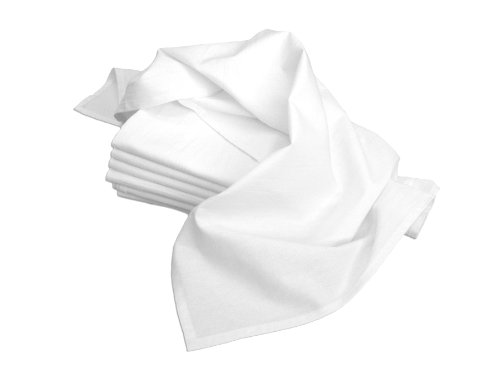
Aunt Martha’s Flour Sack Dish Towels
Aunt Martha’s is a well-known name for plain flour sack towels, and its dish towels are straightforward: unprinted cotton squares sold in multi-packs. They look humble, but they are a common pick for people who want a stack of dependable drying cloths for the kitchen.
Because the fabric is plain white, it works for many jobs beyond dishes. People use flour sack towels to cover rising dough, strain soup or wrap herbs, and the same low-fiber feel helps there. They are also easy to bleach or boil-wash when stains appear, if the label allows.
The trade-offs are the same as with any flour sack towel. They shed a little at first, and the thin fabric will not suit anyone who wants a plush, absorbent feel. Check the listing for the size and count.
This is the one to pick for volume, since a multi-pack gives you enough towels to rotate through the week. Skip it if you want decorative patterns.
Sinland Waffle Weave Microfiber Dish Towels
Microfiber sounds like an odd answer to a lint problem, since some people link it with fuzz. But a tight waffle weave microfiber towel behaves differently from a plush one. The pockets in the waffle texture hold water, and the synthetic fibers do not break apart in the same way cotton threads do.
Sinland sells these dish towels in multi-packs. They are popular for drying glasses, wiping a stovetop and polishing stainless steel, tasks where visible fibers are most annoying.
The trade-offs are the usual microfiber ones. Avoid fabric softener, wash with similar items, and keep them away from cotton towels that shed, because microfiber can pick up lint from the machine. Follow the maker’s care label.
Choose it for glass and metal surfaces. Skip it if you prefer natural fibers or want a towel for your body.
Chakir Turkish Linens Turkish Cotton Bath Towels
For bathrooms, long-fiber cotton in a lighter weave is a smart place to look. Chakir Turkish Linens sells Turkish cotton bath towels that are thinner than a typical fluffy towel, which tends to mean fewer loose fibers to leave on dark clothes after you dry off.
Turkish cotton is known for relatively long fibers, which are held more securely in the yarn than short ones. That is a general quality of the fiber, not a promise about this exact towel, but it explains why Turkish cotton is a common suggestion for people who dislike lint.
The trade-off is feel. If you love a thick, spongy towel, a lighter Turkish cotton towel will seem flat. It also needs the usual first washes to settle. Check the listing for sizes and colors.
Choose it if you wear dark clothes and dislike fibers on them after a shower. Skip it if thickness matters more.
Hammam Linen Original Turkish Cotton Bath Towels
Hammam Linen offers thin Turkish-style bath towels with a flat, soft weave. The design is closer to a traditional bathhouse towel than to a thick spa towel, and that structure gives it a different relationship with lint.
It dries quickly, folds small and takes up little space in a laundry load, so it suits people who wash towels often. Washing often is one of the best ways to bring shedding down, because loose fibers wash out over time.
The compromise is again the feel. These towels are lighter, and some people find they do not feel as cushioned as a fluffy towel. If you are particular about absorbency, check the listing and read the maker’s description closely.
It is a good second option beside the Chakir towels for a bathroom or gym bag. Skip it if you want a heavy, plush feel.
Best for Glassware and Mirrors
The Now Designs flour sack towels are the neat choice here. The flat weave and tight finish give a clean wipe. Use a fresh, dry towel for the final polish to limit marks.
Best for a Busy Kitchen
The Aunt Martha’s pack covers a full week of cooking. You can rotate towels, put the damp ones in the wash, and always have a fresh towel at hand.
Best for Wiping Counters and Steel
The Sinland waffle weave towels are well suited to stainless steel, glass stovetops and countertops. The texture gives a bit of grip, and the fabric does not leave cotton fibers behind.
Best for Bathrooms
Between the two Turkish cotton options, Chakir is a little more conventional as a bath towel, and Hammam Linen is the thinner pick. Either one suits people who want to cut down on fibers in the laundry basket.
How to Choose Towels That Shed Less
Understand first that lint comes from short fibers working loose from yarn. Towels with long fibers, tight weaves and flat surfaces release fewer of them. Looped terry and fluffy pile naturally shed more, especially when new.
For the kitchen, flat weaves such as flour sack are the standard answer. They have no loops, they are thin and they dry fast. For drying glass and metal, tight waffle weave microfiber is a good alternative.
For bath towels, Turkish cotton and lighter weaves are the usual choice. Heavier towels can still shed, so choose according to your tolerance. If you prefer a thick towel, accept a few extra washes before it settles.
Wash new towels before use, and wash them separately. Washing a towel with clothes spreads lint across the load. A separate wash also lets fibers rinse away rather than reattach to other fabrics. Use a full rinse cycle and shake each towel out before drying.
Clean the dryer lint trap before every load. It is easy to forget, but a clogged trap sends lint back onto towels. Skip fabric softener, which coats fibers and can make some towels linty.
Think about color as well. Dark towels show fibers more than light ones, and white towels hide them. If lint is the chief complaint, choose a color that does not highlight it.
Avoid common mistakes: judging a towel after one wash, overloading the machine and drying on very high heat, which can weaken fibers. Treat the first few washes as part of the process.
It also helps to be realistic about expectations. A flour sack towel will still shed a little in its first month, and a Turkish cotton towel is not immune. What you are aiming for is a steady decline: each wash should leave fewer loose fibers than the one before, and after several washes a good towel should be quiet. If a towel is still shedding heavily after many washes, it may simply not be the right fabric for you.
For glassware specifically, many people use a two-towel routine. A slightly damp towel removes water and spots, and a second, completely dry towel gives the final polish. This works with flour sack, waffle weave or any flat towel, and it is more effective than trying to do everything with one cloth.
In the bathroom, a quick shake outside the laundry room before the towel goes into the machine knocks loose a surprising amount of fluff. A short, separate wash with plenty of water then carries the fibers away, rather than letting them settle back into the cloth.
Notes on Use and Safety
Follow each maker’s care label. Clean the dryer lint trap before each load, because a clogged trap is a fire risk as well as a lint problem, and never leave a running dryer unattended. If your dryer vents are blocked or damaged, have them checked by a qualified technician rather than repairing them yourself.
Care and Troubleshooting
Wash new towels alone, use a modest amount of detergent and dry on a setting the label allows. Fold while still slightly warm to keep edges tidy.
| Problem | Likely cause | What to try |
|---|---|---|
| Lint on dark clothes | Towels washed with clothes | Wash towels separately |
| Fibers on glass | New or plush towel | Wash twice and use a flat weave |
| Towel feels coated | Fabric softener | Skip softener and rewash |
| Lint in the dryer | Full trap or overload | Clean the trap and use smaller loads |
Weaves and Fabrics Explained
Lint is loose fiber, and how much of it a towel releases depends on how the fabric is built. Understanding the common constructions makes it easier to see why the towels in this guide are grouped the way they are.
- Flour sack cotton: a plain, tight weave with no raised loops. Because there is no pile to shed, it tends to leave surfaces clean once the initial finishing residue is washed out. It is thin, so it dries quickly but holds less water.
- Waffle weave: a honeycomb texture that traps water in the recessed squares. It gives good absorbency for its weight and is a popular choice in microfiber versions.
- Terry: a looped pile that is thick and absorbent. It is the standard bath towel construction, and it naturally releases some fibers early in its life.
- Turkish cotton: long-staple cotton known for a smooth, lighter-weight feel. Longer fibers are spun more tightly, which generally means fewer loose ends to shed.
No single weave is best for everything. A tight, flat weave is ideal for glass and mirrors where a stray thread shows. A looped weave is better where water volume matters, such as after a shower.
Assigning Towels to Specific Jobs
One of the simplest ways to cut down on lint complaints is to stop using the same towel for everything. A towel that has just wiped a greasy counter will not polish a wine glass. Keeping dedicated sets removes most of the frustration.
A workable system has three tiers. Reserve your lowest-lint flat-weave towels for glassware, mirrors, windows, and stainless appliances. Use a second group for general kitchen drying of dishes and hands. Keep a third, older set for spills, pet paws, and messy cleanups. Labeling by color or a small stitch of thread helps everyone in the house follow the system.
This approach also extends towel life. The glass towels stay clean because they never see grease, and the rough-duty towels can be washed hot and hard without worrying about preserving softness. If you are building from scratch, buy the glass-polishing set first and add others as needs appear.
Laundry Habits That Prevent Lint Transfer
Even a good towel can pick up lint in the wash. The usual source is other laundry, particularly fleece, fuzzy sweatshirts, and new terry towels. Washing lint-free towels with those items transfers loose fibers directly onto the cloth. Wash your low-lint towels with other smooth fabrics, or on their own.
Clean the dryer lint trap before every load, and run a quick wipe of the drum if it feels dusty. An overstuffed dryer prevents airflow and leaves lint stuck to damp fabric, so give towels room to tumble. Shake each towel out before folding.
Water temperature plays a role as well. Warm water helps release finishing residue from new towels, while cold water is gentler on color and fibers. Follow the care label, and run an extra rinse if a new towel feels slick.
Spending Wisely on Towels
Lint resistance is not tied closely to price. Plain flour sack towels are often among the least expensive choices and some of the best performers on glass. Higher-priced bath towels usually reflect fiber length, weight, and finishing rather than a guarantee of zero shedding. Decide what each towel needs to do, and match the construction to that task rather than paying for features you will not use.
Questions to Ask Before You Order
A few minutes of reading product pages will tell you more than any photo. Start with the fiber content. A listing that says one hundred percent cotton, or names a specific blend, gives you something to evaluate. Vague terms such as soft fabric tell you nothing about shedding. Next, check the dimensions, because a towel that is too small for the job ends up wadded in your hand and leaves more fiber behind than a properly sized one.
Look at the care instructions next. A towel that must be washed in cold water and line dried is less convenient than one that handles a regular cycle. Finally, think about quantity. Dish and glass towels wear out and stain, so a multi-pack is practical, while bath towels are usually bought in sets that match. Ask yourself whether you are replacing a full set or filling a gap, and buy accordingly so you do not end up with towels that serve no clear purpose.
It is also fair to keep expectations realistic. Even the best choice may shed lightly in the first few washes, so judge a towel after it has been laundered properly, not straight out of the package.
Comparing the Low-Lint Picks by Surface and Temperament
No towel is truly lint-free, so the useful comparison is how each pick sheds, where, and for how long. The Now Designs Floursack Dish Towels and the Aunt Martha’s Flour Sack Dish Towels share the flour sack virtues: a smooth, plain weave that has very little loose fibre to give up, a thin profile that dries quickly, and a long kitchen tradition of polishing glassware without leaving a trail. Choosing between the two flour sack options comes down to the sizes, pack make-up and finishing details that suit your kitchen, because both are bought for the same honest reason, a clean wipe on glass and dishes with nothing left behind. The Sinland Waffle Weave Microfiber Dish Towels take a different route to the same destination: the waffle pockets hold water while the microfiber surface stays comparatively tidy, suiting households that want one towel to dry dishes, wipe counters and still behave near glass.
The Chakir Turkish Linens Turkish Cotton Bath Towels and the Hammam Linen Original Turkish Cotton Bath Towels represent the terry end of a low-lint guide, which surprises people until they live with them. A well-made terry towel sheds noticeably in its early washes and then settles, and once settled it can serve bathroom duty with very little transfer, provided it is washed with its own kind and not asked to dry glassware. The honest division of labour in most homes is therefore flour sack or waffle weave for the kitchen and glass, settled terry for the bathroom, and no towel crossing between those worlds. Owners who demand one towel for every job will always be negotiating with lint; owners who assign towels to jobs mostly stop thinking about it.
The First Six Washes: Settling a New Towel In
A towel’s lint behaviour is largely decided in its first half-dozen washes, and those washes repay a little ceremony. Wash new towels separately, by type and colour, before they meet anything you care about, and expect the filter and the wash water to tell you how much loose fibre the towel arrived carrying. Dry them fully and shake them out outdoors, then test each type on its intended surface in good light: a dark glass, a black cooktop panel or a mirror viewed at an angle will show transfer that a white plate conceals. Towels that pass early can be promoted to their real duties with confidence.
Between the early washes, keep the discipline that protects the settling process. Do not wash new towels with fleece, older terry or anything else that donates lint, because a low-lint towel washed in a lint storm emerges wearing someone else’s fibres and gets blamed for them. Avoid overloading the drum, which traps shed fibre in the load instead of letting it rinse away, and clean the dryer’s filter between towel loads during the settling period, since a loaded filter recirculates exactly what you are trying to remove. By the end of the settling washes, each towel’s true character is known, and the small number that still shed heavily can be demoted to jobs where lint is harmless rather than fought with for a year.
Lint on Clothes, Screens and Dark Surfaces: A Troubleshooting Pass
When lint appears where it should not, work backwards from the surface. Fibres on dark laundry usually entered in the wash, either from towels washed in the same load or from a towel used to wipe the machine’s rim and door seal, where lint collects. Fibres on screens and glossy black surfaces usually arrived on the cloth itself, which means the cloth was stored with terry or fleece, or dried in a load that included them. Fibres on glassware point to the drying towel, and the fix is a dedicated glass towel, washed alone, stored in a closed drawer, and never used on a counter first.
Static makes every lint problem look worse, particularly in dry, heated rooms in winter, because fibres cling to screens and dark surfaces instead of falling away. A cloth very slightly dampened lays dust and lint down instead of chasing it, and wiping in one direction, lifting at the end of each stroke, removes fibres rather than redistributing them. If a surface must be perfect, such as a television screen, a framed print under glass or a display cabinet, use the smoothest cloth you own, freshly washed, and inspect the result in raking light from a window before declaring the job done.
Assigning Low-Lint Towels Across the Whole House
A house that takes lint seriously ends up with a map, and drawing it once saves years of small annoyances. In the kitchen, flour sack and waffle towels own the glassware, the dishes and the polished steel, while a separate, older towel handles spills and oven doors so the good towels never meet grease or rough work. In the bathroom, settled terry owns bodies and hands, and a smooth cloth, kept apart, owns the mirror. Around the house, a dedicated smooth cloth for screens, picture glass and glossy furniture prevents the slow accumulation of fine scratches and fibres that comes from wiping delicate surfaces with whatever towel was nearest.
The map only works if storage enforces it. Keep each job’s towels where the job happens, in closed drawers or boxes where possible, because a low-lint towel stored draped over a terry towel arrives at its surface already loaded. Wash by map zone as well as by colour, and demote towels within their zone: a kitchen glass towel that begins to tire becomes the kitchen’s counter towel, then its floor towel, and it never migrates to the bathroom mirror on the way down. That one-way traffic is the whole secret, and it costs nothing but a decision made once and kept calmly.
When Lint Is a Symptom, Not a Towel Problem
Sometimes the towel is innocent. A washing machine with a lint-clogged filter, a dryer whose filter or venting is overdue for attention, or a household habit of washing everything together will coat even the best low-lint towels in other fabrics’ fibres, and replacing the towels changes nothing. If every towel in the house suddenly seems to shed more, audit the laundry before the linen: clean the filters, run an empty maintenance wash if your machine’s guidance calls for one, and wash a test towel entirely alone to see whether it emerges clean. New household members, new fleece blankets and a new rug in the laundry area have all, in real homes, been the hidden source of a lint mystery that towels were blamed for.
Water and detergent play smaller parts. Overloaded loads cannot rinse shed fibre away, so it resettles on the load, while too little water for the load size has the same effect. Splitting towel loads, giving them room and water to rinse properly, and shaking each towel out before it goes into the drawer are unglamorous habits that deliver most of what people hope to buy when they shop for a miracle towel. The picks in this guide genuinely shed less by construction, but they perform at their best inside a laundry routine that is not working against them.
Drying Dishes, Glassware and Produce: Three Kitchen Jobs Compared
The kitchen asks three different things of a low-lint towel, and separating them clarifies which pick belongs where. Drying dishes is the volume job: plates, pans and utensils arrive wet in quantity, and the towel must absorb steadily without becoming a soggy sheet halfway through the rack. Waffle weave earns its place here, because its pockets hold water and its structure keeps working as it dampens, while a flour sack towel, superb at finishing, can wet through quickly under a full load of pans. Drying glassware is the finishing job, fewer items, higher standards, and it belongs to the smoothest towel you own, used dry at the start and retired from the session the moment it feels damp, because a damp finishing towel leaves the very marks it was chosen to prevent.
Drying washed produce and herbs is the third job, and the one most often assigned thoughtlessly. A towel that dries salad leaves and berries should be scrupulously clean, reserved for food, and washed often, and it should never be the towel that wiped the counter after raw ingredients were prepared. Households that keep one light, plain towel for produce alone find their salads crisper and their conscience clearer. Across all three jobs, the discipline is the same as elsewhere in this guide: the towel’s history matters as much as its weave, and a low-lint towel with the wrong history is the wrong towel.
Buying Low-Lint Towels Without Overbuying
Because low-lint performance depends so much on settling and routine, the sensible purchase is staged. Buy one pack or set in the style you favour, put it through the settling washes, and live with it on its intended surfaces for a few weeks before committing the whole house to it. Towels that settle well can be reordered with confidence and the rotation built gradually, while a style that disappoints has cost you one pack rather than a cupboard. Keep notes, even mental ones, on which towel serves which surface in your light and your water, because those local facts outweigh any general ranking, including the one in this guide.
Quantity should follow the map, not the pack sizes on offer. Most kitchens settle happily with a small stack of finishing towels, a similar stack for dishes, and a couple for produce, while bathrooms need their terry in the numbers your household’s laundry rhythm dictates. Buying beyond the map creates storage piles where towels age unused and gather the very lint and dust the system exists to avoid. Buy for the jobs, wash the towels in honestly, and let a settled, well-assigned set prove that lint was a manageable problem all along rather than a reason to keep searching for a perfect towel.
Seasonal Lint: Why the Problem Changes With the Calendar
Lint complaints rise and fall with the seasons for reasons that have little to do with the towels. In winter, homes fill with fleece, wool and layered clothing, all generous lint donors, and heated indoor air adds the static that makes fibres cling to screens and dark surfaces. The same towel that behaved all summer can seem to fail in January, when in truth it is being washed, dried and stored in a much more fibrous environment. The winter answers are separation in the wash, closed storage for finishing towels, and the slightly damp cloth technique for screens and glossy surfaces described earlier.
Summer brings the opposite pressures: more frequent washing of lighter loads, line drying in breezy gardens where pollen and dust settle on damp towels, and a house full of open windows moving fibres around. Towels dried outdoors should be shaken well before they come in and stored promptly rather than left in a basket where everything else in the laundry can share its fibres with them. Spring cleaning itself is a lint event, disturbing dust that has settled for months, and the finishing towels should be washed and put away before the deep clean begins, then brought out for the final glass and screen pass when the dust has settled. Reading the calendar this way turns a recurring frustration into a predictable, manageable rhythm.
There is a final, liberating point to make about lint: the goal is management, not perfection. Even professional cleaners, working with dedicated cloths and disciplined laundry, accept that a fibre or two will appear on a dark surface and simply finish with a last, slow pass in good light. A home that has assigned its towels honestly, settled them in with separate washes, and stored its finishing towels away from the lint donors has already captured nearly all of the benefit the category offers. Chasing the last fibre with ever more specialised purchases yields diminishing returns and a cupboard full of near-duplicates, while the settled system described here keeps glassware, screens and dark surfaces looking the way their owners intended, week after ordinary week.
One more habit is worth adopting before you reorder anything: keep a single, known-perfect finishing towel as your household reference. Wash it alone, store it sealed, and use it only for the final pass on the surfaces you care about most. When another towel’s performance is in doubt, clean half a mirror with the reference towel and half with the suspect, in the same light, and the comparison will tell you more than any amount of handling and guessing. References remove arguments, and in a shared household a visible, physical standard quietly keeps everyone’s laundry and storage habits honest without a word being said.
Storing the Settled Set So It Stays Settled
A towel that has been settled in with six careful washes can be unsettled by one careless shelf, so finish the system at the storage. Keep finishing towels in a closed drawer or box, folded loosely, away from the fleece, the bath towels and the laundry basket’s weather, and keep each job’s towels in the room where the job lives rather than in a central cupboard they must travel from, shedding and gathering as they go. Storage near a tumble dryer or a warm airing cupboard full of other fabrics is storage inside a lint source, however tidy it looks. The last principle is turnover: use the whole settled set in rotation rather than favouring the top towel, because a towel stored for months gathers the cupboard’s dust and arrives at its surface pre-loaded. Settled, separated, stored closed and rotated: four small disciplines that together are the entire difference between owning low-lint towels and actually living with low-lint results.
Keep the faith through the settling period, because low-lint is a destination towels arrive at rather than a quality they always display in the shop. The household that washes a new set in properly, assigns it honestly and stores it apart will look up in a month to find the problem simply gone from its glassware, its screens and its dark laundry. That quiet disappearance, not any single purchase, is the result this guide has been describing from the first page.
Frequently Asked Questions
Is any towel completely lint-free?
No fabric is entirely lint-free, but flat weaves and long-fiber cotton shed less than fluffy terry.
Why does my new towel shed so much?
New towels carry loose fibers from manufacturing. Several washes usually settle them.
Do microfiber towels leave lint?
Tight waffle weave microfiber generally leaves fewer fibers than cotton terry, but it can pick up lint from other laundry.
Should I wash towels alone?
Yes, especially new ones. It keeps fibers from spreading to other items.
Does fabric softener help with lint?
Usually not. It can coat fibers, so many makers advise against it.
What towel is best for drying glasses without fibers?
A clean flour sack towel or a waffle weave microfiber towel is a common choice.
How do I stop towels from leaving lint on my clothes?
Wash new towels separately for the first few cycles, use an extra rinse, and clean the dryer lint trap each load. Avoid washing them with fleece or other fuzzy fabrics. After that, shake them out before folding and the amount of lint should drop noticeably.
Are flour sack towels good for drying glasses?
They are a popular choice because the flat, tight weave leaves little behind. Wash them first to remove finishing residue and they usually work well on glassware and mirrors. They absorb less than terry, so wring them out and swap to a dry one when damp.
Is waffle weave better than terry for avoiding lint?
Generally yes for surface drying, since waffle weave has no loose looped pile. Terry is more absorbent for the body but tends to shed more early on. Choose waffle weave for kitchens and glass, and terry where you need maximum water uptake.
How many washes until a towel stops shedding?
There is no fixed number, and it varies by fabric and quality. Many cotton towels shed noticeably for the first few washes, then settle down. If a towel continues to leave heavy fiber after several cycles, it may be low quality or its yarn too loosely spun.
Does tumble drying or line drying produce less lint transfer?
Tumble drying removes more loose fibre from the towel itself, because the filter collects what line drying leaves in the weave to be shed later on your surfaces, so towels destined for glass and dark surfaces usually behave better with a thorough tumble dry during their settling period. Line-dried towels can still serve well if they are shaken out firmly outdoors once dry. Whichever method you use, separating low-lint towels from lint-donating fabrics matters more than the drying method itself.
Are dark-coloured towels better at hiding lint problems?
They hide the appearance on the towel, not the transfer to your surfaces, and they can mislead you into thinking a towel has settled when it is still shedding onto glass and screens where the pale fibres show clearly. Judge any towel on the surface it will serve, in good light, rather than by how clean the towel itself looks hanging on the rail.
Should I keep one towel exclusively for drying a car after washing?
If the car matters to you, yes, and it should be a smooth, low-lint cloth kept entirely out of the household rotation, washed separately and stored sealed. Household towels carry household history, including fibres, residues and the occasional grit, and paint shows all of it. A dedicated cloth, demoted household towels can serve the wheels and jambs, while the reserved cloth alone touches the paint and glass.
Can a low-lint towel be used to strain or cover food?
Plain flour sack towels have a long kitchen history of covering rising dough and straining, and a clean, dedicated towel kept only for food use is well suited to those tasks. The conditions are strict: the towel must be washed without heavily scented products, stored with food linens rather than cleaning cloths, and retired from food duty permanently once it has served any cleaning role. Households that prefer a clear line can keep one pack of plain towels for food only and never let the categories meet.
How can I tell whether fibres on my clothes came from towels or from the clothes themselves?
Wash a suspect dark garment entirely alone and inspect it dry, in daylight. If it emerges clean, the fibres in mixed loads are arriving from companions, most often towels, fleece or new items still shedding. If it emerges covered even alone, the garment itself is shedding and no towel change will fix it. This one-load test settles arguments that weeks of guessing cannot, and it tells you whether to change the laundry sorting or to retire a garment from the loads that matter.
Bottom Line
For the kitchen, choose flour sack towels from Now Designs or Aunt Martha’s, and add the Sinland waffle weave towels for glass and steel. For bathrooms, the Chakir and Hammam Linen Turkish cotton towels are lighter options that tend to shed less. Wash everything before use and check each listing for size and count.
Related Guides
- Best Towels and Washcloths for the Bath, Shower and Face
- Best Towels with Hanging Loops for Easy Bathroom Drying
- Best Shop Towels for the Garage, Workshop and Messy Jobs