A freestanding wine rack holds bottles without needing wall mounting, so you can place it on the floor, in a pantry or on a counter. Styles range from slim metal towers to wood shelves and modular stackable units.
The six options below cover metal, wood and stackable designs from familiar brands. We have not used these products ourselves, so confirm the exact capacity, dimensions and assembly details on the current listing before you buy. Everything here is general guidance only.
As an Amazon Associate we earn from qualifying purchases. Links below are affiliate links, and they do not change the product information we give.
What to Look For
| Feature | Why it matters |
|---|---|
| Capacity | Pick a size that fits your collection with room to grow |
| Material | Metal is sturdy, while wood warms up a room |
| Footprint | Measure the floor space and ceiling height before buying |
| Stability | A wide base and level feet prevent tipping |
| Assembly | Some racks need tools, while others snap together |
| Bottle shape | Check that wide-base bottles will fit the slots |
| Placement | Corners, pantry ends and dining room walls each suit different rack shapes |
| Finish | Choose a color that matches nearby furniture and cabinets |
In this guide
Specs at a Glance
| Rack | Material | Style | Best for |
|---|---|---|---|
| Sorbus Freestanding Wine Rack | Metal | Tiered tower | Floor display |
| Wine Enthusiast N’FINITY | Plastic and metal | Modular | Growing collections |
| Whitmor Supreme Stackable | Wood | Stackable | Expandable storage |
| VASAGLE Wine Rack | Engineered wood and metal | Shelf with glass holder | Kitchen use |
| Pipishell Wine Rack | Metal and wood | Countertop | Small spaces |
| Seville Classics Expandable | Metal | Expandable | Flexible storage |
The 6 Best Freestanding Wine Racks
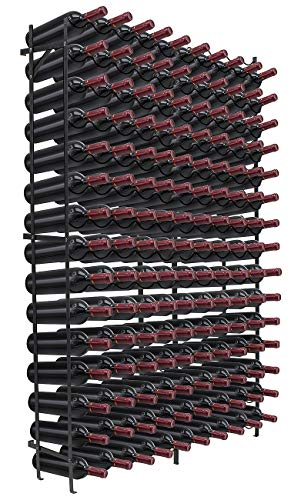
1. Sorbus Freestanding Wine Rack
A freestanding metal rack that holds bottles in a tiered design. Check the listing for the bottle count and finish. Level the feet and tighten every fastener to keep it steady.
Suits: floor display. Strengths: sturdy metal build. Weaknesses: assembly needs care. Skip it if you want a compact countertop piece.
View Sorbus Freestanding Wine Rack on Amazon
2. Wine Enthusiast N’FINITY Wine Rack
A modular rack you can add to as your collection grows. The maker is a known wine accessories brand. Add extra modules over time as your collection grows.
Suits: growing collections. Strengths: a flexible layout. Weaknesses: cost increases as you add parts. Skip it if you want one fixed unit.
View Wine Enthusiast N’FINITY Wine Rack on Amazon
3. Whitmor Supreme Stackable Wine Rack
A stackable wood rack that lets you build up storage in modules. Confirm the finish and count on the listing. Make sure the stacked units are secure before loading them.
Suits: expandable storage. Strengths: easy stacking. Weaknesses: wood finish varies. Skip it if you want metal.
View Whitmor Supreme Stackable Wine Rack on Amazon
4. VASAGLE Freestanding Wine Rack
A shelf-style rack with bottle storage and a spot for glasses. It combines storage and display in one piece. Its glass holder keeps stemware close to the bottles.
Suits: kitchen or dining use. Strengths: shelf space for glasses. Weaknesses: fewer bottle slots than a tower. Skip it if you need a large capacity.
View VASAGLE Freestanding Wine Rack on Amazon
5. Pipishell Wine Rack
A compact rack aimed at countertops and small spaces. Check the listing for the capacity and dimensions. Place it away from direct heat or bright sunlight.
Suits: small kitchens. Strengths: a slim body. Weaknesses: smaller capacity. Skip it if you have a large collection.
View Pipishell Wine Rack on Amazon
6. Seville Classics Expandable Wine Rack
An expandable metal rack that adapts to different spaces. It suits people who want a flexible layout. Check the weight limit before filling every slot.
Suits: changing spaces. Strengths: a flexible shape. Weaknesses: stability depends on setup. Skip it if you want a decorative piece.
View Seville Classics Expandable Wine Rack on Amazon
Care and Setup
- Keep the rack away from direct sunlight and heat.
- Dust wood and metal with a soft cloth.
- Check screws every few months.
- Store bottles on their sides when corks are used.
- Place the rack on a level, solid floor.
Mistakes to Avoid
- Overloading a rack beyond its limit.
- Placing it near a stove or radiator.
- Skipping assembly steps and leaving it wobbly.
- Forgetting to measure the room first.
- Using it for long-term aging of fine bottles in a warm room.
Sizing Capacity for Your Collection
Capacity is the first number most buyers look at, and it is easy to get wrong in both directions. A rack that is too small forces you to stack bottles on a counter or in boxes, while an oversized tower looks half empty and takes floor space you may want back. Start by counting the bottles you own today, then add the bottles you typically bring home in a month or two. Most people buy in bursts around holidays or case discounts, so the real peak is usually higher than the everyday count.
Next, decide whether the rack is for storage or for display. A storage rack is judged by how many bottles it holds per square foot of floor. A display rack is judged by how the front-facing bottles look, and it may hold fewer. If you want both, a modular or stackable design lets you buy a small unit now and add sections later, which spreads the cost and keeps the room from feeling crowded.
Also think about daily use. If you drink a bottle or two each week, a countertop or small floor rack that keeps the next few bottles within reach may be enough. If you buy by the case, a taller unit with more slots makes more sense. Always confirm the stated bottle count on the product listing, since some makers count only standard-size bottles and some include slots meant for stemware or magnums. When in doubt, choose one size up from your current count so the rack never has to be fully packed to hold your collection.
Metal, Wood and Stackable Designs Compared
Each construction type solves a slightly different problem, so it helps to know the trade-offs before you look at styles. Metal racks tend to have thin frames, which means they hold a good number of bottles in a small footprint and fit modern kitchens well. Their weak points are usually the joints and fasteners. Check how the pieces connect, and expect to tighten screws once the rack has been loaded for a few weeks.
Wood racks feel warmer and often look like furniture, which suits dining rooms and living areas. Solid wood and engineered wood behave differently. Solid wood can be heavier and may show natural variation in grain, while engineered wood can be steady and consistent but may not tolerate moisture or heavy knocks well. The listing should say which one you are getting. Wood finishes can also vary from batch to batch, so treat photos as a guide rather than an exact match.
Stackable and modular racks trade a fixed look for flexibility. You can start with one or two units, build up in a column, or spread units along a wall. The things to check are how securely the units lock together and whether the stack remains stable once it reaches its full height. A stack that is stable at two units may need extra care at four. Some people prefer to keep stacks short and place them side by side instead of building tall towers.
- Metal: slim, sturdy, good for tight spaces.
- Wood: warm look, suits visible rooms.
- Stackable: grows with you, depends on connection quality.
Weight, Stability and Tip-Over Safety
A full wine rack carries more weight than many people expect. Each bottle is heavy on its own, and a rack holding a dozen or more adds up quickly, with most of that load sitting at a height above the base. That is why stability deserves more attention than style. Look for a wide base, feet that can be adjusted, and a frame that does not flex when you press on the top.
Before loading, put the rack where it will live and test it. Press gently on the corners and watch for rocking. If the floor is uneven, adjust the feet until all contact points are firm, then check again after the first week as screws can settle. Fill the lower rows first so the weight stays low, and avoid putting a few heavy bottles on the highest tier while the rest is empty.
If you have children, pets or live in an area where the floor shakes, take tall units seriously. Many tall racks can be secured to a wall with an anchor or strap, and the manual will say if that is recommended. If the maker advises it, do it. For slim towers, a rack that stands in a corner and touches two walls has natural support. Also read any stated weight limit on the listing, and remember that limits often assume weight is spread evenly rather than concentrated on one shelf.
Where to Put the Rack in Your Home
Placement affects both how well the wine keeps and how well the rack works day to day. Wine dislikes heat, direct light and constant temperature swings. That rules out spots beside a stove, dishwasher, radiator, sunny window or the top of a refrigerator. A dining room wall, a hallway, a pantry end or a cool interior corner is usually a safer choice than the kitchen counter.
Think about traffic too. A rack in a narrow walkway is easy to bump, and a bump can loosen joints or knock bottles. Leave enough room to pull a bottle out without scraping the neighbor. Measure the width and depth of the footprint, then add room around it, and check ceiling height if you are considering a tall unit. For stackable designs, remember that adding a module changes the height and may bring it close to a shelf or light fixture.
Floor type matters as well. Hard, flat floors give the best stability. On carpet, a rack may sink slightly or tilt, so a flat base plate or a firm mat under it can help, depending on the manual. Garages and basements can look convenient, but they often swing in temperature across seasons, which is hard on bottles you plan to keep for more than a short while. If the space is humid, metal parts may also be prone to rust, so check the finish description.
Budget Tiers and Signs It Is Time to Replace
Racks fall into rough tiers, and the differences are usually about materials and joinery rather than looks. Entry-level units tend to use thinner metal or lighter engineered wood and simpler fasteners. They can work well for a modest number of bottles in a low-traffic spot. Mid-range units generally add thicker frames, better finishes and clearer assembly steps. Higher-end units lean toward solid materials, adjustable feet and tidier hardware. A higher tier is not automatically better for you, though. If you keep six bottles for the weekend, a simple rack is enough.
Ask a few questions before buying. Does the listing give a weight limit? Is assembly tool-free or does it require a screwdriver? Can I add units later? Are replacement parts available from the maker? A rack that offers spare parts is easier to keep for years.
Know when to retire a rack. Signs include a frame that rocks even after leveling, joints that keep loosening, cracked or swollen wood, visible rust at connection points, or slots that have bent so bottles no longer sit evenly. A rack that tilts under load is a safety issue, not just a cosmetic one, so empty it and replace it rather than propping it with folded paper.
Metal, Wood or Stackable: A Short Comparison
Freestanding racks sit on the floor or a surface without any wall mounting. That freedom makes them flexible, but each material has its own personality.
| Material | Appearance | Practical notes |
|---|---|---|
| Metal | Slim and modern | Look at joints and feet for steadiness |
| Wood | Warm and traditional | Follow the maker care steps for the finish |
| Stackable modules | Flexible and modular | Check load limits when you build upward |
If your rack will share a room with pets, children or heavy foot traffic, stability should outrank appearance. Choose a wide base and read what the listing says about weight capacity.
Placement Ideas Around the Home
A rack does not have to live in the kitchen. A dining room corner, a hallway nook or a spot beside a sideboard can all work, as long as the area stays cool and out of strong sunlight. Avoid positions beside ovens, radiators and sunny windows, which expose bottles to changing temperatures.
- Leave room to walk by without brushing the bottles.
- Place heavier racks on a level, solid floor.
- Keep the rack out of the swing zone of doors.
- Consider the visual weight, since a tall rack can dominate a small room.
Counting Capacity Realistically
Capacity numbers are based on standard bottles. Wide sparkling bottles and bottles with thick shoulders may occupy more space than the listing suggests, and some slots only suit certain shapes. When in doubt, plan for about eighty percent of the quoted figure.
It also helps to decide how you want to use the rack: for everyday bottles you will drink soon, or for bottles that rest for a long time. A quick turnover rack can be more relaxed about vibration and light, while long-term storage benefits from a calmer spot. Whatever you choose, follow the assembly instructions in the box and tighten the hardware once the rack is in its final position.
Mistakes to Avoid With Floor Racks
A freestanding rack looks easy to live with, but a handful of avoidable errors cause most frustration. The classic one is choosing a rack too tall for the space, so it feels crowded or reaches the ceiling fan. Another is loading the top shelf first, which makes the whole structure top heavy.
- Filling a new rack before the hardware has been checked and tightened.
- Placing it on an uneven floor, then fighting a wobble.
- Putting it in a doorway or a busy passage where people may bump it.
- Forgetting to account for bottle size, especially for larger formats.
- Leaving it in a sunny window where labels fade and bottles warm up.
A Short Decision Guide by Situation
| If you have | Consider |
|---|---|
| A small apartment | A slim metal rack or a compact tabletop model |
| A growing collection | Stackable modules that can expand |
| A formal dining room | A wood rack that matches your furniture |
| Young children at home | A very stable, low rack, anchored if the maker allows |
Whichever route you choose, read the assembly guide before you open the screws and parts bags, and keep the manual for later. If the maker offers advice on cleaning the finish, follow it rather than using strong cleaners. A well placed rack can serve for many years, and a few minutes spent on planning pays off every time you reach for a bottle.
Freestanding Wine Rack FAQ
How many bottles do I need space for?
Pick a rack that holds your current bottles with space left to grow.
Is wood or metal better?
Metal is sturdy and slim, while wood adds warmth and character.
Can a rack store wine long-term?
A rack is for display and short-term storage, and long aging needs stable cool conditions.
Do I need to fasten a rack to the wall?
Many are stable alone, but check the maker’s guidance for tall units.
Can I store open bottles on a rack?
No, a rack is for sealed bottles, and opened wine should be kept upright and sealed.
What if my bottles are unusually large?
Check the slot size on the listing, since sparkling and magnum bottles may not fit standard slots.
How should I arrange bottles on a rack?
Put heavier or larger bottles on the lower rows and lighter ones higher up so the rack stays stable. Many people group by type or by when they plan to open them. Keep the bottles you will drink soon within easy reach.
Can I put a freestanding wine rack in a garage or basement?
You can, but these spaces often have big temperature swings and sometimes high humidity. That is fine for a few bottles you will open soon, though it is not ideal for wine you plan to keep. Check the finish if the area is damp, since metal parts may rust.
Should the rack hold bottles on their sides?
For bottles sealed with natural cork, laying them on their sides keeps the cork in contact with the wine. Screw-cap bottles are less sensitive to this. Most racks are designed with angled or horizontal slots for this reason.
How do I clean a wine rack?
Wipe wood and metal with a soft, slightly damp cloth, then dry it. Avoid harsh cleaners that might damage a finish. Dust built up in the slots can be removed with a soft brush.
Is it a problem if my rack wobbles slightly?
Yes, it should be addressed before you load it. Adjust the feet, tighten the fasteners and check the floor. If it still rocks, contact the seller or consider a different rack.
Can I mix different rack styles in the same room?
Yes, as long as each one is stable and sits on a level spot. Matching finishes helps the room look cohesive, but it is not necessary for function.
How much space should I leave around the rack?
Leave enough room to pull bottles out freely and to walk by without bumping it. Keeping a small gap from walls and heat sources is also wise. Check the manual for any minimum clearance.
Do racks that hold glasses affect how many bottles fit?
Often yes. A rack with a stemware holder or shelf usually has fewer bottle slots than a pure bottle tower. Compare the bottle count on the listing against your needs.
Going Deeper: What Really Matters When Choosing Freestanding wine racks
The first part of this guide gave you the shortlist. This extended section slows the decision down, because freestanding wine racks reward buyers who think past the headline features and into the daily reality of owning and using them. None of the criteria below appears in large print on a product box, yet together they decide whether a purchase still feels right a year from now. Work through them with your own kitchen, household and habits in view — the right answer is personal, and these are the questions that reveal it.
Capacity today, and the collection you are becoming
Count your bottles honestly, then think about trajectory. A rack filled to the brim on day one leaves nowhere for the case you will be offered or the bottles you will bring back from a trip. A rack that dwarfs a small collection looks empty and wastes floor. Most households do best with capacity modestly above their current count, in a design that can be extended, stacked or paired with a second unit later. The picks here span compact countertop-adjacent sizes to larger floor pieces. Match the rack to the collection you expect in a year, and let modular designs handle the uncertainty beyond that.
How the bottle is supported
Wine bottles should rest stably, ideally with the wine in contact with the cork for bottles sealed with natural cork, which means horizontal or slightly angled storage. Look at how each rack cradles the bottle: full-length support, two rails, or individual slots. Individual slots make bottles easy to remove without disturbing neighbours and suit collections you dip into often. Check neck support as well — a rack that grips only the body can let bottles slide if the floor vibrates or the rack is nudged. Stable, boring support is exactly what you want; drama in a wine rack is a fault, not a feature.
Material and the room it will live in
Metal racks tend to be slimmer, more modern and easy to clean; wooden racks bring warmth, suit traditional rooms and often arrive in furniture-like finishes; stackable systems trade looks for flexibility. Consider the room’s existing furniture, the floor surface and whether the rack will be seen daily or live in a cupboard or cellar corner. Weight matters too — a loaded rack is heavy, and both the rack’s construction and your floor must be comfortable with the total. Choose the material as you would a piece of furniture, because once loaded with a collection, that is what it becomes.
Placement: light, heat and vibration
Where the rack stands matters as much as which rack you buy. Wine dislikes direct sunlight, heat sources and constant vibration, so a freestanding rack belongs in the coolest, darkest, calmest spot available — away from radiators, sunny windows, and the top of appliances. A hallway alcove, a shaded corner of a dining room or a cellar wall all serve well. Before choosing a size, measure that spot, including the room needed to slide bottles in and out. The best rack in the wrong place ages wine faster than a modest rack in the right place protects it.
How the Picks in This Guide Compare in Daily Use
The reviews above introduce each option on its own terms. This section steps back and compares them as things you will live with, because the differences that matter most — effort, forgiveness, maintenance, fit with your household — only appear in daily use. Read it with your own routine in mind, and let the picks sort themselves against that routine rather than against each other in the abstract.
Consider Sorbus Freestanding Wine Rack again with daily life in mind rather than first impressions. The description above sets out what it is and who it suits; the living-with-it question is how its strengths and its stated trade-off feel after a month of ordinary use. If its strength matches the thing you do most often, the trade-off will fade into the background. If its strength serves an occasional need while its weakness taxes a daily one, the honeymoon will be short. That simple projection — strength against routine, weakness against routine — is the most reliable comparison tool in this whole guide.
With Wine Enthusiast N’FINITY Wine Rack, the detail worth re-reading is the limitation named in its review, because limitations are where ownership is actually decided. Every pick here does its main job well; they differ in what they ask of you in return — space, patience, cleaning attention, or a narrower set of drinks. Ask whether the specific thing it asks is a thing you give easily. A demand that fits your habits is barely a cost. A demand that fights them is a daily tax, and daily taxes, not headline features, are what make people stop using a product they once researched carefully.
Place Whitmor Supreme Stackable Wine Rack in the context of the other picks rather than judging it alone. This guide deliberately spans different approaches to the same job, so each option defines the others: the convenient ones show what the hands-on ones ask you to give up, and the hands-on ones show what the convenient ones cannot do. If you find yourself torn between this pick and another, name the single difference that separates them and imagine living with that difference for a year. Decisions made on one honest difference age better than decisions made on a blur of features.
Think about VASAGLE Freestanding Wine Rack in the hands of the other people in your household, not only in yours. A product that only its buyer can operate becomes a service that person must provide; a product others can use confidently becomes part of the household. If your household will share it, weight clarity and forgiveness heavily. If it is truly yours alone — your hobby, your ritual, your quiet morning — weight pleasure and control instead. Neither weighting is wrong, but choosing the wrong one for your situation is the most common reason a well-reviewed product disappoints a perfectly sensible buyer.
For Pipishell Wine Rack, imagine the second year rather than the second week. What wears, what needs cleaning, what needs replacing, and how available are the parts and the knowledge to do it? Products in this guide were chosen to be keepable — standard sizes, documented care, designs that can be maintained rather than discarded. Still, the ownership stories differ, and the pick whose maintenance rhythm matches your temperament will feel cheaper and better over time than a rival whose care you resent. Long-term fit is a feature; read for it between the lines of each review.
Finally, hold Seville Classics Expandable Wine Rack against the simplest test of all: does it remove a friction you actually feel, or add a capability you only imagine using? Both can justify a purchase, but they justify different ones. Friction-removers pay you back daily and are almost never regretted. Capability-adders pay you back when the imagined occasion arrives — so be honest about how often it will. Running every pick through that test, in the order they appear above, usually leaves one option standing quietly at the end. That quiet one, more often than not, is the right purchase.
A Closer Look at the Details That Decide Satisfaction
Organising a rack turns storage into a small pleasure. Many collectors arrange by readiness: bottles to drink soon at the front or top, bottles to keep lower or deeper, and special bottles in the least disturbed positions. Others group by colour or by occasion — weeknight bottles, dinner-party bottles, gifts received. There is no correct system, only a system you can remember when you are standing with a corkscrew in hand. If your collection grows, a simple notebook or phone note listing what is where prevents the classic discovery of a bottle kept years past its best. The rack holds the wine; the system holds the knowledge.
Freestanding racks ask a little assembly honesty. Pieces that arrive flat-packed need their fixings fully tightened and, once loaded, a check that the unit stands square and does not rock. Load gradually and evenly, heavier bottles lower, rather than filling one side first. If the design allows wall anchoring and the rack is tall or your household includes children or large pets, anchoring is cheap insurance — a loaded rack is top-heavy in a way an empty one never reveals. Stackable designs deserve the same respect: follow the stacking guidance, keep stacks modest, and re-check stability whenever you rearrange.
Not every bottle in a rack is wine for keeping. Sparkling wines, everyday bottles bought for the month, and wines sealed with screw caps or glass stoppers are less fussy about angle than natural-cork bottles meant for ageing. That flexibility lets a freestanding rack serve as a household drinks station as well as a cellar substitute. Some owners keep a section for mixers, glasses or the opener collection. Treat the rack as furniture with a job, and let the job evolve: the measure of a good rack is not how perfectly it mimics a cellar, but how gracefully it holds the way your household actually drinks.
Finally, think about the rack’s second life. Collections shrink as well as grow; tastes change; households move. A well-made freestanding rack can move rooms, become hallway storage, hold rolled towels or kitchen bottles, or pass to another wine drinker intact. Designs in honest materials age gracefully through those changes, while novelty designs date quickly. When you compare the picks, you are choosing an object you will see every day for years. Choose the one whose looks you will still enjoy when the excitement of the first filled shelf has become the comfort of a familiar piece of furniture.
A Practical Routine: Loading, Organising and Living With the Rack
Load the rack with a plan rather than at random. Heavier bottles low, everyday bottles within easy reach, and the bottles you intend to keep longest in the positions you will disturb least. Leave a little slack in each section so bottles slide without scraping labels or knocking neighbours. As you load, note what went where — a phone note or a simple list transforms future you from a bottle archaeologist into someone who simply takes the right bottle off the rack. That small act of recording, done once at loading, pays out at every dinner party and quiet Tuesday that follows.
Live with the rack as furniture. Dust it as you dust the room, check occasionally that fixings remain tight and the unit stands true, and rotate your attention to the bottles themselves: anything leaking, pushing its cork or showing a low fill level should be opened soon and enjoyed rather than mourned later. A quarterly five-minute review — what is drinking well now, what should be drunk up, what space is coming free — keeps a collection in its prime and a rack earning its floor space. Wine rewards this light, regular attention far more than occasional grand reorganisations.
When the collection changes shape, let the rack change with it. A section that held reds can hold sparkling wines for a season of celebrations; a rack that outgrows its room can move to a calmer one. The freestanding format’s whole virtue is this adaptability — no installation to undo, no cellar to rebuild. Protect floors when you move a loaded rack, or unload it first; a full rack is far heavier than intuition suggests. Treated as a long-term, movable piece of furniture, a good rack will serve several homes and several phases of your wine life without complaint.
Troubleshooting: Small Problems, Simple Fixes
A rack that rocks or creaks needs attention before it needs replacing. Check the floor first — few floors are perfectly level — then the fixings, which loosen as wood settles and metal seats itself. Tighten in sequence, shim a short leg if the design allows, and reload evenly. If bottles slide or rattle, look at the support angle and whether the bottles suit the slots; some oversized or unusually shaped bottles simply sit better in a different section. Most rack problems are geometry problems, and geometry problems have patient, inexpensive solutions.
Wine that seems to age too fast in a rack is usually reporting its environment, not the rack. Warm rooms, sunlight through a nearby window, and vibration from appliances all accelerate decline. Move the rack before blaming it: the coolest interior wall, away from glass and heat, transforms the same rack’s performance. For bottles in regular rotation — drunk within weeks — these factors matter little. For the few bottles you keep for years, environment is destiny, and the freestanding format gives you the freedom to chase the best spot in the house.
Labels suffering in a rack point to humidity or friction. In damp spaces, labels can mould or peel; in tight slots, they can scuff as bottles slide. Give bottles a fraction more room, handle by the body rather than dragging, and keep genuinely damp cellars for racks in materials that tolerate them. If a label matters — a gift bottle, a souvenir — a clear protective wrap is a known collector’s trick. These are small cares, but a collection is a set of small cares repeated, and the rack is where most of them happen.
Matching the Rack to the Household
For the weeknight wine drinker, the rack is a pantry: a modest selection, constantly rotating, chosen for reach and visibility. Compact designs near the dining area serve best, and perfect cellaring conditions matter less than not running out of the house red. For the collector, the rack is a library: capacity, stability and calm placement dominate, and the everyday bottles may live elsewhere entirely. For the entertainer, the rack is stage dressing as much as storage — it should look generous, hold enough for a party’s arc from aperitif to dessert wine, and let the host find bottles without leaving the conversation for long.
Small homes reward vertical and stackable thinking. A tall, narrow rack uses air instead of floor; a stackable system grows one layer at a time as the collection justifies it. In rented homes, freestanding designs avoid fixings and move out as easily as they moved in. In family homes, placement must reckon with small hands and wagging tails — stability and a spot out of the main traffic line protect both the bottles and the household. The right rack is the one whose shape answers your home’s specific constraints, which is why this guide spans so many forms of the same simple idea.
Think finally about the second rack, because many collections end up with one. A small rack where you drink — kitchen or dining room — fed from a larger rack where you store, is the arrangement experienced collectors converge on. If your collection is heading that way, choosing a first rack whose style can later become the satellite, or whose system stacks and extends, saves buying twice. Wine collecting is a long game played in bottles; the furniture that holds it should be chosen with the same patience. Buy the rack your next five years want, in the style your rooms will still love.
More Questions Worth Asking Before You Decide
Should wine bottles be stored horizontally or upright?
Bottles sealed with natural cork are traditionally stored horizontally so the wine keeps the cork moist and swollen, maintaining the seal during longer storage. For bottles you will drink within a few weeks, and for screw-cap or glass-stoppered bottles, angle matters far less. A freestanding rack that stores bottles horizontally covers every case, which is why most designs do. If you keep a few special cork-sealed bottles for years, horizontal storage plus a cool, dark spot gives them their best chance.
How many bottles should a first rack hold?
Start from your real buying pattern. If you usually have a case or so at home, a rack in the range of one to two cases gives breathing room without dominating the room. If you buy by the bottle, a compact rack keeps those bottles properly supported instead of rolling in a cupboard. Modular and stackable designs are the hedge against uncertainty: begin with the size that suits today, and add a unit when the collection genuinely outgrows it, rather than buying a large rack as a resolution to collect more.
Can a freestanding rack go in a kitchen?
It can, if you choose the spot carefully. Kitchens swing in temperature and humidity more than any other room, and heat from ovens and sunlight through windows are wine’s enemies. A kitchen corner away from the oven, hob and sunny glass — ideally the coolest wall — is acceptable for bottles in regular rotation. For bottles you intend to keep for a long time, a calmer room serves better. Many households split the difference: a small kitchen rack for current drinking, and the main rack in a steadier spot.
Seasonal Rhythms: How a Rack Earns Its Place All Year
A wine rack’s busiest moments are seasonal, and thinking through the year helps you choose well. In the festive season the rack becomes a staging post: bottles for gatherings, gifts received, and gifts waiting to be given all pass through it at once, and a design with a little spare capacity absorbs that surge without spilling into cupboards and countertops. In the quieter months the same rack settles into its library role, holding the slower bottles in peace. A rack that can swell and settle with the year — especially a stackable or expandable one — matches how wine actually moves through a household far better than a fixed size chosen for one season.
Summer asks a particular question of placement. Rooms warm up, sun reaches further through windows, and a rack that was perfectly placed in winter can find itself in a shaft of afternoon light. Because a freestanding rack can move, make that move without guilt: a few feet into shade protects the collection through the hot months, and the rack can return when the light retreats. This mobility is a genuine cellaring tool. Fixed storage cannot follow the seasons; a freestanding rack can, and owners who use that freedom keep their wine in steadier conditions than the room’s average would suggest.
The rack also has a role in how you buy. A visible, organised collection changes shopping for the better: you can see at a glance that the everyday reds are running low, that the sparkling shelf is full, or that a special bottle has been waiting long enough. Buying to fill visible gaps replaces buying by impulse, and the collection stays balanced — enough of what you drink, not too much of what you merely found interesting once. When you compare the picks in this guide, picture your own buying habits flowing through each design, and choose the one that makes those habits easier to keep.
Finally, give the rack a small place in your hosting routine. Before guests arrive, a two-minute pass — bottles for the evening moved to the front, glasses checked, the opener where your hand expects it — turns the rack from storage into service. Afterward, returning bottles to their sections restores the system while the evening is still fresh in memory. These tiny rituals are why some racks feel like part of the home’s hospitality and others feel like furniture that happens to hold bottles. The difference is not the rack; it is the routine. Choose a design that invites the routine, and the hospitality follows.
The Short Version
For a tiered floor rack, the Sorbus. For modular growth, the Wine Enthusiast N’FINITY. For stackable wood, the Whitmor Supreme. For kitchen display, the VASAGLE. For small counters, the Pipishell. For flexible shape, the Seville Classics.