Where to buy
Check the latest price, availability and delivery on Amazon. Orders are placed on Amazon. We may earn a commission from qualifying purchases.
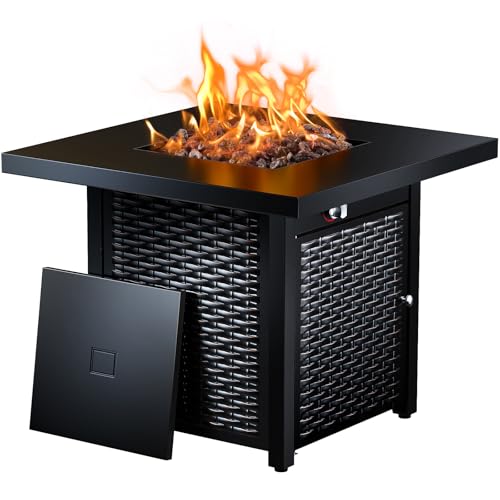
- Most plausible where permitted: Ciays 28-Inch Propane Fire Pit Table (CIFPT3-N1) — Check on Amazon
- Easiest to remove: Outland Living Firebowl 893 Deluxe Portable Propane Fire Pit, 19-Inch — Check on Amazon
- Best for an owned ground-floor patio: Elementi Manhattan 36-Inch Square Propane Fire Table (OFG103-LP) — Check on Amazon
- Best full table where allowed: Outland Living Series 403 Fire Table, 44-Inch, Slate Grey — Check on Amazon
- Best for a large private terrace: BALI OUTDOORS 42-Inch Propane Fire Pit Table, 60,000 BTU — Check on Amazon
- Best long table where allowed: Ciays 43-Inch Rectangular Propane Fire Pit Table, 60,000 BTU — Check on Amazon
Read the full guide ↓
Disclosure: As an Amazon Associate, dailyhomedecorating.com earns from qualifying purchases. Links to Amazon on this page are affiliate links; they cost you nothing extra. Listing details such as price and availability change often, so check the current Amazon listing before you buy.
Let us save you the suspense that the best propane fire pit for apartments under $1500 usually hides until the last paragraph: for most apartment balconies, the correct purchase is no fire pit at all, and no budget changes that. Open-flame devices on apartment balconies are restricted by fire codes, by building rules and by leases, independently and all at once. The International Fire Code, in section 308.1.4, prohibits open-flame cooking and heating devices on combustible balconies and within 10 feet of combustible construction in multi-family buildings, with narrow exceptions; NFPA 1 carries a parallel rule; and most leases and condo documents ban gas appliances on balconies outright, whether or not the fire code would allow them. A $1500 budget buys a beautiful appliance. It does not buy an exception, and this guide will not pretend otherwise or help you argue around your own lease.
So who is this guide honestly for? Three groups. Renters and owners with a ground-floor patio — a private, at-grade outdoor space, not a balcony — where the building’s written rules and the local fire code both allow a propane appliance used with full clearances. Owners of condo or townhouse terraces large enough to meet those clearances, with written confirmation from the association. And apartment hunters and new movers planning ahead: people furnishing a space they are about to occupy, who want to know what would work if the rules allow it, and what to buy instead if they do not. For everyone else — anyone whose outdoor space is a typical upper-floor balcony — the useful content here is the rules section, the questions to ask your landlord, and the discipline of checking before money moves.
The picks below are therefore ranked by apartment realism, not by luxury. Small footprints, easy removal and modest scale come first, because in the spaces where a propane fire pit is legitimately possible for an apartment dweller, those are the virtues that matter. Every pick is a true propane appliance with a tank valve you can close — nothing here burns poured liquid fuel, a category with a serious federal recall record that has no place in a multi-family building under any reading of the rules. Verify first, in writing, then shop. That order is not a disclaimer bolted onto this guide; it is the guide.
In this guide
Quick Picks
Ranked by apartment realism — permission, footprint and removability first, luxury last. Read the rules section before the reviews; for many balconies the honest pick is none of these, and the guide says why.
| Buyer type | Pick | Why it stands out | Link |
|---|---|---|---|
| Most plausible where permitted | Ciays 28-Inch Propane Fire Pit Table (CIFPT3-N1) | 28-inch square, CSA-listed — the smallest table footprint here, if your lease and local code allow any flame at all | Check on Amazon |
| Easiest to remove | Outland Living Firebowl 893 Deluxe Portable Propane Fire Pit, 19-Inch | Portable bowl with carry kit: nothing installed, nothing permanent, gone in one trip | Check on Amazon |
| Best for an owned patio | Elementi Manhattan 36-Inch Square Propane Fire Table (OFG103-LP) | Concrete lounge table for a ground-floor patio you own, not a shared balcony | Check on Amazon |
| Best full table where allowed | Outland Living Series 403 Fire Table, 44-Inch, Slate Grey | Hidden tank and 50,000 BTU for a large, permitted private terrace | Check on Amazon |
| Best for a large terrace | BALI OUTDOORS 42-Inch Propane Fire Pit Table, 60,000 BTU | 60,000 BTU and a tile top — only for big private outdoor space with full clearances | Check on Amazon |
| Best long table where allowed | Ciays 43-Inch Rectangular Propane Fire Pit Table, 60,000 BTU | 60,000 BTU H-burner for a permitted terrace with a sectional | Check on Amazon |
How These Propane Fire Pit for Apartments Under $1500 Picks Were Chosen
Our selection method started from the same verified catalogue as the main under-$1500 roundup — manufacturer specifications, certification listings and Amazon catalogue records cross-checked model by model, with recall records checked for every pick — and then applied an apartment filter that removed more products than it kept. To survive the filter, a pick had to be small enough to plausibly meet clearances on a private patio, simple enough to remove completely at move-out without tools beyond basic assembly, and free of any installation step: no gas plumbing, no permanent mounting, nothing a landlord could call an alteration.
We also weighted honesty about scale. Several premium tables in the wider market are wonderful appliances that no apartment space can responsibly hold, and the two largest concrete benchmarks from our main guide are discussed there rather than repeated here. Within this list, the first two picks are the only ones we would even discuss for a small private patio; the full-size tables appear because ground-floor patios and large owned terraces are real apartment-adjacent spaces, and readers in those spaces deserve the comparison — clearly labelled, with the conditions attached. Where a compact square concrete table and a compact square wicker table from well-known ranges could not be catalogue-verified, they are mentioned in prose in the relevant sections rather than linked.
One more filter deserves stating plainly: we excluded every tabletop and pour-fuel product from consideration before judging a single propane model. In a detached house those products are a personal risk decision that federal regulators have already answered with recalls and a category-wide alert; in a building where your neighbour’s bedroom is on the other side of the wall, they are not a grey area at all. Propane, a certified burner, a closable valve — or nothing. That is the standard this list was built to.
Detailed Reviews
Most plausible where permitted: Ciays 28-Inch Propane Fire Pit Table (CIFPT3-N1)
The Ciays 28-inch is the smallest true fire table in this guide: a 28 by 28 inch square steel table, 25 inches tall, with a 50,000 BTU burner, a CSA listing, a steel lid and lava rock included, connecting to a standard external 20 lb propane tank. Its virtues for apartment life are exactly its plainness. It assembles with basic tools, it asks for no installation, the lid turns it back into an ordinary side table when it is off, and at move-out it leaves with you as easily as a chair does. If — and the condition is the whole article — your space is a private ground-floor patio, your lease and association allow a propane appliance in writing, and your local code is satisfied, this is the scale of fire table that can fit that permission.
Even in the permitted case, think about the geometry honestly. A 28-inch table still needs its manual’s clearances on every side — from the building wall, from the railing, from your own chairs and any cushion storage — plus open sky above it, not a balcony deck overhead. On many ground-floor patios that arithmetic works; on a balcony it almost never does, which is why this pick is framed for patios throughout. The external tank needs its own spot on the patio, valve accessible, hose flat and untrippable. Get those four things right — permission, clearances, surface, tank — and this modest table delivers the same 50,000 BTU flame as far larger appliances.
What we like
- Smallest table footprint in the guide; easiest clearances case
- CSA-listed with lid and lava rock included
- No installation; removes completely at move-out
- Leaves nearly all of the budget for furniture that is allowed anywhere
Honest limitation: It is still an open-flame gas appliance: if your lease, association or local code prohibits it in your space, there is no configuration of this table that makes it permitted.
Choose it if your written rules allow a propane appliance on a private ground-floor patio and you want the smallest, simplest table. Skip it if your outdoor space is an upper-floor balcony, or your permission is verbal, assumed or “everyone else does it.”
Easiest to remove: Outland Living Firebowl 893 Deluxe Portable Propane Fire Pit, 19-Inch
The Firebowl 893 Deluxe is a 19-inch portable propane bowl rated at 58,000 BTU, CSA approved, supplied with lava rock, a fitted cover and a carry kit, connecting to a standard 20 lb tank on a 10 ft hose. For apartment dwellers its defining feature is impermanence: nothing is built, plumbed or mounted. It comes out of a closet, sits on a suitable heat-resistant surface in a permitted space, lights, warms the evening, cools, and goes back into its kit. For renters whose permitted space is somewhere other than home — a rented cabin weekend, a campsite, a friend’s backyard — it is also the one pick here that travels to wherever the permission already exists.
Portability cuts both ways, and the honest half matters. A bowl is not more permitted than a table: the same fire-code, building and lease rules apply to its flame wherever you light it, and “it’s only small” is not a legal category. What portability changes is consequence and storage — no landlord can call it an installation, it never blocks a balcony you are not allowed to use it on, and it stores indoors without weathering. Use it where open flame is genuinely allowed, respect the same clearances as any pick here, and keep the tank upright, outdoors and valve-closed in storage, exactly as the safety section describes.
What we like
- Nothing installed; stores in its own carry kit
- 58,000 BTU — the strongest output-per-commitment here
- CSA approved, with cover included
- Travels to spaces where flame is already permitted
Honest limitation: Portability does not create permission: the same balcony prohibitions apply to this bowl as to any fire table, and its low open flame still needs full clearances and supervision.
Choose it if you want a fire you can own without installing anything, for use in genuinely permitted spaces at home or away. Skip it if you are hoping a small bowl slips under a balcony ban — it does not.
Best for an owned ground-floor patio: Elementi Manhattan 36-Inch Square Propane Fire Table (OFG103-LP)
The Elementi Manhattan is a 36-inch square fire table in glass-fiber reinforced concrete, with a 45,000 BTU burner, electronic ignition with automatic safety shut-off, lava rock and a canvas cover included, and an external 20 lb tank on a 10 ft hose. In an apartment guide it belongs to one specific reader: the owner — not renter — of a ground-floor patio or a large terrace, in a building whose documents allow propane appliances, who wants a permanent, architectural piece rather than seasonal equipment. For that reader it is superb: concrete that never rusts, a low lounge profile, and the best ignition safety feature in this guide.
For everyone else it is a photograph to admire and walk past. It is heavy in the way concrete is heavy, which makes it a poor renter’s appliance even where the rules allow one — delivery, placement and eventual removal are all two-person logistics through shared hallways and elevators. Its 36-inch top also needs the full ring of clearances around it, which consumes a terrace quickly once chairs are added. Buy it as an owner improving a permitted space you will use for years; do not buy it as a tenant, and do not buy it for any balcony.
What we like
- GFRC concrete permanence for an owned patio
- Electronic ignition with automatic safety shut-off
- Low profile suits owned lounge terraces
- Cover and lava rock included
Honest limitation: Concrete weight makes it impractical for renters and for any space you may leave within a year or two, and it needs the same full clearances as any 36-inch appliance.
Choose it if you own your ground-floor patio or terrace, have written confirmation propane is allowed, and plan to stay for years. Skip it if you rent, you might move soon, or your space is a balcony of any size.
Best full table where allowed: Outland Living Series 403 Fire Table, 44-Inch, Slate Grey
The Outland Living Series 403 is a 44 by 32 inch fire table with a 50,000 BTU CSA approved burner, an aluminum and resin wicker body, a tempered-glass top, and a base that conceals its 20 lb tank. In the main guide it is the all-round recommendation; here it is the full-size option for the minority of apartment-adjacent spaces that can honestly hold it — a genuinely large private terrace or ground-floor patio, owned or rented, where the written rules allow a propane table and the clearance maths works with chairs in place. The hidden tank is a real advantage in shared-view spaces: neighbours and building managers see a coffee table, not a gas installation.
Be honest about the footprint before falling for that tidy picture. Forty-four inches of table plus 36 inches of side clearance plus chair depth is a large claim on any terrace, and the 80-inch overhead clearance rules out covered loggias and the space under another balcony. Measure with tape, in the actual space, with your actual furniture — not from the listing’s styled photograph. If it fits and the permission is written, this is the most liveable full table here; if either condition fails, the smaller picks above are not a downgrade, they are the correct answer.
What we like
- Tank hidden in the base — the tidiest full-table look
- 50,000 BTU with push-button ignition
- Aluminum and wicker shrug off weather between uses
- Real coffee-table surface by day
Honest limitation: Its full footprint plus clearances exceeds what most terraces can honestly provide, and overhead clearance excludes covered balconies and loggias.
Choose it if your permitted terrace or ground patio genuinely fits it with clearances and chairs, verified by tape measure. Skip it if you are estimating the fit, or your permission covers “a small fire pit” rather than a 44-inch gas table.
Best for a large private terrace: BALI OUTDOORS 42-Inch Propane Fire Pit Table, 60,000 BTU
The BALI OUTDOORS 42-inch table brings a 60,000 BTU burner, a ceramic tile top, a hidden-tank base, and included blue fire glass and lid. In this guide it is explicitly a large-space pick: a big private terrace or a ground-floor patio with room to spare, in a building that permits propane appliances in writing. Its appeal in that setting is real — the strongest heat here for a group spread around a terrace, and a tiled top that reads as furniture from the shared spaces that overlook it. Nothing about it is balcony-scaled, and we list it so that readers with genuinely large permitted spaces can compare it, not to stretch anyone’s interpretation of their lease.
The same clearance discipline applies, amplified: a 42-inch table at full output is the wrong appliance to squeeze. If your tape measure says the clearances only work with chairs pushed in and nobody circulating, they do not work. Where they do work — a wide, open, permitted terrace — the BALI’s reserve of heat is a genuine comfort on cold evenings, and its covered, lidded off-duty state keeps the peace with neighbours and building managers who care how shared-view spaces look.
What we like
- 60,000 BTU for large permitted terraces
- Tile top and hidden tank keep the look neighbour-friendly
- Lid and blue fire glass included
- Strong value; most of the budget stays free
Honest limitation: It is the joint-largest claim on space in this guide, and its steel frame needs cover discipline — a poor match for small or marginally permitted spaces.
Choose it if you have a large, open, written-permission terrace and host groups on it. Skip it if your space is a standard balcony or a small patio — the smaller picks exist precisely for you.
Best long table where allowed: Ciays 43-Inch Rectangular Propane Fire Pit Table, 60,000 BTU
The Ciays 43-inch is a long rectangular table with a 60,000 BTU stainless H-burner, glass stones and a glass wind guard included, connecting to an external 20 lb tank. Its apartment relevance is narrow and specific: the permitted terrace furnished with a sectional, where a long, low table matches the seating and the wind guard earns its keep on an exposed, higher-up terrace where breezes are stronger than at ground level. The external tank needs a planned corner and a flat hose run, and on a terrace that planning is part of the furniture layout, not an afterthought.
Length is the thing to interrogate. Forty-three inches of table, plus clearances, plus a sectional’s depth, is a floor plan, not a purchase — sketch it before ordering. Terraces that pass that test get a genuinely sociable fire: the H-burner’s line of flame serves both long sides evenly, which round burners do not. Terraces that fail it should look up this list to the 28-inch table without a flicker of regret; the right-sized fire in a permitted space is the entire point of this guide.
What we like
- H-burner spreads flame evenly along a sectional
- Wind guard included — valuable on exposed terraces
- 60,000 BTU with stainless burner
- Modern low profile suits terrace furniture
Honest limitation: The external tank and hose need planned placement, and the 43-inch length fails the floor-plan test on most apartment terraces.
Choose it if your permitted terrace runs a sectional and passes a taped floor-plan test. Skip it if you are furnishing a balcony, or your terrace fit is a guess.
Comparison Table
The six picks side by side, on the facts that decide fit: size, maximum output, where the tank lives, and the job each one does best.
| Pick | Size | Max output | Propane tank | Best for |
|---|---|---|---|---|
| Ciays 28-Inch | 28 x 28 in | 50,000 BTU | External | Smallest permitted-patio table |
| Outland Firebowl 893 Deluxe | 19 in bowl | 58,000 BTU | External, 10 ft hose | Removable, travel-friendly bowl |
| Elementi Manhattan 36-Inch | 36 x 36 in | 45,000 BTU | External, 10 ft hose | Owned ground-floor patios |
| Outland Living Series 403 | 44 x 32 in | 50,000 BTU | Hidden in base | Large permitted terraces |
| BALI OUTDOORS 42-Inch | 42 x 24 in | 60,000 BTU | Hidden in base | Large terraces, groups |
| Ciays 43-Inch | 43 in rectangular | 60,000 BTU | External | Terrace sectionals |
Fire Safety and the Rules: Balconies, Codes and Leases
First, the rules that decide whether this section is even relevant to you. The International Fire Code (section 308.1.4) prohibits open-flame cooking and heating devices on combustible balconies and within 10 feet of combustible construction in multi-family dwellings, apart from narrow exceptions such as certain sprinklered or non-combustible balcony constructions — your local fire code adopts and sometimes tightens its own version. NFPA 1 states a parallel prohibition. Separately and additionally, your lease, condo declaration or HOA rules govern what you may keep and use, and most prohibit gas appliances on balconies regardless of the fire code. Any one of the three — code, building rules, lease — is enough to prohibit. A landlord’s casual verbal shrug does not amend any of them; if permission matters, get it in writing, naming a propane fire pit explicitly.
Where a propane appliance is genuinely permitted — typically a private ground-floor patio — the full outdoor discipline applies without discount. Outdoors only, never in the unit, a garage or an enclosed balcony, because propane combustion produces carbon monoxide. Place the appliance on a level, non-combustible, heat-resistant surface, with the manual’s clearances kept from the building wall, railings, furniture and anything overhead — remember that the balcony above yours is a ceiling for clearance purposes. Run the soapy-water leak check at every tank connection: bubbles mean gas is escaping; close the valve and fix the connection before lighting anything. Never leave a lit fire unattended in a multi-family setting, keep the tank valve accessible so shutdown takes seconds, close the tank valve first at the end of the evening, and store spare tanks outdoors and upright — never inside the apartment.
Finally, be a neighbour in the way you would want reciprocated. Smoke is not the issue with propane — flame visibility, heat and late-night gatherings are. Keep sessions to reasonable hours, keep the flame at a moderate setting rather than a full-output bonfire impression, and if a neighbour or manager raises a concern, the written permission you obtained first is what turns a dispute into a conversation. If you do not have it, do not light the fire.
How to Choose the Best Propane Fire Pit for Apartments Under $1500
Choose in this order: permission, place, product. Permission means three documents, not a feeling — your lease, your building or association rules, and your local fire code’s position on open-flame devices in multi-family buildings. Read them for the words “open flame,” “gas appliance,” “barbecue” and “balcony,” because fire pits are often governed by the barbecue clause. If any layer prohibits, stop: the correct apartment purchase is then the furniture, lighting and electric warmth that make the balcony good without flame, and this guide’s picks will still be here if you move to a house. Place means the taped test: footprint plus the manual’s clearances plus your chairs, in the real space, with attention to what is overhead. A ground-floor patio that passes both tests is a genuinely good place for a small propane table.
Only then does product choice begin, and for apartments it runs small-to-large on purpose. Prefer the smallest appliance that warms your actual seating group; prefer removable over permanent, because your housing will change before the appliance wears out; prefer a lid or cover, because an appliance that looks tidy at rest causes no friction with the people who manage your building. Spend the rest of the generous ceiling on the things no rule prohibits — the chairs, the rug rated for outdoor use away from any flame zone, the lighting — and treat any unspent fire budget as a success of judgement, not a failure of shopping.
Common Mistakes to Avoid
Assuming a propane fire pit is allowed because grills exist in the building. Someone else’s violation, or a grill rule from a different appliance class, is not your permission.
Asking the landlord casually instead of in writing. Verbal permission evaporates in a dispute or a management change. Written, explicit, appliance-named permission is the only kind that counts.
Believing small means exempt. Fire codes and leases prohibit open-flame devices, not large open-flame devices. A portable bowl is governed exactly like a fire table.
Measuring the table but not the clearances. The appliance is the smallest part of the space claim; clearances, chairs and circulation are the rest of it.
Storing the propane tank indoors. Tanks live outdoors, upright, valve closed — never in the unit, a storage cage that prohibits them, or a garage.
Buying the statement piece as a renter. A heavy concrete table in a home you will leave is a moving problem and a deposit risk, even where it is permitted.
Final Recommendation
If your documents prohibit open flame — the common case — the recommendation of this guide is to buy nothing with a burner in it, and to spend the budget on the balcony itself. If you hold written permission for a private ground-floor patio or a genuinely large terrace, start with the Ciays 28-inch for the smallest honest footprint, or the Firebowl 893 if impermanence matters more than a table surface. The full-size tables and the concrete Manhattan are here for owners and large-terrace readers whose permission and tape measure both say yes. In every case the order is the same: documents first, tape measure second, checkout last. A fire pit you are allowed to use, in a space it fits, beats a premium appliance in a dispute — every evening of the year.
- Smallest honest footprint: Ciays 28-Inch Propane Fire Pit Table (CIFPT3-N1)
- Most removable option: Outland Living Firebowl 893 Deluxe Portable Propane Fire Pit, 19-Inch
Before You Buy: The Three Checks, in Writing
Check one is your lease, read properly rather than remembered. Find the clauses on balconies, patios, barbecues, open flames, gas appliances and “hazardous materials,” because propane and its tank are governed by whichever of those your document contains, and a fire pit is rarely named directly. If the lease incorporates the building’s rules by reference, you need those rules too — ask management for the current document rather than relying on a summary from a previous tenant. Photograph or save the relevant pages. This is not bureaucracy for its own sake: in any later disagreement, the document is the entire conversation, and the tenant who can produce it is the tenant who keeps their deposit and their tenancy in good standing.
Check two is the local fire code, which in most US jurisdictions adopts the International Fire Code’s position on open-flame devices in multi-family buildings — section 308.1.4 prohibits them on combustible balconies and within 10 feet of combustible construction, with narrow exceptions — or the parallel provision in NFPA 1. Your city or county fire marshal’s office publishes the local version and answers exactly this question routinely; a two-minute call or a page on their website settles what no forum thread can. Note that the code cares about the building and the space, not about your intentions, the appliance’s size, or how carefully you promise to behave. A ground-floor patio at grade is a different case from a balcony in the code’s eyes, which is why this guide keeps returning to that distinction.
Check three is the written permission itself. Write to your landlord or association — email is fine, because email is a record — and ask a question that can be answered yes or no: “May I use a propane fire pit table, fuelled by a standard 20 lb tank, on my ground-floor patio?” Name the fuel, the tank and the exact space. A reply that says yes to that question is permission. A reply about barbecues, a verbal “should be fine,” or silence is not. Keep the answer with your lease. If the answer is no, it is also, usefully, final: you can stop shopping for fire and spend the budget on the balcony itself with a clear conscience, which is a better outcome than a premium appliance in a dispute.
If the Answer Is No: Spending the Budget Without Flame
A prohibited fire pit is not a ruined patio, and the $1500 framing of this guide can be spent so well without combustion that many readers will not miss the flame by the second week. Start with seating you would choose for indoors — the single largest comfort upgrade available at any budget — then layer the things that create evening atmosphere in the order guests actually perceive them: warm, dimmable lighting at seated eye level rather than overhead; textiles rated for outdoor use; a rug underfoot where building rules allow ordinary furnishings; and planting that gives a balcony privacy and a sense of enclosure. Warmth itself has a lawful route in many buildings: an electric radiant heater, used strictly within its own clearances and only where the lease permits it, delivers directed heat with no flame and no tank — check its rules as carefully as you checked the fire pit’s, because “electric” is not a synonym for “unregulated.”
What not to do is shop for loopholes. The small pour-fuel tabletop fire pits marketed directly at balcony owners are the most dangerous possible answer to a prohibition: federal regulators have recalled them in large numbers and issued a category-wide alert after deaths and serious burns from flame jetting and pool fires. A device that endangers the neighbours who share your building’s walls is not a grey area, and “the listing said indoor-outdoor” is not a defence your landlord, your insurer or a fire marshal will entertain. The disciplined answer — documents first, flame only where they allow it — is also the one that keeps your home. Keep the fire pit list for the house, the owned patio or the ground-floor space where the paperwork says yes; it will be there, and so will your deposit.
Moving, Storage and the End of the Tenancy
Apartment appliances are judged twice: once while you use them and once when you leave. The picks in this guide were filtered for the second judgement as much as the first. A fire table that assembles with basic tools disassembles the same way; a portable bowl needs no disassembly at all. Plan the exit when you buy: keep the packaging for glass and burner parts if you have the storage, photograph the hose and connection arrangement before you take it apart, and keep the manual with the appliance rather than in a kitchen drawer it will not follow. On moving day the tank travels as tanks must — upright, valve closed, in a ventilated vehicle space, never packed among household goods in a sealed truck — and in many jurisdictions and rental agreements the tank cannot be stored in the unit while the home is empty between tenancies, so time its refill and its use accordingly.
Storage during the tenancy deserves the same forethought. A lidded table under a cover is furniture at rest and bothers nobody. A bowl in its carry kit takes a closet corner and asks nothing. What causes friction with building managers is the in-between state: an uncovered appliance weathering visibly, a tank standing in a shared sightline, a hose left across a walkway. None of that is a fire-code issue; all of it is how permitted appliances become prohibited ones in the next revision of the building rules. The renter who keeps a tidy, covered, obviously cared-for setup is protecting not only their own permission but every future tenant’s.
Finally, the deposit conversation, because it is where apartment fire pits most often become expensive. Heat near a wall, a scorched railing, a stained balcony slab — on a ground-floor patio, keep the appliance’s clearances from the building fabric as faithfully as from furniture, and keep a photographic record of the patio’s condition at move-in and during use. If the appliance ever marks a surface, that is what the clearance discipline was for. A tenant who can show permission in writing, an appliance used on the right surface at the right distances, and a patio returned as found, has nothing to discuss at checkout — which is exactly the outcome this guide was written to produce.
A Note on Insurance, Deposits and Good Faith
One audience for your paperwork is rarely mentioned in buying guides: your insurer and your future self at deposit time. Renter’s and homeowner’s policies alike assume the home is used as its documents describe; an unpermitted gas appliance that causes damage is the kind of fact that complicates a claim out of all proportion to the evenings it provided. The written permission this guide insists on is therefore not only a landlord courtesy — it is the document that keeps the appliance inside the life you have insured and leased, rather than outside it. Keep it with the policy, not in a message thread that scrolls away.
Good faith runs in the other direction too. If a manager questions the appliance mid-tenancy, the tenant who produces permission, points to the correct surface and clearances, and shows a covered, well-kept setup ends the conversation in minutes. The tenant who argues from vibes starts a process. Apartment living is a long negotiation with the people who share your walls and the people who manage them, and a fire — the most visible appliance a home can have — is where that negotiation is won or lost on evidence. Buy nothing until the evidence exists, and the rest of this guide becomes what it should be: a pleasant choice among good appliances, made in the open.
One Last Check Before You Order
Before any money moves, run the sequence one final time, in order, out loud if it helps. One: the documents — lease, building rules, local code — permit a propane appliance in this exact space, and the permission is written and kept. Two: the tape — footprint, clearances, chairs and circulation — passes in the real space with the real furniture. Three: the surface — level, non-combustible, heat-resistant, exactly as the chosen model’s manual requires. Four: the exit — the appliance can be removed completely, by you, without damage, on the day the tenancy ends. A yes to all four is a purchase. Anything less is a postponement, and a postponement, in apartment life, is not a defeat: it is the system working precisely as it should, protecting the home you already have while you plan the one where the answer is yes.
Frequently Asked Questions
Are propane fire pits allowed on apartment balconies?
Usually not. The International Fire Code section 308.1.4 prohibits open-flame devices on combustible balconies and within 10 feet of combustible construction in multi-family buildings, with narrow exceptions, and NFPA 1 has a parallel rule. Most leases and HOA documents prohibit gas appliances on balconies as well. Treat “no” as the default answer until your own documents and local code prove otherwise in writing.
My lease bans barbecues but does not mention fire pits. Is a fire pit allowed?
Do not rely on that gap. Fire pits are open-flame gas appliances, and landlords and fire marshals generally read barbecue and open-flame clauses to cover them. Ask your landlord or association in writing, naming a propane fire pit explicitly, and keep the answer. If the answer is no or never comes, the safe and honest reading is no.
Does a small or tabletop fire pit avoid the rules?
No — and small pour-fuel tabletop fire pits are the worst choice of all in a multi-family building: federal regulators have recalled them and issued a category-wide alert over flame-jetting and pool-fire hazards. Size does not exempt any flame from fire code or lease rules. In this guide every pick is a tank-fed propane appliance, and even those require permission and clearances.
What about a ground-floor patio — is that different from a balcony?
It can be. An at-grade private patio is not a balcony in the fire-code sense, and some buildings permit propane appliances there while prohibiting them above. It is still governed by your lease or association rules and by clearance distances to the building and fences. Written confirmation plus the taped clearance test is the standard to meet.
Can I store the propane tank on the balcony or in my unit?
Never store a propane tank indoors — not in the unit, and not in an enclosed storage area that prohibits it. Tanks are stored outdoors, upright, with the valve closed, away from heat and ignition sources, in a spot your building’s rules allow. If your building provides a designated outdoor storage area, use it; if it prohibits tanks entirely, that is another form of the same answer.
What should I buy for my balcony instead of a fire pit?
Everything that makes a balcony good without combustion: comfortable seating, an outdoor rug placed as decor, warm lighting, blankets and an electric radiant heater if your lease and the appliance’s own clearances allow one — electric heaters have their own rules, so check those too. Save the fire pit for a space where it is permitted; it will keep.
Related Guides
Planning the rest of the patio, or working with a different budget or space? These guides on the same site cover the neighbouring questions:


