Where to buy
Check the latest price, availability and delivery on Amazon. Orders are placed on Amazon. We may earn a commission from qualifying purchases.
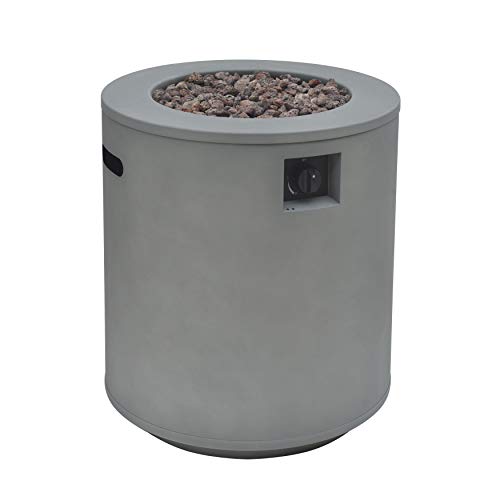
- Best where a private patio allows it: Bond Manufacturing Acero 23-Inch Round Fire Column, 50,000 BTU — Check on Amazon
- Best store-away option: Outland Living Portable Propane Fire Pit, 19-Inch, 58,000 BTU (893 Deluxe) — Check on Amazon
- Smallest fire table: Ciays 28 Inch Propane Fire Pit Table, 50,000 BTU — Check on Amazon
- Best column for a ground-floor terrace: SUNBURY Outdoor Propane Fire Pit Column, 40,000 BTU — Check on Amazon
See 2 more Amazon options (accessories — not fire pits)
- Accessory — not a fire pit: BALI OUTDOORS Fire Pit Wind Guard, 18 x 18 Inch Glass Flame Guard — Check on Amazon
- Accessory — not a fire pit: Ciays Propane Tank Cover Table for 20 lb Tanks — Check on Amazon
Read the full guide ↓
Disclosure: As an Amazon Associate, dailyhomedecorating.com earns from qualifying purchases. Links to Amazon on this page are affiliate links; they cost you nothing extra. Listing details such as price and availability change often, so check the current Amazon listing before you buy.
We are going to start this guide to the best propane fire pit for apartments under $500 with the sentence most roundups bury at the bottom: on most apartment balconies, you may not use one at all. Open-flame devices on the balconies of multi-family buildings are restricted by widely adopted fire codes — the International Fire Code, Section 308.1.4, prohibits open-flame cooking and recreational devices on combustible balconies and within ten feet of combustible construction in multi-family dwellings, with narrow exceptions, and NFPA 1 carries a parallel rule. On top of the code sits your lease, which in most apartment complexes bans grills and fire features on balconies outright, and your local fire marshal, who can impose stricter rules than either. None of that makes this guide pointless — it makes it specific. Apartment dwellers also have ground-floor patios, private terraces on non-combustible construction, townhouse courtyards, rented-house yards and shared amenity spaces where a propane fire pit is allowed with management’s blessing. This guide is written for those spaces, and for readers deciding honestly whether their space qualifies.
So the apartment lens is really three filters applied in order. Filter one is permission: written, specific, and checked against your lease and local code before money moves — the detailed permission section below walks through exactly how to ask and what answers count. Filter two is footprint: apartment outdoor space is measured in single feet, so this guide favours columns and compact tables that hide their own tank, light without a fuss, and store or cover neatly, over the wide entertaining tables in our main roundup. Filter three is neighbourliness: propane’s clean burn is a genuine advantage in dense housing — no wood smoke drifting into the windows above you, no sparks, and a flame that is fully out the second you turn the valve, which matters when other people’s homes are fifteen feet away in three directions. Every pick below burns propane only; we excluded the entire pour-fuel tabletop category from consideration, because federal regulators have warned that those liquid-fuel devices can jet flame, and dense housing is the last place for that risk profile.
Our short answer, for readers whose space passes filter one: the Bond Acero column is the apartment pick — a 23-inch round footprint, the tank hidden inside, full 50,000 BTU heat, and a silhouette that reads as furniture rather than equipment. If your arrangement is temporary or your storage is a closet, the Outland 893 Deluxe bowl packs away entirely between uses. If you have a proper little patio and want a table, the 28-inch Ciays is the smallest honest fire table we verified. The SUNBURY column suits ground-floor terraces where a stone-look finish blends with planters. Two clearly labelled accessories — a glass wind guard and a tank cover table — solve the two problems apartment users report most: breezes funnelled between buildings, and an ugly cylinder with nowhere to hide. Read the permission section first. It is the most important part of this page, and it may save you the entire purchase price.
In this guide
Quick Picks
Every pick below assumes you have confirmed permission for your specific space. Prices move, so links simply let you check price on Amazon.
| Buyer type | Pick | Why it stands out | Link |
|---|---|---|---|
| Best for a permitted private patio | Bond Manufacturing Acero 23-Inch Fire Column, 50,000 BTU | Small round footprint, tank hidden inside, full-size heat | Check on Amazon |
| Best store-away | Outland Living 893 Deluxe Portable Fire Pit, 19-Inch, 58,000 BTU | Packs into its carry kit; nothing permanent on the patio | Check on Amazon |
| Smallest fire table | Ciays 28 Inch Propane Fire Pit Table, 50,000 BTU | CSA-listed table format in the tightest footprint we verified | Check on Amazon |
| Best for ground-floor terraces | SUNBURY Propane Fire Pit Column, 40,000 BTU | Stone-look column, CSA certified, cover included | Check on Amazon |
| Accessory — not a fire pit | BALI OUTDOORS Glass Wind Guard, 18 x 18 Inch | Keeps flames upright in building-funnelled breezes | Check on Amazon |
| Accessory — not a fire pit | Ciays Propane Tank Cover Table | Hides a 20 lb cylinder and turns it into a side table | Check on Amazon |
First, Permission: The Rules That Decide Whether You Can Burn at All
Work through this section before the reviews, because no product feature can fix a rules problem. Start with your lease: search it for “grill”, “open flame”, “fire”, “balcony” and “patio”. Many leases ban all open-flame devices outside the unit; some ban them only on balconies; some are silent, and silence is not permission — it just means the next document decides. That document is usually your local fire code. The model rule most jurisdictions adopt, IFC Section 308.1.4, prohibits open-flame devices on combustible balconies of multi-family buildings and within ten feet of combustible construction, with exceptions that typically cover certain fixed, sprinkler-protected or single-family situations — not a portable fire pit on a wooden balcony. NFPA 1 mirrors this approach. Some cities go further and restrict propane storage in multi-family buildings, which matters because the appliance is only half the question; the 20 lb cylinder has to live somewhere, and storing it indoors or in an enclosed garage is both against code in many places and genuinely dangerous.
The practical path is boring and effective: email your property manager a specific question — the exact appliance type, fuel, and the exact space you want to use it in — and keep the reply. “The leasing office said it was probably fine” is not a standard you can rely on when a fire marshal or an insurer asks later. If the answer is no for your balcony but your complex has a courtyard, amenity deck or rentable patio space, ask about that space specifically; managers say yes to a ground-level concrete amenity area far more often than to a third-floor wooden balcony, for reasons this guide’s safety section makes obvious. If every answer is no, accept it gracefully: an electric fireplace or a quality outdoor heater approved for your space will serve you better than a fire pit you have to hide, and our related guides at the end include options in that direction. What you should never do is buy first and negotiate later — a fire pit is conspicuous by design, and “everyone on my floor has one” has never been a defence that survives contact with a lease enforcement letter.
How We Chose the Best Propane Fire Pit for Apartments Under $500
With permission assumed, we re-ranked the verified under-$500 propane field by apartment criteria. Footprint came first: every primary pick fits a circle or square under roughly two feet across, because apartment patios must also hold chairs, a door swing and the human beings using them. Tank concealment came second — in a small space an external cylinder and ten feet of hose is not a detail, it is a trip hazard across your only walkway — so internal-tank columns and tables lead, and the one external-tank pick earns its place by packing away completely. Third was shut-off confidence: in dense housing, a flame that is verifiably out when the knob turns matters more than peak heat, so we favoured certified appliances with proper valves and flame controls, and checked every pick against CPSC recall records on 2026-11-20. Fourth was storage reality: covers included, weights one person can manage, and nothing that must overwinter as patio sculpture if your lease or your life changes. Finally, every model and ASIN was verified against the Amazon Creators API on the same date, matching returned titles to the products reviewed; the two accessories are labelled as accessories everywhere they appear, because a wind guard is not a fire pit and this guide will not pretend otherwise.
Detailed Reviews
Bond Manufacturing Acero 23-Inch Fire Column, 50,000 BTU — Best for a Permitted Private Patio
Who it suits: Apartment dwellers with a ground-floor patio, a concrete terrace or a townhouse courtyard where open flame is allowed — and who want the fire feature to occupy the least possible floor while still heating like a real appliance.
The Acero is a round steel column, 23 inches in diameter and 25 inches tall, weighing about 33 pounds. The 20 lb tank hides inside the column body, the stainless burner delivers 50,000 BTU, and ignition is an impulse system worked like a barbecue’s. Lava rocks and a light PVC cover are included. The column format is the apartment insight in physical form: it takes its space vertically instead of horizontally, leaves room for two chairs and a side table on a small patio, and its enclosed body keeps the flame picture tidy and the hose entirely out of sight. At seated distance the heat is properly useful — this is not a token candle scaled up, it is a full-output burner in a narrow suit.
Pros: Smallest full-power footprint in this guide; tank concealed, so no hose crosses the floor; light enough to move for cleaning or seasonal storage; cover and rocks included; a neutral grey finish that sits quietly beside planters and furniture.
Honest limitation: A column gives you fire, not table — drinks need somewhere else to live, which on a small patio means the tank-cover-table trick below or a folding side table. The included cover is light; in exposed weather, upgrade it. And to repeat the point that governs this whole guide: the Acero’s compact size does not exempt it from balcony rules — a small prohibited flame is still prohibited.
Choose this if your permitted space is small and you want maximum heat per square foot. Skip it if you need table surface from the same purchase, or if your only outdoor space is a balcony where the answer was no. Check on Amazon to check price on Amazon and confirm the current finish options.
Outland Living 893 Deluxe Portable Fire Pit, 19-Inch, 58,000 BTU — Best Store-Away Option
Who it suits: Renters whose fire pit must disappear — into a storage closet, a car boot for a weekend away, or out of sight before a landlord inspection of a space where fires are allowed only occasionally, such as a rented house’s yard or a complex amenity lawn you book for the evening.
The 893 Deluxe is a 19-inch steel firebowl rated at 58,000 BTU, supplied with a cover and carry kit and a pre-attached ten-foot hose for a standard 20 lb tank. It sets up in minutes with no tools, lights with its regulator control, and — the apartment-relevant part — packs down into a kit one person can carry and store on a closet shelf. The flame over its rock set is wide and genuinely warming, the strongest output in this guide, and because nothing is installed, nothing about it commits your space. For renters who move every year or two, that reversibility is worth more than any furniture feature.
Pros: Stores completely away; highest heat in this guide; no assembly and no permanent footprint; CSA-approved design from the category’s best-known portable brand; travels to campsites and family yards where fires are welcome.
Honest limitation: The tank is external, connected by that ten-foot hose — on a small patio you must plan the hose route and the cylinder’s home (the tank cover table below exists for exactly this), and the cylinder itself still needs a legal, outdoor storage spot between uses. A portable bowl also sits low, so the non-combustible surface and clearance rules in our safety section apply in full.
Choose this if impermanence is the point. Skip it if you want a fixed feature with the tank hidden inside. Check on Amazon to check price on Amazon and the current kit contents.
Ciays 28 Inch Propane Fire Pit Table, 50,000 BTU — Smallest Fire Table
Who it suits: Patio households — ground-floor or townhouse — who want the table format (rim for drinks, lid for daytime, tank inside) at the smallest size that still behaves like furniture for two.
Ciays’ 28-inch table is a square steel unit with a 50,000 BTU burner, CSA listing, a removable lid and lava rocks included. The tank sits inside the base, the control is on the side panel, and the whole thing occupies about the floor area of a large plant pot while still giving two people a shared warm centre and somewhere to set a mug. In a permitted apartment patio it pairs naturally with two compact chairs; in a townhouse courtyard it works as the fire zone of a slightly larger layout without dictating it.
Pros: Real table function at the tightest footprint we verified; CSA listed; tank concealed; lid converts it to a side table by day; strong heat for its size class.
Honest limitation: Twenty-eight inches is a two-person table — a third chair turns it into a warming post, not a gathering point, and the rim space disappears fast. As with every pick here, its apartment suitability is entirely conditional on your space being one where open flame is allowed.
Choose this if you want furniture and fire in one small square. Skip it if you host more than one guest at a time around the fire. Check on Amazon to check price on Amazon and confirm dimensions.
SUNBURY Propane Fire Pit Column, 40,000 BTU — Best for Ground-Floor Terraces
Who it suits: Ground-floor apartment and townhouse residents whose terrace styling leans natural — stone, planters, timber — and who want the fire feature to blend rather than announce itself.
The SUNBURY is a 20 x 20 x 29 inch column with a magnesium-oxide stone-look finish, a 40,000 BTU burner, CSA certification, concealed 20 lb tank storage, lava rocks and a waterproof cover in the box. The flame control offers stepped levels rather than a fully variable dial, which some users prefer: repeatable settings, no fiddling. At about 70 pounds with its rock set it is the most substantial-feeling pick here — a point in its favour on a terrace, where a featherweight unit reads as temporary, and a point to plan around if your storage plan involves stairs.
Pros: Stone-look finish suits planted terraces; CSA certified; tank concealed; waterproof cover included rather than a dust sheet; stepped flame levels are easy to repeat.
Honest limitation: Output is a step below the 50,000 BTU picks — on a still evening it is ample, but in a breezy courtyard the Acero’s extra output shows. The weight that makes it feel permanent also makes it the least portable pick in this guide; buy it for a space you expect to keep.
Choose this if looks and a settled terrace come first. Skip it if you move often or need maximum heat. Check on Amazon to check price on Amazon and review the finish up close.
Accessory — Not a Fire Pit: BALI OUTDOORS Glass Wind Guard, 18 x 18 Inch
Who it suits: Any apartment patio user whose fire sits in the wind tunnel between buildings. This is an accessory — a tempered-glass flame guard that fits square burners around 18 inches — and it solves the single most common apartment complaint: a flame that will not stand up.
Glass wind guards work by sheltering the burner from cross-drafts while leaving the view of the fire unobstructed. On apartment patios, where breezes accelerate between towers and swirl off walls, the difference between a guarded and unguarded flame is the difference between using the fire pit and giving up on it in October. The guard also adds a physical boundary between flame and sleeves, napkins and curious fingers — a modest but real safety contribution in a small space where people sit close. Measure your burner’s fire area before ordering; guards must match the burner, not the table’s outer dimensions.
Pros: Transforms usability in wind; keeps the flame picture visible; adds a separation layer in tight seating; fits many square-burner tables and columns.
Honest limitation: It is glass — it gets hot in use, needs cooling before handling, and needs occasional cleaning to stay invisible. It also does nothing to change the rules question: a wind guard makes a permitted fire nicer, never a prohibited fire permitted.
Choose this if wind is your patio’s defining feature. Skip it if your burner is round or a different size — measure first. Check on Amazon to check price on Amazon and confirm fit.
Accessory — Not a Fire Pit: Ciays Propane Tank Cover Table
Who it suits: Users of external-tank models like the Outland bowl above, on patios where a bare 20 lb cylinder is both an eyesore and a storage problem. This accessory is a powder-coated steel cover that drops over a standard 20 lb tank and works as a side table.
On a small patio, every object should hold two jobs. The tank cover hides the cylinder, gives drinks and books a surface next to your chair, and keeps the tank upright and shaded. Adjustable feet and side handles make it practical to lift off for swaps. Two cautions keep this accessory honest: a cover is for a disconnected or in-use tank placed exactly as the fire pit’s instructions allow — never cover a tank in a way that traps heat against the appliance or blocks ventilation the manufacturer requires — and the cylinder under it still lives outdoors, upright, and within your building’s rules for propane storage.
Pros: Hides the cylinder completely; doubles as a side table; sturdy steel with rust-resistant coating; handles and adjustable feet make swaps easy.
Honest limitation: It fits standard 20 lb cylinders — if your setup uses a different size, it will not fit, and it adds one more object to a small floor plan, so measure the corner you intend for it.
Choose this if your pick runs an external tank. Skip it if your fire pit hides its tank internally. Check on Amazon to check price on Amazon and confirm tank compatibility.
Sizing Worked Examples: Three Real Apartment Layouts
Abstract footprints persuade nobody, so here are three layouts we see constantly, worked through honestly. Layout one: a ground-floor patio, roughly eight by ten feet, concrete slab, sliding door on the long wall, permission confirmed. This is the Acero’s home turf — the column stands in a corner clear of the door swing, two chairs angle toward it, the tank lives inside the column, and the clearances to the fence and the wall are comfortable in every direction. The Ciays 28 also works here if the household wants a table surface, placed centrally with chairs on two sides. Layout two: a townhouse courtyard, twelve feet square, pavers, planting along two edges. Either column works; the SUNBURY’s stone finish earns its keep against the planting, and there is floor left for the wind guard’s benefit to matter, because courtyards swirl. The Outland bowl also works here on its pad for households that prefer an open fire picture, with the cylinder dressed in the tank cover table at the courtyard’s edge.
Layout three is the honest failure case, included deliberately: a fifth-floor balcony, six by four feet, wooden deck boards, timber railing, a neighbour’s balcony directly overhead. Nothing in this guide belongs there — not the smallest column, not the portable bowl, not for one evening, not with the flame low. The surface is combustible, the construction is combustible, the code language was written about almost exactly this balcony, and the lease almost certainly agrees. The correct purchase for layout three is the flameless route from the previous section, or a portable fire pit bought for use at a family yard, a campsite or a bookable amenity space — places where the same appliance is welcome. We include the failure case because a guide that only shows successes teaches readers to force their space into the success column; the discipline of recognising layout three is worth more than any single product recommendation on this page.
Comparison Table
| Pick | Type | Heat output | Tank placement | Apartment strength |
|---|---|---|---|---|
| Bond Acero Column | 23-inch column | 50,000 BTU | Inside body | Smallest full-power footprint |
| Outland 893 Deluxe | 19-inch portable bowl | 58,000 BTU | External, 10 ft hose | Stores away completely |
| Ciays 28 Inch Table | Square table | 50,000 BTU | Inside base | Smallest table format |
| SUNBURY Column | 20-inch stone-look column | 40,000 BTU | Inside body | Terrace styling, cover included |
| BALI Wind Guard | Accessory — not a fire pit | — | — | Wind protection for square burners |
| Ciays Tank Cover Table | Accessory — not a fire pit | — | Covers external 20 lb tank | Hides cylinder, adds side table |
Fire Safety in Dense Housing
Everything in our main guide’s safety discipline applies here, tightened for neighbours on all sides. Placement: keep the appliance well clear of anything combustible — siding, railings, fences, stored cushions, curtains and overhanging material — following the manufacturer’s stated clearances as minimums, and never operate under a roof, awning or the balcony above you; rising heat collects against the structure overhead, which in an apartment building is someone else’s floor. Surface: only a level, non-combustible, heat-resistant surface — concrete, stone or a rated fire pad; a wooden balcony deck fails this test twice over, once for the surface and usually once for the code. Air: propane appliances are outdoor-only because combustion produces carbon monoxide; never use one in a garage, enclosed porch or any space where air does not move freely, and store cylinders upright outdoors, never inside the unit or a storage room.
Connections and routine: after every tank change, brush soapy water over the fittings with the valve open and the burner off — growing bubbles mean a leak; close the valve, fix the connection, and retest before lighting. Keep the hose where it cannot be tripped over in a small space, inspect it each season, and close the cylinder valve itself after every session, not just the burner knob. Presence: never leave the flame unattended, set a clear boundary for children and pets, and be honest about your building — if a neighbour’s balcony is directly above your patio, your smoke-free propane flame is courteous, but your heat plume still rises toward their rail, which is one more reason the permission conversation comes before the purchase, not after a complaint.
Shared Amenity Spaces, Courtyards and Rented Houses: The Grey Zones, Answered
Most apartment readers do not land in a clean yes or no; they land in a grey zone, and each grey zone has its own logic. Shared amenity decks and courtyards are the most promising: they are usually ground-level or podium-level, surfaced in concrete or pavers, and already host the building’s grills — which tells you the building’s own risk assessment accepts managed open flame in that space. The catch is that amenity spaces are governed by community rules rather than your lease alone, reservations may be required, and the fire pit you bring is yours to remove the same evening. A portable pick like the Outland 893 Deluxe fits this pattern perfectly: book the space, carry the fire in, carry it out, leave nothing behind but a warm memory and a clean slab.
Rented houses are the second grey zone, and the friendliest: a single-family yard usually sits outside the multi-family balcony rules entirely, and the governing documents shrink to your lease and the municipal code. Many landlords who ban “fire pits” are picturing a wood-burning crater scorching the lawn; a propane appliance on a proper pad, on the patio, with the lawn untouched, is a different conversation — have it before you buy, offer the pad and the clearances unprompted, and you will be surprised how often the answer improves. Townhouses and condos you own sit between the two: your own deed removes the landlord, but the HOA’s architectural and fire rules step into the same role, and an HOA fine is just a lease violation with better stationery. In every grey zone the method is identical — identify who can say no, ask them specifically, keep the answer — and the product choice only begins after the method has run.
Living With a Fire Pit in a Small Space: The Daily Reality
Buyers imagine the first evening; owners live the fiftieth. In a small apartment patio, the daily reality of a fire pit is mostly storage, surfaces and routines. Storage: the unit, its cover, the cylinder and two chairs must coexist in perhaps sixty square feet, which is why this guide weighted concealed tanks and pack-away designs so heavily — a hose permanently snaking across a tiny patio is not a minor aesthetic issue, it is the difference between a space that relaxes you and one that nags you. Surfaces: heat rises and drifts, so the cushion you store against the wall behind the fire, the curtain panel beside it and the neighbour’s planter above it are all part of your setup whether you planned them or not; walk the space once with the flame lit and your hand testing where the warmth actually goes, and rearrange what the heat finds.
Routines: apartment fire pits earn their keep in short sessions — forty minutes after dinner, a Friday hour with a friend — rather than the long backyard burns of house life. That pattern flatters propane: instant on, instant off, no cool-down vigil, and fuel consumption so modest that a cylinder lasts a small-space user a very long time. It also flatters smaller burners: you do not need entertaining-scale output to warm two chairs at close range, which is why the 40,000–50,000 BTU picks here are sized to the real job. Finally, sound and light etiquette: a fire pit glows, and in a courtyard building your glow enters other people’s windows. Keeping sessions to sociable hours and the flame to a sociable height is not a rule in any code — it is how a permitted pleasure stays a welcome one, in a building where next year’s permission conversation remembers this year’s behaviour.
How to Choose as an Apartment Dweller
Permission before product. Lease, fire code, property manager — in that order, in writing where possible. Everything else in this section is irrelevant until that answer is yes for your specific space.
Measure the real floor. Tape the footprint on your patio, then add chair space and the door swing, then add the safety clearances. Apartment buyers consistently overestimate their space by exactly the width of a fire pit.
Prefer concealed tanks. In small spaces, an internal-tank column or table removes the hose from your only walkway and the cylinder from your only view. Choose external-tank models only when their pack-away advantage is the point.
Plan storage before delivery. Where does the unit live in January, during a move, or if management changes the rules? Covers, weights and pack-down size in the reviews above answer this — read them with your actual closet in mind.
Think like the neighbour above. Propane’s clean, spark-free, instantly-off flame is the most considerate fire that exists in dense housing. Choosing it — and using it at sensible hours with the flame at a social height — is how apartment fire features stay welcome.
Common Mistakes to Avoid
Assuming a small fire pit is exempt from balcony rules. The codes restrict open-flame devices, not large ones. A 19-inch flame is as prohibited as a 44-inch one where the rule applies.
Asking verbally and remembering generously. Get the permission in writing, naming the appliance and the space. Memories diverge exactly when it matters.
Storing the propane cylinder indoors. A spare tank in a hallway cupboard or garage is a code violation in many buildings and a genuine hazard everywhere. Cylinders live upright, outdoors, ventilated.
Burning under the balcony above. Even where a ground patio is permitted, heat rising into the structure or balcony overhead is a hazard and a nuisance. Open sky above the unit is the standard.
Buying the table before measuring the door swing. Apartment patios are circulation space first. If the fire pit blocks the door, the bins or the escape route, it is the wrong size at any price.
If the Answer Is No: Warmth Without an Open Flame
A refusal is not the end of the project; it is a redirection, and apartment dwellers have better flameless options than they did five years ago. Electric patio heaters — infrared models especially — warm people rather than air, switch on instantly, and are permitted in many buildings that ban flame, though you must still check: some leases restrict heaters too, and any heater needs its own clearances from fabric and furniture. Electric fireplaces and flame-effect units give the visual ritual without combustion; the better ones are convincing at conversational distance and carry none of the fuel, storage or code baggage of a real flame. Even the humble string-light-and-blanket combination deserves respect: much of what people want from a balcony fire is a reason to linger outside, and warm light plus a throw delivers half the experience with zero permission required.
Two cautions belong here. First, do not let a refusal push you toward the small pour-fuel tabletop burners sold as apartment-friendly ambience: federal safety regulators have warned that liquid-fuel tabletop devices can produce flame jetting and pool fires, several have been recalled, and a device category under that cloud is the worst possible answer to a building that already said no to flame. Second, do not quietly buy a propane unit anyway and plan to keep it hidden — a fire feature is visible by design, the first complaint ends the experiment, and you will own an appliance you cannot use, cannot store legally, and cannot return with a straight face. The readers who end up happiest treat the permission answer as information about which product category to shop, not as an obstacle to outwit.
Can I use a propane fire pit just once, for a party, if my building bans them? No — and this deserves a direct answer because it is the most common follow-up we hear. A ban does not have a party exception, the risk profile of the appliance does not change because the occasion is festive, and a single incident or complaint carries the same lease and liability consequences as nightly use. If the courtyard or a rented space is available for the party, the portable picks in this guide travel there happily; that is the legitimate version of the idea.
What should I ask my property manager, exactly? Ask in one written message with four specifics: the appliance type (a CSA-certified propane fire pit, naming the model), the fuel and its storage (a standard 20 lb cylinder, stored per code), the exact location (ground-floor patio, courtyard, amenity deck — with its surface type), and your safety setup (non-combustible pad, clearances, supervised use). Specific questions get specific, defensible answers; vague questions get vague answers that evaporate under scrutiny.
Final Recommendation
If your space passes the permission test, the Bond Acero is the apartment buy: full heat, tiny footprint, hidden tank, nothing to trip over. Choose the Outland 893 Deluxe if your life needs the fire to pack away, the Ciays 28 if you want a true little table, and the SUNBURY if your terrace rewards a stone finish — then add the wind guard if your building funnels the breeze, and the tank cover if your pick runs an external cylinder. And if your space does not pass the permission test, let this guide’s most useful sentence be its first one: the right fire pit for a prohibited balcony is no fire pit, and the money you did not spend is the best saving in this entire roundup.
FAQ
Are propane fire pits allowed on apartment balconies? Usually not. Widely adopted fire-code language (IFC Section 308.1.4, with NFPA 1 parallels) prohibits open-flame devices on combustible balconies of multi-family buildings and within ten feet of combustible construction, and most leases ban them independently. Exceptions exist for some non-combustible, sprinklered or single-family situations, but the only safe answer for your unit comes from your lease, your local code and your property manager — in writing.
What if my lease does not mention fire pits? Silence is not permission. Fire codes apply whether or not the lease repeats them, and management can enforce community rules regardless. Ask specifically, in writing, before buying.
Where can apartment dwellers use a propane fire pit? Ground-floor patios on non-combustible surfaces, townhouse courtyards, rented-house yards, and shared amenity spaces with management approval are the common yes answers. The pattern: ground level, open sky, non-combustible surface, distance from the building — exactly the conditions the picks in this guide are sized for.
Can I store a propane tank on my balcony or in my storage unit? Many codes and leases restrict propane storage in multi-family buildings, and cylinders must always be stored upright and outdoors in ventilated conditions — never indoors or in an enclosed garage. Check your building’s specific rule; if storage is prohibited, a fire pit that needs a cylinder is not viable for you, full stop.
Is propane better than wood for neighbours? Substantially. Propane produces no wood smoke, no sparks and no lingering fire — the three things neighbours actually complain about and codes worry about. It does not make a prohibited device permitted, but in permitted spaces it is the most considerate fuel you can choose.
What if my building allows grills but has never ruled on fire pits? Treat that as an unanswered question, not a yes. A grill approval does not automatically extend to a fire feature, because the rules that govern them are written separately in most codes and leases. Ask the specific question about the specific appliance, in writing, and keep the answer with your lease — it takes one email and it converts a guess into a permission.
Will a propane fire pit set off my neighbour’s smoke alarm or annoy the building? Propane burns cleanly — no wood smoke, minimal odour — so the usual triggers for complaints are absent. What neighbours notice is light and late-night noise, not the appliance itself. Keep sessions sociable, the flame moderate and the music down, and a permitted fire pit is typically one of the best-received amenities in a building rather than a source of friction.
How do I check for a gas leak in a small patio setup? Brush soapy water over the hose connections with the tank valve open and the burner off. Growing bubbles mean escaping gas: close the valve, re-seat or replace the fitting, and repeat until the test is clean. Never use a flame to find a leak.
Related Guides
For the full-size field, see Best Propane Fire Pit Under $500; for permitted patios with more room, Best Propane Fire Pit For Small Patios Under $500 and Best Propane Fire Pit For Backyards Under $500 go deeper on sizing. Furnish the space with Best Adirondack Chair For Apartments Under $500 and ground it with Best Outdoor Rug Under $500.