Where to buy
Check the latest price, availability and delivery on Amazon. Orders are placed on Amazon. We may earn a commission from qualifying purchases.
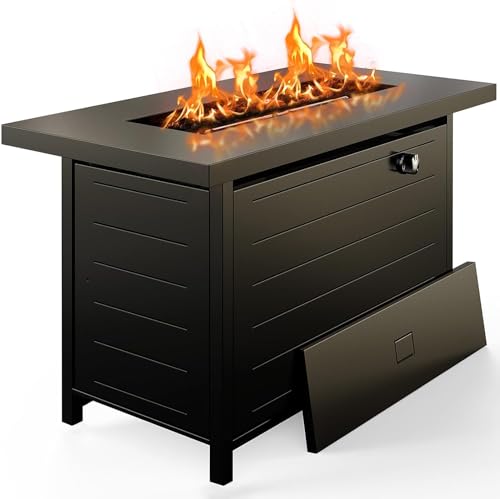
- Best overall fire pit table: Ciays 42 Inch Gas Fire Pit Table, 60,000 BTU — Check on Amazon
- Best portable fire bowl: Outland Living Firebowl 883 Mega, 24-Inch, 58,000 BTU — Check on Amazon
- Bond Manufacturing Mondavi 36-Inch Fire Bowl, 65,000 BTU — premium faux-concrete bowl (prose-only benchmark in this guide; see the detailed review for why we still rate it)
- Best compact table: Bond Manufacturing Brently 28-Inch Square Fire Pit Table, 50,000 BTU — Check on Amazon
- Best large table for groups: Sundale Outdoor 51 Inch Propane Fire Pit Table, 50,000 BTU — Check on Amazon
See 1 more option
- Outland Living Series 403 Fire Table, 44-Inch, 50,000 BTU — prose-only premium benchmark; current listings sit above this guide’s $500 ceiling, so it carries no purchase link here
Read the full guide ↓
Disclosure: As an Amazon Associate, dailyhomedecorating.com earns from qualifying purchases. Links to Amazon on this page are affiliate links; they cost you nothing extra. Listing details such as price and availability change often, so check the current Amazon listing before you buy.
Finding the best propane fire pit under $500 used to mean choosing between a flimsy steel bowl that rusted by August and a contractor-grade fire table that cost as much as the patio furniture around it. That gap has closed. At this budget you can now buy a proper fire pit table with a concealed 20 lb propane tank, a stainless burner rated at 50,000 BTU or more, a lid that turns the burner into usable table surface, and a CSA-certified safety system — or, if you prefer, a portable fire bowl that lights in seconds, makes no ash, and goes back in the shed when the evening ends. What you cannot do at any budget is treat a propane flame casually, and this guide does not: every pick below burns propane and only propane, every pick was checked for certification and recall status, and a full fire-safety section covers clearances, surfaces, leak checks and carbon monoxide before we get to a single recommendation about style.
Why propane at all? Because for most households it solves the three problems that make wood fires a chore. There is no smoke drifting into the house through an open window, no sparks landing on deck boards, and no half-burned logs to deal with the next morning. You turn a knob, push an igniter, and you have a real flame; you turn the knob back and the fire is genuinely out, which matters in dry counties, in suburbs with burn rules, and anywhere children or dogs move around the seating area. Propane also burns at a predictable rate, so a standard 20 lb tank gives you many evenings of use and swaps in minutes at any hardware store. The trade-offs are real — you are managing a pressurised fuel cylinder, the heat is radiant rather than the deep ember heat of wood, and the flame needs shelter from wind — and this guide weighs them openly for each model rather than pretending one format suits everyone.
Our short answer: for most patios, start with the 42-inch Ciays table. It is the rare mid-size fire table that gets the fundamentals right — strong heat output, a steel lid, lava rock included, and a footprint that seats four to six people without swallowing the deck. If your outdoor space is a lawn, a campsite or a deck you reconfigure often, the Outland Firebowl 883 Mega is the better tool: bigger flame, no assembly, nothing to rust out at the seams. If you want the most beautiful object on this page and your budget stretches to the top of the band, read the Bond Mondavi review carefully. And if your patio is small, skip straight to the Bond Brently, a 28-inch table designed for exactly that constraint. The detailed reviews, the safety section and the buying criteria below explain how we got there — and the mistakes section lists the errors we see buyers repeat every season, starting with placing a fire table on a wooden deck with nothing beneath it.
In this guide
Quick Picks
In a hurry? This table matches each pick to the household it serves best. Prices move constantly, so every link simply lets you check price on Amazon.
| Buyer type | Pick | Why it stands out | Link |
|---|---|---|---|
| Best overall | Ciays 42 Inch Gas Fire Pit Table, 60,000 BTU | The strongest heat in this roundup in a mid-size table with lid and lava rock included | Check on Amazon |
| Best portable | Outland Living Firebowl 883 Mega, 24-Inch, 58,000 BTU | No assembly, no ash, packs away — a real flame for lawns, decks and campsites | Check on Amazon |
| Best premium bowl | Bond Manufacturing Mondavi 36-Inch Fire Bowl, 65,000 BTU | Faux-concrete Envirostone bowl with the highest heat output here | Prose-only — check the listing details in the review below |
| Best compact table | Bond Manufacturing Brently 28-Inch Square Fire Pit Table, 50,000 BTU | Full 50,000 BTU in a 28-inch footprint with the tank hidden inside | Check on Amazon |
| Best for groups | Sundale Outdoor 51 Inch Propane Fire Pit Table, 50,000 BTU | Long rectangular table with wind guard and sliding tank holder, CSA certified | Check on Amazon |
| Premium benchmark | Outland Living Series 403 Fire Table, 44-Inch, 50,000 BTU | Tempered glass top and refined finish — currently listed above the $500 ceiling | Prose-only benchmark — no link in this guide |
How We Chose the Best Propane Fire Pit Under $500
We built the shortlist the way a careful neighbour would: start with what is actually safe and legal to burn, then argue about heat, size and looks. First, fuel. Every product in this guide runs on propane from a standard cylinder. We excluded the entire category of small tabletop devices that burn liquid alcohol fuels, because federal safety regulators have warned repeatedly that pour-fuel designs can produce flame jetting and pool fires, and several have been recalled. A propane burner with a regulator, a hose and a control valve is a fundamentally different appliance, and it is the only kind we recommend. Second, certification. We favoured models listed or certified by CSA or an equivalent testing body, with a thermocouple or flame-failure shutoff where the design offers one, and we checked each pick against current CPSC recall records before including it; anything recalled was dropped without discussion.
Third, honest heat. BTU figures are easy to inflate and hard to compare, so we treated them as a ceiling rather than a promise: a 50,000 BTU burner under a wide table warms a circle of seated people in mild weather, but wind, seating distance and burner shape matter as much as the headline number. We favoured ring and H-burners in stainless steel, which spread flame across the fire media instead of producing one tall central jet, and we noted which models include a wind guard or sit low enough to stay lit on a breezy evening. Fourth, the tank question. Tables that hide a 20 lb tank inside the base look cleaner and keep the hose short, but they dictate a minimum cabinet size; bowls that run on a ten-foot hose let you place the tank out of sight — and out of the heat — at the cost of a hose to route and protect. Both approaches appear below, labelled clearly, because the right answer depends on your space.
Fifth, build and weather. A fire pit lives outside, so we looked for powder-coated steel, aluminium or stone-composite bodies, stainless burners, and a cover in the box. We also verified every model and ASIN against the manufacturer’s current retail listings through the Amazon Creators API on 2026-11-20, matched the returned titles to the products reviewed here, and recorded the checks in the sources file that accompanies this guide. Where a well-known model’s current listing price sits persistently above this guide’s $500 ceiling — the Outland Series 403 is the example — we kept it as a clearly labelled prose-only benchmark rather than pretending it fits the budget. Finally, we read the criteria through the lens of a general buyer: someone with a typical patio or yard, a mix of weekday and weekend use, and no desire to become a gas-appliance technician. Specialised lenses — apartments, backyards, entertaining and small patios — get their own dedicated guides in this series, linked at the end.
Detailed Reviews
Ciays 42 Inch Gas Fire Pit Table, 60,000 BTU — Best Overall
Who it suits: Households that want one fire table to anchor a patio seating area — four to six chairs around it, drinks and plates on the rim, and enough heat to stretch the outdoor season at both ends. If you entertain a little, relax a lot, and want the strongest burner in this roundup without jumping to a premium brand, this is the centre of the list.
The Ciays 42-inch is a rectangular steel fire pit table with a 60,000 BTU burner, a steel lid that converts the fire area into flat table surface, and lava rocks included in the box. The flame control sits on the side panel, the standard 20 lb tank connects underneath, and the proportions are the sweet spot of this category: long enough to feel like furniture, compact enough to leave walking room on a mid-size deck. In use, the higher output shows most on the first cold evening of autumn — where a 40,000 BTU table takes the edge off, this one genuinely warms the circle. The lava rock bed spreads the flame into a wide, low sheet rather than a single plume, which reads as more firelight and less glare.
Pros: Highest heat output of any linked pick here; lid included, so the table earns its floor space on non-fire days; lava rock included rather than sold as an extra; flame adjusts from the side panel without reaching over the burner; a shape that seats people on both long sides, which is how patios are actually used.
Honest limitation: The tank is not cradled in a sliding tray on this model, so swapping a cylinder means kneeling and working inside the cabinet — a small chore, but one you will feel if you burn through tanks quickly. Steel also needs its cover on between uses; leave it uncovered through a wet winter and you are maintaining paint, not enjoying a fire.
Choose this if you want the best all-round balance of heat, size and simplicity in this guide. Skip it if your patio is genuinely small (look at the Brently below) or you want a fire you can carry to the lawn (look at the Outland bowl). Check on Amazon — and check price on Amazon before assuming any seasonal promotion still applies.
Outland Living Firebowl 883 Mega, 24-Inch, 58,000 BTU — Best Portable Bowl
Who it suits: Anyone whose fire needs to move — from deck to lawn, house to campsite, or out of the shed only on the evenings it earns its keep. Renters who cannot build anything permanent, and households in areas with seasonal wood-fire bans, get particular value from a CSA-approved propane bowl that lights like a barbecue.
The 883 Mega is a 24-inch round steel firebowl rated at 58,000 BTU, running on a pre-attached ten-foot hose to a standard 20 lb tank that sits away from the bowl. There is no assembly to speak of: set it on a stable, non-combustible surface, connect the tank, open the valve, and use the regulator knob to set the flame. It ships with a weather-resistant cover and a rock set, and the whole unit is light enough for one person to carry by its handles. Because the tank is external, the bowl itself stays low and open — the closest thing to a campfire silhouette in this guide — and the wide burner produces a full, lazy flame over the included lava rocks.
Pros: Genuinely portable and quick to store; very strong heat for its size; no ash, no sparks, no smoke — usable during many campfire bans where local rules allow CSA-approved propane appliances (always confirm locally); long hose keeps the cylinder away from the flame and out of the seating circle; cover included.
Honest limitation: A bowl gives you fire, not furniture — there is no table rim for drinks, and the external tank and hose need a tidy route so nobody trips over them in the dark. The open flame also sits lower to the ground, so the clearance discipline in our safety section matters more, not less, and it should never be used on a combustible deck without a proper non-combustible, heat-resistant base beneath it.
Choose this if flexibility beats furniture in your yard. Skip it if you want a permanent centrepiece with a concealed tank. Check on Amazon to check price on Amazon and confirm the current kit contents.
Bond Manufacturing Mondavi 36-Inch Fire Bowl, 65,000 BTU — Best Premium Bowl
Who it suits: Design-led buyers who want the fire feature to look like landscape architecture rather than equipment. The Mondavi’s faux-concrete bowl sits in a garden or on a stone patio the way a planter does — substantial, quiet, and better looking than any steel box in this roundup.
Bond builds the Mondavi from Envirostone, a lightweight stone composite finished with a protective coating intended to resist UV, temperature swings and chipping. The bowl is 36 inches across, the burner is rated at 65,000 BTU — the highest figure in this guide — and ignition is a pulse system with a control knob for flame height. It runs on an external 20 lb tank connected by the included ten-foot regulator hose, with a tank seat provided, and the box includes lava rock and a cover. It can also be converted to natural gas with the appropriate kit, which matters if your patio already has a gas line.
Pros: The strongest heat here, spread across a wide bowl; genuinely handsome faux-concrete finish; includes rock, cover, hose and tank seat; natural-gas convertible for plumbed patios; a low, stable profile that shrugs off wind better than tall tables.
Honest limitation: This pick is prose-only in this guide: its current listings sit at the very top of — and at times beyond — the under-$500 frame, and we do not attach purchase links we cannot stand behind at this budget. The external tank also needs a home: plan a tank cover or a planting screen, because a bare cylinder next to this bowl undoes the design work you paid for.
Choose this if looks and maximum heat lead your list and you accept the budget stretch. Skip it if you need the tank hidden inside the unit or a strict ceiling on spend. Because it is prose-only, search the model name on Amazon to check price on Amazon and current availability.
Bond Manufacturing Brently 28-Inch Square Fire Pit Table, 50,000 BTU — Best Compact Table
Who it suits: Buyers with a modest patio, a townhouse terrace or a deck where a 42-inch table would block the door swing. The Brently proves that compact does not have to mean weak: it carries the same 50,000 BTU class of burner as full-size tables in a footprint roughly the size of a café table.
The Brently is a 28-inch square steel fire pit table, 24 inches high and about 40 pounds, with the 20 lb propane tank concealed inside the base. Ignition is a piezo push-and-turn control, the burner lid lifts off to convert the top back to a table, and Bond includes lava rocks and a light PVC cover in the box. Around it, two people sit comfortably with drinks on the rim; four can gather, though elbows get friendly. The flame picture is smaller than the Ciays 42 — the fire area is compact — but the heat at seated distance is honest, because a smaller table puts everyone closer to the burner.
Pros: Full-size heat in a small footprint; internal tank keeps hoses out of sight and out of the walkway; light enough to reposition seasonally; lid, rocks and cover included; a clean, neutral design that sits well beside most patio furniture.
Honest limitation: The included cover is a light dust cover, not a storm cover — budget for a heavier cover if the table winters outdoors. And a 28-inch top fills up fast: two drinks, a phone and a small plate per side is about the limit, so heavy entertainers should size up.
Choose this if space is your binding constraint but you refuse to drop to a token flame. Skip it if you regularly seat six around the fire. Check on Amazon to check price on Amazon and confirm dimensions against your patio plan.
Sundale Outdoor 51 Inch Propane Fire Pit Table, 50,000 BTU — Best for Groups
Who it suits: The household whose patio is the neighbourhood’s default gathering spot. A 51-inch rectangular table seats six to eight along its long sides, and Sundale bundles the extras — glass wind guard, fire crystals, sliding tank holder — that other brands sell separately.
The Sundale pairs a 50,000 BTU CSA-certified burner with a powder-coated steel frame finished in an embossed woodgrain effect. The tank rides in a sliding holder, which sounds like a small thing until you have changed a cylinder in the dark: the tank rolls out, swaps, and rolls back without wrestling inside a cabinet. The included glass wind guard keeps the flame steadier and more upright on breezy evenings and adds a layer of separation between the flame and curious hands or napkins. With the lid on, the whole unit reverts to a long coffee table for summer afternoons.
Pros: The most complete bundle in this guide — wind guard and decorative fire glass included; CSA certified; sliding tank holder makes refills genuinely easy; long tabletop works for drinks and shared plates; converts fully to a coffee table.
Honest limitation: At 51 inches plus chair clearance on both sides, it demands a real patio — measure before you fall in love, and remember the safety clearances in the section below are part of the footprint. Assembly is also the longest of any pick here; set aside an unhurried hour and a second pair of hands.
Choose this if you host often and want one purchase to finish the job. Skip it if your outdoor space is a balcony-adjacent terrace or you move your furniture around weekly. Check on Amazon to check price on Amazon and review the assembled dimensions.
Outland Living Series 403 Fire Table, 44-Inch, 50,000 BTU — Premium Benchmark (Prose-Only)
Who it suits: Buyers who asked for an under-$500 guide but quietly want to know what the next step up buys. The Series 403 is the reference point: a 44-inch fire table with a tempered glass top, decorative glass rocks, and the fit and finish that made Outland Living the name most people meet first in this category.
The specification is strong — 50,000 BTU, an aluminium-and-steel build in espresso brown or slate grey, and a glass top that wipes clean and shrugs off the scorch marks that accumulate on painted steel rims. We include it honestly as a benchmark, and just as honestly without a purchase link: when we verified listings through the Amazon Creators API on 2026-11-20, this model’s current listings sat above the $500 ceiling that defines this guide. Rules are rules — a guide that quietly links a product over its stated budget teaches readers to distrust every other claim in it.
Pros: Tempered glass top is the easiest surface here to live with; refined two-tone finishes; strong, even burner; the benchmark for build quality in this class.
Honest limitation: It is, at current listings, over budget for this guide — that is the limitation, stated plainly. Shoppers who find it on a genuine promotion should still apply every check in this guide, because a discount changes the price, not the clearances your patio needs.
Choose this if your budget flexes and finish quality leads. Skip it if the $500 ceiling is firm — the Ciays 42 gives you more heat for the money. As a prose-only benchmark it carries no link; search the model name on Amazon to check price on Amazon.
Comparison Table
| Pick | Format | Heat output | Tank placement | Best for |
|---|---|---|---|---|
| Ciays 42 Inch | Rectangular table | 60,000 BTU | Inside base | Best overall balance |
| Outland Firebowl 883 Mega | 24-inch portable bowl | 58,000 BTU | External, 10 ft hose | Portability, lawns, camping |
| Bond Mondavi 36-Inch | Faux-concrete bowl | 65,000 BTU | External, 10 ft hose | Design and maximum heat |
| Bond Brently 28-Inch | Square table | 50,000 BTU | Inside base | Compact patios |
| Sundale 51 Inch | Rectangular table | 50,000 BTU | Sliding holder | Groups and entertaining |
| Outland Series 403, 44-Inch | Fire table, glass top | 50,000 BTU | Inside base | Premium benchmark (over ceiling) |
Fire Safety: Read This Before Your First Burn
A propane fire pit is a gas appliance with an open flame, and it deserves the same respect as a grill — more, in one way, because people relax around it and stop paying attention. Start with placement. Keep the unit well away from anything that can burn: house siding, fences, deck railings, overhanging branches, outdoor curtains, umbrellas and stored cushions. Follow the manufacturer’s stated clearances first — they are written for your exact model — and treat them as minimums, not targets. Never operate a fire pit under a roof, pergola cover, awning or tree canopy unless the manufacturer explicitly rates the unit for it; heat rises in a column and collects under covers in a way that surprises people every year.
Second, the surface. Set the unit on a level, non-combustible, heat-resistant surface — stone, concrete, pavers or a purpose-made fire pit pad. A wooden or composite deck is not a safe surface by itself for a low bowl or any unit whose base runs hot; use a rated heat shield or pad, keep it larger than the unit’s footprint, and check the deck beneath after the first few burns for discolouration. Third, fuel discipline. Propane fire pits are outdoor appliances, full stop: never use one indoors, in a garage, in a tent or in any enclosed or partially enclosed space, because burning propane produces carbon monoxide, an odourless gas that can kill in enclosed air. Store spare cylinders upright, outdoors, away from heat and ignition sources — never in a garage or basement.
Fourth, connections. Every time you connect a tank, check for leaks before lighting: brush soapy water over the hose connections and valve, open the tank valve slowly, and watch for bubbles. Bubbles mean gas is escaping — close the valve, tighten or replace the fitting, and test again; never hunt a leak with a flame. Inspect the hose itself each season for cracks, abrasion and rodent damage, and keep it routed where it cannot be tripped over, stepped on or melted against a hot base. When you finish for the night, close the tank valve itself, not just the burner control, and let the unit cool fully before covering or moving it. Finally, presence: an open flame is never left unattended, children and pets get a clear boundary line they understand, loose clothing and dangling sleeves stay away from the burner, and a charged phone and a suitable extinguisher stay within reach. None of this is complicated; all of it is the difference between a relaxing appliance and an incident report.
How to Choose a Propane Fire Pit
Format first. Tables hide the tank, give you a rim for drinks and double as furniture; bowls give you a truer fire silhouette and portability; columns suit narrow footprints and read as architecture. Decide where the fire will live most of the year and buy for that spot, not for the one party you host in July.
Heat, honestly assessed. For seated warmth in calm weather, 50,000 BTU is the working standard of this category and every pick here meets or beats it. Treat anything far below that as ambience rather than heating. Remember that burner shape and wind exposure change real-world warmth as much as the rating: a wide ring burner under glass media feels warmer than a narrow jet of the same rating, and a wind guard is the cheapest warmth upgrade that exists.
Tank logistics. Internal tanks look clean but fix the cabinet size; external tanks on a hose give placement freedom and easier swaps, at the cost of hose management and a cylinder to disguise. Either way, confirm the unit takes the standard 20 lb cylinder you can exchange anywhere, and think through the swap in the dark, in October, wearing gloves — that mental rehearsal picks the right design faster than any specification sheet.
Materials and weather. Powder-coated steel is the value standard; aluminium resists rust best; stone composites look best and shrug off heat. Whatever you choose, a fitted cover used religiously doubles the cosmetic life of the unit. Stainless burners are non-negotiable at this budget — a mild-steel burner is the first component to fail.
Certification and controls. Look for CSA or equivalent certification, a flame-supervision device where offered, and a control you can operate without leaning across the fire area. If a listing cannot state its certification plainly, treat that silence as your answer and move on.
Common Mistakes to Avoid
Placing the unit on a bare wooden deck. The single most common and most consequential error. Use a non-combustible, heat-resistant pad or shield, sized beyond the footprint, every time.
Burning under a cover or canopy. Heat and combustion gases collect overhead. Open sky is the default; anything else needs an explicit manufacturer rating.
Skipping the soapy-water leak check. It takes ninety seconds after every tank change. Bubbles are information; ignoring them is a decision, and a bad one.
Leaving the tank valve open between uses. Burner knobs are not storage valves. Close the cylinder valve after every session so a slow fitting leak cannot fill the cabinet or the patio corner with gas overnight.
Buying by BTU alone. A huge rating on a narrow burner in a windy yard delivers less comfort than a moderate rating spread wide and sheltered. Match burner shape and wind protection to your site.
Treating a fire pit like indoor heating. It is an outdoor appliance. Carbon monoxide does not smell, does not warn, and does not forgive — never in a garage, never in a screened porch with the screens down and the air still, never indoors.
Propane vs Wood vs Natural Gas: Which Fire Should You Own?
Readers cross-shopping fuel types deserve a straight comparison, because the best propane fire pit under $500 competes with two real alternatives. Wood is the romantic default: the crackle, the ember bed, the smell that means autumn to half the population. It is also smoke in the neighbours’ windows, sparks that pit deck boards and fleece jackets, a woodpile that hosts insects, ash that needs disposal, and a fire that is not out when you go inside — it is merely unattended, which is worse. In many suburbs, wood fires are restricted by ordinance, by burn bans, or by simple courtesy on still evenings. If you have land, distance from neighbours and a taste for tending a fire as an activity in itself, wood remains wonderful. For a patio ten feet from the house, it is usually the wrong tool.
Natural gas is the invisible default of new-build patios: plumbed once, it never needs a cylinder swap and the flame is always ready. The catch is the plumbing — a gas line run by a licensed fitter costs more than any product in this guide before you have bought a burner to attach to it, the fire feature becomes a permanent fixture of that exact spot, and renters and future rearrangers need not apply. One pick in this guide, the Bond Mondavi, converts to natural gas, which makes it the bridge option: propane today, plumbed later if the patio becomes permanent. For everyone else, propane is the pragmatic middle — instant on, instant off, no smoke, no ash, no installation, a fuel cylinder you can exchange at a petrol station at 9 p.m., and a unit you can move when the patio layout changes or take with you when you move house. Its weaknesses are honest ones: radiant heat that falls off faster than an ember bed’s, a flame that dislikes strong wind, and a cylinder to manage. This entire guide exists because, for most patios, that trade is overwhelmingly worth it.
Running a Propane Fire Pit: Tanks, Media and Maintenance
Ownership is simple but not zero-effort, and the buyers who enjoy these appliances for a decade share a few habits. Tank management comes first: keep one cylinder in the unit and, if you entertain often, a second full one stored upright outdoors in shade — never indoors, never in a garage. When a cylinder empties mid-evening, the swap is a two-minute job if you have practised it once in daylight. Learn your regulator: open the tank valve slowly, because slamming it open can trip the excess-flow safety device built into modern connectors and leave you with a mysteriously weak flame; if that happens, close everything, wait a minute, and start again slowly. That single tip resolves the most common “my new fire pit is faulty” complaint in this category.
Fire media is the second habit. Lava rock and fire glass are not decoration alone — they diffuse gas, shape the flame and protect the burner. Keep media dry: porous lava rock that has soaked up rain can spit steam and crackle debris when lit, so the lid and cover routine matters, and if the unit has been uncovered through a storm, run the burner on low for a few minutes to dry the bed before turning it up. Never substitute media with gravel, landscape stone or anything not rated for fire use; ordinary stone can fracture explosively when heated. Maintenance rounds out the list: brush the burner ports clear of spider webs and debris at the start of the season (insects love gas lines), wipe glass media or replace tired lava rock when it degrades, check the hose for cracking each spring, and keep the cover on whenever the unit is cool and idle. Fifteen minutes of attention twice a year is the entire maintenance contract — one more reason propane has quietly become the default fire for ordinary patios.
Final Recommendation
For the typical household this guide was written for, the Ciays 42-inch table is the buy: the strongest burner among our linked picks, a lid that makes it furniture seven days a week, and a size that respects a normal patio. Choose the Outland 883 Mega instead if your fire needs to travel or store away, the Bond Brently if your patio is small, the Sundale 51 if your patio is a social hub, and the Bond Mondavi if design leads and the budget stretches. Whichever you pick, spend the first evening with the safety section, not the flame — set the clearances, test the connections, and put the pad under the unit. A propane fire pit bought carefully and sited properly is one of the highest-pleasure objects a home can own; the care is not a burden on the pleasure, it is what makes the pleasure repeatable for a decade.
FAQ
How long does a 20 lb propane tank last in a fire pit? Burn time depends on the flame setting: a 50,000 BTU burner at full output uses fuel far faster than the same burner idling low for ambience. Most households get many evenings of typical mixed use from one cylinder, and because exchange cylinders are available everywhere, running a fire pit is closer to owning a grill than to managing a fuel supply. Keep the tank valve closed between sessions so none of that fuel is lost to a weeping fitting.
Can I use a propane fire pit on a wooden deck? Only with discipline: the unit must sit on a non-combustible, heat-resistant surface or rated pad larger than its footprint, clearances to railings and siding must follow the manufacturer’s instructions, and the deck beneath should be checked for heat damage after early uses. Low bowls radiate more heat downward than tall tables; if your deck is your pride and joy, a tall table design plus a proper pad is the lower-risk combination. When in doubt, stone or concrete is always the safer home for any fire feature.
Is a propane fire pit safe during a burn ban? Often, yes — many jurisdictions exempt CSA-approved propane appliances from wood-fire bans because there are no sparks or embers and the flame shuts off instantly. But rules vary by county, by season and by ban severity, and some bans cover all open flames. Check your local fire authority’s current wording before you light, every time conditions change.
What is the difference between a fire pit table and a fire bowl? A table encloses the burner in furniture with a rim, usually hiding the tank inside, and converts to a table with a lid. A bowl is an open burner in a low vessel, usually portable, with the tank outside on a hose. Tables win on looks, drinks space and tidiness; bowls win on portability, price per BTU and a flame picture closer to a campfire.
Do propane fire pits produce carbon monoxide? Yes — all propane combustion does. Outdoors, in open air, it disperses harmlessly, which is exactly why these appliances are outdoor-only. Never run one in a garage, tent, or enclosed porch, and never use it to heat an indoor or semi-indoor space.
Can I cook over a propane fire pit? Treat it as a fire feature, not a grill. Marshmallows on a long skewer are the traditional exception and are fine with adult supervision, but dripping food grease fouls burner ports and fire media, voids the spirit of the manufacturer’s instructions, and turns a clean-burning appliance into a smoky one. If cooking is a priority, buy a grill for cooking and a fire pit for gathering — each does its own job better than a hybrid does both.
How much clearance does a propane fire pit actually need? The manufacturer’s instruction manual for your exact model is the authority — clearances are tested, not guessed — and typical guidance in this category keeps the unit several feet from combustible walls, furniture and stored items, with generous open space above it. Treat published clearances as minimums: more distance is always safer, and no styling photograph of a fire table tucked against a sofa should overrule the manual that shipped in your box.
Why is my flame small or yellow even on a new unit? The usual causes are mundane: the tank valve was opened too quickly and tripped the excess-flow device (close everything, wait, reopen slowly), the tank is nearly empty, or insects and debris are obstructing the burner or air inlet after storage. Work through those three checks before concluding the unit is defective — in our experience they explain the overwhelming majority of weak-flame reports, and all three are five-minute fixes.
How do I know if my tank connection is leaking? Mix dish soap and water, brush it over the connections with the tank valve open and the burner off, and look for growing bubbles — bubbles mean escaping gas. Close the valve, re-seat or replace the fitting or hose, and repeat until the test is clean. Never check for a gas leak with a match or lighter.
Related Guides
Shopping the wider patio at the same budget? See our guides to Best Propane Fire Pit Under $300 for the step-down tier, Best Propane Fire Pit Under $700 for the step-up tier, seating in Best Adirondack Chair Under $500, backup warmth in Best Patio Heater Under $500, and finishing touches in Best Outdoor Rug Under $500 and Best Patio Umbrella Under $500.


