Where to buy
Check the latest price, availability and delivery on Amazon. Orders are placed on Amazon. We may earn a commission from qualifying purchases.
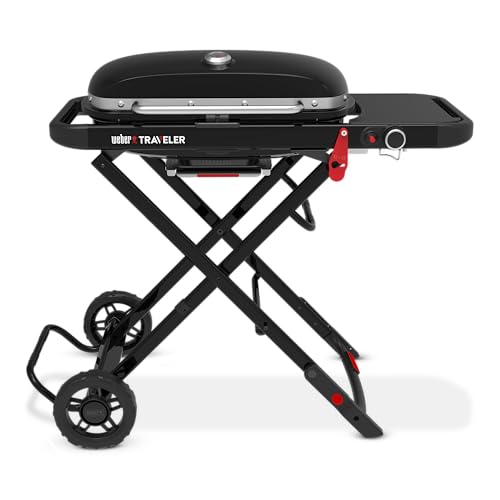
- Best overall for backyards: Weber Traveler Portable Gas Grill, Black — Check on Amazon
- Traeger Ranger Portable Wood Pellet Grill and Smoker — Check on Amazon
- Kamado Joe Joe Jr 13.5-inch Portable Ceramic Charcoal Grill — Check on Amazon
- Broil King Porta-Chef 320 Portable Propane Grill (Model 952654) — Check on Amazon
- Weber Q 2800N+ Portable Propane Grill — Check on Amazon
- Coleman RoadTrip 285 Portable Stand-Up Propane Grill — Check on Amazon
Read the full guide ↓
Disclosure: As an Amazon Associate, dailyhomedecorating.com earns from qualifying purchases. Links to Amazon on this page are affiliate links; they cost you nothing extra. Listing details such as price and availability change often, so check the current Amazon listing before you buy.
The case for the best portable grill for backyards under $500 confuses people at first: if you have a backyard, why buy a portable grill at all? Because a backyard is not one cooking place — it is several. There is the patio by the kitchen door, the far corner where the smoke will not drift through the windows, the patch of lawn where the kids are playing, and the driveway where the tailgate-style cookout actually happens. A fixed grill owns one of those spots. A portable grill owns all of them, follows the shade in August, rolls into the garage when the storm comes, and still fits in the car for the lake house, the campsite and the rental with the rusted-out grill you do not trust. That is the backyard this guide is written for: not a showroom patio with one permanent outdoor kitchen, but a real yard that gets used in different corners, in different seasons, by a household whose cooking moves around.
Five hundred dollars is a sweet spot for that job. It buys the folding cart grill that behaves like a small patio grill, the tabletop pellet smoker that turns a Sunday into ribs without tending a fire, a genuine ceramic kamado for steak nights, a three-burner gas grill with a warming rack for family dinners, the hottest member of a famous portable gas family, and a big three-burner road grill that sits in the middle of the tier and leaves half the budget for the cover, fuel and tools that complete a backyard setup. The six picks below were chosen for backyard patterns specifically: semi-permanent residence on a patio or deck corner with occasional travel, group sizes from two to eight, and cooking that mixes weeknight speed with weekend projects. Each review is honest about the trade the model makes — because in a backyard, where space is not the binding constraint it is on a balcony, the honest questions are about heat, capacity, weather and how a grill ages through seasons of outdoor life.
A word on what this guide is not. It is not a full-size grill guide: every pick can be lifted, folded or carried by one or two adults, and none needs a permanent gas line or a masonry base. If your backyard plan is a fixed outdoor kitchen, this is the wrong shortlist. It is also not a cheapest-possible list — the tier below, covered in Best Portable Grill For Backyards Under $300, handles smaller allowances well. This guide assumes the $500 is meant to buy years of service, and it judges every pick on the backyard evidence that predicts that: grate material, burner and body construction, cover availability, parts support, and how the design handles the two backyard constants of weather and grease. Safety gets its own section, because a backyard grill lives near fences, deck boards, stored fuel and children — a different risk picture from a campsite, and one worth reading before the first cook rather than after the first scorch mark.
In this guide
Quick Picks
Short on time, or comparing several options at once? Each row below names a backyard pattern and the product that suits it, with a link to the listing.
| Buyer type | Pick | Why it stands out | Link |
|---|---|---|---|
| Best overall for backyards | Weber Traveler Portable Gas Grill | Folds flat for the garage, opens into a full-height cart grill with about 320 sq in of cast-iron grate | Check on Amazon |
| Best for smoking days | Traeger Ranger Portable Pellet Grill | Digital pellet control, Keep Warm mode and a cast-iron griddle in a latching tabletop case | Check on Amazon |
| Best for steak nights | Kamado Joe Joe Jr Ceramic Grill | Real ceramic heat for searing and low-and-slow in a stand-mounted portable footprint | Check on Amazon |
| Best for family dinners | Broil King Porta-Chef 320 | Three burners, cast-iron grids and a warming rack — backyard layout, portable body | Check on Amazon |
| Best high-heat gas | Weber Q 2800N+ | The Q line’s widest temperature range — maker-rated from low roasting to a 700°F-class sear | Check on Amazon |
| Best value with kit money left | Coleman RoadTrip 285 | Three burners and 285 sq in on a wheeled stand, at a mid-tier position that leaves budget for the full setup | Check on Amazon |
How These Picks Were Chosen
Every linked pick was verified the same way: we searched each brand and model through Amazon’s own product data, matched the returned listing title to the exact product, and took the ASIN from that verified response — never from memory or an old review. Models whose current pricing has drifted far above this ceiling were excluded from the linked picks even when their reputations are excellent; a backyard guide at this budget has enough genuine contenders without borrowing prestige from a higher tier. We also checked the U.S. Consumer Product Safety Commission’s recall records for every model considered, and anything covered by an active recall was cut without mention as a pick. That screen matters in grills: the CPSC database includes a 2026 recall of a large 3-in-1 gas grill from a well-known kitchen brand over a shattering-glass hazard, and very large 2026 recalls of wire-bristle grill brushes — which is why no product from that recalled grill line appears here, and why every cleaning recommendation in this guide specifies bristle-free tools.
On top of verification, the backyard lens applied four tests the base guide did not need. First, residence: a backyard portable lives outside or in a garage for months, so we favoured cast iron, cast aluminum, ceramic and stainless where it counts, and checked that fitted covers exist for the picks that will winter outdoors. Second, station flexibility: the grill should work on a patio, on a sturdy table, or on its own stand, because backyard cooking moves. Third, throughput for real households: we counted not just grate area but how the design handles a mixed family menu — a warming rack, a second zone, a griddle — since backyard dinners are rarely one food cooked once. Fourth, serviceability: burners, igniters, grates and grease parts should be replaceable from the maker’s parts network, because a grill that cannot be repaired after year three is not a $500 grill, whatever its first summer felt like. Readers comparing fuel families across the whole yard should also see Best Charcoal Grill For Backyards Under $500 and Best Gas Grill For Backyards Under $500, which take each fuel deeper than a mixed shortlist can.
Finally, we priced the whole backyard setup, not just the grill. A portable that consumes the entire $500 and leaves nothing for a cover, fuel and safe cleaning tools is a worse backyard purchase than a mid-tier grill bought complete. That is why this shortlist deliberately spans the tier — from a flagship folding cart to a mid-priced three-burner that finishes the job with money to spare — and why the how-to-choose section treats the kit as part of the product. What we did not do is print static prices or fixed ratings anywhere in this guide: prices in this category move with the season, and listing scores change constantly, so every pick says check the current price on Amazon, and every claim below rests on specifications and design you can verify before you buy.
Best Portable Grill for Backyards Under $500: The 6 Picks
Weber Traveler Portable Gas Grill, Black
Who it suits: The backyard household that wants one grill to do everything — weeknight dinners on the patio, weekend moves to the lawn, winter storage against a garage wall, and the occasional trip away.
In a backyard, the Traveler’s party trick is not that it folds — it is that folding costs you nothing at cooking time. Open, it stands at full cart height with about 320 square inches of porcelain-enameled cast-iron grate, a single 13,000 BTU stainless burner with a wide temperature range, a lid thermometer and tool hooks: a small patio grill in every way that matters at the grate. Closed, it collapses one-handed into a flat, wheeled package that stands in a garage corner or slides along a fence line, which is exactly where backyard grills actually spend the winter. For households whose yard doubles as play space, storage space and everything else, that disappearing act is the difference between a grill that lives outside ready to cook and a grill that becomes garden furniture. The burner lights instantly, the cast iron marks food properly, and the chamber holds roasting temperatures with the lid down — burgers on Tuesday, a whole chicken on Sunday, no ceremony either way.
Backyard honesty: one burner is one heat zone, so a mixed menu cooks in a planned sequence rather than all at once, and at roughly 49 pounds you will roll it on its wheels rather than carry it across the yard. It runs on disposable cylinders out of the box and accepts a full tank with an adapter hose, which is the right backyard configuration — tank at home, cylinders on the road. As the single-grill answer for a mobile backyard household, nothing else in this guide is as complete.
- About 320 sq in of cast-iron grate on a full-height cart that folds flat for storage.
- One strong burner with a wide range, from low roasting to a hard sear; lid thermometer and tool hooks included.
- Wheeled, one-handed fold — the easiest grill here to move around a yard and store for winter.
Honest limitation: A single heat zone, and heavy enough that you will always choose the wheels over carrying it.
Choose it if one grill must cover patio, lawn, garage and road. Skip it if you cook mixed menus for a crowd most weeks — the three-burner picks below are built for that rhythm.
Traeger Ranger Portable Wood Pellet Grill and Smoker
Who it suits: Backyard smokers who want ribs, brisket and pulled pork without tending a fire — especially households that will park it on a patio table near an outlet and cook low all afternoon.
The Ranger turns a backyard corner into a smoke station. Its Digital Arc controller feeds pellets from an eight-pound hopper and holds the temperature you set, in five-degree increments, up to 450°F — so a rack of ribs or a pork shoulder cooks on schedule while you are doing literally anything else, and the Keep Warm mode holds finished food at serving temperature when the rest of dinner runs late. The cooking space, about 176 square inches, is sized for a rack of ribs, six burgers or a small brisket flat, and the included cast-iron griddle swaps the machine into a breakfast and smash-burger station — a second backyard appliance hiding inside the first. The latching lid and suitcase form mean the same smoker rides to the campsite or the in-laws’ yard when the occasion calls, then returns to its patio table without drama.
The backyard costs are power and patience. The Ranger needs mains electricity for its auger, fan and igniter, so its home spot must be outlet-reachable; pellets should be stored dry in the garage, because damp pellets swell and jam augers; and at about 60 pounds it moves in short, two-handed carries. Its 450°F ceiling grills well but sears gently compared with the kamado below. Households that smoke monthly will forgive all of that by the second brisket.
- Set-and-forget pellet smoking with five-degree control, a meat probe and Keep Warm mode.
- Cast-iron griddle included — smoker by afternoon, breakfast station by morning.
- Eight-pound hopper and latching, transport-ready body.
Honest limitation: Needs outdoor power and dry pellet storage, weighs about 60 pounds, and tops out at 450°F.
Choose it if low-and-slow is your backyard’s main event. Skip it if your yard lacks a reachable outlet or your cooking is mostly high-heat weeknight grilling.
Kamado Joe Joe Jr 13.5-inch Portable Ceramic Charcoal Grill
Who it suits: Backyard charcoal cooks cooking for two to four — the steak-night household, the small-brisket experimenter, the cook who enjoys running a fire and wants ceramic results without a full-size kamado’s footprint or price.
Set the Joe Jr on its stand in a sheltered backyard corner and it stops behaving like a portable at all. The thick ceramic body holds heat with a stability metal cannot match: establish the fire, set the vents, and it will hold a low smoking temperature for hours on a modest load of lump charcoal, then open up to steakhouse heat for the reverse sear. The 13.5-inch stainless grate, heat deflector for indirect cooking and ash tool are all in the box, and the sealed, low-airflow cooking keeps food moister than a leaky kettle ever does. For a household of two to four, the little kamado’s output quality — crust, smoke ring, juiciness — is the highest in this guide, and its fuel efficiency means the charcoal bag by the garage door lasts the season rather than the month.
The discipline it asks for is real. Ceramic is heavy — north of 70 pounds on its stand — and breakable if dropped, so choose its backyard spot once and move it rarely, on a stable, heat-resistant base with proper clearance from fences and siding. Charcoal takes time to light and stabilise, and ash must cool completely, then go to a metal container — the safety section covers the routine. This is a craft grill for people who like the craft; in a backyard, with no carrying required week to week, its weight stops mattering and its cooking starts to.
- Genuine ceramic construction: stable low temperatures and very high searing heat from one small fire.
- Heat deflector, ash tool and stand included; extremely economical with lump charcoal.
- The best small-group cooking quality in this guide, in a corner-sized footprint.
Honest limitation: Heavy and fragile to move, sized for two to four people, and charcoal startup takes real time before every cook.
Choose it if cooking quality for a small household outranks speed. Skip it if you host eight-person cookouts or want push-button weeknight starts.
Broil King Porta-Chef 320 Portable Propane Grill (Model 952654)
Who it suits: Backyard families whose typical cook is a mixed menu for four to six — burgers and chicken, corn and sausages, something finishing while something else starts — and who want a warming rack’s forgiveness built in.
Park the Porta-Chef 320 on the patio and it cooks like the backyard grill it miniaturises: three stainless tube burners under porcelain-coated cast-iron grids, a stainless Flav-R-Wave plate vaporising drippings back into flavor, electronic ignition, and about 426 square inches of total cooking space once the warming rack is counted, with roughly 294 on the primary grate. The backyard value is control. Three burners mean a true indirect zone for the chicken, a hot zone for the burgers, and a warming rack holding finished corn at serving temperature instead of letting it go cold on a plate — the three problems that make single-burner portables feel small at a family dinner, solved by layout rather than size. Folding shelves give you the landing space backyard cooking always needs, and when the season turns, the legs detach and the unit stores in the garage like the portable it technically is.
Its compromises are the honest reverse of its strengths: it is the slowest pick here to set up and pack, it expects a standard refillable tank rather than pocket cylinders, and its packed bulk is the largest of the gas picks. In backyard terms those costs are mostly paid twice a year — spring setup, autumn storage — while the three-zone cooking pays out every single dinner. Households that entertain in the yard more than they travel with the grill should rank it first or second on this list.
- Three burners for genuine multi-zone backyard cooking, plus a warming rack for finished food.
- About 426 sq in total cooking space; cast-iron grids and a vapourising plate for even heat and flavor.
- Folding shelves and detachable legs keep a big grill storable.
Honest limitation: The bulkiest gas pick to move and store, and designed around a full-size propane tank.
Choose it if family dinners with mixed menus are your backyard’s default. Skip it if the grill travels more weeks than it stays home — the Traveler’s fold was designed for that life.
Weber Q 2800N+ Portable Propane Grill
Who it suits: Backyard cooks who prize searing heat and a compact, weatherproof body — the steak-and-chops household that wants the Q family’s toughest member living on the patio.
The Q line’s formula is a cast-aluminum body, porcelain-enameled cast-iron grates and a single efficient burner, and the 2800N+ is its most capable expression: Weber rates its temperature range from about 250°F for low roasting up to 700°F-class heat for searing, a span no other single-burner portable here attempts. In the backyard that range is practical, not theatrical — low for ribs and whole chickens with the lid down, fierce for the two-minute steak crust — and the cast body shrugs off seasons of weather that would rust thin steel, making this the pick most content to live outside under a cover year-round. The Q shape also manages grease into a catch pan cleanly, which matters on a deck, and the design’s long production history means covers, griddles and replacement parts are everywhere.
The trade-offs are zone and scale. One burner still means one zone, however wide its range, so mixed menus need sequencing; and the grate, while generous for a Q, serves four more comfortably than six. It also sits at the premium end of this tier, where the buyer is paying for the temperature range and the cast construction specifically. If those are your priorities, it is money spent on exactly the right things.
- The widest temperature range here — low roasting to a 700°F-class sear from one burner.
- Cast-aluminum body and cast-iron grates built for year-round outdoor residence.
- Clean grease management and a deep ecosystem of covers, griddles and parts.
Honest limitation: Single heat zone and premium-tier pricing; cooks for four more happily than for six.
Choose it if searing heat and outdoor durability top your list. Skip it if you need multiple zones — Porta-Chef 320 — or maximum grate per dollar — RoadTrip 285.
Coleman RoadTrip 285 Portable Stand-Up Propane Grill
Who it suits: Value-minded backyard households that cook for a crowd — three burners, a big grate and a wheeled stand, bought as a complete setup with budget left for fuel, a cover and tools.
The RoadTrip 285 is the backyard pragmatist’s pick. Three adjustable burners put out 20,000 BTU across 285 square inches of grate, the stand is built in and wheeled, ignition is push-button, and the cooking system accepts swappable tops — grates and griddles — so the same stand that grills Saturday’s burgers fries Sunday’s pancakes. In a backyard, its virtues compound: it is big enough for a family-plus-neighbours cookout, simple enough that a teenager can run it, and positioned in the middle of this tier, which is the most important specification of all — the household that buys it can also buy the cover that keeps it alive, the tank that feeds it, and the bristle-free cleaning kit that maintains it, and still finish inside the budget with change. Complete setups outlast flagship grills bought bare; this is the pick that proves the rule.
Honesty requires noting the finish class: the RoadTrip’s materials and detailing are workmanlike rather than premium, its temperature finesse is a step behind the Weber and Broil King picks, and its stand, while sturdy, is not the one-handed engineering showpiece the Traveler is. None of that affects a single dinner. Bought as the centre of a complete backyard kit, it is the smartest money in this guide.
- Three burners, 20,000 BTU and 285 sq in on a built-in wheeled stand.
- Swappable cooking tops — grill grates and griddles on one stand.
- Mid-tier positioning leaves real budget for cover, fuel and tools.
Honest limitation: Workmanlike finish and less refined heat control than the premium picks.
Choose it if you want the complete backyard setup inside one budget. Skip it if build finesse and brand parts networks matter more than total value.
Comparison Table
| Product | Fuel | Best use | Link |
|---|---|---|---|
| Weber Traveler | Propane, folding cart | The all-round backyard grill that stores flat | Check on Amazon |
| Traeger Ranger | Wood pellets, tabletop | Smoking days and griddle breakfasts by the patio outlet | Check on Amazon |
| Kamado Joe Joe Jr | Charcoal, ceramic | Steak nights and small low-and-slow cooks | Check on Amazon |
| Broil King Porta-Chef 320 | Propane, three burners | Family mixed menus with a warming rack | Check on Amazon |
| Weber Q 2800N+ | Propane, high-heat | Searing power in a weatherproof cast body | Check on Amazon |
| Coleman RoadTrip 285 | Propane, three burners | Crowd capacity plus a complete kit inside the budget | Check on Amazon |
How to Choose a Portable Grill for a Backyard Under $500
- Decide where it lives. A grill that winters under a cover on the patio can be heavier and larger; one that stores in the garage should fold or break down. Residence decides the shortlist before fuel does.
- Match zones to menus. Single-food cooks thrive on one burner; mixed family menus need two or three zones or a warming rack. Count your typical dinner, not your biggest party.
- Place the pellet option near power. A pellet grill’s backyard spot must reach an outdoor outlet, and its pellets must store dry. Solve both before ordering, and the Ranger class of grill becomes the easiest cooking you own.
- Give charcoal a permanent safe corner. A kamado wants a stable, heat-resistant base, real clearance from fences, siding and overhangs, and a metal ash container nearby. Choose the corner once, properly.
- Budget the complete setup. Cover, fuel, a thermometer and bristle-free cleaning tools are part of the purchase. A mid-tier grill bought complete beats a flagship bought bare, every season.
- Think in seasons, not summers. Cast iron, cast aluminum, ceramic and stainless repay care for years; thin painted steel does not. Check that burners, igniters and grates are replaceable before you buy.
- Keep the travel option honest. If the grill will also go camping or to rentals, weigh the carry and the pack size now — the backyard is forgiving, the car boot is not.
- Verify the exact model. Portable lines are revised often; confirm the listing’s model matches the maker’s current specification, and check the current price on Amazon before comparing totals.
Backyard Fire Safety: The Rules That Protect the House
A backyard grill operates near the most valuable and most combustible things you own, so placement is the whole game. Set the grill on a stable, heat-resistant surface — a concrete pad, pavers or bare earth — and keep it well clear of fences, siding, deck railings, overhangs, stored firewood and fuel cans; never grill inside a garage, under a low eave or in any enclosed space, and keep the grill attended from ignition to cool-down. Wooden decks deserve special honesty: a grill on deck boards needs a non-combustible grill pad beneath it and extra clearance, and many experienced cooks simply move the grill to the patio or lawn edge instead. Charcoal ash is the backyard’s most underestimated hazard — let it cool completely, for a full day as a habit, then move it to a lidded metal container kept away from the house; never into a plastic bin, a paper bag or the household trash while there is any chance of a live ember. Carbon monoxide makes every fuel-burning grill outdoor-only without exception: colourless and odourless, it is lethal in enclosed spaces and dangerous even in partly sheltered ones. Keep a fire extinguisher rated for grease and ordinary combustibles within reach, check propane connections with soapy water each season, and store spare cylinders upright, outdoors and away from heat — never in the garage’s hottest corner or a closed vehicle. Finally, clean only with bristle-free tools: coil brushes, nylon brushes on cool grates, wooden scrapers. Wire-bristle brushes were recalled in very large numbers in 2026 after detached bristles caused serious injuries; no backyard grate is worth that risk. A fire pit evening after the grilling is done has its own rules — see Best Fire Pit For Backyards Under $500 — and households planning to spend beyond this tier should compare Best Portable Grill Under $700 before deciding the extra money is necessary.
Common Buying Mistakes
- Buying a full-size-grill appetite in a portable body, then hosting eight people through a 176 sq in grate in relays while the guests wait and the sides go cold.
- Parking a charcoal grill against a wooden fence because the corner was convenient.
- Dumping same-night ash into a plastic bin — the classic backyard fire that starts at midnight.
- Spending the whole budget on the grill and skipping the cover, then watching one winter undo the purchase.
- Storing pellets in a damp shed and blaming the grill for the auger jam that follows.
- Choosing a single-burner grill for a household whose every dinner is a mixed menu.
- Cleaning with a wire-bristle brush; the 2026 recalls are the standing reason this guide never recommends one.
- Grilling on a wooden deck without a non-combustible pad and proper clearance.
- Ignoring the parts question until an igniter fails in year three and the model has no support.
- Judging a backyard grill by its first cookout instead of its fiftieth — the tier’s real differences are durability, parts and how the design ages through seasons of weather, grease and storage.
Final Recommendation
- One grill for everything: Weber Traveler.
- Smoking-first households: Traeger Ranger.
- Steak nights for two to four: Kamado Joe Joe Jr.
- Family mixed menus: Broil King Porta-Chef 320.
- Maximum sear, year-round residence: Weber Q 2800N+.
- Complete setup, money to spare: Coleman RoadTrip 285.
Think of the decision as a map of your own yard. The patio-by-the-door household that grills twice a week wants instant gas and a grill that vanishes into the garage — the Traveler pattern. The household whose Sundays are projects wants the Ranger’s patience or the Joe Jr’s fire. The household whose yard fills with family every other weekend wants zones, a warming rack and a stand that never moves — the Porta-Chef and RoadTrip pattern. Every pick in this guide is the right answer to one of those maps and the wrong answer to the others, which is why the reviews above are organised by household pattern rather than by specification rank.
The backyard rewards the household that buys for its real patterns — where the grill lives, what dinner usually looks like, and how much ceremony a weeknight allows. Match the pick to those answers and this budget buys years of reliable service; mismatch them and even the best grill here becomes the thing you walk past on your way to use the oven instead.
A Backyard Season With Each Fuel: What Ownership Actually Feels Like
Specifications tell you what a grill can do in June; ownership is what it asks of you from March to November. Propane’s season is the easiest: a tank check in spring, a soapy-water leak test, burners brushed out after the first pollen-heavy month, and a grease path cleaned before the heavy summer cooking begins. The gas picks here reward that light routine with instant readiness — the reason weeknight grilling actually happens is that starting it takes ninety seconds. Pellet ownership adds two habits: pellets live in a sealed container in the garage, because a humid month turns them to dust and auger jams, and the firepot gets vacuumed of ash every few cooks so airflow stays honest. In exchange, the pellet household gets the calmest cooking in this guide — long smokes that need a glance an hour, not a vigil.
Charcoal’s season is the most tactile. The kamado household learns its vents the way a driver learns a familiar road: where the dampers sit for a low smoke, how long the ceramic takes to stabilise, how the same fire behaves in July heat and October cold. Ash management becomes a rhythm rather than a chore — cool a full day, metal container, done — and the lump charcoal bag empties so slowly that fuel cost nearly vanishes from the household maths. What charcoal asks is time at the start of every cook, and what it returns is the deepest flavor and the best sear in this guide, plus a body that will outlast everything else in the yard. Electric is absent from this backyard shortlist for a simple reason: with no balcony rules to satisfy, a backyard household gains little from giving up flame — but the household whose yard time happens on a covered porch or a strict-HOA patio will find the full electric shortlist in the apartment edition of this guide, and several of those models serve a backyard corner perfectly well.
The season’s end is where the $500 tier separates itself. A cheap grill is discarded in October; these picks are cleaned, covered and stored with intent — burners checked, grates oiled lightly, the pellet hopper emptied, the kamado’s ash cleared and its vents left a crack open against mustiness. That hour of autumn care is the real price of a multi-year grill, and it is why the how-to-choose section weighs parts support and cover availability as heavily as cooking area. Buy the grill whose season you will actually enjoy living through, and the purchase stops being an expense and becomes a routine the household looks forward to — which, in a backyard, is the entire point.
Frequently Asked Questions
Why buy a portable grill for a backyard instead of a full-size grill?
Movement and storage. A portable grill follows the cooking around the yard — patio, lawn, driveway — rolls into the garage for winter or storms, and still travels to campsites and rentals. For households that do not need a fixed outdoor kitchen, a premium portable under this budget cooks as well as a comparably priced full-size grill while asking far less of the yard. If your cooking never moves and your groups are large, a full-size grill is the better tool; this guide serves the households whose cooking does move.
Where should a portable grill sit in a backyard?
On a stable, heat-resistant surface — concrete, pavers or bare earth — with generous clearance from fences, siding, overhangs and stored fuel, and within sensible reach of the kitchen door so the cook is not crossing the whole yard with hot trays. Pellet grills add one constraint: an outdoor outlet within cord reach. Charcoal adds another: a spot where ash handling and the metal container live naturally. Avoid wooden deck boards unless you use a non-combustible pad and extra clearance, and never grill in a garage or under a low eave — carbon monoxide and radiant heat both punish enclosed spaces. Pick the spot with the safety section in mind and the rest of backyard grilling gets easier.
Which fuel suits a backyard best?
Propane for weeknight speed and mixed menus, pellets for hands-off smoking, charcoal for searing craft and flavor. A backyard removes the venue restrictions that dominate apartment choices, so the answer is purely about your cooking: how often you grill, how much tending you enjoy, and whether low-and-slow or high-heat dominates your menu. Many households end up with a gas portable for the week and a kamado or pellet grill for the weekend — at this budget, choose the one matching your most frequent cook first.
Can I leave a portable grill outside all year?
The cast-aluminum, ceramic and stainless picks here can live outdoors under a fitted cover in most climates, with two conditions: keep them clean and dry underneath the cover, and bring pellet grills’ fuel — and ideally the grill itself — under real shelter, since electronics and pellets both hate moisture. Painted steel bodies age fastest outdoors. Whatever the material, a cover is not optional equipment at this tier; it is the difference between a five-season grill and a two-season one.
How do I handle charcoal ash safely in a backyard?
Let it cool completely — a full day is the safe habit — then transfer it to a metal container with a tight lid, stored away from the house and anything combustible until disposal. Never put ash in a plastic bin, cardboard or household trash on the day of the cook: buried embers can smoulder for many hours after the surface feels cool. Wetting the ash in the metal container before final disposal is a sensible last step.
What size portable grill does a backyard family need?
For four people cooking one main item, 250–320 sq in is comfortable; for mixed menus or five to six people, look for that area plus zones or a warming rack, which is why the Porta-Chef 320 and RoadTrip 285 anchor this guide’s family end. Small households genuinely cook better on smaller grills — faster preheats, less fuel, easier cleaning — so resist sizing for the one annual party; borrow a second grill for that day instead.
Is one premium portable better than a portable plus a fire pit or second grill?
For many backyards, the combination wins. A mid-tier grill from this guide — the RoadTrip 285 is the natural candidate — plus a fire pit for the evening, or plus a small charcoal kettle for steak nights, covers more backyard life than any single flagship can. The exception is the household that knows its one pattern precisely: the dedicated smoker should buy the Ranger without apology, and the folding-grill household the Traveler. Buy for your dominant pattern first; combinations are for households whose patterns genuinely split.
How long will a portable grill at this price last in a backyard?
With a cover, seasonal cleaning with bristle-free tools and dry storage of fuel and electronics, the bodies in this guide should serve for many seasons. Ceramic and cast aluminum are effectively rust-proof and sit at the longevity top; stainless burners and cast-iron grates are replaceable wear parts on all the established makers here. The two habits that decide lifespan are unglamorous: never let grease and ash sit wet through a winter, and never let a cover trap moisture against a dirty grill. An hour of care each autumn is the whole secret.
What cleaning tools are safe for backyard grills?
Bristle-free tools only: coil brushes, nylon brushes used on cool grates, wooden scrapers and pumice-style cleaners, followed by a wipe-down. Wire-bristle brushes were subject to very large recalls in 2026 after bristles detached, lodged in grates and food, and caused serious ingestion injuries. If an old wire brush is in your garage, retire it today — the replacement costs little and the risk it removes is entirely one-sided.