Where to buy
Check the latest price, availability and delivery on Amazon. Orders are placed on Amazon. We may earn a commission from qualifying purchases.
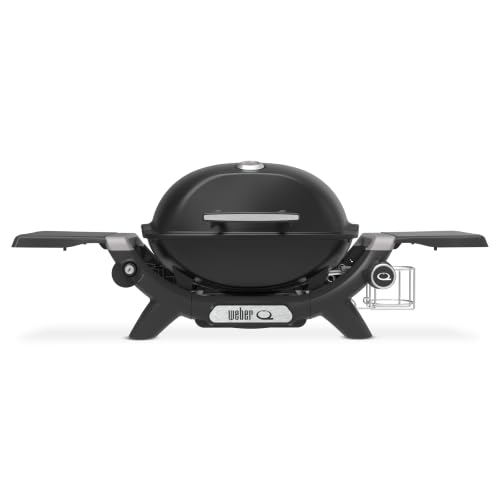
- Best overall: Weber Q 1200N Portable Propane Gas Grill — Check on Amazon
- Coleman RoadTrip 285 Portable Stand-Up Propane Grill — Check on Amazon
- Cuisinart Chef’s Style Portable Propane Tabletop Gas Grill, CGG-306 — Check on Amazon
- Oklahoma Joe’s Rambler Tabletop Charcoal Grill — Check on Amazon
- Masterbuilt Portable Propane Gas Grill, MB20030819 — Check on Amazon
- Ninja Woodfire Outdoor Grill & Smoker, OG701 — electric grill and smoker; see the review below for why this one is listed without a buying link
Read the full guide ↓
Disclosure: As an Amazon Associate, dailyhomedecorating.com earns from qualifying purchases. Links to Amazon on this page are affiliate links; they cost you nothing extra. Listing details such as price and availability change often, so check the current Amazon listing before you buy.
Finding the best portable grill under $300 sounds like a compromise hunt, and at lower budgets it usually is — thin steel, one weak burner, a grate that fits four burgers if nobody breathes. Three hundred dollars is where that stops being true. At this level the portable category contains grills with cast-aluminum fireboxes, porcelain-enameled cast-iron grates, genuine two-zone gas control and charcoal boxes built from heavy-gauge steel: equipment that cooks like a real grill and still folds, lifts or wheels into a car trunk, a storage closet or the corner of a patio. The six products below are the strongest ways we found to spend this budget, and they were chosen for people who intend to grill often, not for people buying a disposable toy for one camping weekend.
Start by deciding what “portable” means in your life, because the word covers three different machines. The first is the tabletop: a compact grill that lives on a patio table, a picnic bench or a tailgate, light enough to carry one-handed or in two hands, and stored indoors between cooks. The second is the stand-up folder: a grill on its own legs or cart that sets up at standing height, cooks for a crowd, then collapses flat enough to lean against a garage wall. The third is the electric portable: a grill that plugs into a wall outlet, needs no fuel bottles or charcoal, and earns its place where open flame is restricted or simply inconvenient. This guide includes all three shapes, because at under $300 you no longer have to accept the shape that happens to be cheap — you can choose the shape that matches where the grill will actually live.
Fuel is the second decision, and it shapes everything else. Propane portables running on one-pound disposable cylinders light in seconds, adjust with a knob and shut off the moment you close the valve, which is why they dominate this category; most also accept an adapter hose to a standard refillable tank at home. Charcoal portables ask more of you — lighting time, ash management, patience — and repay it with the one thing gas cannot fake, which is real fire flavor and ripping radiant heat for searing. Electric portables trade peak heat for total convenience and rule compliance. There is no universally right answer, only a right answer for your patio, your building rules and your patience, and the reviews below are written to make that trade-off visible rather than to crown one fuel for everyone.
One promise about how this guide handles money and safety. No product price is printed in this article, because portable grill prices move with seasons and sales; every linked pick was confirmed against the under-$300 line when this guide was researched, and the instruction throughout is simply to check price on Amazon before you order. One pick, the Ninja Woodfire, is presented without a buying link because we could not confirm a current in-band price for it at research time — it is here because it is genuinely worth considering, not because we could attach a link to it. And because every product below involves fire, each review and the safety guidance later in this guide treat clearance, surfaces and carbon monoxide as part of the purchase, not as fine print. If you already know your budget is smaller, Best Portable Grill Under $200 covers the tier below this one; if you are willing to step up, Best Portable Grill Under $500 shows what the next band adds.
In this guide
Quick Picks
Short on time? The table below pairs each kind of buyer with the one grill in this guide that fits best. Read the fuel column before anything else — it decides how the grill behaves every single time you cook.
| Buyer type | Pick | Why it stands out | Link |
|---|---|---|---|
| Best overall | Weber Q 1200N | Cast-aluminum body, porcelain-enameled cast-iron grates and the build quality to outlast everything else here | Check on Amazon |
| Best for crowds and tailgates | Coleman RoadTrip 285 | 285 sq in across three burners on its own folding stand with wheels, plus swappable cooktops | Check on Amazon |
| Best two-zone tabletop | Cuisinart CGG-306 Chef’s Style | Twin burners totaling 20,000 BTU over 275 sq in of stainless grate — real sear-and-hold cooking | Check on Amazon |
| Best charcoal portable | Oklahoma Joe’s Rambler | Heavy-gauge steel, cast-iron grates and a height-adjustable charcoal tray for genuine fire control | Check on Amazon |
| Best electric all-rounder | Ninja Woodfire OG701 | Grills, smokes with real wood pellets, air fries and more from a wall outlet — no flame, no fuel bottles | Prose-only — see review |
| Best value cooking space | Masterbuilt Portable Propane MB20030819 | 288 sq in plus a warming rack on folding legs, at the friendliest end of this budget band | Check on Amazon |
How These Picks Were Chosen
The shortlist began with every portable grill from a manufacturer with a real parts and support network that could plausibly sit under $300 in the US market, then narrowed on evidence rather than reputation. Every linked pick in this guide was cross-checked against Amazon’s own catalog data for this site: the exact model, the exact listing title and the current selling position relative to this budget. Where that check could not confirm a model inside the budget — the Ninja Woodfire’s listing showed no confirmable in-band price at research time — the product stayed in the guide as an honest prose-only recommendation instead of being forced in with a link or quietly dropped. Two famous step-up models, Weber’s Traveler cart grill and the larger Q 2800N+, were checked the same way and sit persistently above this budget, so they appear in this guide only as named benchmarks in the advice sections, never as picks pretending to fit under $300.
Safety screening came before cooking performance. Each candidate was checked against the US Consumer Product Safety Commission recall record. That check matters in this category in 2026: a widely sold Cuisinart three-in-one grill line was recalled this year over a shattering glass hazard, which is exactly why the Cuisinart models recommended below are the brand’s long-running, mechanically simple tabletop grills — different models, with no glass oven component — and why we name models precisely throughout this guide instead of recommending brands in the abstract. Any model with an open recall was excluded entirely, full stop. The surviving picks were then judged on the things that decide whether a portable grill gets used weekly or gathers dust: grate material and area, burner count and zoning, ignition reliability, how the grease is managed, how the unit folds and carries, and how much of your storage space it consumes in February.
A note on method, because honesty about products includes honesty about process: we did not hands-on test these six grills on a test patio. The assessments below are built from manufacturer specifications, listing data verified for this guide, and the consistent pattern of owner experience with these long-running models. Where a specification differs between a manufacturer’s page and a retail listing, we used the more conservative figure or left the number out. Prices are deliberately absent from the article body for the reason stated above; the budget discipline was applied at the research stage, where it belongs, and every pick below sat inside the under-$300 band in the configuration recommended when checked.
Best Portable Grill Under $300: The 6 Picks, Reviewed in Detail
Weber Q 1200N Portable Propane Gas Grill
Who it suits: Buyers who want one portable grill to keep for a decade — couples and small families who grill on a patio all summer and take the same grill to campsites and tailgates, and who value even heat and durable materials over maximum grate area per dollar.
The Q line is the reason the premium end of this category exists, and the Q 1200N is its compact form: a cast-aluminum lid and firebox that shrug off weather and transport knocks, porcelain-enameled cast-iron cooking grates that hold heat and lay down proper sear marks, a single stainless burner under electronic ignition, a lid thermometer, and two fold-out side tables that give you somewhere to put the tongs that is not the ground. The cooking area is 189 square inches — enough for a family pack of chicken thighs, six to eight burgers, or a couple of steaks with vegetables worked around them — and the whole unit runs on the one-pound disposable propane cylinders sold everywhere, with an adapter hose available if you prefer a refillable tank on the patio. Heat management is the quiet strength: the cast iron evens out the single burner’s output far better than the thin stamped grates on cheaper portables, so food cooks at the edges instead of only in a hot stripe down the middle.
Ownership is where the Weber pulls away from the field. Replacement grates, burners, igniters and regulators for Q grills are stocked for years, the grease management is a simple removable catch pan that takes a disposable liner, and the unit cleans down with a bristle-free coil brush or a nylon scraper once the grate has cooled — never a wire-bristle brush, whose shed bristles are a genuine ingestion hazard and the subject of repeated safety warnings. Set it on a heat-resistant, level surface with clear space around it, keep it well away from siding, railings and anything combustible, and let it cool fully before it goes back in the car or closet. It sits at the premium end of this budget band — check price on Amazon — and what the premium buys is not features but lifespan.
- Cast-aluminum body and porcelain-enameled cast-iron grates — the most durable construction in this guide.
- Electronic ignition, lid thermometer and fold-out side tables in a genuinely carryable tabletop format.
- Runs on one-pound cylinders; adapter hose (sold separately) connects a standard refillable tank for patio use.
Honest limitation: One burner means one heat zone — you cannot sear on one side and hold on the other — and 189 square inches is a hard ceiling: cooking for more than four people becomes a batch operation.
Choose it if you grill for two to four people, want the grill most likely to still be working in ten years, and will pay the top of this budget for build quality. Skip it if you regularly cook for six or more, or if two-zone control matters more to you than construction — the Cuisinart below is your grill.
Coleman RoadTrip 285 Portable Stand-Up Propane Grill
Who it suits: Tailgaters, campers and backyard hosts who cook for groups and want a portable that works at standing height — no picnic table required — with enough grate to feed a crowd in one round.
The RoadTrip 285 is the stand-up answer in this guide: 285 square inches of cooking surface over three adjustable burners totaling 20,000 BTU, push-button Instastart ignition, and a quick-fold leg system on wheels that sets up and collapses in minutes and rolls to the car like luggage. Three burners is the headline that matters. It means a hot zone for searing, a medium zone for cooking through, and a low or off zone for holding finished food — the full grammar of real grilling, on a grill that folds flat. Coleman also sells interchangeable cooktops for the platform, so the same base can run a full griddle for breakfast or a stove grate for a pot, which is how one appliance ends up covering an entire camping weekend. At home it earns its keep as the overflow grill for party days and the main grill for households that would rather store a folder than dedicate patio corner to a full-size cart.
Two ownership realities deserve plain statement. First, folded is not the same as small: the RoadTrip leans and rolls beautifully, but it is a substantial object that wants a garage corner or a closet with depth, and at roughly the weight of a packed suitcase it is a two-stage lift into a high trunk. Second, its grease system uses a water-filled pan beneath the grates that must be emptied and cleaned after cooks — effective at catching drippings, less charming at a campsite. Neither is a defect; both are the price of crowd capacity in a folder. Safety handling is standard for a stand-up gas grill: level ground, the wheels’ side away from traffic, generous clearance from vehicles, tents, siding and dry grass, and cylinders changed only when the grill is cold and outdoors. It sits comfortably inside this budget — check price on Amazon — and for group cooks nothing else in this guide is close.
- 285 sq in over three independently controlled burners — the only true three-zone portable in this guide.
- Folding stand with wheels: standing-height cooking that still travels and stores flat.
- Swappable cooktop platform (griddle and stove grates sold separately) turns it into a full camp kitchen.
Honest limitation: It is the bulkiest folder here when stored and the heaviest lift of the gas picks, and the water-pan grease system needs emptying after every cook.
Choose it if you cook for five to ten people, tailgate or camp with a group, and want standing-height, multi-zone cooking that still goes in the vehicle. Skip it if storage space is your scarcest resource or most of your grilling is weeknight dinners for two — a tabletop below will make you happier.
Cuisinart Chef’s Style Portable Propane Tabletop Gas Grill, CGG-306
Who it suits: Cooks who think in heat zones — the steak-and-asparagus, sear-then-hold crowd — and want the power and layout of a small two-burner patio grill in a tabletop body that still travels.
The CGG-306 is the tabletop power pick: two stainless burners at 10,000 BTU each, 20,000 BTU in total across 275 square inches of stainless-steel grate, in an all-stainless body with folding legs and a locking lid. The twin-burner layout is the point. Light both sides and you have a wide, hot field for a crowd of burgers; light one and you have a genuine two-zone fire — direct heat for searing on the lit side, gentle indirect heat on the other for thick chops, bone-in chicken or anything that needs to finish without burning. That single capability is what separates grilling from merely cooking outdoors, and most tabletops in this class cannot do it because they run one burner under one zone. The stainless construction wipes down easily, shrugs off a season of patio weather better than painted steel, and gives the grill a professional-kitchen look that suits a permanent spot on an outdoor counter or sturdy table.
Precision about models matters with this brand in 2026, so let us be exact: the grill recommended here is the CGG-306 Chef’s Style tabletop, a simple two-burner grill with no glass components, and it is not part of the CPSC recall that affected a different Cuisinart three-in-one grill line with a pizza-oven window — a model this guide does not recommend anywhere. Check the model number on any listing against “CGG-306” and you are looking at the right machine. In use it wants the same discipline as any tabletop gas grill: a stable, heat-resistant surface (never glass, never a plastic folding table), clearance behind and above for the open lid, and a cool-down before the legs fold. It sits in the middle of this budget band — check price on Amazon. Buyers comparing the wider gas category beyond portables will find Best Gas Grill Under $300 useful; within portables, this is the two-zone benchmark.
- Two independent 10,000 BTU burners — real two-zone cooking, the rarest capability in a tabletop.
- 275 sq in of stainless grate in an all-stainless, weather-tolerant body.
- Folding legs and locking lid keep it genuinely portable despite the full-size layout.
Honest limitation: It is a two-handed carry and one of the heavier tabletops here, and stainless grates, while durable, do not hold or release heat quite like the Weber’s enameled cast iron.
Choose it if two-zone technique matters to you, you cook mixed loads (sear plus sides), and your portable mostly lives on a patio or in a vehicle rather than being carried any distance. Skip it if you want the lightest possible tabletop or cast-iron searing specifically.
Oklahoma Joe’s Rambler Tabletop Charcoal Grill
Who it suits: Charcoal devotees who refuse to give up real fire when they leave the backyard — steak searing at a campsite, burgers at the park — and who are willing to trade push-button convenience for flavor and heat.
Most portable charcoal grills are thin bowls with a grate resting on top. The Rambler is built like a small offset smoker that lost its firebox: heavy-gauge steel construction, cast-iron cooking grates over 218 square inches, a lid-mounted temperature gauge, dampers for airflow control, and — the feature that elevates it — a charcoal tray whose height adjusts with a crank handle, so you control heat the way a pitmaster does, by moving the fire closer to or farther from the food. That adjustability turns one grill into two: tray up for a fierce sear on steaks and chops, tray down for gentler cooking of chicken and sausages without the flare-up roulette of a fixed shallow bowl. The cast iron holds the heat that thin steel portables shed the moment the lid opens, and the whole unit feels, in the best sense, overbuilt for its size.
Charcoal ownership rules apply in full, and this guide states them in every article because they are where portable charcoal goes wrong. Light with a chimney starter, never lighter fluid soaked into food-zone coals at a picnic table. Grill outdoors only, well clear of structures, decking furniture and dry ground cover — charcoal produces carbon monoxide, which is why a charcoal grill never, ever runs in a garage, tent or enclosed porch, even “just to finish.” When the cook ends, close the dampers, let the ash cool completely — plan on a full day or more, not an hour — then seal the cold ash in foil or a metal container before disposal; ash that feels cool can hide live embers deep inside. The Rambler is also honestly heavy for a “portable”: it is a two-handed, vehicle-based portable, not a carry-it-to-the-beach grill. It sits in the middle of this budget — check price on Amazon — and for fire flavor per dollar nothing gas-powered touches it. The wider charcoal field is covered in Best Charcoal Grill Under $300.
- Height-adjustable charcoal tray — genuine heat control, the feature cheap charcoal portables never offer.
- Heavy-gauge steel body and cast-iron grates over 218 sq in, with lid thermometer and damper control.
- Cooks with the searing power and smoke flavor that only a real coal bed delivers.
Honest limitation: It is the heaviest pick in this guide and the slowest to start and finish — lighting, cooking and the long ash cool-down make it a planned event, not a weeknight shortcut.
Choose it if charcoal flavor is non-negotiable and your portable grilling is vehicle-based: campsites, tailgates, park shelters. Skip it if you want weeknight speed, cook on a balcony (charcoal is prohibited in most multi-family settings), or dislike ash management.
Ninja Woodfire Outdoor Grill & Smoker, OG701
Who it suits: Grillers whose space or building rules say no to open flame, and gadget-happy cooks who want one outdoor appliance that grills, smokes, air fries, roasts, bakes, broils and dehydrates from a standard outdoor outlet.
The Woodfire is the electric wildcard of this category, and it exists to solve a specific problem: smoke flavor without combustion. It is a plug-in electric grill whose heating element works with real wood pellets in a small smoke box, so food gets genuine wood smoke while the appliance itself produces no open flame, no propane and no charcoal — a combination that makes it the only “grill” many patios, decks and rental situations can host, and a legitimately different cooking tool even where flame is allowed. The grill function runs hot enough to sear steaks and burgers on its nonstick grate; the smoker function does credible work on ribs and wings for an electric unit; and the air-fryer mode with its crisper basket handles frozen sides and vegetables alongside the main event. For households that grill for two to four and like variety more than volume, it can replace two or three appliances.
Why is there no buying link on this pick? Because this guide’s rule is that a linked pick must be confirmable inside the budget at research time, and the Woodfire’s Amazon listing data available to us showed no current price we could verify against the under-$300 line — the model has historically lived right at the top of this band and moves with promotions. Treat it as a benchmark to price-check yourself: if you find it within budget, it is a strong buy for the uses above; if it is sitting above the line, the honest comparison is against the $500 tier in Best Portable Grill Under $500. Practical notes: it needs a proper outdoor-rated outlet and a short run of cord, it should live under cover or indoors between cooks despite its weather-resistant design, the pellet smoke is real smoke — neighbors and smoke alarms near open windows will notice — and its grate area suits small households rather than party loads. Cleaning is the easiest here: nonstick surfaces, a removable grease tray, and a bristle-free brush or nylon pad once cool.
- Real wood-pellet smoke flavor with no open flame, no propane and no charcoal to store.
- Seven functions in one appliance — grill, smoke, air fry, roast, bake, broil, dehydrate.
- The most capable option in this guide for spaces where flame grills are restricted.
Honest limitation: It is dependent on an outlet, its cooking area suits two to four people rather than a party, and we could not verify an in-budget price for it at research time — confirm the live price before treating it as an under-$300 purchase.
Choose it if flame is restricted where you live, you cook small and varied, and you value smoke flavor plus air frying in one unit. Skip it if you cook for crowds, grill away from power (campsites, tailgates), or want the char and crust chemistry that only open flame delivers.
Masterbuilt Portable Propane Gas Grill, MB20030819
Who it suits: Value hunters who want maximum cooking area per dollar — big families and group cooks on a budget — and who are happy to trade premium materials for space and simplicity.
The Masterbuilt portable is the space-per-dollar champion of this guide: 288 square inches of primary cooking area — the largest grate here — plus a chrome-coated warming rack above it for buns, corn and finished food, in a stainless-steel body on folding legs with push-button ignition. The warming rack is a more useful feature than it sounds: portable grilling for a group is a logistics exercise, and a warm holding zone is what lets burgers, dogs and vegetables all reach the table hot instead of in relays. The folding legs set it at a workable height on a sturdy table or tailgate, the lid locks for transport, and like most gas portables it runs on one-pound cylinders with the option of an adapter hose at home. It sits at the friendliest end of this budget band — check price on Amazon — which leaves room in the same $300 for the accessories that make portable grilling pleasant: a cover, a griddle insert, a bristle-free cleaning brush and a spare cylinder or two (see Best Grill Accessories Under $150 for the useful ones).
The trade for that value is refinement. The construction is lighter-gauge than the Weber or the Oklahoma Joe’s, the heat distribution takes a little learning — expect a hotter center and cooler corners until you know your unit — and long-term parts support, while real, is not as deep as Weber’s. None of that prevents it from cooking a great deal of food well; it simply asks the owner to season expectations to the price. Use it on a stable, heat-resistant surface with the usual clearances, keep the warming rack’s load modest so the lid closes properly, and store it dry: lighter stainless and chrome finishes reward a cover and punish a wet winter outdoors. For a first portable, a cabin grill, or a big-batch second grill beside a smaller premium unit, it is the easiest recommendation in this guide to justify on arithmetic alone.
- 288 sq in of cooking area plus a warming rack — the most capacity in this guide, at its friendliest price position.
- Folding legs, locking lid and push-button ignition keep setup and transport simple.
- Leaves budget headroom for the cover, tools and fuel that portable grilling actually consumes.
Honest limitation: Lighter-gauge construction and less even heat than the premium picks; it rewards learning its hot spots rather than delivering uniform heat from day one.
Choose it if you cook volume — family packs, team tailgates, cabin weekends — and want the most grate your money buys. Skip it if you want buy-it-for-a-decade build quality or cook mostly for two, where the Weber’s refinement matters more than area.
Comparison Table
| Product | Fuel / type | Cooking area | Best use | Link |
|---|---|---|---|---|
| Weber Q 1200N | Propane tabletop, 1 burner | 189 sq in | Buy-it-for-years quality for two to four people | Check on Amazon |
| Coleman RoadTrip 285 | Propane stand-up folder, 3 burners | 285 sq in | Groups, tailgates and camp kitchens at standing height | Check on Amazon |
| Cuisinart CGG-306 Chef’s Style | Propane tabletop, 2 burners | 275 sq in | Two-zone technique cooking in a portable body | Check on Amazon |
| Oklahoma Joe’s Rambler | Charcoal tabletop | 218 sq in | Real fire flavor and searing, vehicle-based trips | Check on Amazon |
| Ninja Woodfire OG701 | Electric grill / smoker | Compact grate, 7 functions | Flame-free spaces; smoke flavor plus air frying | Prose-only — see review |
| Masterbuilt Portable Propane MB20030819 | Propane tabletop, folding legs | 288 sq in + warming rack | Maximum cooking space per dollar | Check on Amazon |
How to Choose a Portable Grill Under $300
- Decide where it will live first. Storage decides more portable-grill purchases than cooking does. Measure the closet, shelf or garage corner the grill must occupy in winter, then check folded dimensions against it. A stand-up folder like the RoadTrip needs depth; a tabletop needs a shelf; the electric needs indoor or covered storage near an outlet.
- Match grate area to your real headcount. Roughly: 150–190 sq in serves two to four, 220–290 sq in serves four to eight in one round. Burgers need about 20 sq in each with working room. Buying double your headcount buys slower preheats and more cleaning for no benefit.
- Count burners, not just BTUs. Total BTU figures flatter small grills. What changes your cooking is zoning: one burner is one temperature; two burners give you sear-and-hold; three give you a true holding zone. Choose zoning for the way you actually cook mixed loads.
- Interrogate the grate material. Porcelain-enameled cast iron sears best and lasts; stainless is durable and easy; plated steel is the budget tell. At this budget you should not be accepting thin plated grates on a primary grill.
- Plan the fuel logistics. One-pound cylinders are convenient and costly per cook; an adapter hose to a refillable tank pays for itself in a home season. Charcoal means storage for fuel and a plan for ash. Electric means an outdoor outlet and a heavy-duty, outdoor-rated extension only if the manufacturer allows one.
- Check the rules of your space before the specs of the grill. Leases, HOA rules and local fire codes restrict fuel types by building and balcony type. Confirm what is allowed where you will actually cook — the apartments variant of this guide goes deep on this — before falling in love with a fuel.
- Budget the second purchase. A cover, a bristle-free cleaning brush (never wire bristles), a chimney starter for charcoal, spare cylinders for gas, and a instant-read thermometer turn a good grill into a working system. The Masterbuilt’s price position exists partly to leave room for these.
- Verify the exact model, not just the brand. Recall news in this category is model-specific — a brand can have a recalled line and a perfectly sound one at the same time. Match the full model number on the listing to the model you researched.
Fire Safety Rules Every Portable Grill Owner Should Follow
Portable grills start the same fires full-size grills start, usually closer to furniture, vehicles and buildings. Four rules cover most of the risk. First, the surface: set the grill on a level, heat-resistant surface — concrete, pavers, bare ground, or a sturdy purpose-built stand or metal table. Never on a glass table, a plastic folding table, a wooden deck board run you care about without a protective grill mat rated for the purpose, and never under a low overhang, awning or tree canopy. Second, clearance: keep the grill well away from siding, railings, fences, vehicles, tents and stored fuel — a minimum of several feet in every direction, more for charcoal, and never inside a garage or enclosed porch. Third, fuel discipline: propane cylinders connect and disconnect outdoors with the grill cold; spare one-pound cylinders store upright, outdoors, away from living spaces and heat — never in a closet inside the home or a hot car trunk for a season. Charcoal ash gets the full protocol: dampers closed, a complete cool-down measured in a day or more, then cold ash sealed in foil or a lidded metal container before it goes anywhere near household trash.
Fourth, carbon monoxide — the rule with no exceptions. Charcoal and gas grills both produce CO, and charcoal keeps producing it while it smolders down. Never run any fuel-burning grill in a garage, tent, RV, enclosed porch or indoors “just for a few minutes,” and never bring a charcoal grill inside to warm a space or finish a cook. Electric grills avoid CO entirely, which is one reason they anchor the restricted-space recommendations in this guide series. Finally, cleaning safety: scrub grates with a bristle-free coil brush, a nylon brush on a cool grate, or a wooden scraper. Wire-bristle brushes shed bristles that can stick to grates and end up in food; they are the subject of repeated federal safety warnings and a wide 2026 recall wave, and no pick in this guide should ever meet one. A grill brush is a consumable — replace it when it looks tired.
Common Buying Mistakes
- Buying grate area for the biggest party of the year instead of the typical Tuesday — then living with a bulky grill that is wrong for 50 weeks to serve one.
- Comparing total BTU numbers across sizes and concluding the bigger number cooks better, when zoning and grate material matter more.
- Assuming “portable” means light. Several excellent portables are two-handed, vehicle-based machines; check the carry reality against your actual trips.
- Setting a tabletop grill on a glass patio table or resin folding table and learning about heat transfer from the damage.
- Storing spare propane cylinders in a hall closet, basement or hot vehicle — they belong upright and outdoors.
- Dumping ash the same evening because the surface feels cool, while embers inside stay live for a day or longer.
- Bringing a charcoal grill into a garage or screened porch during rain — the carbon monoxide risk does not care that the cook was nearly done.
- Cleaning with a wire-bristle brush because it came free with a tool set. Bristle-free only, on every grill in this guide.
- Buying a brand instead of a model and missing that recall status, burner count and grate material are all model-level facts.
- Forgetting the second purchase — cover, thermometer, fuel, cleaning tools — and blowing the whole $300 on the grill alone.
Final Recommendation
- The default buy for most people: Weber Q 1200N.
- Cooking for groups, tailgates and camp weekends: Coleman RoadTrip 285.
- Two-zone technique in a tabletop: Cuisinart CGG-306 Chef’s Style.
- Real charcoal flavor, vehicle-based: Oklahoma Joe’s Rambler.
- Flame-restricted spaces and multi-function cooking: Ninja Woodfire OG701 (prose-only — verify the live price against your budget).
- Maximum area per dollar: Masterbuilt Portable Propane MB20030819.
Forced to name one, this guide names the Weber Q 1200N, because portable grills fail in the same two ways — they rust out or their owners stop enjoying them — and the Q’s cast-aluminum body, enameled cast-iron grates and decade-deep parts support defend against both. It is the grill in this guide you are least likely to replace, and replacement is the hidden cost that makes cheap grills expensive. If your life involves cooking for six or more away from home, the answer flips to the Coleman RoadTrip 285: three burners, a real stand and crowd capacity that folds into a trunk. Charcoal loyalists should not compromise at all — the Rambler’s adjustable coal tray is the real thing — and households under flame restrictions should price-check the Woodfire first, because nothing else here does what it does. Round out whichever you choose with the patio pieces that make portable grilling a habit rather than an event — seating and a surface from Best Patio Dining Set Under $300 is the usual next step — and keep the safety rules above taped inside the storage closet door.
Frequently Asked Questions
Is a portable grill under $300 good enough to be my only grill?
For households of up to four, and for group cooks willing to work in one or two batches, yes — the top of this band includes grills with cast-iron grates, multi-zone burners and construction that lasts for years. What you give up versus a full-size cart grill is simultaneous capacity and a permanent, always-ready setup, not cooking quality. Households that regularly cook for eight or more at home usually end up happier with a full-size grill plus a small portable for trips.
How long does a one-pound propane cylinder last on a portable grill?
As a planning figure, a one-pound cylinder typically runs a small portable for roughly one to one-and-a-half hours of cumulative burner time at moderate settings — a few weeknight cooks, or one long group session. Heavy users should either keep spares (stored upright and outdoors) or use an adapter hose with a refillable tank at home and reserve the small cylinders for travel.
Can I use a portable grill on a balcony?
It depends on your building, your lease and your local fire code, and the honest default answer for open-flame grills on multi-family balconies is no — fire codes such as IFC §308.1.4 restrict open-flame cooking devices on combustible balconies and near combustible construction, and most leases ban them outright. Electric grills are the common compliant option where the lease allows them. The apartments edition of this guide covers the rules in detail.
What is the safest way to clean a portable grill’s grates?
Heat the grate, let it cool to warm, and scrub with a bristle-free coil brush, a wooden scraper, or a nylon brush once fully cool. Never use a wire-bristle brush: its bristles shed, stick to grates and can be swallowed with food, which is why they feature in repeated safety warnings and recalls. Removable grates and drip pans can also be soaked and washed like cookware once cool.
Charcoal or propane — which is better in a portable grill?
Propane wins on speed, control and cleanup: instant ignition, knob-adjustable heat, no ash. Charcoal wins on flavor and maximum searing heat, and loses on time, mess and restrictions — it is prohibited in many multi-family and some park settings. Most households that grill weekly choose propane for the portable and keep charcoal for a dedicated backyard setup; devoted charcoal cooks accept the Rambler’s routine gladly.
Why does one pick in this guide have no Amazon link?
Because we could not verify, at research time, that the Ninja Woodfire OG701 was actually selling inside the under-$300 band — its listing data showed no confirmable current price. Rather than attach a link and hope, the guide presents it as a prose-only recommendation with instructions to check the live price yourself. Every linked pick, by contrast, was confirmed against the budget when researched.