Where to buy
Check the latest price, availability and delivery on Amazon. Orders are placed on Amazon. We may earn a commission from qualifying purchases.
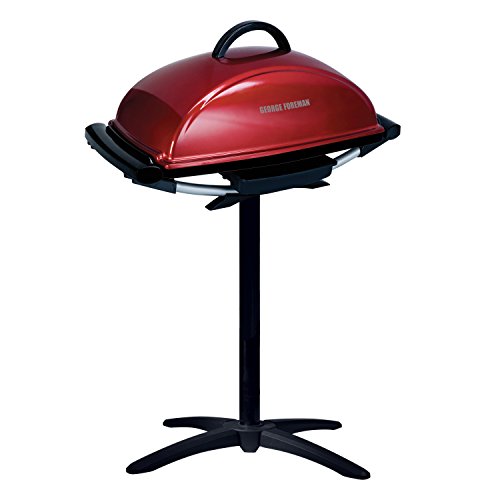
- Best apartment-legal pick where electric grilling is allowed: George Foreman Indoor/Outdoor Electric Grill with Stand — Check on Amazon
- Cuisinart 2-in-1 Portable Outdoor Electric Grill (CEG-115) — Check on Amazon
- Cuisinart Grillster Portable Gas Grill (CGG-059A) — for designated grill areas only — Check on Amazon
- Char-Broil Grill2Go X200 Portable Gas Grill — for designated grill areas only — Check on Amazon
- Royal Gourmet GT1001 Portable Propane Gas Grill — for shared courtyard and grill-area cooking — Check on Amazon
Benchmark pick, currently priced above this guide’s ceiling when we checked: the Weber Q 1400 electric grill is reviewed below in prose. It is the electric grill most apartment cooks aspire to, but its current price sits above the under-$200 ceiling, so it carries no purchase link here — check price on Amazon if you want to watch for it inside the budget.
Read the full guide ↓
Disclosure: As an Amazon Associate, dailyhomedecorating.com earns from qualifying purchases. Links to Amazon on this page are affiliate links; they cost you nothing extra. Listing details such as price and availability change often, so check the current Amazon listing before you buy.
Searching for the best portable grill for apartments under $200 is different from every other grill search, because the first question is not which grill cooks best — it is which grill you are allowed to use at all. In a large share of apartment buildings, the honest answer for a balcony is: no charcoal grill, no ordinary propane grill, and in some buildings no grill of any kind. That is not this guide being cautious. It is the combined effect of typical lease clauses, which commonly ban open-flame cooking devices on balconies outright, and fire codes modelled on the International Fire Code, whose section 308.1.4 states that charcoal burners and other open-flame cooking devices shall not be operated on combustible balconies or within ten feet of combustible construction. Most apartment balconies are combustible construction, most are well within ten feet of siding, railings and the balcony above, and most leases add their own prohibition on top of the code. A guide that recommended a charcoal grill for your balcony anyway would be recommending that you break your lease and, in many jurisdictions, the fire code. This guide does not do that.
So this article is organised around compliance first and cooking second. The two lead picks are electric grills, because an electric grill has no open flame, no embers and no carbon monoxide, and it is therefore the only type that many leases and fire codes permit on a balcony — and even then, only where your specific lease allows grills at all, which you must check before you buy. The three gas picks that follow are included for the apartment situations where gas grilling is legitimately possible: a designated communal grill area, a ground-floor patio where your lease and local code allow it, or the narrow fire-code exception for small LP-gas devices using a cylinder of nominal one-pound capacity where the building and balcony qualify and the lease does not ban them anyway. Read the compliance section before the reviews; it decides which half of this guide applies to you. And if your building bans balcony grilling entirely, the genuinely good outcomes are the communal grill area, a ground-level patio, or an electric grill used exactly as your lease permits — not a quiet rule-break that risks your deposit, your tenancy and your neighbours’ safety.
Every grill here was checked against the U.S. Consumer Product Safety Commission recall database before inclusion, and the standard fire rules apply throughout: stable heat-resistant surfaces, generous clearance from anything combustible, no combustion grill indoors or in enclosed spaces because of carbon monoxide, complete cooling of ash before sealed metal disposal for any charcoal cooking done in permitted areas, and bristle-free grate cleaning only — wire-bristle brushes have been recalled in the tens of millions in 2026 because loose bristles can contaminate food and be swallowed.
In this guide
Quick Picks
Short on time, or comparing several options at once? Each row below names a situation and the grill that suits it, with a link to the listing where one is offered. Note how many rows are about permission, not performance — that is the reality of apartment grilling.
| Situation | Pick | Why it stands out | Link |
|---|---|---|---|
| Balcony, where electric grills are allowed | George Foreman Indoor/Outdoor Electric Grill with Stand | No flame, no fuel storage, 240 sq. in. of cooking space and its own stand — check price on Amazon | Check on Amazon |
| Balcony or small patio, electric, hotter sear | Cuisinart 2-in-1 Portable Outdoor Electric Grill (CEG-115) | Reaches up to 550°F from a wall outlet; works on its stand or a tabletop | Check on Amazon |
| Electric benchmark above the ceiling | Weber Q 1400 Electric Grill | The premium electric standard — prose-only here because its current price exceeds the under-$200 budget; check price on Amazon | Prose-only |
| Designated grill area, lightest carry | Cuisinart Grillster Portable Gas Grill (CGG-059A) | About 13 pounds, briefcase body — easy to carry down to a shared grill area | Check on Amazon |
| Designated grill area, toughest build | Char-Broil Grill2Go X200 Portable Gas Grill | Latching cast-aluminium body and TRU-Infrared cooking for the trip downstairs | Check on Amazon |
| Shared courtyard cooking for a group | Royal Gourmet GT1001 Portable Propane Gas Grill | 285 sq. in. and a 10,000 BTU burner — the most cooking space of the gas picks here | Check on Amazon |
Read This First: Balcony Rules, Leases and IFC 308.1.4
Your lease is the first law. Most apartment leases and condominium rules regulate grills directly: many prohibit any grill on a balcony, many prohibit charcoal and propane while allowing electric, and some prohibit storing fuel even where cooking is allowed. A lease ban is enforceable regardless of what the fire code permits — the code sets a floor for safety, not a right to grill — and violating it can mean fines, loss of the grill, or action against your tenancy. Before buying anything in this guide, find your lease’s grill clause, and if it is ambiguous, ask your property manager in writing and keep the answer. “Nobody has complained” is not permission.
The fire code is the second law. International Fire Code section 308.1.4 provides that charcoal burners and other open-flame cooking devices shall not be operated on combustible balconies or within ten feet (about three metres) of combustible construction. The stated exceptions are narrow: one- and two-family dwellings (which apartment buildings are not), buildings and balconies protected by an automatic sprinkler system, and LP-gas cooking devices whose container has a water capacity no greater than two and a half pounds — the nominal one-pound disposable cylinder size. Read those exceptions carefully. The one-pound exception is the reason some small camping-style gas grills are treated differently from a grill fed by a standard twenty-pound tank, which is also why storing large LP cylinders in or around apartment buildings is separately restricted. But an exception in the fire code does not override a stricter lease, and local amendments vary by city and state — some jurisdictions ban balcony grilling more broadly than the model code. When lease, local code and building rules disagree, the strictest one governs your behaviour in practice.
Why electric is different. An electric grill produces heat without combustion: no open flame, no embers, no carbon monoxide, no fuel to store. That is why fire codes built around open-flame devices generally do not capture it, and why so many leases that ban “grills” in one breath allow electric models in the next — or why managers approve them on request. It is not a loophole to exploit; it is a genuinely different risk profile. Even so, an electric grill is still a hot appliance used outdoors near railings and furniture: it needs a stable heat-resistant footing, clearance from combustibles, a weather-appropriate outdoor outlet used exactly as its manufacturer directs, and it must never be used in rain or left unattended. And if your lease bans all grills including electric, that is the answer — use the communal area instead.
The communal grill area is the underrated option. Many complexes maintain a designated grilling spot — a ground-level patio, often with fixed grills or open space where residents bring portables. This is where the gas picks in this guide belong in apartment life: carried down, cooked on in a space designed for open flame, carried back up cool and clean. If your building has one, a light latching gas grill like the Grillster or X200 gives you real flame cooking with none of the balcony problems, and the walk is the only compromise.
How These Picks Were Chosen
Compliance shaped the shortlist before cooking quality did. The two electric leads had to be true outdoor-capable electric grills — not indoor contact grills pressed into balcony service — with enough cooking area for a real meal and stands or tabletop designs suited to small spaces. The gas picks had to run on one-pound cylinders, because that is the fuel format relevant to the fire-code exception and to buildings that prohibit larger tanks, and they had to be light, latching and genuinely carry-able, because their apartment use case is a trip to a permitted area, not permanent balcony residence. Every linked pick was confirmed through an Amazon Creators API cross-check as a real orderable listing at or under the $200 ceiling when checked; the one grill whose checked price sat above the ceiling — the Weber Q 1400 — is covered in prose as a benchmark rather than linked as if it met the budget. Each model was also checked against the CPSC recall database; a recalled model would have been excluded silently and entirely. Specifications below are stated only where the manufacturer or the verified listing states them, and no star ratings or review counts are used anywhere in the rankings, because those figures change constantly and say nothing about whether a grill belongs on your balcony.
The Best Portable Grill for Apartments Under $200: Full Reviews
1. George Foreman Indoor/Outdoor Electric Grill with Stand — Best for Permitted Balconies
Who it suits: Apartment cooks whose lease allows electric grills and who want the closest thing to normal grilling — a round grill on its own stand, a big cooking surface, a lid — with no flame, no fuel and no code anxiety.
The George Foreman indoor/outdoor design has been the default answer to apartment grilling for years, and the reasons are structural rather than fashionable. The cooking surface offers about 240 square inches — room for a family-sized batch of burgers, chicken pieces or vegetables in a single layer — heated electrically with five heat settings from a simple dial. The grill plate carries the brand’s signature slope, which drains fat away into a drip tray as food cooks; on a balcony, that grease management matters twice over, because dripping fat is both a fire concern and a downstairs-neighbour concern. The removable stand puts the grill at a comfortable cooking height without consuming a table, and the grill itself lifts off the stand for tabletop use or storage, which is how a grill this size fits apartment life: assembled to cook, broken down to store in a closet or corner.
Because it is electric, there is nothing to store that a lease can object to — no cylinders, no charcoal, no lighter fluid — and nothing to produce carbon monoxide, so the entire category of fuel rules simply falls away. What remains is ordinary appliance discipline: plug it in exactly as the manual directs, keep the cord from crossing walkways or resting against the hot body, give the grill clearance from railings, siding and furniture while it cooks, and never run it in rain or leave it unattended. The cooking itself is honest electric grilling: it browns and chars lightly rather than searing like gas over cast iron, and it rewards preheating with the lid down and cooking in uncrowded batches.
Pros: No flame, fuel or carbon monoxide; generous 240 sq. in. surface; removable stand for storage; effective fat drainage to a drip tray; five heat settings. Honest limitation: Electric heat cannot match the hard sear of gas or charcoal, the nonstick plate needs non-metal utensils and gentle cleaning, and it still requires your lease to permit electric grills — “electric” is not a universal pass.
Choose it if your lease allows electric grills and you want full-size balcony cooking. Skip it if your building bans all grills — go straight to the communal-area gas picks — or if sear marks matter more to you than permission.
2. Cuisinart 2-in-1 Portable Outdoor Electric Grill (CEG-115) — Hottest Electric Sear
Who it suits: Apartment cooks who found typical electric grills timid. The CEG-115’s selling point is heat: Cuisinart rates it to reach 550°F from a standard wall outlet, which is the temperature territory where electric grilling stops apologising.
That headline figure changes what the grill does well. At 550°F, steaks and chops take colour properly, chicken skin renders instead of steaming, and vegetables char at the edges — the Maillard results that weaker electric grills, loafing along at much lower surface temperatures, cannot deliver. The cooking area matches the George Foreman at 240 square inches of nonstick surface, and the “2-in-1” in the name is the format: the grill works on its included stand for balcony cooking at standing height, or lifts to a tabletop for a patio table or a tailgate-style setup where outlets exist. Temperature control is a proper dial rather than fixed settings, so you can back the heat off for fish or hold a gentle warmth for finished food.
The apartment-specific virtues mirror the Foreman’s: no combustion, no carbon monoxide, no fuel storage, nothing for a fire-code open-flame clause to attach to — subject always to your own lease’s wording. The stand-or-tabletop flexibility earns its keep in small spaces, because a grill that can cook on a sturdy table does not permanently occupy balcony floor area, and a grill that stores as a tabletop unit fits a cupboard. Cleanup is nonstick-grill standard: let the plate cool, wipe it down, empty the grease management, and never attack it with a wire brush — bristle-free tools only, as with every grill in this guide.
Pros: Up to 550°F — the strongest sear of the electric picks; 240 sq. in. of cooking space; stand or tabletop use; dial temperature control. Honest limitation: At full heat it draws serious current, so it wants a proper outlet circuit used as the manual directs — not a chain of extension cords; and like all electrics it is a fair-weather, attended appliance.
Choose it if searing performance is your electric priority. Skip it if your balcony outlet situation is doubtful, or you prefer the Foreman’s fat-draining slope and simpler controls.
3. Weber Q 1400 Electric Grill — Benchmark Above the Ceiling (Prose-Only)
Who it suits: The apartment cook researching what the premium electric option is, and whether waiting for a sale beats buying in-budget now.
The Q 1400 applies Weber’s compact-grill formula to electric heat: a 1,560-watt, 120-volt element under porcelain-enamelled cast-iron cooking grates in a cast-aluminium body. The cast iron is the story — it stores heat the way gas-grate iron does, so food landing on the grate meets a surface that stays hot, producing the most convincing grill marks and crust of any electric in this article. Build quality, lid fit and the maker’s parts network are at the level the brand’s gas grills established. As an apartment appliance it shares the electric category’s compliance virtues: no flame, no embers, no carbon monoxide, no fuel.
It is prose-only for one reason: when its current Amazon price was cross-checked through the Creators API during the writing of this guide, it sat clearly above the $200 ceiling. An under-$200 guide that linked it anyway would be misleading you about the budget. If you find it at or under the ceiling on sale, it becomes a legitimate — arguably the strongest — electric pick here; check price on Amazon and judge with your lease in hand. Until then, the two linked electrics above deliver most of the experience inside the budget, and the honest limitation of the Weber is simply its price.
Pros: Cast-iron grates for the best electric sear; premium build and support. Honest limitation: Currently priced above this guide’s ceiling, hence no purchase link; needs a suitable outlet and, like every grill here, lease permission.
Choose it if you catch it within budget or decide to stretch. Skip it if the ceiling is firm — the Foreman and CEG-115 respect it today.
4. Cuisinart Grillster Portable Gas Grill (CGG-059A) — For Designated Grill Areas
Who it suits: Apartment residents whose buildings provide a grill area, a ground-level patio, or another designated open-flame spot — and who need a grill light enough that using it is a pleasure rather than a project.
Be clear about this pick’s place: it is a propane grill, it produces open flame, and it does not belong on a typical apartment balcony under typical leases and IFC 308.1.4. Its apartment virtue is portability. At about 13 pounds in a latching briefcase body with a carry handle, the Grillster is the grill you can carry downstairs one-handed with a one-pound cylinder in the other hand. Its 8,000 BTU burner is rated to reach 600°F, so the small 146 sq. in. grate cooks with real conviction for one to three people; push-button ignition lights it instantly; and when you are done, the grate goes in the dishwasher back upstairs — cleanup that respects apartment kitchens. In buildings where the narrow one-pound LP-gas exception applies and the lease is silent or permissive, a grill of exactly this format is also the only gas type that can even enter the balcony conversation — but that determination belongs to your lease and your local code, not to a buying guide, and the default assumption must be that balcony gas grilling is not allowed until you have verified otherwise in writing.
Pros: About 13 lb and truly hand-carried; high heat for its size; dishwasher-safe grate; latching body travels cleanly through shared spaces. Honest limitation: Open flame — designated areas only for most apartment dwellers; smallest cooking area in this guide; one-pound cylinders are the running cost of the format.
Choose it if your building has a grill area and you cook for one to three. Skip it if you have no permitted place to use it — a grill you cannot legally light is not a bargain at any price.
5. Char-Broil Grill2Go X200 Portable Gas Grill — Toughest Grill-Area Carry
Who it suits: Residents who will carry a gas grill to a permitted area often — down stairs, across car parks, to a courtyard — and want the one built like luggage rather than like furniture.
The X200’s cast-aluminium body, latching lid and high-impact frame were designed for exactly this life. It shrugs off the knocks of communal hallways and car boots, the lid stays shut in transit so the interior stays clean, and there is no hose to pack because one-pound cylinders screw directly to the regulator. Its TRU-Infrared cooking system — an emitter plate between burner and food across its 200 sq. in. grate — evens out hot spots and suppresses the flare-ups that make small gas grills exciting in the wrong way when cooking fatty food in a shared space, where smoke and flame draw attention you do not want. For a grill-area cook feeding two to four, it is the most complete gas package in this article.
The compliance framing is identical to the Grillster’s and bears repeating without dilution: this is an open-flame appliance for designated areas and other permitted ground-level spaces, not a balcony grill for a typical apartment. Where it earns its place over the Grillster is capacity and durability; where it loses is weight and the extra cleaning the emitter plate needs — a bristle-free brush or a soak and nylon brush on the cooled plate, never a wire-bristle brush.
Pros: Latching cast-aluminium build made for carrying; even infrared-style heat with few flare-ups; 200 sq. in. grate; no hose to pack. Honest limitation: Heavier than the Grillster; emitter plate adds a cleaning task; open flame restricts it to permitted areas.
Choose it if your grill-area trips are frequent and your group is three or four. Skip it if minimum weight matters most — that is the Grillster — or if you have no permitted area at all.
6. Royal Gourmet GT1001 Portable Propane Gas Grill — Shared Courtyard Capacity
Who it suits: The social apartment cook — the one who hosts at the communal patio, cooks for the group in the courtyard, and needs real cooking area at the end of the carry.
The GT1001 is a stainless tabletop grill with folding legs, a lockable lid and 285 sq. in. of cooking area over a 10,000 BTU stainless U-shaped burner — the largest gas cooking surface in this guide. That U-burner shape matters: it spreads flame across more of the firebox than a straight tube, so the big grate heats more evenly than most single-burner tabletops. For a permitted shared space, this is the grill that cooks burgers for six in one batch while the group stays together, rather than in relays. The folding legs and locking lid make the trip back upstairs manageable, though at this size it is a two-handed, deliberate carry rather than the Grillster’s grab-and-go.
Its place in an apartment guide is strictly as a communal-area grill. It is too large to pretend otherwise, it runs on open flame, and its one-pound cylinder format keeps it in the small-LP category for whatever local rules apply in the designated area itself. Set up on a stable heat-resistant surface in the open, with clearance from the building and anything combustible, it does a job neither electric can do in a shared courtyard: high-heat, high-capacity, flame-grilled food for a crowd, in the one place your building actually wants it cooked.
Pros: 285 sq. in. — the most gas cooking space here; even-heating U-burner; folding legs and lockable lid; stainless construction. Honest limitation: The bulkiest carry in this guide; single heat zone; designated areas only.
Choose it if communal cooking for groups is your apartment grilling life. Skip it if you cook solo at the grill area — the Grillster is the saner carry.
Comparison Table
| Grill | Type | Cooking area | Apartment use case | Watch out for |
|---|---|---|---|---|
| George Foreman Indoor/Outdoor Electric | Electric | 240 sq. in. | Balcony where electric is permitted | Gentler sear; lease must allow electric grills |
| Cuisinart CEG-115 | Electric | 240 sq. in. | Balcony/patio where electric is permitted | High current draw at full heat; outlet discipline |
| Weber Q 1400 (prose-only) | Electric | Compact cast-iron grate | Balcony where electric is permitted | Currently above the $200 ceiling |
| Cuisinart Grillster CGG-059A | Propane, 1-lb cylinder | 146 sq. in. | Designated grill area; lightest carry | Open flame; cooks for one to three |
| Char-Broil Grill2Go X200 | Propane, 1-lb cylinder | 200 sq. in. | Designated grill area; frequent carries | Emitter plate cleaning; heavier |
| Royal Gourmet GT1001 | Propane, 1-lb cylinder | 285 sq. in. | Shared courtyard, group cooking | Bulkiest carry; designated areas only |
The table’s logic is the article’s logic: the first three rows are the balcony conversation, and they are all electric. The last three rows are the communal-area conversation, and they are all gas. No row crosses over, because in apartment life the fuel decision is made by your lease and your fire code before it is made by your taste.
How to Choose the Best Portable Grill for Apartments Under $200
Step one is paperwork, not shopping. Read your lease’s grill and balcony clauses. Check your building’s rules and any local fire-code amendments. If anything is unclear, email your property manager a specific question — “May I use an electric grill on my balcony?” — and keep the written answer. The five minutes this takes decides whether you are shopping in the electric half or the gas half of this guide, and it protects your deposit and your tenancy in a way no product feature can.
If electric is permitted, choose between sear and simplicity. The CEG-115’s 550°F ceiling makes it the performance pick; the George Foreman’s sloped plate, drip management and lift-off stand make it the easy-living pick; the Q 1400 is the stretch pick if its price falls to you. All three need the same balcony discipline: a stable heat-resistant footing, clearance from railings and siding, an outlet used exactly as the manufacturer directs, no use in rain, no unattended cooking, and a cool-down before the grill is moved or stored.
If you will use a designated area, choose by the carry. Count the stairs, the doors and the distance honestly. Under about 15 pounds, the Grillster disappears into the trip. The X200 trades weight for durability and capacity. The GT1001 trades carry comfort for the ability to feed the whole group at once. In shared areas, also mind the social contract: arrive with everything, leave the area cleaner than you found it, let the grill cool fully before carrying it back through common spaces, and never transport a warm grill or a hot grate through a stairwell.
Storage rules are part of the choice. Electric grills store like appliances — cool, clean, indoors, no controversy. Gas grills store with conditions: many buildings prohibit storing LP-gas cylinders inside living spaces or on balconies above certain sizes, and the one-pound format of every gas pick here is precisely the format least likely to collide with those rules — but “least likely” still means checking. Charcoal, notably absent from this guide’s picks, fails apartment storage and use on every axis: open flame, embers, ash, and smoke that drifts into every window above you. If charcoal is your love, cook it at a permitted ground-level area or a friend’s house, not at home.
Keep the universal safety rules attached to whichever pick you choose. Heat-resistant surface, clearance from combustibles, no combustion appliance indoors or under cover because of carbon monoxide, ash from any permitted charcoal cooking cooled completely and sealed in metal, and bristle-free cleaning tools only — the 2026 wire-bristle brush recalls, covering tens of millions of brushes across major brands, removed any excuse for keeping one in the kit. Apartment grilling done well is mostly this: the right fuel for your lease, the right size for your space, and rules followed without exception. Readers working with a smaller outdoor footprint will also find the crossover advice in our guide to the Best Portable Grill For Small Patios Under $200 useful, and tighter budgets are covered by the Best Portable Grill For Apartments Under $100 guide.
Smoke, Neighbours and the Etiquette That Keeps Your Permission
Permission to grill in an apartment building is rarely a one-time grant; it survives because the people around you never have a reason to ask management to revoke it. Smoke is the main threat to that peace. Even a permitted electric grill produces cooking smoke, and a gas grill in a courtyard sends its plume wherever the wind decides. Cook with the wind in mind — position the grill so smoke travels away from open windows where you can, keep the lid down as much as the recipe allows because a closed lid produces noticeably less smoke than open-grate cooking, and avoid the fattiest, flare-prone loads on still evenings when smoke hangs between buildings. Marinades heavy with sugar burn and smoke more than simple seasoned food; save them for the park if your setting is tight.
Grease is the second threat. Balcony cooking drips downward, and nothing ends a building’s tolerance faster than fat spotting the balcony, furniture or laundry of the neighbour below. The George Foreman’s sloped plate and drip tray are a genuine etiquette feature here, not just a health one; for gas grills used in shared areas, a heat-resistant mat under the grill catches the drips that would otherwise mark communal paving, and the grease tray gets emptied — when cool — after every session, not every season. Noise and timing are the third: a grill area gathering that runs late and loud is how designated areas get time limits. None of this is in any fire code, but it is the difference between an apartment griller who is a good neighbour and one whose hobby becomes a building meeting agenda item. The cooks who keep their privileges for years are, without exception, the ones whose grilling nobody else can smell, hear or find traces of.
One more practical habit: keep a small fire kit wherever you cook — a lidded metal container for any ash from permitted charcoal use elsewhere, a heat-resistant mat, and knowledge of the nearest extinguisher in your building’s common areas. In your own space, a compact extinguisher rated for grease fires, stored where you can reach it without passing the grill, is cheap insurance that apartment cooks in particular should not skip, because the distance between a balcony flare-up and a building evacuation is measured in seconds and other people’s homes.
Common Mistakes Apartment Grillers Make
Assuming a small grill is exempt from the rules. Size is not the legal test; flame is. A tiny charcoal grill on a combustible balcony violates IFC 308.1.4 exactly as a large one does, and a lease that bans grills bans small ones too. The only size-based relief in the model code is the narrow exception for LP-gas devices on nominal one-pound cylinders — and your lease can still close that door.
Buying the grill first and reading the lease later. The sequence matters because the discovery usually arrives as a notice from management, with the grill already bought, seasoned and stored on the balcony. Read first, get permission in writing, then shop.
Storing propane where it is prohibited. Spare cylinders in a living room, a balcony storage box or a shared corridor can violate building rules and fire-code storage provisions even where grilling itself is allowed. Keep the minimum fuel, in the format the rules allow, stored as the rules require.
Grilling under the balcony above. Even where a grill is permitted, heat and smoke rise into the unit above, and overhangs are combustible construction in the code’s eyes. Position matters: open sky above the grill, clearance on every side, and consideration for the neighbours who did not choose your dinner menu.
Cleaning the grate with a wire-bristle brush. The 2026 recalls of wire-bristle brushes — millions of units across several brands, after bristles detached and were swallowed — apply to apartment cooks exactly as to everyone else. Use coil-style, wooden or nylon bristle-free tools.
Carrying a warm grill through the building. A grill that feels “cool enough” can still hold enough heat to burn a hand, mark a floor or trigger a smoke alarm in a stairwell. Cool it completely at the cooking spot, latch it, then carry it.
Final Recommendation
Start with your lease, and let it pick your half of this guide. If electric grills are permitted on your balcony, the George Foreman Indoor/Outdoor is the default buy — the most space, the easiest storage story, no fuel at all — with the Cuisinart CEG-115 as the choice for cooks who care most about a hard sear, and the Weber Q 1400 waiting in prose for the day its price meets this budget. If your building offers a designated grill area, the Grillster is the carry you will not resent, the X200 the durable all-rounder, and the GT1001 the group feeder. What this guide will not do is point you at a charcoal or standard propane grill for a typical balcony: under most leases and under IFC 308.1.4, that recommendation would be wrong, and no grill is worth your tenancy. If your budget can stretch, the step-up field is surveyed in the Best Portable Grill For Apartments Under $300 guide; if the balcony itself is the project, the seating side is covered by our Best Adirondack Chair For Apartments Under $200 and Best Camping Chair For Apartments Under $200 guides.
FAQ
Are portable grills allowed on apartment balconies?
Often not, and the answer is set by your lease first and your local fire code second. Model fire code IFC 308.1.4 prohibits open-flame cooking devices — charcoal and ordinary gas grills — on combustible balconies and within ten feet of combustible construction in multi-family buildings, with narrow exceptions. Many leases ban balcony grills entirely. Electric grills are the most commonly permitted type, but only where your lease allows them. Check both documents before buying.
What does IFC 308.1.4 actually say?
It states that charcoal burners and other open-flame cooking devices shall not be operated on combustible balconies or within ten feet of combustible construction. Exceptions cover one- and two-family dwellings, sprinkler-protected buildings and balconies, and LP-gas devices using a container with a water capacity no greater than two and a half pounds — the nominal one-pound cylinder. Local codes may differ, and leases may be stricter.
Is an electric grill really safer on a balcony?
It removes the specific hazards the rules target: no open flame, no embers, no fuel storage and no carbon monoxide. It remains a hot appliance that needs clearance, a stable footing, proper outlet use and supervision — and it still needs your lease’s permission. Safer is not the same as automatically allowed.
Can I use a one-pound propane grill on my balcony?
Possibly, in a narrow set of circumstances: the model fire code’s exception covers LP-gas devices with containers of that size, but your local code may not include the exception, your balcony may not qualify, and your lease may prohibit gas grills regardless. Treat the answer as “no” until you have verified the exception locally and have your building’s position in writing.
My building bans balcony grills. What are my options?
Use the designated communal grill area if one exists — the gas picks in this guide are chosen for exactly that trip. Cook at ground-level spaces your building designates, take a portable grill to parks and friends’ homes where it is welcome, or use an electric grill indoors within its manufacturer’s instructions if your lease permits the appliance itself. What not to do is grill on the balcony anyway: the risks are fire, fines and your tenancy.
How should I store a portable grill in an apartment?
Cool, clean and latched, indoors if space allows. Electric grills store like any appliance. Gas grills should be stored according to your building’s rules, with cylinders handled as those rules and the fire code require — never assume spare propane belongs in a living space or balcony box. Empty the grease tray before storage so the grill comes out clean, not rancid.
Can I use an electric grill indoors if my balcony is off-limits?
Only models designed and rated by their manufacturer for indoor use, used exactly as their manuals direct, with ventilation for cooking smoke and the same clearance and supervision you would give any hot appliance. The George Foreman in this guide is an indoor/outdoor design; a purely outdoor electric grill should stay outdoors. When in doubt, the manufacturer’s stated use — not the plug fitting your kitchen outlet — decides.
Why are there no charcoal grills recommended for apartments?
Because charcoal combines every apartment problem at once: open flame under the code, embers and ash that need a full day of cooling and metal-container disposal, smoke that drifts into neighbouring units, and storage of fuel and ash in a small home. Where a permitted ground-level area exists, charcoal can be part of apartment life occasionally — but as a balcony recommendation it would be irresponsible, so this guide leaves it out on purpose.


