Where to buy
Check the latest price, availability and delivery on Amazon. Orders are placed on Amazon. We may earn a commission from qualifying purchases. One honest note before the list: at this budget there is no complete, freestanding pergola kit from a known maker that we could verify, so every linked pick below is clearly labelled as what it really is — a shade alternative or an accessory — not a pergola.
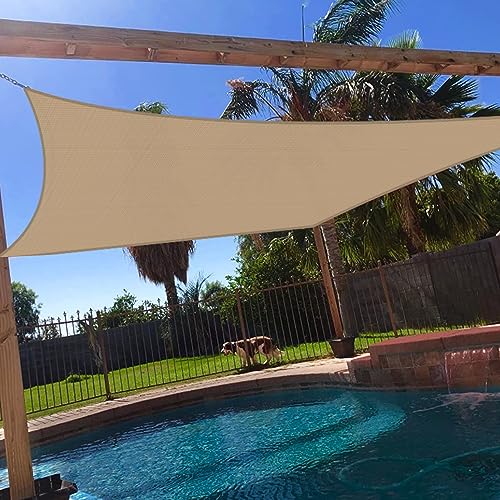
- Best shade alternative overall — shade sail, not a pergola: Windscreen4less 10′ x 12′ Sun Shade Sail Rectangle (Sand) — Check on Amazon
- Best heavy-duty shade sail — shade alternative, not a pergola: ColourTree 8′ x 12′ Beige Rectangle Shade Sail, Pro Ring — Check on Amazon
- Best drape-over shade cloth — accessory, not a pergola: Amagenix 90% Sun Shade Cloth with Grommets, 8′ x 10′ — Check on Amazon
- Best replacement canopy — accessory, not a pergola: Iheqard Pergola Canopy Replacement Shade Cover for 10×10 Frames — Check on Amazon
- Best retractable-canopy replacement — accessory, not a pergola: Garden Winds Replacement Canopy for the Crosby St Retractable 10′ x 10′ Pergola — Check on Amazon
- Garden arbor for a pergola-like entry — structure, not a pergola: described in prose below, because we could not pin a verified listing for it during this check.
Read the full guide ↓
Disclosure: As an Amazon Associate, dailyhomedecorating.com earns from qualifying purchases. Links to Amazon on this page are affiliate links; they cost you nothing extra. Listing details such as price and availability change often, so check the current Amazon listing before you buy.
If you came here searching for the best pergola for small patios under $150, this guide starts with the answer most roundups are afraid to print: that product, as a complete kit, effectively does not exist. A pergola is four posts, a frame of beams and rafters, and some form of roof or canopy, and the metal, fabric, fasteners and freight for even a small 8-by-8 or 10-by-10 kit cost more to make and ship than this entire budget. When we cross-checked the current catalogue through Amazon’s own product data for this guide, the cheapest complete small pergola kits we could verify — thin steel frames with fabric canopies from budget outdoor brands — were hovering right around this tier’s ceiling, sometimes a little under it on a given day, sometimes over it the next week, and always with compromises we describe honestly below. Everything comfortably and durably under the line was something else: a shade sail, a shade cloth, a replacement canopy for a frame you already own, or a garden arbor. So this guide does two useful things instead of one dishonest one. First, it reviews the shade alternatives that genuinely solve the small-patio problem — too much sun on a small slab of concrete — for well within budget. Second, it tells you exactly where the real pergola kits start, so you can decide whether to stretch to the next tier, which is where our companion guide to the Best Pergola For Small Patios Under $300 takes over.
Why does the small-patio part matter so much here? Because a small patio punishes the wrong shade purchase faster than a big backyard does. On a 10-by-12 slab, a pergola’s four posts are not a detail; they are four obstacles in the only outdoor room you have. A shade sail, by contrast, anchors to the house wall, a fence, or two slim poles at the slab’s edge and gives you shade with zero floor footprint. A replacement canopy only makes sense if a frame already stands on your patio. An arbor gives you the vertical, vine-covered look of a pergola in a footprint about two feet deep. Each of the six picks below is judged through that small-space lens: how much floor it steals, how it anchors when you cannot drill into a rental’s brickwork, how it behaves in wind funnelled between buildings, and how easily it comes down when the season — or the lease — ends. If your patio is bigger than the “small” label suggests, the wider field in our guide to the Best Pergola Under $300 is worth a look before you decide.
In this guide
Quick Picks
In a hurry? This table matches each option to the small-patio situation it actually solves. Read the labels carefully: only the benchmark at the bottom of this guide is a complete pergola, and it is prose-only for the reasons explained above.
| Buyer type | Pick | What it really is | Link |
|---|---|---|---|
| Best shade alternative overall | Windscreen4less 10′ x 12′ Sun Shade Sail (Sand) | Shade alternative — not a pergola: HDPE sail that anchors to walls, fences or poles | Check on Amazon |
| Best heavy-duty sail | ColourTree 8′ x 12′ Beige Rectangle Shade Sail, Pro Ring | Shade alternative — not a pergola: reinforced-ring sail in a patio-friendly size | Check on Amazon |
| Best for draping an existing frame or railing | Amagenix 90% Sun Shade Cloth with Grommets, 8′ x 10′ | Accessory — not a pergola: grommeted shade cloth for frames, rails and fences | Check on Amazon |
| Best if your 10×10 frame’s canopy tore | Iheqard Pergola Canopy Replacement Shade Cover | Accessory — not a pergola: replacement cover sized for a common 10×10 frame | Check on Amazon |
| Best retractable-canopy revival | Garden Winds Replacement Canopy, Crosby St Retractable 10′ x 10′ | Accessory — not a pergola: heavy replacement fabric for one specific retractable frame | Check on Amazon |
| Best pergola look in two feet of depth | Flat-top wooden or metal garden arbor (various makers) | Structure — not a pergola: a walk-through arch for vines and an entry moment | Prose-only in this guide |
How These Picks Were Chosen
We started with a rule that shaped everything else: no pick could be called a pergola unless it actually is one. Every candidate was checked against live Amazon product data through the retailer’s own catalogue tools during this guide’s research, and each linked pick below matched a real, current listing for exactly the product named. Products whose listings we could not verify — including the garden arbor in this roundup — were demoted to prose-only rather than linked on a guess. That discipline matters most at this price tier, where marketplace listings for “pergola” routinely turn out to be a single replacement canopy, a bracket kit, or a shade cloth wearing a pergola’s name in the title.
Within the honest categories, we ranked by small-patio fitness. First, footprint: options that shade without consuming floor space scored highest, because on a small patio the scarcest resource is not money, it is square feet. Second, anchoring practicality: a pick had to offer a workable mounting story for the surfaces small patios actually have — house siding, a fence line, railing posts, or weighted poles — and we flag where drilling is unavoidable. Third, wind behaviour: fabric shade is a sail in the literal sense, and small patios between buildings often funnel gusts, so we favoured breathable weaves and designs that can be unclipped quickly before a storm. Fourth, fabric quality signals that can be checked on a listing: material type, stated UV block, edge reinforcement and hardware material. Fifth, reversibility: renters and HOA-governed owners need shade that comes down without a trace, so anything requiring permanent footings lost ground. Finally, we checked the category against public recall notices; the widely reported gazebo recalls in recent years involved hardtop pavilion models from a warehouse-club brand, none of which resemble anything in this guide, and no pick here is a recalled product.
One more methodological note, because it explains this guide’s unusual shape. We did verify complete pergola kits whose listings sit near this tier — a basic 10-by-10 steel-frame pergola with a fabric canopy from Outsunny is the usual benchmark, and retractable 9-by-12 aluminium kits from VINGLI also appear near the line. Their prices move too much, and their frames are too lightly built, for us to present them as safely “under $150” recommendations; they are discussed as prose-only benchmarks in the reality-check section below, and they get full linked reviews in the under-$300 guides where they belong. If you already own a frame, the replacement-canopy picks here will save you real money. If you own nothing, the shade sails are where this budget does its best work — and if what you truly want is the structure itself, pair this guide with our look at the Best Gazebo For Small Patios Under $300 to see what the next tier buys in enclosed designs.
The Best Pergola for Small Patios Under $150: The Honest Alternatives
Each review below states plainly what the product is, who it suits on a small patio, where it genuinely shines, the limitation we would want to know before buying, and a straight choose-or-skip verdict. Prices are never printed in this guide because they change constantly; use the Amazon links to check the current figure, which for every linked pick sat comfortably within this tier when we verified the listings.
Windscreen4less 10′ x 12′ Sun Shade Sail Rectangle (Sand) — shade alternative, not a pergola
Who it suits: Small-patio owners whose slab sits next to at least two anchorable surfaces — a house wall and a fence, two walls in a corner patio, or one wall plus a pair of poles — and who want the largest possible pool of shade for the smallest possible spend. If your patio is a simple rectangle of concrete outside a sliding door, this is the default answer at this budget.
What you are buying is a rectangle of high-density polyethylene knitted fabric, finished with reinforced edges and stainless D-rings at the corners, sized 10 by 12 feet. HDPE shade cloth is the right material for this job for a reason that surprises people: it is breathable. Hot air rises through the knit instead of ballooning the fabric, and rain mostly passes or runs off a properly tensioned, sloped installation rather than pooling. The listing positions it for backyard, porch, pergola, deck and garden use, and on a small patio its party trick is geometry — mount one long edge to the house just above the sliding door, angle the far edge down toward the fence, and you have created a shaded room whose floor is entirely yours. No posts inside the space, no frame to walk around, nothing for a chair leg to catch.
Pros: The coverage-to-cost ratio is unbeatable in this guide; nothing else shades 120 square feet for a fraction of the tier. The breathable knit handles gusts far better than a solid canopy of the same size, which matters in the wind tunnels between houses and fences. Installation is reversible — unhook four corners and the patio is bare again, which keeps landlords and HOAs calm. The sand colour throws a warm, neutral light that flatters small spaces instead of darkening them. It also packs down to almost nothing for winter storage, a real consideration when your storage is one closet.
Honest limitation: A shade sail is only as good as its anchors, and anchors are the part the box does not fully solve. You will likely need a mounting kit of turnbuckles, pad eyes and snap hooks, and at least two points that can take real tension — a sail pulled drum-tight (which is how it must be installed to avoid flapping and pooling) loads its corners hard. On a rental where you cannot drill into brick or siding, you are into pole-and-planter workarounds that add cost and fiddling. It also provides no rain shelter worth the name and no structure to hang lights or curtains from without extra hardware.
Choose it if you have two solid anchor lines and want maximum shade per dollar. Skip it if your patio has nothing to anchor to and no permission to add poles — look at the arbor or save toward a freestanding kit instead. Check on Amazon
ColourTree 8′ x 12′ Beige Rectangle Shade Sail, Pro Ring — shade alternative, not a pergola
Who it suits: Owners of genuinely small patios — townhouse slabs, condo terraces, narrow side-yard patios — where a 10-by-12 sail would overhang the fence line or shade the neighbour’s airspace, and buyers who expect to leave the sail up all season and want reinforced hardware at the corners.
ColourTree’s Pro Ring line is the step up within the shade-sail category. The differentiator is in the name: instead of a simple stitched D-ring at each corner, the Pro Ring design uses a reinforced ring assembly intended to spread corner loads, which is exactly where cheap sails fail — the fabric rarely tears in the middle; it tears out at a corner in the first serious gust. The fabric is HDPE with a high stated UV block, in an 8-by-12 rectangle that maps neatly onto the classic small patio: the 8-foot dimension spans from house wall to fence on many townhouse slabs, and the 12-foot length covers a bistro set plus a lounger, or a four-seat dining set with room to pull chairs back. The beige tone is light and neutral, and the brand offers a wide range of sizes, so matching a replacement or a second sail later is realistic.
Pros: The smaller footprint is a feature, not a compromise: less fabric means less wind load, less sag, and an easier one-person install. Reinforced corners address the category’s number-one failure point. The breathable knit gives dappled, ventilated shade rather than the hot still air under a solid roof, which on a small patio hemmed in by walls is the difference between pleasant and stuffy. Like all sails, it stores in a drawer over winter. ColourTree is an established shade-fabric brand rather than a disposable marketplace label, which matters when you want the same size again in three years.
Honest limitation: The premium over no-name sails buys hardware and fabric consistency, not magic: you still need proper tensioning hardware and strong anchor points, still get no rain protection, and still must drop the sail before serious storms. The 8-foot span also means the shade pool is modest — measure your furniture layout before ordering, because a sail shades a smaller area than its dimensions suggest once the sun is at an angle (we walk through the geometry in the measuring section below).
Choose it if your patio is truly small and you want the sail category done properly the first time. Skip it if you need to shade a wide seating area — the larger Windscreen4less above covers more ground for less. Check on Amazon
Amagenix 90% Sun Shade Cloth with Grommets, 8′ x 10′ (Mocha) — accessory, not a pergola
Who it suits: Patio owners who already have something to drape: an existing pergola frame whose original canopy disintegrated, a sturdy railing, a chain-link or slat fence that bakes in afternoon sun, or a simple DIY frame of poles. Also ideal for renters, because grommeted cloth plus zip ties is the most reversible shade installation in existence.
This is the humblest product in the guide and, for the right patio, the smartest. It is a knitted shade cloth rated by the maker at a high sunblock percentage, edged and punched with grommets at intervals, sized 8 by 10 feet in a mocha tone. Where a shade sail is a tensioned structure, shade cloth is a textile: you tie it, clip it, zip-tie it or bungee it across whatever is already standing. Draped over a tired pergola frame, it restores shade in an afternoon for a small fraction of a fitted replacement canopy’s cost, and because it is a loose knit rather than a coated fabric, it does not hold rain pockets or turn into a parachute in moderate wind. On a small patio it has a second talent: hung vertically along the sun-side railing or fence, it works as a privacy-and-glare screen that cools the slab’s edge where the low western sun sneaks under any overhead shade.
Pros: The lowest-cost route to real shade in this guide, full stop. Grommets make it genuinely tool-light to install and remove, and it tolerates being cut, folded and re-hung as your layout changes. The knit breathes, sheds wind and never pools water. It is also the easiest pick to store — roll it up and it lives in a tote. For owners of sun-rotted pergola frames, it buys another season or three from a structure that would otherwise be scrapped.
Honest limitation: It looks like what it is: a utility cloth, not a designed canopy. Edges can curl, the drape is informal, and on a styled patio it reads “clever fix” rather than “finished structure.” It also provides shade only where you have something to attach it to — it creates no structure of its own — and the lighter knit offers slightly softer shade than a tensioned sail of similar rating. If presentation matters as much as temperature, this is a stopgap, not the destination.
Choose it if you have a frame, fence or railing and a hot patio today. Skip it if you are starting from a bare slab with nothing to tie to — a sail or the arbor below fits better. Check on Amazon
Iheqard Pergola Canopy Replacement Shade Cover for 10×10 Frames — accessory, not a pergola
Who it suits: Anyone whose patio already hosts a 10-by-10 freestanding pergola frame — specifically the widely sold Allen + Roth freestanding model named in the listing — whose fabric top has faded, torn or gone mouldy, which is the single most common pergola problem on small patios after two or three summers.
Understand what this is and it becomes one of the best-value picks in the guide: it is the fabric roof only, a long replacement shade cover woven to span that frame’s bar layout, restoring the structure you already own for a fraction of a new kit. The listing is explicit that it fits the named 10-by-10 freestanding frame (model number given on the listing), and the cover is a waterproof-style shade roof rather than a tensioned sail. On a small patio this matters beyond money: replacing a canopy means no new posts, no new footprint, no re-arguing the layout — the furniture plan you already refined stays exactly as it is, and the structure goes from eyesore to backdrop in the time it takes to thread the new cover over the bars.
Pros: It resurrects a whole pergola for accessory money, which is the only way anything pergola-shaped legitimately happens at this tier. Fit is its advantage over generic shade cloth: a cover made for the frame’s dimensions and bar spacing sits flatter, flaps less and looks finished. It also extends the honest life of the steel frame, which typically outlasts two or three fabrics. Installation needs no tools beyond a step stool and patience.
Honest limitation: Compatibility is narrow and unforgiving. This cover fits the named frame family; a different brand’s 10-by-10 can differ in bar count, spacing and corner geometry enough to make the cover useless, so measure your frame and compare against the listing’s stated canopy dimensions before ordering — the listing gives the cover’s actual measurements, and they, not the “10×10” label, are what must match. And of course, if you do not already own the frame, this pick is a roof looking for a house: skip down to the sails.
Choose it if your frame matches the listing’s stated model and dimensions. Skip it if your frame is any other layout — the Garden Winds pick below covers a different popular frame, and generic cloth above covers everything else. Check on Amazon
Garden Winds Replacement Canopy for the Crosby St Retractable 10′ x 10′ Pergola — accessory, not a pergola
Who it suits: Owners of the specific retractable pergola named in the listing — the At Home Crosby St 10-by-10 — whose sliding canopy has worn out. Retractable pergolas are disproportionately common on small patios because the sliding roof suits changeable weather and tight spaces, and their canopies are wear items by design.
Garden Winds is the specialist name in this niche: the company exists to make replacement canopies for specific big-box and marketplace frames, and this listing is built around one frame, in the maker’s heavier Riplock fabric line, in slate gray. That specificity is the point. A retractable canopy is not a flat sheet; it is a series of fabric sections that hang between the frame’s sliding bars, and the sag, spacing and attachment of those sections determine whether the roof glides or jams. A made-for-the-frame replacement restores the smooth slide and the tailored, scalloped drape that made the original structure look good on a small patio, where a pergola is always close enough to inspect. The heavier fabric positioning also addresses the original canopy’s usual cause of death — sun-rotted, thinning polyester — with a sturdier weave.
Pros: Exact-fit restoration for a popular small-patio structure, from the category’s specialist maker, in an upgraded fabric tier. It returns a several-hundred-dollar structure to full function for accessory money, keeps the retractable feature that generic cloth cannot replicate, and the slate gray colourway suits the grey-and-charcoal palette of most modern patio furniture. Garden Winds’ model-specific listings also make verification easy: if your frame’s name matches, the fit question is settled.
Honest limitation: The same specificity is the risk — this canopy fits the named Crosby St frame and effectively nothing else, and “10 x 10 retractable pergola” describes dozens of incompatible frames from other sellers. Confirm your frame’s brand and model from its manual or frame labels, not from memory. It is also the priciest accessory in this guide, which is fair for what it is, but it means a wrong-frame order stings more. And like the Iheqard, it is useless without the frame.
Choose it if you own the named frame and its canopy is the only worn part. Skip it if your retractable came from any other maker — measure for the generic options instead. Check on Amazon
Garden Arbor (flat-top wooden or metal) — structure, not a pergola
Who it suits: Small-patio owners who want the pergola feeling — vertical posts, an overhead lattice, something for vines to climb — more than they want a shaded room, and whose patio has a natural entry point: the gate, the step down from the deck, the gap between planters where people walk through.
An arbor is a pergola’s compact ancestor: two side panels joined by a flat or arched top, typically five to six feet wide and under two feet deep, standing about seven feet tall. Flat-top wooden versions from makers such as Giantex and Yaheetech, and steel arch versions from brands like VINGLI and Outsunny, are the standard shapes, and they are the one true structure in this guide that can live at this tier. On a small patio an arbor does three jobs a sail cannot. It creates an entrance — a threshold that makes a plain slab feel like a garden room. It grows upward, carrying jasmine, clematis or a grape up and over without touching your floor plan. And it gives string lights, a hanging planter or a curtain panel a legitimate home. Placed at the patio’s sun-side edge with a light vine canopy, it even throws a band of real shade across a chair or two at the right hour.
Pros: A genuine, freestanding structure with a two-foot-deep footprint — the only pergola-adjacent architecture that fits a small patio without consuming it. Assembly is a one-person afternoon, the pieces are light, and it moves when you do. Wooden versions can be stained to match decking; metal versions shrug off weather. It also sidesteps most permit and HOA anxiety, since it is garden furniture, not a structure.
Honest limitation: We are deliberately not linking a specific arbor listing here: during this guide’s catalogue cross-check, the arbor category could not be pinned to a single verified listing before the retailer’s lookup limit paused our checks, and we do not attach purchase links we have not verified — search Amazon for the maker names above and check the listing details carefully before buying. Substantively, an arbor is not shade for a seating area; it shades a doorway. Vines take a season or two to cover the top, and wooden versions need periodic re-staining to avoid greying and checking. If your problem is a roasting dining set, buy a sail.
Choose it if you want structure, greenery and an entry moment more than a shaded room. Skip it if your primary need is cooling a seating area — it is the garnish, not the meal. (Prose-only pick — no link, by the verification rule explained in How These Picks Were Chosen.)
Comparison Table
| Pick | Category (honest label) | Coverage / size | Needs to work | Best for |
|---|---|---|---|---|
| Windscreen4less Shade Sail 10′ x 12′ | Shade alternative — not a pergola | 10 x 12 ft fabric | Two anchor lines + tensioning hardware | Maximum shade per dollar |
| ColourTree Shade Sail 8′ x 12′ Pro Ring | Shade alternative — not a pergola | 8 x 12 ft fabric | Two anchor lines + tensioning hardware | Truly small patios, all-season install |
| Amagenix Shade Cloth 8′ x 10′ | Accessory — not a pergola | 8 x 10 ft cloth | Existing frame, fence or railing | Cheapest fix; renters; tired frames |
| Iheqard Replacement Canopy | Accessory — not a pergola | Fits named 10×10 frame | The matching frame, already owned | Reviving a faded 10×10 pergola |
| Garden Winds Replacement Canopy | Accessory — not a pergola | Fits Crosby St 10′ x 10′ retractable | The matching frame, already owned | Restoring a retractable canopy |
| Garden arbor (prose-only) | Structure — not a pergola | ~5-6 ft wide, ~2 ft deep | Level ground; stakes or feet | Entry moment and climbing vines |
The Budget Reality Check: Where Real Pergola Kits Actually Start
Because this guide refuses to mislabel accessories, it owes you the other half of the truth: what a complete pergola costs when it is honestly a pergola. During our catalogue check, the cheapest complete small kits we could verify were basic steel-frame models with fabric canopies — the Outsunny 10-by-10 steel pergola is the recurring benchmark, a powder-coated steel frame with a weather-resistant fabric top and drainage holes — whose listings hover right around this tier’s boundary, dipping under it in promotions and floating back over it within weeks. Just above them sit the retractable aluminium kits, such as VINGLI’s 9-by-12, which add a sliding canopy and a sturdier frame. We list those kits as prose-only benchmarks here, without purchase links, because presenting a price-borderline kit as an “under $150” recommendation would be exactly the kind of claim this guide exists to avoid — and because their full reviews, with verified links, live in our under-$300 guides where their typical prices honestly belong.
What do those entry kits compromise, wherever you buy them? Frame steel is thin-walled, so posts flex and joints work loose unless every bolt is re-tightened seasonally. Canopies are light polyester that fade and thin within a few summers — which is why the replacement-canopy market above exists. Wind tolerance is modest: these are fair-weather structures that must be anchored and stripped of fabric before storms, and they carry no meaningful snow load. None of that makes them bad purchases at the next tier; it makes them fair-weather shade with a pergola’s silhouette, which is a perfectly reasonable thing to buy with open eyes. If that silhouette is what you want, the sensible move is to budget for the tier where the kits are honestly sold, and our guide to the Best Pergola Under $500 shows how much more structure the following tier adds again. If your need is shade this weekend on a small patio, the sails above will outperform a borderline kit on comfort per dollar every time.
How to Choose Shade for a Small Patio
Start with the sun, not the catalogue. Stand on your patio at the hours you actually use it — for most people, late afternoon — and note where the sun lands and where it enters: overhead, or raking in low from the west under any roof you could add? Overhead sun is a sail’s job. Low western sun is a vertical problem, solved by a shade cloth hung on the sun-side edge, a curtain panel, or planting. Buying overhead shade for a low-sun problem is the most common small-patio mistake, and no return is as annoying as a 12-foot sail.
Measure the shade pool, not the fabric. A sail shades its own dimensions only when the sun is directly overhead. Morning and afternoon, the shaded area slides sideways by roughly the height of the installation for every hour from noon. For a small patio, the practical rule is to mount the sail so its noon shadow covers your seating, biased toward the side the afternoon sun comes from, and to size up one step if your anchor lines allow it. Also respect the slope rule: a sail needs a deliberate height difference between corners — a foot or more across the span — so rain runs off instead of pooling into a fabric-breaking water bag.
Audit your anchors before you fall in love. Walk the patio and list what can take tension: house framing behind siding (with proper lag-into-stud mounting), brick or block walls with masonry anchors, fence posts (only if they are stout, set in concrete, and yours to use), or freestanding poles in weighted planters. Vinyl siding over foam, thin fence panels and railing balusters are not anchor points. If the honest audit says “nothing,” your options narrow to the arbor, a weighted-pole sail install, or saving toward a freestanding kit — which is precisely the fork this guide’s picks are organised around.
Decide your storm plan in advance. Every fabric pick here should come down, or be designed to be unclipped, before a serious storm; sails under tension in a gale can damage their anchor points, not just themselves. If your patio is a wind funnel and you know you will not actually climb up and unhook fabric at midnight, choose the shade cloth (which bleeds wind) over a big tensioned sail, and keep expectations calibrated: no product in this tier is a four-season structure.
Check the rules that apply to your slab. A tensioned sail screwed into a house wall can trip HOA rules about exterior attachments and, for renters, lease clauses about fixings — the picks here were chosen partly because most can be installed reversibly, but “reversible” still means asking first where asking is required. Freestanding structures under a certain size rarely need permits in most US jurisdictions, but setback and height rules vary, and a pergola bolted to the house is treated differently from one standing free. A two-minute check of your HOA covenants or municipal website beats a removal order.
Pergola vs Gazebo vs Shade Sail: A 60-Second Explainer
These words are used interchangeably in marketplace titles and mean different things. A pergola is an open frame of posts and beams, traditionally with an open lattice roof, today usually sold with a fabric or sliding canopy; it defines a space more than it seals one. A gazebo is a roofed structure — typically round or hexagonal in classic form, square in modern kits — with a more complete roof that sheds rain; our companion guide to the Best Gazebo Under $300 covers the square steel kind sold at these tiers. A shade sail is tensioned fabric with no frame at all. On a small patio the practical ranking is: sail for pure shade per dollar and zero footprint, pergola kit for a defined “room” and a place to hang lights and curtains, gazebo for the most weather-shedding roof. Knowing which you are actually shopping for is the cheapest upgrade in this entire guide.
Common Buying Mistakes
Buying a “pergola” that is only a canopy. Marketplace titles stuff the word pergola onto replacement covers, bracket kits and shade cloths. Read the listing’s own description for the words “cover only” or “frame not included” — or shop from this guide’s labels, which do that reading for you.
Assuming the tier buys a structure. At this budget, expecting four posts and a roof leads to the worst outcome: a flimsy, price-borderline kit bought in frustration. Decide first whether your problem is sun (fabric solves it cheaply) or architecture (save for the next tier).
Mounting a sail flat and level. A level sail pools rain, sags, and tears its corners. Build in slope, tension it hard, and re-tension after the first week as the fabric settles.
Anchoring to things that cannot hold. Fence panels, vinyl siding and gutters are not anchors. A tensioned sail in a gust pulls with surprising force; when in doubt, add a pole rather than trusting a weak fixing.
Forgetting the furniture plan. Shade that lands two feet left of the dining set is decoration. Map the furniture, then place the shade — and if the seating itself needs upgrading, our picks for the Best Adirondack Chair For Small Patios Under $300 pair well with a new sail’s footprint.
Leaving fabric up through storm season. Every pick here is a fair-weather product. The five minutes spent unclipping a sail before a storm is the cheapest insurance in outdoor living.
Final Recommendation
For most small patios at this budget, buy the Windscreen4less 10-by-12 shade sail, add a proper tensioning hardware kit, and enjoy the largest, coolest, most reversible shade this tier can honestly deliver. If your patio is narrower or you want reinforced corners for an all-season installation, step to the ColourTree 8-by-12 Pro Ring instead. If you already own a pergola frame, do not buy a new structure at all: match your frame to the Iheqard or Garden Winds replacement canopy and restore what you have. Choose the Amagenix shade cloth when a fence, railing or tired frame gives you something to drape, and the arbor when what you really crave is the pergola look at a doorway. And if your heart is set on a complete kit, treat this guide as the honest signpost it is meant to be: the kits begin at the next tier, and they are reviewed properly there.
Frequently Asked Questions
Can you actually buy a pergola for under $150?
Not a complete, verifiable one that we could stand behind. The cheapest complete small kits we verified during research hover right around this tier’s ceiling and move across it with promotions, so this guide labels them prose-only benchmarks and reviews them in the under-$300 guides. Everything solidly within budget is a shade alternative or an accessory — which, for the actual problem of a hot small patio, often works better anyway.
Is a shade sail as good as a pergola on a small patio?
For shade, frequently better: it covers the seating without consuming floor space with posts, breathes in wind, and removes in minutes. A pergola wins on looks, on defining a room, and on carrying lights, curtains and heaters. Choose by whether your problem is temperature or architecture.
How do I anchor a shade sail without drilling into my house?
Use poles set in heavy, water- or sand-filled planters or umbrella-style bases at the slab’s corners, or anchor to a sturdy fence line if it is yours and solidly built. Keep spans shorter and tension moderate with pole installs, and drop the sail before storms, since freestanding anchors tolerate less load than wall fixings.
Will a shade sail keep rain off my patio?
No. Knitted HDPE sails pass much of the rain through and shed the rest only when sloped; they are sun products. Even coated replacement canopies only handle light rain. For real rain shelter you need a roofed gazebo-style structure from a higher tier.
Do I need a permit or HOA approval for these options?
Sails, cloths and arbors are usually treated as temporary garden items and rarely need permits, but HOAs may regulate anything attached to the house or visible from the street, and renters should check lease terms before drilling. Freestanding kits attached to the house can trigger different rules than free-standing ones. Check your local rules before installing anything fixed.
How long will a budget shade sail or canopy last?
Expect a few seasons from HDPE sail fabric if it is tensioned correctly and stored dry over winter; coated polyester canopies typically fade and thin faster in strong sun, which is why replacements are a category of their own. UV exposure, storm habits and storage care matter more than brand at this tier.