Where to buy
Check the latest price, availability and delivery on Amazon. Orders are placed on Amazon. We may earn a commission from qualifying purchases.
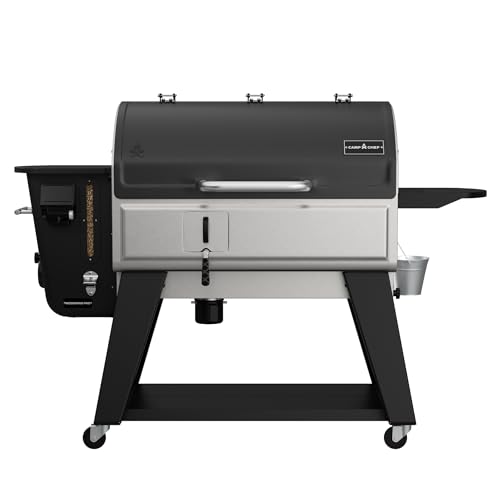
- Best overall for entertaining: Camp Chef Woodwind Pro 36 Pellet Grill — Check on Amazon
- recteq Patio Legend 600 Pellet Smoker Grill — Check on Amazon
- Traeger Woodridge Pro Plus Wood Pellet Grill & Smoker — Check on Amazon
- Pit Boss 850 Navigator Series Wood Pellet Grill & Smoker — Check on Amazon
- Traeger Ironwood 885 Wood Pellet Grill & Smoker — Check on Amazon
See 1 more Amazon option
- Weber Smoque XL 34-Inch Pellet Smoker — Check on Amazon
Read the full guide ↓
Disclosure: As an Amazon Associate, dailyhomedecorating.com earns from qualifying purchases. Links to Amazon on this page are affiliate links; they cost you nothing extra. Listing details such as price and availability change often, so check the current Amazon listing before you buy.
The best pellet grill for outdoor entertaining under $1500 is not simply the biggest grill in the tier, because entertaining is a workflow problem disguised as a cooking problem. A party makes three demands that a Tuesday dinner never does. It wants volume — protein for twelve or twenty people, arriving in waves rather than in one sitting. It wants timing — the brisket that must be ready when guests are, not when the brisket feels like it, plus burgers and sausages cooked to order while the host is somehow also holding a drink and a conversation. And it wants the host present, which means the grill has to run itself for long stretches: stable temperatures, a hopper that does not need babysitting, probes and an app that warn before something is wrong. The six grills in this guide are the ones in this budget that handle that workflow — big honest capacity where it counts, a sear solution for cook-to-order food, and the automation that lets you host instead of pit-tend.
Capacity math is where entertaining shoppers should start, because headline square inches mislead in both directions. As a planning rule, a pound of raw brisket or pork shoulder per guest shrinks to roughly half that on the plate, and a full packer brisket needs a main rack at least 30 inches wide to lie flat without curling up the sides. Ribs eat area fastest of all — a rack of spare ribs occupies the space of a small pizza — so a rib party for twelve is really a question of rack levels, not total area. Burgers and sausages, the cook-to-order staples, are about throughput: how many fit on the hot zone at once and how fast the grill recovers heat when the lid opens for the tenth time. The picks below were judged on those party realities — main-rack width, rack levels, hopper endurance, heat recovery and sear options — rather than on the biggest number printed on the box. Readers setting up the whole gathering space will also want Best Patio Dining Set Under $1500 and Best Outdoor Sectional Under $1500; this guide covers the cooker at the center of it.
Budget framing matters here too. The $1500 ceiling should cover the grill plus the party kit around it: a second set of probes if the grill ships with too few, a large cooler for raw meat staging and drink duty (see Best Outdoor Cooler Under $300), a folding staging table, trays, tongs that are long enough for a hot wide grate, and a shade plan for the cook — a grill station in full afternoon sun is a host-fatigue machine, and Best Patio Umbrella Under $300 is the cheapest comfort upgrade in outdoor cooking. Several picks below deliberately leave headroom for exactly that kit. At the top of the list, the Camp Chef Woodwind Pro 36 earns first place for entertaining specifically: the widest rack here, a smoke box for real wood flavor, and an accessory system that adds a propane sear burner beside the pellet chamber — the closest thing in this budget to a two-station outdoor kitchen. The rest of the six each win a different party style, from set-and-forget smoking to sear-to-order grilling.
In this guide
Quick Picks: the best pellet grill for outdoor entertaining under $1500 at a glance
| Party style | Pick | Why it stands out | Link |
|---|---|---|---|
| Best overall for entertaining | Camp Chef Woodwind Pro 36 | 1,236 sq in, Smoke Box flavor, and Sidekick add-ons for a true sear station | Check on Amazon |
| Best for sear-to-order | recteq Patio Legend 600 | Runs past 700°F — burgers, steaks and sausages with real crust, cooked as guests ask | Check on Amazon |
| Best host-friendly setup | Traeger Woodridge Pro Plus | 970 sq in, storage cabinet, folding shelf and one-keg grease and ash cleanup after the party | Check on Amazon |
| Best value crowd grill | Pit Boss 850 Navigator | 932 sq in listed space, a 30 lb hopper and a flame broiler, at a mid-tier price | Check on Amazon |
| Best set-and-forget | Traeger Ironwood 885 | WiFIRE, a pellet sensor and Super Smoke — the grill that needs the host least | Check on Amazon |
| Best for smoke-ahead prep | Weber Smoque XL | 918 sq in over two levels with SmokeBoost — batch-cook the day before, reheat gently | Check on Amazon |
How the picks were chosen
Entertaining criteria reorder the usual priorities. First came throughput in its two forms: low-and-slow volume (main-rack width, rack levels, lid height) and high-heat turnaround (top temperature, direct-flame or accessory sear paths, heat recovery after lid openings). Second came endurance: hopper capacity and pellet efficiency across a ten-to-fourteen-hour party day, because the classic entertaining failure is an empty hopper discovered at hour nine. Third came host freedom — WiFi monitoring, enough probe ports to watch two meats at once, pellet sensors, and controls a helpful guest cannot easily ruin. Fourth came the morning after: grease capacity and cleanup systems sized for a grill that just cooked for twenty, because a party grill that takes an hour to clean gets cleaned badly, and badly cleaned grills are how grease fires start at the next party.
Specifications were verified to the site standard — manufacturer figures cross-checked against current Amazon listings confirmed through this site’s Amazon Creators API where possible, the Camp Chef’s listing verified on the web after its API query hit a rate limit, and every model screened against US CPSC recall records, with no recalls found for any pick; the sources file kept with this article records each check. Prices are not printed, per site policy, so judge the current listings against the ceiling when you shop. One famous name was excluded on currency rather than quality: Weber’s SmokeFire line, once a default premium pick, has been discontinued and replaced by the Searwood and Smoque lines, so the Smoque XL represents Weber here; if you specifically want Weber’s high-heat pellet searing, the Searwood XL 600 is the current model to research, though we could not verify an Amazon listing for it to this site’s standard and it therefore appears in prose only.
Finally, we weighted real party menus over spec-sheet theater. A grill earns its place below by cooking an actual event well: a brisket started the night before, ribs arriving at five, burgers seared to order at six, and a host who was at the party rather than at the pit. The sibling guide Best Pellet Grill For Backyards Under $1500 ranks much of the same hardware for everyday yard life; this one is specifically about the days the yard fills up.
One more filter deserves naming, because it eliminated several plausible candidates: party reliability under neglect. Entertaining grills get run hard, cleaned late and stored fast, so we favored designs whose grease systems forgive a busy weekend (enclosed kegs and buckets with real capacity), whose controllers recover gracefully from the lid being opened thirty times an hour, and whose manufacturers stock the wear parts — igniters, probes, gaskets — that party season consumes. A grill that is brilliant in a reviewer’s test week and fragile in its second summer of birthdays is not an entertaining grill, whatever its first-month scores say. Every pick below is a model with enough time in owners’ yards for its failure modes to be known, documented and — just as important — fixable with parts a phone call away.
The six best entertaining pellet grills, reviewed
Camp Chef Woodwind Pro 36 — best overall for entertaining
Who it suits: The host who cooks the whole event on one station — smoked mains, seared sides, sauces kept warm — and whose guest list regularly reaches the teens.
Everything about the Woodwind Pro 36 maps onto a party. The chamber offers 1,236 sq in of total rack space with a 663 sq in lower rack wide enough for two packer briskets side by side, and a 573 sq in upper rack for the rib wave. The Smoke Box burns wood chunks or lump charcoal above the firepot, so the brisket tastes like it came off a stick burner — the flavor upgrade guests actually notice. Four probe ports mean two meats can be monitored without opening the lid, and the 22 lb hopper covers the long first act of the day. Then comes the entertaining masterstroke: the Sidekick mount. Add Camp Chef’s propane sear burner or flat top beside the chamber and the station gains a true second station — searing burgers to order, crisping bacon for breakfast crowds, keeping a sauce at a bare simmer — while the pellet side holds finished food warm. No other pick here builds a two-station kitchen out of one footprint.
Pros:
- Biggest party capacity here, with a main rack that fits two briskets flat
- Smoke Box delivers the deepest smoke flavor guests will taste
- Sidekick system adds a genuine sear/griddle station (accessory)
- Four probes and WiFi control suit multi-meat event cooking
Honest limitation: The sear station is an extra purchase, the assembled footprint with a Sidekick is the widest here, and the pellet chamber itself still tops out at 500°F. Budget and measure for the system, not just the grill.
Choose it if your parties are productions and you want one station to run them. Skip it if your gatherings are six people and a weeknight grill would honestly do — several picks below are simpler. Check on Amazon
recteq Patio Legend 600 — best for sear-to-order parties
Who it suits: The host whose parties run on burgers, steaks, sausages and skewers cooked when guests ask — the grill-party host, not the brisket hermit.
The Patio Legend 600 is the high-heat outlier of this guide: a WiFi PID pellet grill with a temperature range from 180°F to past 700°F, in recteq’s stainless-heavy build. For entertaining, that top end is transformative. The classic pellet-party compromise — smoke the mains early, then apologize for pale burgers — disappears: the same machine that held ribs at 225°F all afternoon can be ripping hot for steak night, smash burgers or pizza for a crowd, with the crust that only real heat makes. Its 600-class grate is mid-size rather than huge, but throughput at high heat is about recovery and crust, not raw area, and the recteq controller’s tight temperature holding keeps the line moving. recteq’s US support is the other party-relevant feature: when something fails on a Friday before a Saturday event, a reachable human is worth more than a spec.
Pros:
- Past-700°F heat: true searing and pizza for a crowd from a pellet grill
- Tight PID control at both smoking and searing temperatures
- Stainless-heavy build shrugs off heavy party use
- Strong US-based support if a party-day problem strikes
Honest limitation: The grate is the smallest here, so low-and-slow volume for a big crowd means batching or a second cooker, and there is no smoke-enhancement system beyond the pellet fire itself.
Choose it if your parties are grill parties. Skip it if your signature event is two briskets and six racks of ribs — the Woodwind Pro or Smoque XL will swallow that menu whole. Check on Amazon
Traeger Woodridge Pro Plus — best host-friendly setup
Who it suits: The organized host: someone who preps the day before, wants the station tidy in the photos, and wants the post-party cleanup to take minutes, not an hour on hands and knees.
The Woodridge Pro Plus builds on the Woodridge Pro’s 970 sq in, WiFIRE control and Super Smoke mode with the two features a host feels most: a folding side shelf that becomes a staging surface when the trays start moving, and an enclosed storage cabinet under the grill that swallows pellets, tools and trays out of sight. The platform’s EZ-Clean design routes grease and ash into a single enclosed keg — after a twenty-person cook, cleanup is lifting out one container instead of scraping a bucket and excavating a firepot, which is exactly the kind of friction that decides whether hosting feels fun. A pellet sensor watches the hopper so the grill, not the host, notices when fuel runs low during the long first cook. It is the most domesticated big grill here: full-size capacity that behaves like good kitchen equipment.
Pros:
- 970 sq in with a cabinet and folding shelf — a self-contained party station
- One-keg grease and ash cleanup is the fastest reset here
- Pellet sensor and WiFIRE keep the long cook supervised by the grill
- Super Smoke mode for proper low-and-slow flavor
Honest limitation: The 500°F ceiling means cook-to-order searing is skillet-or-side-burner work, and as the newest platform here it has the shortest accessory track record.
Choose it if you host often and value a tidy, low-friction station. Skip it if searing for a crowd is the main event — that is the recteq’s party. Check on Amazon
Pit Boss 850 Navigator — best value crowd grill
Who it suits: The big-family, big-gathering buyer who needs party capacity on a real budget — the grill for the annual reunion, the team’s end-of-season cookout and every birthday between.
The Navigator’s party math is compelling: a listed 932 sq in of cook space, the largest hopper in this guide at 30 lb — load it Friday night and stop thinking about fuel until Sunday — WiFi and Bluetooth control, and Pit Boss’s flame broiler, a sliding plate that opens direct flame over the firepot for finishing and searing without a second appliance. That broiler is the value pick’s party trick: sausages and burgers get genuine flame-kissed edges, and smoked meats can take a final char before serving. The trade-offs are the familiar Pit Boss ones — plainer finish, a controller that swings a little wider than the premium PID systems — but at a party, where the food is sauced, sliced and served in waves, those refinements matter less than space, fuel and flame, all of which this grill has in surplus.
Pros:
- 30 lb hopper: the longest party endurance in this guide
- Flame broiler gives direct-flame finishing on a budget
- 932 sq in of listed space at a mid-tier price
- WiFi and Bluetooth monitoring included
Honest limitation: Temperature control is good rather than great, the build finish trails the premium picks, and the grill is wide — give it a proper pad and clearance, not a corner.
Choose it if headcount per dollar is your metric. Skip it if you will notice controller swings on precision cooks — the Traegers above are steadier. Check on Amazon
Traeger Ironwood 885 — best set-and-forget for hosts
Who it suits: The host who refuses to spend their own party at the pit. If your ideal event has you in the conversation while the grill quietly produces the food, this is your pick.
The Ironwood 885’s entertaining case is automation with depth: 885 sq in over two tiers for a brisket-plus-ribs load, a 20 lb hopper with a pellet sensor that pushes a warning to your phone before fuel becomes a crisis, WiFIRE control for adjusting the cook from the kitchen or the far end of the yard, and Super Smoke mode laying down extra smoke during the unattended hours when it matters most. The D2 drive system holds temperature with the steadiness that lets a host set a pork shoulder at breakfast and genuinely forget it until the probes say otherwise. Around those systems sits the category’s deepest support network — if a party-weekend part fails, a replacement is a local errand, not a shipping saga. For hosts, that ecosystem is a feature as real as any on the spec sheet.
Pros:
- Pellet sensor plus WiFIRE: the least host attention required here
- 885 sq in two-tier space covers the standard party menu in one load
- Super Smoke deepens flavor during hands-off hours
- Best parts and accessory availability in the category
Honest limitation: The 500°F ceiling makes it a smoke-and-hold machine rather than a sear station, and it sits near the top of the budget, leaving less for the rest of the party kit.
Choose it if being a guest at your own party is the goal. Skip it if you enjoy running the pit — or need the sear the recteq provides. Check on Amazon
Weber Smoque XL — best for smoke-ahead party prep
Who it suits: The planner. The host who would rather smoke everything the day before, rest it properly and reheat gently while guests arrive, than run a live-fire marathon on the day.
The Smoque XL is a dedicated smoker, and batch cooking is its party language: 918 sq in over two levels (a 595 sq in primary grate plus the upper rack) swallows multiple shoulders or a festival of ribs at once, SmokeBoost mode holds the low temperature where smoke absorption peaks during the critical first hours, and the SmoqueVent system circulates that smoke evenly instead of channeling it past the food. The side hopper loads a standard 20 lb bag in one pour — party-scale fueling without the scoop-and-spill — and the Rapid React PID snaps back to temperature after the lid openings that big loading sessions require. On party day it moonlights as the holding and reheating oven: set low, it brings yesterday’s brisket back to serving temperature gently while the grill (or the recteq-owning neighbor) handles the live cooking. Weber’s support network completes a very adult package.
Pros:
- Two-level 918 sq in built for batch smoking
- SmokeBoost and smoke-circulation design for deep, even flavor
- Side hopper takes a full standard bag; fast temperature recovery
- Doubles as a gentle holding/reheating oven on the day
Honest limitation: It is a smoker, full stop — a 500°F ceiling and no sear feature means a complete party station pairs it with something hot, and solo hosts who sear to order should look up-list.
Choose it if your parties are smoked feasts planned a day ahead. Skip it if your menu is cooked live to order. Check on Amazon
Comparison table
| Grill | Cooking area | Hopper | Top heat / sear path | Party strength | Watch out for |
|---|---|---|---|---|---|
| Camp Chef Woodwind Pro 36 | 1,236 sq in total | 22 lb | 500°F; Sidekick accessory | Two-station outdoor kitchen | Sear station costs extra |
| recteq Patio Legend 600 | 600 class | — | 700°F+ | Cook-to-order searing | Smallest grate here |
| Traeger Woodridge Pro Plus | 970 sq in | 24 lb class | 500°F | Staging shelf, cabinet, fast cleanup | No built-in sear solution |
| Pit Boss 850 Navigator | 932 sq in (listing) | 30 lb | 500°F + flame broiler | Endurance and value | Plainer control and finish |
| Traeger Ironwood 885 | 885 sq in | 20 lb | 500°F | Set-and-forget automation | Near the budget ceiling |
| Weber Smoque XL | 918 sq in total | 20 lb bag | 500°F | Batch smoking and holding | Smoker only; no sear |
How to choose for entertaining — and run the party safely
Program the menu like a timeline, not a list. Work backwards from serving time. Long smokes start the night before or at dawn; ribs go on mid-event-day; anything cooked to order happens in the last hour. Build slack into every step — barbecue is done when it is done, and a rest in a cooler buys you an hour of grace, while a late brisket buys you nothing but stress. The grills here divide by which timeline they serve: smokers (Smoque XL, Ironwood, Woodridge) own the long first act, the recteq owns the live last act, and the Woodwind Pro with a Sidekick is the only one that runs both acts from one station.
Hold food safely, not hopefully. Cooked meat waiting for guests must stay out of the temperature danger zone: hold hot food at 140°F or above, and treat two hours at outdoor summer temperatures as the outer limit for anything sitting out — one hour when the day is above 90°F. A pellet grill set to its lowest temperature is a legitimate holding oven for wrapped brisket and shoulders; a cooler pre-warmed with hot water holds a wrapped brisket safely for a couple of hours and is the classic competition trick. Raw and cooked food never share trays, tongs or the staging table’s raw end, and the raw-meat cooler stays closed and cold until the moment meat moves to the grate.
Fire safety scales with the crowd. Everything in the standard pellet routine matters more at a party: the grill sits on a level, heat-resistant, non-combustible surface at full manufacturer clearance from the house, fences and anything guests can lean, drape or park against it — and the clearance zone stays clear even when twenty people are milling around it. Keep children and pets out of the cooking station’s working radius; a wide lid swinging open is at small-child face height. Manage grease before the event, not after: a grill starting a party with a clean firepot and an empty grease path is a safe grill, while a grill carrying three cooks of buildup into its biggest load of the year is the classic incident report. Ash from the pre-party cleanout goes fully cold into a lidded metal container stored away from the house. During the event, the grill is never left running unwatched for long stretches — the host circulates, but someone sober always owns the pit — and at the end of the night the shutdown cycle runs to completion before the cover goes on, however tired everyone is. A grease-rated extinguisher lives by the back door, and the person who knows where it is should not be a secret. If the evening extends to a fire feature, keep it well separated from the cooking station, as the layouts in Best Propane Fire Pit Under $500 assume.
Feed the grill like you feed the guests. Party-day pellet planning is simple arithmetic: roughly a pound to a pound and a half per hour at smoking temperatures, more at searing heat or in cold wind. A twelve-hour event on a big grill can run through most of a 20 lb bag; start with a full hopper, keep a sealed spare bag at the station, and store both dry. Running dry mid-party does not just pause the cook — a starved firepot that gets refilled and relit can overshoot and smoke heavily, so the sensor-equipped picks here earn genuine entertaining points.
Brief a second pair of hands. The best party upgrade is not equipment: it is one designated helper who knows the plan — where the raw and cooked trays live, which cooler is which, where the extinguisher hangs, and that the lid stays closed unless the pit owner opens it. Five minutes of briefing before guests arrive prevents the two classic party accidents: the helpful guest who “checks” the brisket every ten minutes, and the helpful guest who moves a tray of raw chicken next to the sliced brisket. Entertaining is a team sport at the grill even when only one person is cooking.
A party day, worked end to end
The night before. The brisket goes on after dinner — trimmed, seasoned, and onto a grill that was cleaned that afternoon: firepot vacuumed, grease path emptied, hopper filled to the top with dry pellets and a sealed spare bag staged beside it. Probes in the thickest part of the flat and the point, alerts set on the app, and the grill settles into its overnight rhythm. This is where the set-and-forget picks earn their price: a pellet sensor watching the fuel, a controller that holds temperature through the coolest part of the night, and a host who sleeps instead of fire-tending. Everything else for the party is also staged tonight — ribs trimmed and membrane-free in the fridge, sauces made, the cooler cleaned, trays and tongs laid out — because party day punishes improvisation.
Morning. The brisket is somewhere in its stall, wrapped if that is your method, and the grill has hours of capacity left. This is the moment to check the two numbers that decide the day: internal temperature trend and hopper level. Top up the pellets now, not at noon. Sides that tolerate smoke go in around the meat — a tray of beans under the brisket to catch the drippings is the oldest trick in the book and still the best one. The staging table comes out, the raw-meat cooler is loaded and kept shut, and the drinks station is set up anywhere except the grill’s work zone.
Midday. Ribs join the cook, timed backwards from serving. The brisket comes off when it is tender, not when the clock says so, and goes into its rest — wrapped, into the pre-warmed cooler, where it will hold safely and improve for one to two hours. That rest is the host’s secret weapon: it converts the most stressful timing in barbecue into the most flexible. The grill, freed of the brisket, drops or rises to whatever the ribs and sides need, and the first guests arrive to a yard that smells like a barbecue joint and a host who is holding a drink, not a thermometer.
The serving hour. This is where the sear question gets answered. On a Woodwind Pro with a Sidekick, or on the recteq, burgers, sausages and skewers cook to order in waves while the pellet side holds ribs and beans warm. On a smoker-only setup, the cooked-to-order element is planned differently — chicken halves finished over the hottest part of the grate, or a cast-iron pan on the grate for a final sear — and it works perfectly well as long as it was planned rather than improvised. Food moves from grill to tray to table in one direction; raw never crosses cooked; the brisket is sliced last and in front of an audience, because after fourteen hours it has earned a reveal.
After. Guests drift, leftovers are packed and refrigerated promptly — the two-hour rule applies to the buffet as much as to the cook — and the grill runs its shutdown cycle while the yard is still full of people to enjoy the last of the evening. The deep clean waits for tomorrow, when the ash is cold and can go into the metal container and the grease keg can be emptied without haste. A party run this way is not more work than a chaotic one; it is the same work, done in the order that makes it feel like hosting instead of catering.
Notice what the timeline never contains: a heroic moment. No sprint to a store for pellets, no brisket carved in a panic while guests stand hungry, no fire lit under pressure. That is not luck — it is the compound interest of the boring decisions: the grill sized for the crowd, the hopper filled the night before, the cleanout done on a weekday, the holding plan written into the menu. Entertaining well with a pellet grill is mostly a logistics exercise wearing an apron, and the hosts who look effortless are simply the ones who did the logistics early. Choose a grill from this list that matches your party style, run the timeline once for a small gathering to learn its rhythm, and by the third event the system will feel like a tradition rather than a production.
Sides, staging and the second-surface problem
Every experienced host learns the same lesson: the grill is big enough and the party still jams up, because the bottleneck is surfaces, not cooking space. You need somewhere to land a raw brisket, somewhere else to land it cooked, a place for trays, tongs, sauce and a resting board that is not the grill’s own shelf — which is why the Woodridge Pro Plus’s cabinet and folding shelf, and the general principle of a separate folding staging table, appear so often in this guide. Plan the station as three zones: hot (the grill), landing (staging table, trays, board) and cold (the cooler, kept shut, opened only for meat). Guests are routed around all three; the cook moves between them in a triangle of a few steps. It sounds fussy on paper and feels effortless in practice, and it is the difference between a host who cooks and a host who performs logistics.
Sides deserve the same planning as the main event, because the pellet grill is secretly an excellent side-dish oven. Anything that bakes can bake in it — mac and cheese, cornbread in a cast-iron skillet, beans, cobbler — and everything that goes in picks up a whisper of smoke that guests identify as “whatever you did to this.” The scheduling trick is temperature compatibility: sides that bake at 350°F ride along during the ribs’ last hour or during the brisket’s rest, in the grill set to baking temperature while the meat holds in the cooler. Vegetables for the grill itself — corn in the husk, peppers, onions, zucchini planks — take the high-heat window at serving time alongside the sear-to-order items. A party menu built this way uses the grill for five hours of sides and mains without ever needing a second cooker, which is the entire economic argument for buying capacity and control instead of a second, lesser grill.
Common mistakes
Cooking everything live. The fastest route to a frazzled host and a late dinner. Smoke the big meats ahead, hold them properly, and let the grill’s party-day job be ribs, sides and sear-to-order items.
Inviting twenty and buying for ten. Ribs and brisket shrink and disappear faster than intuition says. Use the planning math in the intro — then add a margin, because leftover barbecue is a gift and an empty tray at six o’clock is a story told for years.
Opening the lid to show everyone the brisket. Every admiring look costs heat and time. Probes and apps exist so the lid stays shut; schedule one grand reveal, not twelve.
Letting the station become a bar shelf. Drinks, paper napkins and plastic cups migrate onto the grill’s side shelf, inches from a hot lid. Designate the shelf for tools and trays only, and put the drinks table anywhere else.
Skipping the pre-party cleanout. The biggest load of the year on top of a season of grease is how party grills catch fire. Twenty minutes with a vacuum (cold ash, metal container) the day before is the cheapest insurance in entertaining.
Final recommendation
For most entertainers, the Camp Chef Woodwind Pro 36 — ideally with its sear accessory budgeted in — is the most complete party machine under $1500: the biggest rack, the best smoke and a genuine second station. Hosts who sear to order should take the recteq Patio Legend 600; hosts who want to be at their own party should take the Ironwood 885; planners should take the Weber Smoque XL; tidy-station hosts the Woodridge Pro Plus; and anyone feeding a crowd on a budget, the Pit Boss Navigator. Match the grill to the party you actually throw, run the safety routine like it matters — it does — and the food will take care of the reviews.
One last piece of advice from every host who has done this more than once: rehearse. Run the full party timeline once for four people before you run it for twenty — same menu structure, same holding plan, same station layout. The rehearsal costs one small cook and buys you the only thing a bigger grill cannot: a host who already knows where the day pinches, and has quietly fixed it before the guests arrive.
FAQ
How big a pellet grill do I need for 20 guests?
Think in loads, not square inches: a main rack that fits a full brisket plus an upper rack for ribs — roughly the 885–1,236 sq in class in this guide — covers 20 guests when the menu mixes one big smoked meat with grilled items. Two smaller cooks staged across the day beat one overloaded grill.
How do I keep brisket warm for hours before serving?
Wrap it, rest it, then hold it at 140°F or above — in the grill set low, or in a pre-warmed cooler for up to a couple of hours. Slice only when guests are ready; sliced brisket dries and cools fast. If the hold stretches longer than planned, the grill-as-holding-oven is the safer tool, because its temperature is controlled and visible on the app rather than guessed through a cooler wall.
Can one pellet grill really handle a whole party menu?
Yes, if the menu is programmed: smoked mains ahead, sides in the gaps, searing last. The constraint is rarely the grill — it is the timeline. The Woodwind Pro with a sear accessory is the closest to a one-station answer here.
How many pellets should I have on hand for a party?
A full hopper plus a sealed spare bag. Long party days at smoking temperatures burn roughly a pound to a pound and a half per hour, and running dry mid-event is the most preventable failure in this guide.
Is it safe to leave the grill running while I greet guests?
Pellet grills are designed for long, steady cooks, and WiFi monitoring helps — but “running itself” is not “unattended.” Stay on the property, keep the app alerts on, keep the area around the grill clear, and check in regularly. Never leave a grill running while you leave home.
What is the safest setup for a grill at a crowded party?
A level, non-combustible pad at full clearance, a clean grease path, a clear working zone guests do not cut through, an extinguisher by the door, and a designated pit owner for the whole event. The full routine is in the how-to-choose section above.
Should I buy one big grill or a grill plus a sear station?
For most hosts, one capable grill plus a modest sear solution — an accessory burner, a cast-iron grate insert, or a small kettle kept for the purpose — beats one enormous grill, because the searing load is short and intense while the smoking load is long and passive. The exception is the genuinely big household that maxes out grate space weekly; that buyer should simply take the Woodwind Pro and its accessory system.
How far ahead can I cook party food?
Big smoked meats improve with a proper rest and hold safely for hours when kept at 140°F or above, which is why the day-before strategy in this guide works. Ribs are best within a shorter window, and anything grilled to order should be cooked to order. When in doubt, schedule the food that forgives (brisket, shoulders) early and the food that does not (burgers, steaks, vegetables) last.
What do I do if the grill flames up during a party?
Close the lid to cut off air, turn the grill off if you can do so safely, and keep everyone back — most flare-ups are grease burning off and settle once the lid is closed and the fuel stops feeding. Never use water on a grease fire. If flames do not settle quickly or spread beyond the grill, stop trying to save dinner: get people clear and call the fire department. This is why the pre-party cleanout and the extinguisher by the door are in this guide.


