Where to buy
Check the latest price, availability and delivery on Amazon. Orders are placed on Amazon. We may earn a commission from qualifying purchases.
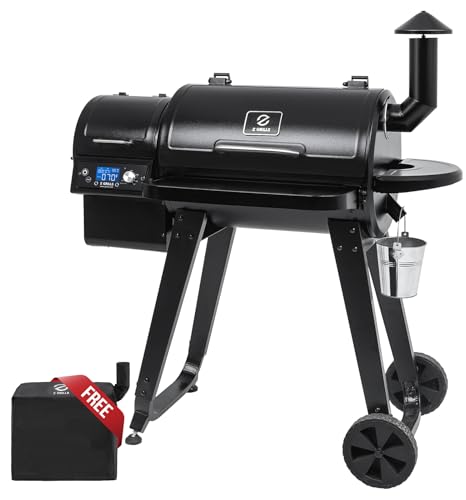
- Best overall for backyards: Z Grills ZPG-450A Wood Pellet Grill & Smoker — Check on Amazon
- Best for searing: Pit Boss 440 Mahogany Series Wood Pellet Grill & Smoker (PB440D2) — Check on Amazon
- Best tabletop for small yards: Pit Boss PB150PPG Table Top Wood Pellet Grill — Check on Amazon
- Best compact second grill: Z Grills 200A Table Top Wood Pellet Grill & Smoker — Check on Amazon
- ASMOKE AS350 Portable Wood Pellet Grill & Smoker — check price on Amazon (prose-only pick in this guide; see the review below)
- Camp Chef Pursuit 20 Portable Pellet Grill (PPG20) — usually above this budget; prose-only stretch reference, see the review below
Read the full guide ↓
Disclosure: As an Amazon Associate, dailyhomedecorating.com earns from qualifying purchases. Links to Amazon on this page are affiliate links; they cost you nothing extra. Listing details such as price and availability change often, so check the current Amazon listing before you buy.
The best pellet grill for backyards under $300 is not the best pellet grill shrunk to fit a budget — it is a different purchase from the portable and patio versions of this search, because a backyard changes what a grill is for. A backyard grill lives outside, in one place, in all weather. It cooks for the household every week and for the whole street a few times a year. It does the long Saturday smokes that justify pellet cooking in the first place: the shoulder that goes on in the morning, the ribs that need five steady hours, the brisket that tests whether the hopper and the controller can be trusted together. Ranked for that life, the field reorders itself. Hopper capacity and temperature stability climb to the top of the list. Portability falls off it. And the honest weaknesses of the budget tier — thin steel, simple controllers, small hoppers on some models — have to be weighed against years of outdoor living, not a single season.
Three hundred dollars is the tier where this purchase becomes real. Below it, pellet grills are tabletops and accessories; at it, two full-size cart grills from Pit Boss and Z Grills anchor the category, each with a genuine claim to be a backyard’s only grill. Around them sit the tabletops, which earn backyard places of their own — as the small-yard answer, as the second grill that handles overflow and weeknight duty, as the one that also travels. This guide ranks all six for backyard use specifically, with the two prose-only picks labeled and explained: one whose listing we could not verify to our standard in this pass, and one excellent grill whose price usually lives above the budget, included so you can see exactly what the step up buys. If you are still comparing across the whole category rather than the backyard slice of it, our overall guide to the Best Pellet Grill Under $300 ranks the same machines without the backyard weighting.
A backyard also brings responsibilities a balcony never does, and they are woven through the reviews below. A pellet grill is a live wood fire in a steel box: it needs a level, heat-proof place to stand, clear space from siding, fences, eaves and play equipment, and a permanent address far enough from the house that its smoke is a pleasure rather than an intrusion. It needs a cover, because budget steel lives outdoors on your watch. It needs its ash and grease managed on a schedule, because a backyard grill that cooks every week builds both faster than any other kind. And it needs pellets stored dry — a garage bin, not the hopper — because the surest way to ruin a Saturday is a auger jammed with swollen fuel. None of this is burdensome; it is simply the difference between a grill that serves for years and one that serves for a summer.
In this guide
Quick Picks
Short on time, or comparing several options at once? Each row below names a buyer type and the product that suits it, with a link to the listing where one is available.
| Buyer type | Pick | Why it stands out | Link |
|---|---|---|---|
| Best overall for backyards | Z Grills ZPG-450A | A 15 lb hopper and PID control over 459 sq in — the long-smoke backyard anchor at this budget | Check on Amazon |
| Best for searing | Pit Boss 440 Mahogany Series (PB440D2) | 518 sq in plus Flame Broiler direct-flame searing for steak-night households | Check on Amazon |
| Best tabletop for small yards | Pit Boss PB150PPG Table Top | 256 sq in and a real sear in a grill that parks on a potting bench or patio table | Check on Amazon |
| Best compact second grill | Z Grills 200A Table Top | 202 sq in with an 8 lb hopper — overflow, sides and small households, stored on a shelf | Check on Amazon |
| Best ash-cleaning design | ASMOKE AS350 Portable | 256 sq in and ash collection that suits a tidy patio corner — prose-only in this guide | Check price on Amazon |
| Best stretch reference | Camp Chef Pursuit 20 (PPG20) | 501 sq in that folds for travel — usually above budget, included as the step-up benchmark | Check price on Amazon |
How we chose the best pellet grill for backyards under $300
Every pick had to be a true pellet grill — auger, firepot, controller, cooking chamber — from a maker with a warranty and a parts trail, with specifications checked against the manufacturer or the current Amazon listing and each linked listing cross-checked in this verification pass. Models that failed the listing check, or that habitually sell above the budget, are prose-only and labeled. Each model was also screened against the CPSC recall database before inclusion. Backyard criteria then did the ranking. Long-cook endurance came first: hopper capacity and controller quality, because the backyard cook’s signature dishes are measured in hours. Main-grate area came second — the headline number includes warming racks, and briskets do not cook on warming racks. Weatherworthiness came third: finish, cover availability and the simplicity of keeping the machine alive outdoors. Searing ability, storage and portability were scored last, as bonuses rather than foundations, which is why this ranking differs from our small-space and travel rankings of the same six grills.
The best pellet grill for backyards under $300: full reviews
Z Grills ZPG-450A Wood Pellet Grill & Smoker — best overall for backyards
Who it suits: The backyard cook whose menu runs long and low — shoulders, ribs, whole chickens, the occasional brisket — and who wants one grill, parked in its corner, that handles the household’s smoking without supervision anxiety.
The 450A wins the backyard ranking on a single number: fifteen pounds. That is the hopper capacity, triple the Pit Boss 440’s, and in a backyard it is the difference between a smoker and a smoking-themed chore. Fifteen pounds of pellets is a full pork shoulder or a modest brisket at smoking temperatures on one fill — load it in the morning, set the PID V3.0 controller, and the grill’s contribution to the day is a steady 225°F and a thin, correct plume of smoke. The controller is the other half of the equation: PID cycling holds set temperatures far more steadily than the timer-based boards of older budget grills, across a 180°F to 450°F range, and the current version includes a meat probe with dual probe ports on the controller. The chamber gives you 459 square inches in total, 324 of them on the main grate — enough for two racks of ribs or a shoulder with room for a pan of beans beside it — with an upper rack for the items that want gentler heat.
Backyard living suits the rest of the package. The cart rolls on two large wheels to its corner and parks; the folding front shelf stages trays without claiming permanent patio; the porcelain-coated grates clean up with a hot brush. Z Grills’ three-year warranty and the model’s long production run mean igniters, probes and boards are findable parts, which is what a multi-year outdoor appliance actually needs. What the 450A will not do is sear: its 450°F ceiling is indirect heat, so steaks come off roasted-grilled rather than crusted, and households that grill steaks weekly should either accept a cast-iron finish or look at the Pit Boss below. The hopper also lacks a cleanout chute, so changing pellet flavors means scooping or cooking the hopper down — a minor ritual, honestly disclosed.
Pros:
- 15 lb hopper — the only true set-and-forget long-smoke capacity at this budget
- PID V3.0 controller holds temperature steadily across long cooks
- 459 sq in of cooking space with a meat probe and folding front shelf
- Three-year warranty, mature model line, easy parts availability
Honest limitation: No direct-flame searing and a 450°F ceiling. The hopper has no purge door, and budget Z Grills ownership reports include occasional controller and auger faults over time — register the warranty and keep the firepot clean, which prevents most of them.
Choose it if smoking is the backyard’s main event. Skip it if your grill nights are steak nights — the 440 below is your pick. Safety for a parked backyard grill: give it a permanent, level, heat-proof spot with clear space on all sides and above — away from siding, fences, eaves and the kids’ trampoline — and keep that clearance for its whole life, not just the first cook. Before long smokes, empty the grease bucket and check the firepot; a day-long cook over a season of built-up grease is the classic backyard grill fire, and it is prevented by ten minutes with a scraper, not by luck.
Check on Amazon — check price on Amazon and confirm the current controller revision on the listing.
Pit Boss 440 Mahogany Series Wood Pellet Grill & Smoker (PB440D2) — best for searing
Who it suits: The backyard household that grills more than it smokes — burgers, steaks, chops and chicken through the week, ribs on the weekend — and wants the biggest cooking surface and the only real sear this budget offers.
The 440 Mahogany is the largest cooker in this guide that honestly lives at the price: 518 square inches in total, with 373 square inches on the main grate, all porcelain-coated steel. That main grate swallows a family burger batch in one round and takes a brisket flat without folding it. The controller is Pit Boss’s LED digital board — set the temperature and walk away, 180°F to 500°F — with a meat probe included and no app, account or firmware between you and dinner. And then there is the feature that defines the grill: the Flame Broiler. Slide the lever and the heat shield opens, putting the firepot’s flame in direct contact with the grate zone above it, which Pit Boss rates at up to 1,000°F at the flame. Steaks get an actual crust. Burgers get actual char. Among pellet grills under $300, this is close to a unique ability, and for grill-first households it outweighs every other spec in this guide.
The trade is endurance. The hopper holds five pounds — plenty for any grilling session and for ribs, thin for a brisket unless you plan a refill — and there is no cleanout door. The mahogany-look finish is handsome and, like all painted steel at this price, it is a finish that rewards a cover and punishes neglect with surface rust at the seams. Neither point is hidden, and both are manageable: refill on the long cooks, cover it the rest of the time, and the 440 will out-cook grills twice its price for the household it suits. Pit Boss’s five-year warranty is the longest backing among the full-size picks here.
Pros:
- Biggest in-budget cooking area: 518 sq in total, 373 sq in on the main grate
- Flame Broiler direct-flame searing — the steak feature of the guide
- Simple LED digital control with a meat probe; nothing to pair or update
- Five-year Pit Boss warranty
Honest limitation: The five-pound hopper makes long smokes a participatory sport, and the painted finish needs a cover to stay handsome outdoors. Buy the cover with the grill, not after the first rust spot.
Choose it if grilling leads and smoking follows in your backyard. Skip it if unattended-length brisket cooks are the dream — that is the 450A’s entire argument. Safety: the manual’s minimum clearance is 12 inches from combustible construction at the sides and back; in a backyard you usually have more, so use more, and keep the grill out from under eaves, pergola roofs and low branches. Direct-flame mode deserves respect — open the Flame Broiler only with the lid managed as the manual directs, keep children and pets back during searing, and let ash cool completely into a lidded metal container stored away from the house and deck.
Check on Amazon — check price on Amazon, since this model drifts in and out of the budget with seasonal pricing.
Pit Boss PB150PPG Table Top Wood Pellet Grill — best tabletop for small yards
Who it suits: The small backyard, the patio-home yard, the household of two — anyone whose outdoor space is a slab and a strip of grass, who still wants one grill that both smokes and sears.
In a small yard, a cart grill is not a grill with a footprint; it is a piece of furniture that eats the patio. The PB150PPG sidesteps the problem by living on a surface: a sturdy patio table, a potting bench, a purpose-built stand. Its 256 square inches of porcelain-coated cooking space run from 180°F to 500°F under digital control, a meat probe is included, and the Flame Broiler system gives it the direct-flame sear that makes it, uniquely among tabletops, a complete grill rather than a smoker that grills a little. The hopper holds seven pounds per the current listing — hours of smoking — and when the yard needs to be a yard again, the locking lid closes and the whole grill, about 43 pounds of it, moves to a shelf in the garage.
The limits are the category’s limits. Two to four people per batch; a rack of ribs in halves; a small chicken rather than a large one. The compact chamber feels wind and cold more than a barrel does. But in the small-yard brief, those limits rarely bind: the household is small, the cooks are weeknight-sized, and the grill’s ability to disappear is worth more than a fourth rack of ribs. As a second grill in a big yard — the weeknight unit while the big smoker rests, the overflow cooker at parties — it makes the same argument.
Pros:
- Flame Broiler direct-flame searing in a tabletop — a category rarity
- 256 sq in, 180–500°F digital control and a meat probe
- Lives on a surface and stores on a shelf; the yard stays a yard
- Five-year Pit Boss warranty
Honest limitation: Batch size is two to four people, headroom is low for tall foods, and the small chamber swings more in wind and winter than a full-size barrel.
Choose it if your yard is small or your household is. Skip it if you regularly cook for six at home — buy a cart grill and give it a corner. Safety: the surface rule is absolute — stable, level, heat-proof and non-combustible only, never a plastic table or a wooden surface without a heat-proof barrier rated for the purpose — with open clearance on all sides and above, and a full cool-down before the grill is carried back to its shelf.
Check on Amazon — check price on Amazon; frequently the deepest discount in this guide.
Z Grills 200A Table Top Wood Pellet Grill & Smoker — best compact second grill
Who it suits: The backyard household that already owns fire — a kettle, a gas grill, a big smoker — and wants a small, patient pellet cooker for the jobs those do badly: low-and-slow sides, a second temperature zone at parties, weeknight smoking for two.
The 200A’s backyard case rests on its hopper. Eight pounds in a body roughly 25 by 20 by 13 inches is the best fuel-to-footprint ratio in this guide, good for around ten hours of smoking, which means the smallest grill here can run the longest unattended cook of any tabletop in the set. The PID controller holds 180°F to 450°F, the current version adds an LCD display and meat probes, and the folding front rack stages a tray without permanent furniture. At a party, it is the bean-and-wings station that minds itself while the main grill does the loud work. On a Tuesday, it is a chicken smoking gently while the yard is used for something else. Z Grills covers it for three years.
As a household’s only grill, its ceiling is clear: 202 square inches, a 450°F top end, no direct flame. Ribs get trimmed; briskets are not invited. As a second grill or a small household’s smoker, those numbers stop mattering, and the 200A’s patience and size become the point. It also travels — the same grill that holds beans at your party smokes trout at a campsite — which no cart grill in this guide can claim.
Pros:
- Eight-pound hopper — around ten hours of smoking in a tabletop body
- PID control with LCD and meat probes on the current version
- Shelf-sized storage; doubles as the household’s travel grill
- Three-year warranty
Honest limitation: The smallest grate in the guide and no searing mode; as a sole family grill it will feel tight within a month.
Choose it if you need a patient second cooker or a small smoker that stores away. Skip it if it must be the only grill for a family of five. Safety: small grills get tucked into small corners — resist it. Keep the full clearance ring and open sky above it even on a patio, never under an umbrella or awning, and brush out cooled ash before it returns to indoor storage; ash and pellets both live in their own sealed containers, ash in metal, outside.
Check on Amazon — check price on Amazon and confirm the current PID version.
ASMOKE AS350 Portable Wood Pellet Grill & Smoker — best ash-cleaning design (prose-only)
Who it suits: The tidy backyard — a designed patio, a small landscaped yard — where the grill is visible, the cooks are for two to four, and cleanup discipline decides whether grilling stays a pleasure.
The AS350 brings 256 square inches across two tiers of porcelain-coated cast-iron grids, a 180°F to 500°F range, and a compact stainless-accented body of about 24.4 by 17.5 by 16 inches. Its signature is ASMOKE’s ASCA ash system, which sweeps ash toward a removable collection bucket rather than letting it cake in the firepot — on a patio where ash dust on the pavers is a genuine annoyance, that design is worth real money, and the five-year warranty behind it is the joint-longest in this guide. It is prose-only here because our listing cross-check for it could not be completed in this verification pass; the grill is presented on its specifications, and you should check price on Amazon directly.
Its compromises are fuel and weight: a four-pound hopper that suits cooks of a few hours and asks for a refill on long smokes, and about 49 pounds of body — heavy for a tabletop, though in a backyard that mostly sits still, weight reads as stability. For the household whose cooks are chickens, chops, ribs and vegetables, with an occasional short smoke, it is a genuinely appealing patio appliance.
Pros:
- ASCA ash collection keeps patio and firepot cleaner than rivals
- 256 sq in over two tiers with cast-iron grids; full 180–500°F range
- Five-year warranty and a finished, patio-friendly design
Honest limitation: The smallest hopper in the guide and the heaviest tabletop; long smokes need refills. Prose-only status means verifying the current listing yourself.
Choose it if cleanup and patio tidiness rank high and your cooks run a few hours. Skip it if all-day smoking is the plan. Safety: empty the ash bucket only when fully cold, into a lidded metal container stored away from the house — ash convenience is not ash safety — and keep the grease path clean, because a grill that lives on a pretty patio still burns like a grill.
Check price on Amazon — search the ASMOKE AS350 by name and confirm the seller before ordering.
Camp Chef Pursuit 20 Portable Pellet Grill (PPG20) — the stretch reference (prose-only)
Who it suits: The backyard buyer whose grill must occasionally leave the backyard — to a tailgate, a lake house, a competition-adjacent Saturday — and who is willing to pay above this budget for one machine that does both jobs at full size.
The Pursuit 20 is the specification leader of this guide: 501 square inches (253 lower, 248 upper), a Gen 2 PID controller spanning 160°F to 500°F, Smoke Control that sets smoke level independently of temperature, two meat probes, Slide and Grill direct-flame searing, a ten-pound hopper, and folding legs with a locking lid that turn all of it into cargo. In a backyard it parks like a cart grill and cooks like one; away from home it has no rival here. It is prose-only because its street price usually sits above $300 — excellence does not amend a budget — and because at about 82 pounds its portability is a two-person, wheeled affair rather than a lift.
The honest backyard question is whether the travel ability earns its premium in your life. If the grill never leaves the yard, the 450A smokes as patiently and the 440 sears as hard for in-budget money, and the Pursuit’s folding legs are a feature you paid for and never fold. If it leaves monthly, the calculation inverts, and the Pursuit becomes the rational buy despite the price tag this guide cannot call under $300.
Pros:
- 501 sq in with Gen 2 PID, Smoke Control and two probes
- Slide and Grill direct-flame searing plus a ten-pound hopper
- Folding legs and locking lid — full-size cooking that travels
Honest limitation: Usually above this budget, and heavy. In a stay-at-home backyard, in-budget picks match its cooking for less.
Choose it if your budget flexes and your grill genuinely travels. Skip it if $300 is a hard ceiling or the grill will never fold. Safety: lock and level the folding legs before every cook without exception, check the grease system before long cooks, and let it cool completely — ash emptied into metal — before it is folded, loaded or stored.
Check price on Amazon — seasonal pricing occasionally brings it close to the budget.
Comparison table
| Pick | Cooking area | Hopper | Temp range | Format | Backyard verdict |
|---|---|---|---|---|---|
| Z Grills ZPG-450A | 459 sq in (324 main) | 15 lb | 180–450°F | Full-size cart | Best long-smoke anchor |
| Pit Boss 440 (PB440D2) | 518 sq in (373 main) | 5 lb | 180–500°F | Full-size cart | Best sear and space |
| Pit Boss PB150PPG | 256 sq in | 7 lb | 180–500°F | Tabletop | Best small-yard answer |
| Z Grills 200A | 202 sq in | 8 lb | 180–450°F | Tabletop | Best second grill |
| ASMOKE AS350 | 256 sq in (191 main) | 4 lb | 180–500°F | Tabletop | Tidiest patio pick; prose-only |
| Camp Chef Pursuit 20 | 501 sq in (253 lower) | 10 lb | 160–500°F | Folding-leg portable | Step-up benchmark; prose-only |
For backyard shoppers the decision usually collapses to one question: does your yard’s cooking lead with smoke or with fire? Smoke leads to the 450A’s hopper; fire leads to the 440’s Flame Broiler; small yards and second-grill duties lead to the tabletops. Party hosts cooking for a crowd in one batch should also read our ranking for the Best Pellet Grill For Outdoor Entertaining Under $300, which weights raw batch capacity above all else.
How to choose a pellet grill for your backyard
Give the grill a permanent, safe address first. Before comparing models, pick the spot: level, heat-proof underfoot — a concrete or paver pad is ideal; a wooden deck demands distance and a grill mat rated for the purpose — with clear space from siding, fences and eaves and open sky above. If the only spot that fits is against the house wall under the eave, the correct purchase is a different spot, not a different grill.
Size by the main grate and the hopper, in that order. Main-grate area decides what fits; hopper capacity decides how long it cooks without you. For family smoking, 320-plus square inches of main grate and double-digit hopper pounds is the comfort zone the 450A occupies; for grill-led households, grate first and accept the 440’s refill ritual.
Budget the whole installation, not just the grill. A cover, a pellet bin, a grill brush, a metal ash can and a spare meat probe are part of the purchase. At this tier the grill is most of the money but not all of it, and the cover alone doubles the finish’s life. Readers weighing a bigger step can see what changes in our guide to the Best Pellet Grill Under $500.
Decide the sear question honestly. If steak night is weekly, a direct-flame feature or a cast-iron plan is mandatory; indirect-only grills will disappoint you fifty-two times a year. If steaks are monthly, the smoker’s virtues dominate and the 450A’s patience wins.
Think in years: warranty, parts, and local fuel. Three-to-five-year warranties and findable igniters and auger motors separate a backyard appliance from a season’s toy. Pellets themselves are brand-agnostic — any food-grade hardwood pellet feeds any of these grills — so buy fuel where it is cheap and dry. If you are cross-shopping fuels for the same yard, our Best Charcoal Grill For Backyards Under $300 and Best Gas Grill For Backyards Under $300 guides cover the alternatives at the same budget.
Fire safety: the non-negotiables for any pellet grill
Placement: outdoors only, in the open, on a level, heat-proof surface, with clear space on every side and above — Pit Boss’s manual minimum of 12 inches from combustible construction is a floor; backyards usually allow more, so take more. Keep the grill away from dry grass, leaf litter, mulch and stored firewood, and never run it in a garage, under a carport or beneath low tree cover. Operation: be present for startup and shutdown, keep the firepot, drip tray and grease bucket on a cleaning schedule matched to how often you cook, and treat any grease fire by closing the lid, switching off and letting it starve — never water on burning grease. Ash: cool completely, then into a metal container with a tight lid, stored outside away from the house, deck and anything that burns; embers hide in ash for days. Pellets: sealed and dry in a bin, never left to swell in the hopper through a wet month. Power: outdoor-rated outlet, cord out of walkways and away from water, unplugged after the shutdown cycle. A backyard grill earns its keep for years when these habits are boring and automatic.
Common mistakes backyard buyers make
Parking the grill against the house. The convenient corner is always the dangerous one. Clearance is a condition of the appliance’s listing, not a style preference.
Buying headline area instead of main-grate area. Warming racks warm. Briskets, rib racks and burger batches live on the main grate; size your purchase by it.
Skipping the cover. Budget painted steel outdoors without a cover is a rust schedule, not a grill. The cover is the cheapest longevity in this guide.
Letting grease and ash accumulate through the season. Most backyard grill fires are maintenance fires. Ten minutes with a scraper after every few cooks is the entire prevention program.
Storing pellets in the hopper over winter. Swollen pellets, a jammed auger and a smoldering mess in spring. Bin the fuel; run the hopper down or empty it for long storage.
Final recommendation
For the typical backyard, the Z Grills ZPG-450A is the buy: the fifteen-pound hopper and PID control turn the long smokes that define backyard pellet cooking into a set-and-enjoy routine, at a price this budget can hold. If your yard grills more than it smokes, take the Pit Boss 440 Mahogany and its direct-flame sear and larger grate, and accept the smaller hopper with open eyes. Small yards and second-grill duties belong to the Pit Boss PB150PPG and the Z Grills 200A. Whichever you choose, spend the small extra on the cover and the ash can the same day — a backyard grill’s life is decided by its habits, not its badge.
A backyard pellet grill through the seasons
Spring is commissioning season. Whatever grill you choose, its year starts the same way: unbox or uncover it away from the house, assemble it on the pad where it will live, and run the manufacturer’s burn-in — a hot, empty cycle that burns off manufacturing oils — before any food touches the grates. Then cook something forgiving first: chicken thighs, sausages, a pork shoulder. The first cooks teach you the grill’s personality — where its hot spots sit, how its controller behaves in a breeze, how fast its hopper falls at 225°F — and that knowledge is what makes the ambitious summer cooks calm. Spring is also when a backyard cook should walk the setup with safety eyes: confirm the clearance ring is still clear after winter storage migrated into the grill’s corner, check the cord for damage, empty last season’s ash can, and start the year with fresh, dry pellets rather than the bag that overwintered in the garage’s damp corner.
Summer is throughput season. The grill earns its place in batches: burgers for the block, ribs for the family, a shoulder that starts before the heat does. This is where the rankings in this guide prove themselves — the 450A’s hopper swallowing a whole day’s smoke without attention, the 440’s grate taking the full burger round at once, the tabletops appearing as second stations for corn, wings and warming duty. Summer is also grease season: weekly cooking builds the drip path fast, and the discipline that matters is boring — scrape the grates hot after each cook, check the grease bucket before every long one, and keep the firepot vacuumed or brushed out on a rhythm measured in cooks, not months. Do that, and a budget grill runs its second and third summers like its first.
Autumn is smoking season, and the pellet grill’s home turf. Cool air, big cuts, long cooks: brisket weather. The practical notes are fuel and patience. Pellet consumption rises as temperatures fall, so the hopper arithmetic from the summer no longer holds — a five-pound hopper that covered ribs in July asks for a refill sooner in October, and even the 450A’s fifteen pounds should be checked rather than assumed on an overnight cook. Wind matters more too; a backyard spot that is merely convenient in summer becomes genuinely better in autumn if a fence or wall breaks the prevailing wind without closing in the grill’s clearance or trapping its smoke. Position for the season, not just the day.
Winter separates the habits from the hardware. Every grill here will cook in the cold — pellet grills are convection ovens with fire, and cold, dense air can even help smoke quality — but consumption climbs, preheats lengthen, and the tabletops feel it most because their small chambers lose heat fastest. The winter rules are storage rules: cover on between cooks, hopper emptied or kept scrupulously dry, pellets binned indoors, ash never left to freeze into the firepot, and the grill never, under any circumstances, wheeled into a garage or enclosed porch to escape the weather. A pellet grill is an outdoor appliance in January exactly as in July; the cook dresses warmer, the grill stays where it belongs.
FAQ
How far from the house should a pellet grill sit?
Follow the manual first — Pit Boss specifies a minimum of 12 inches from combustible construction at the sides and back — and give it more wherever the yard allows. Open sky above, no eaves or low branches, and a heat-proof surface underneath are as important as the side distance.
Can I leave a pellet grill outside all year?
Yes, with a fitted cover, an emptied or well-sealed hopper in wet seasons, and grease and ash kept current. Budget finishes reward the cover most; unpainted seams and the firepot area are where neglect shows first.
Which of these is best for a brisket?
The ZPG-450A, on hopper endurance and controller steadiness. The Pit Boss 440 fits the cut easily but needs a mid-cook refill; the tabletops are not brisket grills, though they smoke brisket flats and points in smaller form.
Do pellet grills attract pests in a backyard?
Grease and food residue do. Empty the grease bucket, wipe the drip tray, and keep the area under the grill clean; a maintained pellet grill is no more attractive to animals than any other outdoor appliance.
Can a backyard pellet grill replace my gas grill entirely?
For smoking, roasting and baking, yes. For fast weeknight searing, only the direct-flame models here — the Pit Boss picks — truly cover the job; an indirect-only pellet grill is slower to heat and gentler at the top end than gas.
How long will a budget pellet grill last in a backyard?
With a cover, clean grease management and dry fuel storage, the steel and grates last many years; igniters and auger motors are the wear items, and the three-to-five-year warranties on these picks cover the early failures that matter.
Does a backyard pellet grill need a dedicated electrical circuit?
No. These grills draw modest power — a few hundred watts at startup for the igniter, far less once running, since the auger and fan are small loads. A standard outdoor outlet on a normal household circuit runs any pick in this guide. What matters is the outlet’s condition and protection: outdoor-rated, GFCI-protected, with the cord routed clear of water, walkways and mower paths.
Can I cook pizza or bake on a backyard pellet grill?
Yes — a pellet grill is a wood-fired convection oven at temperature, and the picks with 500°F ceilings (the Pit Boss models and the ASMOKE) handle pizza on a stone or steel and baked dishes particularly well. The 450°F-capped models bake comfortably and can still do pizza with a longer, gentler approach. It is one of the format’s underused backyard talents, especially in summer when the kitchen oven heats the whole house.
Where should pellets be stored in a backyard setup?
Sealed and dry, in a lidded bin in the garage, shed or under a covered area — close enough to the grill to make refills easy, dry enough that the pellets pour like gravel rather than clumping like mulch. The hopper itself is a working reservoir, not storage: for cooks a week apart it can hold fuel in dry weather, but across wet months the bin is the fuel’s home and the hopper gets filled per cook. This single habit prevents most auger jams, most failed startups and most smoldering-hopper incidents a backyard will ever see.
Can I build a pellet grill into an outdoor kitchen?
Not these. Budget cart and tabletop pellet grills are freestanding appliances with clearances and ventilation designed around open air on all sides; enclosing one in cabinetry or a built island voids the assumptions its listing was tested under and traps heat and smoke where neither belongs. If a built-in outdoor kitchen is the dream, that is a different product class with its own rated inserts. A freestanding grill on a proper pad beside the counter gives you ninety percent of the experience with none of the risk.
What pellets should a backyard beginner buy first?
A single bag of a competition-blend or hickory hardwood pellet is the right start: versatile across beef, pork and chicken, available everywhere, and consistent while you learn your grill. Pellet flavor differences are real but subtle; temperature control and timing matter far more. Whatever you buy, buy it dry, store it sealed, and never mix in pellets that have swollen or crumbled from moisture — those belong in the trash, not the auger.