Where to buy
Check the latest price, availability and delivery on Amazon. Orders are placed on Amazon. We may earn a commission from qualifying purchases.
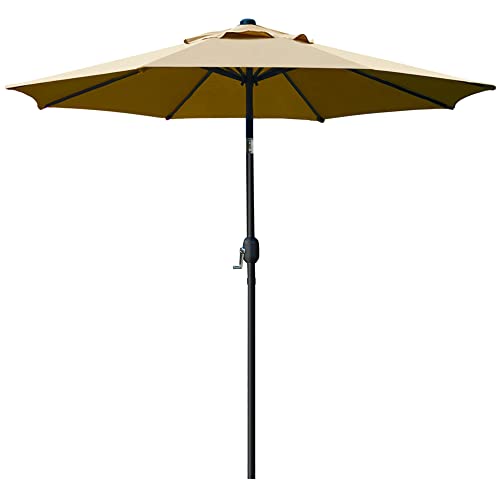
- Best overall: Sunnyglade 9′ Patio Umbrella with Crank and Push-Button Tilt — Check on Amazon
- Best iron-frame value: JEAREY 9FT Outdoor Patio Umbrella, Market Umbrella, Beige — Check on Amazon
- Best for bistro corners: Sunnyglade 7.5′ Patio Umbrella with Tilt and Crank — Check on Amazon
- Blissun 9′ Outdoor Patio Umbrella — prose-only pick in this guide; search the name on Amazon to check price on Amazon
See 2 more options discussed in the full reviews
- Abba Patio Lyon 9FT Outdoor Patio Umbrella — prose-only pick in this guide; search the name on Amazon to check price on Amazon
- Simple Deluxe 7.5′ Patio Umbrella with Push Button Tilt and Crank — prose-only pick in this guide; search the name on Amazon to check price on Amazon
Read the full guide ↓
Disclosure: As an Amazon Associate, dailyhomedecorating.com earns from qualifying purchases. Links to Amazon on this page are affiliate links; they cost you nothing extra. Listing details such as price and availability change often, so check the current Amazon listing before you buy.
Finding the best patio umbrella for outdoor entertaining under $75 sounds like a compromise until you host your first real gathering under one. Picture the scene honestly: six people around a table that seats four comfortably, a grill smoking two feet too close, drinks sweating onto every flat surface, and the late-afternoon sun sliding sideways until half the table is squinting into it. The umbrella is the one piece of furniture working the entire party. It decides whether guests linger for a second drink or drift indoors, whether the potato salad stays shaded, and whether the host spends the evening rotating chairs like a sundial. That is the job this guide shops for — not a decorative parasol, but a working canopy for people who actually entertain outside.
The good news is that $75 is a genuinely workable entertaining budget, as long as you spend it on the right things. At this tier you can get a full 9-foot market canopy — the size that honestly covers a 42- to 54-inch table with four to six chairs — with a crank lift, a push-button tilt, eight ribs and a vented top. What you generally cannot get at this tier is a base included in the box, solution-dyed acrylic fabric, or a cantilever design, and this guide will not pretend otherwise. Every umbrella below is a center-pole market umbrella, and every one needs a base bought separately unless it sits through a sturdy table. Budget for that base from the start, because an entertaining umbrella that tips into the drinks is worse than no umbrella at all. If your gatherings regularly run past sunset, also know that lighted models mostly live in the next tier up — our companion guide to the Best Patio Umbrella For Outdoor Entertaining Under $150 covers the solar LED options, while this guide squeezes maximum daytime shade and guest comfort out of $75.
Entertaining changes the ranking logic in ways a solo-lounging guide would miss. Coverage per dollar matters more than elegance, because guests do not distribute themselves politely inside the shade circle — they cluster, lean and pull chairs in from the edges. Tilt matters more than in a private garden, because a party has a schedule and the sun does not respect it; the host needs to swing the canopy at 5 p.m. without a ladder or a wrestling match. Ease of operation matters too: the crank will be operated by whoever is standing nearest, possibly a guest, possibly with a drink in the other hand, so it has to be obvious and forgiving. And wind behavior matters most of all, because a yard full of guests is the worst possible place for a canopy to invert. The short version: most hosts should start with the Sunnyglade 9-foot, the proven all-rounder with an aluminum pole and eight ribs — check price on Amazon. Hosts who want a heavier iron frame for a breezy yard should look at the JEAREY. And anyone shading a drinks station, a bistro set or a buffet side table rather than the main dining table should skip straight to the 7.5-foot picks, which cost less and maneuver far more easily between courses and conversations.
In this guide
Quick Picks
Short on time, or comparing several options at once? Each row below names a host type and the umbrella that suits it, with a link where we verified one.
| Host type | Pick | Why it stands out | Link |
|---|---|---|---|
| Best overall | Sunnyglade 9′ Patio Umbrella | 9 ft canopy, aluminum pole, 8 ribs, crank and push-button tilt — check price on Amazon | Check on Amazon |
| Best for breezy yards | JEAREY 9FT Outdoor Patio Umbrella | Powder-coated iron frame, double-layer vent, 8 ribs — check price on Amazon | Check on Amazon |
| Best for side tables | Sunnyglade 7.5′ Patio Umbrella | Smaller canopy for bistro sets and drinks stations — check price on Amazon | Check on Amazon |
| Best plain-and-simple | Blissun 9′ Outdoor Patio Umbrella | A no-frills 9 ft market canopy with crank and tilt (prose-only) | Search the name on Amazon |
| Best sun rating | Abba Patio Lyon 9FT Umbrella | Maker-rated UPF 50+ canopy fabric (prose-only) | Search the name on Amazon |
| Best compact spare | Simple Deluxe 7.5′ Patio Umbrella | A light second umbrella for overflow seating (prose-only) | Search the name on Amazon |
How These Picks Were Chosen
We built this list for one specific reader: a host whose entertaining happens around a table, on a real budget. Every candidate had to be a market-style patio umbrella sold on Amazon, sized between 7.5 and 9 feet, with a crank lift — because a host juggling trays cannot be hauling a pulley rope hand over hand — and a tilt mechanism, because evening sun is the whole ballgame at a dinner party. We cross-checked each linked pick against the Amazon Creators API on 2026-11-20, matching the API-returned title to the product name before using any ASIN, and we checked manufacturer listings and independent roundups for the specifications quoted in the reviews: canopy diameter, pole diameter and material, rib count, vent style and fabric type. Picks whose ASINs we could not confirm through the API are presented honestly as prose-only entries — you will find them described and evaluated, but without a product link, and the sources file for this guide records exactly which checks passed and which are still pending.
Price discipline mattered as much as hardware. We used recent sightings from listings, manuals and deal coverage as an internal sanity check that each pick genuinely trades inside the under-$75 tier, and we describe positioning in words — lower end, middle, top of the tier — rather than printing figures that would be stale within weeks. Two popular categories were deliberately excluded. Cantilever umbrellas, which hang the canopy from a side arm, start well above this budget in any form worth owning, and their heavy cross bases eat patio space a party needs. Solar LED umbrellas were also mostly excluded: at this tier the lights usually come out of the frame budget, and a dim canopy on a wobbly pole serves guests worse than a solid unlit one. One more filter: safety. We searched CPSC recall records for every brand named here. The patio umbrella recalls on file involve other brands entirely — a solar market umbrella sold through a warehouse club, a premium Belgian cantilever line, and older big-box models — and none of the picks below is subject to a CPSC recall we could find. The recalled brands are not named or recommended anywhere in this guide.
Finally, we weighted the criteria the way a party stresses them. Shade coverage and tilt range came first, because they decide guest comfort hour by hour. Frame and rib construction came second, because a canopy that flexes and rattles distracts everyone under it. Fabric came third — all of these are polyester, and the honest differences are in weave density, fade resistance and whether the maker publishes a UPF rating. Operation came fourth: crank effort, tilt button placement, and how the pole separates for storage. Portability and color range brought up the rear. Where a specification comes from the manufacturer’s own listing rather than independent testing, the review says so.
Best Patio Umbrella for Outdoor Entertaining Under $75: The 6 Picks
Sunnyglade 9′ Patio Umbrella with Crank and Push-Button Tilt
Who it suits. The default host: a 42- to 54-inch dining table, four to six chairs, and a yard where the party runs from afternoon into evening. If you are buying one umbrella with this budget and want the fewest surprises, this is the one the rest of the list is measured against.
The Sunnyglade’s recipe is the classic one executed completely. The canopy spans 9 feet across eight ribs, the pole is powder-coated aluminum at roughly 1.5 inches (40 mm) in diameter — the size most patio table holes are drilled for — and the lift is a crank with a push-button tilt at the joint. The canopy fabric is polyester, described by the maker as waterproof and fade-resistant, with a vent at the top that lets hot air escape and gives gusts somewhere to go. The whole umbrella weighs under ten pounds, which sounds like a footnote until you are the person carrying it from the garage while holding a tray. Assembly is two pole sections clicking together; there is nothing to thread, tension or swear at. For entertaining specifically, the tilt is the feature that earns its keep: as the sun drops, one press of the button and a nudge angles the canopy so the west-facing guests stop squinting, and the crank lets you close the canopy in seconds when a gust front arrives mid-course.
Pros. Full 9-foot coverage for a six-seat table at the lower-middle of the tier; aluminum pole will not rust where hands and the table edge wear the finish; eight ribs keep the canopy shape composed when guests brush past; light enough for one person to move between table and lawn; a wide color range, so matching existing cushions is realistic.
Honest limitation. The base is sold separately — plan on a weighted base of at least 50 pounds for freestanding use, less only if the pole also passes through a heavy table. Polyester at this level fades over seasons of hard sun, and the tilt is a single push-button joint, not the multi-angle collar tilt of pricier umbrellas, so late-evening angles are good rather than perfect.
Choose it if you want the safest all-round buy for a dining table. Skip it if your table is a two-seat bistro set — the 7.5-foot picks below will look and work better — or if your yard is genuinely windy, where the heavier iron JEAREY frame is the smarter spend. Check on Amazon — and check the current listing for the color you want, because shades sell out unevenly in season. For a broader look at the tier, see our guide to the Best Patio Umbrella Under $75.
JEAREY 9FT Outdoor Patio Umbrella, Market Umbrella, Beige
Who it suits. Hosts in breezy yards, on open decks, or anywhere the afternoon wind is a regular uninvited guest. Also a good fit for anyone who has watched a lightweight umbrella shudder through a whole dinner and wants the heavier, calmer feel of iron.
JEAREY builds this 9-foot market umbrella around a powder-coated iron pole and eight iron ribs, and the extra weight over aluminum — the umbrella comes in around eleven and a half pounds — is exactly the point. Iron flexes less, so the canopy sits steadier and the whole structure feels planted rather than perched. The canopy is a high-density polyester the maker rates as water- and UV-resistant, topped with a double-layer vent: two tiers of fabric that let heat and gust pressure bleed off while shedding the worst of a passing shower. Operation is the familiar crank lift plus push-button tilt, and the maker is unusually upfront about the base situation, pointing buyers to a matched base sold separately — honest, and worth copying whatever umbrella you buy. Under it, a 9-foot canopy shades four to six chairs around a table, which makes it a true like-for-like alternative to the Sunnyglade with a different material philosophy: aluminum saves weight and shrugs off rust; iron adds heft and composure.
Pros. Heavier frame stays composed in gusty conditions that rattle lighter umbrellas; double-layer vent handles heat build-up at crowded tables noticeably well; dense polyester canopy; crank and tilt are glove- and guest-friendly; the maker’s own guidance on base pairing is refreshingly direct.
Honest limitation. Iron’s weakness is corrosion: the powder coat does its job until it chips, and a chipped iron pole left out all winter will show rust where an aluminum one would not. It is also the heavier carry, and the beige-first color range is narrower than the Sunnyglade’s.
Choose it if wind is your yard’s defining feature and you entertain on an exposed deck or lawn. Skip it if the umbrella will live outdoors uncovered year-round in a wet climate, or if you move your shade around constantly and will feel every extra pound. Check on Amazon to confirm the current color and listing details before ordering.
Sunnyglade 7.5′ Patio Umbrella with Tilt and Crank
Who it suits. Hosts whose entertaining spills beyond one table: a bistro set in the corner, a drinks station, a dessert table, a kids’ table parked in the shade. A 7.5-foot canopy is the right tool for these satellite spots, and this is the smaller sibling of our top pick.
Everything that makes the 9-foot Sunnyglade easy to live with is here in miniature — crank lift, push-button tilt, polyester canopy with a vent, and a pole that drops through a standard table hole — but the frame runs on six ribs instead of eight and the canopy covers a footprint a small gathering can actually fill. That smaller span is a feature at a party: the umbrella can sit between conversation areas without dominating them, it catches less wind than a 9-footer in the same yard, and one person can relocate it mid-event when the shade needs to follow the guests rather than the furniture. It also stores in half the closet length, which matters in the off-season when two umbrellas compete for the same corner of the garage. Hosts building a two-umbrella setup on this budget often pair one 9-foot over the dining table with this 7.5-foot over the auxiliary spot, and still land inside a sensible total spend.
Pros. Right-sized shade for two- to four-seat satellite settings; lighter and easier to reposition during an event; same crank-and-tilt operation as the 9-foot, so guests already know how it works; six-rib frame is simpler and cheaper to replace if a rib ever bends.
Honest limitation. It will not cover a six-seat dining table — pretending otherwise leaves two guests as the designated sun seats. Six ribs also mean a slightly less tailored canopy shape than the eight-rib models, and the base is again sold separately.
Choose it if your entertaining layout has a second spot that always ends up unshaded. Skip it if it would be your only umbrella over a full-size dining table; buy the 9-foot instead and add this later. Check on Amazon for current availability.
Blissun 9′ Outdoor Patio Umbrella
Who it suits. The host who wants the classic market-umbrella formula with nothing extra to learn, break or pay for — a plain, full-size canopy for a table of four to six, bought on value.
Blissun’s 9-foot umbrella covers the same 42- to 54-inch table range as our top pick, with eight ribs, a crank lift and a push-button tilt under a polyester canopy. In side-by-side specification terms it is the Sunnyglade’s closest rival in this guide, and in practice the choice between them comes down to listing details on the day: color availability, the exact pole construction described, and which listing reads more clearly about what is in the box. We present the Blissun as a prose-only pick because its ASIN cross-check through the Creators API is still pending after a rate-limit stop during verification — rather than guess a product code, we describe the umbrella and let you search the name on Amazon, where you can check price on Amazon and read the full current specification on the listing itself. That transparency costs the Blissun a link, not its place in the ranking: on specifications and tier positioning it belongs here.
Pros. Full-size 9-foot coverage with the standard crank-and-tilt toolkit; simple, familiar construction with no proprietary parts; sits at the value end of the tier in most sightings we reviewed.
Honest limitation. As with every pick here, the base is separate, and the polyester canopy is a seasonal fabric — expect gradual fading in strong sun and plan on storing it dry. Because we could not complete the API match, double-check the listing’s rib count and pole material before ordering, since marketplace umbrellas are revised quietly.
Choose it if the top pick’s colors are sold out or its listing details do not suit your table. Skip it if you want the fully verified link and the aluminum pole — that is the Sunnyglade. Search “Blissun 9′ Outdoor Patio Umbrella” on Amazon to check price on Amazon.
Abba Patio Lyon 9FT Outdoor Patio Umbrella
Who it suits. Sun-serious hosts: pale-skinned guests, midday lunches, high-altitude or southern yards where shade quality is a health issue and not just comfort.
The Lyon’s headline is its canopy fabric, which the maker rates at UPF 50+ — a published ultraviolet protection figure that most umbrellas in this tier do not claim at all. Around that fabric sits a complete market-umbrella package: a 9-foot canopy over eight aluminum ribs, a vented top, a crank lift and a push-button tilt, in a tool-free threaded-pole design that twists together by hand. At a little over thirteen pounds it is the heaviest umbrella in this guide, and for a stationary dining setup that weight reads as substance rather than burden. The Lyon is our second prose-only pick: we verified its specifications and tier positioning through the maker’s materials and independent coverage, but it was not part of the completed API-confirmed set for this guide, so it carries no product link here. Search the full name on Amazon to check price on Amazon and confirm the current version’s details.
Pros. Published UPF 50+ canopy rating, rare at this tier; aluminum ribs keep the rust question off the table; vented canopy and full crank-and-tilt operation; hand-assembled threaded pole with no tools and no loose hardware to lose before a party.
Honest limitation. Heaviest pick here, so it is a set-it-and-leave-it umbrella rather than a shade you chase around the yard. The UPF figure is the manufacturer’s rating, not an independent lab result we can cite, and — repeating the refrain — the base is sold separately.
Choose it if midday sun is your main enemy and you want the strongest stated fabric protection in the tier. Skip it if you reposition shade constantly, or if you prefer a linked, API-confirmed pick — the Sunnyglade 9-foot is your umbrella. Search “Abba Patio Lyon 9FT” on Amazon to check the current listing.
Simple Deluxe 7.5′ Patio Umbrella with Push Button Tilt and Crank
Who it suits. The overflow host: the one whose guest list grows between invitation and event day, and who needs a second, inexpensive canopy for the extra chairs that materialize on the lawn.
Simple Deluxe’s 7.5-foot umbrella is the straightforward version of the small-umbrella idea — six ribs, a push-button tilt, a crank lift, and a polyester canopy sized for a small table or a pair of loungers. It does not pretend to be a dining-table centerpiece, and that honesty is its charm: as a spare, it can shade the grill cook, the drinks cooler, or the two guests who prefer the quiet corner, then go back in the garage without anyone mourning the storage space. Like the Abba Patio above, it is a prose-only pick in this guide — verified by specification and price-tier sightings, not yet matched through the API — so search the name on Amazon to check price on Amazon. If you are furnishing your very first setup and money is tight, pairing this as the satellite with the Sunnyglade 7.5-foot’s slightly tidier finish is a judgment call; as a pure spare bought after the main umbrella, the Simple Deluxe’s simplicity is the point.
Pros. Inexpensive way to add a second shade zone to a party layout; compact storage footprint; familiar crank-and-tilt operation for guests; light enough to deploy on impulse when extra guests arrive.
Honest limitation. Six ribs and a lighter build mean it is the first umbrella here you should close when wind picks up, and its canopy is sized for small settings only. Base sold separately, as with every pick in this guide.
Choose it if you already own a main umbrella and need party overflow shade. Skip it if it would be your primary dining shade — step up to a 9-foot pick instead. Search “Simple Deluxe 7.5′ Patio Umbrella” on Amazon to check the current listing. New hosts may also like our companion picks in the Best Patio Umbrella For Beginners Under $75.
Comparison Table
| Pick | Canopy | Frame | Ribs | Tilt / lift | Best for |
|---|---|---|---|---|---|
| Sunnyglade 9′ | 9 ft polyester, vented | Aluminum pole | 8 | Push-button tilt, crank | Most dining tables |
| JEAREY 9FT | 9 ft polyester, double vent | Powder-coated iron | 8 | Push-button tilt, crank | Breezy yards |
| Sunnyglade 7.5′ | 7.5 ft polyester, vented | Aluminum pole | 6 | Push-button tilt, crank | Bistro and side tables |
| Blissun 9′ | 9 ft polyester | See current listing | 8 | Push-button tilt, crank | Plain value |
| Abba Patio Lyon 9FT | 9 ft, maker-rated UPF 50+ | Aluminum ribs | 8 | Push-button tilt, crank | Hard midday sun |
| Simple Deluxe 7.5′ | 7.5 ft polyester | See current listing | 6 | Push-button tilt, crank | Overflow shade |
How to Choose a Patio Umbrella for Outdoor Entertaining
Size the canopy to the table, then add margin for people. The maker’s rule of thumb — a 9-foot umbrella for a 42- to 54-inch table — assumes seated diners staying politely in place. Entertaining breaks that assumption: guests lean back, pull in extra chairs and stand with drinks at the table’s edge. If your table is at the top of a size range, or your parties regularly seat two extra, treat the 9-foot as a minimum and arrange a satellite umbrella for the overflow rather than expecting one canopy to cover a growing crowd.
Insist on crank lift and tilt. A pulley-and-pin lift is fine for a private umbrella opened twice a day; at a party, the canopy goes up and down with the weather and the schedule, often by a guest’s hand. A crank is obvious, one-handed and quick to close in a gust. Tilt is the other non-negotiable: without it, your shade abandons the table by late afternoon, which is precisely when most entertaining happens.
Budget the base as part of the umbrella. None of the picks in this tier includes a base, and the base is not an accessory — it is half the product. A 9-foot canopy in a through-table setup can work with a moderate weighted base; freestanding on a lawn or deck, go heavier. Fillable bases are easier to move empty and store; solid bases are set-and-forget. Whichever you choose, buy it in the same order, because the umbrella cannot be used safely the weekend it arrives without one.
Match frame material to your yard. Aluminum poles and ribs shrug off rust and keep the umbrella light enough to move — the right call for most hosts. Iron frames feel steadier in wind and suit exposed sites, at the cost of weight and a powder coat you must protect from chips. Either way, a vented canopy top is worth having: it bleeds off the gust pressure that makes umbrellas dance, and it vents the heat that pools under a canopy full of people.
Be honest about evenings. If your gatherings routinely run past dusk, an unlit umbrella turns into a dark ceiling over the table. String lights under the ribs are the budget fix and look festive doing it — many hosts pair this guide’s umbrellas with a fire feature for light and warmth, which is why our readers also browse the Best Fire Pit For Outdoor Entertaining Under $75. If built-in lighting matters more, step up a tier rather than buying a flimsy lit umbrella at this one.
Setting Up for a Party: A Host’s Shade Timeline
Shade is a schedule, not a fixture. At noon, a centered 9-foot canopy covers a lunch table completely, and the host’s only job is opening it early enough that the table and chairs are not already hot to the touch. By mid-afternoon the shadow has slid sideways; this is when the tilt earns its price, angling the canopy to pull the shade back over the seats rather than the lawn. In the early evening, as guests migrate from table to lawn chairs, a satellite 7.5-foot umbrella over the drinks or dessert station keeps the second act of the party comfortable. And when the wind inevitably tests the setup — usually during the main course — the host who has a crank, a weighted base and a vented canopy handles it in ten seconds, while the host with a pulley lift and a featherweight base performs dinner theater. Buying for entertaining means buying for all four of those moments, not just the first photograph.
Common Buying Mistakes
Buying the umbrella and forgetting the base. The single most common failure in this tier. The box arrives, the party is Saturday, and the umbrella spends it leaning against the house because there is nothing to stand it in. Order the base with the umbrella, every time.
Sizing to the table and ignoring the guests. A canopy that exactly matches the tabletop shades the plates, not the people. Chairs sit outside the table’s footprint; so does the shade need to be.
Leaving the canopy up in wind to “hold the shade.” An open umbrella is a sail, and a crowded patio is the worst place for it to travel. Close it when gusts arrive; a vented top buys margin, not immunity. If your yard’s wind is constant rather than occasional, a fixed structure may serve you better — see the Best Gazebo For Outdoor Entertaining Under $75 for the next step up in commitment.
Judging fabric by color photos. Listing photos are lit to flatter. What matters is the fabric type, whether a UPF rating is published, and whether the canopy is vented — the details in the specification, not the saturation in the picture.
Storing it wet and open. A polyester canopy put away damp comes back with mildew spots; one stored open comes back with bent ribs. Close it, let it dry, and store it closed and dry.
Final Recommendation
For most hosts, the Sunnyglade 9-foot is the entertaining umbrella to buy at this tier: complete crank-and-tilt operation, an aluminum pole that will not rust, eight ribs, and honest 9-foot coverage for a six-seat table — Check on Amazon. If your yard’s wind is the main character at every gathering, choose the JEAREY’s heavier iron frame instead, and if your parties sprawl across multiple seating spots, add the Sunnyglade 7.5-foot as the satellite. Whichever you pick, order the weighted base in the same breath, and your next gathering will be remembered for the food rather than the squinting.
What About Cantilever and Lighted Umbrellas at This Price?
Two styles dominate the questions readers ask about this tier, and both deserve a straight answer. Cantilever umbrellas — the kind that hang the canopy from an offset arm so no pole interrupts the table — are wonderful for entertaining, and at $75 they are also a trap. The mechanism, the arm and the heavy cross base a cantilever needs simply cost more than this budget holds, so the versions that appear at this price cut the difference out of rib thickness, joint quality and base stability. A center-pole market umbrella at $75 is a complete product; a cantilever at $75 is a compromised one. If the offset style is what your layout truly needs, save toward the tiers where it is built properly rather than buying the shape now and the regrets immediately.
Lighted umbrellas are the subtler case, because a few solar models do brush the top of this tier on sale. Our reasoning for leaving them out of the linked picks is about trade-offs, not snobbery. The LEDs, the solar panel and the battery all draw from the same fixed budget as the pole, ribs and fabric, and at $75 something has to give — usually frame substance. For a host, the failure modes are also asymmetric: a plain umbrella that fades is a cosmetic problem, while a lighted umbrella with a dead battery strip is a broken promise hanging over dinner. The budget alternative genuinely works: warm string lights woven under the ribs of a solid umbrella give better light, replaceable light, and they come off in winter when the canopy goes into storage. Buy the shade first and the glow second, and both will last longer.
Care, Storage and Getting a Second Season
An entertaining umbrella lives a harder life than a private one — more openings, more operators, more weather surprises mid-event — so a small care routine pays for itself quickly. After a party, close the canopy and let it dry fully before it goes anywhere; ten minutes of patience prevents the mildew freckles that no cleaning fully removes from polyester. Brush loose grit off the fabric before cranking it closed, because grit ground into the fold lines is what wears pinholes into budget canopies. Once a season, work the crank and tilt through their full travel and check the tilt button still seats with a positive click; a button that feels vague in spring is a button that will not hold an angle in August. Inspect rib ends where they meet the canopy pockets, since that stitch line is where wind stress concentrates, and check the pole’s lower section for the dents that come from table edges.
Storage is the other half of longevity. These umbrellas separate into two pole sections, and stored that way — closed, dry, indoors, ideally in a storage bag or simply wrapped — a $75 umbrella gives several seasons of parties. Stored open on the patio through winter, the same umbrella gives one. If it must live outside, a fitted cover is the cheapest insurance in this entire guide, and it also keeps the canopy color closer to your cushions’ color, which is the kind of detail guests notice without knowing why. Finally, keep the base honest: check fillable bases for leaks each spring, and top up sand or water before the first party rather than discovering a light base during the first gusty one.
Matching the Umbrella to Your Table and Layout
Start with the hole, not the canopy. Most dining tables in this class are drilled for a pole of about 1.5 inches, and every full-size pick in this guide is built around that standard — but measure yours anyway, because a pole that rattles in an oversized hole will worry the whole table with every breeze, and a pole that will not fit at all turns delivery day into return day. If the hole is generous, a simple sleeve or a wrap of weatherproof tape at the contact point quiets the rattle; if there is no hole, you are in freestanding territory and the base budget grows accordingly.
Then think in shade circles rather than product sizes. A 9-foot canopy throws a moving ellipse, not a static disc, and its useful coverage at a seated table is always smaller than its diameter suggests. Walk your yard at the hours you actually entertain — three, five and seven in the evening tell three different stories — and note where the shadow of a hypothetical canopy would need to start to be over the chairs when it matters. Hosts are routinely surprised to find the umbrella belongs a foot or two from where the table’s center suggests, which is an argument for the satellite-umbrella layout: one canopy anchored to the table, one smaller canopy free to stand where the evening actually happens. It is also an argument for tilt over raw size. A tilting 9-foot umbrella reclaims more late-day coverage than a fixed 10-foot one, because the low sun defeats diameter and surrenders to angle.
Color, finally, is a functional choice disguised as a decorative one. Dark canopies feel cooler and glare less from below; light canopies keep the table brighter on overcast days and show pollen and mildew sooner, which is either a cleaning prompt or a nuisance depending on your temperament. Match the umbrella to the cushions if you like, but match it to your light first.
Frequently Asked Questions
How big a patio umbrella do I need for a table that seats six?
A 9-foot canopy is the standard match for a 42- to 54-inch table with four to six chairs, and it is the size every full-size pick in this guide uses. If your six seats are generous armchairs rather than dining chairs, add a 7.5-foot satellite for the overflow instead of expecting one canopy to do everything.
Is a base really not included?
Correct — at this tier, market umbrellas are sold without bases across all the brands we checked. Plan the base into the budget from the start: a weighted base for through-table use, a heavier one for freestanding setups, and always the same order as the umbrella.
Can these umbrellas handle wind?
They handle breezes, with vented tops and eight-rib frames on the larger picks. They are not storm equipment: any patio umbrella should be closed in strong gusts, both for safety and because a bent rib ends the umbrella’s useful life. Iron frames feel steadier; aluminum frames resist rust. Choose for your yard’s typical day, and close up for its worst.
What is the difference between the $75 tier and the $150 tier?
At $150 you start seeing 10-foot canopies, solar LED lighting built into the ribs, three-tier vented canopies and heavier frame finishes. The shade geometry at $75 is genuinely good; what the extra money buys is size, light and refinement. Our Best Patio Umbrella For Outdoor Entertaining Under $150 guide covers that tier pick by pick.
How do I keep a polyester canopy from fading?
Close it when it is not in use — most fading happens on empty weekdays, not at parties. Store it dry and indoors over winter, spot-clean rather than soaking, and consider a storage cover if it lives outside. All polyester fades eventually in hard sun; the habits above are the difference between seasons and years.
Can a guest operate these, or does the host have to manage the umbrella?
That is exactly why this guide insists on crank lift and push-button tilt: both are obvious to a first-time user with no instruction. Show one guest where the tilt button is when you open up, and the shade will adjust itself socially for the rest of the party.
Should I buy one large umbrella or two smaller ones for a party?
For most yards, one 9-foot umbrella over the dining table plus one 7.5-foot satellite beats a single larger canopy at this budget. Two canopies follow the party as it moves, cover the drinks station and the quiet corner as well as the table, and give you a backup if one umbrella is ever out of action. It also spreads the wind risk: a gust that troubles one small canopy is a smaller event than a gust that catches one very large one.


