Where to buy
Check the latest price, availability and delivery on Amazon. Orders are placed on Amazon. We may earn a commission from qualifying purchases. Picks marked as accessories are labelled honestly — they are not complete umbrellas, and this guide never pretends otherwise.
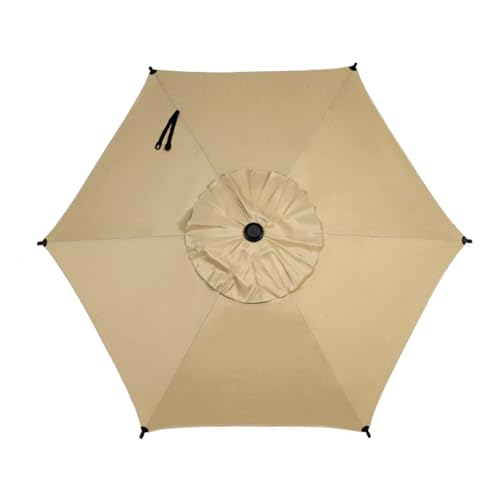
- Abba Patio 7.5 ft Lyon Replacement Canopy (canopy only) — Check on Amazon
- Rhino BaseMate Umbrella Base Weight Bag (18 inch) — Accessory — base weight bag, NOT an umbrella and NOT a base; search Amazon by the full product name to check price on Amazon
- Zippered Patio Umbrella Cover for 7–11 ft Market Umbrellas — Accessory — protective cover, NOT an umbrella; search Amazon by the full product name to check price on Amazon
- Patio Umbrella Bug Net / Mesh Screen — Accessory — insect netting, NOT an umbrella; search Amazon by the full product name to check price on Amazon
- Cordless LED Patio Umbrella Pole Light (clamp-on) — Accessory — umbrella light, NOT an umbrella; search Amazon by the full product name to check price on Amazon
- Repel Windproof Travel Umbrella — Handheld mini umbrella — NOT a patio umbrella; search Amazon by the full product name to check price on Amazon
Read the full guide ↓
Disclosure: As an Amazon Associate, dailyhomedecorating.com earns from qualifying purchases. Links to Amazon on this page are affiliate links; they cost you nothing extra. Listing details such as price and availability change often, so check the current Amazon listing before you buy.
Here is the straight answer behind the search for the best patio umbrella for backyards under $20: no complete patio umbrella worth owning exists at this price — not for a backyard, not from any verifiable maker. A real backyard umbrella is a two-section metal pole, six to nine ribs, a crank or pulley lift and square metres of outdoor fabric, and it still needs a heavy base that is sold separately. That list of parts cannot be honestly sold at this tier, and the listings that pretend otherwise are decorative parasols with plastic poles that snap in their first storm. What this budget genuinely buys is set out below, labelled without any spin: replacement fabric for a frame you own, ballast for a base that tips, a cover that stops the ageing, a bug screen and a light that extend an existing umbrella into the evening, and one handheld umbrella that shades exactly one person.
A backyard changes the emphasis compared with a balcony or a small patio. Space is rarely the problem; exposure is. Backyard umbrellas sit in open wind paths, ride out summer storms, host dinners that run past dusk and into mosquito hours, and winter in sheds and garage corners. So the ranking below leans into the backyard failure modes: fabric killed by UV and weather, bases beaten by gusts, evenings ended by insects and darkness. If you already own an umbrella — and most backyard readers searching this tier do, because theirs is failing — these six purchases are how a small budget makes it right again. If you own nothing, read the reality check, buy the accessory your future umbrella will need on day one, and step up to the tier where complete umbrellas exist; the final section shows where that is.
One more backyard truth shapes this guide: a cheap complete umbrella is not merely disappointing here, it is a hazard with a longer fall and a bigger sail. Umbrella incident and recall history is dominated by tipping, by arms and tilt mechanisms breaking, and — for solar models — by battery overheating that led to a very large recall. Those failures concentrate exactly where ultra-cheap products save money. Every pick below was screened against the CPSC recall record, and none of the recalled lines appears in this guide. Honest accessories for sound equipment beat a whole new umbrella built to fail.
The $20 Reality Check for Backyards
Do the parts maths once and the tier explains itself. Take the simplest legitimate backyard umbrella — a 7.5 to 9 ft market umbrella — and price its anatomy honestly: an aluminium or steel pole, a crank housing with a wound cord, six or more ribs with tips and pockets, a vented canopy of outdoor polyester, and the packaging and freight for a two-metre object. Then add the base, because the umbrella alone cannot stand: a base with real ballast is its own product with its own cost. Any ‘complete umbrella’ offered at a fraction of that anatomy has removed something structural, and in a backyard the removed thing is what the first thunderstorm finds. We verified this pattern across the tier and excluded every such listing rather than rank the least-bad toy.
The backyard-specific risk is worth stating plainly, because backyards feel safe. An open 9 ft canopy in a gust front carries enough force to drag or topple a light base, slide across a deck, and strike whatever is beside the table — and incident reports include exactly those strikes, plus cantilever arms breaking at their joints. The defences are unglamorous and cheap: ballast matched to canopy size, closing the umbrella when it is unattended or when weather approaches, tying it shut, and covering it dry. Notice that three of those four defences are products or habits in this guide. At this budget you cannot buy a better umbrella, but you can absolutely buy a safer one — the one you already own, properly weighted, closed and covered.
In this guide
Quick Picks
Six honest backyard purchases at this tier: one matched replacement canopy, three pieces of life-extension and stability gear for an umbrella you own, evening kit for it, and one personal-shade handheld. No complete umbrellas — each row says what the item really is.
| Pick | What it actually is | Best for | Amazon |
|---|---|---|---|
| Abba Patio 7.5 ft Lyon Replacement Canopy (canopy only) | Accessory — replacement canopy, NOT a complete umbrella | Refreshing a tired Lyon canopy on a sound frame | Check on Amazon |
| Rhino BaseMate Umbrella Base Weight Bag (18 inch) | Accessory — base weight bag, NOT an umbrella and NOT a base | Adding ballast to a base that tips in gusts | Prose-only — check price on Amazon |
| Zippered Patio Umbrella Cover for 7–11 ft Market Umbrellas | Accessory — protective cover, NOT an umbrella | Protecting a stored umbrella from UV and rain | Prose-only — check price on Amazon |
| Patio Umbrella Bug Net / Mesh Screen | Accessory — insect netting, NOT an umbrella | Mosquito-free evening dining under your umbrella | Prose-only — check price on Amazon |
| Cordless LED Patio Umbrella Pole Light (clamp-on) | Accessory — umbrella light, NOT an umbrella | Table light for after-dark backyard time | Prose-only — check price on Amazon |
| Repel Windproof Travel Umbrella | Handheld mini umbrella — NOT a patio umbrella | Personal shade while you work or walk the yard | Prose-only — check price on Amazon |
How These Picks Were Chosen
Selection began by refusing the category’s favourite lie: nothing was eligible to be called a patio umbrella unless it verifiably was one — metal pole, ribbed frame, working lift, outdoor canopy, stated dimensions from a real maker. At this tier nothing qualified, so the list was rebuilt around the backyard reader’s real situations: a fading umbrella, a tipping umbrella, an umbrella ageing in storage, evenings lost to insects and darkness, and a person working in open sun. Candidates had to be verifiable products with stated specifications — canopy fit and rib count, ballast capacity and fabric, cover size range, mesh and zipper construction, clamp and pole ranges.
Each survivor was screened against the CPSC recall record by brand and product type, with special attention to the category’s documented weak points: tilt and crank mechanisms, offset and cantilever arms, and solar battery systems, one of which produced a recall of hundreds of thousands of umbrellas. Solar models were excluded from this guide entirely at this tier. Fit for a backyard was the third screen: weather exposure, storage size, storm practicality and whether the item solves a problem backyards actually have. Amazon-linked picks in this guide carry ASINs confirmed through the site’s Creators API cross-check; prose-only picks are named in full so they can be found and checked directly, and their cross-check status is recorded in this article’s source notes.
The 6 Best Patio Umbrella Buys for Backyards Under $20 — Honestly Labelled
1. Abba Patio 7.5 ft Lyon Replacement Canopy (canopy only)
What it is: Accessory — replacement canopy, NOT a complete umbrella.
Replacement canopy made for the Abba Patio 7.5 ft Lyon market umbrella, 6-rib layout, UV-protection waterproof polyester in the Lyon colour range. Canopy only: the Lyon pole, crank and tilt hardware are not included, and fit is intended for that specific frame rather than for umbrellas in general.
Backyards are where budget umbrellas go to be forgotten — bought in May, left open through every storm, and discovered in September with fabric like tissue paper. If the frame underneath is an Abba Lyon and it still cranks smoothly with straight ribs, the canopy is the only part that actually died. A matched replacement is the most backyard-sensible purchase in this guide: no new pole to set, no new base to buy, and the old fabric is the only thing that leaves. Check the model honestly before ordering — this canopy is made for the Lyon, and ‘close enough’ sizing is how replacement fabric becomes a return.
Who it suits: you own an Abba Lyon whose frame is straight but whose fabric has faded or torn.
- Exact-fit fabric for Lyon owners instead of a gamble on universal sizing
- Fresh UV-protective, water-shedding polyester restores shade quality in one swap
- Cheaper and less wasteful than replacing a healthy aluminium frame
Honest limitation: Brand-specific fit is the catch: on a non-Lyon frame the pockets and vent alignment may not line up. Confirm your umbrella is actually a Lyon before buying.
Choose it if your Lyon frame is sound — matched fabric is the cheapest route back to full shade. Skip it if your frame is not a Lyon, or its ribs and crank are as tired as the fabric.
2. Rhino BaseMate Umbrella Base Weight Bag (18 inch)
What it is: Accessory — base weight bag, NOT an umbrella and NOT a base.
An 18-inch weight bag in heavy 900D fabric with a side opening that slides around an existing umbrella base or pole, filled by you with sand (sand is not included). It adds ballast to a base that is almost heavy enough. It is not itself a base: with nothing underneath it, there is nothing for it to weight down.
A backyard gives an umbrella room to fall, and summer storms give it the push. The classic setup — a light resin base that came free in a bundle — is ballast for a calm day and a liability in a gust front. A fill-in-place weight bag is the budget correction: it slides around the base you have, takes sand from a single hardware-store trip, and turns a nervous setup into a settled one. It also stores flat in winter, which matters in sheds already full of the rest of summer. What it will not do is rescue a base that is fundamentally wrong for the canopy size — if your umbrella is large and your base is a token, step up the base itself.
Who it suits: your backyard umbrella stands in a base that leans, walks or has tipped in a summer storm.
- Fixes the most common budget-umbrella failure — a too-light base — without buying a new base
- Side opening means you fill it in place instead of lifting a full bag
- Ships and stores flat, unlike cast-iron or resin bases
Honest limitation: You supply the sand and the existing base. On its own it holds no umbrella upright, and a filled bag still will not make an undersized base safe in strong wind.
Choose it if tipping is your problem and you already own the base it supplements. Skip it if you have no base at all — a weight bag supplements a base, it is not one.
Prose-only pick: search Amazon by the full product name above to check price on Amazon.
3. Zippered Patio Umbrella Cover for 7–11 ft Market Umbrellas
What it is: Accessory — protective cover, NOT an umbrella.
A waterproof Oxford-fabric storage cover sized for market umbrellas roughly 7 to 11 ft, with a zipper, a drawstring hem and, on many versions, a reach rod so you can pull it over a tall closed canopy without a step stool. It produces no shade at all; it protects the umbrella you already own from UV, rain and bird mess while it is closed.
In a backyard, the cover’s enemy list is longer than UV: pollen cemented by rain, bird mess, tree sap, and the slow mildew that starts in a folded, damp canopy. A zippered cover with a drawstring hem is how a budget umbrella survives to a third and fourth season, and the reach rod matters more than it sounds — a 9 ft umbrella’s crown is high enough that a cover without one simply never gets put on. The discipline is the product: cover it dry, every time, and the fabric you already paid for stops ageing between uses.
Who it suits: your umbrella winters in a garage corner or under a deck, uncovered, ageing a year per season.
- The single cheapest way to double the life of a budget canopy, which is where cheap umbrellas die first
- Zipper plus drawstring keeps it on in wind better than slip-on sleeves
- Fits a wide span of market sizes, so it survives an umbrella upgrade
Honest limitation: Useless if you do not already own an umbrella, and it must be put on a dry canopy — sealing in moisture invites mildew.
Choose it if you own an umbrella worth protecting and store it anywhere except a climate-controlled room. Skip it if you own no umbrella yet; shade first, protection second.
Prose-only pick: search Amazon by the full product name above to check price on Amazon.
4. Patio Umbrella Bug Net / Mesh Screen
What it is: Accessory — insect netting, NOT an umbrella.
A fine-mesh screen that hangs from the edge of an open patio umbrella and drapes to the ground or table line, usually with a zippered entry and a water-fillable or weighted bottom tube to keep it settled. It needs an open umbrella above it to hang from. It provides no shade of its own.
Every backyard has the same July equation: the umbrella makes dinner outside pleasant, and the mosquitoes make it short. A mesh screen that hangs from the umbrella you already own changes the venue without changing the furniture — no gazebo to permit, build or store. It is at its best over a dining table in the still, humid evenings when insects are worst and a breeze is absent anyway. It asks for an open umbrella above it and a little patience with the zipper, and in exchange it returns the whole evening.
Who it suits: your family eats outside in summer and spends the meal swatting mosquitoes.
- Converts an existing umbrella into a mosquito-free dining zone for evening meals
- Costs a fraction of a screened gazebo and packs away to almost nothing
- Zippered entry and weighted hem keep it usable rather than theatrical
Honest limitation: Entirely dependent on an umbrella you already have, and it changes the feel of the space — some people find dining inside netting claustrophobic.
Choose it if insects, not sun, are what drive your family indoors in the evening. Skip it if you have no umbrella to hang it from, or your yard’s insects are a daytime problem.
Prose-only pick: search Amazon by the full product name above to check price on Amazon.
5. Cordless LED Patio Umbrella Pole Light (clamp-on)
What it is: Accessory — umbrella light, NOT an umbrella.
A round cordless LED light that clamps around a standard umbrella pole and shines down onto the table, typically with several brightness settings and battery or USB-rechargeable power. It adds evening light to an umbrella you already own. It casts no shade, blocks no sun and does nothing at noon.
Backyard lighting usually fails at the table: the house lights the wall, the string lights look pretty and light nothing, and the meal happens in a gloom between them. A clamp-on pole light puts the light exactly where the umbrella already is — over the table — with no cord across the lawn to trip on or mow over. For households whose umbrella earns its keep at dinner time, this is the accessory that gets used nightly rather than seasonally, which at this budget is the definition of value.
Who it suits: your patio table is where evenings happen and the porch light does not reach it.
- Turns an existing umbrella into evening infrastructure for dinners and card games
- Clamp fits most standard pole diameters and moves between umbrellas in seconds
- No wiring, no outlet hunt, no electrician — renter-safe by design
Honest limitation: Purely a night accessory. If your problem is afternoon sun, a light solves none of it, and batteries or charging become one more chore.
Choose it if your shade is sorted and darkness is the remaining problem. Skip it if your problem is afternoon heat and sun, not evening darkness.
Prose-only pick: search Amazon by the full product name above to check price on Amazon.
6. Repel Windproof Travel Umbrella
What it is: Handheld mini umbrella — NOT a patio umbrella.
A compact folding rain umbrella: 11.5 inches folded, under a pound, nine resin-reinforced fibreglass ribs, a double-vented canopy with a water-repellent coating, and one-button automatic open and close. It shades one person, handheld, for as long as someone is willing to hold it. It mounts to nothing and shades no table.
Yard shade has two kinds: the fixed shade of the umbrella over the table, and the moving shade of whoever is weeding, planting, reading in the hammock or watching the grill. A handheld compact covers the second kind — honestly, for one person, with a hand occupied. In a big yard it earns its place in a way it never could as a table solution: it follows the work. Buy it as a personal tool, keep it by the back door, and never ask it to shade a gathering.
Who it suits: you garden, mow or supervise kids in full sun and want shade that follows you.
- Real, immediate personal shade and rain cover while you save for a proper patio umbrella
- Fibreglass ribs flex in gusts instead of snapping like cheap steel compacts
- Folds small enough for a balcony storage box, a tote or a car door pocket
Honest limitation: It is a rain umbrella, full stop. Coverage is one person, it ties up a hand, and it is not a substitute for mounted patio shade over furniture.
Choose it if you want moving, personal shade today and accept it covers one person. Skip it if you need shade over a table, a lounger pair or a children’s pool.
Prose-only pick: search Amazon by the full product name above to check price on Amazon.
Comparison Table
| Pick | Type | Provides shade? | Needs an existing umbrella? |
|---|---|---|---|
| Abba Patio 7.5 ft Lyon Replacement Canopy (canopy only) | Accessory — replacement canopy, NOT a complete umbrella | No — fabric for an existing Lyon frame | Yes — an Abba Lyon frame |
| Rhino BaseMate Umbrella Base Weight Bag (18 inch) | Accessory — base weight bag, NOT an umbrella and NOT a base | No | Yes — umbrella plus base |
| Zippered Patio Umbrella Cover for 7–11 ft Market Umbrellas | Accessory — protective cover, NOT an umbrella | No | Yes |
| Patio Umbrella Bug Net / Mesh Screen | Accessory — insect netting, NOT an umbrella | No | Yes |
| Cordless LED Patio Umbrella Pole Light (clamp-on) | Accessory — umbrella light, NOT an umbrella | No | Yes |
| Repel Windproof Travel Umbrella | Handheld mini umbrella — NOT a patio umbrella | One person, handheld | No |
The shade column tells the story of this tier: nothing here shades a backyard table by itself. The canopy restores shade through your frame, the handheld shades one moving person, and the rest protect, stabilise, screen or light the umbrella at the centre of your yard. Ranked against the problem you actually have, though, each is the best spend available at this budget.
A sensible backyard sequence: if it tips, ballast first; if it fades, cover now and canopy when the fabric fails; if evenings end early, net and light in whichever order insects and darkness bother you more. And if you own nothing at all, the cover or the weight bag is still a rational first buy — your future umbrella will need both from its first weekend.
How to Choose a Patio Umbrella Strategy for a Backyard When the Budget Is $20
Diagnose before you shop; backyards present four distinct failures and each has a different cure. Failure one is fabric death — fading, tearing at the pockets, mildew — over a frame that still cranks smoothly: cure is a matched replacement canopy, after counting ribs and confirming the model it is made for. Failure two is instability — leaning, rattling, a base that walks across the deck: cure is ballast, provided the base is roughly right for the canopy; a fundamentally undersized base under a big canopy should be replaced, not supplemented. Failure three is slow ageing in storage: cure is a zippered cover, used dry, every time. Failure four is the evening exodus — insects and darkness: cure is the net and the pole light, in the order your family feels them.
Measure the things that decide fit. For canopies: rib count, rib length hub-to-tip, and the exact model name — replacement fabric is the least universal product in the umbrella world. For covers: your umbrella’s canopy size and closed length against the cover’s stated range. For ballast: your canopy diameter and your base’s stated rating, remembering that maker minimums assume sheltered conditions and backyards are rarely sheltered. For nets: your umbrella’s diameter, because a net sized for a larger canopy drapes and pools, and one sized smaller will not close. Ten minutes with a tape measure is the difference between an accessory that works and a return label.
Then plan the step up honestly, because most backyard readers will buy a complete umbrella eventually. Know that the real entry tier for a complete 7.5 to 9 ft market umbrella — bought together with a proper base — sits well above this budget, and that cantilever and solar models sit higher again, with a safety record that rewards buying them slowly from established makers. The related guides at the end of this article map those tiers for backyards specifically. Money spent on this guide’s accessories is not lost when you step up: covers, ballast, nets and lights all transfer to the next umbrella.
Storms, Storage and the Backyard Umbrella’s Real Enemies
Ask what actually kills backyard umbrellas and the answers are rarely dramatic. Ultraviolet light breaks down polyester fibre season after season, fastest on the crown and the pocket stitching that holds fabric to rib tips. Rain followed by closed storage breeds mildew in the folds, and mildew is not cosmetic — it weakens the same stitching. Wind does its damage in minutes rather than months, but usually to an umbrella that UV and mildew had already weakened, or to one standing in a base that was never heavy enough. The expensive umbrella and the cheap one are made of similar fabric; the difference in lifespan is mostly exposure management, which is why this guide spends its budget there.
Storm discipline deserves its own paragraph because backyards breed false confidence: the umbrella is ‘in the garden’, far from the house, and nobody wants to go out in rising wind to close it. Do it anyway, and do it early — the time to close and tie an umbrella is when the forecast or the sky first suggests weather, not when the canopy starts to strain. Incident patterns in the umbrella category repeat one scenario: an open umbrella, unattended, in a gust. A tied, closed canopy presents almost no sail; a covered one presents none and stays dry. If your yard is a wind path — between houses, across open lawn — treat ballast as a system: base plus weight bag, sized for the gusty day, not the average one.
Storage is the third enemy and the easiest to beat. The worst winter home for an umbrella is leaning open-frame in a damp garage corner, fabric folded wet. The best is free: canopy dry, cover on, standing or hanging in the driest spot you have, crank cord relaxed rather than wound under tension. Check the tilt joint and crank before the first spring use — grit washed out with a hose, a stiff mechanism worked gently, never forced. Push-button tilts and small crank housings are the category’s known pinch and breakage points; five patient minutes in April is what keeps them boring, and boring is exactly what umbrella hardware should be.
Finally, a word about the solar temptation, because backyards are where solar umbrellas are most marketed and most used. A large line of solar LED market umbrellas was recalled after reports of the lithium battery in the solar puck overheating and catching fire — on umbrellas that were, by backyard standards, ordinary and popular. That history does not condemn every solar model, but it does set the buying rule: never the cheapest, never unverified, always checked against the current recall record, and always charged and stored exactly as the maker instructs. At this guide’s budget the question is moot — no solar umbrella belongs here — but the rule will matter when you step up.
Common Buying Mistakes
Replacing the whole umbrella when only the fabric died. If the frame cranks smoothly and the ribs are straight, a matched canopy restores the umbrella for a fraction of a replacement — and produces a fraction of the waste.
Supplementing a hopeless base. A weight bag fixes a nearly adequate base. A token base under a large canopy in an open yard needs replacing, not decorating.
Leaving the umbrella open through storms ‘because it survived last time’. Survival is not a rating. Close it, tie it, and let the cover take the weather.
Storing the canopy wet. Mildew in the folds weakens pocket stitching, and pocket stitching is what a gust tests first. Dry before covering, always.
Buying the net or light before the shade. Evening accessories multiply an umbrella you have; they substitute for nothing. Sequence shade, stability, then evenings.
Chasing a solar umbrella at the lowest price. The category’s battery recall history makes the cheapest solar listing the worst buy in the umbrella world. Verify the maker, check the recalls, follow the charging instructions.
Final Recommendation
The backyard verdict matches the search’s reality: at this budget there is no patio umbrella to crown, and pretending otherwise would send you a toy that a thunderstorm would return. What the budget does brilliantly is rescue and extend: matched fabric for a sound Lyon frame, ballast that ends the tipping, a cover that ends the fade, a screen and a light that give you back the evenings, and a handheld that shades the gardener. For most backyard readers — whose umbrellas are failing rather than absent — that is not a consolation prize; it is the correct shopping list.
When the step up comes, buy the complete umbrella and its base as one decision, at the tiers the related guides map for backyards, and bring this guide’s gear with you — every item here transfers. Shade bought honestly, weighted properly and stored dry is how a backyard umbrella becomes a five-season fixture instead of an annual purchase.
Best Patio Umbrella for Backyards Under $20: A Season Plan for the Yard
Backyard shade runs on a calendar, and a small budget goes furthest when it is spent in the calendar’s order. In early spring, before the first warm weekend tempts you to just open everything and hope, give the umbrella its annual inspection on the driveway where you can see it properly. Open the canopy fully and sight along each rib for bends. Work the crank slowly through its full travel and listen: a smooth, even resistance is health; grinding, slipping or a cord that jumps is a mechanism asking for retirement, not another season. Check the tilt joint through its range without force, and hose the whole frame down to clear the winter’s grit from the hub and collar before it grinds into the moving parts.
Spring is also ballast season, because summer storms do not send warnings that respect your schedule. Set the base on its flattest, firmest spot — deck boards or pavers, not lawn that softens after rain — seat the pole fully, and add the weight bag if last year gave you even one nervous afternoon. Then perform the test nobody does: push the open canopy firmly at its edge, the way a gust front’s first second would, and watch the base. A setup that shrugs is ready; a setup that rocks is a shopping list, and it is far better written in April than read out in July.
Through summer, the routine is measured in minutes per week. Close and tie the umbrella when the yard empties, and make it a household rule rather than a personal preference, because the person who leaves it open is rarely the person who priced a replacement. After storms, walk the yard before you open anything: a canopy that took a gust closed and tied will be exactly as you left it, and that boring outcome is the entire point. Keep the cover’s zipper and drawstring working with an occasional brush-down, and store the net and light indoors between uses — accessories left outside age at the same rate as the umbrella they serve, which defeats the purpose of buying them.
Autumn is when this guide’s logic pays out a second time. The canopy that was covered dry all season comes off — or stays on its frame under its cover — without the mildew smell and weakened pockets that end budget umbrellas. If the fabric did fail, autumn is when you measure ribs and count pockets for a replacement canopy, while the frame is in front of you rather than in spring’s first-weekend rush. Note what the season taught you in one honest list: did it tip, did it fade, did the evenings end from insects or darkness? That list, not advertising, is next year’s first purchase.
And when replacement day finally comes for the whole umbrella, the yard will already own its supporting system: ballast that fits the space, a cover in the right size, a net and a light that transfer to any standard pole. The complete umbrella bought then — at the backyard tiers linked below — slots into a working system instead of starting from zero. That is what a $20 season buys in a backyard: not a lesser umbrella, but a longer-lived one, and a setup that gets more deliberate every year.
The Backyard Umbrella Care Checklist
Weekly: close and tie the umbrella when the yard empties, and make it a household rule rather than one person’s habit. Brush leaves and seeds off the closed canopy before they stain, and give the base a visual once-over — a base that has crept on pavers or sunk on one side into softened ground announces itself quietly before it fails loudly in a storm.
Monthly: work the crank and tilt through their full ranges, rinse grit and pollen cement from the hub, and check the cord where it enters the crank housing for fraying. Backyard umbrellas live in a soup of pollen, dust and sprinkler water, and mechanisms that are exercised and rinsed monthly stay smooth for years, while identical mechanisms left seized are forced once and broken forever.
Each season: wash the canopy with mild soap and water, dry it fully in the sun, and inspect every rib-tip pocket and the crown vent stitching. Check the cover, net and light before storing them — accessories put away dirty or damp come back a season older than they should. Note in one line what the season taught you: tipping, fading, insects or darkness. That line is next year’s first purchase, in the right order.
Before any storm: close and tie the umbrella at the first serious forecast, not the first gust. Move the net and light indoors, confirm the weight bag is seated, and if your yard is a known wind path, lay the whole umbrella down or move it under cover entirely. A backyard gives you room to be conservative; use it.
Over winter: store the umbrella dry, covered, and off the ground in the driest spot the shed or garage offers, with the crank cord relaxed. Keep the accessories together in one box so spring setup is a single trip. An umbrella wintered this way starts its next season as the same umbrella; one wintered damp in a corner starts it as a replacement discussion.
One more backyard consideration deserves space before the questions below: children and pets change the umbrella’s risk profile in ways product pages never mention. A crank handle at head height for a seven-year-old, a tilt button that invites experimentation, a base that becomes a climbing step — none of these are product defects, but all of them are backyard realities. Set the umbrella up with the household you actually have: crank handles secured, the umbrella closed when play gets rowdy around it, and a standing family rule that the umbrella is furniture, not playground equipment. The same discipline that protects the umbrella from storms protects the household from the umbrella, and in a family yard that symmetry is the whole safety argument in one sentence.
Frequently Asked Questions
Why is there no actual umbrella in a guide about backyard umbrellas under $20?
Because no verifiable maker sells a complete, real patio umbrella at this tier. The listings that claim to are decorative parasols with plastic poles and unstated dimensions. Rather than rank toys, this guide ranks the honest purchases at the budget — accessories that restore, stabilise, protect and extend an umbrella you own, plus one handheld for personal shade.
My umbrella’s fabric is torn but the frame works. What should I do?
Buy a matched replacement canopy. Count the ribs, measure a rib from hub to tip, and confirm the canopy is made for your model — the Abba canopy in this guide fits the Lyon frame specifically. Swapping fabric takes minutes and restores the umbrella for far less than replacing it.
How do I stop my backyard umbrella tipping over?
Add ballast matched to your canopy size, keep the pole seated fully in the base, and close the umbrella when unattended or when weather approaches. A weight bag supplements a nearly adequate base; if the base is fundamentally undersized for a large canopy, replace the base itself.
Does a cover really extend an umbrella’s life?
Yes — most budget canopy death is UV and moisture damage while the umbrella sits closed and stored, not wear while open. A zippered cover used on a dry canopy interrupts that cycle, and a reach rod makes the cover easy enough that it actually gets used on tall umbrellas.
Are patio umbrella bug nets worth it?
For evening dining in mosquito country, yes: a net turns the umbrella you own into a screened dining space for a fraction of a gazebo’s cost and storage. It needs an open umbrella to hang from, it works best in still air, and the zippered entry is the feature to insist on.
When should I just buy a complete new umbrella?
When the frame is bent, the crank slips or the tilt joint is damaged — fabric cannot fix mechanics. Buy at the tiers where complete 7.5 to 9 ft umbrellas with real bases exist, which the related backyard guides below cover, and transfer your cover, ballast and light to the new setup.
Related Guides
Ready to look at complete backyard umbrellas at tiers where they actually exist — or finishing the rest of the yard? Start here:


