Where to buy
Check the latest price, availability and delivery on Amazon. Orders are placed on Amazon. We may earn a commission from qualifying purchases.
- The tabletop benchmark — usually above this budget (prose-only): Cuisinart COH-514 Portable Tabletop Patio Heater (covered in prose below; no link because it was listed above this budget when checked)
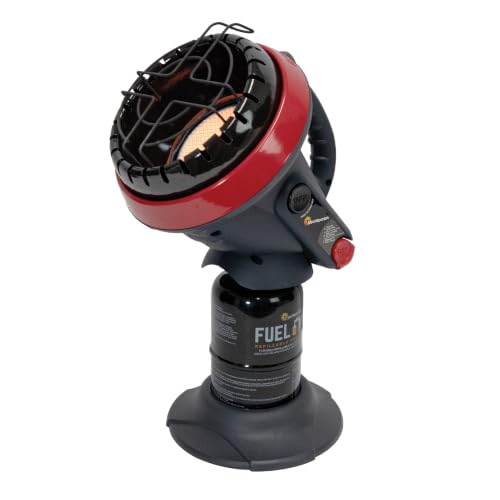
- Best overall under $75: Mr. Heater Little Buddy MH4B Portable Radiant Propane Heater — Check on Amazon
- Best for aiming heat at a seat or work spot: Heat Hog 4,000 BTU Portable Propane Radiant Heater — Check on Amazon
- Best electric option (no flame, no fuel): Joanolga 1500W PTC Ceramic Electric Heater — Check on Amazon
- Classic lamp-style tabletop — usually above this budget (prose-only): Hiland HLDS032-B Portable Table Top Patio Heater (covered in prose below; no link because it was listed above this budget when checked)
- Stainless tabletop with hidden cylinder — usually above this budget (prose-only): Fire Sense 60262 Portable Tabletop Patio Heater (covered in prose below; no link because it was listed above this budget when checked)
Read the full guide ↓
Disclosure: As an Amazon Associate, dailyhomedecorating.com earns from qualifying purchases. Links to Amazon on this page are affiliate links; they cost you nothing extra. Listing details such as price and availability change often, so check the current Amazon listing before you buy.
Choosing the best patio heater for outdoor entertaining under $75 is an exercise in hosting honesty. Entertaining means guests — four, six, eight people spread across a table and a seating set, moving around, in and out of the warm spots. No single heater under $75 warms that scene, and this guide will not pretend one does. What this budget does for a host is more specific and genuinely useful: it warms the anchor points where guests settle — the dining table, the two chairs where the last conversation always happens — and it does it with equipment you can buy this week without a second thought.
The entertaining lens also reorders priorities. Looks matter more here than anywhere else in this series: a heater at a dinner party is furniture, sitting in the middle of the table your guests are looking at. That is why the Cuisinart tabletop leads this guide’s reviews despite being prose-only — it was listed above the $75 ceiling when checked, and it is still the format a host actually wants, so it is covered in full, clearly labelled, for the moment it goes on sale. The linked picks — two portable propane panels and one electric unit — are the workhorses that warm the seating corners the table heater cannot reach.
Hosting adds a safety dimension too. Guests do not know your patio’s rules; they lean, reach, hang jackets on chair backs and set napkins down without thinking. A host’s heater setup has to be safe for people who are not paying attention, which means stable placement, clear walkways, and heat sources positioned where a relaxed evening cannot knock into them. The safety section below is written with exactly that room in mind.
In this guide
Quick picks: the patio heater for outdoor entertaining under $75 lineup at a glance
| Pick | Format | Fuel | Output | Best for |
|---|---|---|---|---|
| Cuisinart COH-514 Portable Tabletop Patio Heater (prose-only) | True tabletop patio heater | Propane (1 lb cylinder) | 11,000 BTU | A real tabletop heater, if you find it discounted |
| Mr. Heater Little Buddy MH4B Portable Radiant Propane Heater | Portable radiant panel — not a tabletop unit | Propane (1 lb cylinder) | 3,800 BTU radiant | One or two people sitting close; the safest propane buy in budget |
| Heat Hog 4,000 BTU Portable Propane Radiant Heater | Portable radiant panel with angled head — not a tabletop unit | Propane (1 lb cylinder) | 4,000 BTU radiant | Aiming warmth at a chair, bench or work spot |
| Joanolga 1500W PTC Ceramic Electric Heater | Compact electric fan heater — not a radiant patio heater | Electric, 1500W fan-assisted PTC | 1500W, three modes | Balconies and covered spots where open flame is banned |
| Hiland HLDS032-B Portable Table Top Patio Heater (prose-only) | True tabletop patio heater, lamp style | Propane (1 lb or 20 lb tank) | 11,000 BTU | Tabletop lamp style with a 20 lb tank option |
| Fire Sense 60262 Portable Tabletop Patio Heater (prose-only) | True tabletop patio heater | Propane (1 lb cylinder) | 10,000 BTU | A tidy tabletop look with the cylinder hidden |
How the picks were chosen
Every candidate for this guide had to pass the same filters, in this order. First, the budget filter, applied honestly: a heater only earns a buying link if it was actually listed within the $75 ceiling when checked. That single rule reshaped this guide, because the classic tabletop patio heater — the little lamp that sits in the middle of the table — has largely moved above $75. Rather than pretend otherwise, this guide links what the budget genuinely buys and covers the best-known tabletop models in prose, clearly labelled, so you can recognise them and judge any sale price for yourself.
Second, the safety filter. Any propane model without a tip-over or anti-tilt shutoff was cut, and every pick was checked against CPSC recall records before inclusion; recalled products are excluded entirely and never recommended. Third, the honesty filter on format: several picks below are portable radiant panels or a compact electric fan heater rather than true tabletop patio heaters, and each one is labelled as exactly what it is, in its review and in the tables. A small heater that warms one person well is a good product; pretending it warms a patio would make it a bad recommendation.
Fourth, verification. Product names, outputs and safety features were cross-checked against manufacturer information and the Amazon Creators API listing data for this site, and each article’s source file records what was confirmed and when. Prices move constantly, which is why this guide never prints a product price — check the current listing before you buy, especially for the prose-only tabletop models, which do get discounted.
The host’s math: anchor points, not area coverage
Watch any good outdoor evening and you will see it is not evenly spread. People cluster: around the table while food is out, then in the deep chairs afterwards, with a standing group near the drinks. Heating for entertaining means heating the clusters. A tabletop unit owns the table cluster. A radiant panel owns the after-dinner chairs. The standing group, honestly, warms itself with movement and drinks, and no budget heater changes that.
This is also why two modest heaters beat one bigger one for a host. A single mid-priced heater creates one warm island and a patio of cold guests orbiting it; two personal-scale units at the two natural clusters make the whole evening feel considered. Under this guide’s budget you can link-buy the panels today and add the tabletop on sale later — a staged plan that matches how parties actually use a patio. What does not work is the last-minute panic buy of a no-name heater with no safety shutoff because guests arrive Friday. The filters in this guide exist for that moment.
Safety first: fire, carbon monoxide, clearances and tip-over
Every heater in this guide makes real heat, and the propane models make an open flame. That combination deserves a full section, not a footnote, because the mistakes that hurt people with small heaters are almost always placement mistakes, not product defects.
Carbon monoxide. Propane heaters burn fuel and produce carbon monoxide. They are outdoor appliances, full stop. Never run one inside a house, a garage, a tent, a camper, or an enclosed or screened porch, and never under a solid cover that traps exhaust around people. Carbon monoxide is colourless and odourless, and the CPSC warns that outdoor heaters used indoors can build up deadly levels in minutes. If a space has walls and a roof, it is indoors for the purposes of this rule. The electric pick in this guide produces no carbon monoxide, which is its single biggest advantage.
Clearances. Keep any propane heater well away from anything that can burn: furniture cushions, table umbrellas, pergola curtains, dry plants, stacked firewood, and the siding of the house. Heater manuals commonly require clear space on all sides and generous clearance above the reflector — read the clearance figures in your own manual and treat them as minimums, not suggestions. Never set a tabletop heater under an umbrella, and never run any heater where a guest’s sleeve, a paper napkin or a child’s hand can drift into the burner guard.
Tip-over and stability. Small heaters are light, and light things get knocked. Choose models with a tip-over or anti-tilt shutoff, set them on a flat, hard, level surface — never on a wobbly side table, a soft cushion or gravel that lets a base rock — and keep them out of the walkway where feet and chair legs catch. A tabletop unit belongs in the centre of a sturdy table, not at its edge, and never on a table a dog can bump.
Fuel handling. Fit 1 lb cylinders hand-tight, check for leaks with soapy water if a connection smells of gas, and never store spare cylinders indoors or near the heater while it runs. Let a heater cool fully before moving or covering it. One specific warning: do not use refill adapters to refill disposable 1 lb propane cylinders. Those cylinders are not built or certified for refilling, refilled disposables are illegal to transport, and a damaged valve on a refilled cylinder is a leak waiting for a spark. If you run a small heater often, the safe routes are a maker-approved refillable 1 lb system or a heater that connects to a standard 20 lb tank with a proper hose.
Electric safety. The electric pick plugs into a wall outlet — directly, never through a lightweight extension cord or a power strip, which can overheat under a continuous 1500W load. Keep its cord out of walkways, keep it dry unless its rating says otherwise, and give its intake and outlet the breathing room the manual specifies.
The three heater types in this budget, explained
Hosts shop by photograph, which is dangerous in this category: the three types under $75 look interchangeable in a listing grid and behave nothing alike at a real table.
Portable radiant panels — the Little Buddy and Heat Hog format — burn propane behind a glowing ceramic plaque and throw that heat in one direction, like sunlight. They warm objects and people in their path rather than the air, which is why a modest BTU figure can feel generous at two feet and irrelevant at ten. They are light, instant and cordless, they carry the strongest safety packages in this class, and they are the format this budget buys best. Their weakness is coverage: one panel, one or two people, one direction.
True tabletop patio heaters — the Cuisinart, Hiland and Fire Sense format — put a burner under a reflector hood in the centre of a table, raining warmth down and out over everyone seated around it. At 10,000 to 11,000 BTU they are roughly three times as powerful as the panels, and they are the only format that heats a group symmetrically. They are also the format that has drifted above this budget, the hungriest on 1 lb cylinders, and the most demanding about overhead clearance. Everything good and bad about this guide’s prose-only section follows from those three facts.
Compact electric heaters — represented here by a fan-assisted PTC unit — make heat from a wall outlet and move it with a fan. They produce no flame and no carbon monoxide, start and stop instantly, and cost little to run, but moving air is a fragile way to deliver warmth outdoors: wind strips it, distance dilutes it, and the unit must live within direct-plug reach of an outlet in a sheltered spot. Judged as an outdoor appliance for a covered corner they are genuinely useful; judged as a patio heater for open air they are miscast, and this guide reviews the electric pick on exactly those terms.
Detailed reviews: best patio heater for outdoor entertaining under $75 picks, one by one
Cuisinart COH-514 Portable Tabletop Patio Heater
The best-known true tabletop patio heater: 11,000 BTU, an anti-tilt safety switch, adjustable heat and a burner screen guard, with a maker-rated heat range of about 30 square feet. At the time of checking it was listed above the $75 ceiling of this guide, so it appears here without a buying link — know what the format leader looks like, and buy it only if you catch it discounted or decide the tabletop format is worth stretching for.
Who it suits: Anyone whose real goal is the classic picture: a small heater glowing in the centre of the patio table, warming everyone seated around it. This is the format leader among true tabletop models.
What we like:
- A genuine tabletop patio heater — 11,000 BTU under a reflector, roughly triple the output of the portable panels in this guide
- Anti-tilt safety switch, adjustable heat control and a burner screen guard
- Maker rates the heat range at about 30 square feet — a bistro table or a small dining set
- Runs on a standard 1 lb cylinder and assembles in minutes
Honest limitation: At check time it was listed above the $75 ceiling of this guide, which is why it carries no buying link here. Its 1 lb cylinder also empties fast at full output — a couple of hours of real heat per cylinder is a fair expectation, so tabletop ownership means keeping spare cylinders on hand.
For entertaining, this is the centrepiece pick: it sits in the middle of the table like it was designed for the photograph, because it was. Guests feel its warmth across a small dining set, and its adjustable heat lets you turn it down as the evening and the wine warm up. Above budget at check time — buy it on sale, or buy it knowing exactly which line you are crossing and why.
Living with it: tabletop ownership means cylinder discipline — at full output a 1 lb cylinder is a short-evening fuel supply, so owners keep a small stock and swap before guests arrive rather than during. The reflector benefits from a wipe when it dulls, and a fitted cover (the maker sells one sized for this heater family) keeps a tabletop unit presentable between uses. Assembly is a one-time ten minutes; after that it lives on the table like furniture.
Choose or skip: Choose it — when it is discounted into your budget, or if you decide the true tabletop format is worth stretching for — if table-centre heating is the whole point. Skip it at full price if the $75 cap is firm; the linked picks above are what the cap honestly buys.
Prose-only pick: no buying link, because it was listed above this budget when checked. Search Amazon by the model name to see its current listing.
Mr. Heater Little Buddy MH4B Portable Radiant Propane Heater
The only established-brand propane heater that genuinely lives inside this budget: a 3,800 BTU radiant panel with a low-oxygen shutoff and tip-over switch, made to warm one or two people up close rather than a whole patio.
Who it suits: Anyone who wants proven, branded propane warmth for one or two people sitting close — beside a pair of chairs, at the edge of a fire pit circle, or next to a workbench just outside the garage door.
What we like:
- Genuine low-oxygen shutoff (ODS) plus an accidental tip-over switch — the strongest safety package in this budget class
- Radiant panel throws heat straight at people, so 3,800 BTU feels more useful than the number suggests
- Runs on a standard 1 lb cylinder, lights with a simple piezo ignition, and needs no assembly beyond attaching the cylinder
- From the most established name in portable propane heat, with parts and support that actually exist
Honest limitation: It is a portable radiant panel, not a tabletop patio heater: it will not sit in the middle of a dining table warming six people, and its heat falls off quickly beyond a few feet. Output is fixed rather than finely adjustable, and wind steals radiant heat outdoors.
For entertaining, the Little Buddy is the host’s utility player: it warms the after-dinner chairs, then moves to wherever the last two guests are still talking at midnight. Its proven shutoffs matter doubly around guests who did not read any manual, and its plain looks disappear behind chairs rather than competing with your table setting.
Living with it: ownership is mostly about cylinders. Keep two spares and the swap takes ten seconds in the dark once you have done it twice. The panel face benefits from a soft brush-down at season’s end, and the unit stores on a shelf like a lantern. Owners who treat it as a permanent outdoor fixture get a shorter life from it than owners who bring it in — it is portable, so let it be portable, and it will repay you with years of uncomplaining service.
Choose or skip: Choose it if you want the safest, most proven propane warmth this budget can buy and your group is small. Skip it if you need to warm a whole table or a wide seating area — no heater under $75 honestly does that.
Heat Hog 4,000 BTU Portable Propane Radiant Heater
A close rival to the Little Buddy with a slightly higher output rating and an angled heating head you can tilt toward cold legs and hands, which makes its modest output feel bigger than it is.
Who it suits: People who sit in one place — a favourite chair, a fishing spot on the dock, a tailgate seat — and want to aim warmth exactly where they are instead of heating the air around everyone.
What we like:
- Angled, tiltable heating head lets you point radiant heat at legs and hands instead of the sky
- Slightly higher output rating than the Little Buddy in the same portable format
- Runs on the same standard 1 lb cylinders, so fuel is cheap and everywhere
- Purpose-built base keeps the cylinder stable on flat ground
Honest limitation: The brand is younger and its long-term parts support is less proven than Mr. Heater’s, and like every small radiant panel it warms a person, not a patio — step a few feet away and the effect mostly disappears.
For entertaining, the Heat Hog’s tilt makes it the set-and-forget corner unit: aim it at the loveseat or the bench before guests arrive and that seat stays claimed-and-warm all evening. Hosts with a fixed seating layout will get more from its aimed heat than from a second all-purpose panel.
Living with it: the tilt mechanism is the part to keep clean — grit in the hinge makes aim adjustments crunchy, so a wipe-down when you swap cylinders keeps it smooth. Like the Little Buddy it runs on the same 1 lb cylinders, so a household can share one fuel stock between both. Store it head-protected; the heating plaque is the business end and does not love being knocked against shed walls.
Choose or skip: Choose it if the tilting head solves your exact seating setup. Skip it if you prefer the longest track record and the ODS safety sensor — that is the Little Buddy.
Joanolga 1500W PTC Ceramic Electric Heater
A plug-in PTC fan heater sold for patios, greenhouses and garages. It is not a radiant patio heater and will not warm open air the way flame does, but it is the only format here with no combustion at all — which is exactly why it matters for balconies and covered spots where burners are banned.
Who it suits: Apartment balconies, covered porches and anywhere an open flame is banned, plus anyone who refuses to store propane. It is the only pick here with no combustion, no carbon monoxide and no fuel to buy.
What we like:
- No flame, no fuel, no carbon monoxide — the only format in this guide that can be legal where burners are prohibited (still check your lease and local rules)
- Three heat modes and overheat protection, with instant on/off and no cylinders to swap mid-evening
- Fan assistance spreads warmth around a small seating nook better than a bare radiant panel spreads it in still air
- Costs nothing to run beyond household electricity and needs no ventilation decisions
Honest limitation: Be honest about what it is: a compact electric fan heater, not a radiant patio heater. Fan-driven warm air dissipates fast in open outdoor air and in wind, it draws a full 1500W that must go straight into a wall outlet (no extension cords), and it is not a rain-proof outdoor appliance — bring it in when the evening ends.
For entertaining, the electric pick serves the covered-porch dinner and the drinks station near the house wall — anywhere an outlet and shelter coincide. It also solves the mid-party fuel problem: no cylinder dies halfway through dessert, because there is no cylinder. Keep it out of walkways; a cord across a party is a trip waiting for a dark moment.
Living with it: the ownership cost is a small electric bill and a dusting habit — fan heaters pull lint into their intakes, and a vacuum brush over the grille monthly keeps output honest. There is no fuel shelf, no cylinder stock, nothing to run out of at the wrong moment. Its limits are weather and reach, not maintenance: it comes indoors when the evening ends, and that thirty-second habit is the whole ownership routine.
Choose or skip: Choose it if flame is banned where you live or you simply want zero fuel hassle for a small, sheltered spot. Skip it for an open, windy patio — moving air defeats it, and a propane radiant panel will serve you better.
Hiland HLDS032-B Portable Table Top Patio Heater
The long-running lamp-style tabletop design: 11,000 BTU under a reflector hood, able to run on a 1 lb cylinder or, with the maker’s hose arrangement, a 20 lb tank. Also listed above this guide’s $75 ceiling when checked, so it is covered in prose only.
Who it suits: Traditionalists who like the lamp-style tabletop silhouette and anyone who hates swapping 1 lb cylinders: this design can also run from a 20 lb tank with the maker’s hose arrangement, which stretches runtime enormously.
What we like:
- 11,000 BTU tabletop output in the classic reflector-hood lamp format
- Fuel flexibility: 1 lb cylinder for a short evening, 20 lb tank for a long one
- A long-running design with widely available replacement parts
- Stainless finish shrugs off outdoor storage better than painted steel
Honest limitation: Also listed above this guide’s $75 ceiling when checked, hence prose-only here. The lamp format is tall for a tabletop unit, so overhead clearance matters even more than usual, and the 20 lb hose arrangement adds a trip hazard to manage.
For entertaining, the Hiland on a 20 lb tank is the long-evening answer: no mid-party cylinder swap in front of guests, and the lamp format reads as patio furniture rather than equipment. It was above budget when checked — a deliberate stretch purchase for frequent hosts, covered in prose so the decision is an informed one.
Living with it: run on a 20 lb tank, this is the lowest-effort heater in the guide — weeks of evenings between tank thoughts, at the price of a hose to route and a tank to house. Run on 1 lb cylinders it behaves like the Cuisinart: keep spares. The lamp format’s height makes it the one unit here that wants a proper cover and a stable storage corner rather than a shelf.
Choose or skip: Choose it if you find it on sale and the dual-fuel option appeals. Skip it if overhead clearance above your table is tight or if a hose across the patio is a non-starter.
Prose-only pick: no buying link, because it was listed above this budget when checked. Search Amazon by the model name to see its current listing.
Fire Sense 60262 Portable Tabletop Patio Heater
A stainless tabletop heater with the 1 lb cylinder concealed inside the base, an auto-shutoff valve and CSA approval. Neat, proven — and, like the other true tabletop models, listed above $75 at check time, so no link here.
Who it suits: Design-conscious buyers: the cylinder hides inside the stainless base, so the table keeps a clean look, and CSA approval plus an auto-shutoff valve cover the safety basics.
What we like:
- 10,000 BTU tabletop output with the 1 lb cylinder concealed in the base
- Auto-shutoff valve and CSA approval
- Stainless steel build suits coastal and humid climates
- Lightweight enough to move from table to table as the evening shifts
Honest limitation: Listed above the $75 ceiling at check time, so no link in this guide. Output and heat pattern are a step behind the Cuisinart’s, and the hidden-cylinder design means checking fuel level means opening the base.
For entertaining, the Fire Sense is the stylist’s tabletop: stainless, tidy, cylinder hidden, nothing to explain to guests. Slightly less heat than the Cuisinart and above budget at check time, but for a small, pretty table it is the one guests will compliment.
Living with it: the hidden-cylinder design means fuel checks are a small ritual — open the base, heft the cylinder, close it up — best done in daylight before the evening, not by torchlight during it. Stainless steel forgives coastal air and casual storage better than painted finishes, which is part of what its price buys. Everything else is standard tabletop ownership: spares on hand, reflector wiped, cover on between weekends.
Choose or skip: Choose it on sale if looks matter and you want a proven tabletop name. Skip it if maximum heat per dollar is the priority.
Prose-only pick: no buying link, because it was listed above this budget when checked. Search Amazon by the model name to see its current listing.
Comparison table: best patio heater for outdoor entertaining under $75 contenders side by side
| Model | Fuel | Output | Safety shutoffs | Burns on a 1 lb cylinder? | Link status |
|---|---|---|---|---|---|
| Cuisinart COH-514 Portable Tabletop Patio Heater | Propane | 11,000 BTU | Anti-tilt switch | Yes | Prose-only — above budget at check |
| Mr. Heater Little Buddy MH4B Portable Radiant Propane Heater | Propane | 3,800 BTU | Low-oxygen (ODS) + tip-over | Yes | Linked — check price on Amazon |
| Heat Hog 4,000 BTU Portable Propane Radiant Heater | Propane | 4,000 BTU | Tip-over protection (per maker) | Yes | Linked — check price on Amazon |
| Joanolga 1500W PTC Ceramic Electric Heater | Electric 1500W | 1500W PTC fan | Overheat protection | No fuel | Linked — check price on Amazon |
| Hiland HLDS032-B Portable Table Top Patio Heater | Propane | 11,000 BTU | Tip-over shutoff (per maker) | Yes, or 20 lb tank | Prose-only — above budget at check |
| Fire Sense 60262 Portable Tabletop Patio Heater | Propane | 10,000 BTU | Auto-shutoff valve, CSA approved | Yes | Prose-only — above budget at check |
Fuel, runtime and running costs
For a host, running cost has a second meaning: the cost of a heater dying in front of guests, which is measured in evenings, not dollars.
The 1 lb propane cylinder is the fuel unit of this entire budget class. On the small radiant panels — the Little Buddy and the Heat Hog — a cylinder delivers a few hours of heat at full output, which in practice means two or three ordinary evenings per cylinder if you run the heater for the after-dinner stretch rather than from dusk to midnight. On an 11,000 BTU tabletop model at full blast, the same cylinder is gone far sooner; tabletop owners who entertain long evenings either throttle back between courses, keep spares in rotation, or move to a 20 lb tank arrangement where the format allows it.
That arithmetic is why the purchase price is only the opening bid. A household heating four evenings a week all season will spend more on 1 lb cylinders than the heater cost — which does not make the heater a bad buy, but it does mean the 20 lb-capable and electric options deserve their place in this guide. A 20 lb tank holds roughly twenty times the fuel of a disposable cylinder at a far lower cost per hour, and an electric heater converts the whole question into a modest line on the power bill with nothing to store, swap or run out of.
Two habits keep propane costs and risks down together. First, buy cylinders in multi-packs when they are on general sale rather than singly at weekend prices. Second, never chase savings with refill adapters on disposable cylinders — as the safety section explains, disposable 1 lb cylinders are not certified for refilling and refilled ones are illegal to transport. The certified refillable 1 lb systems and plain 20 lb tanks are the safe ways to cut fuel cost; adapters on disposables are not a third way, they are the hazard the rule exists for.
Electric running cost is simpler to predict: a 1500W heater uses about one and a half kilowatt-hours per hour at full power, so an evening’s warmth costs roughly what running a small appliance for a few hours costs — no fuel trips, no spares, no mid-evening failures. For sheltered, outlet-adjacent seating it is the cheapest heat in this guide to live with; for open or distant seating it simply cannot be used, which is why this guide treats fuel choice as a location decision first and a cost decision second.
Setup and first use: the pre-party routine
Entertaining setup happens in two passes: a rehearsal and the day itself. The rehearsal is a quiet evening, at least a day before guests, when you assemble and light everything you own, sit in every seat your guests will occupy, and fix what the chair test reveals — the table heater centred rather than photogenic-but-off-to-one-side, the panel covering the chairs the table cannot reach, walkways clear enough for someone carrying two glasses in the dark. This is also when you discover ignition quirks and burn off new-heater smells, neither of which should debut at a party.
On the day, work backwards from guest arrival. Fresh cylinder fitted in daylight — or the electric unit plugged in and tested — heaters in their rehearsed positions an hour before anyone arrives, and a spare cylinder stored safely within the host’s reach, not the guests’. Light the table heater as the first guests sit, not before; a tabletop on a fresh cylinder has a finite evening in it, and spending it on an empty table is the classic host error this routine exists to prevent.
During the party, the host owns the heaters. Guests do not adjust, move or relight them — not because guests are careless, but because the person who rehearsed the setup is the person who knows where the hot surfaces and the clearances are. At evening’s end, heaters cool fully before they are moved or covered, which in practice means they are the last thing tidied, after the chairs. Hosts who adopt that rhythm find heaters stop being a party variable at all — just warmth, where the people are, all evening.
How to choose a patio heater for outdoor entertaining
Assign every heater a cluster. Table, deep chairs, drinks corner. If a heater has no cluster, it has no job and will spend the party warming a walkway. One unit per cluster, bought in order of how long guests sit there.
Prioritise the table if you dine outside. The table cluster sits still longest and feels cold first — seated, still, in evening air. That is why the tabletop format leads this guide even in prose: if one stretch or sale purchase happens, it should happen at the table.
Choose unattended-safe placement. Guests lean, reach and wander. Heaters go where elbows, sleeves, napkins and chair backs cannot reach them: table centre, not table edge; behind the chairs, not beside the walkway. If a spot requires guests to be careful, it is the wrong spot.
Plan fuel for the whole evening. A tabletop at full output empties a 1 lb cylinder in a couple of hours — mid-party. Start the night on a fresh cylinder, keep a spare within reach (stored safely away from the heat), or use the 20 lb and electric options where they fit. A heater that dies at nine teaches guests to leave at nine.
Test the setup before the party. Light everything the afternoon before, sit in each seat, and adjust. Five minutes of testing finds the cold chair and the too-hot chair while there is still time to move things.
Common mistakes hosts make with patio heaters
One heater, eight guests. A single small heater creates a warm aristocracy and a cold majority. Heat the clusters or lower expectations — and tell guests to bring a layer either way.
Heater at the table edge or in the walkway. The two placements guests will definitely bump. Centre of table, behind seating, never where people pass with plates.
Running out of fuel mid-evening. A dead heater at dessert reads as the end of the party. Fresh cylinder at start, spare on hand, or a format that cannot run dry.
First use on party night. New heaters need a burn-in and a learning curve — ignition quirks, heat settings, placement. Discover them on a quiet evening, not in front of an audience.
Forgetting the wind direction. A breeze that arrives with the evening cools the exposed side of every table. Walk the patio at dusk, feel where the air moves, and place heaters on the sheltered side of each cluster.
Final recommendation
Hosts should buy in this order: the Little Buddy now, for the after-dinner chairs, because it is linked, proven and inside budget today; the Heat Hog next if your seating has a second fixed cluster; and the Cuisinart COH-514 the moment it is discounted into range, because the table is where entertaining is won. The Joanolga electric covers a sheltered porch or drinks corner without fuel worries. Bought in that order, under or near this budget per step, an ordinary patio becomes a place guests linger — which was the entire point.
FAQ
How many heaters do I need for a dinner party of six?
Realistically two personal-scale units: one at the table (a tabletop format) and one at the seating cluster. One unit leaves half the party cold.
What is the best-looking heater under $75?
Among linked picks, the portable panels are functional rather than decorative. The best-looking format — a true tabletop — was above budget when checked and is covered in prose above.
Will a tabletop heater warm a whole dining table?
A small one, yes — the Cuisinart’s maker-rated range is about 30 square feet, a bistro or four-person table. A six-to-eight-person table needs a second heat source at the far end or lower expectations.
How do I keep guests safe around heaters?
Stable central placement, clear walkways, no heaters near where sleeves and napkins move, and a host who lights and manages them rather than leaving guests to experiment.
Propane runs out mid-party — how do I avoid it?
Start on a fresh cylinder, keep a spare stored safely nearby, turn heat down between courses, or use a 20 lb-capable or electric unit for the longest sessions.
Can I put a tabletop heater under a pergola or umbrella?
Not under an umbrella, and under a pergola only with the manual’s full overhead clearance and open sides. When in doubt, ground-level panels aimed at legs are the safer party layout.


