Where to buy
Check the latest price, availability and delivery on Amazon for the linked picks — orders for those are placed on Amazon, and we may earn a commission from qualifying purchases. Entertaining note: every chest here has a finished, furniture-like face because at a gathering the storage box is part of the room. The Lifetime Horizontal is the deliberate exception — a back-of-house workhorse for hosts with a side yard, labeled as such in its review.
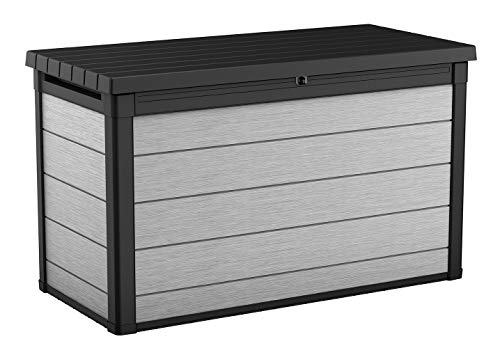
- Best premium build: Keter Denali 200 Gallon Deck Box, Grey & Black — Check on Amazon
- Best soft-close family pick: Suncast 200 Gallon Extra Large Deck Box, Dove Gray — Check on Amazon
- Best big-box value: Keter Java 230 Gallon Deck Box, Grey — Check on Amazon
- Best maximum capacity: YITAHOME 320 Gallon Extra Large Deck Box — Check on Amazon
- Best mid-large all-rounder: EAST OAK 180 Gallon Deck Box, Grey — Check on Amazon
- Best shed-style capacity: Lifetime Horizontal Storage Box, 75 Cubic Feet (561 Gallon) — Check on Amazon
Read the full guide ↓
Disclosure: As an Amazon Associate, dailyhomedecorating.com earns from qualifying purchases. Links to Amazon on this page are affiliate links; they cost you nothing extra. Listing details such as price and availability change often, so check the current Amazon listing before you buy.
The best outdoor storage box for outdoor entertaining under $700 is judged by an audience: at a gathering, the storage box sits in the middle of the party, holding the cushions before guests arrive, the throws and games during it, and doubling — whether you planned it or not — as a serving surface, a drink ledge and extra seating. Seven hundred dollars is a generous entertaining budget, and this guide spends it the way a host would: on boxes that look like furniture, open one-handed while you carry a tray, close quietly during conversation, and swallow the entire cushion set in the ten minutes between the party’s end and the rain.
Entertaining changes the specification in ways ordinary roundups miss. Appearance is a feature, not vanity: a woven or wood-look finish reads as part of the setting, while a utility tote reads as clutter that happens to have a lid. The lid is a surface — it must be flat enough and rated honestly if drinks will land on it. Access is social: pistons and soft-close hardware let you open the box mid-conversation without a slam or a two-handed heave. And capacity is timed: the box must take the whole cushion set fast, because the end-of-party scramble is when cushions get left out, get wet, and quietly shorten their lives.
The Keter Denali leads for hosts because its paintable double-wall panels can match the house and its build reads as furniture at conversational distance. The Suncast follows — soft-close is the polite lid, and its deep interior takes the broad cushions of the deep-seating sets built for lingering. The Keter Java brings piston-assisted volume for big sectional hosts, the YITAHOME’s divider separates party gear from pool gear when the gathering is both, and the EAST OAK is the right-sized second box for the drinks station or the fire-pit corner. Hosts comparing tiers should also read our Best Outdoor Storage Box For Outdoor Entertaining Under $500 guide.
The Lifetime Horizontal closes the list honestly: no host should park a bin shed in the sightline of a dinner party, but hosts with a side yard gain a lockable back-of-house for bins, the grill’s extras and the folding chairs that only appear when the guest list grows. Its review says exactly where it belongs — out of the photograph, doing the unglamorous work that makes the front of house look effortless.
In this guide
Quick Picks: The Best Outdoor Storage Box for Outdoor Entertaining Under $700 at a Glance
Each row names the job the purchase does best for this brief. Full reviews follow, with interior dimensions and honest limitations for every pick.
| Buyer type | Pick | Why it stands out | Link |
|---|---|---|---|
| Best premium build | Keter Denali 200 Gallon Deck Box, Grey & Black | Paintable double-wall panels — the box that matches the house | Check on Amazon |
| Best soft-close family pick | Suncast 200 Gallon Extra Large Deck Box, Dove Gray | Soft-close politeness and the deepest cushion interior | Check on Amazon |
| Best big-box value | Keter Java 230 Gallon Deck Box, Grey | Piston-assisted volume for sectional-scale hosting | Check on Amazon |
| Best maximum capacity | YITAHOME 320 Gallon Extra Large Deck Box | Divider order: party gear one side, pool gear the other | Check on Amazon |
| Best mid-large all-rounder | EAST OAK 180 Gallon Deck Box, Grey | The right-sized second box for drinks station or fire-pit corner | Check on Amazon |
| Best shed-style capacity | Lifetime Horizontal Storage Box, 75 Cubic Feet (561 Gallon) | Back-of-house only: bins, grill extras and folding chairs, locked away | Check on Amazon |
How the Picks Were Chosen for the Best Outdoor Storage Box for Outdoor Entertaining Under $700 Guide
Entertaining picks were filtered from the premium field — Keter, Lifetime, Suncast, EAST OAK and YITAHOME’s largest units — through a host’s checklist. The box had to present a finished face: wood-look, woven texture or paintable panels, because it will be photographed behind your guests. The lid had to be assisted or soft-closing, openable with one hand and incapable of slamming mid-sentence. Interior dimensions had to clear a full deep-seating or sectional cushion set, the load every host actually stores. And it had to lock, because party gear — games, lighting, speakers’ accessories — walks away more easily than garden tools. Maker specifications were verified for each survivor: dimensions inside and out, lid behavior and any published lid load rating (used conservatively — a rating is a ceiling, not an invitation to seat the whole party), warranty, and assembly. Boxes with a purely utilitarian tote look were cut regardless of capacity; the one working exception, the Lifetime, is framed as back-of-house equipment and never recommended for the entertaining space itself. The $700 ceiling was treated as a hosting-system budget — box, lock, cushion bags and the tray-friendly extras — since no single chest here needs the whole sum, and hosts get more party per dollar from the system than from a costlier box.
The Host’s Storage Doctrine
Storage is part of the hospitality
Guests read a patio the way they read a room: what is visible is the experience, and what is hidden is the host’s competence. A furniture-finish box at the edge of the seating says the setting was composed; a utility tote says it was assembled. That is why this ranking pays for finish and paintability with real money and treats the purely utilitarian unit as back-of-house equipment. The Denali’s paintable panels are the doctrine’s purest expression — storage that takes the house’s own colors stops being an object on the patio and becomes part of the architecture of the evening.
Choreography: the box in the party’s timeline
A host’s box works three shifts. Before: it releases the cushions, throws and games in one trip, in the order the setting is built. During: it stands as surface and spare seat, lid rated and dressed, opening one-handed and closing without a syllable of slam while conversation flows over it. After: it swallows the entire set in minutes, ahead of dew or weather, by one tired person working in low light. Judge every candidate against those three shifts — pistons, soft-close and honest capacity are not features, they are the choreography made physical — and the ranking in this guide explains itself.
The morning-after standard
The true test of entertaining storage is the morning after: textiles dry and unfaded, games complete, no cushion forgotten on a chair to mildew in the dew. Systems that pass it share three habits — a box big enough that nothing is ever left out for lack of room, an interior order simple enough to restore at midnight, and a lock that closes the party’s valuables away before the host sleeps. Build those habits into whichever pick you choose and the box stops being furniture and becomes the reason your patio is always, effortlessly, ready.
Setting the box before the first party
Give a new box one rehearsal before its first gathering: assemble it in position, pack the full cushion set in performance order, and time the close-down with the lights low. Adjust the interior order until one person can clear the setting in minutes without a second trip. Then dress the lid — tray, runner, planter — and leave it dressed; a host who must undecorate the box before opening it will stop opening it. The rehearsal feels excessive exactly once, and pays out at every party afterward.
The Best Outdoor Storage Box for Outdoor Entertaining Under $700 Picks in Detail
Keter Denali 200 Gallon Deck Box, Grey & Black
Who it suits: hosts who entertain in a designed outdoor room. Paint the panels to match your trim and the box disappears into the setting; the stiff double walls and tall interior handle the full cushion set of a serious seating group, and the finish survives being leaned on, set upon with a tray, and photographed.
Duotech resin panels a full 20 mm thick — double-wall construction you can paint and drill, which no thin-wall box on this page allows. Exterior is about 59.7 inches long, 28.5 inches deep and 35.4 inches tall; the interior runs about 56.2 by 25 by 33.2 inches, so tall cushions stand rather than slump. The lid is lockable, the resin is UV protected, and Keter backs the box with a two-year limited warranty.
Ownership is where the Denali separates itself from the field. The 20 mm panels do not oil-can in summer heat or drum in hail the way thin walls do, the box stays square season after season — which keeps the lid sealing as designed — and the surface takes exterior paint properly, so a color refresh in year five is an afternoon’s work rather than a replacement decision. Assembly is a panel-and-fastener build that rewards patience: lay every panel out, keep fasteners finger-tight until the carcass is square, then torque in sequence. Inside, the tall interior suits standing cushions on edge with a slim crate at one end for tools and ties. Expect the pistons and hardware to be the only wear items worth a thought over a decade, and both are the kind of standard fittings a maker can supply long after purchase.
- Thickest, stiffest walls here — panels can be painted to match a house and drilled for hooks or dividers
- Tall interior swallows deep-seat and chaise cushions that shorter boxes force you to fold
- Lockable lid and a wood-look finish that reads as furniture, not as a plastic bin
Honest limitation: It is the deepest step up in this guide: you pay for wall thickness and finish, not for raw gallons, and at roughly sixty inches long it still needs a real wall run or deck edge to live against.
Choose it if the fit above sounds like your household; skip it if the limitation describes your space or habits — a smaller or simpler box below will serve you better. Check on Amazon
Suncast 200 Gallon Extra Large Deck Box, Dove Gray
Who it suits: hosts whose gatherings include children, grandparents and anyone who has ever had a lid slam end a sentence. The soft-close hardware is social technology: silent, finger-safe, one-handed — and the deep interior is built for the broad cushions that entertaining furniture wears.
Made in the USA from all-weather resin with a soft-close lid — the lid lowers itself the last stretch instead of dropping. Exterior is about 57.5 inches long, 31.5 inches deep and 32.75 inches tall; the interior runs about 54 by 27.5 by 30 inches, the deepest front-to-back interior among the chests here. Suncast documents a 300-pound lid capacity and a padlock-ready metal hasp, and the resin is UV protected.
The Suncast’s ownership story is its lid. The soft-close mechanism changes daily behavior more than any capacity figure: you stop bracing for the slam, children stop fearing the box, and the lid’s seal lands gently and completely every time — which is also why interiors stay dry, because a slammed lid eventually warps its own landing. The deep interior rewards a simple system: broad cushions flat at the base, back cushions on edge behind them, small items in one crate at the end. The resin wipes clean, the light finish reflects summer heat instead of absorbing it, and the reinforced lid holds its shape under its rated load year after year. Assembly is a straightforward panel build most owners finish solo in an unhurried session.
- Soft-close lid is the finger-safe choice around children and the quiet choice near bedroom windows
- Deepest interior here — broad seat cushions lie flat without curling at the edges
- US-made resin with a reinforced lid that doubles as occasional seating within its rating
Honest limitation: The soft-close hardware asks you to open the lid fully and let it work; forcing it down by hand fights the mechanism, and the light Dove Gray shows pollen and scuffs sooner than dark finishes.
Choose it if the fit above sounds like your household; skip it if the limitation describes your space or habits — a smaller or simpler box below will serve you better. Check on Amazon
Keter Java 230 Gallon Deck Box, Grey
Who it suits: sectional hosts. When the seating seats eight, the cushion set is a volume problem before it is anything else, and this chest solves it on pistons that hold the lid while you load with both arms — at party’s end, in the dark, ahead of weather.
Keter’s XXL chest in a rattan-look grey resin: about 57.5 inches long, 32.7 inches deep and 33.9 inches tall outside, with an interior around 51.9 by 28.3 by 31.1 inches and roughly 56 pounds of weight. Two hydraulic pistons lift the lid and hold it open, the lid is padlock compatible, and the resin panels carry a woven texture that hides dust better than smooth walls.
The Java is the box owners stop thinking about, which is the compliment big chests earn. The pistons hold the lid at working height through years of daily cycles, the rattan texture hides the dust film that makes smooth boxes look tired by July, and the sheer interior volume means the packing never has to be clever — sectional sets simply go in. Assembly is a snap-and-screw panel build, fastest with a second pair of hands for the long walls. Two ownership notes from the category’s experience: open the lid slowly after heavy rain so pooled water sheds outward rather than in, and keep the long walls out of direct reflected heat from south-facing glass, the one environment that ages any resin early.
- The most chest gallons per purchase on this page — full sectional cushion sets fit in one box
- Pistons hold the lid open hands-free while you load with both arms full
- Rattan texture shrugs off the dusty, chalky look that plagues smooth dark resin
Honest limitation: Single-wall panels flex more than the Denali’s double walls, the long lid can take on rain that runs in as you open it after a storm, and the footprint is a commitment on anything but a full-size deck.
Choose it if the fit above sounds like your household; skip it if the limitation describes your space or habits — a smaller or simpler box below will serve you better. Check on Amazon
YITAHOME 320 Gallon Extra Large Deck Box
Who it suits: pool-party hosts, whose entertaining storage is really two storages: dry party textiles and games on one side of the divider, damp pool gear on the other. One footprint by the pool fence, everything in reach, nothing mildewed by association.
The capacity champion here: 320 gallons of double-wall resin with a flexible divider, so cushions can live on one side and pool or sports gear on the other. The maker rates the structure for a 1000-pound load, the lid is lockable, and the box is built as one long run — plan on roughly sixty-eight inches of wall. Double-wall panels and the divider are the two features that separate it from the generic oversize chests it competes with.
A 320-gallon box is a logistics decision before it is a storage one. It arrives as a large, heavy flat pack; plan the carry, the assembly space and the final position before the delivery day, and assemble it in place — a finished box this size does not love being dragged. In service, the divider is the feature owners praise: it converts one cavern into two rooms, and the double-wall panels keep the long spans from flexing when the box is loaded unevenly. The structure’s heavy load rating makes the lid a genuine gathering bench, though a cushion or runner keeps the finish kind. Keep the interior aired on dry mornings in humid climates; very large sealed volumes hold still air, and still air is what mildew eats.
- Largest capacity in this guide, with a divider that keeps wet pool gear off dry cushions
- Double-wall build and a heavy load rating make the lid usable as a gathering bench
- One box replaces the two mid-size boxes many households end up buying anyway
Honest limitation: It ships as a very large, heavy flat pack and the assembled box is a two-person move; measure gates and deck stairs before ordering, because returning an assembled 320-gallon box is nobody’s idea of fun.
Choose it if the fit above sounds like your household; skip it if the limitation describes your space or habits — a smaller or simpler box below will serve you better. Check on Amazon
EAST OAK 180 Gallon Deck Box, Grey
Who it suits: hosts who already own a main box and need the satellite: the fire-pit corner’s throws and pokers, the drinks station’s extras, the games lawn’s equipment. Right-sized, quick to build, and finished plainly enough to sit beside furniture without shouting.
A large resin chest in a clean grey finish: 180 gallons of lockable, waterproof, UV-resistant storage sized for cushion sets, gardening tools and pool accessories. EAST OAK builds this size as the step up from its popular smaller boxes, keeping the same straightforward panel assembly and a lid that takes a padlock. It is the smallest footprint on this page, which is exactly its role: big-box storage for households that cannot give a 200-plus-gallon chest a home.
The EAST OAK is the low-maintenance citizen of this guide. Assembly is the simplest here — panels and lid, no door alignment, no spring hardware — and most owners build it solo where it will stand. The resin needs nothing beyond a hose-down and an occasional wipe, the lockable lid covers the security basics, and the footprint forgives repositioning: at this size, changing your mind about placement is a two-minute job rather than a project. The one discipline it asks is lid courtesy — lower it by hand rather than dropping it, since there is no soft-close hardware — and in return it asks nothing else for years. For households graduating from a too-small first box, it is the calm, correct second purchase.
- Real capacity without the five-foot-plus footprint of the 200-gallon class
- Lockable, weather-sealed design from a brand whose smaller boxes are category staples
- The easiest assembly here — panels and lid, no door hardware or spring hinges to align
Honest limitation: No pistons or soft-close hardware — the lid is a manual lift and can drop if you let go of it mid-close, and 180 gallons fills fast once chaise cushions join the pile.
Choose it if the fit above sounds like your household; skip it if the limitation describes your space or habits — a smaller or simpler box below will serve you better. Check on Amazon
Lifetime Horizontal Storage Box, 75 Cubic Feet (561 Gallon)
Who it suits: hosts with a side yard or service area. Bins hidden, the grill’s rotisserie kit and the extra folding chairs behind a lock, the smoker’s wood sorted — the unglamorous inventory of a good party, kept where guests never see it. Not for the entertaining space itself.
This is the one pick that stops being a chest and starts being a small horizontal shed: about 75.2 inches long, 42.5 inches deep and 52 inches tall outside, with an interior around 71.2 by 38.75 by 47 to 48 inches — 75 cubic feet in total. Dual-wall high-density polyethylene panels are steel reinforced, the front doors are lockable with an external latch, the lid rides on a controlled spring hinge, and Lifetime covers it with a five-year limited warranty. It is sized to hold two large wheeled bins, a mower, or bikes.
Owning the Lifetime is closer to owning a small building than a box. Assembly is the price of admission — a methodical two-person build with many panels, steel supports and door hardware to align — and it pays to assemble it exactly where it will live, on its level base, because moving the finished unit is a four-hand carry. Once built, daily life is doors and a lid that both open wide and latch positively; bins roll in and out without lifting, and the spring hinge keeps the heavy lid from ever dropping. The HDPE floor shrugs off bin drips and mower grime and hoses clean each spring. The five-year warranty is the longest in this guide, and the steel-reinforced dual walls are why: this is the pick least likely to be replaced for structural reasons.
- Front doors plus a lifting lid — you walk items in instead of hoisting them over a chest wall
- Steel-reinforced dual-wall HDPE and the longest warranty on this page
- Hides two full-size trash and recycling bins completely, which no chest here can do
Honest limitation: Assembly is a genuine two-person project measured in hours, it needs a level pad or deck section, and at about 52 inches tall it is far too big for balconies and most small patios.
Choose it if the fit above sounds like your household; skip it if the limitation describes your space or habits — a smaller or simpler box below will serve you better. Check on Amazon
Comparison Table
Capacities and dimensions are the makers’ published figures; where a maker publishes no lid rating or exact dimension, the table says so rather than guessing.
| Pick | Capacity | Exterior size | Construction | Lid and lock | Warranty |
|---|---|---|---|---|---|
| Keter Denali 200 Gallon Deck Box, Grey & Black | 200 gal | 59.7 x 28.5 x 35.4 in | Duotech resin, 20 mm double-wall | Lockable lid | 2-year limited |
| Suncast 200 Gallon Extra Large Deck Box, Dove Gray | 200 gal | 57.5 x 31.5 x 32.75 in | All-weather resin | Soft-close, padlock-ready hasp | Maker limited |
| Keter Java 230 Gallon Deck Box, Grey | 230 gal | 57.5 x 32.7 x 33.9 in | Resin, rattan look | Hydraulic pistons, padlock compatible | Maker limited |
| YITAHOME 320 Gallon Extra Large Deck Box | 320 gal | About 68 in long | Double-wall resin | Lockable lid, flexible divider | Maker limited |
| EAST OAK 180 Gallon Deck Box, Grey | 180 gal | Compact for its class | Resin | Lockable lid | Maker limited |
| Lifetime Horizontal Storage Box, 75 Cubic Feet (561 Gallon) | 75 cu ft / 561 gal | 75.2 x 42.5 x 52 in | Dual-wall HDPE, steel reinforced | Lockable doors + spring-hinge lid | 5-year limited |
How to Choose the Best Outdoor Storage Box for Outdoor Entertaining Under $700
Style the box into the setting
Choose the finish as you would furniture: woven textures (the Keter Java) forgive dust between parties; wood-look and paintable panels (the Denali) integrate with the house; clean grey (the EAST OAK) sits quietly beside modern sets. Then use the lid deliberately — a tray corrals drinks, a planter anchors the box visually, and a folded throw over one corner softens the line. A box that looks placed is never mistaken for clutter. Our Best Patio Dining Set For Outdoor Entertaining Under $700 guide covers the table side of the same setting.
Plan the ten-minute close-down
Time your storage the way caterers do: the box lives within a few steps of the seating, the cushion order inside is rehearsed (largest pads flat at the bottom, throws and pillows on top for first-out convenience), and the lid hardware lets one person do the whole close-down alone. Pistons and soft-close earn their price at exactly this moment, in the dark, with weather coming. If the box cannot take the full set in one trip, it is undersized for entertaining — size up before the season, not after the first soaked cushion.
Seat and serve within the rating
Guests will sit on the box and set drinks on it whether you invite them to or not. Respect the maker’s published lid rating where one exists — the Suncast documents its lid capacity — and where none is published, treat the lid as a surface for trays, not people. A cushion or runner on the lid protects the finish from glass rings and makes the improvisation look intentional. Complete the setting with the seating guidance in our Best Patio Furniture Set For Outdoor Entertaining Under $700 roundup.
Lock the party, not just the box
Entertaining storage holds the stealable and the fragile: string-light spares, games, the good throws, lantern fuel kept separately and safely. Lock the box between gatherings, keep anything flammable out entirely, and let the divider (YITAHOME) or bags keep guest-facing textiles smelling fresh rather than of the pool. A locked, organized box is also what makes spontaneous hosting possible — everything findable in one trip. Rug scale for the same space is covered in our Best Outdoor Rug For Outdoor Entertaining Under $700 guide.
Common Mistakes to Avoid
- Buying a utility tote for a beautiful patio. The box is in every photograph of every party; its finish is a hosting decision, not an afterthought.
- Undersizing for the cushion set. A box that takes ninety percent of the cushions guarantees the wettest ten percent — the ones left out — are the ones you sit on next time.
- Letting guests treat an unrated lid as a bench. Know your model’s published rating, cushion the lid, and steer seating to actual seats before physics files a complaint.
- Storing party textiles with pool chemicals or damp gear. One shared sealed space and the throws smell of chlorine by the second gathering — divide or separate.
- Placing the box across the yard. Entertaining storage must live steps from the seating, or the close-down becomes a relay and cushions start spending nights out.
- Forgetting the lock between parties. The box holds the most portable valuables on the patio; an unlocked lid is an invitation written in resin. Compare deck-first alternatives in our Best Deck Box For Outdoor Entertaining Under $700 guide.
Loading for the Party: The Host’s Inventory
The cushion set, rehearsed
Entertaining storage begins with a rehearsal: on a quiet afternoon, pack the full cushion set into the box in the order you will unpack it — the pieces for the farthest seats at the bottom, the host’s own chair last in and first out — and photograph the result. If the set does not fit with the lid closing on its own weight, the box is undersized for your setting and no organization will save it; size up while returning is easy. If it fits, the photograph becomes the household’s closing-time map, taped inside the lid where the tired version of you will need it.
The prop closet layer
Above the cushions lives the party layer: throws rolled in a breathable bag, outdoor games complete in their crate, string-light and lantern spares, citronella and the fire-pit’s tools in their own slim box at one end. This layer is what turns a storage purchase into a hosting capability — the difference between a patio that can receive six unexpected guests and one that cannot is usually twenty minutes of hunting through a garage. Keep the layer ruthless: anything not used in three gatherings is evicted to the garage, because a prop closet that becomes a junk drawer fails at the exact moment it is needed.
The drinks-station satellite
Hosts with a second, smaller box — the EAST OAK’s role in this guide — run it as the drinks and serving station’s annex: the ice bucket’s companions, spare glassware in its crate, the grill’s tools and the evening’s firewood kindling kept dry at the fire-pit corner. The satellite’s virtue is distance discipline: the main box stays closed and composed by the seating while the working clutter lives where the work happens. Even a single-box host can borrow the principle with the divider or a crate: working items quarantined from guest-facing textiles, always.
The seasonal rotation
Entertaining loads rotate: spring adds the light strings and the shade sail, high summer the pool-party kit, autumn the fire-pit throws and the smoker’s accessories, winter almost nothing but the covers themselves. Rotate deliberately at each equinox — out with the retired, in with the arriving, everything entering dry — and the box never reaches the overpacked state where lids strain and textiles suffer. The rotation is also the audit: broken games, perished spares and the throw that never recovered from July all surface while replacing them is still easy.
The two-box endgame
Serious hosts converge on the same endgame this guide’s ranking implies: one furniture-grade box at the setting — Denali or Suncast — running the cushion-and-prop system, and one working box out of sight — the Lifetime at the service side, or the YITAHOME at the pool fence — absorbing the overflow, the working gear and the seasonal rotation. Bought in either order as gatherings grow, the pair costs less than the tier’s ceiling across a couple of seasons and ends the storage question for a decade of parties. Start with the box your next gathering needs; the endgame assembles itself from there.
Care, Placement and Longevity
Hosts maintain to a calendar: the party calendar. Before the season’s first gathering, empty and air the box, wash the lid’s surface that will carry trays, and rehearse the cushion order so the close-down runs on muscle memory. Between parties, a two-minute reset — textiles dry before they go in, games complete before they are shelved, the lid wiped of rings before they set — keeps the system guest-ready at an hour’s notice. At season’s end, store everything bone-dry, leave the lid latched against winter wildlife, and note anything that needs replacing while the sales are on. A host’s box maintained this way is invisible infrastructure: the parties feel effortless because the storage is.
Keep one small ritual after the last gathering of the season: the host’s debrief, five minutes with the box open. What ran out, what was hunted for, what never got used, what got wet that should not have — each answer edits next season’s inventory while the evidence is fresh. Replace the spares, evict the unused, note the cushion that is fading faster than its siblings. It is the least festive five minutes of the hosting year and the reason the first party of the next one feels, to every guest, like no time has passed at all.
A closing thought for hosts: the gatherings people remember are the ones where nothing went visibly wrong — no cushion hunt, no slammed lid, no mid-party excavation of a cluttered box in front of the guests. That invisibility is not luck; it is storage doing quiet, rehearsed work at the edge of the scene. Every pick, section and habit in this guide exists to buy exactly that invisibility, at whatever scale your patio hosts. Choose the box that fits your setting’s choreography, load it like a stage manager, and then forget it exists — your guests already will have, which is the highest compliment entertaining storage can earn.
Final Recommendation
For hosts, the Denali is the headline: furniture-grade, paintable, and built for a decade of gatherings. The Suncast is the polite alternative with the family-safe lid; the Keter Java the volume answer for sectional-scale parties; the YITAHOME the pool-party organizer; the EAST OAK the satellite box every complete setting eventually needs; and the Lifetime the back-of-house secret behind hosts whose patios always look effortless. Spend the change from $700 on the lock, the bags and the tray — the party will notice those, too.
Frequently Asked Questions
Can guests sit on these storage boxes?
Within limits, and only where the maker publishes a lid rating — the Suncast documents a 300-pound lid capacity, suitable for a guest or two, and the YITAHOME’s structure carries a heavy load rating. Where no rating is published, keep the lid for trays and planters. Add a seat cushion on rated lids: it protects the finish and signals that sitting there is intended rather than tolerated.
What size box does a sectional’s cushion set need?
Start at 200 gallons and verify interior depth against your deepest pad. Sectional sets run ten to fourteen cushions; the Keter Java’s volume and the Suncast’s deep interior are the two safest fits here, and the YITAHOME 320 ends the question for hosts who also store games, throws and pool gear in the same footprint.
How do I keep entertaining textiles fresh in an outdoor box?
Store only fully dry cushions and throws, use breathable bags rather than sealed plastic, and quarantine anything damp or chlorinated on the far side of a divider — or in another box entirely. Air the box open on a dry morning between gatherings. Fresh textiles are a system, not a product feature, and the system is cheap.
Where should the box sit during a party?
Steps from the seating, against a wall or fence line, lid accessible without moving furniture. It should read as part of the setting — styled with a tray or planter — and never block the path between table, grill and door. After the party it stays exactly there; entertaining storage that requires relocation before use simply stops being used.
Is a prettier box worth paying more for when entertaining?
In this one context, yes — appearance is function. The box occupies prime patio real estate and appears in every gathering’s photographs; a furniture-grade finish (or the Denali’s paintable panels) protects the setting’s look the way a good table does. What is not worth paying for is capacity you cannot fill or features with no party job; this guide’s ranking already strips those out.
What belongs in an entertaining storage box — and what does not?
In: cushions, throws, outdoor games, string-light and lantern spares, citronella supplies, serving extras and the fire-pit’s tools. Out: fuel and anything flammable, pool chemicals beside textiles, and food or drink beyond the evening itself. The box is the party’s wardrobe and prop closet — curated, locked and ready — not a general garage annex.
How do I stop the box looking like storage in party photos?
Three moves: match or soften the finish (paint the Denali, choose the woven Keter texture, or run a runner across the EAST OAK’s lid), anchor it visually with a planter at one end, and keep the lid’s working surface curated — a tray, a lantern, nothing random. A box treated as furniture photographs as furniture. The one unfixable case is a utility-finish box in a designed setting, which is why finish was a selection filter here rather than a preference.
What do I do with the box in the off-season?
It becomes the setting’s winter vault: cushions and throws stored bone-dry inside, the furniture covers on top for first access in spring, lid latched and locked against wildlife and wind. In snow country, brush accumulation off the lid rather than letting a season’s load sit on the hardware. One dry-day airing midwinter, if your climate offers one, keeps the interior sweet for the first spring gathering.
Should the box match my patio furniture exactly?
It should harmonize, not match. Exact matches date quickly and read as a set bought in one afternoon; a box in the house’s trim color (the Denali’s paintable panels make this literal), a woven texture that echoes a rug, or a quiet grey that recedes all age better. When in doubt, go one shade quieter than the furniture — storage should be the setting’s background, and backgrounds that compete with the table lose. Your guests should remember the evening, not the box, and that is the finish doing its job.


