Where to buy
Check the latest price, availability and delivery on Amazon. Orders are placed on Amazon. We may earn a commission from qualifying purchases.
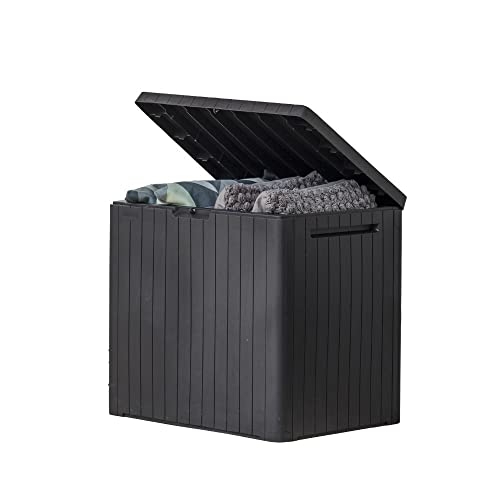
- Keter City 30 Gallon Storage Box and Side Table, Grey — Check on Amazon
- Suncast 22 Gallon Small Deck Box with Seat, Java — Check on Amazon
- Keter Marvel Plus 71 Gallon Deck Box, Dark Grey — Check on Amazon
- Suncast 73 Gallon Medium Deck Box, Mocha Brown — Check on Amazon
See 2 more Amazon options
- Keter Borneo 110 Gallon Deck Box, Grey — Check on Amazon
- Keter Westwood 150 Gallon Deck Box, Brown — Check on Amazon
Read the full guide ↓
Disclosure: As an Amazon Associate, dailyhomedecorating.com earns from qualifying purchases. Links to Amazon on this page are affiliate links; they cost you nothing extra. Listing details such as price and availability change often, so check the current Amazon listing before you buy.
Finding the best outdoor storage box for apartments under $300 is a different problem from equipping a house patio, and this guide treats it that way. Apartment outdoor space is measured in square feet you can count on one hand: a balcony that fits two chairs and a plant stand, a terrace shared with a grill, a ground-floor patio overlooked by neighbours. Every object out there must earn its footprint — ideally twice, as storage and as furniture — and it must arrive through an apartment door, fit in a lift or up a stairwell, and leave with you when the lease ends. A box that fails any of those tests is not a bargain at any price.
That is why the six picks below are weighted toward the compact and dual-purpose end of the category, even though the budget stretches to full-size boxes. The Keter City doubles as a side table; the Suncast 22 is a seat that happens to store things; the Keter Borneo stores a cushion set and then seats your guests on top of it. Two larger options are included deliberately: a mid-size box for terraces that host a real dining set, and one full-size pick for ground-floor patios where space is not the constraint. Note what is not here — no box that needs a garden to assemble in, none that a landlord could reasonably object to, and none that only makes sense if you own the slab it sits on. Measure your balcony’s usable rectangle, check your building’s rules about balcony storage, and read on: the right apartment box is the one that disappears into your routine.
In this guide
Quick Picks: Best Outdoor Storage Box for Apartments Under $300
Short on time? Each row names a buyer type and the box that suits it, with a link to the listing. Every pick below was verified on Amazon while this guide was researched, and each sits inside the under $300 budget — check price on Amazon for the current figure.
| Buyer type | Pick | Why it stands out | Link |
|---|---|---|---|
| Best overall for apartments | Keter City 30 Gallon Storage Box and Side Table, Grey | 30 gallons of weather-resistant storage — check price on Amazon | Check on Amazon |
| Smallest footprint | Suncast 22 Gallon Small Deck Box with Seat, Java | 22 gallons of weather-resistant storage — check price on Amazon | Check on Amazon |
| Best mid-size for renters | Keter Marvel Plus 71 Gallon Deck Box, Dark Grey | 71 gallons of weather-resistant storage — check price on Amazon | Check on Amazon |
| Best for larger balconies | Suncast 73 Gallon Medium Deck Box, Mocha Brown | 73 gallons of weather-resistant storage — check price on Amazon | Check on Amazon |
| Best storage-and-seating combo | Keter Borneo 110 Gallon Deck Box, Grey | 110 gallons of weather-resistant storage — check price on Amazon | Check on Amazon |
| Best for ground-floor patios | Keter Westwood 150 Gallon Deck Box, Brown | 150 gallons of weather-resistant storage — check price on Amazon | Check on Amazon |
How These Picks Were Chosen
Apartment suitability was the first filter, applied before capacity or looks. Each pick was assessed on footprint, on whether it can be carried through a standard doorway and assembled in a small space, on weight when empty — renters move, and a box that needs three people to shift is a liability — and on whether it serves a second purpose, because single-purpose objects are a luxury small balconies cannot afford. Building rules mattered too: nothing in this guide requires fixings, drilling or permanent placement, and every pick is freestanding and removable without trace.
The budget filter worked as it does across this site: every pick is a real Amazon listing verified during research and positioned inside the under $300 ceiling — check price on Amazon for the current figure. The capacity filter was deliberately inverted compared with a house guide. Instead of maximising gallons, picks were matched to apartment-scale loads: balcony clutter and a pair of cushions at the small end, a terrace dining set’s cushions at the large end. Weather behaviour still mattered — balconies are exposed, and upper-floor wind is stronger than garden wind — as did lockability, because apartment storage often holds the cleaning chemicals and tools that have no indoor home. Any product with a safety recall was excluded, and the final six spread across the sizes apartment life actually uses.
Detailed Reviews
Six boxes, six different answers to the same problem. Read the limitation in each review as carefully as the strengths — with outdoor storage, the right box is usually the one whose weakness you will never personally meet.
Keter City 30 Gallon Storage Box and Side Table, Grey — Best overall for apartments
Who it suits: Balcony owners whose storage list is sunscreen, tools, a throw and pool or beach gear — and who gain a side table in the bargain.
The City box is Keter’s compact dual-purpose design: a 30-gallon resin storage box that doubles as a patio side table, with a lockable lid and a footprint small enough for balconies and beside a single lounge chair. It stores the small clutter of outdoor life — sunscreen, bug spray, a folded throw, pool toys, hand tools — rather than full cushion sets.
Pros: For small spaces this is the most useful shape in the guide: it earns its floor area twice, as table and as storage, and its height matches typical lounge seating so a drink sits naturally on the lid. It assembles in minutes, moves easily even when loaded, and the lockable lid keeps balcony clutter and cleaning chemicals tidier than an open basket would.
Honest limitation: Thirty gallons is a hard ceiling — two standard seat cushions will not fit, and buyers who really need cushion storage will outgrow it immediately. The lid is a side table, not a seat, and standing water can sit on the flat top after rain, so give it a wipe before setting down a book or phone.
Living with it: The City box disappears into a balcony’s routine within a week: morning coffee on its lid, sunscreen and the watering can inside it, the throw folded on top of the pool towels. It is the pick most likely to be bought twice — once for the balcony, once for beside the front door — because its size matches the small, specific clutter that otherwise lives on the floor. It will not pretend to be cushion storage, and households that respect that boundary love it; those who needed 70 gallons should buy the Marvel Plus instead.
Sizing and fit notes: On size: the City’s footprint is roughly a generous side table’s, and that is the right mental model — if a side table fits the spot, this fits, with the lid needing only its own height of clearance to open. It suits the end of a lounger, between two balcony chairs, or beside the door as the household’s outdoor pocket. Load it with the small and the daily: it rewards being the home for ten specific things rather than the overflow for everything. Because it is light, keep it loaded or latched in exposed positions; a full City box is a settled one.
Choose it if the profile above matches your space and the way you actually use your outdoor area week to week. Skip it if the limitation described here hits your exact situation — a neighbouring pick in this guide will cover you better. Either way, check the current listing for dimensions against your measured space before ordering. Check on Amazon
Suncast 22 Gallon Small Deck Box with Seat, Java — Smallest footprint
Who it suits: The tightest balconies and doorways, where the box must fit a measured gap rather than a general area.
Suncast’s 22-gallon box is the smallest pick in this guide: a made-in-USA all-weather resin box with a reinforced lid the maker rates as a seat for loads up to 200 pounds. It is sized for a pair of chair cushions, a coiled hose, pool towels or a bag of charcoal — the single-category clutter that otherwise lives on the floor.
Pros: It is the footprint champion: it tucks beside a door, under a window or at the end of a balcony where nothing larger fits, and the seat-rated lid means it still earns its place as a perch or footstool. Suncast’s resin and US parts support give it a longer expected service life than the disposable-feeling small boxes sold at seasonal discount.
Honest limitation: The limitation is obvious and worth stating plainly: 22 gallons fills fast. Buy it for one defined job, not as general storage, because a family that tries to make it their only outdoor box will be shopping again within a season. The lid seat is for one person sitting, not for standing on to reach gutters.
Living with it: Twenty-two gallons sounds like a compromise until the box is assigned one job and does it for years: the hose and nozzle, the charcoal, the pool towels, the dog’s outdoor toys. Its seat lid makes it the perch by the door where shoes get changed, and its US-made resin shrugs off seasons that crack thinner small boxes. Owners consistently describe the same satisfaction — not that it holds everything, but that the one messy category it owns has simply stopped existing as a problem.
Sizing and fit notes: On size: this is the tape-measure pick — 22 gallons in the smallest rectangle here, designed for the gap you have actually measured rather than the space you vaguely have. It fits under most windowsills and beside most doors without entering the walkway. Assign it one category before it arrives — hose, charcoal, towels, dog kit — and it will feel twice its size, because a dedicated box is always half empty when you need it. The seat lid takes one adult comfortably; in a household it becomes the step-free perch for lacing boots and setting down a watering can.
Choose it if the profile above matches your space and the way you actually use your outdoor area week to week. Skip it if the limitation described here hits your exact situation — a neighbouring pick in this guide will cover you better. Either way, check the current listing for dimensions against your measured space before ordering. Check on Amazon
Keter Marvel Plus 71 Gallon Deck Box, Dark Grey — Best mid-size for renters
Who it suits: Apartment households that outgrew a tiny box: a couple of cushion pairs and an umbrella, in a box light enough to take at the next move.
The Marvel Plus is Keter’s compact-to-mid-size resin box at 71 gallons, in a dark grey finish with a lockable lid. It covers the gap between side-table boxes and full cushion chests: a couple of seat-and-back cushion pairs, a folded patio umbrella, garden hand tools and a watering can, or the toys of one toddler.
Pros: It is the right-size pick for households that found 30 gallons too small and 110 too bulky. The dark grey panels hide dust, assembly is among the quickest here, and the footprint fits along a fence line or balcony wall without blocking a walkway. For renters, it is also light enough to take along at the next move.
Honest limitation: There are no lid pistons at this size and price, so the lid is a hold-it-open affair, and the capacity still will not take a full deep-seating cushion set. The flat lid can pool rainwater; store it very slightly tilted or wipe before opening if contents must stay bone dry.
Living with it: The Marvel Plus is the box households graduate to: the first box was too small, the patio cannot take a 150, and this is the size that fits both the space and the pile. Assembly is a short job, the dark grey disappears against fences and balcony walls, and the interior takes two cushion pairs standing on edge with room for the umbrella between them. It is also the renter’s friend in this guide — light enough to carry out of a van alone, substantial enough to still be wanted at the next address.
Sizing and fit notes: On size: 71 gallons in a compact rectangle that threads the needle most renters and small patios actually face — it stands along a balcony wall or fence without entering the conversation area, and its height stays below most railing lines. Two cushion pairs stand on edge inside with the umbrella between them, which is the load to picture when judging the fit. Assembly is among the quickest here, and the finished box carries easily by one person when empty. If your pile grows past it, it demotes gracefully to tool-and-toy duty rather than to the resale pile.
Choose it if the profile above matches your space and the way you actually use your outdoor area week to week. Skip it if the limitation described here hits your exact situation — a neighbouring pick in this guide will cover you better. Either way, check the current listing for dimensions against your measured space before ordering. Check on Amazon
Suncast 73 Gallon Medium Deck Box, Mocha Brown — Best for larger balconies
Who it suits: Apartments with a proper terrace that hosts a small dining set and needs its cushions stored on site.
Suncast’s 73-gallon medium box is a made-in-USA all-weather resin chest in mocha brown with a lockable lid, positioned by Suncast for furniture cushions, garden supplies, pool gear and even firewood. It is the middle child of the range: real capacity without the patio-filling presence of the 130-gallon-plus boxes.
Pros: This is the balanced footprint pick — enough room for a small dining set’s cushions and a bag of charcoal or a stack of firewood, in a box one person can assemble and shift. The mocha finish is warm beside timber decking and hides dust well, and Suncast’s US support stands behind it.
Honest limitation: Medium means compromise both ways: too big to be a balcony box for most apartments, too small for a large sectional’s cushions. The lid has no stay-open pistons, and the interior is a single open volume, so add your own crate for small tools.
Living with it: The 73-gallon Suncast is the Goldilocks entry in its maker’s range, and owners use it exactly that way: the dining set’s cushions plus the charcoal, or the pool gear plus the towels, in a box that never dominates the patio. The mocha finish is warm against timber and brick, assembly is a one-person job, and the single open interior takes a crate for small items without complaint. It is rarely the box anyone boasts about; it is very often the box still quietly working when boasted-about purchases have been replaced.
Sizing and fit notes: On size: the 73-gallon Suncast is the medium rectangle that fits the gap between ‘too small to matter’ and ‘too big for the patio’ — along a wall it stores a small dining set’s cushions with the charcoal or firewood sharing honestly. Its height keeps it below most sightlines from seated positions, which is why it disappears into patios so well. One person assembles and positions it; loaded, it stays. Picture the load as two zones — fabrics one side, fuel and tools in a crate the other — and the single open interior stops feeling like a compromise and starts feeling like a system.
Choose it if the profile above matches your space and the way you actually use your outdoor area week to week. Skip it if the limitation described here hits your exact situation — a neighbouring pick in this guide will cover you better. Either way, check the current listing for dimensions against your measured space before ordering. Check on Amazon
Keter Borneo 110 Gallon Deck Box, Grey — Best storage-and-seating combo
Who it suits: Renters who host: the box stores the cushions, then seats two guests when friends come over.
The Borneo is Keter’s rattan-look bench box: 110 gallons of resin storage with a lockable, waterproof lid that doubles as seating for two. It has been in Keter’s range for years, which makes it one of the most thoroughly owner-tested designs in this guide, and its mid-size footprint suits patios where a 150-gallon box would dominate.
Pros: The dual role is the appeal — it stores a four-seat cushion set and then seats two guests on top, which is exactly the trick small and mid-size patios need. The rattan texture disguises dust between cleanings, the panels assemble without specialist tools, and the size is big enough to be useful yet small enough to reposition empty without help.
Honest limitation: Mid-size is also the compromise: a full six-seat deep-cushion set will not fit, and the seat lid, while sturdy for sitting, is not a step or a standing platform. Like other rattan-textured boxes, the grooves collect grime in spring pollen season and need a soft brush rather than a rinse alone.
Living with it: The Borneo’s party trick never gets old: cushions out, guests on. As a bench it sits at a comfortable height for most adults, and as a box it keeps a four-seat set genuinely dry through normal rain. The rattan panels forgive the knocks of being repositioned for gatherings, and its mid-size footprint means it migrates around the patio across the season — by the dining set in summer, by the back door in winter — without needing two people to move it when empty.
Sizing and fit notes: On size: the Borneo’s 110 gallons sit in a bench’s rectangle, so the fit question is really a furniture question — place it where a bench would go and it will look inevitable. Seat height suits most adults, and the lid’s slight crown sheds water away from sitters’ side of the box. Load the four-seat cushion set with backs along one long side and seats along the other, and the geometry closes cleanly. Empty, one person can walk it to a new spot; that portability is why so many owners describe it migrating around the patio with the seasons and the sun.
Choose it if the profile above matches your space and the way you actually use your outdoor area week to week. Skip it if the limitation described here hits your exact situation — a neighbouring pick in this guide will cover you better. Either way, check the current listing for dimensions against your measured space before ordering. Check on Amazon
Keter Westwood 150 Gallon Deck Box, Brown — Best for ground-floor patios
Who it suits: Ground-floor and townhouse apartments with a real patio slab, where a full-size box earns its footprint.
The Westwood is Keter’s wood-plank-look resin box in the 150-gallon class. The listing describes a large, waterproof, lockable box with easy-lift pistons on the lid, so the top opens with one hand and stays up while you load it. The panels are moulded resin with a wood-effect finish, which means no sanding, staining or sealing, and the capacity is sized for a full set of deep patio cushions plus throws and outdoor games.
Pros: Capacity per footprint is the headline: 150 gallons swallows the cushion set from a six-seat patio set without forcing the lid. The piston-assisted lid is a genuine daily-use advantage over boxes you have to hold open with one hand, and the lockable hasp (padlock not included) keeps pool chemicals and tools away from visiting children. Resin panels shrug off rain and hose-downs, and the wood-look finish reads as furniture rather than a plastic tub from across the yard.
Honest limitation: The honest limitation is assembly and lid behaviour in wind: the panels snap and screw together and the job is easier with two people, and like most large resin lids it can channel a little rainwater off the top when you open it straight after a storm, so wipe the lid before lifting if you store fabric inside. It is also a big box — measure your gate and the corner you plan for it before ordering.
Living with it: Day to day, the Westwood’s pistons are what owners mention: the lid rises with a nudge and waits while you wrestle a cushion in, then lowers without the resin clatter cheaper boxes make. The wood-plank texture shrugs off the scuffs of being dragged a few inches across decking, and the interior takes a standard plastic crate at one end for chemicals and small tools without eating cushion space. In winter it simply sits — no cover needed, no finish to renew — and a spring wash-down with soapy water returns it to guest-ready in ten minutes.
Sizing and fit notes: On size: at 150 gallons the Westwood wants a footprint in the region of a low coffee table scaled up — allow a clear rectangle along a wall or fence and enough headroom for the piston lid to open fully without striking an eave or branch. It passes through standard gates flat-packed and assembles where it will live. Two adults can shift it empty; loaded, treat it as fixed. If your cushion set is a six-seater with thick back cushions, load them standing on edge in two rows — that is the arrangement the interior rewards — and keep the throws in the crate space at the end rather than on top, so the lid closes without persuasion.
Choose it if the profile above matches your space and the way you actually use your outdoor area week to week. Skip it if the limitation described here hits your exact situation — a neighbouring pick in this guide will cover you better. Either way, check the current listing for dimensions against your measured space before ordering. Check on Amazon
Comparison Table
Capacity is the maker’s stated figure; treat it as a guide to class rather than a laboratory measurement, because interior shapes differ. What matters is matching the class to your cushion set or gear pile, which the how-to-choose section below walks through.
| Pick | Stated capacity | Best for | Link |
|---|---|---|---|
| Keter City 30 Gallon Storage Box and Side Table, Grey | 30 gallons | Best overall for apartments | Check on Amazon |
| Suncast 22 Gallon Small Deck Box with Seat, Java | 22 gallons | Smallest footprint | Check on Amazon |
| Keter Marvel Plus 71 Gallon Deck Box, Dark Grey | 71 gallons | Best mid-size for renters | Check on Amazon |
| Suncast 73 Gallon Medium Deck Box, Mocha Brown | 73 gallons | Best for larger balconies | Check on Amazon |
| Keter Borneo 110 Gallon Deck Box, Grey | 110 gallons | Best storage-and-seating combo | Check on Amazon |
| Keter Westwood 150 Gallon Deck Box, Brown | 150 gallons | Best for ground-floor patios | Check on Amazon |
How to Choose the Right Outdoor Storage Box
Measure the balcony, then measure the route. Write down the usable rectangle of your balcony or terrace — excluding the door swing and any railing planters — and then the width of your front door, hallway turns and lift. Apartment buyers get caught by the route more often than the destination: a box that fits the balcony perfectly but cannot turn the corner by the bathroom is a return in progress. Compact picks like the Keter City and Suncast 22 pass almost anywhere; the larger terrace picks should be checked twice.
Check the rules before the box arrives. Many leases and building rules restrict balcony storage, visible items above railing height, and anything attached to the structure. A low, neutral, freestanding box that sits below the railing line is rarely a problem; a tall shed-style unit may be. If your building has a balcony policy, read it first — it takes two minutes and prevents the most frustrating return of all.
Demand a second job. On a small balcony, floor space is the scarcest resource you own. A storage box that is also a side table, or also a seat, costs you zero additional square feet. That is why four of the six picks here double as furniture. When comparing prices, compare against the cost of the table or bench you then do not need to buy.
Think about wind and weight. Upper balconies funnel wind, and an empty lightweight box can walk across a balcony in a storm. Keep the box loaded, place it in the most sheltered corner, and never leave the lid unlatched. Equally, check what your balcony can bear if you plan a large box filled with heavy items — most modern balconies handle these loads easily, but older or timber structures deserve a moment’s thought, and heavy storage belongs against the wall, not at the railing.
Plan the exit. Renters move. A box that one person can empty, lift and carry — or that disassembles without damage — will still be serving you two homes from now. The mid-size picks here were chosen partly for that portability; the full-size ground-floor pick assumes you have a patio and a van-sized move when the day comes.
Keep it neighbourly. Choose colours that read as furniture from the flats opposite, keep the lid closed and the top clear of clutter, and store smelly items — charcoal lighter fluid, fertiliser — sealed or indoors. A tidy box is invisible; a messy one is a complaint.
Apartment Balcony Storage: The Rules Nobody Tells Renters
Balcony storage operates under constraints that product listings never mention, and a short tour of them will save most renters at least one mistake. The first is the railing rule of thumb: in many buildings, anything visible above the railing from the street attracts attention, and anything fixed to the structure attracts a letter. Every pick in this guide is freestanding and below typical railing height when placed against the wall, which is precisely why shed-format and tall cabinets were excluded despite fitting the budget.
The second constraint is water. Balconies drain by design, usually toward an outlet at one corner, and a season of ponded water against a door threshold can damage seals and finishes that are the landlord’s property and your deposit. The practical rule is simple: keep the drainage corner and path clear, and if your balcony has a known wet spot, that spot is not where the box goes, whatever the floor plan suggests. The third constraint is the neighbours below: a lid slammed at midnight is a sound event for the flat underneath, and items stored on an open balcony should be the kind that cannot blow off or leak. Latched lids and sealed containers are not fussiness; they are how balcony storage stays welcome.
Finally, there is the move-out test, which renters should apply to every balcony purchase: can this leave with me, in the lift, without wall marks or a van hire of its own? The compact picks here pass trivially; the terrace picks pass with a friend; and that is the honest ceiling for apartment storage. A box that passes the move-out test is an asset you will still own in your next home. A box that fails it is a negotiation with a landlord and a listing on a resale site, and no capacity figure is worth that ending.
Common Mistakes to Avoid
Buying a house-size box for a balcony. The most common apartment mistake is shopping by capacity envy. A 150-gallon box on a six-foot balcony leaves room for the box and nothing else. Start from your measured rectangle and your actual storage pile, which for most apartments is smaller than they fear.
Ignoring the door swing and the railing. Boxes placed where the balcony door opens into them, or tall enough to block the railing view you pay rent for, get resented daily. Keep the box below railing height where possible and out of the door’s arc.
Storing indoor overflow outdoors. A balcony box is weather-resistant, not a spare room. Books, electronics, cardboard and anything that mildew or heat can ruin do not belong in it. Cushions, tools, outdoor gear and sealed supplies only.
Forgetting drainage. Balconies are designed to shed water in a particular direction. A large box parked across the drainage path can pond water against your door threshold. Leave the drainage route clear and raise the box very slightly if your balcony has a known wet corner.
Assembling on the balcony without checking the fit first. Dry-fit the footprint with the shipping carton or painter’s tape before you build. Discovering the box crowds out your chair after assembly is a miserable moment that tape prevents for free.
Leaving the lid unlatched in wind. A lid that lifts and slams in a night storm is noise for you and every neighbour, and a hazard on high floors. Latch it, every time, and keep something with a little weight inside even in empty seasons.
Final Recommendation
For most apartment balconies, the Keter City 30 Gallon is the answer: it stores the everyday clutter, works as the side table your balcony was missing, and asks almost nothing of your floor plan. If your measured gap is smaller still, the Suncast 22 Gallon is the smallest honest box we found. Renters with a terrace and a dining set should step up to the Suncast 73 or the Keter Borneo — the Borneo especially, since its seat lid repays its footprint every time friends visit. Ground-floor patios can justify the full-size Keter Westwood. Whichever you choose, measure the balcony and the route, glance at your building’s rules, verify the pick is inside budget on the current listing — check price on Amazon — and enjoy a balcony that finally looks intentional.
Balcony Storage Through the Year: A Renter’s Calendar
Spring on a balcony starts with the reset: empty the box onto the balcony floor, wash the interior, dry it with the lid open, and put back only what the new season actually uses. This is also the moment to re-check the balcony itself — drainage path clear, box still clear of the door swing after winter rearrangements, and the building’s balcony rules unchanged if your management sends seasonal notices. Cushions that wintered indoors come back out only when nights are reliably dry, and they go into a clean box, not last autumn’s dust.
Summer is when balcony storage earns its keep daily, and the habits are small ones: latch the lid every time against the gusts that upper floors funnel, wipe rain off the City-style flat tops before setting down a drink or a book, and keep anything scented — charcoal, fertiliser, sunscreen stockpiles — sealed so the balcony stays a pleasant place to sit two feet from the box. If your box doubles as your side table or seat, a weekly rinse keeps it at furniture standard rather than storage standard.
Autumn is decision season for renters: what winters on the balcony, and what honestly belongs indoors? Fabrics that will not be used should winter inside where the air is dry; the box keeps the tools, the watering kit and the hardy items. Clear leaves from behind the box — balcony drainage in autumn is a landlord-grade concern, and a dam of wet leaves against your door threshold is the kind of damage deposits are lost over. Photograph the balcony as you found it each season if your lease is particular; tidy records make tidy move-outs.
Winter asks for a latched lid, a box kept loaded enough to sit heavy in storms, and nothing stored that a freeze can ruin — liquids that expand, anything with a battery, anything the maker’s label says to keep frost-free. If you travel for the holidays, the balcony should look from the street exactly as it does when you are home: box closed, nothing loose, nothing perched. That is the whole winter programme, and it is why the compact, lockable picks in this guide suit apartment life so well.
Before You Buy: The Renter’s Checklist
Five checks stand between an apartment dweller and the right box. First, the rules check: the lease or building policy has been read for balcony storage, and the chosen box is freestanding, low and neutral enough to sit comfortably within it. Second, the route check: door widths, hallway turns and the lift have been measured against the flat-pack carton, and the plan is to assemble on the balcony itself. Third, the rectangle check: the usable balcony floor — minus door swing, minus drainage path, minus the chair space you refuse to surrender — has been taped out and lived with for a day.
Fourth, the load check: the box’s class matches the actual pile, which for most apartments is balcony clutter plus a cushion pair or two, not a fantasy of storing the household’s overflow outdoors. Fifth, the exit check: one person, or one person and a friend, can empty and remove this box in a single trip when the lease ends, leaving no mark behind. Run the listing check last, at purchase: model, colour and dimensions confirmed, and the price inside the under $300 budget — check price on Amazon. A box that passes all six is not a purchase risk; it is the balcony upgrade that survives every future address.
Frequently Asked Questions
Will a storage box violate my lease or building rules?
It depends on the building. Freestanding, low, neutral boxes below railing height are commonly fine; tall or fixed structures are the usual problem. Check your lease’s balcony clause before buying, and choose a box you can remove without trace.
What size storage box fits a typical apartment balcony?
Most balconies suit the 22-to-71-gallon class: enough for balcony clutter and one or two cushion pairs. Terraces with a dining set can justify 73 to 110 gallons. Measure your usable rectangle and keep the box out of the door swing.
Can I leave a resin storage box on a balcony all winter?
Yes — the resin and polyethylene picks here are all-weather designs. Keep the lid latched against wind, store contents dry, and in very exposed high-rise positions keep the box weighted with its normal load so storms cannot shift it.
How do I get a large box into an apartment?
These boxes ship flat-packed as panels, so the carton is far smaller than the assembled box. Check the carton dimensions against your lift and stairwell, and assemble on the balcony itself rather than carrying a finished box through the flat.
Is a storage box safe storage for cleaning chemicals on a balcony?
A lockable box keeps chemicals away from children and pets and out of indoor cupboards, which is why several picks here have padlock hasps. Keep containers sealed and upright, follow each product’s own storage instructions, and never store fuel indoors or in enclosed living spaces.
What is the best dual-purpose pick for a tiny balcony?
The Keter City: it is a side table at lounge-chair height that happens to hold 30 gallons. On the smallest balconies, a box that replaces a piece of furniture is worth more than a larger box that competes with it.
Related Guides
Planning the rest of the outdoor space? These guides on the same site cover the neighbouring decisions:


