Where to buy
Check the latest price, availability and delivery on Amazon. Orders are placed on Amazon. We may earn a commission from qualifying purchases.
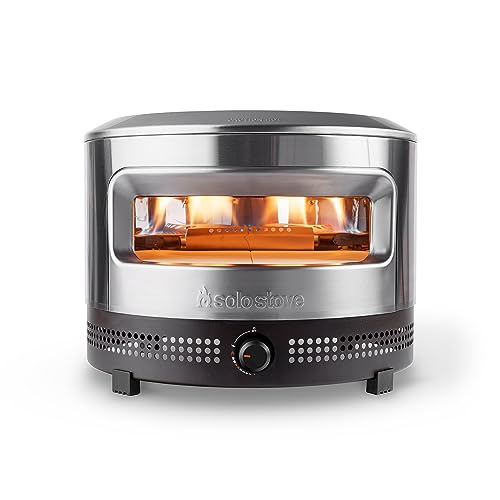
- Best for small patios: Solo Stove Pi Prime Pizza Oven — Check on Amazon
- Best folding / storage: Ooni Karu 2 Multi-Fuel Pizza Oven — Check on Amazon
- Best electric for small patios: Ninja Artisan Outdoor Pizza Oven MO201 — Check on Amazon
- Best build in a small footprint: Gozney Roccbox Outdoor Pizza Oven — Check on Amazon
- Best countertop electric: Ooni Volt 2 Electric Pizza Oven — Check on Amazon
- Only for the largest small patios: Ooni Koda 16 Gas Pizza Oven — Check on Amazon
Read the full guide ↓
Disclosure: As an Amazon Associate, dailyhomedecorating.com earns from qualifying purchases. Links to Amazon on this page are affiliate links; they cost you nothing extra. Listing details such as price and availability change often, so check the current Amazon listing before you buy.
On a small patio, a pizza oven is not measured in inches of pizza — it is measured in inches of everything else. The table it demands, the clearance it keeps from the railing and the wall, the corner it occupies in February, and the space left for you, a chair and a second human being: that is the real specification sheet. The best outdoor pizza oven for small patios under $700 is the one that delivers genuine pizza-oven heat while asking the least of a footprint that was never generous. This guide to the best outdoor pizza oven for small patios under $700 ranks the tier’s proven ovens by small-space logic — working footprint, storage footprint, weight, and how the cook actually stands and moves around the oven — because on a small patio, the wrong fifteen pounds or the wrong six inches matter more than the last fifty degrees.
Three honest truths frame the picks. First, every oven here cooks a 12-inch pizza except one — the 16-inch Koda 16, included at the bottom of the ranking with its conditions stated, because a minority of “small patios” are really compact terraces that can hold it and their owners deserve the comparison rather than silence. Twelve inches is not a compromise size: it is the classic Neapolitan format, the size these ovens’ stones recover fastest at, and the size that fits the tables small patios can actually host. Second, small patios reward ovens that disappear — folding legs, detachable chimneys, closet-friendly weights — because a patio that hosts a permanent oven shrine hosts nothing else. Third, small spaces sit close to the house and often close to rules: if your patio is attached to a rental or a condo, the permissions logic in our Best Outdoor Pizza Oven For Apartments Under $700 guide applies to you too, and the electric picks below may be your only legal route. Readers with unrestricted space should compare the full field in our Best Outdoor Pizza Oven Under $700 roundup; this guide is for the rest of us, measuring twice.
The good news is that small-patio cooking has never been better equipped. The current 12-inch class includes a gas oven with front controls designed for tight working space, a multi-fuel oven that folds to closet size, an outdoor-rated electric that multitasks for its footprint, and a restaurant-grade insulated oven that happens to be compact even if it is not light. What a small patio cannot forgive is bad planning: an oven bought by headline temperature, set on an undersized table, stored in the rain, and cursed every time somebody squeezes past it. The how-to-choose section therefore starts with a tape measure, and the safety section treats clearances as the small patio’s first design constraint — because at 950°F, the distance between the oven and everything you own is not a detail. Complete the small space with the storage thinking in our Best Deck Box For Small Patios Under $700 guide and seating from Best Adirondack Chair For Small Patios Under $700, and the patio works as a room, not a compromise.
In this guide
Quick Picks: Best Outdoor Pizza Oven for Small Patios Under $700
| Pick | Best for | Fuel | Size | Small-patio strength |
|---|---|---|---|---|
| Solo Stove Pi Prime | Best for small patios | Propane | 12 in | Compact + front controls for tight space |
| Ooni Karu 2 | Best folding / storage | Wood / charcoal (+ opt. gas) | 12 in | Folds to closet size, lightest here |
| Ninja Artisan MO201 | Best electric for small patios | Electric | 12 in | No flame, multi-use footprint |
| Gozney Roccbox | Best build, small footprint | Propane (+ opt. wood) | 12 in | Compact pro build, cooler-touch jacket |
| Ooni Volt 2 | Best countertop electric | Electric 120V | 12 in | 850°F, lives indoors between uses |
| Ooni Koda 16 | Largest small patios only | Propane | 16 in | Capacity — if the tape measure agrees |
Short version: the Pi Prime fits the most small patios, the Karu 2 stores the smallest, the Ninja and Volt 2 solve flame and space together — and the Koda 16 is a terrace oven wearing a small-patio invitation it should only accept after measurement.
How These Picks Were Chosen
Every oven passed the tier’s verification gate first: an established maker with warranty support; an exactly verified Amazon listing and model identity; a current price sighting at or under the $700 ceiling at research time; specifications confirmable from the maker’s own documentation; and a clean CPSC recall check — recall records for this category were searched before writing, and any recalled grill-and-oven combination was excluded entirely, unnamed and unlinked. Small-patio ranking then re-weighted everything by space: working footprint including clearances and the cook’s stance, storage footprint and weight, setup and teardown effort (an oven that takes twenty minutes to assemble gets used monthly, not weekly), and multi-function value for appliances that must earn their square footage. Two famous names above the tier — the discontinued multi-fuel flagship and its successor — are handled in prose in the comparison section, and the tighter-budget version of this guide is our Best Outdoor Pizza Oven For Small Patios Under $500.
The 6 Best Outdoor Pizza Ovens for Small Patios Under $700, Reviewed
1. Solo Stove Pi Prime — Best for Small Patios
Who it suits: Small-patio owners who want real gas-fired pizza without surrendering the patio to the oven.
The Pi Prime wins this guide on a detail most reviews bury: its temperature dial is on the front. On a small patio, the cook works in a slot between the oven, the table edge and the railing — and an oven whose controls demand reaching over or around a 950°F box is an oven designed for a bigger yard. The Pi Prime’s front dial, wide panoramic opening and compact demi-dome footprint are a small-space design brief executed properly. It runs on propane into the 950°F class per the maker, cooks 12-inch pizzas on a cordierite stone, and its stainless shell wipes clean in the tight quarters where splashes land on things you care about. Setup is a modest heat-resistant table and a tank tucked within the rules of your space; teardown is a cover, not a project.
Pros:
- Front controls: the only oven here designed for a cook standing in a slot.
- Compact footprint with a wide, forgiving launch opening.
- Push-button propane simplicity; no ash or chimney to store.
- Clean design that suits a styled small patio rather than fighting it.
Honest limitation: Gas-only, with a propane tank that still needs legal, upright, outdoor storage — on the smallest patios the tank, not the oven, can be the dealbreaker, which is what the electrics below exist for. Its heat pattern rewards learning the stone’s hotter rear zone, and there is no wood-fired path.
Choose it if your patio fits a compact table and a tank. Skip it if tank storage is impossible or flame is restricted — go electric, below.
Check on Amazon — check price on Amazon, and choose the oven-only listing if you already own peels.
2. Ooni Karu 2 — Best Folding / Storage
Who it suits: Small-patio cooks who want wood-fired pizza and a patio that returns to being a patio when dinner ends.
The Karu 2’s small-patio genius is that it leaves. At under thirty-four pounds, with folding legs and a detachable chimney, the oven that burns real wood or charcoal to the 950°F class — behind a borosilicate glass door, with an integrated thermometer — packs down to a closet, a deck box or a car boot. On a small patio that is the difference between an oven you own and an oven that owns you: set it on its table for pizza night, let it cool completely, and the space is a reading corner again by morning. The optional gas burner, sold separately, converts it where propane is the practical fuel, making it the most storage-friendly route to two ovens in one footprint.
Pros:
- Lightest serious oven here; folds and stores like luggage.
- Real wood-fired flavor no similarly storable oven matches.
- Glass door and thermometer make fire management compact-kitchen friendly.
- Optional gas burner (separate) doubles its roles without doubling storage.
Honest limitation: Fire management is real work in a small space — fuel storage, ash handling once fully cold, and smoke that has fewer places to go on a hemmed-in patio. Setup and teardown, while quick, are still steps a gas oven skips; households that cook pizza twice a week may tire of the ritual and should weigh the Pi Prime’s permanence.
Choose it if storage is your scarcest resource and fire is your favorite flavor. Skip it if you want a permanently set-up, push-button station.
Check on Amazon — check price on Amazon; the gas burner is a separate accessory.
3. Ninja Artisan MO201 — Best Electric for Small Patios
Who it suits: Small patios where flame or fuel storage is restricted, impractical or simply unwelcome — and households that need every appliance to multitask.
The Artisan solves the small patio’s hardest equation: no flame, no tank, no fuel store, and a footprint that pays rent five ways. This outdoor-rated electric reaches 700°F, cooks a 12-inch pizza in about three minutes on style presets, and then works as the patio’s small oven — baking, broiling, proofing, warming — on the six nights a week pizza is not the plan. On a patio where the oven’s table is also the dining table’s neighbor and the storage is a single deck box, an appliance this versatile is not a compromise pick; it is the rational one. It is also the friendliest oven here for small-space social geometry: no open flame beside the railing, no tank beside the chair.
Pros:
- No flame and no fuel storage: fits patios and buildings that ban both.
- Multi-function value — the footprint earns itself beyond pizza night.
- Presets make it the easiest oven here for any household member to run.
- Leaves most of the tier’s budget for furniture and storage that complete the patio.
Honest limitation: The 700°F ceiling caps crust drama and bake speed, and it draws real power — know your outdoor outlet’s circuit. As the only oven for a pizza-purist household it will eventually feel like a ceiling; as the small patio’s one cooking appliance, its versatility usually wins the argument.
Choose it if your patio bans flame or your space must multitask. Skip it if wood-fired or 950°F results are the entire point of the purchase.
Check on Amazon — check price on Amazon; the linked listing is the blue finish.
4. Gozney Roccbox — Best Build in a Small Footprint
Who it suits: Small-patio owners who cook often, keep gear for years, and can give one compact corner permanently to a serious oven.
The Roccbox is the professional’s 12-inch oven squeezed into a patio footprint: heavily insulated body, dense stone with the fastest recovery here, a rolling gas flame, a built-in thermometer, retractable legs and a quality peel included. Its silicone SafeTouch jacket deserves special mention in this guide — on a small patio, people pass within inches of the oven, and an exterior designed to be more touch-tolerant is a safety feature with daily value. If your small patio has one dedicated cooking corner and pizza night is weekly, this is the oven that turns that corner into a tiny pizzeria that never feels like a starter kit.
Pros:
- Compact footprint with restaurant-grade insulation and recovery.
- Cooler-touch jacket: a real margin where people pass close.
- Built-in thermometer and peel included — the complete corner setup.
- Optional wood burner available for a second personality.
Honest limitation: At roughly forty-four pounds it is compact, not light: a small patio up a flight of stairs will feel every pound on setup day, and it is a permanent resident rather than a folder. Buyers who must store the oven away between uses should take the Karu 2’s disappearing act instead.
Choose it if your patio has a permanent cooking corner. Skip it if the oven must be carried, folded or stored after every session.
Check on Amazon — check price on Amazon; this is the black finish listing.
5. Ooni Volt 2 — Best Countertop Electric
Who it suits: Small-patio households whose patio is really a balcony-adjacent ledge — or whose best “outdoor” cooking spot is the kitchen counter by the open door.
The Volt 2 reframes small-patio math: its working footprint outdoors can be zero. This indoor-rated electric oven lives on a kitchen counter or in a cupboard, reaches 850°F on a standard 120V outlet, and bakes a 12-inch pizza in about ninety seconds per the maker, with adaptive presets and a dough-proofing mode. Carry it to a covered patio table where rules allow electric appliances, or simply cook inside with the doors open and carry pizzas out — either way, no permanent patio footprint, no fuel storage, and the highest temperature in this guide. Its counter footprint is roughly a quarter smaller than the electric flagship it replaced, which is exactly the direction small homes need.
Pros:
- 850°F — the highest heat here — with no patio footprint at all.
- Lives indoors: no weather, no cover, no storage battle.
- Presets and proofing mode make it a complete small-kitchen pizza station.
- The flame-free answer for restricted buildings and covered spaces.
Honest limitation: It is indoor-rated, not an outdoor appliance — it cannot live outside or cook in open rain, and at just under forty pounds the carry-it-out routine is a real lift. It also sits at the top of the tier, consuming budget that small patios often need for the table, storage and seating around the oven.
Choose it if your patio is tiny, covered or rule-bound. Skip it if you want a true outdoor resident oven — that is the Pi Prime and Roccbox.
Check on Amazon — check price on Amazon; a sale brings this tier-ceiling model comfortably in.
6. Ooni Koda 16 — Only for the Largest Small Patios
Who it suits: Owners of compact terraces — small in name, but with a genuinely workable cooking corner — who host and need 16-inch capacity.
Honesty requires this pick to argue against itself first. The Koda 16 is a superb oven — 16-inch stone, even L-shaped propane burner, about-a-minute pizzas at full heat, the simplest workflow in the tier — and it is the best overall oven in our general roundup. But its working footprint is a wide oven plus full clearances plus a cook with a long peel, on a generously sized heat-resistant table, with a propane tank stored properly. On a genuinely small patio that combination consumes the room. It is included, ranked last, for the minority whose “small patio” is a compact terrace that passes the tape-measure test in the how-to-choose section — and as a standing warning that the best oven and the best oven for your space are different questions.
Pros:
- 16-inch pizzas: family and party capacity no other pick matches.
- Even burner and the simplest gas workflow in the tier.
- Folding legs; hose and regulator included.
- The capacity answer if your terrace honestly fits it.
Honest limitation: Size, in every direction — footprint, table, clearances, storage — plus no built-in thermometer and no wood option. If you are hoping your patio is bigger than it is, measure before ordering; returns of forty-pound ovens are nobody’s favorite errand.
Choose it if the measurements in the next section pass with room to spare. Skip it if they are even close — every oven above it will make you happier.
Check on Amazon — check price on Amazon; listings for this previous-generation model move around.
Comparison Table
| Oven | Fuel | Size | Peak heat (maker) | Storage story | Watch out for |
|---|---|---|---|---|---|
| Solo Stove Pi Prime | Propane | 12 in | 950°F class | Compact resident + cover | Tank storage decides |
| Ooni Karu 2 | Wood / charcoal (+ opt. gas) | 12 in | 950°F class | Folds to a closet | Fire work; smoke in tight space |
| Ninja Artisan MO201 | Electric | 12 in | 700°F | Deck box / indoors | Lowest ceiling temperature |
| Gozney Roccbox | Propane (+ opt. wood) | 12 in | 950°F class | Permanent corner | Heaviest here |
| Ooni Volt 2 | Electric 120V | 12 in | 850°F | Lives indoors | Top of tier; carry weight |
| Ooni Koda 16 | Propane | 16 in | 950°F class | Needs a real corner | Footprint, clearances, table size |
Above the tier, in prose only: the discontinued 16-inch multi-fuel flagship and its above-ceiling successor were considered and excluded on price as well as size — on a small patio, the budget and the tape measure deliver the same verdict. If either constraint relaxes, our general tier guide is the place to revisit them.
How to Choose a Pizza Oven for a Small Patio: The Tape-Measure Method
Measure the working footprint, not the oven. Your real number is oven width and depth plus the manufacturer’s clearance on every side, plus roughly an arm’s length in front for you and a peel. Draw it on the patio with tape before you buy. If the outline eats the seating, the oven is too big — regardless of what its product page calls compact.
Choose the table as carefully as the oven. Small patios live or die by the table: stable, level, heat-resistant, sized to the oven with landing room beside it for a board and a peel rest. A folding or wheeled table that doubles as storage multiplies a small patio’s usefulness; a wobbly one disqualifies the whole setup, because a 950°F oven on an unstable surface is not a space problem, it is a safety one.
Decide resident or guest. A resident oven (Pi Prime, Roccbox) wants a corner, a cover and a permanent tank or outlet plan. A guest oven (Karu 2, Volt 2, Ninja) wants a storage home — closet, deck box, kitchen — and a setup routine under five minutes. Small patios punish the in-between: an oven too heavy to move but too exposed to leave out.
Count fuel storage as footprint. A propane tank, a wood store, an ash routine: each occupies patio and each has rules. If the honest map has no legal, tidy place for fuel, the electric picks are not a compromise — they are the design solution.
Spend the savings on the room. The 12-inch class leaves tier budget unspent. On a small patio that remainder — seating, storage, light, a heater for the shoulder season — is what turns an oven purchase into a finished outdoor room.
Safety: Fire, Heat and Clearances on a Small Patio
Small patios concentrate everything the safety rules exist for: the oven sits close to the house wall, the railing, the seating and the cook, all at once. Start with placement: a stable, non-combustible, heat-resistant surface, the manufacturer’s full clearances from walls, railings, overhangs, curtains and stored items in every direction including up — and if the patio cannot honestly provide them, the correct move is a smaller oven or an electric one, not a hopeful squeeze. Never run a gas, wood or charcoal oven indoors, in a garage or in an enclosed space; carbon monoxide risk rises exactly as spaces shrink. Keep the cook’s lane clear — on a small patio, guests should be seated before cooking starts and the path between oven and landing board should cross nobody’s chair. Treat every surface of the oven and its stone as a burn hazard during cooking and through the long cool-down afterward; long gloves and long peels keep hands out of the tight hot zone, and children and pets stay inside the door line while the oven is hot. Check propane connections with soapy water whenever a tank is connected, store tanks upright, outdoors, shaded and only where your building and local code allow, and keep wood fuel dry and clear of the oven’s clearance zone. Keep a suitable fire extinguisher within reach — on a small patio that means inside the door, known to everyone in the household. Before buying, check the CPSC recall database for the exact model; this guide excluded recalled products entirely, and small spaces deserve that diligence most. Finally, let the oven cool completely before covering or carrying it to storage: the folding ovens in this guide are only a storage solution once they are genuinely cold.
Common Mistakes Small-Patio Buyers Make
- Measuring the oven instead of the setup. Oven plus clearances plus cook plus peel rest is the purchase. Tape it out first.
- Undersizing the table. No landing space beside the oven means pizzas land on laps, rails and floors. The table is safety equipment.
- Forgetting the tank. A compact oven with nowhere legal to keep its propane is not compact. Map fuel storage before ordering.
- Buying a resident that should have been a guest. If the oven must move for the patio to function, buy the folder (Karu 2) or the indoor resident (Volt 2), not the heavyweight.
- Cooking in the traffic lane. Small patios have one path; if it passes the oven, reseat the guests or move the station.
- Storing it wet. Damp stones heated fast can crack, and uncovered small-patio storage is the wettest kind. Cover, or bring it in.
- Skipping the recall and manual check. Verify the exact model against CPSC records and read its clearance page — small spaces have the least margin for surprises.
Small-Patio Layouts That Actually Work
Three layouts cover nearly every small patio, and choosing among them is worth more than choosing among ovens. The first is the corner station: the oven on a compact heat-resistant table in the patio’s least social corner, clearances honored, the cook standing in the corner’s mouth with seating arranged in an L away from the heat. It suits resident gas ovens — the Pi Prime, the Roccbox — and patios used by two to four people, because the cooking zone and the sitting zone share the room without sharing the same square feet. The second layout is the transformer: no permanent station at all. A folding table appears for pizza night, the Karu 2 or Ninja comes out of its closet or deck box, cooks, cools completely, and vanishes; the patio spends six days a week as a reading, coffee and container-garden room and one evening as a pizzeria. It is the layout that makes small-patio ownership sustainable for people who resent single-purpose furniture, and it is why folding weight and setup minutes were ranking criteria in this guide rather than trivia.
The third layout is the threshold: the cooking happens at the patio door, not on the patio. The Volt 2 lives on the kitchen counter inside; pizzas travel the two steps to the table outside; the patio holds only people, plates and a small serving surface. It sounds like a surrender and functions like a triumph — the highest temperatures in this guide, zero patio footprint, zero clearance battles, and a patio that stays a garden. Many small-patio owners arrive at the threshold layout after a season of fighting layout one or two, and the honest advice of this guide is to consider starting there if your patio is under the size where a table, an oven, clearances and two chairs can coexist without choreography.
Whichever layout you choose, three small investments decide whether it feels designed or endured. The first is vertical thinking: a wall-mounted shelf or rail for peels and tools, hooks for the thermometer and gloves, storage that climbs instead of sprawling. The second is light: a small patio cooked on after dark needs the station lit well enough to judge a crust — and the cook’s hands — without glare in the diners’ eyes. The third is a landing ritual: one defined board or tray where finished pizzas always land, because on a small patio “where do I put this” asked beside a 950°F oven is a safety question wearing an apron. Get those three right and even the transformer layout runs like a restaurant pass.
Finally, a word about the patio’s other life. The best small-patio setups in this guide’s research share a trait: the oven is the patio’s guest, not its landlord. Seating, plants and the morning coffee spot keep their places; the oven earns an evening, cooks beautifully, and gives the room back. Buy the oven that respects that arrangement — light enough, small enough, or indoor enough — and a small patio stops being the reason you cannot have a pizza oven and becomes the reason yours gets used more than your friends’ bigger ones.
Three Patios, Three Answers: A Buying Walkthrough
Abstract advice lands better with addresses attached, so here are the three small patios this guide was written for, and the oven each one should buy. The first is the renter’s balcony: six feet deep, a railing, a sliding door, a lease with an open-flame clause and a landlord who answers email. The honest shortlist has two names on it. If the building allows electric cooking appliances on balconies — many do, and the written-permission playbook in our apartments guide gets the answer — the Ninja Artisan goes on a compact heat-resistant table, plugs into the outdoor outlet, and turns the balcony into a Friday-night pizzeria with no flame, no tank and no deposit anxiety. If the balcony bans cooking appliances outright, the same household buys the Volt 2 for the kitchen counter and loses almost nothing: the pizzas travel three steps, and the balcony keeps its chairs.
The second patio belongs to a townhouse: a paved handkerchief behind the kitchen, room for a small table and two chairs, a fence on one side and the house wall on the other, no HOA flame ban but a real premium on every inch. This is the Pi Prime’s home ground — gas-fired results, front controls for the cook standing in the slot between table and fence, a compact footprint, and a tank stored upright in the shaded corner the layout reserves for it. If this household’s cooks are fire people, the Karu 2 is the alternative that stores in the under-stairs cupboard and perfumes the whole row of gardens on a Friday — chosen knowingly, with the neighbors’ windows in mind. What this patio should not buy is the Roccbox unless the cooking corner is truly permanent, nor the Koda 16 unless the tape measure produces a surprise.
The third patio is the compact terrace of a house: bigger than a balcony, smaller than a garden, with a covered section, an outdoor outlet, and a family of five that eats outside all summer. Here the ranking inverts in an interesting way. The covered section plus the outlet makes the Volt 2 a serious primary oven — 850°F under cover, steps from the kitchen, working in every month — while the family’s headcount makes the Koda 16’s capacity genuinely tempting on the uncovered corner. The walkthrough answer is sequencing, not choosing: the Volt 2 first, because it cooks tonight, legally and under cover; the Koda 16 later if the terrace proves, over a season of taped outlines and borrowed-table experiments, that it can host the big oven’s working footprint without surrendering the room. Small patios reward households that let the space vote — and every patio in this walkthrough ends up well fed, which is the only verdict that matters.
Accessories, Sized for a Small Patio
Small patios punish accessory sprawl, so this guide’s kit list is deliberately short — each item earns its storage by being used at every session. The launch peel comes first, sized to the oven: a 12-inch oven wants a peel that fits its mouth with the pizza aboard, and on a small patio a folding or short handle is not a gimmick but the difference between storing the peel in the deck box and storing it in the hallway. The turning peel is its smaller partner — a narrow, long-handled tool that rotates the pizza in place; in tight working space it matters more than anywhere, because turning with the big peel means withdrawing the pizza into the room you do not have. The infrared thermometer is the third essential: on a small patio the cook stands close, works fast and judges by numbers rather than by leaning in, and the thermometer is what makes that possible.
After the essentials come the space-multipliers. A cover tailored to the oven protects a resident without a storage project; a heat-resistant mat or a properly rated table surface protects the patio itself, which on rented and condo patios is a deposit issue as much as a safety one. A single lidded bin or deck box that swallows the peels, gloves, thermometer and cover turns teardown into one trip — the transformer layout from the previous section lives or dies on exactly this box. Long heat gloves replace the oven mitts that are never where the small patio needs them. And that is the list. Everything else the pizza-oven market will happily sell a small patio — stands with six shelves, tool arsenals, pizza stations with their own weather systems — should have to argue its way past the tape measure the way the oven did. On a small patio, the discipline that chose the oven is the discipline that furnishes around it: few things, right-sized, used every time.
Winter on a Small Patio
Small patios have a winter problem that big yards do not: the oven’s storage place and the patio’s living space are the same few square feet, so the season forces a decision that bigger households postpone. The resident gas ovens face it first. A covered Pi Prime or Roccbox can winter in its corner in most climates, provided the cover is sound, the stone is dry before the cold sets in, the propane tank is stored upright and properly, and the spring commissioning — connection checks, burner inspection, a gentle first heat — is treated as mandatory rather than optional. The folding and indoor ovens face a kinder version of the same decision: the Karu 2 goes to its closet, the Volt 2 simply stays in the kitchen it never really left, and the Ninja goes to its deck box or a shelf, each of them immune to the season in a way no resident oven is. This is the small patio’s hidden dividend — the ovens that fit it best are also the ones that winter best, because they were designed around being moved.
Winter is also, quietly, the small patio’s best cooking season for those equipped for it. The electrics do not care about the calendar; the Volt 2’s kitchen season peaks exactly when the patio is unusable, and a Ninja on a sheltered patio corner with the cook in a coat has a charm that summer cannot replicate. Households that plan the winter at purchase time — choosing the oven whose cold-season story they actually like — discover that a small patio, properly matched to its oven, cooks twelve months a year while bigger, fair-weather stations sit under their covers waiting for spring.
The One-Person Test
Before any small-patio purchase is final, run the one-person test in your imagination, step by step. Can one person carry the oven from its storage to its station, set it on the table, connect its fuel or plug, and reverse the whole sequence alone, at night, after dinner, when it has fully cooled? Can one person hold the patio’s door, the oven and their patience at the same time? The ovens that pass this test — the Karu 2 at under thirty-four pounds, the Ninja as a single countertop unit, the Pi Prime as a compact resident that never travels — are the ovens small patios keep using, because small homes rarely offer a second pair of hands on the oven’s schedule. The ovens that fail it are not bad ovens; they are household decisions, and they should be made as consciously as the purchase itself. On a small patio, convenience is not a soft preference. It is the mechanism by which a 950°F appliance becomes a weekly habit instead of a monthly project.
Final Recommendation
For most small patios, buy the Solo Stove Pi Prime: front controls, a compact footprint and gas-fired results that respect the room it sits in. If the oven must disappear between dinners, the Ooni Karu 2 folds the problem away; if flame or fuel has no legal home on your patio, the Ninja Artisan and the Volt 2 solve it electrically at two heights of ambition. The Roccbox owns the permanent corner, and the Koda 16 waits for the terrace that can prove it fits. Measure honestly, and a small patio will cook as well as a big one — just closer together, which was always the charm.
FAQ
What is the smallest serious pizza oven I can buy?
By storage footprint, the Karu 2 — it folds to under thirty-four pounds with its chimney detached. By working footprint among gas ovens, the Pi Prime’s compact body and front controls fit the tightest stations. By patio footprint of all, the Volt 2 wins by living indoors.
Can I put a pizza oven on a small wooden deck or patio?
Only on a stable, non-combustible, heat-resistant surface or maker-approved barrier, with full manufacturer clearances from rails, walls and the floor above — and never unattended. If your space cannot provide that, choose an electric oven used within its maker’s guidance, or do not cook there.
Is a 12-inch pizza big enough for a family?
For most small-patio households, yes — cooked in quick succession, 12-inch pizzas feed a family in waves, and the format is the classic Neapolitan size. Households that regularly serve five or more at once are the ones who should run the tape-measure test on the 16-inch Koda 16.
Where do I store a pizza oven on a small patio?
Options in order of kindness to the oven: indoors (closet, cupboard — the Karu 2 and Volt 2 are built for it), a weatherproof deck box, or in place under a quality cover for the resident gas ovens. Whatever the spot, the oven goes away fully cool and dry.
Do I need a special table for a small patio?
You need a stable, level, heat-resistant table sized to the oven with landing room beside it. Folding and wheeled tables designed for outdoor cooking are ideal in small spaces because they work as storage and prep on other days; a wobbly or combustible table disqualifies the setup.
Which fuel is best for a very small patio?
If rules and storage allow gas, the Pi Prime’s compact gas setup is the classic answer. If either fails, electric is not second-best — the Ninja (outdoor) and Volt 2 (indoor/counter) remove the tank, the flame and most of the clearance problem in one move.
Can two people cook together on a small patio?
Yes, with assigned spots: one person at the oven, one at the prep and landing side, and no crossing paths with a hot peel in hand. Small patios reward choreography over crowding — decide who launches and who tops before the first pizza, and the tightest station runs calmly.


