Where to buy
Check the latest price, availability and delivery on Amazon. Orders are placed on Amazon. We may earn a commission from qualifying purchases.
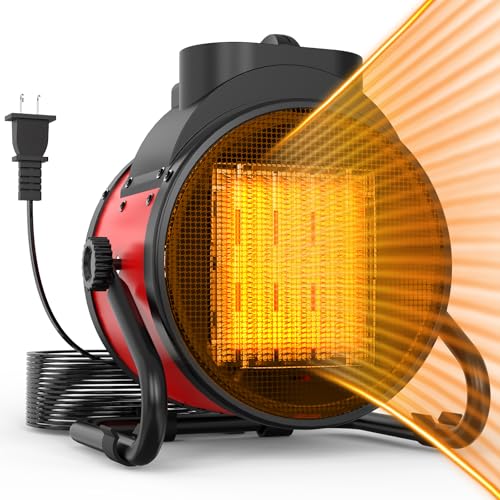
- Best verified buy for a conversation corner: 1500W Portable Electric Heater (Model YXC-150R) — Check on Amazon
- Dura Heat TT-15CSA Tank Top Heater — prose-only pick: the standing-and-mingling zone heater, but its listing carried no featured offer, so no in-budget price could be verified
- Mr. Heater MH15T Single Tank Top Heater — prose-only pick: big-brand tank-top heat for the drinks-station zone; street sightings just above this budget
- Cuisinart COH-500 Tabletop Patio Heater — prose-only pick: the dining-table heater hosts actually want, premium-priced well above this tier
- Mr. Heater Little Buddy MH4B — prose-only pick: the safest spot heater for one or two guests, at a step-up price
- Texsport Portable Outdoor Propane Heater (Item 14215) — prose-only pick: a featherweight second-zone burner; no verified in-budget listing
Read the full guide ↓
Disclosure: As an Amazon Associate, dailyhomedecorating.com earns from qualifying purchases. Links to Amazon on this page are affiliate links; they cost you nothing extra. Listing details such as price and availability change often, so check the current Amazon listing before you buy.
Here is the truth the best outdoor heater for outdoor entertaining under $50 has to start with: there is no single heater at this price that warms a party. Entertaining means people spread across zones — a dining table, a standing circle near the drinks, two chairs in the quiet corner — and every heater in this budget warms exactly one small zone: the few feet directly in front of it, or the single table it sits on. Hosts who understand that have warm parties, because they stop shopping for one miracle heater and start planning zones: which cluster of guests matters most, which zone gets the heater they can buy today, and which zones get blankets, the fire pit, or a move indoors at ten o’clock. This guide is written for that host. It gives you the one verified in-budget buy we could confirm during research — a compact electric heater for the conversation corner, linked below — and then, honestly and without purchase links, the step-up and watch-for-a-dip heaters that fill the other zones: tank-top propane for the standing crowd, a tabletop flame for the dining table, and two small propane spot heaters for the gaps.
It also gives you the hosting-specific safety thinking that general heater guides skip. Guests do not know your heater’s rules. They set drinks beside it, drape jackets over chairs next to it, send children to fetch things past it, and back into its clearance zone mid-conversation with a plate in each hand. A heater that is perfectly safe for a careful owner on a quiet Tuesday can be the wrong heater for eight guests on a Saturday, and several reviews below turn on exactly that difference. Read the safety section before the reviews: at a party, placement is not a detail, it is the whole product.
In this guide
Best Outdoor Heater for Outdoor Entertaining Under $50: Quick Picks
Each row names an entertaining zone and the heater that fits it. Only the electric pick carries a purchase link, because only it had a verified in-budget Amazon price at research time.
| Entertaining zone | Pick | Why it stands out | Link |
|---|---|---|---|
| Conversation corner (verified buy) | 1500W Portable Electric Heater (Model YXC-150R) | Flameless, silent, instant warmth for two chairs by an outlet — check price on Amazon | Check on Amazon |
| Standing and mingling zone | Dura Heat TT-15CSA Tank Top Heater | 15,000 BTU radiant heat a standing circle can share; prose-only, price unverified | Prose-only — see review |
| Drinks station / host’s post | Mr. Heater MH15T Single Tank Top Heater | Adjustable 10,000–15,000 BTU with safety shut-off valve; prose-only, sightings just above budget | Prose-only — see review |
| The dining table | Cuisinart COH-500 Tabletop Patio Heater | 11,000 BTU at torso height with tilt switch and burner guard; prose-only premium step-up | Prose-only — see review |
| One or two seated guests | Mr. Heater Little Buddy MH4B | Oxygen depletion sensor plus tip-over shut-off; prose-only step-up | Prose-only — see review |
| A second small zone, camp-style | Texsport Portable Outdoor Propane Heater (Item 14215) | Featherweight 1 lb cylinder burner with auto shut-off valve; prose-only, no verified listing | Prose-only — see review |
Hosting Safety: Guests Change Every Rule
Assume nobody knows the clearances. The working minimum in this guide — at least three feet of clear space around a heater, more where the manual says so, nothing combustible overhead — has to survive contact with a party. That means siting heaters where guests are not: at the edge of a zone, behind the seating line, never in the path between the house, the table, and the drinks. If a heater’s only possible spot is inside the traffic pattern, that heater does not come out that night.
Tip-over risk is a guest statistic. Published shut-offs matter more at parties than at any other time. The Little Buddy’s tip-over switch and the Cuisinart’s tilt switch exist for the elbow, the dog, and the chair leg you did not predict. Tank-top heaters have no such switch — their stability is the tank and the ground — so at a gathering with children, dogs, or a crowd in motion, a tank-top belongs outside the social area entirely, warming a work or serving zone adults pass deliberately, or it stays in the shed. The electric pick removes the flame question from the guest equation altogether, which is a large part of why it is the verified recommendation for the zone where people sit longest.
Carbon monoxide rules do not bend for events. Flame heaters stay in open air: not under the enclosed canopy, not inside the garage when the party migrates, not in the tent the kids are sleeping in, and never running while anyone sleeps anywhere near them. The safety record in this category includes a death from a tabletop propane heater used inside a camper — a reminder that “outdoors event” describes where your guests are, not wherever the heater ends up. Keep cylinders upright, outdoors, and away from doors; check connections with soapy water before guests arrive, not while they watch; and let any propane heater cool fully before you move it at cleanup time, when tired hosts make their worst decisions.
Plan the unglamorous details. Electric cords cross no walkways, or they are covered and taped where they must. Drinks never sit on or beside a heater. Jackets and blankets live on a designated chair away from every heat source. One sober adult owns the heaters for the evening — lighting, adjusting, and shutting them down — the same way one adult owns the grill.
How These Picks Were Chosen
Three filters ran in order. First, the budget, applied strictly: a purchase link requires a verified Amazon price inside the budget at research time. Only the electric pick passed — check price on Amazon when you shop — while the Dura Heat’s listing carried no featured offer (no price to verify), the MH15T’s street sightings sit just above the tier, the Little Buddy’s verified price sits above it, the Cuisinart’s normal price is far above it, and the Texsport’s Amazon listing could not be verified at all. Those five are prose-only, with their positions stated in their reviews, because a hosting guide that invents bargains sends hosts into a party with the wrong equipment.
Second, documentation and recall status: verified outputs and named safety devices for every pick, and a check of the U.S. Consumer Product Safety Commission recall record for this category — gas patio heaters recalled for fire and burn hazards, electric heaters recalled for overheating — with any model under a current recall excluded entirely and named nowhere in the recommendations. Third, the entertaining test itself: could this heater hold a zone for two to three hours, at a running cost a host can sustain across a season of gatherings, without demanding attention a host does not have? That test is why the guide is organized by zone rather than by raw output — and why the strongest heater here is not automatically the first recommendation.
Detailed Reviews: One Heater per Zone, Honestly Priced
1500W Portable Electric Heater (Model YXC-150R) — The Conversation Corner, Verified
Who it suits. Every host, as the foundation purchase: the two chairs where two guests will sit and talk for an hour, placed on the deck or slab near the house, within direct reach of an outdoor outlet.
Model YXC-150R is a compact plug-in heater from an Amazon marketplace listing: 1500 watts, three heat modes, a fast-heating element, and published overheat protection. For entertaining, its decisive features are the ones it lacks: no flame for a guest to back into, no exhaust to pool under the patio cover, no fuel to run out at nine o’clock, and no noise worth mentioning over conversation. Its warmth is a few feet of personal radius, which matches a two-chair corner exactly. It turns on when the corner fills and off when it empties, and at cleanup it is cool in minutes and shelves in a closet. Plug it directly into the outlet — a 1500-watt load and a light extension cord are not a hosting plan — and route the cord where no guest walks.
Pros. The only verified in-budget Amazon price in this guide. The safest possible guest profile: flameless, carbon-monoxide-free, with overheat protection. Silent enough for conversation, instant enough for real hosting rhythms. The cheapest zone you will ever add to a party.
Honest limitation. One corner is all it heats; a host who imagines it warming the whole gathering will be disappointed by nine o’clock. No weather-resistance grade could be verified, so it deploys for the evening and comes back inside — never a permanent outdoor fixture, never in rain. It is an unbranded listing, so the published protections and Amazon’s return window are your assurance, not a brand name.
Choose it if you buy one thing from this guide. Skip it if your entertaining happens far from the house with no power — your zones are propane zones, below.
Dura Heat TT-15CSA Tank Top Heater — The Standing Circle
Who it suits. A host with a grill tank, a slab or gravel area at the gathering’s edge, and a standing zone — the fire-pit-adjacent circle, the outdoor games area, the smokers’ corner — where guests cluster and drift.
The TT-15CSA clamps onto a 20 lb tank and throws up to 15,000 BTU of radiant heat across three settings: enough for a loose standing circle to rotate through, warming hands and fronts as people turn. Radiant output is the right physics for mingling, because it heats people rather than air and recovers instantly when the circle reforms. A bulk tank runs it evening after evening, so a season of parties costs less in fuel than one evening of small cylinders. Dura Heat publishes a full manual and a one-year warranty against manufacturing defects.
Pros. The most shared warmth in this guide, at the lowest per-evening fuel cost. No small-cylinder swaps mid-party. Throttle settings for early-evening chill versus late-evening cold.
Honest limitation. Its Amazon listing showed no featured offer during research, so its price — in this budget or any other — is unverified, and it is prose-only until you see a live one. It is also the pick that demands the most hosting discipline: exposed burner, no tip-over switch, stability borrowed from a tall tank. At the gathering’s edge on open ground, with the circle facing it and nobody circulating behind it, it earns its place. In the middle of traffic, with children orbiting, it is the wrong heater at any price.
Choose it if a live in-budget price appears and your yard offers it an edge-of-party home. Skip it if your parties are seated and deck-based, or your guest list runs young and four-legged.
Prose-only pick: ASIN verified, but no featured offer at research time meant no in-budget price could be confirmed, so no purchase link is given.
Mr. Heater MH15T Single Tank Top Heater — The Drinks-Station Zone
Who it suits. The host who works a station — grill, bar cart, serving table — in a fixed spot at the gathering’s edge and wants serious adjustable heat there, from the best-documented brand in the tank-top class.
The MH15T (stock F242100) adjusts from 10,000 to 15,000 BTU on a Hi-Med-Lo valve, mounts directly on a 20 lb tank, and carries an automatic safety shut-off valve. Mr. Heater publishes roughly 28 hours at high and over 40 at low from one tank, which in hosting terms is a season of events without a fuel thought. Its manual is the class’s most thorough, including the clearances a host must site by.
Pros. Adjustable output for a long evening’s arc. Named safety shut-off valve. Documentation and parts support that outlast trends. The brand a rental yard would hand you.
Honest limitation. Street sightings sit just above this budget, so it is prose-only — a dip away from belonging here, not a resident. The standard model is match-lit, an awkward ritual mid-party (a piezo sibling model exists; buy deliberately). And it shares the format’s hosting rules in full: edge placement, open ground, no traffic behind it, no children in its orbit.
Choose it if it dips into budget before your event and your station has the ground it needs. Skip it if your hosting is all seated dining — the tabletop below is your shape, at its tier.
Prose-only pick: sightings just above this budget, so no purchase link is given. It competes on level terms in Best Outdoor Heater For Outdoor Entertaining Under $75.
Cuisinart COH-500 Tabletop Patio Heater — The Dining Table, at Its Own Tier
Who it suits. The host whose party is a dinner: six people, one table, two hours, and a wish that the heat lived where the conversation does — at torso height, in the middle of the table’s circle.
The COH-500 delivers 11,000 BTU of radiant propane heat over a single patio table, with a reflector top, adjustable output, a burner screen guard, and a safety tilt switch. Cuisinart’s stated useful range is about 30 square feet — one table, honestly described. Independent reviewers put its appetite at roughly a couple of hours per one-pound cylinder at full output, with an optional hose to a 20 lb tank for long evenings, and the warranty runs one year on defects in material and workmanship.
Pros. The only pick that heats a seated group evenly, because it sits in their center. Tilt switch and burner guard fitted to a surface shared with elbows and sleeves. A brand and manual a host can rely on.
Honest limitation. Its normal price is far above this budget — this is a premium step-up, listed because hosts searching this tier ask for it by name — and its listing showed no featured offer on research day, so it is prose-only twice over. It heats one table and nothing beyond it. A flame among serving dishes demands a disciplined table: nothing flammable near the reflector, no paper decorations, no reaching across it, and never under a low canopy or indoors when the party moves.
Choose it if dining is your entertaining and your budget grows to meet it. Skip it if this budget is real — it is — and zone the electric pick and a watched-for tank-top instead.
Prose-only pick: premium step-up well above this budget, so no purchase link is given.
Mr. Heater Little Buddy MH4B — The Guest Chair Heater
Who it suits. A host with one or two guests who feel the cold — the grandparent chair, the reading guest, the friend who always ends up in the drafty seat — and a wish to give that seat its own safe, personal heat source.
The Little Buddy (MH4B, stock F215100) is a 3,800 BTU radiant propane heater on an 8-inch stand, under six pounds, one-button ignition, about five and a half hours per one-pound cylinder by the maker’s figures. Its oxygen depletion sensor and accidental tip-over shut-off are why it is the small propane heater this guide is comfortable placing near a seated guest: if it is knocked, it shuts down; if its air goes stale, it shuts down. It is CSA certified, and it moves from chair to chair as the evening’s cold seats change.
Pros. The best published safety engineering in small propane heat — the party-relevant kind. Portable enough to redeploy mid-evening. Predictable runtime covers a full gathering per cylinder.
Honest limitation. Its verified price sits above this budget, so it is prose-only: the step-up gift you give one cold guest, not a bargain. One fixed output, one person’s warmth — it does not scale to a group, and a host who buys it expecting party heat will under-serve everyone. Small cylinders remain the priciest propane format across a season.
Choose it if your budget stretches and one special seat matters most. Skip it if you need group warmth — zones and tank-tops, above, are the honest route.
Prose-only pick: verified price above this budget, so no purchase link is given.
Texsport Portable Outdoor Propane Heater (Item 14215) — The Second Small Zone
Who it suits. A camp-fluent host who already stocks one-pound cylinders and wants a featherweight burner to warm a second small station — the games table’s edge, the porch step pair of chairs — without buying a second engineered heater.
Texsport’s item 14215 pairs a stainless burner with a wide base plate, its own regulator, adjustable output up to roughly 2,900 BTU, a safety grid, and an automatic shut-off valve that closes the fuel if the flame dies. It weighs very little, runs on standard 16.4-ounce or 14.1-ounce disposable cylinders, and its manual states the outdoor-only rule plainly.
Pros. The lightest way to add a warm spot. Flame-failure shut-off covers the worst simple-burner scenario. Historically sighted at the bottom of this budget band by review sites.
Honest limitation. No live Amazon ASIN or current in-budget price could be verified during research, so it is prose-only with no stock promise. No tip-over switch — placement discipline is the whole stability plan, which at a party means a supervised, traffic-free corner or none at all. Its output is lap warmth for two close sitters, not a zone for a group.
Choose it if you find it stocked in budget and have the sheltered, supervised corner it needs. Skip it if your party is busy and unsupervised around the edges — the electric pick’s flameless profile is the better second zone for most hosts.
Prose-only pick: no verified in-budget Amazon listing at research time, so no purchase link is given.
A Worked Example: One Party, Three Zones, This Budget
Make the zone method concrete. Imagine the gathering this guide’s readers actually host: eight guests, a deck against the house, a lawn beyond it, a dining table on the deck, drinks on a cart at the deck’s edge, and two good chairs in the corner where the deep conversations happen. The evening runs four hours and the temperature drops steadily after sunset. Here is how this budget covers it, honestly.
Zone one, the corner, gets the verified heater. The electric pick goes between the two conversation chairs, plugged directly into the deck outlet, cord routed behind the chairs where no foot travels. This zone is now solved for the whole evening at a modest electricity cost: flameless, silent, and safe for the guest who settles in with a blanket and stays for two hours. It is also the zone that survives the party’s evolution — when the crowd thins at ten, the corner is where the last four people end up, and it is still warm.
Zone two, the table, gets a strategy instead of a heater. At this budget there is no honest tabletop purchase — the Cuisinart lives tiers up — so the table borrows warmth: seat the cold-sensitive guests on the house side, where the building blocks wind and the corner zone’s spill reaches; serve the hot course while the evening is youngest; and accept that the table’s late shift migrates to the corner. Hosts who dine outdoors weekly should read that paragraph as a purchasing signal: your household is the Cuisinart’s audience, and its tier is where your next entertaining budget belongs.
Zone three, the lawn’s edge, gets the watched-for tank-top — or a fire. If a verified in-budget tank-top has been caught by party day, it stands at the lawn’s edge on bare ground, facing the standing circle, with its back to open yard and nobody’s route passing behind it; the host lights it before guests arrive and owns it all evening. If it has not, the standing zone’s honest substitutes are the ones hosts have always used: a fire pit doing the same job in the same spot (this guide’s related fire-pit guide covers that purchase), or a standing zone deliberately placed in the deck corner’s lee, close enough to borrow the building’s shelter. What the standing zone never gets is a small propane spot heater parked in the traffic — that is the Texsport’s misuse, and the safety section explains the statistics.
The Little Buddy’s party role is personal, not zonal. In this worked example it appears at exactly one moment: when the guest who feels cold most — there is always one — claims a chair outside the warm zones. Placed beside that chair, attended, with its shut-offs as the safety net, it is a kindness with a fuel gauge of about five and a half hours, which is to say it outlasts the party. Bought as a group heater it would disappoint; deployed as a personal one, it is the most appreciated appliance at the gathering.
Cleanup is part of the plan. The electric pick cools in minutes and shelves indoors — remember, it has no verified weather grade, so it never spends the night outside. Propane picks cool fully before moving, cylinders close and store upright outdoors, and the host who owned the heaters all evening owns their shutdown too. A party whose heat plan includes its own ending is a party that can be repeated monthly, which is the entire point of buying zones across a season rather than heroics for one night.
Season Planning for Hosts: Buying Zones in the Right Order
Entertaining households should treat this budget as the first installment of a system, not a one-time answer. The order that serves most hosts: first, the verified electric corner, because it is purchasable today at a confirmed in-budget price and covers the longest-stay zone. Second, the standing zone — a tank-top caught at a verified dip, or a fire feature bought instead — because standing guests are the next longest-stay population and the least tolerant of cold. Third, the personal layer: a Little Buddy for the cold-sensitive chair, bought at its real price when a birthday or a sale makes the step-up painless. Fourth, the table, at the Cuisinart’s tier, only for households whose entertaining is truly dinner-centric. Each step is small, verified, and matched to a zone you have already watched real guests occupy — which is why hosts who buy in this order end up with warm parties, while hosts who buy a single impressive heater end up with one warm spot and a story about the night everyone went inside early.
When the Weather Argues: Wind, Rain Threats, and the Party That Moves
Every host plans the party they hope for; heaters are bought for the party that happens. Three weather scenarios deserve a plan before the guests arrive. The first is wind. Radiant propane heat tolerates a breeze better than any attempt to warm air, but wind still bends a flame’s useful zone sideways, rattles loose reflectors, and — more importantly — carries sparks, napkins, and decorations toward heat sources. On a windy evening, shrink the plan: move the standing zone into the building’s lee, lower your expectations of every zone by a chair or two, and keep paper goods anchored or indoors. If gusts are strong enough to move furniture, the flame heaters stay off entirely; the electric pick, sited out of the gusts’ path, becomes the evening’s only heat, and the party compresses around it — which guests experience as coziness rather than failure when the host has planned the compression instead of apologizing for it.
The second scenario is the rain threat that never quite arrives. The electric pick has no verified weather grade, so its rule is binary: the moment rain is actually falling, it comes inside, and a host who deploys it under a merely threatening sky should keep it under real cover and within one motion of the door. Propane picks tolerate a damp evening better mechanically, but wet guests migrate under cover — dragging the party, though never the flame heaters, toward the enclosed spaces this guide keeps warning about. Plan the migration destination in advance: a living room with the doors open to the deck keeps the party’s geography intact without moving a single burner.
The third scenario is the cold snap that outclasses the equipment. When the evening drops past what small heaters can redeem, the host’s correct move is temporal, not thermal: front-load the outdoor hours, serve the hot food early, move the lingering indoors while the outdoor zones are still a pleasure rather than an endurance test. A party that ends its outdoor chapter on time is remembered as a success; a party that fights the temperature for two extra hours is remembered as cold. Budget heaters extend evenings — they do not repeal seasons, and the host who knows the difference gets more warm parties out of this tier than the host with twice the equipment and none of the judgment.
The Host’s Pre-Party Checklist
Thirty minutes before guests arrive is when this guide becomes a checklist. Walk the zones in order. Corner: electric pick placed, cord routed behind furniture, outlet connection direct, lowest mode tested so the first guest does not meet a tripped breaker. Standing zone, if a flame pick is in service: sited at the edge on open ground, clearances walked off physically rather than estimated, connection leak-tested with soapy water, a full cylinder confirmed — because the evening a tank dies at eight o’clock is the evening the host learns to check at six. Table: nothing flammable within the reflector’s future reach if the tabletop is ever in service, and serving pieces arranged so no guest reaches across heat. Whole space: one route from door to drinks that touches no heater’s clearance, blankets folded on a designated chair away from every heat source, and the host — one named host — holding the evening’s only lighter and the evening’s only authority to move a heater. Parties rarely go wrong at the level of equipment; they go wrong at the level of the unowned detail, and this checklist is the detail list.
Comparison Table
All six picks side by side, organized by the zone each one serves. Outputs are the makers’ published figures.
| Pick | Fuel / power | Published output | Key safety features | Entertaining zone | Link |
|---|---|---|---|---|---|
| 1500W Portable Electric Heater (YXC-150R) | Electric, plug-in | 1500W, 3 modes | Overheat protection; no flame, no CO | Conversation corner, 2 chairs | Check on Amazon |
| Dura Heat TT-15CSA Tank Top | Propane, 20 lb tank | 15,000 BTU, 3 settings | Safety shut-off valve; tank stability | Standing circle at the yard’s edge | Prose-only |
| Mr. Heater MH15T Tank Top | Propane, 20 lb tank | 10,000–15,000 BTU, adjustable | Automatic safety shut-off valve | Grill / drinks station | Prose-only |
| Cuisinart COH-500 Tabletop | Propane, 1 lb cylinder (20 lb via hose) | 11,000 BTU, adjustable | Tilt switch; burner screen guard | The dining table | Prose-only |
| Mr. Heater Little Buddy MH4B | Propane, 1 lb cylinder | 3,800 BTU, single setting | Oxygen depletion sensor; tip-over shut-off | One or two seated guests | Prose-only |
| Texsport Portable Propane Heater (14215) | Propane, 1 lb cylinder | Up to ~2,900 BTU, adjustable | Automatic shut-off valve; burner grid | A second small station | Prose-only |
How to Choose Heaters for Entertaining at This Budget
Draw the party map first. Sketch your zones — dining, standing, conversation, the host’s station — and rank them by how long guests stay in each. Your heater budget goes to the longest-stay zone first. For most homes that is the conversation corner, which is why the verified electric pick leads this guide: it is the only zone you can certainly warm inside this budget, starting tonight.
Buy zones across the season, not one hero tonight. A realistic path at this tier: the electric corner now; a tank-top when a verified dip appears, for the standing zone; the Cuisinart someday, for the table. Each purchase is small, honest, and matched to a map you have already drawn. Hosts who instead spend the whole budget chasing one heater that “does it all” end up with a warm host and cold guests.
Match the safety device to the crowd. Seated, supervised, sober zones can host a well-sited tank-top. Zones with children, dogs, dancing, or drinks in motion want published shut-offs — tip-over, tilt, flame-failure — or no flame at all. When a zone fails that test, warm it with blankets and proximity to a heated zone, not with a burner.
Budget the season’s fuel, not the evening’s. Entertaining multiplies hours. Small cylinders are the expensive way to host winter; a bulk tank is the cheap way; electricity is the predictable way. Price your calendar — how many gatherings, how many hours — before deciding which prose-only pick deserves your watch-list.
Furnish for warmth, too. Chairs that block wind, a rug under the conversation corner, and seating that keeps guests inside the warm zones do as much as a second heater. Readers planning the full setup pair this guide with Best Adirondack Chair For Outdoor Entertaining Under $75 for guest-proof seating, Best Deck Box For Outdoor Entertaining Under $50 for storing heaters and blankets between parties, and Best Fire Pit For Outdoor Entertaining Under $50 for the zone a fire feature can own outright — one strong fire zone plus one electric corner beats three weak heaters for most gatherings.
Common Mistakes Hosts Make
Buying one heater for the whole party. Zones, not miracles. A single small heater warms a single small zone; plan the map and let some zones be blanket zones.
Siting the heater in the traffic lane. Between the door and the drinks is where heaters get clipped, cords get tripped on, and clearances go to die. Edge placement, always.
Moving the party indoors and bringing the heater. The garage migration is a carbon monoxide scenario, not a hosting hack. Flame heaters stay outside when the party moves; the electric pick can follow to a covered, code-appropriate spot only.
Letting guests manage the heat. Guests adjust, move, and drape things over heaters. One host owns the heaters all evening, the way one host owns the grill.
Discovering the fuel bill in December. Small cylinders across a season of parties add up to a step-up heater. Do the season arithmetic in October.
Leaving the electric heater out after the party. It has no verified weather grade; it comes inside at cleanup, every time, along with the cushions.
Final Recommendation
Start with the corner. Buy the verified pick — the 1500W Portable Electric Heater (YXC-150R), check price on Amazon — place it at the two chairs where your favorite conversations happen, and your next gathering already has one genuinely warm zone. Then watch the tank-tops with this guide’s map in hand: a verified in-budget Dura Heat TT-15CSA or a dipped Mr. Heater MH15T claims the standing zone the moment its price is real. The dining table’s turn comes at the Cuisinart’s own tier, and there is no shame in that sequence — it is how a whole warm party gets built out of a small, honest budget. Readers ready to skip a step will find the field widen in Best Outdoor Heater Under $50 and at the next tier for hosts, while this tier’s discipline — zones, clearances, one sober heater-owner — travels with you at every price.
Frequently Asked Questions
How many heaters do I need for a backyard party? One per zone where guests linger — typically two zones for a small gathering: a seated zone and a standing zone. At this budget, expect to fully heat one zone with the verified electric pick and treat other zones as watch-list purchases or blanket zones until your budget grows.
What is the safest heater type around guests and kids? Electric, by a wide margin: no flame, no exhaust, no fuel, and overheat protection — which is why it anchors the highest-traffic zone in this guide. Among propane picks, choose published shut-offs (tip-over, tilt, flame-failure) and site them outside guest traffic entirely.
Can a tank-top heater work at a party? Yes, at the gathering’s edge on open ground, warming a standing circle that faces it, with nobody circulating behind it and no children or dogs in its orbit. In the middle of a busy party it is the wrong tool, however strong its output.
Is a tabletop heater worth it for dinner parties? It is the only format that warms a whole seated table evenly, and the Cuisinart COH-500 is its benchmark — but at its real price, several tiers above this one. At this budget, seat your diners within reach of the electric pick’s zone instead, and let the tabletop wait for its tier.
Should I tell guests where the warm zones are? Yes — hosts underestimate how much a sentence of direction improves an evening. A word at the door (“the corner chairs are the warm seats tonight”) fills the heated zones with the guests who want them, keeps traffic out of the clearances, and stops the slow drift of chairs toward heaters that hosts otherwise spend the night correcting. Warmth at a party is partly equipment and partly choreography, and the choreography is free.
What is the cheapest way to make a party feel warmer without another heater? Arrangement. Angle the seating out of the wind’s path, put a rug under the main zone, cluster chairs closer than summer spacing suggests, and serve the first round hot. Guests read proximity and shelter as warmth, and a well-arranged unheated zone routinely outperforms a badly arranged heated one.
Why do most picks here have no buy link? Their prices could not be verified inside this budget during research. Each review states the pick’s true position, so when a genuine discount appears you can act on it with the zone map already drawn.
Where should guests never stand relative to a heater? Behind it and beside it, inside its clearance. Face the warmth from the front, outside the clear zone the manual specifies, and keep the routes to the house and the drinks outside that zone entirely. A host who sites heaters at zone edges makes this automatic; a heater in the middle of a space makes it impossible.
Can I use two cheap heaters instead of one good one? Two small heaters in two zones beat one small heater pretending to cover both — that is the zone method in one sentence. What two cheap heaters cannot do is substitute for a genuinely stronger heater inside a single large zone; a standing circle of eight needs output, not arithmetic. Match the tool to the zone’s size, then multiply zones as the budget allows.
What do I do when the party moves indoors mid-evening? The electric pick can follow to an appropriate covered spot near an outlet. Every propane pick stays outside, is shut down, and cools where it stands — moving a hot propane heater through a doorway of guests is the exact cleanup-time accident the safety section warns about. Let the indoor rooms be the warm zone for the rest of the night; that is what they are for.


