Where to buy
Check the latest price, availability and delivery on Amazon. Orders are placed on Amazon. We may earn a commission from qualifying purchases.
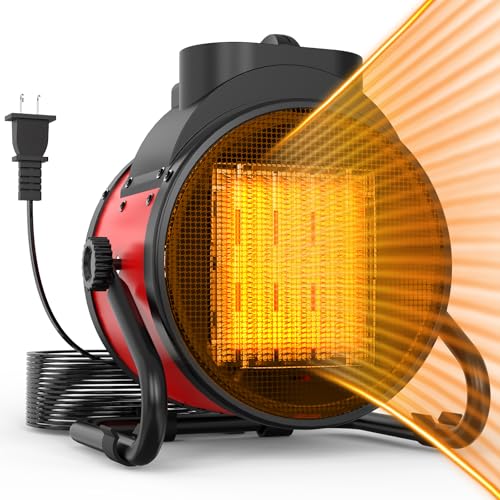
- Best verified buy for a deck by the house: 1500W Portable Electric Heater (Model YXC-150R) — Check on Amazon
- Dura Heat TT-15CSA Tank Top Heater — prose-only pick: the strongest backyard heat here, but its listing carried no featured offer, so no in-budget price could be verified
- Mr. Heater MH15T Single Tank Top Heater — prose-only pick: the big-brand tank-top, with street sightings just above this budget
- Mr. Heater Little Buddy MH4B — prose-only pick: the safest small propane heater for a bench or garden corner, at a step-up price
- Cuisinart COH-500 Tabletop Patio Heater — prose-only pick: backyard dining-table heat, premium-priced well above this tier
- Texsport Portable Outdoor Propane Heater (Item 14215) — prose-only pick: the lightest carry-to-the-far-corner option; no verified in-budget listing
Read the full guide ↓
Disclosure: As an Amazon Associate, dailyhomedecorating.com earns from qualifying purchases. Links to Amazon on this page are affiliate links; they cost you nothing extra. Listing details such as price and availability change often, so check the current Amazon listing before you buy.
The best outdoor heater for backyards under $50 is a different animal from the best patio heater at the same price, and the difference is open air. A backyard gives a heater the three things a small patio cannot: distance from the house, room for real clearance, and space for people to stand in a loose circle rather than sit in fixed chairs. That is why this guide leads its thinking with the heaters a patio guide has to apologize for — tank-top propane heads that clamp onto a 20 lb tank and throw serious radiant heat across a work area, a fire-pit circle, or a sideline. In a backyard, used on open ground with discipline, those are not compromises; they are the strongest heat this budget can touch. The catch, stated now rather than buried, is verification: during research, neither tank-top pick had a confirmed Amazon price inside this budget — one listing showed no featured offer at all, and the other’s street sightings sit just above the tier — so both are prose-only, presented as watch-for-a-dip buys rather than pretend bargains.
The one pick we do link is the opposite kind of tool: a compact 1500W electric heater with a verified in-budget Amazon price, made for the deck or patio slab right against the house where an outdoor outlet lives. Between that verified buy, the two tank-top heavyweights, the safest small propane heater on the market, a tabletop dining heater for the step-up crowd, and the lightest one-pound-cylinder burner we could document, this guide covers every honest way to warm a backyard at this tier — what each one heats, what each one costs to run, and the safety rules that matter more, not less, when the space feels too open to be dangerous. Read the safety section even if you skim the reviews: backyards invite exactly the placements — near the woodpile, under the canopy, beside the dry grass — that turn a good heater into a bad evening.
In this guide
Best Outdoor Heater for Backyards Under $50: Quick Picks
Each row names a backyard job and the heater that fits it. Only the electric pick carries a purchase link, because only it had a verified in-budget Amazon price at research time; the prose-only rows say exactly where they stand.
| Backyard job | Pick | Why it stands out | Link |
|---|---|---|---|
| Best verified buy (deck by the house) | 1500W Portable Electric Heater (Model YXC-150R) | Plug-in warmth for two chairs near an outlet, no fuel, no flame — check price on Amazon | Check on Amazon |
| Most heat for a standing circle | Dura Heat TT-15CSA Tank Top Heater | 15,000 BTU on your grill’s 20 lb tank, three settings; prose-only, price unverified | Prose-only — see review |
| Big-brand tank-top | Mr. Heater MH15T Single Tank Top Heater | Adjustable 10,000–15,000 BTU with a safety shut-off valve; prose-only, sightings just above budget | Prose-only — see review |
| Bench, garden, and sideline heat | Mr. Heater Little Buddy MH4B | Oxygen depletion sensor plus tip-over shut-off in a carry-anywhere unit; prose-only step-up | Prose-only — see review |
| Backyard dining table | Cuisinart COH-500 Tabletop Patio Heater | 11,000 BTU over the table with tilt switch and burner guard; prose-only premium step-up | Prose-only — see review |
| Far corner, camp-style heat | Texsport Portable Outdoor Propane Heater (Item 14215) | Featherweight burner on a 1 lb cylinder with auto shut-off valve; prose-only, no verified listing | Prose-only — see review |
Safety in an Open Yard: The Rules Do Not Shrink Outdoors
A backyard feels safe because it is open, and open air genuinely does forgive the carbon monoxide risk that makes propane heaters deadly indoors — outdoors, exhaust disperses, and that is the entire basis on which flame heaters are acceptable at all. But openness creates its own three hazards, and this guide’s safety rules are built around them.
Fire travels in a yard. Dry grass, leaf litter, mulch beds, woodpiles, fences, sheds, and the canopy or gazebo you set up for the party are all fuel, and a radiant burner does not know the difference between warming your hands and drying out the mulch two feet away. Site every flame heater on bare, flat, non-flammable ground — a patio slab, gravel, or packed earth — with at least three feet of clear space on every side as a working minimum and whatever greater distance the manual specifies, and nothing overhead unless the manual explicitly allows it. Keep the heater out of the wind’s favorite path where gusts can push flame and heat sideways toward plantings, and never set a tank-top heater on a wooden deck crowded with furniture and call the deck boards “open air.”
Stability is the tank-top rule. A tank-top heater is a hot burner mounted on a tall cylinder; its tip-over protection is the flatness of the ground and the discipline of the people around it. Site it where nobody’s route to the house, the cooler, or the bathroom passes within arm’s reach, where dogs will not charge it and children will not orbit it. If your gathering includes small children or loose dogs, the honest backyard choice is the electric pick on the deck or the Little Buddy under direct supervision — not a tank-top head at ankle height in traffic. Check every tank connection with soapy water before lighting, and let the head cool completely before you move or store it.
Carbon monoxide still has rules outdoors. Open air is the requirement, not a suggestion: never run a propane heater inside the garage with the door “mostly open,” inside a tent or camper, under a fully enclosed canopy, or while anyone sleeps outdoors near it. The category’s safety record includes a fatal case of a tabletop propane heater used inside a camper, and the mechanism — an odorless gas building up in a still, enclosed volume — works in any enclosed volume, including one in your backyard. Electric heat makes none of these demands, which is why it anchors the deck end of this guide.
How These Picks Were Chosen
The budget filter came first and it was strict: a pick earns a purchase link only with a verified Amazon price inside the budget at research time. In this category that rule bites hard. The linked electric heater passed it. The Dura Heat tank-top’s listing carried no featured offer, so no price existed to verify; the Mr. Heater tank-top’s verified street sightings sit just above the tier; the Little Buddy’s verified price sits above the tier; the Cuisinart’s normal price is far above it; and the Texsport’s Amazon listing could not be verified at all. All five are therefore prose-only, each with its position stated in its review. A guide that linked them anyway would be inventing bargains, and this site does not do that.
The documentation filter came second: verified output figures, fuel format, and named safety devices from the maker or a full listing, for every pick. The safety filter came third: we checked the U.S. Consumer Product Safety Commission recall record for patio and outdoor heaters before finalizing — this category has seen gas patio heaters recalled for fire and burn hazards and electric heaters recalled for overheating — and any model under a current recall was excluded entirely and appears nowhere below. The backyard filter came last: could this heater do a real backyard job — warm a standing circle, a work bench, a dining table, a garden bench — in open air, at a running cost a household can sustain? The six survivors divide those jobs cleanly, and the reviews assign each one its job and its limits.
Detailed Reviews: Every Pick Assigned Its Backyard Job
Dura Heat TT-15CSA Tank Top Heater — Most Heat for a Standing Circle
Who it suits. A homeowner with a grill tank already in the yard, a slab or gravel patch to stand it on, and a recurring scene — driveway projects, fire-pit-adjacent gatherings, kids’ practice sidelines, a work crew on a break — where several people stand around one heat source and drift in and out of its warmth.
The TT-15CSA is a single radiant head that clamps to a standard 20 lb propane tank and delivers up to 15,000 BTU on three settings. Radiant heat is the right physics for a yard: it warms people and surfaces directly rather than trying to heat outdoor air, so a standing circle feels it immediately, and the three settings let you idle it down once everyone’s hands are warm. The tank math is the other half of the appeal — a 20 lb tank is the cheapest propane format there is, and a head like this runs many evenings per tank, so the per-gathering fuel cost is the lowest in this guide. Dura Heat backs the model with a published manual and a one-year warranty against manufacturing defects, per the sources we verified.
Pros. Four times the Little Buddy’s output, at the lowest running cost here. No outlet, no small cylinders, no mid-evening fuel swaps. Stores on a shelf; the tank goes back to the grill. An established brand with documentation, in a class full of anonymous hardware.
Honest limitation. On research day, this heater’s Amazon listing showed no featured offer — its price could not be verified in this budget or any other — so it is prose-only and its tier membership is unconfirmed until you see a live price. It is also the most placement-demanding pick in the guide: exposed burner, tank stability, open ground, a strict no-traffic zone, and absolutely no place around small children at play or on a furnished wooden deck. It looks like jobsite equipment because it is jobsite equipment.
Choose it if you find it live-priced inside the budget, own the tank, and have the open ground. Skip it if your backyard life is seated dining on a deck — the Cuisinart’s job, at its own tier — or your gatherings mix toddlers and dogs into the heater’s circle.
Prose-only pick: ASIN verified, but no featured offer at research time meant no in-budget price could be confirmed, so no purchase link is given.
Mr. Heater MH15T Single Tank Top Heater — The Big-Brand Tank-Top
Who it suits. The same tank-owning backyard household as the Dura Heat, choosing the most widely sold brand in the class for its documentation, dealer network, and parts availability.
The MH15T (stock F242100) adjusts from 10,000 to 15,000 BTU through a Hi-Med-Lo control valve, connects directly to a 20 lb bulk tank, and carries an automatic safety shut-off valve that stops gas flow if the heater fails to operate. Mr. Heater’s manual publishes the planning numbers: roughly 28 hours at the high setting from a 20 lb tank, stretching past 40 hours at low — a whole season of short evening sessions for many households. The manual is equally clear that these are high-pressure propane appliances for outdoor, temporary heating, with clearances to match.
Pros. Adjustable output with a named safety shut-off valve. The best documentation in the class — manuals, parts, and support that remain findable years later. Runtime per tank that makes fuel a non-issue. A dial you can run down for a long, mild evening instead of cycling the heater on and off.
Honest limitation. Verified street sightings during research placed it just above this budget — close enough that sales pull it in, far enough that this guide will not claim it lives here — so it is prose-only. The standard version is match-lit, which some buyers dislike (a piezo variant exists under a sibling model number; buy the exact model you mean to). And every tank-top placement rule from the safety section applies in full: open flat ground, wide clearance, no traffic, no furnished decks, no play areas.
Choose it if it dips into the budget while you are shopping and your yard fits the format. Skip it if you need seated, furniture-friendly heat or a heater that protects itself when knocked — this format’s protection is your siting, not a switch.
Prose-only pick: sightings just above this budget, so no purchase link is given. In the next tier up — see Best Outdoor Heater Under $75 — this is one of the first heaters that competes on level terms.
1500W Portable Electric Heater (Model YXC-150R) — Best Verified Buy, Deck by the House
Who it suits. Backyard households whose evenings actually happen on the deck or slab against the house — two chairs, a side table, an outdoor outlet within cord reach — and anyone who wants one heater in this guide they can buy today at a verified in-budget price.
Model YXC-150R is a compact plug-in heater sold on Amazon under a descriptive listing: 1500 watts, three heat modes, a fast-heating element, and published overheat protection. In a backyard it is a zone heater, not a yard heater: it warms the people within a few feet of it, on the hard surface where outlets live. That limitation is also its safety profile — no flame near the woodpile, no exhaust under the canopy, no fuel stored in the shed, and instant off when the evening ends. Plug it directly into the outlet; a full 1500-watt load does not belong on a light extension cord snaking across a lawn, and if the chairs are thirty feet from the house, this is simply not their heater.
Pros. The only verified in-budget Amazon price in this guide — check price on Amazon to confirm it holds when you shop. Flameless and carbon-monoxide-free, so it is the one pick welcome under a covered deck roof. Instant on, instant off, nothing to store but the unit itself, which shelves in a closet. Running cost is a modest, predictable electricity draw.
Honest limitation. No weather-resistance grade could be verified from the listing, so it is a fair-weather, covered-spot appliance that comes inside after use — never a leave-it-in-the-yard heater, and never in rain. Its warmth ends a few feet from its face. It is an unbranded marketplace listing, so judge it by its published overheat protection and Amazon’s return window rather than by a brand name.
Choose it if your backyard seating hugs the house and you want the verified buy. Skip it if your gathering spot is the far fire-pit circle — that is tank-top territory, or a bigger budget.
Mr. Heater Little Buddy MH4B — Bench, Garden, and Sideline Heat
Who it suits. One or two people at a fixed backyard station — a garden bench, a potting area, a spectator chair, a fishing spot at the pond edge — who want engineered safety in a small propane heater and will pay the step-up to get it.
The Little Buddy (MH4B, stock F215100) delivers 3,800 BTU of radiant heat from an 8-inch round stand, weighs under six pounds with a carry handle, lights with one button, and runs about five and a half hours per one-pound cylinder by the maker’s figures. Its oxygen depletion sensor and accidental tip-over shut-off are the class benchmark, and it is CSA certified. In a yard it goes where tank-tops cannot: beside a single chair, at the end of a garden row during a chilly morning’s work, in the small spaces between plantings — always in open air, always attended, always awake.
Pros. The best published safety package in small propane heating. Truly grab-and-go portable. Predictable runtime makes fuel planning trivial. A single fixed setting means nothing to misadjust.
Honest limitation. Its verified price sits above this budget, so it is prose-only here — the step-up answer, not a bargain. One-pound cylinders are the priciest way to buy propane, so a winter of long evenings adds up. And 3,800 BTU is personal heat for the person beside it; it will not warm your gathering, and no honest guide should let you expect otherwise.
Choose it if your budget stretches or a real discount appears, and your backyard job is one warm seat. Skip it if the job is a circle of people — the tank-tops above deliver four times the heat for the format that fits it.
Prose-only pick: verified price above this budget, so no purchase link is given.
Cuisinart COH-500 Tabletop Patio Heater — Backyard Dining, at Its Own Tier
Who it suits. Backyard hosts whose table is the social center — long dinners, card games, morning coffee for four — and who will eventually spend tabletop money for heat delivered at torso height, in the middle of the conversation.
The COH-500 puts 11,000 BTU of radiant propane heat over one patio table, with a reflector top, adjustable output, a burner screen guard, and a safety tilt switch. Cuisinart states a useful range of about 30 square feet — one table’s worth of people, which is exactly the claim a tabletop heater should make. It runs on one-pound cylinders, roughly a couple of hours per bottle at full output by independent reviewers’ accounts, with an optional hose for a 20 lb tank when the evening is long. The warranty runs one year on defects in material and workmanship.
Pros. Heat where seated people actually feel it. The tilt switch and burner guard a dining surface demands. A recognizable brand, a real manual, and a form guests understand.
Honest limitation. Its normal price is far above this budget — multiples of it — and its listing showed no featured offer on research day, so it is prose-only twice over. It heats one table and nothing else in your yard. Its fuel habit on small cylinders is the most expensive per evening in this guide unless you use the tank hose. And a flame on a dining table still demands full clearance discipline: no paper goods, decorations, or sleeves near the reflector, and never indoors or under a low canopy.
Choose it if backyard dining is your main event and your budget grows to its tier. Skip it if this budget is the point — it is — and put the electric pick beside the chairs instead.
Prose-only pick: premium step-up well above this budget, so no purchase link is given.
Texsport Portable Outdoor Propane Heater (Item 14215) — The Far-Corner Featherweight
Who it suits. The backyard reader whose cold spot is nowhere near the house: the workshop door at the yard’s end, the greenhouse bench, the camp-style seating around a fire pit that needs a boost on one side. If your heater has to travel to the heat’s location on foot, weight is the spec that matters, and this is the lightest documented option in the guide.
Texsport’s item 14215 is a stainless burner head on a wide base plate with its own regulator, adjustable up to roughly 2,900 BTU, fed by a 16.4-ounce or 14.1-ounce disposable cylinder, with a safety grid and an automatic shut-off valve that closes the fuel if the flame dies. Review sources put the unit at around a pound or two. Its manual carries the class warning without decoration: outdoor use only, because enclosed-space use can be fatal.
Pros. Carry-anywhere weight with real propane warmth. Adjustable output and a flame-failure shut-off valve. Runs on the cylinders camp-stove households already stock. Historically sighted by review sites at the bottom of this budget band.
Honest limitation. No live Amazon ASIN or current in-budget price could be verified during research, so it is prose-only: no link, no stock promise. Its output is the lowest in this guide — hand warmth for one or two close sitters, not area heat. It has no tip-over switch, so its wide base and your flat-ground placement are its whole stability story. Treat it as the specialist it is.
Choose it if you find it stocked in budget and your cold spot is a two-person station far from the house. Skip it if you want push-button convenience, tip-over engineering, or group heat.
Prose-only pick: no verified in-budget Amazon listing at research time, so no purchase link is given.
Backyard Scenarios: Which Pick Earns Its Keep, Season by Season
The project yard. Autumn is when backyards become workshops: fence repairs, firewood stacking, the last of the painting. This is the tank-top format’s home turf and the scenario where its prose-only status in this guide stings most, because nothing else at any nearby price throws 15,000 BTU of radiant heat at a work area for hours on bulk-tank fuel. The host of this scenario stands, moves, and returns to the warmth between tasks — exactly the pattern radiant heat rewards. If your autumn looks like this, your buying order inverts the guide’s general one: watch the Dura Heat and the MH15T first, site them on the slab with the discipline the safety section describes, and let the electric pick wait for spring’s deck evenings.
The spectator yard. Backyard sports — practice in the driveway, a game watched on a screen under the open sky, kids training while a parent watches from one chair — create the loneliest cold job in this guide: one seated person, stationary, for an hour or more. That is the Little Buddy’s exact design brief, and it is why a prose-only step-up still earns a full review here. Stationary people get colder than moving people; a focused 3,800 BTU at the chair, with tip-over protection for the inevitable bump from a stray ball or a dog, solves the problem the tank-tops solve too loudly and the electric pick solves only within cord range of the house. Households with a weekly spectator habit should do the season arithmetic honestly: the Little Buddy’s step-up price, divided by a winter of practices, is small, and its small-cylinder fuel cost is the premium for placing heat precisely where the chair is.
The shoulder-season garden. Gardeners work the yard’s coldest edges: the first spring mornings at the potting bench, the last autumn afternoons putting beds to sleep. The Texsport was built for this person’s cousins — campers — and its virtues map directly: featherweight, one-cylinder simple, warm enough for hands and a seated worker at a bench. Its limits map too: no tip-over engineering, so the bench area must be flat and traffic-free, and output that warms the worker, not the garden. For the gardener, the honest alternative is often no heater at all and a earlier start on sunny days — but for the gardener who wants the bench hours, this is the lightest route to them in the guide.
The deck-evening yard. Most backyards, most evenings, are actually deck evenings: the yard is the view, the deck is the venue. That scenario belongs to the verified electric pick, and it is worth saying why the strongest heaters in the guide lose it. Deck evenings are seated, furnished, close to the house, and social at conversational distance — a setting where flame discipline costs more attention than the evening is worth, where an outlet already exists, and where two chairs are the whole constituency. The tank-tops win the yard’s working hours; the electric pick wins its leisure hours; a household that does both should eventually own both, bought in the order its own calendar dictates.
The winter reality check. Every pick in this guide is a shoulder-season tool. In deep winter cold with any wind, small heaters of every fuel type become hand-warmers with ambitions, and the honest backyard strategy changes: shorter sessions, warmer clothing, a windbreak, and gatherings moved to the fire pit’s zone or indoors. Budget guides that promise winter-long patio living from a small heater are selling the calendar, not the physics. Buy these picks for the eight months they genuinely extend, and they will feel like bargains; demand the other four, and nothing at this tier can satisfy you.
Maintenance and Off-Season Care: Making a Budget Heater Last
Budget heaters die of neglect more often than of defects, and backyard duty — dust, pollen, dew, and shed storage — is the neglect-iest duty there is. A small ritual at each end of the season is the difference between a heater that serves five autumns and one that fails on the second. In spring, before storage: let every pick cool completely, brush dust and cobwebs from burners, reflectors, and electric elements with a soft dry brush, and inspect the parts that age — propane hoses and connections for cracking or stiffness, electric cords for nicks and flattened spots, stands and tank collars for rust at the joints. A cracked hose or a damaged cord is a replace-before-use item, not a monitor-it item; both are cheap parts attached to expensive consequences. Store propane heads indoors, dry, with the cylinder detached; store cylinders upright, outdoors or in a detached ventilated space according to local guidance, never in a living area and never in a sealed hot space. Store the electric pick indoors with its cord loosely coiled, and keep it out of the damp corner of the garage where everything else in the yard goes to corrode.
In autumn, before first use, run the ritual in reverse: retrieve, inspect again (storage is when rodents and moisture do their quiet work), test every shut-off you can test — tip the Little Buddy gently while it runs in a safe open spot and confirm it dies, confirm the electric pick’s controls and modes respond, leak-test every propane connection with soapy water before the first lighting of the season — and then check the recall record for your exact model one more time. Recalls are announced year-round, and a heater that was clean when you bought it can be listed by the time you relight it; the thirty seconds that search takes is the best-value safety step in this guide. Finally, be honest about end of life: a burner that lights unevenly, a valve that sticks, a cord that warms in use, or a guard that has rusted through are retirements, not quirks. At this budget, replacing a tired heater is cheap; the alternative is the most expensive outcome in the category.
A Note on Wind, the Backyard Variable Nobody Can Buy Away
Every output figure in this guide assumes air still enough for radiant heat to be the whole story, and backyards are rarely still. Wind does not reduce a radiant heater’s output — the burner burns the same — but it strips heat from people’s skin faster than the radiation replaces it, and it pushes a tank-top’s useful circle downwind into an ellipse whose far edge may be a fence. The practical responses are siting and expectation. Site the heater so the prevailing evening breeze comes from behind it, putting the circle in its lee rather than across the wind’s path; accept that on genuinely windy nights the honest options are the deck’s shelter with the electric pick or a shorter evening; and never respond to wind by moving a flame heater closer to people or furniture than its clearances allow — the wind is weather, but a clearance is a rule, and only one of them negotiates. Hosts who internalize that sentence get more good evenings from this tier than any specification can promise.
Comparison Table
All six picks side by side. Outputs are the makers’ published figures; coverage claims are still-air best cases.
| Pick | Fuel / power | Published output | Key safety features | Best backyard job | Link |
|---|---|---|---|---|---|
| Dura Heat TT-15CSA Tank Top | Propane, 20 lb tank | 15,000 BTU, 3 settings | Safety shut-off valve; tank stability | Standing circle, projects, sidelines | Prose-only |
| Mr. Heater MH15T Tank Top | Propane, 20 lb tank | 10,000–15,000 BTU, adjustable | Automatic safety shut-off valve | Same jobs, big-brand support | Prose-only |
| 1500W Portable Electric Heater (YXC-150R) | Electric, plug-in | 1500W, 3 modes | Overheat protection; no flame, no CO | Deck chairs by the house | Check on Amazon |
| Mr. Heater Little Buddy MH4B | Propane, 1 lb cylinder | 3,800 BTU, single setting | Oxygen depletion sensor; tip-over shut-off | One bench, one gardener, one chair | Prose-only |
| Cuisinart COH-500 Tabletop | Propane, 1 lb cylinder (20 lb via hose) | 11,000 BTU, adjustable | Tilt switch; burner screen guard | The dining table | Prose-only |
| Texsport Portable Propane Heater (14215) | Propane, 1 lb cylinder | Up to ~2,900 BTU, adjustable | Automatic shut-off valve; burner grid | Far corners, camp-style stations | Prose-only |
How to Choose a Backyard Heater at This Budget
Start where the people will be. Backyard heat is zonal. A standing work or gathering circle on open ground is tank-top country. Chairs on the deck are electric country. A dining table is tabletop country, at a higher tier. A lone bench is Little Buddy country. Name the zone first and the shortlist writes itself; most disappointment in this category comes from buying a good heater for the wrong zone.
Then audit the fuel you already own. A 20 lb grill tank in the yard makes a tank-top head the cheapest strong heat you will ever buy, per evening and per season. A drawer of one-pound camp cylinders makes the small propane picks nearly free to start. Neither makes the electric pick wrong for the deck — it makes the deck pick and the yard pick different purchases, and at this budget many households should buy the verified electric one now and watch the tank-tops for a dip.
Price the season, not the box. Small cylinders cost the most per hour of heat; a bulk tank costs the least; electricity sits between, predictably. Multiply your honest guess at evenings-per-month by hours-per-evening before you decide which pick is “cheap.”
Site it before you buy it. Walk the yard and find the flat, bare, non-flammable spot with three-plus feet of clearance and no foot traffic through it. If that spot exists, flame is an option. If your yard is all deck, plantings, and play space, the electric pick just won by default — and if you are also furnishing the yard, Best Adirondack Chair For Backyards Under $75 and Best Deck Box For Backyards Under $50 are the companion guides backyard readers open most, while fire-feature shoppers should weigh Best Fire Pit For Backyards Under $50 against any heater, since a fire pit and a heater solve overlapping problems at overlapping prices.
Common Mistakes in Backyard Heating
Setting the tank-top on the deck. A wooden deck crowded with furniture is not open ground. The format wants a slab, gravel, or bare earth, with clearance and no traffic.
Heating under the canopy. Party canopies and low covers trap heat and exhaust and sit well inside any flame heater’s overhead clearance. If the cover goes up, the flame heater stays out from under it.
Parking it by the woodpile or the mulch. Radiant heat dries and can ignite nearby fuel long before a flame touches it. Clearance is measured to everything combustible, not just to people.
Letting the gathering orbit the tank. A tank-top heater in the middle of a walking route will eventually meet a dog, a child, or a cooler being carried past. Site it at the circle’s edge, behind the standing line.
Running propane in the garage “with the door open.” A garage is an enclosed volume with a door, not open air. Carbon monoxide builds there. The heater belongs outside the door line or not at all.
Snaking a light extension cord across the lawn. The electric pick wants a direct outlet connection at the deck. A warm cord underfoot in wet grass is two hazards holding hands.
Final Recommendation
Buy in this order. First, the verified one: the 1500W Portable Electric Heater (YXC-150R) — check price on Amazon — for the deck chairs by the house, because it is the only pick whose in-budget price we could confirm, and flameless heat beside the house is never wasted. Second, watch the tank-tops: if the Dura Heat TT-15CSA appears with a live in-budget price, or the Mr. Heater MH15T dips to meet this tier, the one that fits your tank and your open ground is your standing-circle heater for years. Third, know your step-ups: the Little Buddy for the lone bench, the Cuisinart for the dining table, each worth its real price when your budget honestly reaches it — which, for many backyard households, starts with the tier in Best Outdoor Heater For Backyards Under $75.
Frequently Asked Questions
What is the strongest backyard heater under $50? On paper, the tank-top heads — up to 15,000 BTU from a 20 lb tank — dwarf everything else in this guide. In verified practice, neither had a confirmed in-budget Amazon price during research, so the strongest heater you can certainly buy inside the budget today is a matter of watching for their dips, while the verified electric pick warms two deck chairs right now.
Can I use a tank-top heater on a wooden deck? We advise against it. The format needs flat, non-flammable, open ground with wide clearance and no foot traffic. A furnished wooden deck fails on surface, clearance, and traffic at once. Use the deck for the electric pick and the slab or gravel for the tank-top.
How long does a 20 lb tank run a tank-top heater? Mr. Heater publishes roughly 28 hours at the MH15T’s high setting and more than 40 hours at low, from a 20 lb tank. In backyard terms, that is many evenings per tank — the reason tank-top running costs beat every small-cylinder pick.
Is a propane heater safe around a fire pit area? Keep them apart. A heater and a fire pit are two open flames with two clearance zones; overlapping them crowds people between heat sources and multiplies the fuel and traffic problems. Pick one heat source per zone.
Why are most picks here prose-only? Because their prices could not be verified inside this budget during research — one listing had no offer at all, others sit above the tier. The reviews say exactly where each stands so a genuine discount, when you spot one, is easy to act on.
Can I run a tank-top heater in a carport or under a patio roof? Treat covered structures as this guide treats garages: a roof traps heat and exhaust and sits inside a flame heater’s overhead clearance. Site tank-top heaters in the open, or choose the electric pick for the covered spot. The manual for the model you buy has the final word, and it will not be more permissive than this.
How do I check a propane connection for leaks? With the cylinder valve open and the heater off, brush soapy water over the connection points. Growing bubbles mean escaping gas: close the valve, let everything clear, remake the connection, and test again. Never check with a flame, and never light a heater whose connection still bubbles.
Will a backyard heater keep pipes, plants, or pets warm? No — and do not improvise one into that job. These are attended, human-comfort heaters. Freeze protection for plumbing, frost protection for plants, and warmth for animals each have dedicated, purpose-rated solutions; an unattended propane or electric patio heater aimed at a pipe or a pet enclosure is a fire scenario, not a heating plan.


