Where to buy
Check the latest price, availability and delivery on Amazon. Orders are placed on Amazon. We may earn a commission from qualifying purchases.
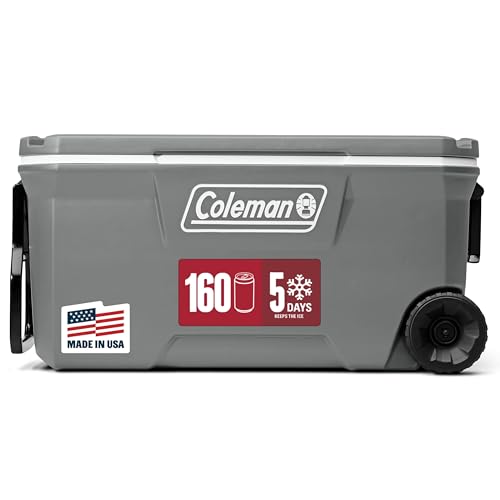
- Best for entertaining overall: Coleman 316 Series 100-Quart Wheeled Cooler — Check on Amazon
- Best for medium gatherings: Coleman 316 Series 65-Quart Wheeled Cooler — Check on Amazon
- Best drinks station: Igloo BMX 52-Quart Cooler — Check on Amazon
- Best food chest to pair with a drinks cooler: Coleman 316 Series 70-Quart Cooler — Check on Amazon
- Best second station / kids’ cooler: Coleman 316 Series 52-Quart Cooler — Check on Amazon
- Step-up pick (prose-only, sits above this budget at most retailers): RTIC 52 QT Ultra-Light Cooler — see the review below.
Disclosure: As an Amazon Associate, dailyhomedecorating.com earns from qualifying purchases. Links to Amazon on this page are affiliate links; they cost you nothing extra. Listing details such as price and availability change often, so check the current Amazon listing before you buy.
Finding the best outdoor cooler for outdoor entertaining under $150 is really about finding the cooler that lets you stop being the bartender. Every host knows the failure mode: the party is going well, the grill is lit, the music is right — and you are spending the evening as a drinks runner, because the cooler is too small, buried in the kitchen’s orbit, or warm by eight o’clock. Entertaining makes demands on a cooler that no camping trip ever does. It is opened not ten times a day but ten times an hour, by guests who hold the lid up while they browse. It must hold not a weekend of supplies but an evening’s worth of drinks for twenty people, at serving temperature, within arm’s reach of where people actually gather. It has to look presentable doing it, because at a party the cooler is furniture. And it has to survive the end of the night — the warm dregs, the mystery spill, the cleanup nobody wants — in a way that makes you willing to host again.
Our headline pick is the Coleman 316 Series 100-Quart Wheeled Cooler, because entertaining is the one job where capacity is not a luxury but the entire point: one fill, one station, drinks cold from the first guest to the last song. For gatherings under a dozen, the wheeled 65-quart version is the better tool — easier to place, easier to store, still a full evening’s capacity with room to spare. The Igloo BMX 52 earns its place as the drinks station with manners: a latching lid that seals between servings, a raised base that keeps it out of the patio’s spills, and a build that shrugs off the knocks of a crowded evening while doubling as extra seating. The 70-quart Coleman is the food chest in the classic two-cooler system — the one that stays shut while the drinks cooler takes the traffic — and the little 52 is the second station that ends the queue: kids’ drinks on the lawn, overflow by the gate, a satellite bar wherever the party spreads. The RTIC closes the list as a prose-only step-up for hosts who entertain weekly and keep their gear for a decade; at the retailers we checked it sits above this budget, so it is described honestly rather than linked.
One principle runs through everything below: at a party, ice is a service, not a supply. Guests do not experience your cooler as a specification; they experience it as whether the drink in their hand at nine o’clock is as cold as the one at six. That experience is decided by capacity, by splitting drinks from food so the food chest stays shut, by staging the cooler where people gather rather than where it is convenient to store, and by the host’s ice technique in the hours before anyone arrives. The reviews that follow therefore judge each pick as a piece of hosting equipment — flow, capacity, presentation and cleanup — as much as a cold box. If you are equipping the whole entertaining space, our backyard guide, Best Outdoor Cooler For Backyards Under $150, covers the resident-cooler side of the same purchases, and the general roundup at Best Outdoor Cooler Under $150 shows how these picks sit in the wider tier.
In this guide
Quick picks: the best outdoor cooler for outdoor entertaining under $150 at a glance
| Pick | Capacity | Wheels | Entertaining strength | Link |
|---|---|---|---|---|
| Coleman 316 Series 100-Quart Wheeled | 100 qt | Yes | One fill serves a full party | Check on Amazon |
| Coleman 316 Series 65-Quart Wheeled | 65 qt | Yes | Medium gatherings; moves to the crowd | Check on Amazon |
| Igloo BMX 52 | 52 qt | No | Sealed drinks station; doubles as seating | Check on Amazon |
| Coleman 316 Series 70-Quart | 70 qt | No | The food chest in a two-cooler system | Check on Amazon |
| Coleman 316 Series 52-Quart | 52 qt | No | Satellite station; kids’ drinks | Check on Amazon |
| RTIC 52 QT Ultra-Light | 52 qt | No | Prose-only: premium step-up above this budget | See review |
How we chose these coolers for entertaining
We re-scored the verified under-$150 field as hosting equipment. Capacity per evening came first: how many guests a cooler can serve drinks to, properly cold, without a mid-party ice run — the single most common entertaining failure. Second, behaviour under traffic: a party cooler is opened constantly and held open by browsing guests, so we favoured thermal mass, insulated lids and, in the BMX, latches that reseal positively every time, because a lid left resting ajar by a guest is an ice leak no insulation can fix. Third, service flow: whether the cooler works as a station — flat lid for bottles and glasses, a spot for the opener, placement that keeps drink traffic out of the cook’s way, and wheels that let the host move the station to wherever the party actually gathers.
Fourth, food safety under party conditions. Entertaining mixes raw ingredients, cooked food and drinks in warm evening air, so we valued systems that separate food from drink traffic — which is why this guide recommends pairings, not just single coolers. Fifth, presentation and cleanup: a cooler at a party is visible all evening and must be cleaned the same night, so smooth interiors, controlled drains and stain-resistant exteriors scored real points. Sixth, the standing rules of our cooler coverage: every linked pick verified at or below this budget at a major retailer, no fixed product prices printed in the article because seasonal pricing moves too fast to print honestly, and a CPSC recall screen that excluded recalled models outright. If your household owns an older rolling cooler that comes out for parties, check its model on the CPSC site before the season — some older rolling models have been subject to handle recalls, and a party is the worst place to discover it.
Finally, we judged value the way a host experiences it: not cost per quart, but cost per party that ends with cold drinks still in the chest. A cooler that forces one mid-party ice run, or one warm final hour, has failed at its only job regardless of its specification sheet — and a cooler that quietly serves a hundred evenings over a decade is cheap at almost any price inside this tier.
The best entertaining coolers under $150, reviewed in detail
1. Coleman 316 Series 100-Quart Wheeled Cooler — best for entertaining overall
Who it suits. Hosts of real gatherings: birthdays, graduations, game days, holiday weekends, the annual party people plan their summer around. If your guest list runs past fifteen and your current cooler is the evening’s bottleneck, this is the upgrade that ends the problem permanently.
The case is capacity, and it is not close. One hundred quarts holds an entire party’s drinks plus the ice to serve them cold for hours, with space for the chilled food that must live somewhere. Coleman rates the model to keep ice up to five days; entertaining never asks that — it asks for six brutal hours of constant opening in warm evening air, and that is where a big, full cooler is unbeatable, because thermal mass is the only insulation that improves with traffic. Every cold can in that chest is working to keep its neighbours cold, so the hundredth opening of the night costs a fraction of what it costs a small cooler. At about 21 pounds empty and roughly 37.5 inches long, it stations like a piece of furniture — park it where the party gathers, wheel it into shade as the afternoon turns, and let it anchor the drinks service while you go back to being a host. The leak-resistant channel drain makes the end of the night civilised: drain the meltwater where it stands, hose the interior, done.
Presentation is better than you would expect from a mainstream chest: parked at the end of a patio with a cloth over the lid’s edge, a bottle opener on a cord and a small bin for caps beside it, the big Coleman reads as a deliberate drinks station rather than an apology. It also scales down gracefully — a half-load with a towel packed over the contents to kill the air space serves a smaller evening without complaint.
Weddings and milestone parties deserve a specific mention, because they are where this size class earns its legend. A rented venue, a marquee in a field, a community hall with a fridge the size of a shoebox — in every case the cold chain for a hundred drinks is the host’s own problem, and a pair of big wheeled chests, one for drinks and one staged as reserve, is the standard solution experienced families hand down. The 100-quart Coleman is exactly that tool at a buy-it-once price that undercuts renting professional kit twice, and after the wedding it goes back to being the birthday-party cooler for the next decade. Few purchases in this guide can point to a single day that justifies them entirely; this one can.
Pros. Party capacity nothing else in the tier approaches; thermal mass keeps drinks cold through constant opening; wheels let one person place and reposition the station; channel drain simplifies the midnight cleanup; excellent cost per guest served; doubles as overflow cold storage between parties.
Honest limitation. It needs storage — nearly three feet of garage or shed — and for gatherings under eight it is overkill that takes up patio where people should be. Buy it for the parties you actually throw, not the ones you imagine.
Choose it if you host fifteen or more with any regularity. Skip it if your parties are dinner-party sized — the 65 below is your cooler. Check on Amazon for the current price and delivery options.
2. Coleman 316 Series 65-Quart Wheeled Cooler — best for medium gatherings
Who it suits. The eight-to-fourteen-guest host: family cookouts, book-club gardens, team celebrations, and every gathering where the party is big enough to need a station but small enough that the host still knows everyone’s drink.
Sixty-five quarts is the entertaining sweet spot for most homes. It swallows an evening’s drinks for a dozen guests with ice to spare, or drinks and chilled food for a family gathering, and its wheels make it the most flexible station in this guide: start it by the kitchen door for loading, roll it to the patio for the party, follow the shade at seven, and park it by the gate for the last hour. Coleman rates it to keep ice up to five days in best-case conditions; in party service, expect drinks properly cold from first arrival to last goodbye with ice still working the next morning — which makes Sunday’s leftover lunch a small dividend. The fully insulated lid and body, the channel drain, and the flat top that stages bottles and glasses mid-service all suit the hosting role, and between parties it stores without dominating the garage and travels to camps and beaches without a discussion.
Pros. The right capacity for most real gatherings; wheels make the station follow the party; strong ice performance across a full evening and beyond; flat lid stages drinks in service; stores and travels easily between parties.
Honest limitation. Past fifteen guests drinking steadily, you will feel the ceiling by late evening — pair it with the little 52 as a satellite, or step up to the 100. Friction lid rather than latches, so reseal discipline is up to your guests.
Choose it if your gatherings run eight to fourteen. Skip it if you regularly host twenty-plus. Check on Amazon for the current price and availability.
3. Igloo BMX 52-Quart Cooler — best drinks station
Who it suits. Hosts who entertain often and care how the station works: cocktail evenings, wine-and-cheese gardens, and any party where the drinks deserve a sealed, cold, good-looking home base — and where the cooler will be knocked by chairs, guests and weather all season.
The BMX’s party trick is its lid. Rubberized T-latches pull it down onto the seal every time it closes, so the guest who lets the lid drop has still sealed the cooler — a small mechanical courtesy that preserves ice through an evening of careless openings better than any amount of extra insulation on a resting lid. Inside, thick blow-molded walls and extra insulation hold serving temperature with authority: Igloo rates up to five days of ice retention, independent field reports land at a strong three to four days in heat, and an evening’s service barely dents it. Fifty-two quarts and 83 cans by Igloo’s measure is a full drinks programme for a dozen guests, the raised Cool Riser base keeps the chest out of the patio’s spilled drinks and sprinkler puddles, and the threaded, hose-compatible drain with its tethered cap makes the post-party rinse a one-minute job. The flat, rigid lid doubles as seating when chairs run out — at a party, a cooler that seats one more guest is a cooler earning its footprint twice — and the tough exterior still looks intentional after a season of evenings.
There is a cocktail-hour subtlety the BMX handles better than any mainstream chest: temperature stability for things that are not cans. Wine bottles, mixers and garnishes suffer in a cooler that swings warm with every opening; the BMX’s sealed lid and thick walls hold a steadier cold, so the bottle that comes out at nine tastes as it should. Hosts who serve more than beer and soda will feel this difference in the glass, and it is the reason the BMX, rather than a larger friction-lid chest, anchors the drinks service in so many serious home setups.
Pros. Latching lid reseals after every guest; excellent ice authority for long evenings; raised base and hose-ready drain suit patio service; doubles as extra seating; toughest, best-looking resident station in the tier.
Honest limitation. No wheels, so place it before you fill it; and 52 quarts is drinks-for-a-dozen, not drinks-for-thirty — pair it or step up for the big nights.
Choose it if you entertain often and want the station to feel professional. Skip it if your parties are large or the cooler must move mid-evening. Check on Amazon for the current price and colour options.
4. Coleman 316 Series 70-Quart Cooler — best food chest in a two-cooler system
Who it suits. Hosts who cook seriously outdoors: the grill masters and buffet builders whose food — marinades, salads, raw ingredients, desserts — needs a cold, organised, rarely-opened home while the drinks cooler takes the evening’s traffic.
The two-cooler system is the professional’s secret, and the 70 is its ideal food half. Seventy quarts in a clean rectangle, roughly 31 by 15.75 by 17.5 inches, packs like a fridge: trays flat, bowls upright, raw meats sealed and low, desserts on top, everything findable in one glance — because the food chest is opened ten times a night, not a hundred, its contents ride at a stable, safe cold that a single shared cooler can never maintain. The 316 Series’ insulated lid and body do the rest, and the absence of wheels is irrelevant for a chest that is carried out empty, filled in place beside the grill, and emptied where it stands at night. Pair it with the BMX or the wheeled 65 for drinks and you have, inside this budget, a hosting setup that restaurants would recognise: cold chain for food, theatre for drinks, no compromises crossing between them.
Pros. Fridge-like rectangular interior organises a full menu; stable cold from rare opening; light and simple, nothing to break; ideal partner to every drinks pick above; stores flat between parties.
Honest limitation. As a sole cooler for a party it forces food and drinks into the same traffic jam — its genius is as half of a pair. Loaded, it is a two-person carry, so fill it in place.
Choose it if you cook for your parties, not just pour for them. Skip it if you need one cooler to do everything. Check on Amazon for the current price.
5. Coleman 316 Series 52-Quart Cooler — best second station
Who it suits. Every host whose party spreads: the satellite by the lawn games, the kids’ drinks station that ends the queue at the main cooler, the overflow that takes the second wave of cans at eight o’clock. Also the small-gathering host for whom this is not the second cooler but the right-sized only one.
Coleman rates the 52 to hold up to 80 cans and up to three days of ice retention — modest numbers that translate into excellent party service, because a satellite station’s job is a single evening done well. Its real value is systemic: every opening of the kids’ cooler is an opening the main chest did not suffer, every guest served at the lawn is a guest not queueing at the patio, and a party with two stations simply feels more generous than a party with one big one. It is light enough for anyone to carry out loaded, small enough to store without a meeting, and affordable enough — the budget end of this tier, in the qualitative sense — that adding it to a hosting setup is the easiest decision in this guide. Small-gathering hosts get the same virtues in primary form: for six to eight guests, this plus good ice technique is a complete drinks service.
Pros. Ends queues and protects the main cooler’s ice; perfect kids’ and satellite station; light, compact, anyone can place it; complete drinks service for small gatherings; the budget-friendly end of the proven 316 Series.
Honest limitation. As the only cooler for a big party it will run warm and empty by late evening. It is a supporting actor — a brilliant one — in gatherings over a dozen.
Choose it if your party spreads out or your gatherings are small. Skip it if it must serve twenty alone. Check on Amazon for the current price.
6. RTIC 52 QT Ultra-Light Cooler — the step-up pick (prose-only)
Who it suits. The weekly entertainer: hosts whose patio is a standing venue, who will open this lid ten thousand times over a decade, and who want premium sealing and construction at the station — in the same 52-quart footprint as the BMX.
It carries no link because, at the retailers we checked, it sat above this guide’s budget ceiling, and it is sold mainly through RTIC’s own store rather than at a verifiable in-tier Amazon price. Described plainly: a mid-range premium cooler, priced above the linked picks here and below the flagship brands, with heavy-duty construction, a properly sealing lid and independently tested ice retention at the top of its class, in a body notably light for its category. For an entertaining household, the step-up buys the two things parties consume: seal integrity over years of openings, and insulation that shrugs off a long evening without management.
Pros. Premium build and sealing in a station-sized footprint; top-class tested ice retention; light for a heavy-duty cooler; a decade of parties in one purchase.
Honest limitation. Above budget — hence prose-only. Inside the tier, the BMX delivers the sealed-station experience for less.
Choose it if you entertain weekly and the budget stretches. Skip it if the ceiling is firm.
A host’s timeline: the cooler across one party day
Morning. The cooler comes out of storage clean — because last time, you cleaned it before putting it away — and gets its pre-chill: a bag of ice or the frozen bottle rotation goes in, lid shut, while the day’s drinks finish chilling in the fridge. This unglamorous step is where cold parties are actually made. A cooler that starts at room temperature spends its first ice cooling its own walls; a cooler that starts cold spends it all on your guests.
An hour before guests. Drain the pre-chill water, lay in the base of block ice or frozen containers, and load drinks in the order they will be wanted — the first round on top, the deep reserves at the bottom. Food goes to its own chest, sealed and low. Wheel the station to its post: edge of the gathering, afternoon shade, opener tied on, cap bin and towel in place, satellite cooler staged where the party will spread. From this moment, you should not need to think about drinks again, and mostly, you will not.
During the party. The system absorbs the chaos. Guests serve themselves; the big chest’s thermal mass shrugs off the openings; the food chest stays shut and safe; the satellite ends the queue before it forms. Your only cooler jobs are pleasant ones — a glance at the ice level at the evening’s midpoint, a top-up from the fridge crate if the night runs long. If you find yourself working at the cooler, something in the morning went wrong, and it is almost never the cooler’s fault.
The last hour. As the party thins, consolidate: move the surviving drinks into the smallest chest or the fridge, and let the big cooler go. This is also the moment the wheeled picks quietly justify themselves — the station rolls to the hose point or the garage without a loaded carry through a dark garden.
Cleanup, the same night. Drain where it stands, hose the interior, wipe the seal and the drain channel, and leave the lid open to dry overnight. Ten minutes, while the grill cools and the last guests find their shoes. Every pick in this guide was chosen to make this hour easy, because hosts are rational: the easier the cleanup, the sooner the next party gets planned — and a cooler that gets used monthly for a decade is the best value in this entire tier, whatever its specification sheet says.
Side-by-side comparison for hosts
| Cooler | Capacity | Wheels | Closure | Hosting role |
|---|---|---|---|---|
| Coleman 316 100-Qt Wheeled | 100 qt | Yes | Friction lid | Main station, big parties |
| Coleman 316 65-Qt Wheeled | 65 qt | Yes | Friction lid | Main station, medium parties |
| Igloo BMX 52 | 52 qt | No | Rubber T-latches | Sealed drinks station |
| Coleman 316 70-Qt | 70 qt | No | Friction lid | Food chest |
| Coleman 316 52-Qt | 52 qt | No | Friction lid | Satellite / kids’ station |
| RTIC 52 QT Ultra-Light (prose-only) | 52 qt | No | Heavy-duty latches | Premium station |
How to choose a cooler for outdoor entertaining under $150
Buy for the host you are, including your storage. Entertaining coolers are bought in June enthusiasm and stored in January reality. The 100-quart flagship is a joy in a garage and a burden in a flat’s single closet; the BMX lives happily on the patio it serves; the 65 splits the difference. Run the tape measure over the storage spot with the same care you give the guest list, and let both numbers shape the shortlist — a cooler that stores badly gets lent, lost or left behind, and none of those is a hosting strategy. Apartment hosts will find this storage-first logic developed fully in Best Outdoor Cooler For Apartments Under $150.
Count guests, then double the ice, not the cooler. The arithmetic of a party is drinks per guest per hour, and the failure is almost never the chest — it is warm drinks added at eight o’clock melting the ice that was keeping everything else cold. Pre-chill every drink before the party, stage a backup crate in the fridge, and let the cooler do maintenance rather than refrigeration. With that discipline, the 65 serves fourteen happily; without it, the 100 feels small by ten.
Split the system: drinks take traffic, food takes shelter. This is the single most valuable idea in this guide. A drinks cooler is opened constantly and should be cheap to open — big, accessible, full of cans. A food cooler is opened rarely and should stay cold and safe — sealed containers, stable temperature, no small hands browsing. Two mid-size coolers outperform one giant one for any party where real food is served, and the pairings in this guide (65 or BMX for drinks, 70 for food, 52 as satellite) are designed to be bought as systems inside the tier across a season or two.
Place the station where the party is, not where the cooler lives. Guests gather where the seating, shade and music are; the drinks should be within a few steps of that centre, with the cook’s zone kept clear. Wheels earn their money here — the wheeled picks let you load by the kitchen and station by the crowd, then chase the shade as the evening turns. Put a small bin for caps and a towel at the station, tie the opener to the handle, and the setup will run itself while you host.
Stage the evening in the afternoon. Pre-chill the cooler with a sacrificial bag of ice or frozen bottles while you prep, load drinks cold and in serving order — first drinks on top — work block ice or frozen containers into the base for longevity, and pack any air gaps with a clean towel. Set the food chest last and open it least. These habits, which cost nothing but an hour of forethought, are worth more than the price difference between any two picks in this guide. Hosts building the full setup will find the same staging philosophy in our guide to Best Outdoor Cooler For Backyards Under $150, and shade for the station in Best Patio Umbrella Under $150.
Think about what guests touch. A party cooler is handled by everyone, including people meeting it for the first time in the dark. Handles that pinch, lids that slam, drains that dribble onto shoes — these are the details guests remember about your setup without knowing why. The picks in this guide share a family resemblance here: simple, obvious mechanisms that a first-time guest operates correctly without instruction. When you are choosing between two finalists, choose the one a stranger can use gracefully at midnight; your party will feel better hosted for reasons nobody can name.
Match the fleet to your hosting calendar, honestly. Look at the last twelve months, not the next twelve’s ambitions. Monthly gatherings of fifteen justify the 100 and a satellite. Quarterly family cookouts are the 65’s home ground. A couple of big annual parties argue for renting or borrowing the flagship capacity and owning the everyday size — storage is a real cost, and a cooler that fills the garage eleven months a year to shine for two evenings is a poor trade for most homes. The calendar test is unglamorous and decisive, which is why it belongs in every hosting purchase.
Plan the last hour as carefully as the first. Entertaining gear earns loyalty at cleanup: drains that empty where the cooler stands, interiors that hose clean in minutes, lids that dry open overnight. Every pick in this guide was chosen partly for a painless midnight — because the host who dreads cleanup hosts less, and the whole point of the purchase is to host more.
Ice for drinks is its own subject
Hosts who take drinks seriously eventually discover that the cooler is only half the system; the ice is the other half, and different ice does different work. Cubed ice is the sprinter: enormous surface area, fast chilling, fast melting — perfect for the top layer that guests actually touch, and for bringing a load of cold drinks down the last few degrees. Block ice and frozen containers are the marathon runners: minimal surface, slow melt, the cold foundation that is still working at midnight. A party cooler layered with blocks at the base and cubes worked into the top is not a compromise between the two; it is both, doing their jobs in sequence, and it routinely outlasts a cooler filled with either alone.
Then there is serving ice — the ice that goes in glasses — which should never be the ice the cans are sitting in. Party hygiene and simple taste both demand a separate, clean supply: a bag of fresh cubes kept in the freezer or in a small sealed container inside the satellite cooler, with a scoop that lives at the station. It is a tiny system, and guests notice it the way they notice clean glassware: not consciously, but in the general feeling that this host has things under control. The same care applies to garnishes and anything perishable riding in the drinks chest — sealed, surfaced, and out of the meltwater.
Finally, plan the water. Every pound of ice becomes a pound of water, and a party cooler’s meltwater has to go somewhere graceful: the channel and threaded drains on these picks exist precisely so the evening’s water leaves in a controlled stream onto a garden bed, not in a tipped flood across the patio at midnight. Drain the excess at the party’s midpoint — keeping enough cold water to cradle the cans, removing enough to stop the sloshing — and the last hour’s drinks will be as cold as the first hour’s, which is, after all, the entire assignment.
Common entertaining mistakes
One cooler for drinks and raw food. Beyond the ice-melting traffic problem, it is a food-safety problem: raw-meat packaging and open drinks should not share meltwater. Split the system; keep meats sealed, low and in the food chest.
Loading warm drinks at party o’clock. The fastest way to spend your ice. Everything goes in cold, or the backup crate waits in the fridge until the first load is fully chilled.
Announcing “warm beer” as a vibe. It is not a vibe; it is a planning failure with good branding. If the evening is long and the crowd is thirsty, the honest fixes are capacity, pre-chilling and a reserve crate in the fridge — all cheaper than the apology, and all covered by the system this guide describes.
The cooler in the kitchen doorway. A station placed in a traffic choke point creates a queue, a puddle and a grumpy cook. Station at the edge of the gathering, in shade, with room for two guests to serve themselves at once.
Forgetting the non-drink details. No opener, no cap bin, no towel, nowhere for empties — the small frictions that make a party feel improvised all live at the cooler. Thirty seconds of staging fixes all of them.
Closing the cooler wet at midnight and walking away. The smell greets the next party. Drain, hose, wipe the seal, lid open overnight — ten minutes that protect every future evening.
Bringing out the old recalled roller for the big night. Party duty is the hardest service a cooler sees. If your household’s spare is an older rolling model, check it against the CPSC recall database before it carries a full load through a crowd.
Final recommendation
Hosts of big gatherings should buy the Coleman 316 Series 100-Quart Wheeled Cooler and retire the mid-party ice run forever. Medium-gathering hosts get the same freedom at a friendlier size from the wheeled 65, and hosts who entertain often and care about the craft should make the Igloo BMX 52 their sealed drinks station, paired in time with the 70-quart food chest and the little 52 as satellite. Buy the system your parties actually need, stage it cold before the first guest rings the bell, and spend the evening where a host belongs — in the party, not at the cooler.
Frequently asked questions
How big a cooler do I need for a party of twenty?
For drinks, the 100-quart class serves twenty comfortably from one fill, especially with drinks pre-chilled. For twelve to fourteen, the 65-quart is enough. Whatever the main cooler, a 52-quart satellite for kids or overflow makes the whole system feel abundant.
How do I keep drinks cold when guests keep opening the cooler?
Thermal mass and discipline: a big, full cooler, drinks loaded cold, a drinks-only chest so the food cooler stays shut, and a towel packed over the contents to reduce air. A latching lid like the BMX’s also reseals properly after careless closings.
Should food and drinks share one cooler at a party?
Ideally not. Drinks traffic warms food and meltwater mixes with packaging. The two-cooler split — drinks in the high-traffic chest, food sealed in the rarely opened one — is safer and, not coincidentally, keeps both colder.
Where should the cooler station go?
At the edge of where guests gather, in shade, out of the cook’s path, with space for two people to serve themselves. Wheels let you load near the kitchen and station near the crowd, then move with the shade.
How much ice should I plan for a party?
A practical rule is roughly a pound of ice per guest for an evening’s drinks service, more in serious heat, less if drinks start fridge-cold and the cooler is large and full. Block ice or frozen containers at the base stretch any amount further.
Is a premium cooler worth it for entertaining?
For weekly hosts, the sealing and build of the step-up class genuinely pay over a decade of parties. For monthly hosts, the linked picks in this guide deliver the same evenings — staging and ice technique matter more than the badge.
How far ahead can I load the cooler before a party?
With a pre-chilled cooler and everything loaded cold, loading the morning of an evening party is comfortable for every pick in this guide, and the big 100-quart will still be serving cold drinks the next day. Loading the night before also works if the cooler is kept somewhere cool and the ice base is block-heavy; just drain and top up an hour before guests arrive.
What do I do with leftover drinks and ice after the party?
Consolidate the surviving drinks into the fridge or the smallest cooler, drain the big chest where it stands, and let the remaining ice melt in place with the drain open over a garden bed. Resist sealing the cooler up “to deal with tomorrow” — tomorrow’s version of you is always less forgiving than tonight’s.
Can one of these coolers replace a second fridge for a big event weekend?
For drinks and sealed, hardy foods across a weekend, yes — that overflow role is one of the big chests’ most-used second careers. For delicate perishables across many days, treat the cooler as a supplement rather than a substitute, keep a thermometer’s worth of scepticism, and prioritise the fridge for anything fragile. Hosts who run one big event a year often find the cooler, not the fridge, is what makes the weekend logistically possible at all.


