Where to buy
Check the latest price, availability and delivery on Amazon. Orders are placed on Amazon. We may earn a commission from qualifying purchases.
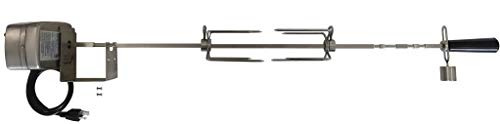
- Best technique upgrade: OneGrill 3WSS40 Stainless Steel Rotisserie Kit — Check on Amazon
- Best heavy-duty tool set: Napoleon Executive 3-Piece Toolset — Check on Amazon
- Best protection for an outdoor grill: Weber 7139 Premium Grill Cover — Check on Amazon
- Best for long backyard cooks: MEATER Plus Smart Wireless Meat Thermometer — Check on Amazon
- Best instant-read: ThermoWorks Thermapen ONE Instant-Read Thermometer — Check on Amazon
- Weber 7652 Rotisserie Kit — prose-only alternative, see the review below
Disclosure: As an Amazon Associate, dailyhomedecorating.com earns from qualifying purchases. Links to Amazon on this page are affiliate links; they cost you nothing extra. Listing details such as price and availability change often, so check the current Amazon listing before you buy.
A backyard changes the accessory equation completely. The grill is not a guest in this space — it is a permanent installation with a dedicated spot, a fuel supply, a prep surface nearby and, in most yards, full exposure to weather twelve months a year. The best grill accessories for backyards under $150 are therefore the ones a smaller-space guide would skip: the rotisserie kit that turns a standard gas grill into something that produces restaurant-centerpiece roasts, the fitted cover that quietly adds years to the grill’s life, tools heavy enough for the big cuts backyard cooking specializes in, and temperature gear built for the long, low cooks that a backyard — with room for a smoker box, a water pan and a chair beside the grill — invites in a way a balcony never does.
The budget framing works the same here as across this series: under $150 means per item or per complete kit. One rotisserie kit, one tool set, one cover. Read that way, this tier is where backyard accessories stop being disposable. The tools are cast rather than stamped, the rotisserie motor is rated in real wattage rather than hope, the cover carries an actual warranty, and the thermometers are the same instruments serious cooks use indoors. What this tier will not buy is a second grill — and it should not try. Its job is to make the grill you already own cook better, last longer and do one or two things it could not do before.
Every linked pick in this guide was verified against its exact Amazon listing during research, with a sighted price at or below the $150 ceiling for that exact item, and screened against current federal recall records. One famous backyard category is missing on purpose: wire-bristle grill brushes. Regulators recalled millions of them in 2026 because loose metal bristles can stick to grates and food and be swallowed. A backyard grill, cleaned weekly and cooked on by family and guests, is the last place to accept that risk — this guide’s cleaning advice is bristle-free throughout, and the how-to-choose section explains what to use instead.
In this guide
Quick Picks: The Best Grill Accessories for Backyards Under $150
| Pick | Best for | Key verified spec | Where to check |
|---|---|---|---|
| OneGrill 3WSS40 Rotisserie Kit | Rotisserie on Weber 3-burner grills | 13-watt motor; 3/8-inch square stainless spit | Check price on Amazon |
| Weber 7652 Rotisserie Kit | Factory kit for Genesis II 200/300 | OEM fit; stainless spit and forks | Prose-only — price sits at the ceiling |
| Napoleon Executive 3-Piece Toolset | Heavy cuts and long sessions | Cast stainless steel; heat-safe grips | Check price on Amazon |
| Weber 7139 Premium Grill Cover | Year-round outdoor storage | Fitted for Spirit 300 series; 3-year warranty | Check price on Amazon |
| MEATER Plus | Monitoring long cooks from the house | Wire-free probe; 165 ft via repeater block | Check price on Amazon |
| ThermoWorks Thermapen ONE | Verifying every cut before it rests | About 1-second readings; IP67 waterproof | Check price on Amazon |
Six picks, four jobs: add a technique (the two rotisserie options), handle heavy food properly (the tool set), protect the machine (the cover), and know the temperature (the two thermometers, one for monitoring and one for verifying). A backyard that has those four jobs covered has, functionally, a complete outdoor kitchen at this budget — everything beyond it is refinement.
How the Picks Were Chosen
Backyard research began with the cooks backyards actually host: weekend rotisserie chickens and holiday turkeys, briskets and shoulders that run half a day, mixed grills for a dozen people where four proteins share one grate, and the ordinary Tuesday burgers that still deserve to be cooked properly. Each candidate accessory was judged against those cooks, then put through the verification process used across this batch: a specific model tied to a specific Amazon listing checked during research, a sighted price at or below $150 for that exact item, and specifications taken from the manufacturer or the listing rather than from other articles.
Fit honesty mattered most in this guide, because the two biggest purchases — rotisserie and cover — are model-dependent. The OneGrill kit is recommended for the Weber three-burner family it is built for and flagged as wrong for everything else; the Weber 7139 cover is recommended for the Spirit grills it is cut for, with the same warning. Where a factory alternative exists but could not be verified cleanly under the ceiling — Weber’s own 7652 rotisserie kit, whose price hugs the $150 line and moves with promotions — it is covered in prose with the caveat stated, rather than linked on a hope. Recall screening followed current CPSC records, which is why the brush category is represented only by bristle-free advice.
The Best Grill Accessories for Backyards Under $150, Reviewed in Detail
1. OneGrill 3WSS40 Rotisserie Kit — The Backyard Technique Upgrade
Who it suits: Owners of Weber Genesis, Genesis II and Spirit three-burner gas grills whose backyard cooking has plateaued — burgers and steaks mastered, whole birds still a gamble — and who want the single accessory that adds an entirely new way to cook rather than a slightly better version of an old one.
Rotisserie is the backyard technique par excellence because it solves the whole-bird problem mechanically. A chicken on a spit bastes itself as it turns: surface juices roll over the meat instead of dripping into the fire, skin crisps evenly on all sides instead of scorching where it faces the burner, and the interior cooks gently because no side sits in direct heat for long. The 3WSS40 makes that possible with hardware sized for real food. Its electric motor is rated at 13 watts, several times the output of the token motors in universal bargain kits, and that torque is what keeps a slightly unbalanced load turning smoothly for two hours instead of stalling at the heavy spot on every rotation. The spit rod is 3/8-inch square stainless steel — square, so the included forks clamp and stay clamped — and the kit includes the counterbalance that smooths out imperfect trussing, plus brackets matched to the Weber three-burner cookbox so installation is a bolt-on job, not a fabrication project.
Pros: Strong 13-watt motor for real roasts and birds; square stainless spit keeps forks locked under load; counterbalance included for uneven loads; stainless construction stores outdoors in the grill cabinet; complete kit matched to a huge family of popular grills.
Honest limitation: It fits Weber three-burner Genesis, Genesis II and Spirit grills — full stop. Kettle, kamado, pellet and other-brand owners need kits built for their cookboxes. It is sold mainly through third-party channels and its price has historically drifted near the top of this budget, so confirm the live price before ordering. And rotisserie cooking requires an electrical outlet near the grill for the motor, which older patios do not always have where you want it.
Choose it if your Weber is a three-burner and whole birds or roasts are regular backyard events. Skip it if your grill is anything else, or your cooking is almost entirely fast and flat.
2. Weber 7652 Rotisserie Kit — The Factory Alternative (Prose-Only)
Who it suits: Genesis II and Genesis II LX 200 and 300 series owners who prefer factory parts on principle — the kit Weber designed for the exact cookbox they own.
The 7652 is Weber’s own rotisserie for the Genesis II family: a stainless spit rod of about 107 cm, adjustable forks, mounting hardware and an electric motor, all engineered to the cookbox’s existing mounting points, with a rated capacity around twenty pounds and a maximum food diameter of roughly eight and a half inches — a large chicken, a leg of lamb, a modest turkey. Owners rate it highly and the factory fit is genuinely the easiest installation in the category. We are covering it in prose rather than linking it for one transparent reason: its price sits right at this guide’s $150 ceiling and moves with retailer promotions, and at research time we could not verify a stable listing price comfortably under the line for the exact kit. If you shop it during a promotion and find it under the ceiling, it is an entirely defensible choice — arguably the default choice for a Genesis II. Compare it against the OneGrill kit above on motor strength and current price, and let those two numbers decide.
Pros: Factory fit and finish for Genesis II 200/300; complete kit with motor, spit and forks; strong owner satisfaction over many seasons; Weber support and parts ecosystem behind it.
Honest limitation: Price hovers at the ceiling — verify before buying, and do not stretch the budget frame for it. Fit is Genesis II-specific, and like all rotisserie kits it needs a nearby outlet.
Choose it if you find it under the ceiling and value OEM fit. Skip it if its current price breaks the frame — the OneGrill kit covers the same ground.
3. Napoleon Executive 3-Piece Toolset — Built for Backyard-Scale Food
Who it suits: Backyard cooks who handle the heavy end of the menu — whole chickens, racks of ribs, pork shoulders coming off after eight hours — and whose current tools announce their limits every time something big needs lifting or turning.
Backyard cooking is heavier cooking, and tool failure scales with load. Napoleon’s Executive set answers with cast stainless steel: tongs that close on a shoulder and lift it from grill to tray without the arms bowing, a spatula whose blade does not flex under a double smash burger or fold under a whole fish, and a silicone basting brush for the mop sauces and glazes that long backyard cooks call for. The handles are full-length with heat-safe rubber grips — length matters more in a backyard, where grills are deeper and fires are bigger, and a cook may be working across a four-burner surface. There is no case and no filler: three tools, each built like it was meant to be the last one you buy in its category. In a yard with a prep table and a rail or hooks by the grill, they live exactly where the cooking happens.
Pros: Cast construction that does not flex under backyard loads; full-length tools with heat-safe grips; silicone brush suits sauces and cleans easily; no filler pieces; gift-worthy heft and finish.
Honest limitation: Three pieces only — carving still wants a knife and fork from your kitchen set, and there is no scraper or storage case. The cast weight that inspires confidence is noticeable across a long session of constant turning, such as a big batch of wings.
Choose it if your menu runs heavy and your current set flexes. Skip it if you mostly cook for two with lighter fare — a nimbler mid-weight set will feel better in the hand.
4. Weber 7139 Premium Grill Cover — The Cheapest Years You Will Add to a Grill
Who it suits: Every backyard owner of a Weber Spirit or Spirit II 300-series grill that lives outdoors — which is to say, nearly every owner — especially in climates with real rain, snow or sun.
A backyard grill’s enemies are not cooks; they are seasons. Rain finds the burner tubes and the igniter, sun chalks the finish, and wind drives debris into the cookbox. A fitted cover is the countermeasure, and the 7139 is the fitted cover for the Spirit 300 family, Spirit II 300 and side-control Spirit 200 models: cut to the grill’s outline including its shelves, made from weather-resistant polyester that sheds water, with fastening straps that keep it in place when a storm works at it, and backed by Weber’s three-year warranty — a rarity among covers and a fair proxy for how long the maker expects it to serve. The arithmetic is simple: a cover at this level costs a small fraction of the grill it protects and routinely doubles the interval before burners, grates and ignition need money spent on them.
Pros: Exact fitted shape sheds water and stays put; three-year warranty; protects the expensive failure points — burners, ignition, finish; tailored look suits a grill that lives in view; pays for itself in deferred parts.
Honest limitation: Model-specific: confirm your Spirit variant before ordering, and do not expect it to fit a Genesis or any other brand. Covers trap some condensation, so in humid climates, lift it on dry days and let the grill breathe, and clean the cookbox before covering for a long wet stretch.
Choose it if your Spirit lives outside. Skip it if the grill is stored under a roof or in a garage — or buy the fitted equivalent for your exact model instead.
5. MEATER Plus — For the Long Cooks a Backyard Is For
Who it suits: Backyard cooks running shoulders, briskets, whole birds and rotisserie loads — cooks measured in hours, where the difference between a great result and a dry one is knowing, continuously, what is happening inside the meat and inside the grill.
The MEATER Plus is a wire-free probe with two sensors: internal temperature at the tip, ambient temperature at the ceramic end. Its app turns those two streams into the number a long cook actually runs on — an estimate of time remaining, adjusted as the cook develops — plus alerts at target and a built-in rest countdown. The charging block doubles as a Bluetooth repeater with a rated range of 165 feet, which in a backyard means the signal reaches the kitchen, the living room or the far side of the yard while you do literally anything else. The wire-free design reaches its full value on the rotisserie: there is no cable to wind around a spit, so the OneGrill and 7652 kits above can be monitored continuously, something no wired probe can do at all. It is equally at home in a smoker or the kitchen oven, which makes it a year-round instrument rather than a seasonal gadget.
Pros: Only practical way to monitor rotisserie continuously; dual sensors give food and grill temperature together; repeater block covers house-and-yard distances; time-remaining estimates transform long-cook planning; works in smoker and oven too.
Honest limitation: Sensor ceilings — internal to 212°F, ambient to 527°F — make it an indirect-heat tool; keep it out of direct flame and do not use it to monitor a sear. One probe watches one piece of food; a mixed grill for twelve still needs spot verification, which is the next pick’s job.
Choose it if long cooks are your backyard’s signature. Skip it if your grilling is ninety percent weeknight-fast — the instant-read below covers that life better.
6. ThermoWorks Thermapen ONE — Verification for Big Mixed Grills
Who it suits: The backyard cook feeding a crowd, where one grate holds chicken thighs, two thicknesses of steak, sausages and a vegetable basket, all finishing at different moments — and where “is it done?” gets asked about fifteen different pieces in five minutes.
That moment is what the Thermapen ONE is built for. Full readings in about one second mean each piece gets a real answer, not a guess extrapolated from its neighbor, and the cook can sweep the whole grate — thick end, thin end, the piece over the hot spot — faster than a budget thermometer finishes its first reading. The accuracy is the reference standard other thermometers are compared against; the display rotates and lights up for the evening finish most backyard parties drift into; the IP67 waterproof body shrugs off the sauce splashes and sink rinses of a big cook. For a backyard with a MEATER watching the one big roast, the Thermapen is the verification layer for everything else on the grate, and the tool that ends the cut-it-open-to-check era permanently.
Pros: One-second readings built for multi-piece verification; reference-grade accuracy; waterproof, backlit, auto-rotating; folds safely into a drawer or apron pocket; equally valuable indoors.
Honest limitation: Spot-check only — it will not watch a brisket or send an alert. Premium pricing within this budget, and Amazon availability is often through third-party sellers, so verify the seller and live price.
Choose it if mixed grills and crowds are your normal. Skip it if your backyard cooking is one protein at a time and a leave-in probe already covers it.
Comparison Table
| Accessory | Backyard job | Standout verified spec | Watch out for |
|---|---|---|---|
| OneGrill 3WSS40 | Rotisserie conversion | 13-watt motor; 3/8-inch square spit | Weber 3-burner fit only; needs an outlet |
| Weber 7652 (prose-only) | Factory rotisserie | OEM Genesis II fit; ~20 lb capacity | Price sits at the $150 ceiling |
| Napoleon Executive 3-Piece | Heavy lifting and turning | Cast stainless steel | Three pieces; heavier in hand |
| Weber 7139 Cover | Weather protection | Spirit 300 fit; 3-year warranty | Model-specific fit only |
| MEATER Plus | Long-cook monitoring | Wire-free; 165 ft via repeater | Ambient ceiling 527°F; one probe |
| Thermapen ONE | Crowd verification | ~1-second readings; IP67 | No monitoring or alerts |
How to Choose Grill Accessories for a Backyard
Buy for the grill you own, by exact model. Backyard accessories split into two families: universal ones (thermometers, tools) that fit every grill, and fitted ones (rotisserie kits, covers) that fit one grill precisely and others not at all. The fitted family delivers the biggest upgrades and the biggest return headaches. Before ordering either, find your grill’s exact series — it is on the rating label inside the cabinet or on the frame — and match it to the kit’s compatibility list word for word. “Three-burner gas grill” is a description, not a fit.
For rotisserie, motor wattage and spit design are the specs that matter. A rotisserie load is a rotating, often unbalanced weight that the motor must start and turn for hours. Motors in serious kits are rated in watts — the OneGrill’s 13-watt unit is the benchmark in this guide — while bargain kits hide behind vague language. Prefer square spit rods over round: forks clamp a square rod positively and cannot spin loose mid-cook, dropping your chicken into the burners. A counterbalance is the third feature worth having, because home trussing is never perfectly even.
For covers, fit and warranty beat fabric marketing. Every cover claims to be heavy-duty and waterproof. The claims you can test are the fit list — is your exact model named? — and the warranty length, which tells you how long the maker stands behind the seams and straps. A fitted cover that follows the shelves sheds water off the grill; a loose universal cover tents, pools water in its folds and becomes a sail. Measure your grill with shelves up, as it actually sits.
Build temperature in two layers. A leave-in wireless probe runs the long cooks and the rotisserie; an instant-read verifies everything else and audits the probe’s placement. Backyards, with their mixed crowds and half-day cooks, use both layers constantly. If the budget forces one first, choose by your dominant cook: long and low says leave-in, fast and varied says instant-read.
Clean bristle-free — this is now a settled safety matter. In 2026 the U.S. Consumer Product Safety Commission announced recalls of millions of metal wire-bristle grill brushes across several major brands, after reports of bristles detaching, sticking to grates and food, and being swallowed — injuries that in some cases required surgery. The agency’s advice is to stop using wire-bristle brushes and switch to non-wire alternatives. For a backyard grill, the working kit is a bristle-free coil brush or wooden scraper for hot cleaning, a nylon brush reserved for a cool grate, and a habit of looking over the cooking surface before food goes on. Retire any wire brush you own rather than using it up.
Plan the station, not just the tools. Backyard accessories live where they are used. A hook rail or magnetic strip near the grill, a weatherproof deck box for the rotisserie parts and cover-season extras, and a designated drawer indoors for the thermometers will do more for your cooking than one more gadget — because the best accessory is the one that is actually at the grill when the food is.
Think in seasons of use, not single cooks. A backyard accessory is a multi-year commitment stored in real weather. Ask of every candidate: where does it live in February, what does the third year of sun do to its handles and housing, and can it be cleaned with the hose and the bristle-free kit you already own? Stainless steel, cast construction and replaceable batteries age gracefully in a yard; plated finishes, glued grips and sealed mystery electronics do not. The picks in this guide were chosen with February in mind as much as July — the cover exists for February, the stainless rotisserie hardware ignores it, and the thermometers winter indoors by design. Gear that survives the off-season is what makes the per-item budget at this tier an investment rather than a rental.
Common Mistakes Backyard Grillers Make
Ordering the rotisserie kit for the wrong generation. Grill lines refresh every few years and cookbox dimensions shift quietly. A kit for the previous generation of your grill may almost fit — which is worse than not fitting, because it tempts modification. Confirm generation as well as series.
Trussing loosely and blaming the motor. A bird that shifts on the spit makes any motor labor and cooks unevenly. Truss tightly, center the load, use the counterbalance, and test the rotation by hand before the grill is hot.
Leaving the grill uncovered “just for winter.” Winter is precisely when water, freeze-thaw cycles and critters do their work. The cover matters most in the months the grill is used least.
Trusting one probe placement on a mixed grill. A single leave-in probe tells the truth about one spot in one piece of food. The rest of the grate needs instant-read verification, especially chicken pieces of varying size sharing space with steaks.
Scrubbing with the old wire brush because it still looks fine. Bristle fatigue is invisible until a bristle is in the food. Given the recall record, “looks fine” is not a safety standard. Replace it with a bristle-free cleaner and move on.
Buying accessories for the grill you plan to buy someday. Fitted gear belongs to the current grill. Universal gear — thermometers, tools — transfers to whatever comes next, which is another reason the sequencing in this guide puts temperature and tools early and fitted items where they belong: matched to the machine in the yard today.
Final Recommendation
The backyard purchase order that serves most households: temperature first — MEATER Plus for the long cooks and rotisserie, Thermapen ONE for verification, in whichever order your cooking demands — then the Napoleon Executive set when your current tools meet a pork shoulder and lose, then the Weber 7139 cover if your Spirit lives outdoors, and the rotisserie kit as the celebratory upgrade once the fundamentals are solid. Between the two rotisserie options, the OneGrill 3WSS40 is the linked recommendation for its motor strength and verifiable price under the ceiling; the Weber 7652 is the factory alternative to grab when a promotion brings it under the line. Covered that way, a backyard grill at this budget stops being a fair-weather appliance and becomes what it should be: the most capable cooking station in the house.
Frequently Asked Questions
Is a rotisserie kit worth it for a backyard grill?
If whole chickens, roasts or a holiday turkey are regular events, yes — rotisserie is the one accessory that adds a new cooking method rather than improving an old one, and the self-basting result is difficult to reproduce any other way. If your grilling is almost entirely burgers, steaks and vegetables, the same money serves you better in thermometers and tools.
Can I monitor a rotisserie cook with a normal wired probe?
Not practically — a cable wraps around the rotating spit within a turn or two. Continuous rotisserie monitoring is the wire-free probe’s home ground, which is why the MEATER Plus pairs so naturally with the rotisserie kits in this guide. Without one, plan on instant-read checks with the motor paused.
How do I know which cover fits my grill?
By exact model and series, from the grill’s rating label, matched against the cover’s fit list — never by burner count or approximate width alone. The Weber 7139 in this guide fits the Spirit 300 series, Spirit II 300 series and Spirit 200 models with side-mounted controls; other grills need their own fitted equivalents.
What should I replace my wire grill brush with?
A bristle-free coil brush or a wooden grill scraper for hot grates, and a nylon-bristle brush used only on a cool grate. Federal regulators recalled millions of wire-bristle brushes in 2026 because detached bristles can contaminate food and cause serious internal injuries if swallowed, and they advise switching to non-wire alternatives. Whatever you use, inspect the grate visually before cooking.
Do I need both a wireless probe and an instant-read thermometer?
For a backyard that hosts both long cooks and mixed grills, the pair covers everything: the probe runs the brisket, the instant-read verifies the chicken, the steaks and the probe itself. Households that only cook one way can start with the matching single tool and add the second when the menu expands.
Does the $150 limit apply to each accessory or the whole setup?
Each item or complete kit, throughout this series. A rotisserie kit, a cover, a tool set and a thermometer each sit at or under the ceiling individually — and several picks sit well under it, so a full backyard upgrade can be staged across a season without any single purchase breaking the frame.
Setting Up a Backyard Grill Station That Actually Works
Put the accessories where the cooking happens. The most common backyard failure is not bad gear — it is good gear stored in the kitchen while the food is in the yard. A simple hook rail or magnetic strip mounted near the grill holds the tool set; the rotisserie spit and forks live in the grill cabinet or a deck box beside it; the cover hangs on a hook when it is off the grill rather than puddling on the patio where it collects the water it was meant to shed. Thermometers are the exception: their electronics prefer indoor storage, so give them one designated drawer and a household rule that they return to it.
Give the rotisserie a power plan. Rotisserie motors need an outlet, and discovering that yours is fifteen feet away — mid-cook, with a trussed chicken in hand — is a rite of passage worth skipping. Before the first rotisserie cook, run the route: outdoor-rated extension cord if needed, cord path kept off walkways and away from the grill’s heat, and the drip pan positioned before the bird goes on, because a self-basting chicken over direct burners will flare. Five minutes of setup turns rotisserie from a project into a routine, and routine is when the technique pays off — a Sunday chicken that costs less than a rotisserie bird from the store and tastes like an occasion.
Stage the cook in zones. Backyard space allows what balconies cannot: a raw zone and a cooked zone that never share a tray, a landing spot for the instant-read between checks, tongs for raw and tongs for cooked if the crowd is big, and the wireless probe’s charging block placed where its signal path to the house is clearest — usually on the prep table rather than inside a metal cabinet, which can muffle it. None of this costs money. It is simply the station discipline that makes the accessories in this guide perform the way they were designed to.
Keep a small weather kit with the grill. A fitted cover does the heavy lifting, but the supporting cast matters: a soft cloth for wiping the grate after the bristle-free scrape, a spray bottle of water for minor flare management on charcoal, spare batteries for the grill light if your station uses one, and the cover’s straps actually fastened — an unstrapped cover in a storm is a kite with your grill’s name on it. In snow country, brush accumulation off the cover rather than letting melt-freeze cycles work at the seams.
A Seasonal Rhythm for Backyard Accessories
Spring is inspection season: the cover comes off for a full day of drying, the cookbox gets its deep clean with bristle-free tools, burner ports get checked, and the rotisserie hardware gets a test spin before the first bird depends on it. Thermometer batteries and probe charges get renewed now, not during the season’s first big cook.
Summer is performance season, and the only maintenance that matters is the per-cook kind: grate scraped and inspected before food, probe placed with intention rather than habit, tools washed the same night. This is also when the wireless probe earns its keep weekly — long weekend cooks monitored from the shade instead of the sun side of the grill.
Autumn is rotisserie season in most yards — turkeys, roasts and the holiday calendar — and the moment to confirm the motor, spit and counterbalance are all present and working before a bird is depending on them. It is also cover-check time: seams, straps and fit verified before the wet months, so the grill enters winter protected rather than merely intended to be.
Winter, for year-round grillers, is when the light and the instant-read carry the season — short days, cold metal, cooks that finish in the dark. For everyone else it is storage done properly: grill cleaned before it is covered, accessories indoors or in the deck box, and nothing wire-bristled left in the kit to be grabbed thoughtlessly in spring. A backyard station maintained on this rhythm makes every accessory in this guide last longer — which is the entire economic argument for buying at this tier in the first place.
Three Backyard Buying Scenarios
The new grill owner. The grill arrived this spring and the accessory drawer holds whatever came in the box. Spend in this order: a thermometer first — the instant-read if your cooking is weeknight-fast, the wireless probe if weekends run long — because every other skill depends on knowing temperatures. The cover comes second if the grill lives outdoors, because protecting a new machine is cheaper than repairing a weathered one, and it should be bought while you still know the exact model name without checking. Tools third, when the included set’s flex starts costing you food. Rotisserie last, as the reward purchase once the basics run themselves.
The experienced cook with aging gear. Your grill is five years in, the tools are a museum of promotional giveaways, and the dome thermometer has not been honest since the second season. Your highest-value move is the two-layer temperature system — wireless probe plus instant-read — because your instincts are good and your information is bad; experienced cooks gain the most from accurate data precisely because they act on it well. Follow with the cast tool set, which will feel like the first honest tools you have owned, and audit the cover honestly: a cracked, ill-fitting cover is a decoration, not protection.
The entertainer. Your backyard hosts, and your cooks are events. The rotisserie kit moves to the front of your queue — a bird turning over the fire is both dinner and theater, and it frees grate space for everything else on the menu. The wireless probe is your second buy, because hosting while tethered to the grill is hosting badly; the probe lets you be at the table while the roast reports itself. The instant-read is third, for the mixed-grill verification that feeding a dozen people demands, and the heavy tool set supports all of it. Your station discipline — zones, staging, a light for the evening finish — matters as much as any single item.
Three different households, three different orders, the same six products. That is the sign of a well-built tier: the picks are stable, and only the sequencing changes with the life around the grill.
What is the single best first accessory for a backyard grill?
A thermometer — and the choice between the two in this guide is a choice about your cooking, not about quality. If your backyard runs on long, low cooks and whole birds, the leave-in wireless probe changes your weekends more, because it converts hours of tending into minutes of glancing. If your cooking is fast and varied — weeknight steaks, chicken pieces, burgers for a crowd — the instant-read is used at literally every cook and should come first. Households that do both, which is most backyards by their second season, end up with the pair, and the pair together still fits the spirit of this budget tier when bought across a season.
How do I keep accessories from disappearing into the garage?
Assign every item a home within arm’s reach of the grill and defend the assignment. Tools on a rail or hooks by the station, rotisserie parts in the grill cabinet or the deck box beside it, the cover on its own hook, thermometers in one indoor drawer that the whole household knows. Accessories vanish when their home is “somewhere in the garage”; they stay when the home is specific, visible and closer than the alternative. A five-minute end-of-season inventory — motor, spit, forks, counterbalance, probes, chargers — prevents the spring discovery that a key piece wintered in a moving box.
When is it worth replacing a working grill instead of accessorizing it?
Accessories fix information, handling, light and protection; they cannot fix a grill whose burners are rusted through, whose firebox is perforated or whose ignition has died for the third time. The honest sequence is to accessorize a sound grill aggressively — the thermometers and tools in this guide will transfer to its successor anyway — and to replace a structurally failing one without guilt. The test is the cookbox and the burners: if those are solid, everything else about the grill can be improved from this page. If they are not, spend the accessory budget on the new grill and let the universal picks you already own carry over.
How often should grill accessories be replaced?
On condition, not on calendar. Stainless and cast tools serve until they are lost or their grips perish — a decade is unremarkable. Covers are the honest consumable: expect several seasons from a warranted one, and replace it when the fabric cracks at the folds or the straps tear, because a failed cover in a storm is worse than none. Thermometer probes are durable but not immortal; a wireless probe that will no longer hold a charge or reads erratically against an ice-water check has finished its service. The ice-water check itself — a probe should read at the freezing point in a stirred ice bath — is the backyard owner’s annual calibration ritual, worth doing every spring before the season’s first important cook depends on the number.